

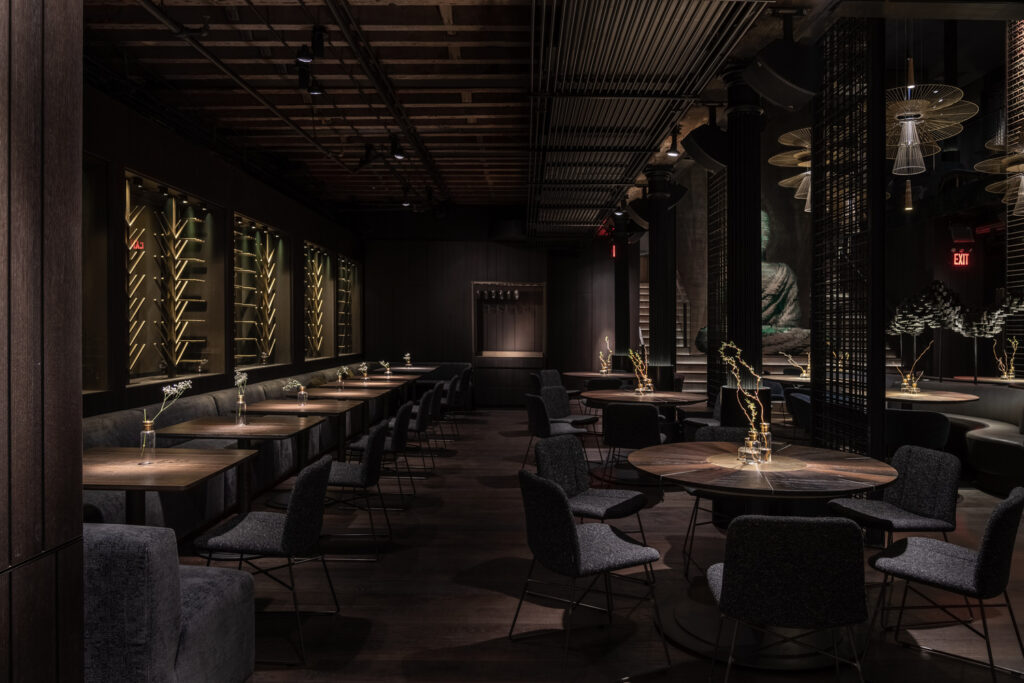
The most memorable restaurants are not defined only by food, service or lighting; the built environment also tells the story, and in high-end restaurant interiors, custom millwork helps create the first impression, guide the guest through the space and make the dining room feel intentional rather than assembled from separate pieces.
| Restaurant Millwork Element | Design Role | Guest Experience Impact |
|---|---|---|
| Custom bar | Creates the main visual anchor with front panels, back bar shelving, lighting, stone, metal or refined wood finishes. | Makes the restaurant feel more energetic, premium and memorable from the first impression. |
| Built-in banquettes | Defines seating zones, improves layout efficiency and brings comfort into walls, corners and private dining areas. | Creates intimacy, order and a more comfortable dining atmosphere. |
| Wall panels | Adds texture, depth and architectural rhythm through decorative panels, acoustic panels or Italian wall treatments. | Makes the dining room feel designed rather than simply decorated. |
| Host station | Combines guest greeting, reservation support, storage and brand presentation in one custom-built element. | Creates a polished arrival moment and sets the tone before guests reach the table. |
| Wine display | Uses glass, wood, metal, lighting and shelving to turn bottle storage into a feature. | Adds depth, hospitality character and a stronger sense of refinement. |
What restaurant millwork design includes
Restaurant millwork design refers to the built-in and custom-fabricated elements created specifically for a restaurant’s layout, service model and brand atmosphere. It is different from simply selecting furniture, paint colors or decorative accessories because millwork becomes part of the architecture of the dining room. It shapes how guests arrive, where they look first, how they sit, how servers move and how the restaurant is remembered after the meal.
For a broader explanation of how built-in elements function across offices, boutiques and hospitality spaces, MATERIA’s guide to commercial interior millwork explains the wider category before narrowing into restaurant-specific applications.
In restaurants, millwork commonly includes:
Custom bars and back bars
Banquettes and built-in seating
Wall panels and decorative feature walls
Host stations and reception points
Wine displays and bottle storage
Private dining partitions and feature cabinetry
Service stations, wait stations and storage zones
Integrated shelving, counters and display areas
The most successful restaurant interiors treat these pieces as one connected design system. A bar front may relate to the wall panels behind the banquettes. A host station may use the same wood tone or metal accent as the wine display. A private dining room may repeat materials from the main dining room, but in a quieter and more intimate way. This kind of continuity is what separates a fully designed hospitality environment from a space filled with attractive but disconnected elements.
Why restaurant millwork is different from standard commercial millwork
Restaurant millwork has to solve problems that are more demanding than many other commercial environments. Offices, boutiques and showrooms also need quality built-ins, but restaurants carry a unique combination of guest experience, food and beverage service, heavy traffic and long operating hours.
A restaurant dining room may serve dozens or hundreds of guests in a single day. Staff members move constantly between tables, service stations, the kitchen, the bar and storage areas. Guests lean against banquettes, place bags near panels, touch counters, move around host stations and spend extended time in close contact with the interior. Spills, cleaning, humidity, heat near service areas and constant movement all place pressure on the materials.
That is why restaurant millwork must balance several priorities at once:
Visual refinement for the guest-facing environment
Durability for high-traffic use
Practical maintenance for daily operations
Comfort for guests seated for long periods
Acoustic support in active dining rooms
Efficient circulation for servers and hosts
Brand expression that feels memorable without becoming distracting
Unlike a standard office reception desk or retail wall unit, restaurant millwork must work during peak service. It has to look elegant when the dining room is calm, but it also has to function when the restaurant is full, the bar is active, servers are moving quickly and guests are arriving at the same time.
This is where thoughtful planning becomes essential. A beautiful bar that slows service becomes a problem. A dramatic wall panel that cannot withstand cleaning becomes a liability. A host station that looks impressive but lacks storage creates operational friction. A banquette that increases seating but makes circulation uncomfortable can reduce the quality of the guest experience. In restaurant millwork design, beauty and performance have to be developed together.
The difference between built-in design and loose furniture
Loose furniture is important in every restaurant. Chairs, bar stools, dining tables, lounge pieces and movable seating all influence comfort and style. However, they are not the whole restaurant environment. Built-in millwork gives the dining room architectural structure.
A room furnished only with loose pieces can feel flexible, but it may also feel unfinished if the walls, bar, service zones and seating edges are not resolved. Built-in millwork creates definition. It frames the bar, anchors the host area, turns blank walls into design moments and gives seating zones a sense of permanence.
Loose seating still matters, especially at the bar, and MATERIA’s guide to Italian bar stools and counter stools can help designers pair movable seating with a custom-built bar environment.
The distinction is important because built-in design affects the bones of the restaurant. A chair can be replaced. A table layout can change. But a custom bar, banquette wall, wine display or panel system becomes part of the restaurant’s identity. These features define the atmosphere before the guest even looks at the menu.
A strong restaurant interior usually needs both. The millwork creates the architectural rhythm, while the loose furniture adds flexibility, comfort and detail. When both are selected together, the dining room feels more complete. When they are selected separately, even expensive pieces can feel disconnected.
Custom bars as the visual anchor of the dining room
In many restaurants, the bar is the first architectural feature guests notice. It often sits near the entrance, frames the transition into the dining room or becomes the central point of energy in the space. Even when a restaurant is not primarily a cocktail venue, the bar can define the visual identity of the room.
A well-designed bar does several things at once. It gives guests a focal point. It creates movement and atmosphere. It supports service. It displays bottles, glassware and materials. It can make the restaurant feel lively, intimate, luxurious, dramatic or understated depending on the design direction.
Restaurant bar millwork may include:
Front bar panels
Back bar shelving
Bottle displays
Integrated lighting
Stone, metal or lacquered surfaces
Foot rails and service ledges
Under-counter storage
Glassware display
Brand-specific textures, patterns and finishes
The bar also has a psychological role. Guests often read the quality of the restaurant through the bar before they experience the meal. A refined bar suggests care, control and investment. A poorly detailed bar can make the entire dining room feel less considered, even if the rest of the design is strong.
This is why custom restaurant millwork is so valuable in bar areas. Standard counters and generic shelving rarely create the same level of atmosphere as a custom-built bar designed around the restaurant’s proportions, lighting, materials and service needs.
Front bar design and guest-facing impact
The front of the bar is one of the most important branding surfaces in a restaurant. Guests see it as they enter, sit near it, walk past it and often photograph it. It is not only a functional counter; it is a design statement.
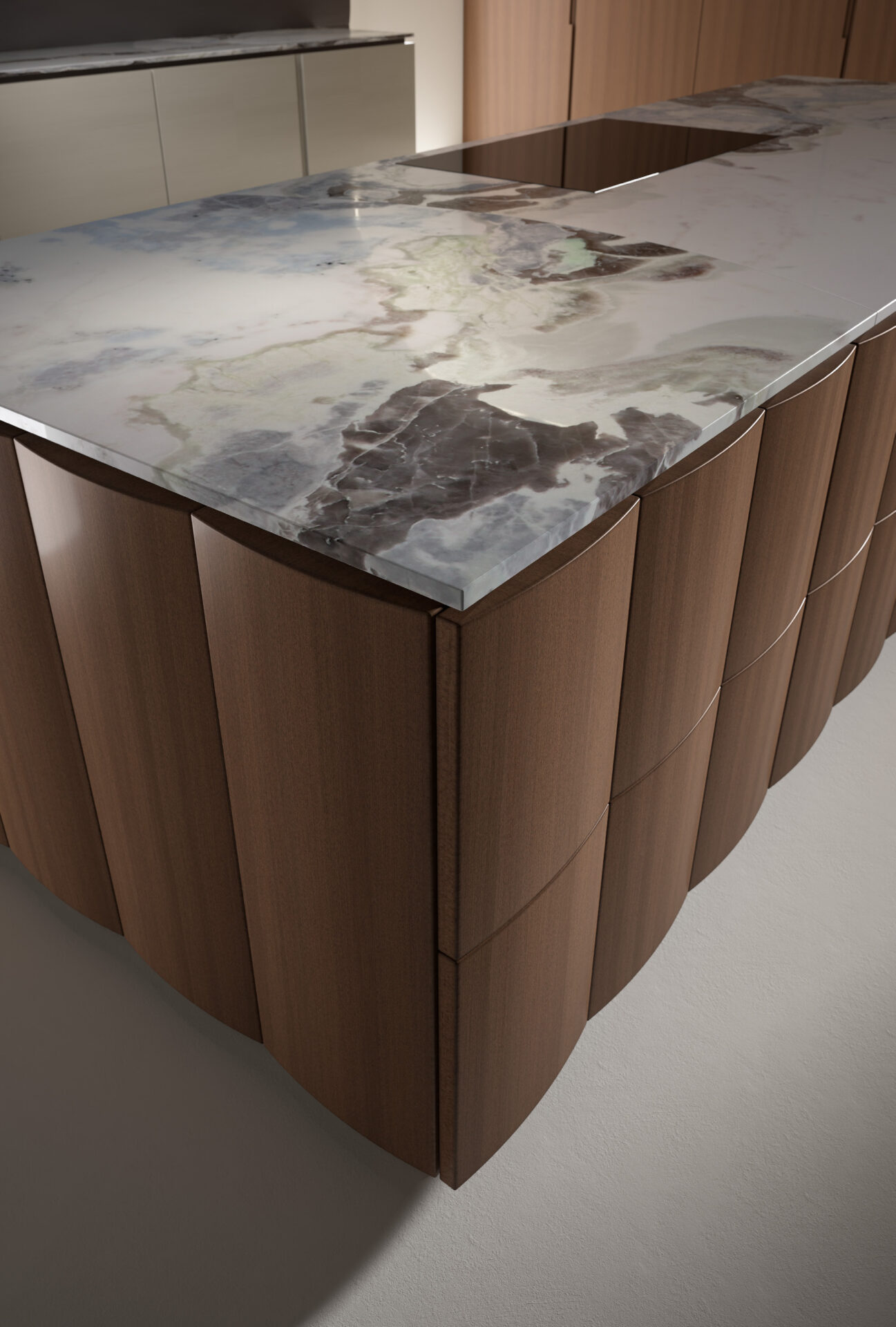
The front bar can use wood veneer, decorative panels, fluted textures, metal inlays, marble-inspired surfaces, stone composites or natural stone accents. Each material changes the tone of the restaurant. A dark wood front can create warmth and private-club character. A marble-inspired surface can feel elegant and hospitality-driven. A metal accent can add precision, contrast and a more contemporary identity. A textured panel can make the bar feel sculptural rather than flat.
This is where MATERIA Collection’s approach to unique custom surfaces, artisan finishes and Italian design language can become especially relevant. MATERIA’s work with natural materials such as exotic woods, natural stone and metals allows bar millwork to feel more refined than ordinary cabinetry. The value is not only in the material itself, but in the way the material is detailed, aligned, joined and installed.
Precision matters in a front bar because the guest is close to it. Edges, seams, panel rhythm, transitions and lighting details are visible. A front bar that looks beautiful from across the room but feels poorly resolved up close does not support a high-end restaurant experience. In luxury hospitality millwork, the guest-facing surface has to withstand attention.
A strong front bar design should consider:
How the material looks under evening lighting
How the bar front relates to flooring and wall panels
Whether the texture is appropriate for guest contact
How edges and corners will hold up over time
Whether the design feels aligned with the restaurant concept
How the bar appears from the entrance, tables and circulation paths
When these details are resolved early, the bar becomes more than a service point. It becomes one of the defining features of the restaurant.
Back bar millwork, lighting and display
The back bar is often misunderstood as simple storage. In high-end restaurant interiors, it is much more than that. It is a display wall, lighting feature and storytelling surface. It presents spirits, wine, glassware and decorative objects in a controlled composition that reflects the restaurant’s personality.
A back bar can be quiet and architectural, or it can be dramatic and theatrical. It can use open shelving, framed niches, glass, mirrors, metal details, stone backdrops, wood panels or illuminated bottle displays. The right direction depends on the restaurant’s concept and service model.
Back bar millwork connects directly to:
Integrated lighting
Vertical rhythm
Reflective surfaces
Wall panels behind shelving
Metal accents
Layered depth
Premium bottle presentation
Lighting is especially important because the back bar often becomes a visual stage. Bottles, glassware and objects need to be visible without creating glare. Shelves need to feel intentional, not crowded. Reflections can add depth, but they must be controlled. If lighting is added late, the design can look harsh or uneven. If it is planned with the millwork from the beginning, the entire bar area feels more refined.
The back bar can also support brand storytelling. A fine dining restaurant may prefer symmetry, restraint and luxurious materials. A boutique restaurant may use more expressive shelving or patterned panels. A hotel restaurant may need a back bar that looks appropriate in daylight but becomes more atmospheric in the evening. A members-only dining room may use darker finishes, softer lighting and enclosed display areas to create exclusivity.
Good back bar millwork also supports staff efficiency. Bottles, tools, glassware and storage must be placed where they make sense for service. The design should not force bartenders to work around beauty. The best restaurant bar millwork allows the bar to look composed from the guest side while functioning intelligently from the service side.


Banquettes and built-in seating
Why banquettes improve layout and flow
Restaurant owners often think first about square footage and seating count. Those numbers matter, but they do not tell the whole story. A dining room with more seats is not automatically better if servers cannot move efficiently or guests feel compressed. Poorly planned seating can create bottlenecks, awkward table spacing and uncomfortable circulation.
Banquettes help solve many of these problems because they create a fixed seating edge. Once that edge is established, tables, chairs and service routes can be planned more clearly. The room gains structure.
Banquettes can:
Increase seating capacity along walls
Create clear circulation routes
Reduce visual clutter
Support small and large party configurations
Help divide open dining rooms into more comfortable zones
A wall-length banquette can make a narrow room more efficient. A corner banquette can turn unused space into a desirable table. A curved banquette can soften a dining room and create a more social setting. A banquette in a private dining room can make the space feel more exclusive and less temporary.
The key is proportion. If the banquette is too deep, it can reduce aisle space. If it is too shallow, it may feel uncomfortable. If the back is too high, it may block sightlines. If it is too low, it may not create enough intimacy. This is why banquettes should be planned as part of the full restaurant interior, not ordered as an isolated seating feature.
Server movement is also critical. A beautiful banquette arrangement can still fail if staff cannot reach tables comfortably. The best built-in seating improves layout while preserving service flow. It allows the restaurant to feel full and atmospheric without feeling chaotic.
Comfort, proportion and upholstery coordination
A banquette is only successful if guests want to sit in it. Visual appeal matters, but comfort determines how the feature performs during a full meal. Seat depth, back height, cushion firmness, table height, spacing and upholstery all influence the experience.
A banquette used for fine dining may need a different proportion than one used for a casual boutique restaurant. A private dining banquette may allow deeper seating and a more lounge-like atmosphere. A busy hotel restaurant may need a balance between comfort, durability and easy movement.
Several details should be considered early:
Seat depth and back angle
Cushion structure and long-term support
Back height and privacy level
Relationship between table height and seat height
Upholstery durability and cleanability
Distance between tables
Position of lighting above or beside the banquette
Relationship to wall panels, mirrors or decorative surfaces behind the seating
Upholstery is especially important because banquettes are high-contact surfaces. The material must support the restaurant’s look while also standing up to repeated use. A luxurious fabric may look beautiful, but it must be appropriate for the environment. A leather or leather-like material may feel refined and practical in some settings, while a textured fabric may create a softer and more residential mood.
MATERIA’s broader furniture and custom furnishing offering can support a more coordinated interior language, where banquettes, tables, chairs, wall panels and lighting feel like parts of one design system. This matters in high-end restaurant interiors because guests sense when the room has been planned holistically. The seating does not feel separate from the walls. The lighting does not feel separate from the millwork. The materials repeat with intention.
Banquettes in luxury and private dining spaces
Banquettes become especially powerful in luxury restaurant settings, private dining rooms, chef’s tables and VIP areas. These spaces need more than efficient seating. They need atmosphere, privacy and a sense of occasion.
A private dining banquette can make a room feel tailored rather than rented. It can wrap a wall, frame a long table, create a more intimate corner or support a layered composition with wall panels, artwork, mirrors and lighting. Curved banquettes can make the space feel softer and more social. Wall-integrated seating can create a seamless architectural effect. Upholstered backs can improve comfort while contributing to the room’s color and texture palette.
For designers working on private dining rooms or elevated restaurant dining areas, MATERIA’s guide to luxury dining rooms offers useful principles for balancing elegance, comfort and function.
Wall panels, feature walls and acoustic value
Restaurant wall panels are one of the fastest ways to make a dining room feel designed. Instead of leaving walls as flat painted surfaces, wall panels add texture, depth, rhythm and identity. They create visual structure and help the restaurant feel more custom, more premium and more memorable.
In restaurants, walls are not passive surfaces. Guests face them while dining. They appear behind tables, bars, host stations and private dining areas. They define the mood of the room and often become part of how guests remember the space. A blank wall may be acceptable in a simple setting, but in a high-end restaurant, it can feel unfinished.
MATERIA Collection’s wall treatment expertise is especially relevant here because the brand works with Italian wall panel systems, decorative wall panels, refined wallpapers and unique custom surfaces. These treatments can transform walls into architectural features rather than background surfaces.
MATERIA’s wall treatment categories include:
Italian wall panel systems
Decorative wall panels
Boiserie panels
Marble-effect panels
Metal-effect panels
Acoustic wall panels
Textured wallpaper
Natural-shape wallpaper
Cement, geometric, floral, architecture and modern affresco wallpaper collections
Bamboo, Line, Maxima, Stars, Terre, Tatami, Juta, Onda and Decor wall panels
These options allow restaurant designers to create many different moods. A warm wood panel may support quiet luxury. A marble-effect surface may bring visual drama. A metal-effect panel may create a sharper contemporary tone. A textured wallpaper may soften a private dining room. An acoustic panel may support comfort in a busy space when properly specified.
Decorative panels as a restaurant branding surface
A wall panel is not just a background. In restaurant millwork design, it can become part of the restaurant’s visual signature. A textured wall behind a banquette, a dramatic panel behind the host stand or a patterned surface inside a private room can create a memorable moment that guests associate with the restaurant.
This is especially important in premium dining environments. Guests may not be able to name every material in the room, but they feel the difference between a flat, generic wall and a layered, designed surface. Decorative panels add shadow, movement and proportion. They can make a long wall feel structured, a small room feel richer or a private dining area feel more complete.
Wall panels can also help organize the restaurant visually. They can mark the entrance, frame the bar, define the main dining area or distinguish private rooms from public areas. A restaurant does not need every wall to be dramatic. In many cases, the most effective approach is selective emphasis. One strong feature wall can do more than several competing surfaces.
In photo-friendly interiors, the most memorable areas often come from architecture and atmosphere rather than decorative props. A well-lit wall panel behind a banquette, a sculptural surface behind the bar or a refined host station backdrop can naturally become part of the guest’s visual memory. The goal is not to design only for photographs. The goal is to create a dining room with enough depth and identity that it feels worth remembering.
MATERIA’s decorative wall panels, Italian wall treatments and artisan finishes can support that kind of atmosphere. They allow restaurant interiors to move beyond standard paint and conventional wall coverings into surfaces that feel more intentional and material-rich.
Acoustic comfort in dining rooms
Noise is one of the most common problems in restaurants. A dining room can look beautiful but feel uncomfortable if guests have to raise their voices throughout the meal. Hard floors, glass, stone, open kitchens, active bars and crowded seating can all contribute to echo and harsh sound.
Wall panels and acoustic treatments can help soften the room when they are specified correctly as part of the full interior strategy. They should not be treated as a last-minute fix after the restaurant is already built. Acoustic comfort is most effective when considered alongside ceiling materials, flooring, upholstery, curtains, seating layout and the overall volume of the space.
MATERIA’s decorative acoustic wall panels can support better acoustic comfort while still contributing to the design language of the restaurant. This distinction matters. In a luxury setting, acoustic solutions should not feel like technical afterthoughts. They should be integrated into the visual concept.
Careful language is important here. Wall panels do not automatically soundproof a restaurant, and every space has its own acoustic conditions. However, properly specified acoustic wall panels can help reduce the harshness of reflective surfaces and make the dining experience more comfortable.
Acoustic value is especially important in:
Fine dining rooms where conversation is part of the experience
Hotel restaurants that serve guests throughout the day
Wine rooms and private dining areas
Members-only dining rooms
Restaurants with hard surfaces and open layouts
Bar-adjacent dining spaces where energy can become noise
Comfort is not only physical. It is also sensory. If a restaurant looks luxurious but sounds chaotic, the guest experience is incomplete. Good restaurant wall panels can help bring the visual and acoustic environment closer together.
Feature walls for fine dining, boutique restaurants and hotel F&B
Feature walls should be designed with restraint and purpose. A feature wall is not simply the loudest wall in the room. It is the surface that carries a specific role in the guest journey. It may introduce the brand at the entrance, create intimacy behind a banquette, define a private room or frame the bar.
In a fine dining restaurant, a feature wall may use warm wood panels, subtle stone-like surfaces or refined boiserie to create quiet luxury. The effect should feel controlled and elegant, not overly decorative. The wall should support the meal, the service and the atmosphere.
In a boutique restaurant, a feature wall can be more expressive. Decorative panels, patterned surfaces, metal effects, geometric treatments or sculptural textures can help define the restaurant’s concept. Boutique restaurants often benefit from a strong visual idea, especially when the space is smaller and every surface matters.
In a hotel restaurant, wall panels need to feel sophisticated across different moments of the day. A breakfast setting may require softness and clarity, while dinner service may call for atmosphere and depth. Panel systems that respond well to changing light can help the restaurant feel polished from morning through evening.
In a members-only room or private club setting, darker wall treatments, layered lighting and rich textures can create privacy and depth. The goal is to make the space feel exclusive without making it feel heavy. Materials, lighting and proportion must work together.
MATERIA’s range of wall panels and wall treatments gives designers the ability to create these different expressions while maintaining a refined Italian design language.
Host stations, wine displays and service zones
Host stations and first impressions
The host station is a threshold moment. It is where the guest moves from outside the restaurant into the dining experience. It may be small, but it carries a large responsibility. It has to welcome, organize and visually introduce the restaurant’s level of care.
A host station should not look like an afterthought. It must support reservation systems, menus, storage, guest communication and staff movement while still matching the restaurant’s design language. If the host stand is generic, cluttered or poorly placed, it can weaken the first impression before the guest reaches the table.
Possible materials for host station millwork include:
Wood veneer
Lacquer
Stone or stone-inspired counters
Metal trims
Integrated lighting
Decorative panels on the front face
The host station should also be proportioned correctly for the entry area. If it is too large, it can block flow. If it is too small, it can look temporary or fail to support operations. Its position should allow hosts to greet guests naturally, manage reservations discreetly and communicate with the dining room without creating congestion.
A refined host station may repeat materials from the bar or wall panels. It may use a stone top, a lacquered body, metal trim or decorative front paneling. These details help the guest understand that the restaurant has been designed as a complete environment.
Wine displays as storage, storytelling and atmosphere
Wine displays can be both functional and emotional. They store bottles, but they also communicate taste, investment and hospitality. In many high-end restaurants, the wine display is part of the brand story. It signals that the restaurant cares about experience beyond the plate.
A wine display can create depth in the room, frame a private dining area, support a sommelier-led service model or act as a transition between the bar and dining room. It can be transparent, enclosed, illuminated, integrated into a wall or designed as a freestanding architectural feature.
Common design directions include:
Glass-fronted wine displays
Wood-framed bottle storage
Metal racking systems
Integrated lighting
Wall-mounted bottle presentations
Private dining wine walls
Display niches for premium selections
The practical side must be considered carefully. Visibility, accessibility, temperature requirements and service routes should be addressed by the project team early in the process. A wine display that looks beautiful but is difficult for staff to use can become frustrating during service.
Lighting also matters. Bottles should be visible without creating glare or excessive heat. The display should feel curated, not crowded. When wine storage is part of the front-of-house experience, it should support both atmosphere and service.
In fine dining restaurants, wine displays often contribute to a sense of ritual. In boutique restaurants, they may help add character and intimacy. In hotel restaurants, they can support premium positioning and make the dining room feel more destination-driven. In private dining rooms, they can create a more exclusive and tailored atmosphere.
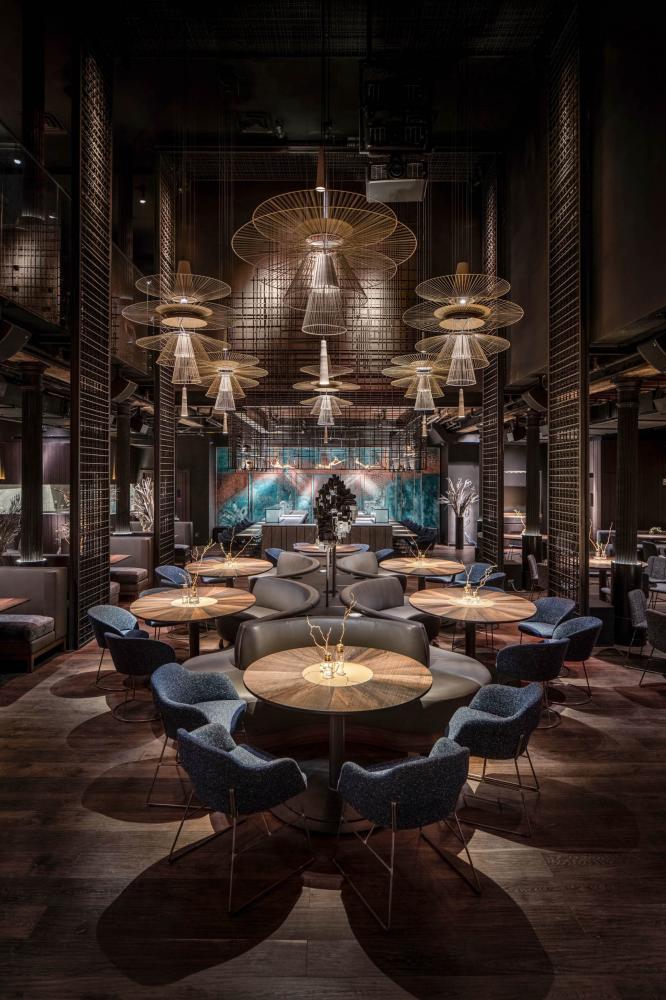
Materials for high-traffic dining spaces
Restaurants are demanding environments, even when they look calm and elegant from the guest side. A dining room may appear composed during service, but every surface is exposed to repeated contact, movement, cleaning, spills, heat near service areas and long operating hours. Materials are touched by guests, leaned against by staff, cleaned multiple times a day and viewed closely under changing light.
For a deeper look at how finish choices influence durability, specification and project planning, MATERIA’s guide to commercial millwork materials explains where premium surfaces can create the strongest long-term value.
Wood veneer, lacquer and refined wood finishes
Wood veneer and refined wood finishes create warmth, authority and a sense of permanence. In restaurants, this matters because guests are not only passing through the space. They are sitting, looking around, speaking, eating and spending time inside the atmosphere. Wood can make a dining room feel more intimate, more grounded and more carefully composed.
A refined wood finish can soften a restaurant that otherwise uses stone, glass, metal or polished surfaces. It can also make a dining room feel more architectural when applied across wall panels, bar fronts, host stations and built-in seating. Instead of treating wood as a single accent, designers can use it to create continuity throughout the restaurant.
Wood veneer is especially useful in restaurant millwork because it can help create consistency across multiple custom elements. A restaurant may need a bar front, back bar shelves, banquette bases, wall panels, service stations and private dining cabinetry to feel connected. Veneer can help align those elements visually without making every part of the room look identical.
In high-end restaurant interiors, wood can be used in many ways:
Warm wall panels behind banquettes
Refined bar fronts with vertical or horizontal grain direction
Host stations with matched wood tones
Back bar shelving with integrated lighting
Private dining cabinetry and concealed storage
Service zones that blend into surrounding millwork
Feature panels that add depth without visual excess
Lacquer offers a different kind of refinement. It can introduce a smoother, more contemporary surface and can work especially well in restaurants with a polished, modern or hospitality-driven identity. Depending on the finish direction, lacquer can feel quiet and architectural or more dramatic and reflective. It can also provide contrast when paired with wood, metal or stone.
The relationship between wood, lacquer and lighting should be considered carefully. A dark wood wall under warm lighting can create intimacy. A lighter wood finish can make a dining room feel more open and natural. A lacquered surface can reflect light and create depth, but it must be used with control so the room does not feel harsh or overly glossy.
MATERIA Collection’s Italian design language and work with custom surfaces make these decisions especially relevant. In a restaurant, the difference between ordinary woodwork and refined millwork is often found in proportion, grain direction, finish quality, edge detailing, transitions and installation precision. Guests may not analyze those details consciously, but they feel the difference in the overall impression of the space.
Metal, stone and marble-inspired surfaces
Metal, stone and marble-inspired surfaces bring a different level of visual weight to restaurant millwork. They can make a space feel more luxurious, more durable, more dramatic or more contemporary depending on how they are used. These materials should not be applied everywhere. They are most powerful when they are placed with intention.
Metal inlays can add precision, contrast and branding. A slim brass line in a bar front, a dark metal edge around a host station or a brushed-metal detail in a wine display can make the millwork feel more tailored. Metal details are especially effective when they define transitions between materials. They can separate wood from stone, frame shelving, outline panels or bring rhythm to a large surface.
Brass, bronze, dark metal and brushed-metal finishes are common choices for luxury interiors because they create detail without requiring excessive ornament. In a restaurant, metal can support a private-club atmosphere, a contemporary dining concept or a more refined hospitality setting. The finish should be selected according to the brand mood. Polished metal can feel glamorous, while darker or brushed finishes often feel more restrained.
Stone and stone-inspired surfaces bring permanence and visual strength. Natural stone can be used for premium feature areas where impact matters, such as bar fronts, counters, host stations, private dining features or selected wall applications. Stone composites can offer visual weight and practical performance in areas where consistency, durability and specification control are important. Marble-inspired surfaces can be especially effective in hospitality settings where drama and elegance are part of the concept.
These materials can support several design goals:
Metal inlays for precision, contrast and branding
Brass, bronze, dark metal or brushed-metal details for luxury interiors
Stone composites for visual weight and durability
Natural stone for premium feature areas
Marble-inspired surfaces for hospitality settings where visual impact is important
Mixed-material compositions that combine wood, stone, metal and lighting
MATERIA’s strength in natural stone, metals, artisan surfaces, custom finishes and precision installation fits naturally into this kind of restaurant environment. The goal is not to use premium materials simply because they are expensive. The goal is to use them where they create the strongest effect and where they can be detailed properly.
A marble-inspired bar front, for example, may create a dramatic focal point. A metal-trimmed back bar may feel refined and architectural. A natural stone host station top may signal quality at the first guest interaction. A stone-effect wall panel in a private dining room may add depth without requiring the entire room to become heavy.
The key is balance. Too many strong surfaces can compete with one another. A luxury restaurant does not need every finish to be loud. Often, the most successful spaces use one or two dominant materials and then support them with quieter textures, controlled lighting and carefully placed accents.
Maintenance planning for restaurant millwork
Beautiful restaurant millwork can fail in practice if maintenance is not considered early. A material that looks impressive on opening night still has to work after months and years of service. Restaurant interiors are active spaces, and even the most refined dining room has practical realities.
Maintenance planning should be part of the design conversation, not an afterthought. Cleaning access, replaceable components, edges, corners, high-touch surfaces and staff routines all affect how the millwork performs over time. The question is not only what the guest sees. It is also how the restaurant team will keep the space looking refined during daily operation.
Several areas deserve close attention:
Bar fronts where guests place shoes, bags or knees
Host stations that receive constant staff use
Service counters exposed to repeated cleaning
Banquette bases near shoes and chair movement
Wall panels near dining tables
Corners and edges in circulation paths
Wine displays and shelving that collect dust
Integrated lighting areas that may need service access
Edges and corners are especially important. These areas often show wear before flat surfaces do. If the detail is too delicate for the location, the millwork may lose its refined appearance quickly. High-touch areas need materials and detailing that can handle the reality of use.
Replaceable components can also be valuable. Certain panels, kick plates, upholstery sections or service-area parts may need to be repaired or refreshed more easily than feature surfaces. In a restaurant, this type of practical planning can protect the long-term appearance of the space.
Coordination with operational teams is also important. Designers and millwork providers should understand how the restaurant will be cleaned, where staff will move, what surfaces will be touched most often and which areas will experience the most pressure. A fine dining restaurant, hotel restaurant, boutique dining room and members-only club may all have different maintenance expectations.
The best maintenance planning does not make the design feel less luxurious. It makes the luxury more sustainable. When the right finishes are placed in the right locations, the restaurant can remain polished through daily use instead of relying only on opening-day impact.
How millwork supports a luxury restaurant brand
Luxury in a restaurant is not created by one expensive object. It comes from consistency. A beautiful bar cannot carry the whole room if the host station feels temporary, the walls feel unfinished and the service zones look disconnected. A restaurant begins to feel truly premium when the bar, panels, banquettes, host stand, lighting and furniture all speak the same design language.
Custom millwork supports that consistency because it gives the dining room structure. It connects the visible parts of the guest experience into one environment. When guests enter a restaurant and immediately understand the mood, rhythm and level of detail, the brand feels stronger before a single dish arrives.
In high-end restaurant interiors, custom millwork helps create:
Visual continuity
A stronger brand story
More memorable guest moments
Better spatial rhythm
A more premium perceived value
Clearer transitions between dining, bar, private and service areas
This matters because restaurants are deeply experiential. Guests remember how the room made them feel. They remember whether the bar had presence, whether the seating felt intimate, whether the lighting and wall surfaces created atmosphere and whether the room felt complete. Millwork is one of the strongest tools for shaping that memory.
A restaurant brand is not only expressed through a logo, menu or color palette. It is expressed through the surfaces guests encounter. A wood-paneled banquette wall can communicate warmth. A sculptural bar front can communicate energy. A refined host station can communicate order. A wine display can communicate depth and hospitality. A private dining partition can communicate exclusivity.
The most effective restaurant millwork does not feel like decoration added to a business. It feels like the physical expression of the restaurant’s identity.
Fine dining restaurants
Fine dining millwork should feel restrained, precise and intentional. The goal is not visual noise. The goal is depth, proportion, material quality and controlled atmosphere. Every element should support the pace and refinement of the dining experience.
In fine dining, guests are often more attentive to detail. They spend more time in the dining room, expect a higher level of comfort and notice whether the atmosphere matches the service. Millwork can help create that sense of quiet control.
Fine dining restaurant millwork may include:
Warm wood panels
Elegant banquettes
Refined host stations
Stone or metal details
Subtle lighting integration
Private dining cabinetry
Discreet service stations
Carefully framed wine displays
Warm wood panels can make the dining room feel intimate without becoming heavy. Elegant banquettes can create comfort and order. A refined host station can set the tone at arrival. Stone or metal details can add luxury when used with restraint. Subtle lighting integration can bring depth to bar shelves, wall panels and private dining features.
In this type of restaurant, the best millwork often feels calm rather than loud. The detailing should be visible, but not distracting. Materials should feel substantial, but not excessive. The space should support conversation, service and the food itself.
Hotel restaurants
Hotel restaurants often require a different kind of flexibility. They may serve breakfast, lunch, dinner, cocktails and private events in the same space. They may need to appeal to hotel guests, local diners, business travelers, event guests and visitors using the lobby or bar. Because of this, the millwork has to support multiple moods throughout the day.
A hotel F&B team may need a restaurant that feels bright and welcoming in the morning, polished and professional at lunch, atmospheric in the evening and flexible for private events. Custom millwork can help create that range without making the space feel inconsistent.
A hotel restaurant may use wall panels, bar millwork, banquettes and service zones to create a strong identity that still belongs to the larger property. The restaurant should feel like a destination, but it should also connect to the hotel’s design language. This is a delicate balance.
Bar millwork may need to transition from coffee and casual daytime service to cocktails at night. Banquettes may need to support both solo hotel guests and larger dining parties. Host stations must handle reservations, hotel guest flow and event coordination. Service zones need to function efficiently across longer operating hours.
For hotel restaurants, durability and maintenance become especially important because the space often operates for more hours per day than a standalone dining concept. Materials should be refined enough for a premium hospitality environment, but practical enough for repeated use.
Custom millwork helps hotel restaurants avoid the generic look that can happen when spaces are designed only for flexibility. Instead, the restaurant can remain adaptable while still feeling distinctive, branded and memorable.
Boutique restaurants
Boutique restaurants often need a more distinctive point of view. They may not have the scale of a large hotel restaurant or the formality of fine dining, but they often rely heavily on atmosphere, concept and memorability. In these spaces, custom restaurant millwork can define the entire personality of the room.
A boutique restaurant may use an expressive bar, a textured wall panel, an intimate banquette arrangement or a sculptural host station to create a strong first impression. Because the space may be smaller, each millwork decision becomes more visible. There is less room for generic surfaces.
Custom wall panels can help establish the concept. A dramatic bar can create a focal point. Built-in seating can make the room feel more organized and comfortable. Curated finishes can give the restaurant a personality that guests remember and describe to others.
Boutique restaurant millwork often works best when it is specific. The design should not feel like it could belong anywhere. It should reflect the cuisine, neighborhood, owner’s vision, guest profile and service style. This does not mean the design has to be theatrical. A boutique restaurant can be minimal, warm, dramatic, colorful, intimate or refined. The important point is that the millwork supports a clear identity.
MATERIA’s range of Italian wall treatments, fine furniture, unique finishes and custom surfaces can be especially useful for boutique environments because these spaces often need a high level of material character without becoming visually chaotic.
Members-only dining rooms and private clubs
Members-only dining rooms and private clubs often require privacy, warmth and exclusivity. The experience is different from a public restaurant because guests expect a more personal environment. The space should feel refined, comfortable and protected from the feeling of ordinary commercial dining.
Millwork can create this atmosphere through darker finishes, integrated shelving, private dining partitions, soft lighting, acoustic panels and custom service details. A members-only room may use rich wood tones, upholstered banquettes, concealed storage, decorative wall panels and carefully lit bottle or object displays to create a more intimate setting.
The goal is not simply to make the room look expensive. The goal is to make it feel settled, layered and private. Custom millwork can help define smaller zones within a larger club, create visual separation without closing the room completely and give guests a sense of belonging.
Private clubs also often require discreet functionality. Service zones should be close but not visually intrusive. Wine displays and storage may need to support premium service. Banquettes and wall panels may need to improve comfort and soften sound. Lighting should feel warm and controlled.
In these environments, restaurant millwork design becomes part of the emotional experience. It tells guests that the space was created for them, not for a generic dining crowd.
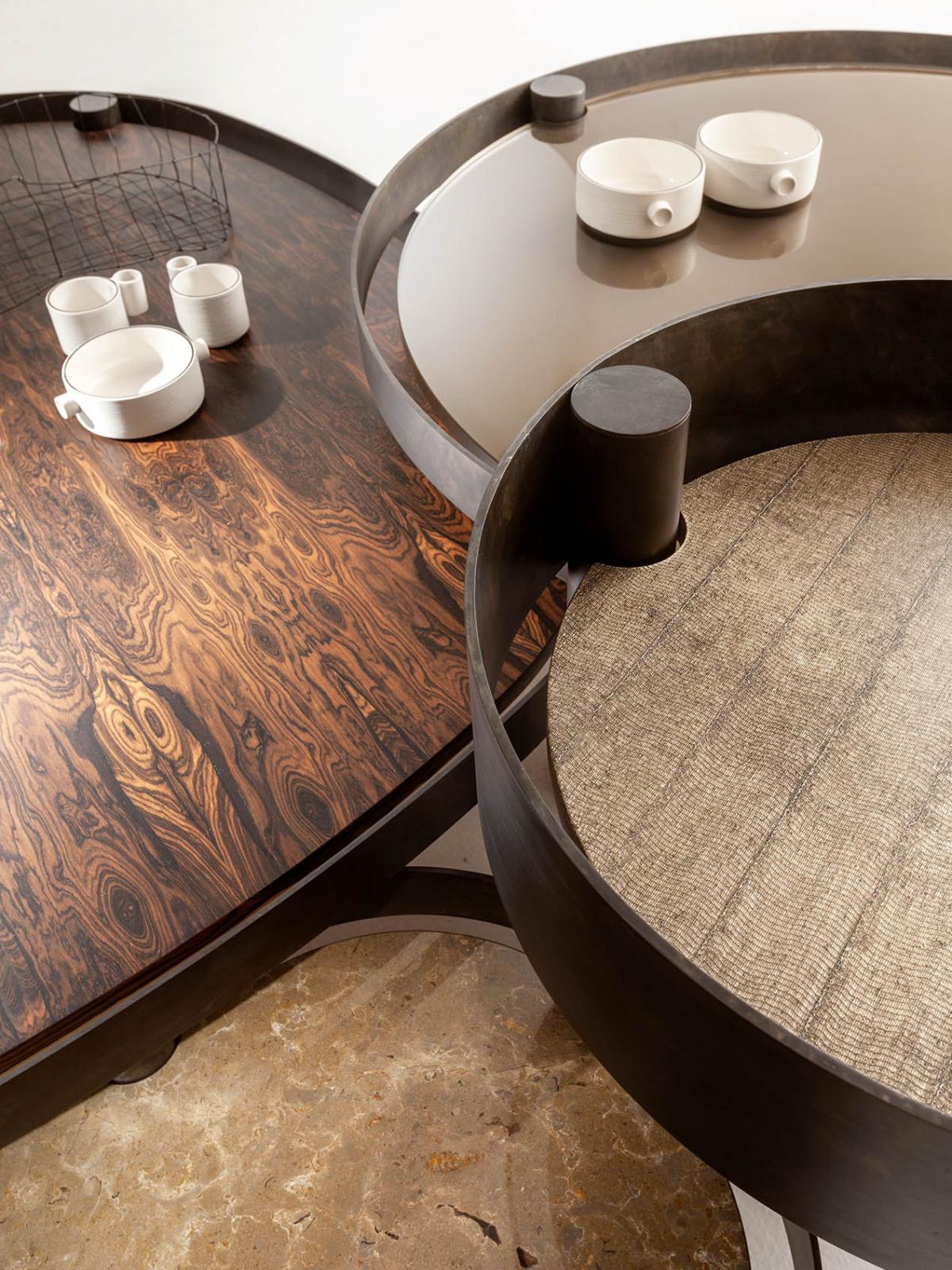
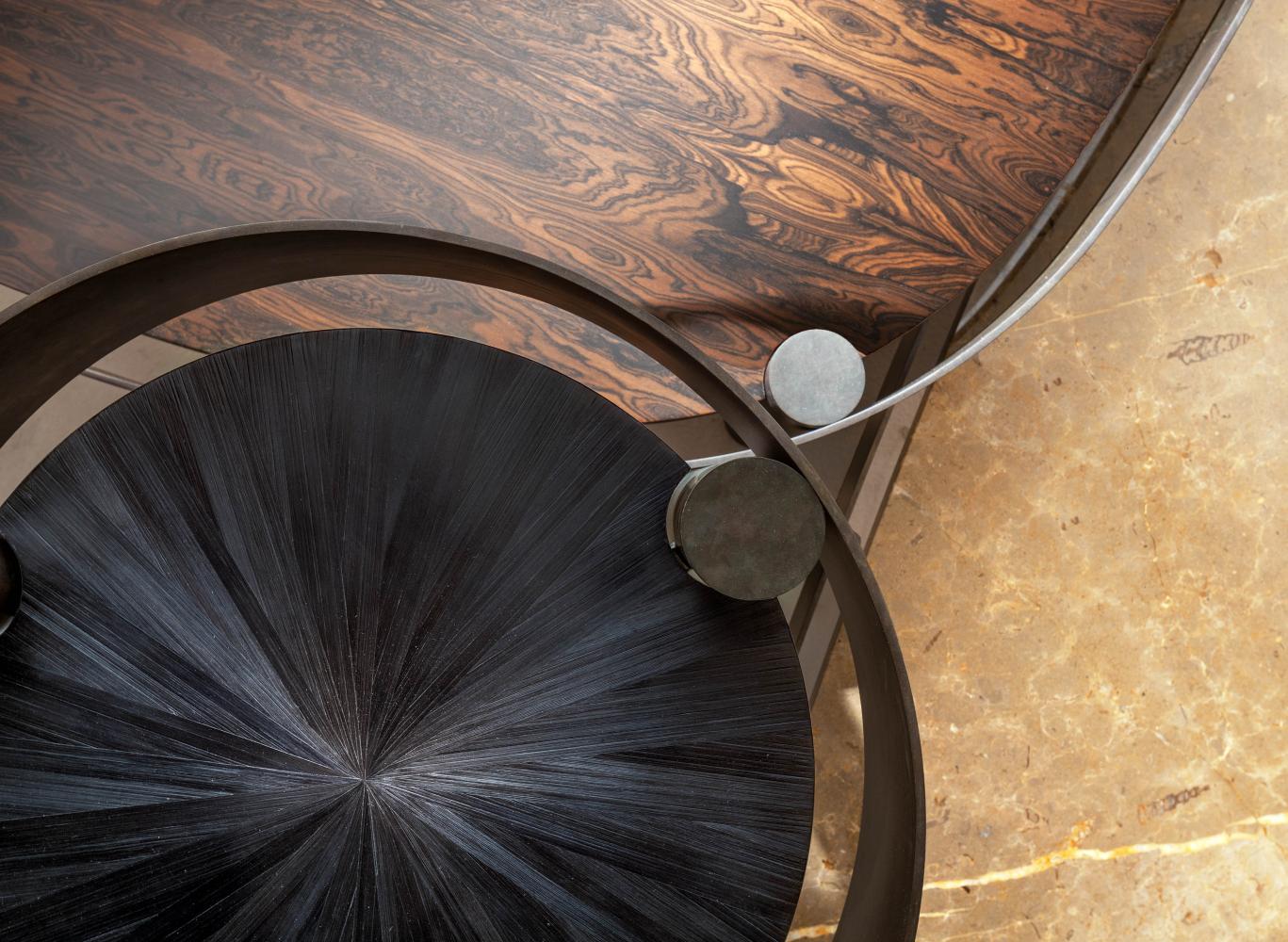
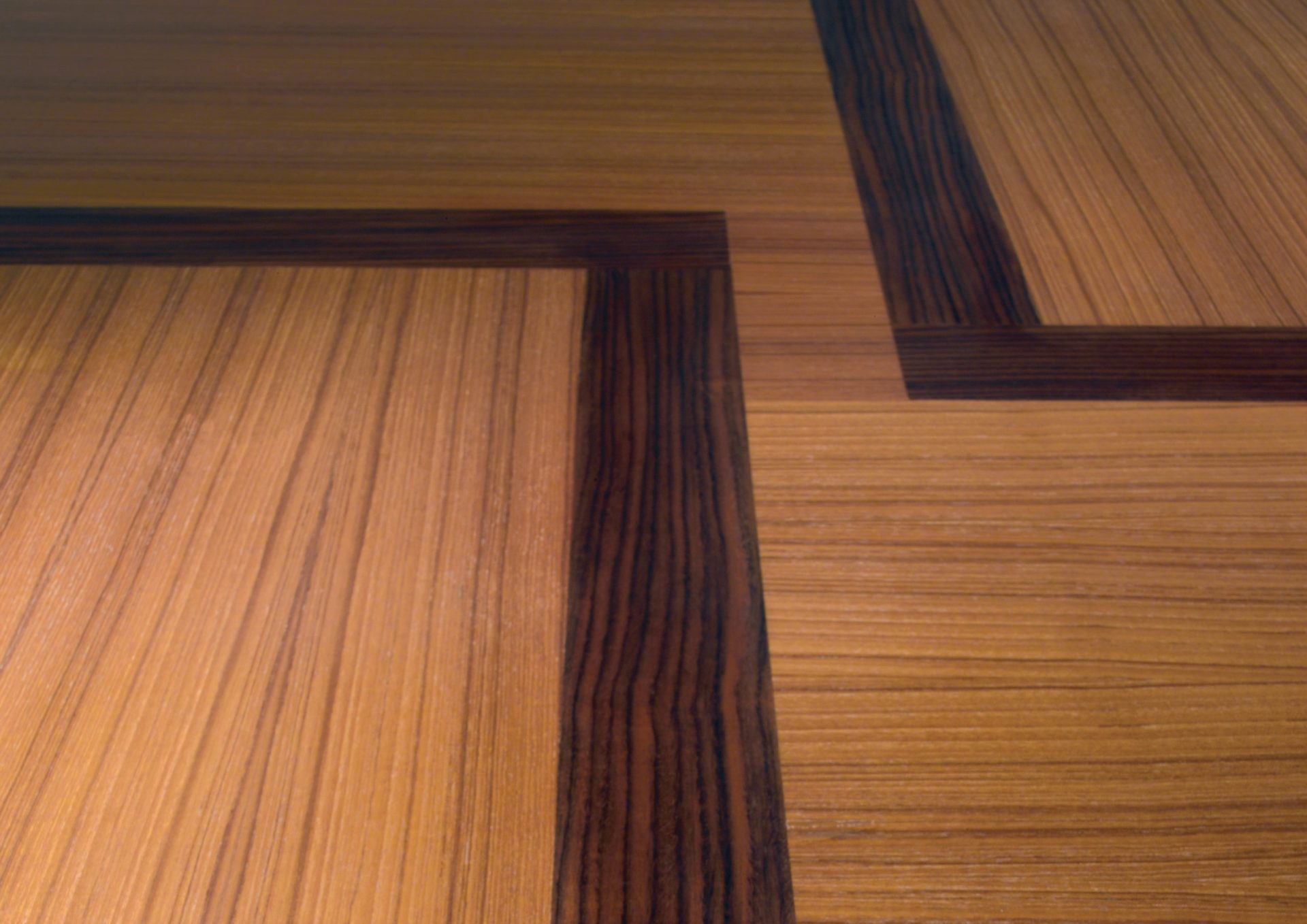
Working with designers, architects and millwork providers early
Restaurant millwork should not be added at the end of the design process. Bars, banquettes, wall panels, host stations, wine displays and service zones affect too many parts of the project to be treated as finishing details. They influence electrical planning, lighting, circulation, seating counts, material transitions, fabrication timelines and installation sequencing.
When millwork is planned late, compromises become more likely. A bar may need lighting after the shelving has already been designed. A banquette may reduce circulation because the seating layout was not coordinated early. Wall panels may be interrupted by outlets, mechanical details or existing conditions. A host station may look beautiful but lack the storage needed for daily use.
Because custom restaurant millwork touches design, fabrication and installation, MATERIA’s overview of the luxury project process is useful for understanding how concept development, specification and final installation connect.
Early collaboration is especially important in restaurants because the design must work for both guests and staff. The guest sees atmosphere, comfort and brand identity. The staff experiences storage, access, movement, cleaning and service flow. The best millwork supports both sides.
Why early coordination prevents design compromises
Early coordination helps the restaurant team make better decisions before the project becomes difficult or expensive to adjust. Architects, designers, millwork providers and operators each see the space from a different angle. When those perspectives come together early, the final environment is usually more refined and more functional.
For example, the designer may focus on the visual rhythm of the bar, while the operator understands how bartenders will work during peak service. The architect may coordinate clearances and technical details, while the millwork provider understands fabrication limits, material transitions and installation sequencing. Each perspective matters.
Early coordination can help avoid issues such as:
Bar lighting that does not align with shelving
Banquettes that reduce aisle clearance
Wall panels interrupted by outlets or mechanical details
Host stations that lack storage
Service zones placed too close to guest seating
Materials chosen too late for fabrication timelines
Wine displays that look impressive but are difficult to access
Decorative surfaces placed where heavy cleaning is required
Integrated lighting without proper service access
Millwork details that conflict with flooring, ceilings or door openings
These may sound like technical issues, but they directly affect the guest experience. If a service zone is poorly located, guests feel interruption. If bar lighting is uneven, the focal point loses impact. If a banquette is uncomfortable or too close to circulation, the dining experience suffers. If materials are chosen too late, the design may lose the finish quality that made the concept special.
Restaurant millwork design is most successful when it is treated as a core part of the interior architecture. It should be discussed while the layout, lighting, seating strategy and brand identity are still being developed.
How MATERIA Collection fits into high-end restaurant projects
MATERIA Collection is inspired by Italian design and its history. Founded by Yana Pojidaeva, the Bay Harbor Islands showroom presents Italian custom furnishings, wall paneling, unique custom surfaces, furniture, kitchen cabinets, lighting and doors. With over 15 years of combined design industry experience, MATERIA works with prominent designers on bespoke projects around the world, including private residences, luxury apartments, refined restaurants, corporate offices and boutiques.
This makes MATERIA especially relevant for high-end restaurant interiors where millwork, wall treatments, furniture, lighting and finishes must feel connected. A restaurant project may need custom wall panels, built-in features, refined furniture, lighting coordination, decorative surfaces and material continuity across the bar, dining room and private spaces. MATERIA’s product universe allows these categories to be considered as parts of one design system rather than separate selections.
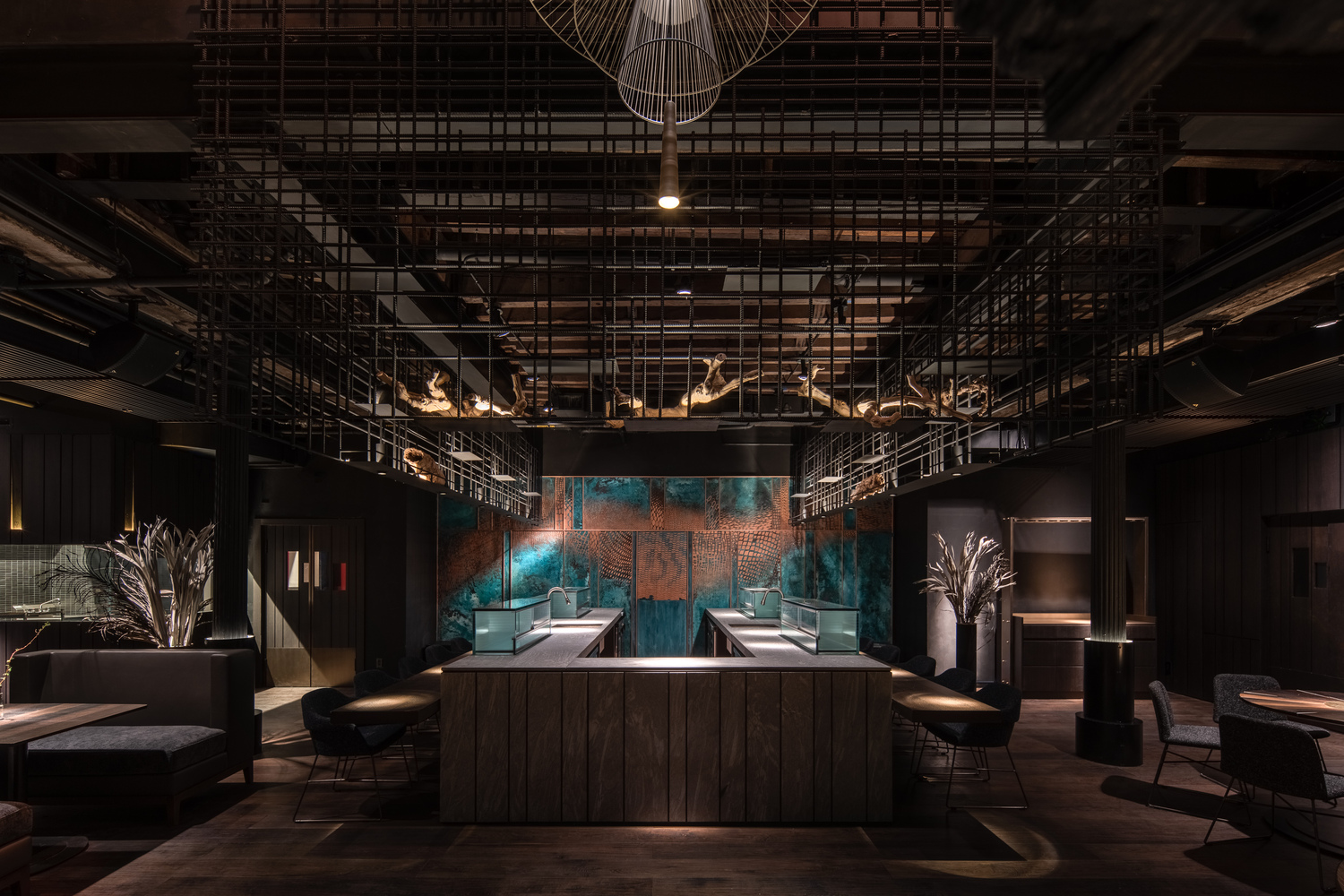
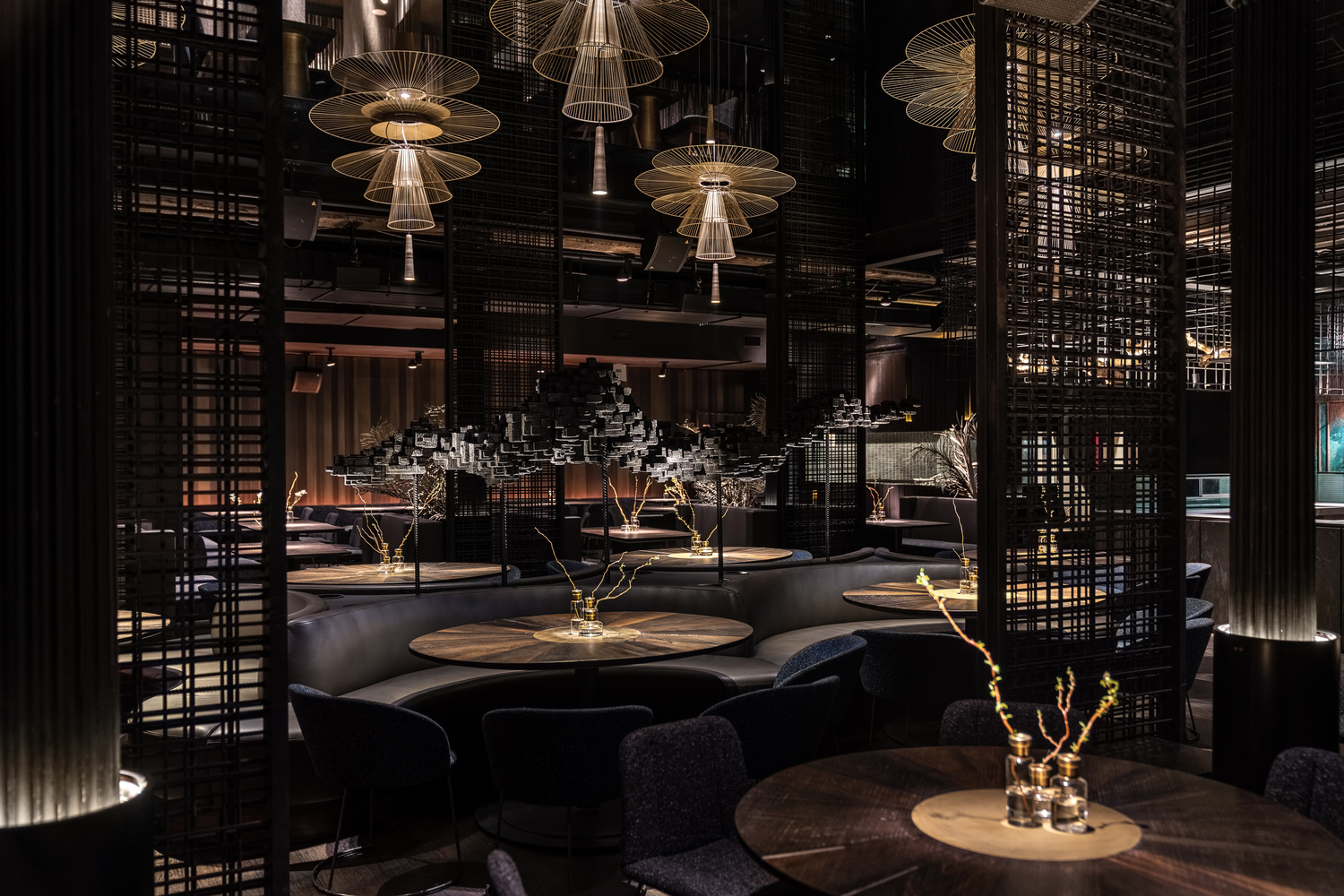
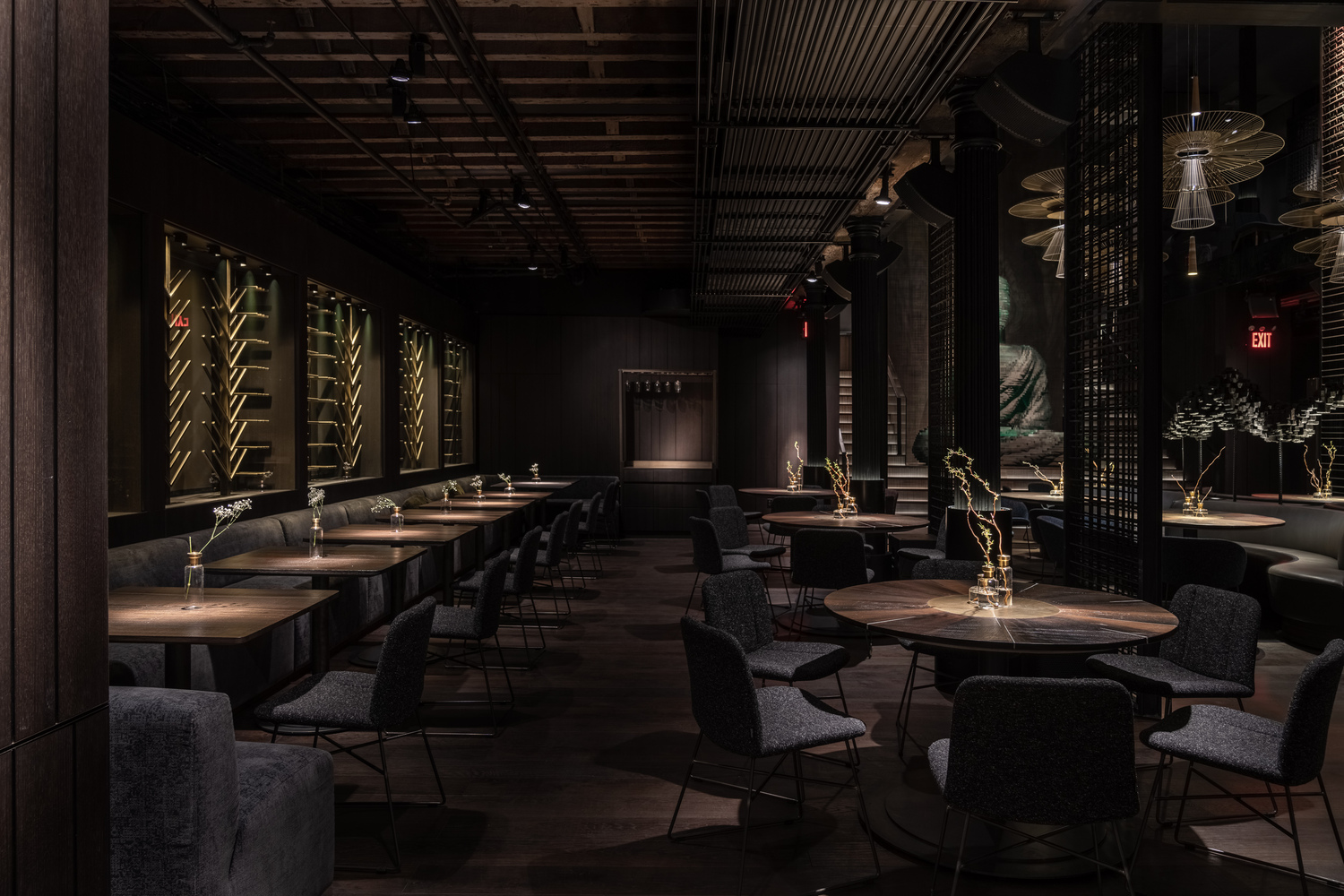
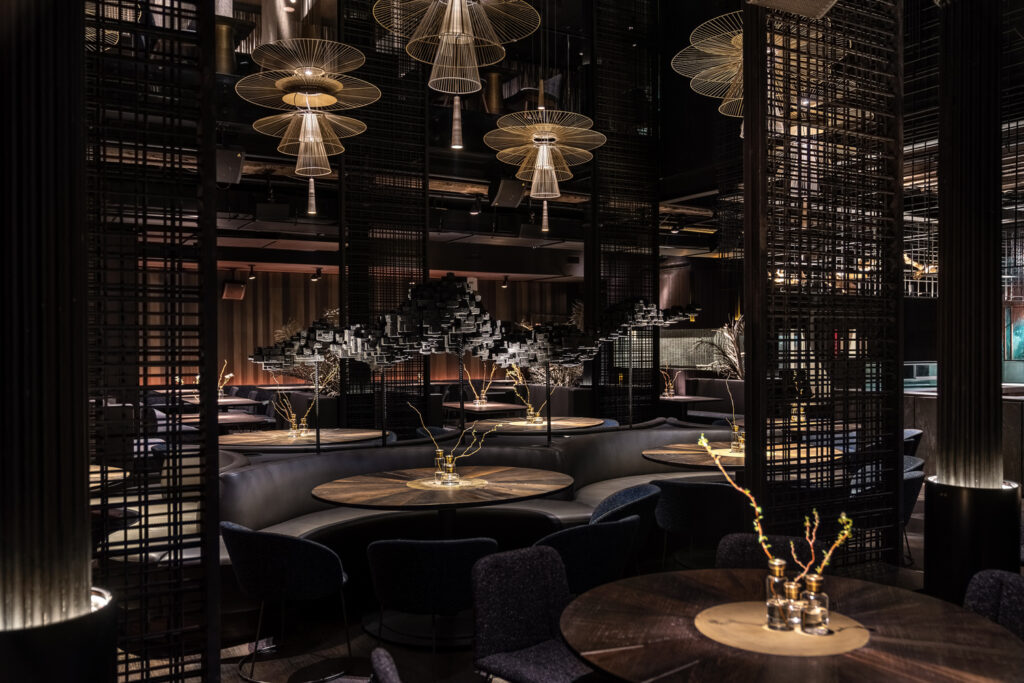
One of MATERIA’s significant hospitality-related projects was Buddha-Bar in New York, completed with YOD Design Lab Project. The project included Maxima Stars and Line wall panels, along with numerous bespoke and personalized items. This kind of work demonstrates how custom surfaces, wall panel systems and tailored details can contribute to a restaurant environment with strong visual identity.
For readers comparing restaurant-specific millwork with broader hotel, club and hospitality applications, MATERIA’s guide to luxury millwork for hospitality expands the conversation across multiple high-end commercial environments.
For restaurant owners, designers, architects and developers planning a high-end dining environment, MATERIA Collection can support a more refined, custom and material-rich approach through Italian wall panel systems, luxury custom furnishings, unique finishes and bespoke project solutions.
Frequently Asked Questions - Restaurant Millwork Design
What is restaurant millwork design?
Restaurant millwork design refers to custom-built interior features made for restaurants, such as bars, banquettes, host stations, wall panels, wine displays, service stations and integrated storage. These elements shape both the look and function of the dining room.
Why is custom millwork important in restaurants?
Custom millwork helps restaurants create a stronger brand identity, improve guest flow, support service and make the interior feel more premium. It also connects the bar, seating, wall panels and service zones into one cohesive design.
What is included in custom restaurant millwork?
Custom restaurant millwork can include bar fronts, back bars, banquettes, built-in seating, decorative wall panels, host stands, wine displays, wait stations, partitions, feature walls and custom storage.
Are wall panels useful in restaurant interiors?
Yes. Restaurant wall panels add texture, depth, visual identity and a more refined atmosphere. When properly specified, acoustic wall panels can also help support a more comfortable dining experience.
When should restaurant millwork be planned?
Restaurant millwork should be planned early with the designer, architect and millwork provider. Early planning helps coordinate layout, lighting, seating, materials, storage, service flow and installation timing.