

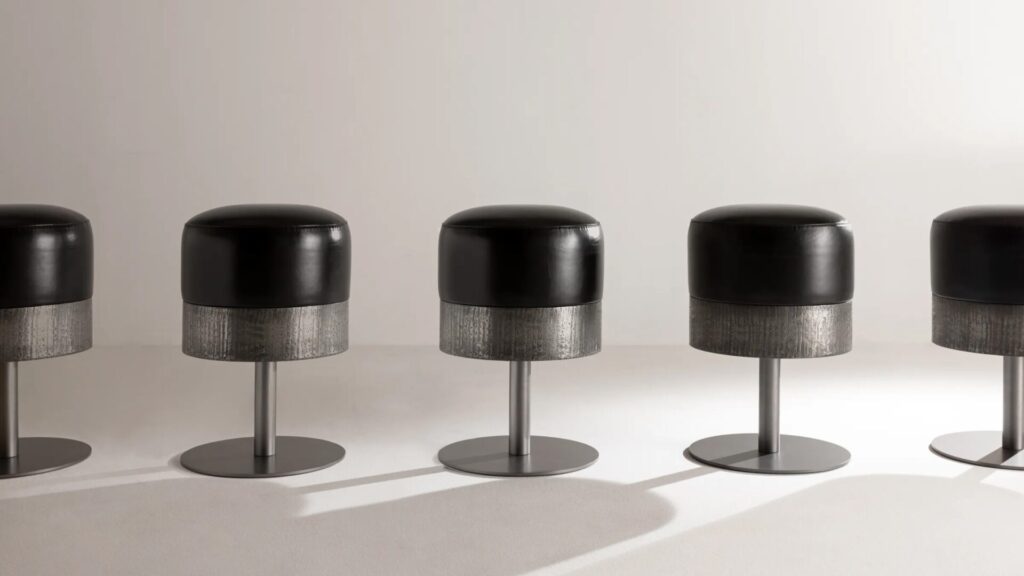
Italian bar stools and counter stools do far more than provide a place to sit, because they shape how a luxury kitchen looks, feels, and functions every day. In a refined interior, seating is never a secondary decision; it is part of the architecture of comfort, proportion, and visual identity.
What is the difference between bar stools and counter stools?
| Seating type | Typical dimensions | Best used for |
|---|---|---|
| Counter stools |
Counter height: around 36 inches Seat height: 24 to 27 inches |
Kitchen islands, breakfast counters, casual dining extensions, open-plan kitchens |
| Bar stools |
Bar height: around 40 to 42 inches Seat height: 28 to 32 inches |
Home bars, raised entertainment counters, restaurants, lounges, hospitality spaces |
| Wrong height consequences |
Too low: awkward reach upward Too high: limited knee clearance |
Avoids poor posture, discomfort, visual imbalance, and daily usability issues |
| Simple measuring rule | Leave 10 to 12 inches between the seat and the underside of the counter | Measure floor to underside of counter, then compare with actual seat height before buying |
Why Italian bar stools and counter stools are different
Italian bar stools and counter stools stand apart because they are shaped by a design culture that values proportion, material integrity, and visual clarity at every level. They are not merely accessories for a kitchen or bar; they are part of a larger language of living that treats furniture as both practical necessity and refined expression.
Italian design as a balance of elegance and practicality
One of the defining qualities of Italian furniture is its ability to unite beauty with livability. The best Italian bar stools do not force a choice between style and comfort. Instead, they show how the two can strengthen each other. A stool can look refined, sculptural, and highly architectural while still feeling supportive enough for everyday use.
That balance is essential in kitchens, because this is one of the few spaces in the home where visual presentation and daily utility must coexist continuously. A luxury kitchen is used for quick breakfasts, family discussions, evening drinks, casual work, and entertaining. Seating that looks beautiful but feels rigid will disappoint quickly. Seating that is comfortable but visually generic will weaken the room’s identity. Italian design answers this challenge by treating function and form as inseparable.
This is also why seating in Italian interiors is rarely approached as an afterthought. It is considered part of a complete design language that includes cabinetry, finishes, lighting, flooring, and circulation. The stool is not selected merely because it fits under a counter. It is selected because it reinforces the tone of the architecture.
Several features often define this Italian approach:
- modern lines that feel clean without feeling cold
- refined proportions that keep the piece visually balanced
- careful attention to silhouette from every angle
- a sense of restraint that allows materials to speak clearly
- comfort integrated into the design rather than added afterward
In a brand such as MATERIA Collection, this philosophy becomes especially relevant because the seating exists within a wider world of luxury interiors, custom millwork, fine furniture, wall treatments, lighting, doors, and bespoke kitchen solutions. That broader design sensibility gives each stool more relevance. It is not an isolated object. It is part of an environment.
Craftsmanship and premium materials
Italian luxury furniture is inseparable from its materials. A bar stool may appear simple at first glance, but its quality is revealed through what it is made from, how those materials are joined, how they age, and how they respond to daily use. MATERIA Collection highlights this clearly through its emphasis on the finest materials, including premium woods, metals, and upholstered fabrics.
Material choice changes everything. It affects durability, weight, tactile comfort, visual richness, and the emotional impression a piece creates in the room. A fine wood frame introduces warmth, grain variation, and a sense of permanence. Metal can add precision, slimness, and a distinctly modern edge. Upholstered fabrics soften the experience of seating and invite people to remain longer, turning the stool into something more generous than a purely utilitarian perch.
In luxury interiors, material selection also creates visual depth. A well-made stool is not flat in appearance. It has texture, contrast, and subtle shifts in tone that help it interact beautifully with stone, wood cabinetry, matte lacquers, brushed metals, or polished surfaces nearby. Even before someone sits down, the piece communicates quality.
Premium materials matter for several practical reasons:
- they withstand everyday contact more gracefully
- they retain their structure and finish longer
- they age with more character and less visible fatigue
- they contribute to the perceived value of the whole room
- they support more precise and sophisticated detailing
Luxury, in this sense, is both seen and felt. It is visible in the crispness of the silhouette and the richness of the finish, but it is also felt in the solidity of the frame, the smoothness of the upholstery, and the confidence of a well-balanced seat beneath the body. Buyers often recognize true quality before they consciously analyze it, because craftsmanship creates an immediate impression of ease and integrity.
The role of ergonomic design
No matter how beautiful a stool may be, it cannot be considered luxurious if it becomes uncomfortable after a short period of sitting. This is where ergonomic design becomes central, especially in kitchens and social spaces where people naturally gather longer than expected. A stool may begin as a place to sit for a few minutes, but in practice it often becomes the setting for a full conversation, an informal meal, or a long evening with guests.
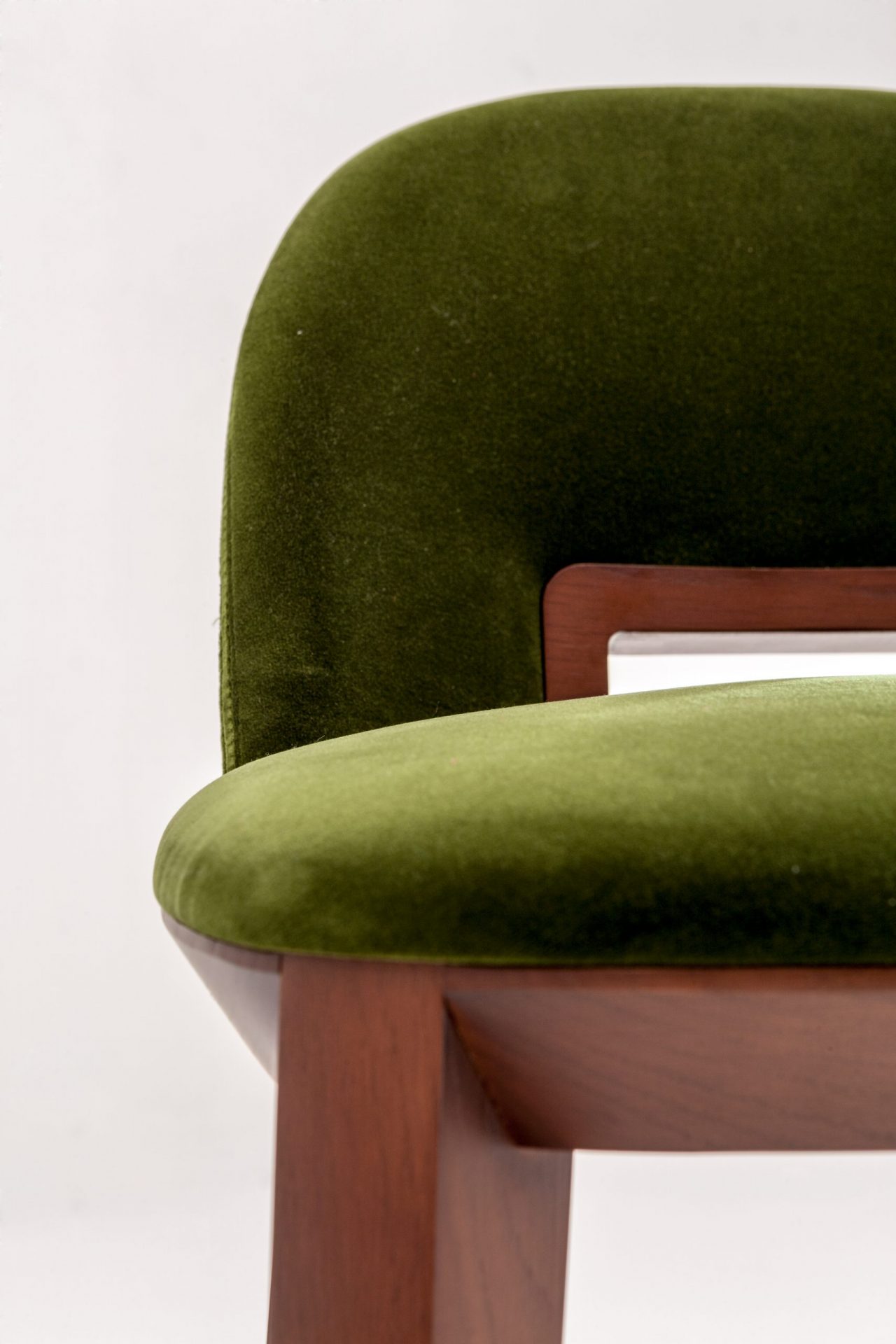
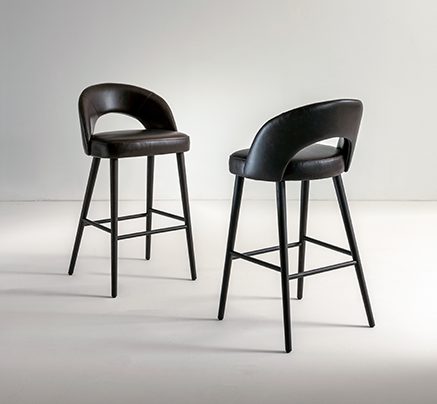
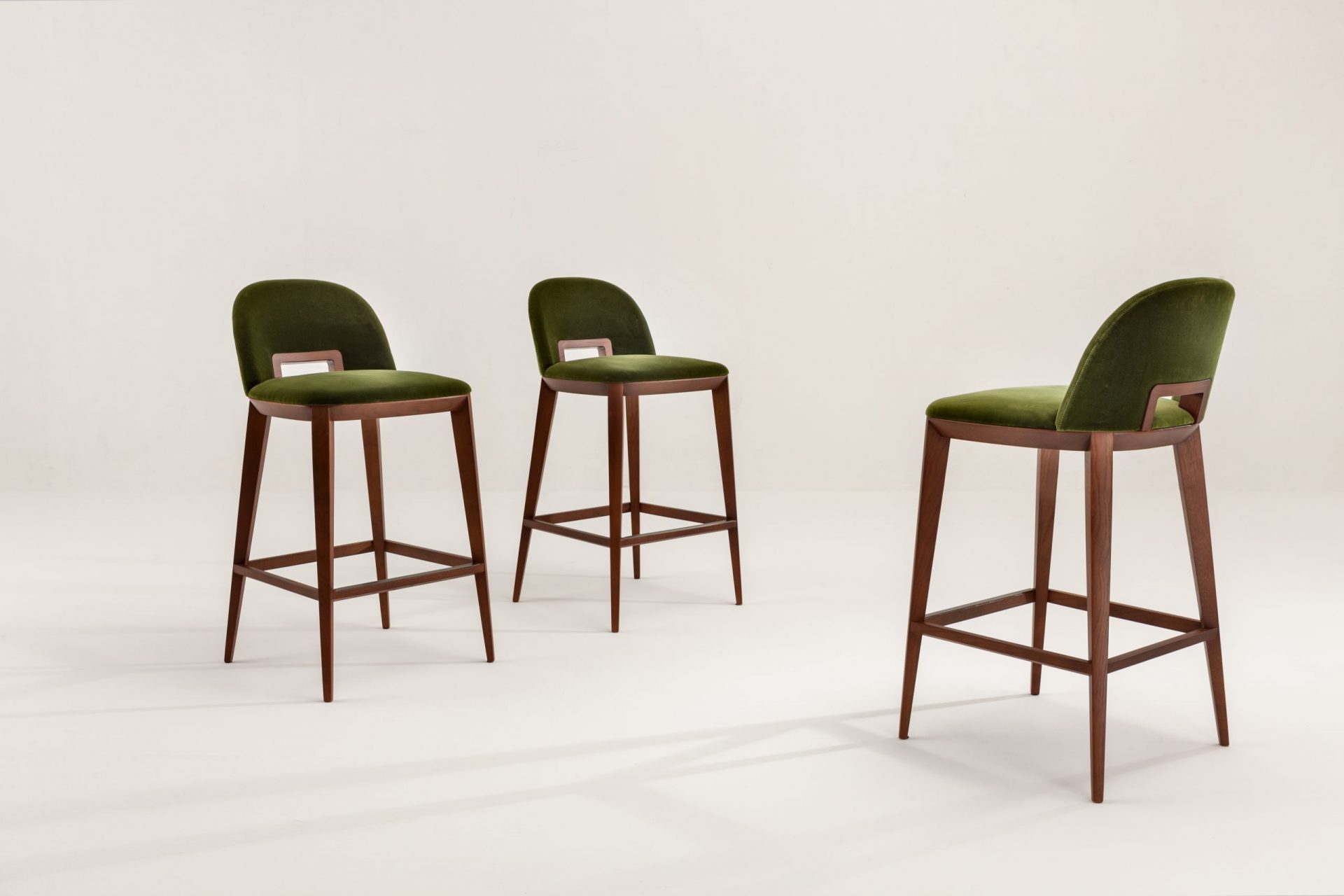
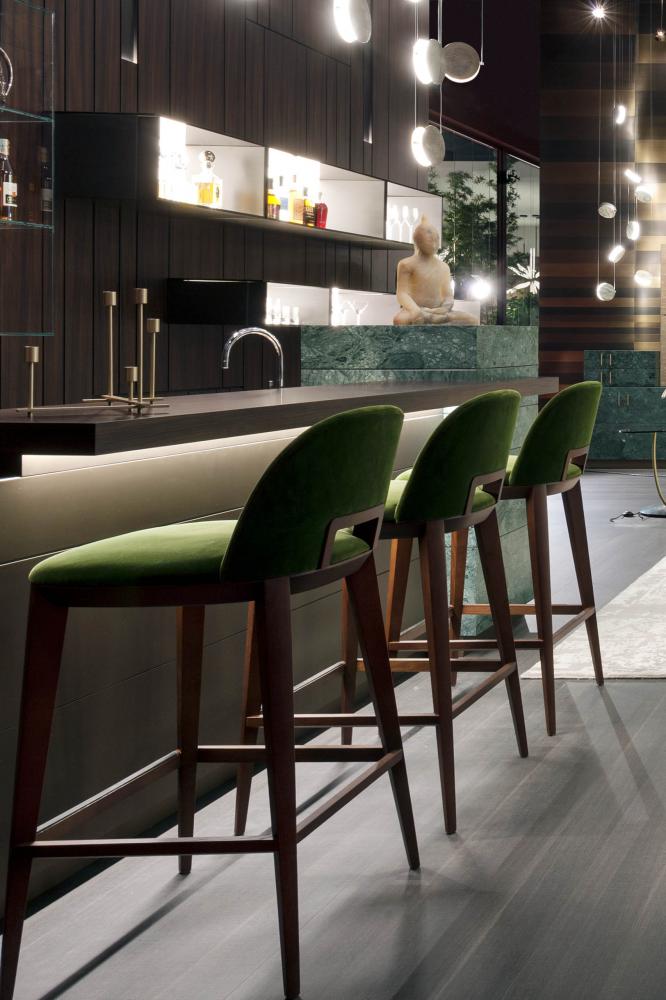
MATERIA Collection’s bar stools are defined in part by curved backrests, and that detail is more important than it may first appear. A curved back does not merely soften the visual line of the stool. It also responds better to the human body, creating support that feels more natural than a flat or overly rigid backrest. This helps the user maintain a relaxed posture and reduces fatigue during longer sitting periods.
The most important factors to consider before buying
The best luxury stools are chosen through a balance of measurement, comfort, performance, and design compatibility. Buyers who focus only on appearance often overlook the practical factors that determine whether a stool will actually enhance the space over time.
Height and proportion
The first consideration is always the relationship between seat height and countertop height. Even the most beautiful stool will fail if it is proportionally wrong. But proportion goes beyond height alone. Width, depth, back height, and frame thickness all affect how the stool reads within the room.
A stool should feel in scale with the island and with the room overall. If it is too heavy, it can overwhelm the composition. If it is too slight, it may look insubstantial against a large stone island or richly detailed kitchen. Luxury interiors depend on visual confidence, and that confidence comes from proportion that feels deliberate.
When evaluating proportion, buyers should consider:
- seat height in relation to the counter or bar
- total stool width across the planned seating run
- depth in relation to walkway clearance
- back height in relation to the island massing
- visual weight of the frame and materials
The goal is not simply to make the stool fit, but to make it belong.
Comfort for real daily use
Luxury seating must perform beautifully in daily life, not only in photographs. That means comfort should be examined with seriousness. Bar stools and counter stools are often used more than expected, especially in open kitchens where people naturally gather.
Footrests make a major difference, particularly on taller stools. Seat depth influences whether the sitter feels balanced or unsupported. Back support changes how long a person can remain comfortably seated. Upholstery and cushioning affect softness, warmth, and the overall sense of hospitality. These elements should all be judged in relation to actual use.
A buyer should ask:
- will these stools be used for quick coffee or full meals
- will guests regularly sit here for long conversations
- is this a family kitchen with frequent daily use
- is the goal a more formal or more relaxed seating experience
- how much softness and support is appropriate for the room
In a truly luxurious environment, comfort is not optional. It is part of what gives the room its sense of generosity.
Material performance
Kitchens are active spaces, and even the most elegant stools are exposed to repeated contact, shifting movement, occasional spills, and everyday friction. Material performance therefore matters just as much as appearance.
Wood brings warmth but should be finished appropriately for use. Metal offers strength and crispness but should align with the room’s finish language. Upholstered surfaces add comfort but require consideration of wear, texture, and maintenance. A high-end stool should be chosen with both beauty and real-world durability in mind.
Key performance concerns include:
- resistance to spills and stains
- tolerance for repeated use
- durability of finish and structure
- visibility of scratches or wear
- ease of maintenance over time
A luxury purchase should align with lifestyle. The right stool is not just attractive on installation day. It continues to look and feel right after sustained use.
Style compatibility
A stool should never appear visually disconnected from the kitchen it serves. Whether the interior is modern, transitional, minimalist, or highly bespoke, the seating should reinforce the room’s overall design language.
This does not mean the stools must match every finish directly. In fact, subtle contrast often produces the most sophisticated result. But harmony matters more than trend-following. A stool that looks fashionable for a brief moment may age poorly if it does not belong to the architecture of the space.
Good style compatibility depends on:
- silhouette that suits the room’s level of formality
- materials that relate to nearby finishes
- proportions that align with the kitchen’s geometry
- detailing that supports the project’s design vocabulary
- timelessness rather than trend dependence
The best luxury interiors feel composed because every piece participates in the same visual conversation.
Number of stools and spacing
Spacing is one of the clearest indicators of whether a kitchen feels genuinely luxurious. Too many stools packed too tightly along an island can make the room feel crowded and far less refined. Good spacing creates comfort, breathing room, and visual order.
As a general guideline, each stool should have enough width to allow the sitter to move comfortably without competing with the person beside them. In many cases, allowing roughly 24 to 30 inches per stool works well, though exact needs depend on arm width, frame thickness, and whether the stool swivels or has a back.
Why spacing matters:
- it improves comfort during actual use
- it preserves the clean appearance of the island
- it prevents visual clutter
- it supports easier movement in and out of the seat
- it makes the kitchen feel more composed and expensive
Often, fewer stools with better proportion create a more luxurious impression than trying to maximize the number of seats. Restraint is part of refinement.
Customization and why it matters in luxury interiors
Customization is one of the clearest distinctions between ordinary furniture selection and true luxury furnishing. In high-end interiors, buyers are rarely looking for something that merely works well in general. They are looking for something that works precisely within a specific architectural setting, material palette, and lifestyle. This is why customization matters so much. It allows a piece to move from attractive to fully integrated.
The value of tailored finishes
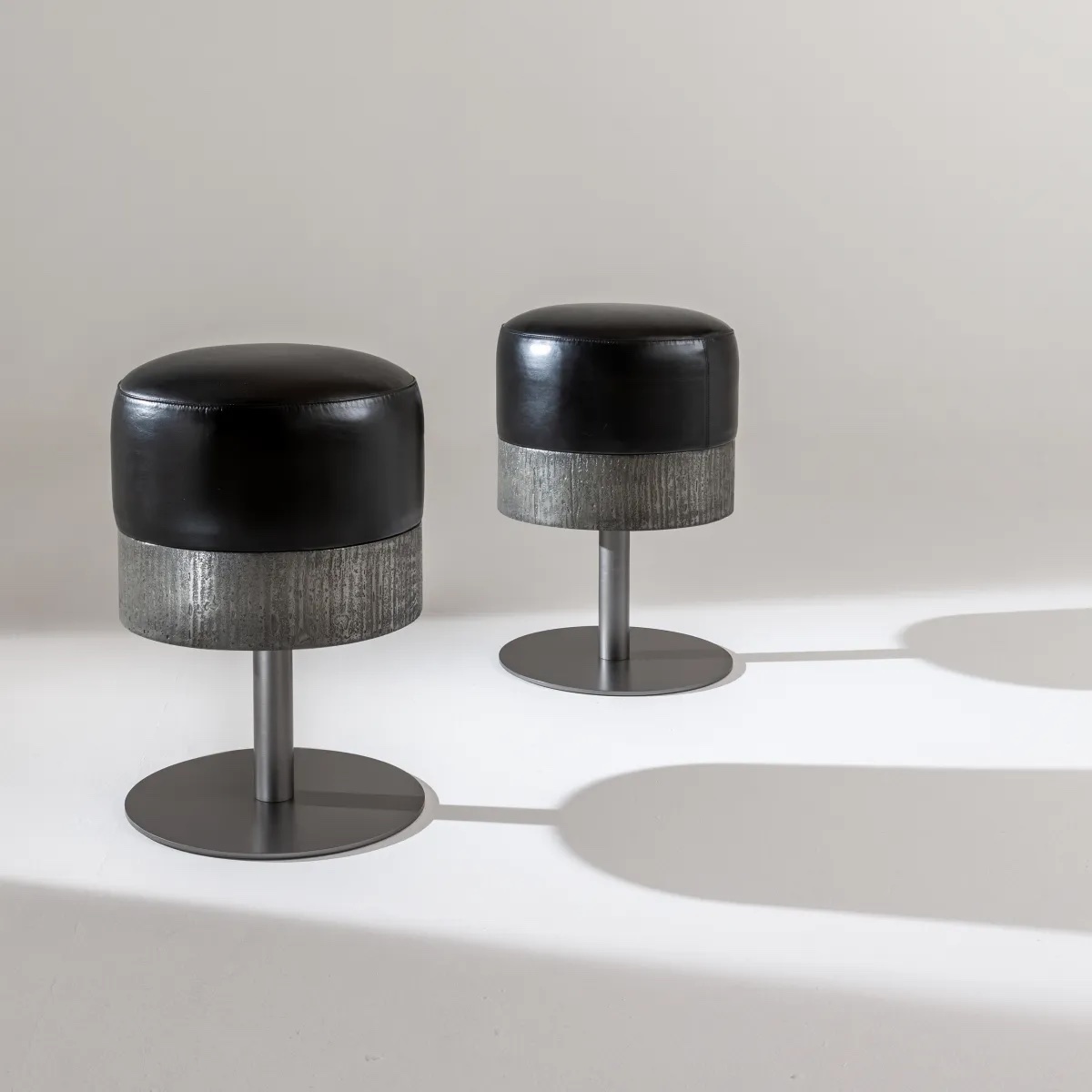
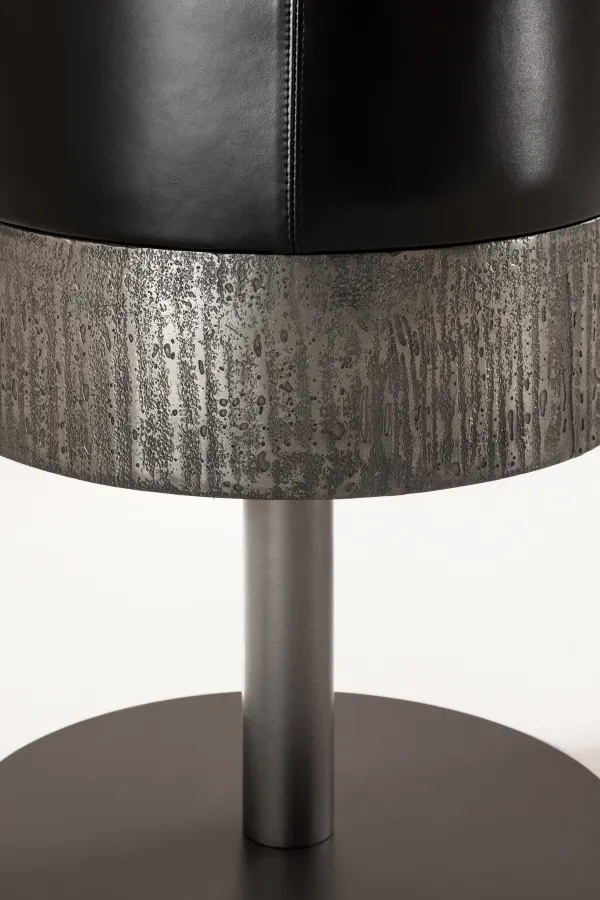
MATERIA Collection offers customization options, and that is especially important for bar stools and counter stools because these pieces sit in close relationship to some of the most visible finishes in the home. Cabinetry, flooring, countertops, metal accents, wall treatments, and millwork all interact with the seating around the island or bar. A tailored finish helps ensure that the stool feels intentionally connected to those elements rather than generically coordinated.
Custom finishes allow buyers to refine details such as tone, texture, sheen, and material relationships. This can make an enormous difference in kitchens where the palette is tightly controlled and every surface has been chosen with care.
Tailored finishes are especially valuable because they help buyers:
- coordinate stool finishes with cabinetry and millwork
- echo tones found in flooring or stone surfaces
- align metal elements with hardware or lighting
- create a softer or sharper contrast depending on the design goal
- achieve a more resolved and project-specific look
This is what elevates a project from beautiful to fully integrated. In a luxury environment, small finish mismatches can become surprisingly visible because the room is otherwise so carefully composed. Customization helps avoid that problem and instead allows the seating to participate naturally in the overall material story of the space.
Tailoring comfort to the user
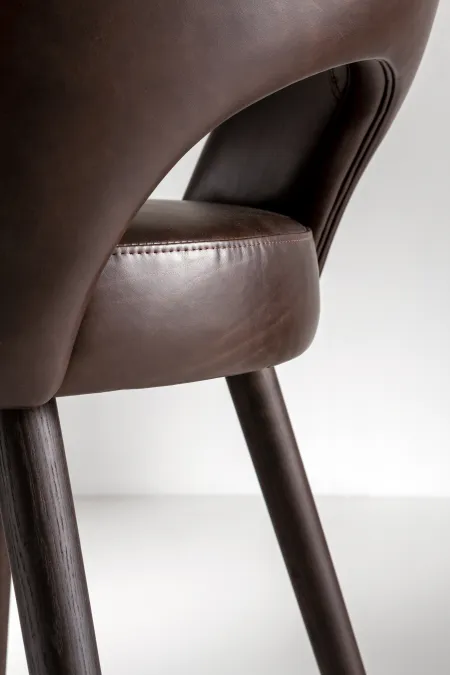
Luxury seating should never be selected based only on how it looks in a showroom or catalog image. The real test of a stool is how it feels when used day after day. This is where customization becomes even more meaningful, because comfort is not one-size-fits-all. Different buyers have different expectations for seat softness, upholstery texture, back support, and overall seating posture.
Some people want a firmer seat with crisp architectural structure. Others prefer more cushioning and a softer sitting experience, especially if the stools will be used for longer meals or social evenings. Some kitchens are used mainly for quick breakfast routines, while others function as full-scale entertaining environments. These differences matter, and customization helps align the seating with how the space will truly be lived in.
Comfort-focused customization may involve attention to:
- seat feel and cushioning preference
- upholstery material and tactile character
- preferred level of back support
- intended frequency and length of use
- suitability for family life, entertaining, or hospitality-style living
This is the difference between showroom appeal and long-term satisfaction. A stool may look striking at first glance, but true luxury requires that it continue to feel right over time. Tailoring the comfort profile to the user helps ensure that the experience of sitting is just as considered as the appearance of the piece.
Custom furniture as part of a larger design vision
One of the strongest reasons to view customization seriously is that luxury seating rarely exists in isolation. In MATERIA Collection’s world, bar stools are part of a much broader design ecosystem that includes wall treatments, kitchen solutions, lighting, luxury doors, office furniture, bathroom furniture, fine furniture, and custom millwork. This larger context matters because it reflects a whole-home design approach rather than a single-product mindset.
When bar stools are selected as part of a broader design vision, they become more effective. They can relate to custom cabinetry, align with a lighting concept, echo materials used in wall systems, or reinforce the tone of adjacent rooms. This gives the entire project more coherence and sophistication.
A whole-home concept allows seating to work in harmony with:
- kitchen cabinetry and countertops
- decorative wall panels and wall treatments
- luxury lighting choices
- custom millwork details
- doors, closets, and broader furniture selections
- adjacent office, dining, or lounge spaces
Luxury interiors are strongest when every piece belongs to the same design conversation. A stool selected through this broader lens contributes far more to the home than one chosen in isolation. It helps unify the project and supports the feeling that the interior has been shaped with intention from room to room.
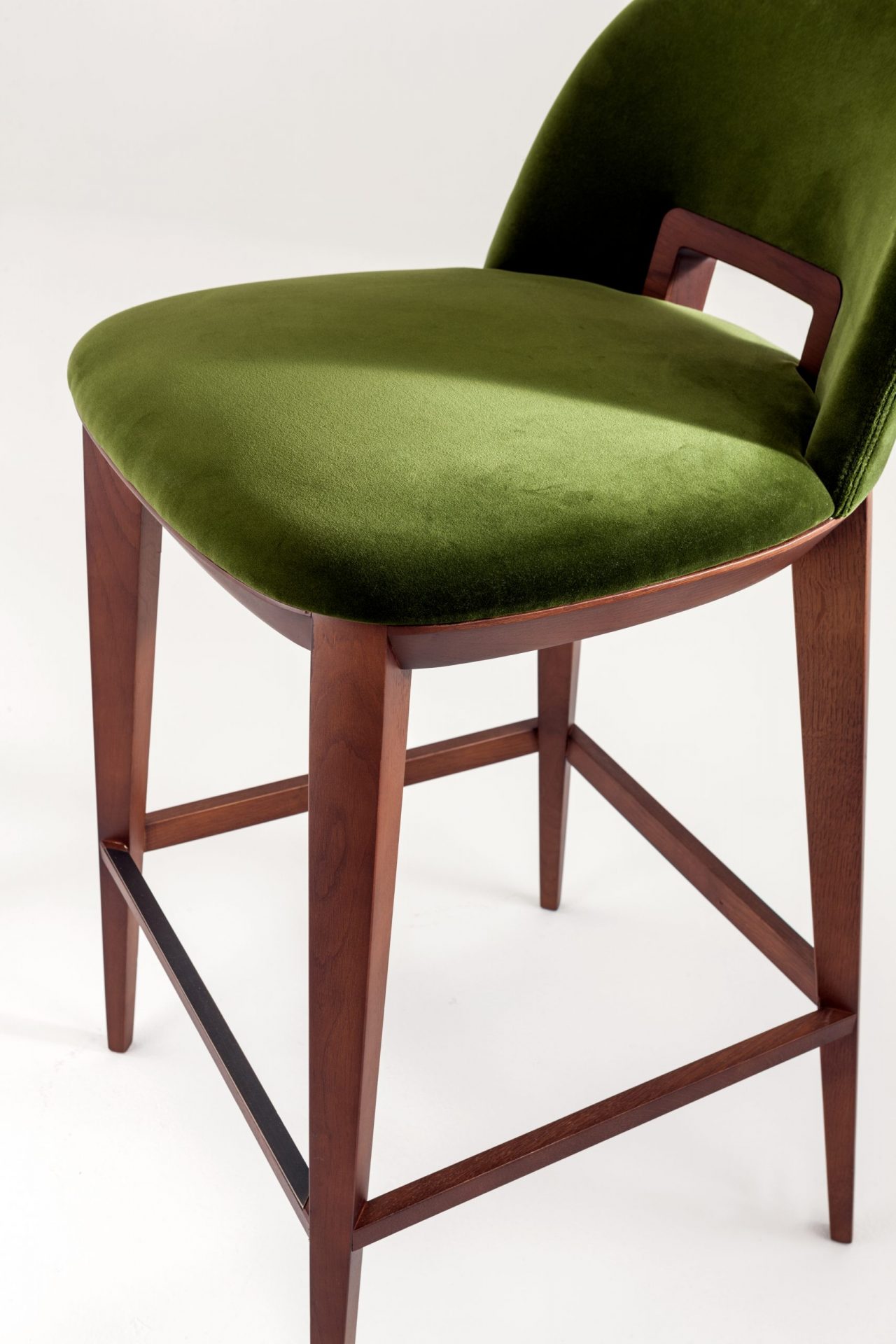
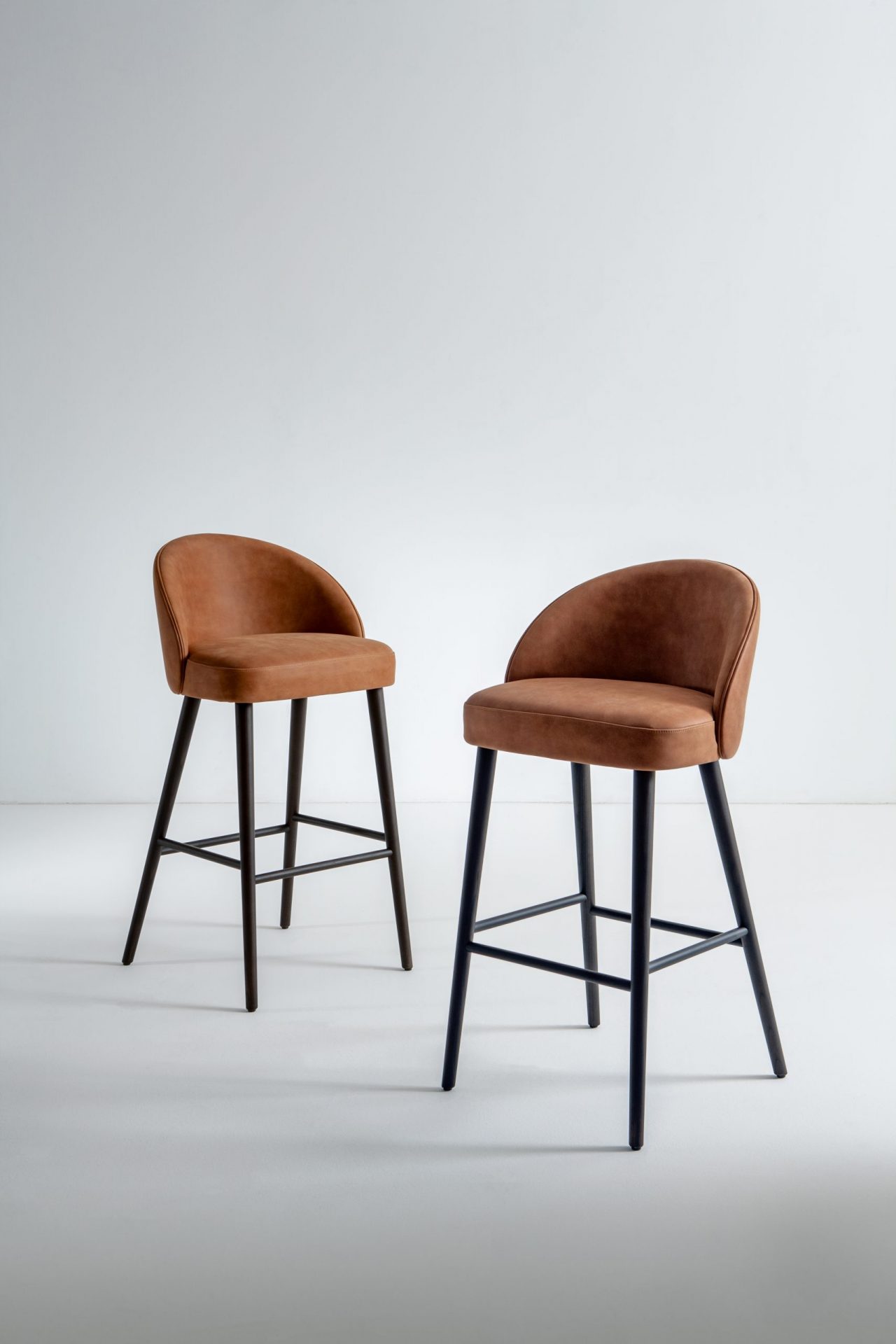
Featured design direction from MATERIA Collection
MATERIA Collection offers a design direction that speaks clearly to buyers seeking bar stools and counter stools with authentic luxury character. The emphasis is not on excess, but on thoughtful design, premium materials, and the kind of refinement that holds up over time.
Italian-designed seating with modern lines
The design language of MATERIA Collection’s seating is rooted in Italian design and the use of the finest materials. The collection is defined by modern lines and, in particular, by curved backrests that give the stools a distinctive contemporary presence.
This combination matters because it captures the essence of true luxury seating: elegance joined with usability. The line is refined, but not cold. The silhouette is sculptural, but still supportive. The material richness is visible, but never overstated.
This design approach offers several advantages:
- a modern appearance that remains timeless
- comfort enhanced by ergonomic shaping
- refined profiles suited to sophisticated interiors
- premium materials that elevate the seating experience
- a balance between architectural clarity and inviting form
The result is seating that feels composed and livable at the same time, which is exactly what buyers in luxury kitchens and hospitality spaces are often seeking.
A curated selection rather than mass-market furniture
One of the strongest values of a collection such as MATERIA’s is curation. In the luxury market, curation matters because buyers are not simply searching for more options. They are searching for better ones. A curated collection saves the client from having to sort through endless generic products and instead presents seating with a clear point of view.
This distinguishes MATERIA Collection from mass-market furniture retailers. Generic retailers often prioritize volume and broad appeal. A curated luxury brand prioritizes design integrity, material quality, and project suitability.
For discerning buyers, that distinction is important because it means the collection is better aligned with:
- sophisticated residential interiors
- designer-led kitchen projects
- boutique hospitality spaces
- custom homes and high-end apartments
- the needs of architects, designers, and developers
A curated collection suggests confidence, and confidence is essential in luxury furnishing. It tells the buyer that every piece has been selected because it contributes meaningfully to a refined environment.
Examples from the collection
Within MATERIA Collection’s bar stools offering, models such as the Amelie Stool, LV 102 Bar Stool, and LV101 Bar Stool illustrate the design sensibility of the collection. Without overstating unsupported technical details, these models can be understood as examples of the brand’s commitment to Italian design, elegant lines, and material sophistication.
They represent a direction rather than a formula. What matters is not only the specific name of the stool, but the broader qualities these pieces express:
- sculptural yet functional seating
- modern lines with luxury presence
- careful attention to silhouette
- suitability for refined residential and commercial interiors
- the kind of aesthetic consistency that supports a curated collection
These pieces help show that the collection is not built around generic seating categories, but around a distinct design attitude.
Why MATERIA Collection is well positioned for luxury furniture selection
Luxury furniture buyers often want more than a product. They want assurance that the brand behind the product understands architecture, craftsmanship, customization, and the real demands of high-end interiors. MATERIA Collection is especially well positioned in this regard because its identity is shaped by design heritage, bespoke experience, material sophistication, and a showroom presence that allows clients to evaluate quality directly.
A brand shaped by Italian design history
MATERIA Collection was founded from a deep connection to Italian design and its history. Inspired by that tradition, founder Yana Pojidaeva turned her passion into reality, opening MATERIA Collection in 2016 with a display of wall paneling, unique custom surfaces and furniture, kitchen cabinets, lighting, and doors.
This origin matters because it shows that the brand is not simply following surface-level trends. It was built from a design-led perspective that values craftsmanship, material expression, and integrated interior thinking. That type of foundation supports more enduring choices and a more coherent curatorial vision.
With over 15 years of combined experience in the design industry behind the showroom presentation and project approach, the brand reflects a commitment to timeless design values rather than short-lived fashion. For buyers of luxury seating, this offers confidence that the pieces are selected within a broader culture of design understanding.
Experience in bespoke and international projects
MATERIA Collection’s experience extends well beyond standard residential furnishing. The brand works with prominent designers on important bespoke projects around the world, serving private residences, houses, luxury apartments, refined restaurants, corporate offices, and boutiques.
That range is significant because it shows the brand’s ability to operate across multiple luxury contexts, each with different technical and aesthetic needs. A stool selected for a private residence is evaluated differently from one selected for a commercial project, and a brand with bespoke experience understands those differences.
This project background demonstrates strength in:
- custom furnishings for high-end residences
- bespoke solutions for apartments and houses
- refined hospitality and restaurant projects
- corporate and boutique environments
- international collaboration with design professionals
For a buyer, this means the bar stool is part of a much larger design capability, not an isolated product category.
Materials, finishes, and craftsmanship beyond standard retail
One of the clearest signs of a true luxury furnishing brand is its relationship to materials and finishes. MATERIA Collection’s work includes exotic woods, natural stone, metals, artisan finishes, and applied pattern overlays, all executed with precision and skillful installation.
This matters because it places the bar stools within a larger culture of craftsmanship. Even though a stool is a smaller-scale piece compared with a custom kitchen or wall system, it still belongs to the same standard of material selection and detailing. That context elevates the meaning of the seating.
Rather than viewing stools as basic accessories, buyers can understand them as part of a broader design philosophy shaped by:
- artisan finishes
- natural and premium materials
- careful detailing
- bespoke thinking
- high standards of execution
This is what separates a truly luxury offer from standard retail furniture that may appear polished at first glance but lacks depth in material culture and craftsmanship.
Showrooms in Miami and New York City
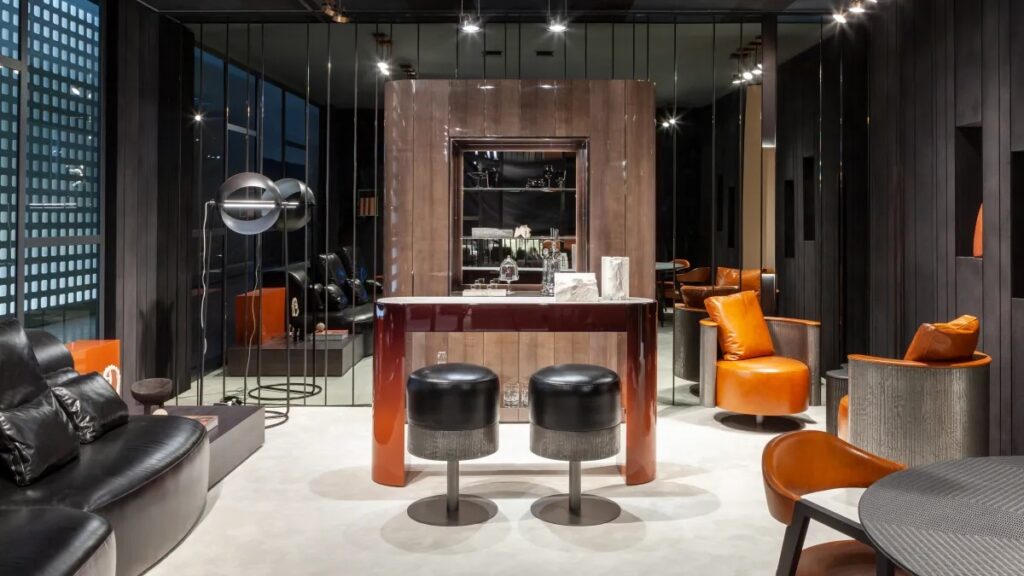
For many luxury buyers, seeing a piece in person remains invaluable. MATERIA Collection invites clients to explore its Italian-designed bar stools at its Miami and New York City locations, which gives buyers the opportunity to assess comfort, finish quality, and design compatibility directly.
Showrooms matter because photographs can only reveal so much. In person, clients can better understand:
- the true texture and tone of finishes
- the quality of upholstery and detailing
- how supportive the stool feels when seated
- whether proportions suit their project vision
- how materials interact under real lighting conditions
For designers, developers, and homeowners alike, these showrooms provide a setting where selection becomes more informed and more precise. In luxury furnishing, that direct experience is often what transforms uncertainty into confidence.
Frequently Asked Questions - Italian Bar Stools & Counter Stools
What is the difference between a bar stool and a counter stool?
The main difference is height. Counter stools are designed for counters that are usually around 36 inches high and typically have seat heights of about 24 to 27 inches. Bar stools are designed for taller bar-height surfaces, usually around 40 to 42 inches high, and generally have seat heights of about 28 to 32 inches. Choosing the correct type ensures proper legroom, comfort, and visual proportion.
How do I know what stool height I need for my kitchen island?
Measure from the floor to the underside of your countertop, then allow roughly 10 to 12 inches between the seat and the underside of the surface. This helps create comfortable clearance for the legs and supports a natural seated posture. It is also important to check width and depth so the stool fits the island and surrounding circulation properly.
Are upholstered bar stools practical for kitchens?
Yes, upholstered bar stools can be very practical for kitchens when the material and construction are chosen carefully. Upholstery adds comfort, softness, and a more welcoming feel, especially in spaces used for long meals or entertaining. The key is to select upholstery suited to your lifestyle, maintenance expectations, and level of daily use.
What makes Italian bar stools a luxury choice?
Italian bar stools are often considered a luxury choice because they combine refined design, premium materials, craftsmanship, and ergonomic attention in a way that feels both elegant and livable. Their silhouettes tend to be highly considered, their materials more sophisticated, and their overall presence more architectural than standard seating. They often function as both practical furniture and sculptural design elements.
Are these stools suitable for commercial spaces as well as homes?
Yes, MATERIA Collection’s bar stools are suitable for both residential and commercial spaces. Their design approach, material quality, and refined appearance make them appropriate for luxury kitchens, home bars, restaurants, lounges, private clubs, and boutique developments. In commercial settings, durability, comfort, and brand atmosphere all become especially important, and well-designed stools help support all three.