What Is Luxury Millwork for Hospitality?
Definition of millwork in a hospitality context
In architectural terms, millwork covers a broad family of elements fabricated in a mill-traditionally from wood, but today often combined with metal, glass, stone, and advanced composites. In hospitality projects, millwork is everywhere guests look and touch. It is the carefully detailed skin that transforms raw structure into an immersive, branded experience.
At its core, hospitality millwork includes:
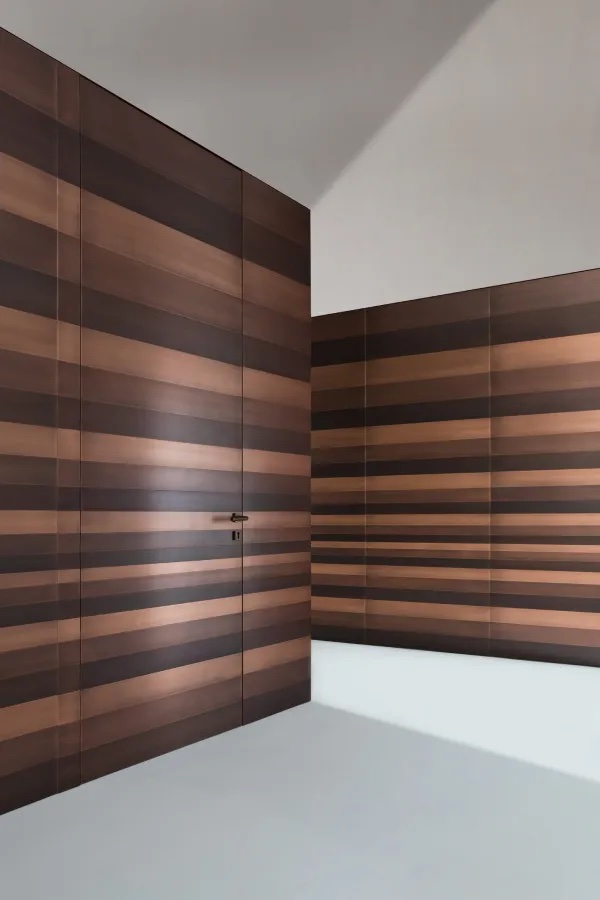
Doors and door surrounds
Wall paneling and boiserie
Baseboards, trims, and moldings
Reception desks, concierge counters, host stands and bars
Built-in cabinetry and shelving systems
Integrated seating niches, banquettes, and headboard walls
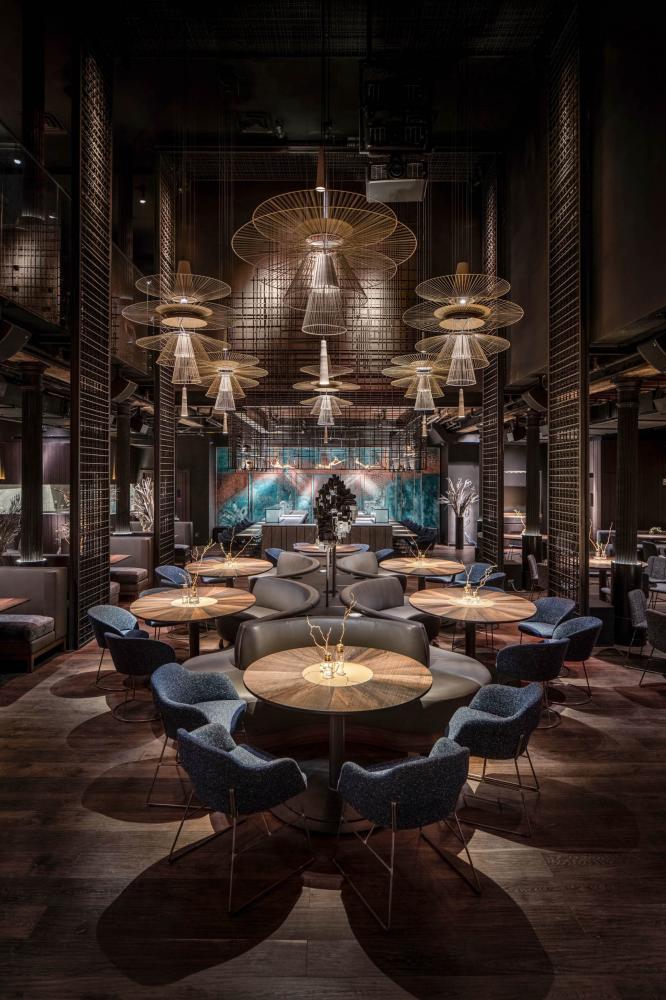
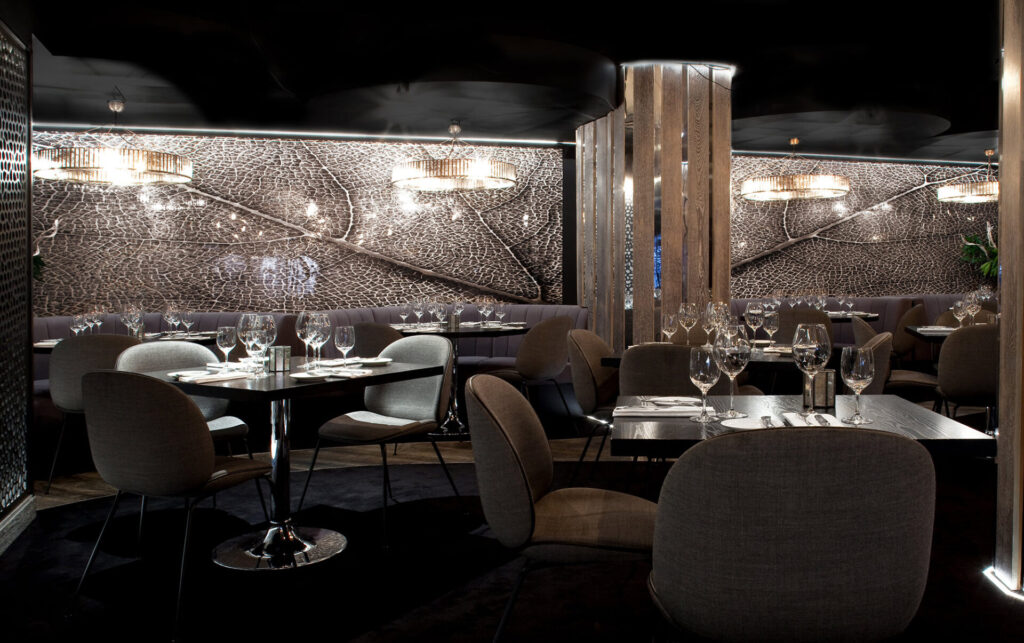
In a hotel, for example, millwork might appear as a continuous panel system running from the reception wall into the lobby bar, flowing around structural columns, and then re-appearing as corridor paneling and guest room headboards. In a restaurant, millwork becomes the expressive facade of the bar, the rhythm of wall panels along the dining room, or the sculptural form of a semi-enclosed private dining area.
Decorative vs functional millwork in hospitality
To design effectively, it helps to distinguish between two intertwined layers:
1. Decorative millwork
This is the storytelling surface-the part guests notice first.
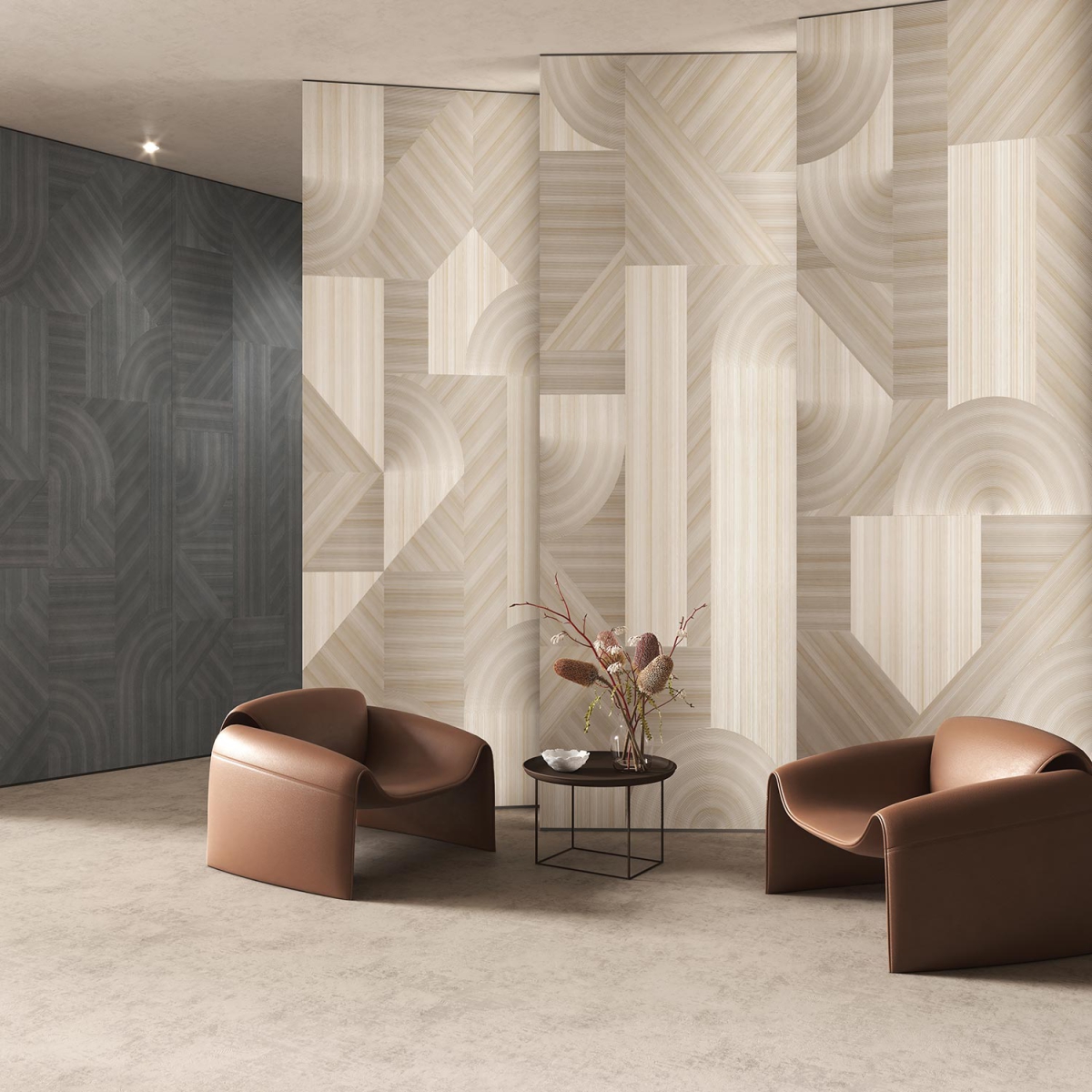
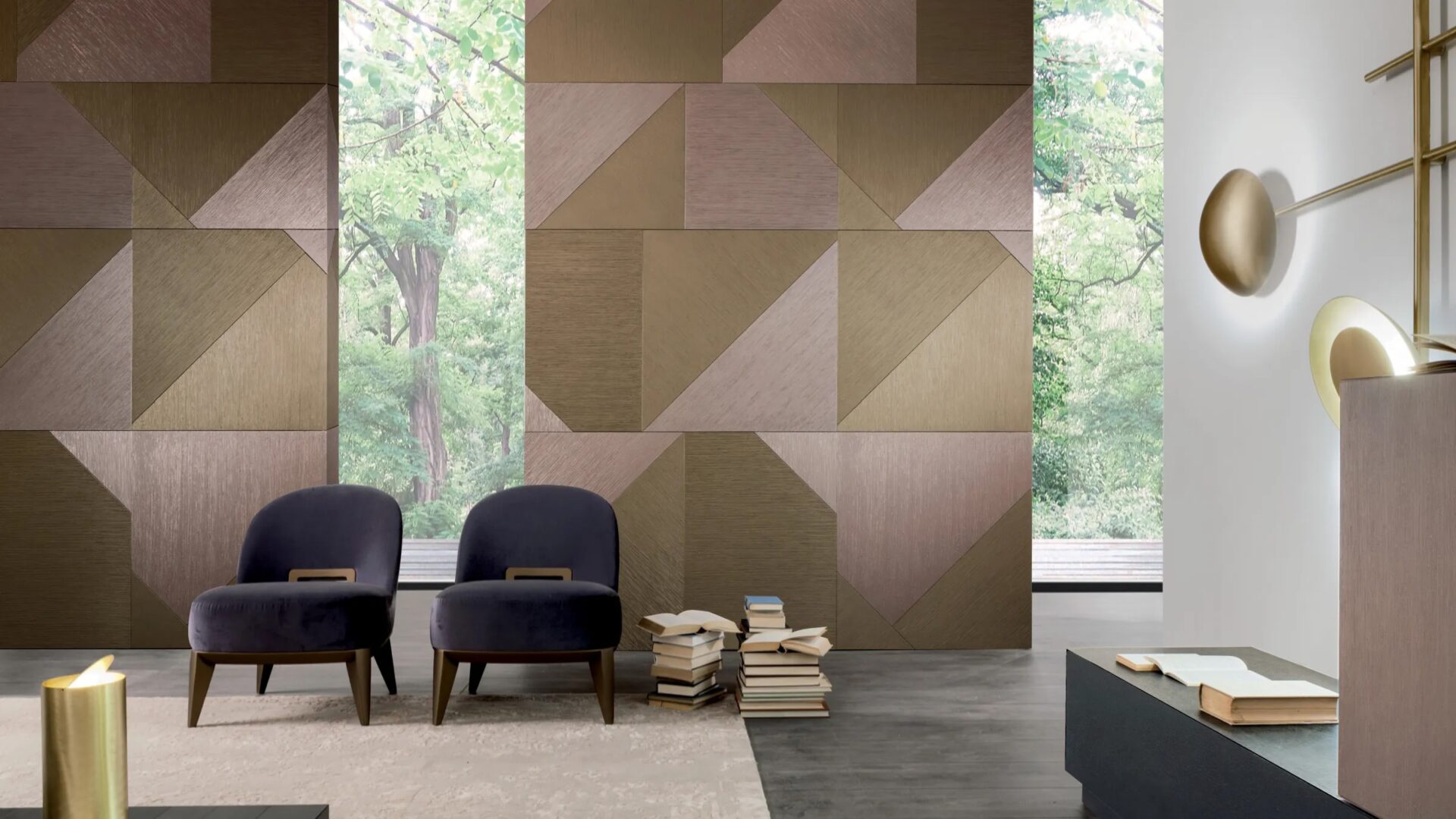
Feature walls in lobbies, bars, and restaurants using structured panels such as MAXIMA, STARS, LINE, BAMBOO, or DUNE.
Boiserie and decorative patterns that add depth, texture, and light play to corridors and lift lobbies.
Ceiling treatments and statement niches that frame artwork, brand elements, or views.
2. Functional millwork
This is the operational backbone that keeps the property running smoothly.
Reception desks with integrated storage, cable management, and ADA-compliant counters.
Back bars and bottle displays that combine refrigeration, storage, and lighting.
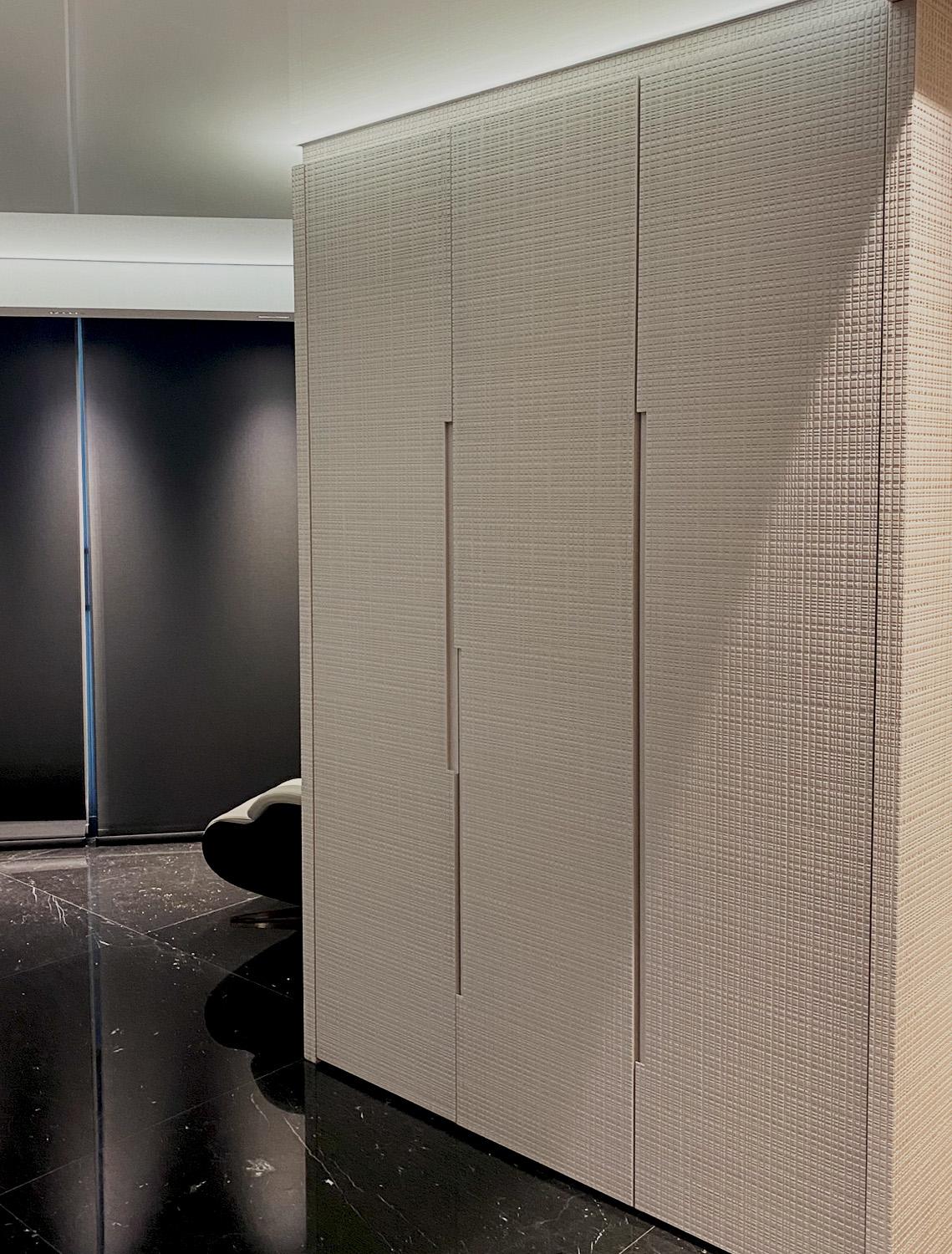
Wardrobes, mini-bar units, and luggage benches integrated into guest room walls.
Built-in banquettes with hidden storage, coat niches, and service stations in F&B outlets.
In well-resolved Luxury Millwork for Hospitality, these two layers are not separated. Decorative wall systems conceal acoustic treatments and storage; functional cabinets are elevated with sophisticated Italian finishes.

Millwork vs. casework: why the difference matters for hotels and restaurants
What is casework?
Casework refers to “box-like” elements: pre-built or custom cabinets and storage units. In hospitality, typical casework includes:
Wardrobes and closets in guest rooms and suites
Bathroom vanities and under-sink cabinets
Mini-bar units and in-room kitchenettes
Service stations and sideboards in restaurants
Back-of-house storage systems and staff lockers
Casework is primarily about organization, storage, and hygiene. It must be durable, easy to clean, and carefully dimensioned to equipment and housekeeping requirements.
How millwork and casework work together in hospitality
In a hotel or restaurant, you rarely specify one without the other:
Millwork provides the architectural framework: wall systems, trims, portals, and integrated features that define the overall look and feel.
Casework provides the internal logic: the cabinetry that makes rooms, bars, and back-of-house spaces truly usable.
For example, a guest room headboard wall might be conceived as a millwork composition: a continuous panel system with integrated lighting, nightstands, and vertical reveals. Within this composition sit casework components: bedside drawers, a wardrobe block, a mini-bar cabinet. In a restaurant, a sculptural bar front is crafted as expressive millwork, while the fridges, drawers, and storage compartments behind it are carefully designed casework.


Custom Millwork vs Standard Fixtures in Hospitality Projects
Custom millwork starts from the narrative and works backwards toward the object.
A reception desk is not just a counter; it becomes a sculpted volume that introduces the brand’s geometry, materials, and light language from the first second.
A bar front is not just a vertical surface; it becomes a theatrical façade, perhaps articulated with MAXIMA or STARS wall panels, metal inlays, or ribbed wood that catches light in the evening.
Wall panel compositions are not merely coverings; they become the architectural rhythm of the room, guiding the eye and shaping how guests move and gather.
Built-in banquettes are designed for the way people actually occupy the room: how close they sit, how they turn to see a stage or DJ booth, how service flows between tables.
Because custom millwork can follow curved walls, respond to structural constraints, integrate air diffusers and lighting, and conceal technical equipment, it enables experiences that would be impossible with standard, freestanding pieces. This is precisely why Luxury Millwork for Hospitality is a strategic tool rather than a decorative afterthought.
Quality, durability, and return on investment
From an owner’s perspective, millwork is a capital investment that must perform over many years in high-traffic, demanding conditions. Lobbies, corridors, restaurants, and clubs are exposed to constant wear: luggage bumps into wall panels; chairs knock against bar fronts; guests touch door pulls and handrails thousands of times each week.
Cheaper, mass-produced fixtures often reveal their limitations very quickly. Finishes chip at corners, laminates peel, edges swell with humidity, and poorly engineered joints begin to separate. The result is costly:
Frequent repairs and replacements disrupt operations.
Visual degradation undermines the perception of quality and rates.
Patching and “quick fixes” dilute the original design intent.
High-quality custom millwork, especially when developed with Italian manufacturers and MATERIA Collection, is built differently.
Materials are chosen for performance as well as beauty. Engineered cores, stable substrates, durable veneers, and robust finishes are specified with the exact use case in mind.
Details are engineered, not improvised. Corner conditions, access panels, and junctions between materials are resolved in shop drawings before anything is fabricated.
Installation is treated as a craft. Even the finest millwork can fail if installation is careless. Hospitality projects require installers who understand tight tolerances, integrated lighting, hidden fastenings, and site sequencing.
The result is millwork that maintains its integrity and appearance over time. While the initial investment may be higher than standard fixtures, the return on investment is realized through:
Longer replacement cycles.
Fewer maintenance interventions.
Higher perceived value, which supports premium room rates and F&B pricing.
In other words, durable artisan millwork is not a luxury indulgence; it is a financially sound decision for serious hospitality operators.

Originality and differentiation in a competitive market
The hospitality market is saturated. Guests often choose between multiple hotels or restaurants within a few blocks of each other, and they are constantly exposed to visual content online. In this environment, originality is not optional-it is the key to memorability.
Custom millwork is one of the most powerful tools for creating that originality. It is physically large, constantly visible, and intimately connected to how guests use a space. A distinctive wall system, a sculptural reception desk, a layered bar back, or a series of custom partitions can become the visual signature that:
Guests photograph and share online.
Travel writers and influencers highlight in their reviews.
Repeat visitors recognize immediately, strengthening brand loyalty.
For example, a lounge bar lined with LINE or BAMBOO wall panels, softly washed with integrated lighting, creates a recognizable backdrop that cannot be replicated by competitors purchasing from the same retail catalog. A hotel corridor clad in TERRE or ONDA wall systems feels like a curated gallery rather than a generic circulation space. A restaurant with custom banquettes and a bespoke bottle display reads as a complete concept, not a collection of standard pieces.
These custom details do more than decorate; they embed the brand into the architecture. The millwork becomes part of the identity, just as the logo, tone of voice, and service philosophy are. For hotels and F&B venues that compete on experience, this is priceless.
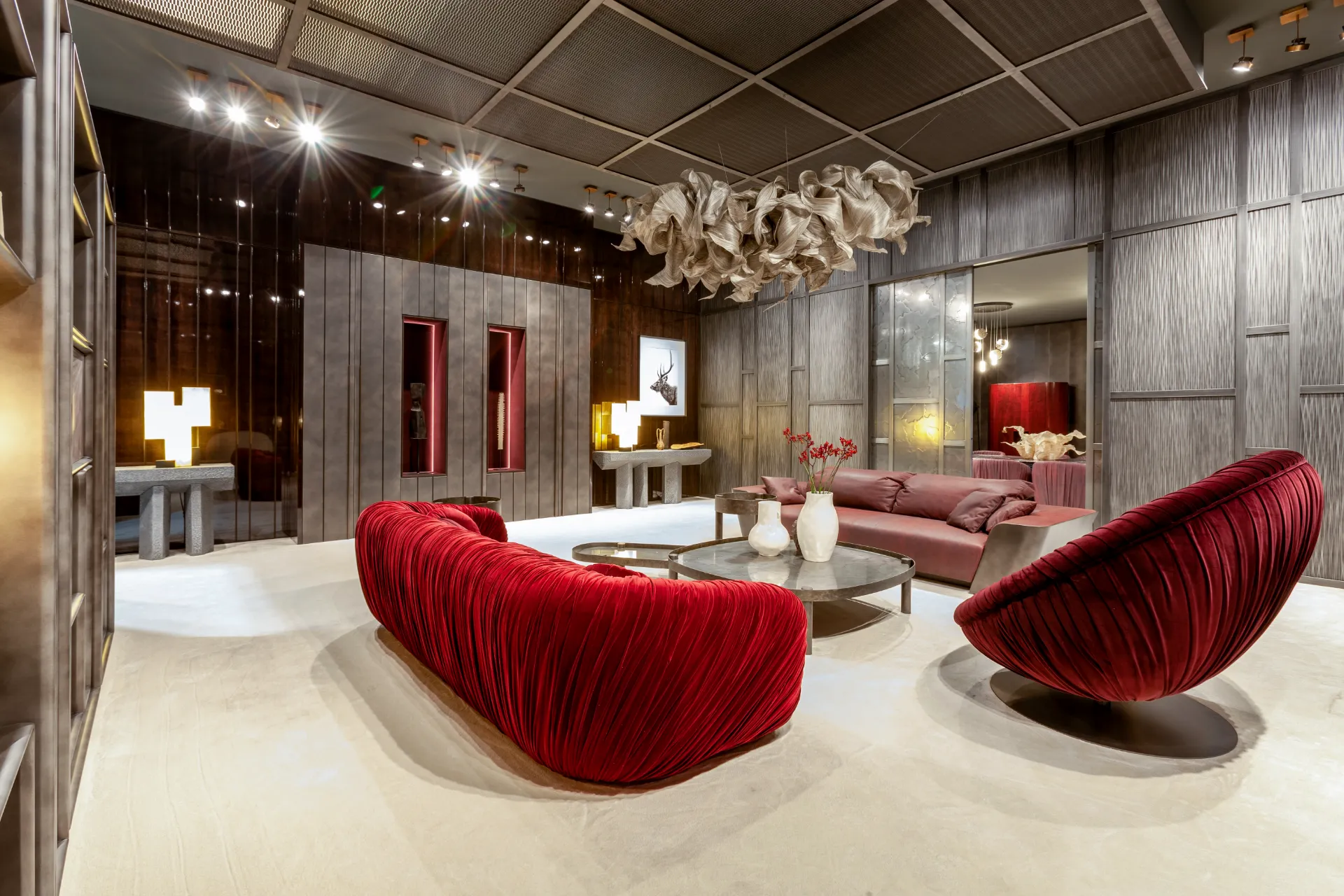
Key Applications of Luxury Millwork for Hotels, Restaurants, and Clubs


Modern Millwork Trends in Hospitality for 2026
Clean lines and minimalism with layered textures
One of the clearest shifts in contemporary hospitality design is the move away from heavy ornamentation toward compositions that feel calm, edited, and precise. Yet “minimal” no longer means empty or cold. In high-end Luxury Millwork for Hospitality, minimalism is enriched by carefully layered textures, subtle reliefs, and sophisticated material contrasts.
Instead of carved moldings and ornate profiles, designers are working with:
Long, uninterrupted planes of wood or lacquer punctuated by rhythmic grooves or fluting.
Panel systems such as LINE, MAXIMA or BAMBOO that introduce depth through repeated patterns rather than applied decoration.
Quiet combinations of matte and satin surfaces that catch light differently across a wall or cabinet front.
The goal is to create spaces that feel visually uncluttered but far from sterile. A hotel lobby might use a restrained palette of pale wood, stone, and metal, but the wall panels have enough relief to generate shadows. A restaurant might avoid overt ornament, yet the bar front is articulated with subtle profiling and refined joints that speak to craftsmanship.
Customized statement ceilings and artful wall paneling
Walls and ceilings have become prime branding surfaces in the hospitality world. Rather than relying solely on loose furniture and decorative accessories to tell the story, designers now use architectural surfaces themselves as the canvas.
In lobbies and restaurants, ceilings once treated as a purely technical zone for sprinklers and HVAC are reimagined through millwork:
Linear wood slats echo the rhythm of wall panels and guide guests toward reception, the bar, or circulation nodes.
Sculptural ceiling elements pick up motifs from STARS, DUNE, or ONDA wall panels, creating a continuous envelope.
Integrated lighting is concealed within dropped millwork elements so that light appears to flow out of the ceiling rather than from visible fixtures.
Walls follow the same logic. Instead of a patchwork of art pieces hung on standard painted surfaces, designers use architectural wall panels to compose “artful” fields. The panel system itself becomes the artwork, punctuated by selected pieces of art, signage, or mirrors.
This approach is especially effective in hospitality because:
It creates memorable vistas that communicate the brand at a glance.
It makes large volumes feel intentional and human-scaled.
It offers a durable foundation that can later be refreshed with new furniture, art, or textiles without needing to replace the core millwork.
Integrated lighting and technology
In contemporary Luxury Millwork for Hospitality, lighting and technology are no longer “applied” after the fact. They are built into the millwork from the earliest design stages, which dramatically raises both perceived quality and day-to-day usability.
In wall panels, LED strips are concealed within rebates or behind profiles, creating lines of light that:
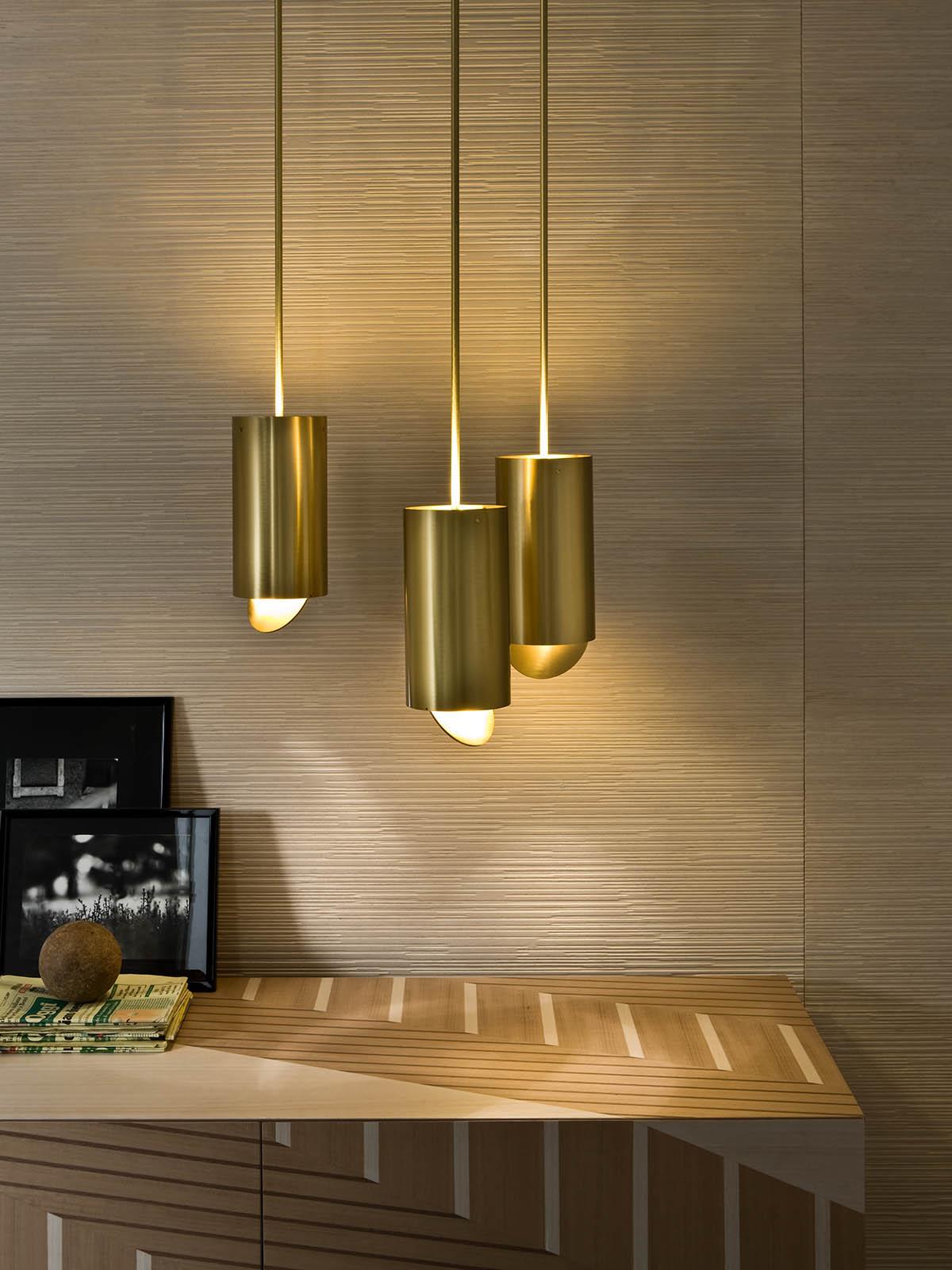
Gently wash textured panels such as LINE, BAMBOO, or DECOR, emphasizing their relief.
Define key architectural elements: the reception desk, the edge of a staircase, the perimeter of a niche.
Provide low-level orientation light in corridors and lift lobbies without glare.
In guest rooms and suites, wardrobes and cabinet systems integrate task lighting and convenience features:
Interior wardrobe lighting that switches on automatically when doors are opened.
Under-shelf lighting that illuminates luggage or folded clothing without casting harsh shadows.
Integrated power outlets and USB points within headboard walls, desks, and bedside niches.
This level of integration is easiest to achieve when millwork is custom-designed, engineered, and fabricated for the specific project, as it is in MATERIA’s Italian-driven approach.
Multi-functional built-ins and flexible spaces
Hotels, restaurants, and clubs increasingly need to adapt over time. A lobby may function as a co-working space during the day and a social lounge in the evening. A restaurant may host events, tastings, or private functions. Conference spaces may be reconfigured regularly. This has a direct impact on millwork design.
Rather than static, single-purpose elements, designers are relying on multi-functional built-ins and modular systems. With MATERIA’s Italian collections, this can take several forms:
Banquettes that integrate storage for cushions, tableware, or AV equipment beneath upholstered seating.
Wall units that transform from open shelving into closed storage, thanks to sliding or pivoting panels.
Modular systems such as the 40/40 Modular System or Symphony Modular System, which can be reconfigured to support different room layouts, from theater-style conferences to more intimate lounge setups.
In conference and event venues, a single millwork system might:
Hide retractable screens and projectors when not in use.
Provide integrated lighting and sound distribution.
Offer niches for display during brand events or pop-ups.
This versatility is especially valuable when renovation budgets are planned over a long horizon. By investing in well-designed, modular Luxury Millwork for Hospitality, operators gain the ability to adapt programming and revenue strategies without constantly rebuilding their core architecture.
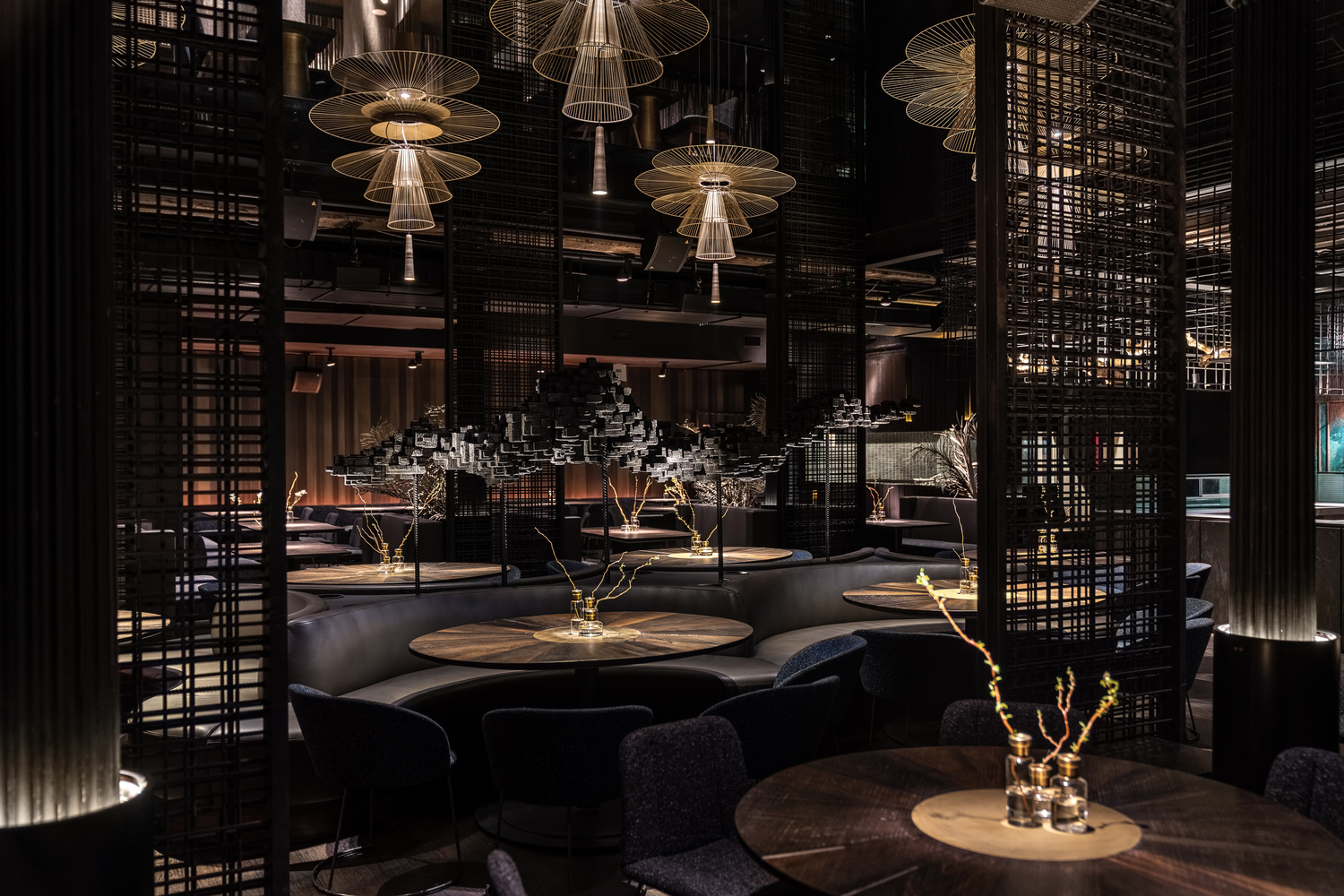
Buddha-Bar New York – Immersive Hospitality through Italian Millwork
Buddha-Bar New York stands as one of the most recognizable examples of immersive hospitality in the United States. Known for its theatrical ambiance, dramatic lighting, and Asian-inspired aesthetic, the project required a millwork and wall-treatment strategy capable of delivering visual impact on a grand scale while maintaining intimate, richly textured zones throughout the multi-level space.
The core challenge was to create an environment that felt immersive, cohesive, and sophisticated-not simply themed. Buddha-Bar’s identity depends on a sense of ritual, mystery, and sensory richness, all of which needed to be communicated through architectural materials rather than surface decoration alone. This required a millwork approach that could perform aesthetically, functionally, and operationally for a venue that accommodates hundreds of guests daily.
Millwork and wall treatments used
To articulate the complex atmosphere of Buddha-Bar New York, MATERIA Collection supplied a combination of some of Italy’s most advanced wall-panel systems, each chosen for its sculptural depth and ability to respond to different lighting conditions.
Key millwork and wall treatments included:
MAXIMA Wall Panels
Used to create expansive, dramatic feature walls with deep relief patterns. These panels provide significant shadow play, especially in environments with directional lighting. In Buddha-Bar, they served as key sculptural backdrops around the dining room and lounge zones, contributing to the enveloping mood.STARS Wall Panels
Selected for areas requiring a rhythmic, geometric pattern. The STARS collection helped define spatial transitions, creating a layered and visually dynamic envelope without overwhelming the architecture. These panels provided both texture and precision, reinforcing the project’s contemporary identity.LINE Wall Panels
Employed in circulation spaces and secondary walls where a more subtle, linear articulation was needed. LINE panels contribute continuity and calm, ensuring that decorative complexity in feature zones is balanced by quieter, refined surfaces elsewhere.
Beyond panel systems, MATERIA’s Italian partners fabricated multiple bespoke and personalized elements:
A custom bar front, combining structured relief surfaces with specialized lighting integrations.
Feature walls behind key dining and lounge areas, tailored to accommodate signage, lighting, and sculptural inserts.
Screening partitions that separate dining zones without visually closing the space, using combinations of wood, metal, and translucent materials.
Built-in cabinetry, including storage niches, service stations, and DJ-booth integrations that merge seamlessly with the wall-panel language.
Beyond Millwork: Complete Italian Interior Solutions for Hospitality by MATERIA
Fine furniture for lounges, lobbies, and guest rooms
In addition to architectural millwork, hospitality interiors require high-quality loose and built-in furniture. MATERIA Collection provides:
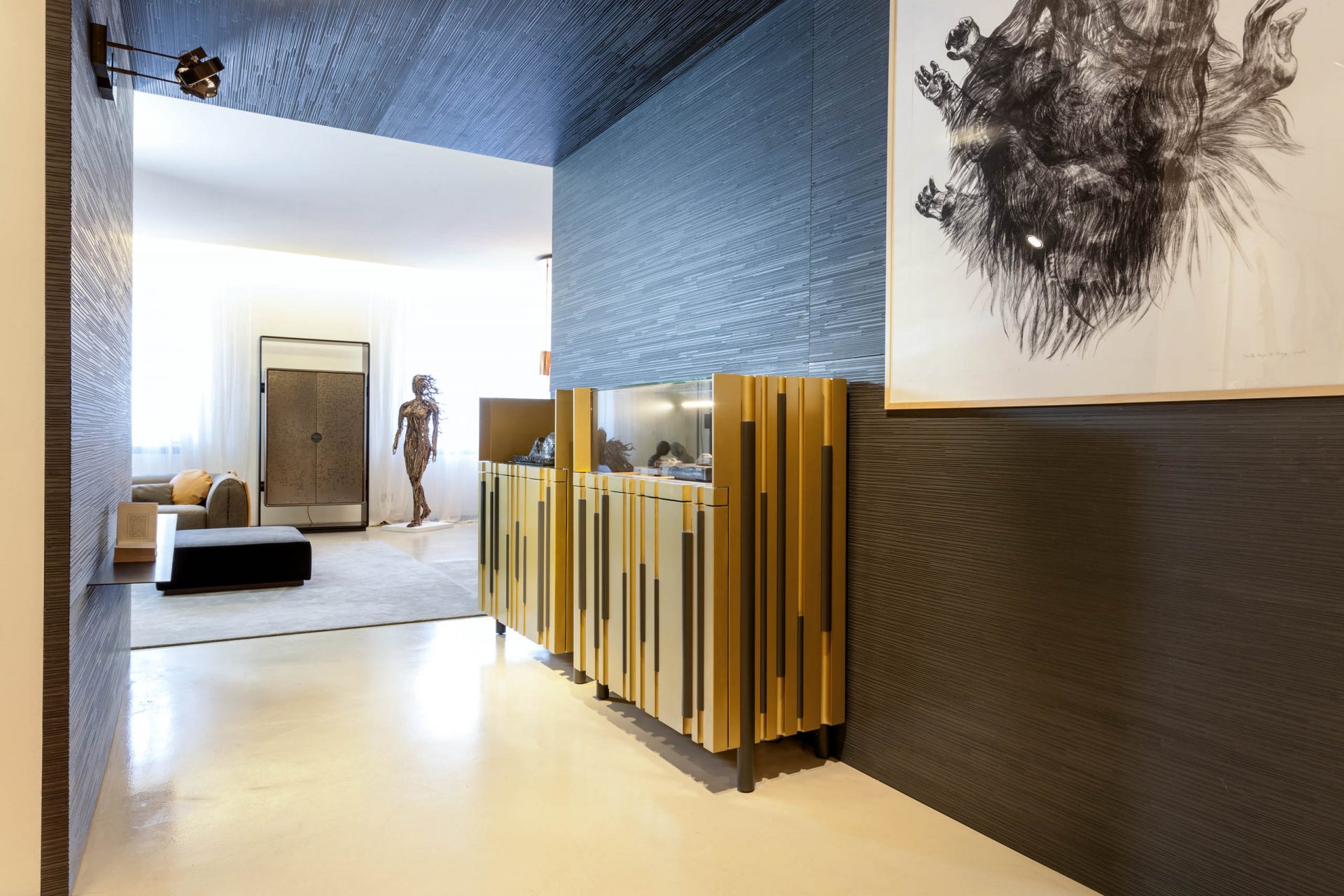
Sideboards and consoles for public spaces, often matching wall-panel textures or metal trims.
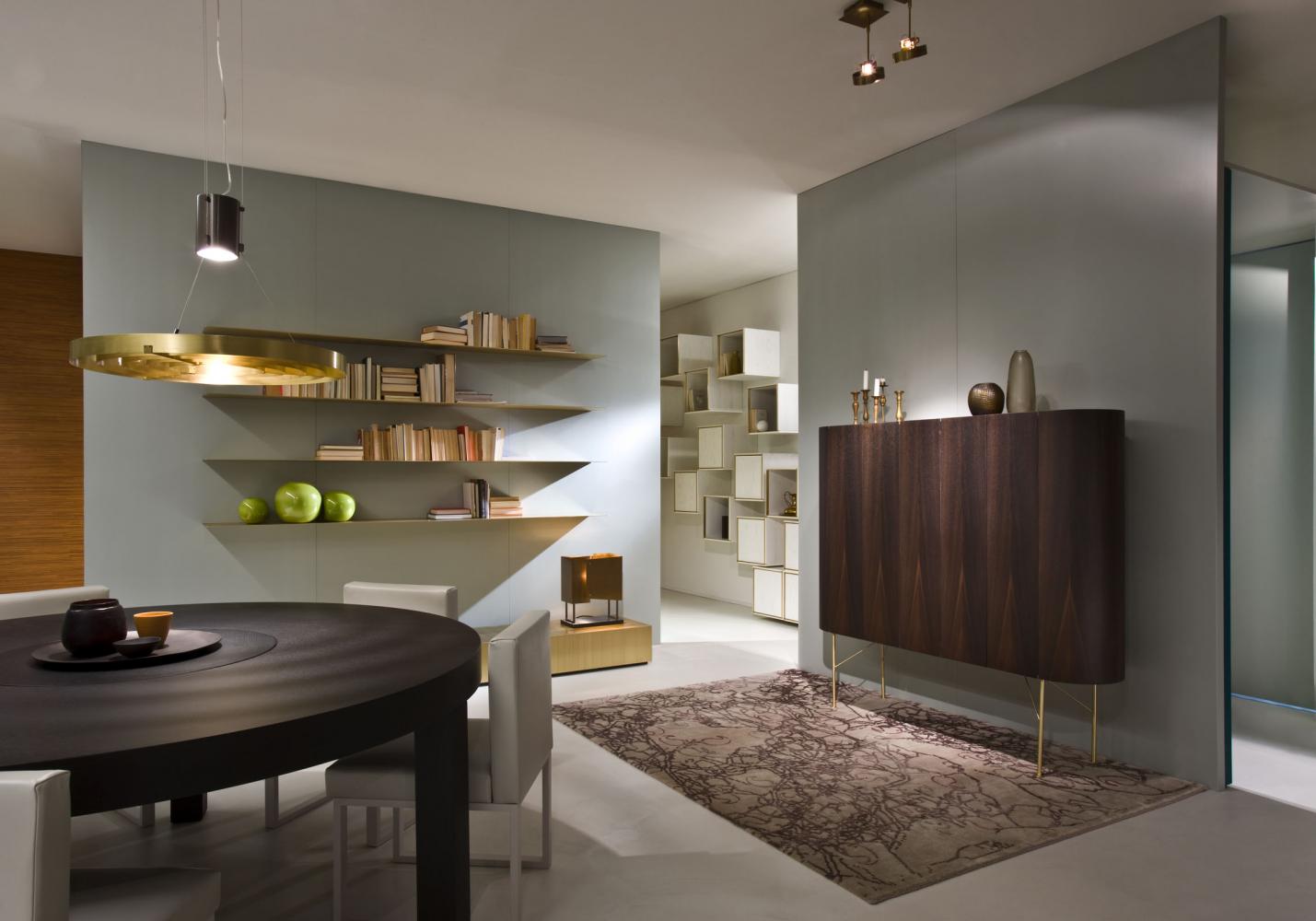
Wall units and shelving integrated into reception areas, lounges, and guest rooms.
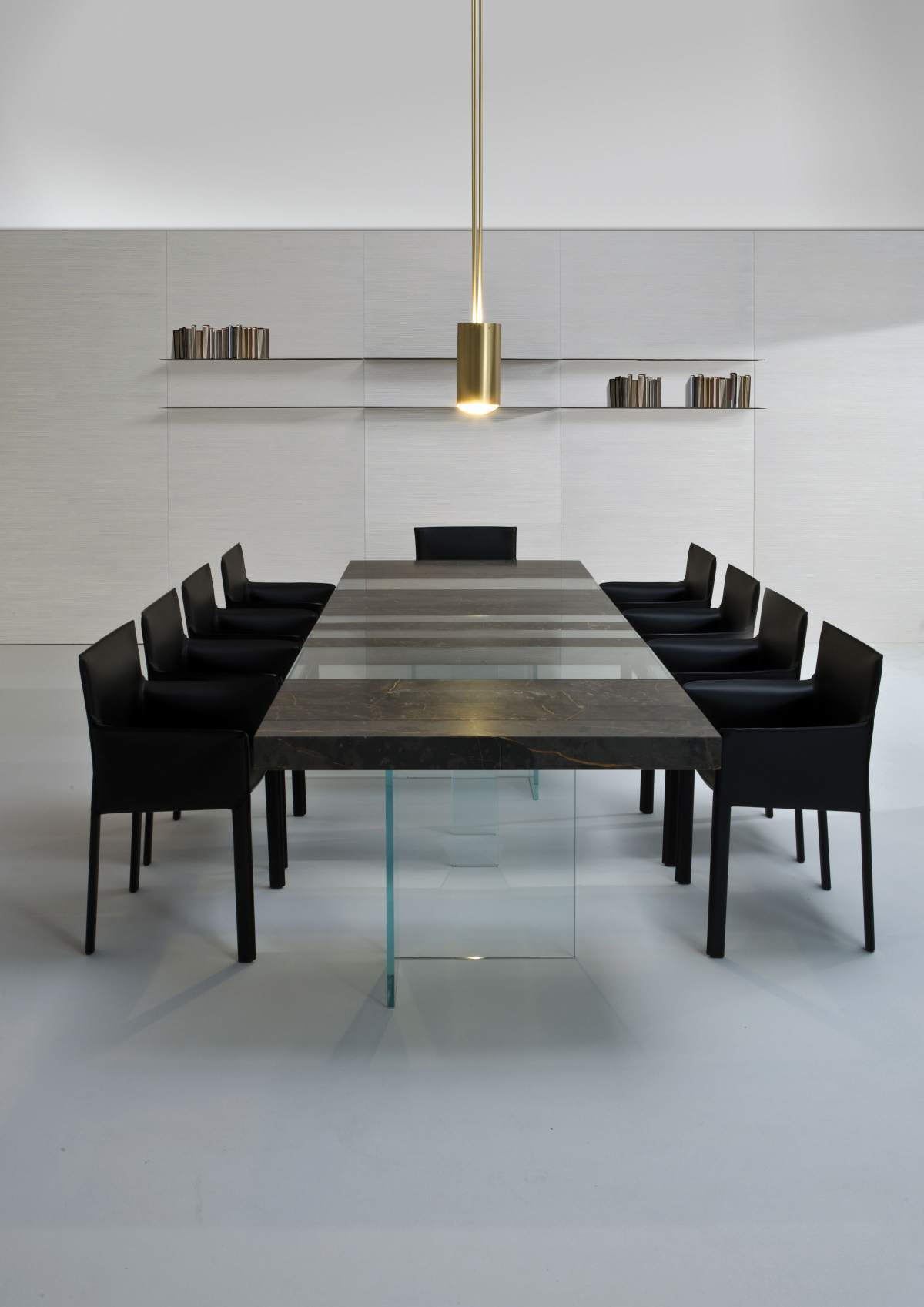
Dining tables, lounge seating, and armchairs crafted with Italian upholstery and joinery methods.
Custom pieces developed specifically for signature restaurants or branded lobby lounges.
Because these furniture elements come from the same Italian ecosystem as the millwork, they maintain consistent material tones, joinery details, and overall aesthetic coherence.
Luxury doors, kitchens, and bathrooms
For hospitality properties, doors and technical zones play a major role in establishing first impressions and maintaining operational efficiency.
Luxury interior and exterior doors (pivot, swing, sliding) provide sculptural entry points to rooms, suites, and private dining areas. These doors can integrate metal inlays, acoustic cores, and concealed hinges.
Modern kitchens support hotel suites, extended-stay rooms, and open show kitchens in restaurants, always with refined Italian finishes and fully integrated appliances.
Bathroom furniture – vanities, medicine cabinets, mirrors, and storage units-can be tailored to the hotel’s design language, ensuring durability and moisture resistance.
These elements make it possible to present the hotel as a unified design story rather than a collection of disparate components.
Office and back-of-house areas
While guest-facing areas receive the most design attention, hospitality operators know that back-of-house performance is essential for daily efficiency. MATERIA provides:
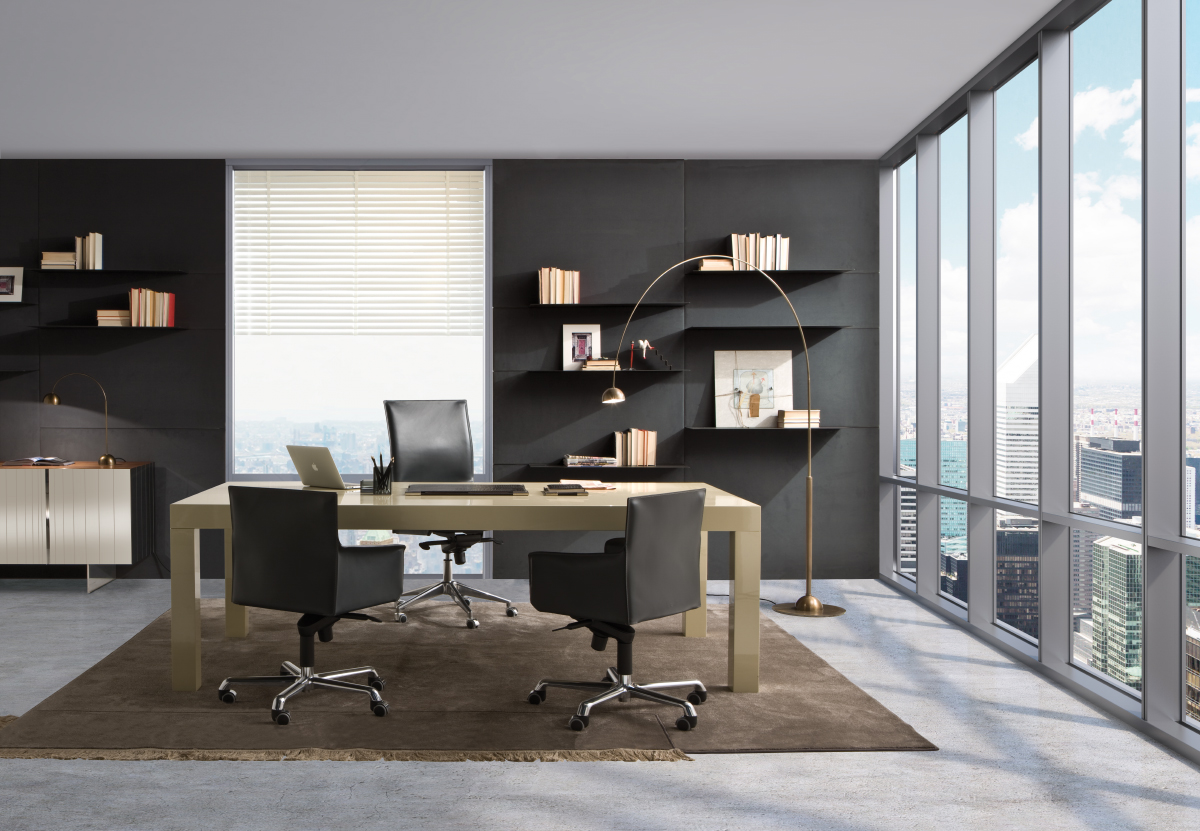
Office furniture for managers and administrative teams.
Meeting-room solutions for hotel conference floors.
Co-working style setups for hybrid hospitality concepts.
Durable storage systems for staff facilities and service areas.
These spaces benefit from the same Italian craftsmanship, ensuring reliability and longevity even in heavily used operational zones.
Working with MATERIA ensures that the project benefits not only from Italian craftsmanship, but also from a deeply collaborative, hospitality-focused approach.