

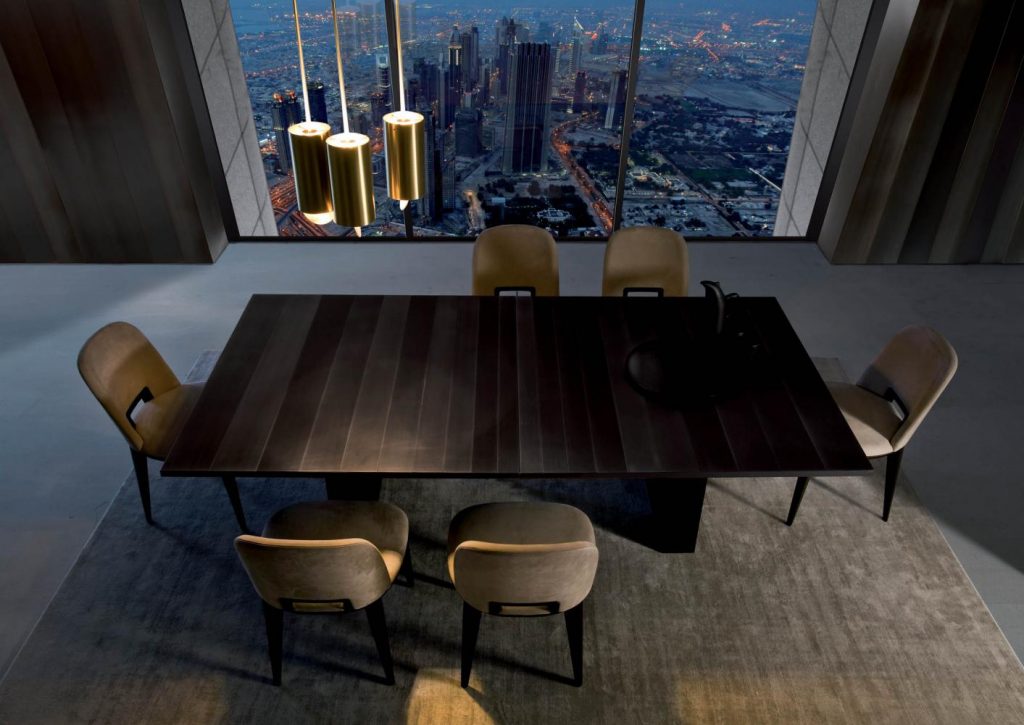
A dining table is not just a surface for serving meals; in a luxury interior, it becomes the architectural center of the dining room, shaping scale, material language, circulation, and atmosphere. In private residences, Miami waterfront homes, New York City penthouses, luxury apartments, and refined hospitality spaces, the right dining table must balance proportion, finish, craftsmanship, durability, and visual presence.
Materia Collection’s curated selection of luxury Italian dining tables brings together modern design and the Italian craftsmanship of Laurameroni.
What makes a luxury Italian dining table different?
A luxury Italian dining table is not defined only by price, scale, or the prestige of the name attached to it. Those elements may matter, but they are not enough. What truly separates a luxury Italian dining table from a standard dining table is the way every visible and structural decision feels intentional: the proportion of the top, the weight of the base, the quality of the finish, the relationship between materials, and the way the piece sits within the larger interior composition.
A table can be expensive and still feel awkward if it is too heavy for the room, too decorative for the architecture, or too generic for the surrounding furniture. A well-designed modern Italian dining table, on the other hand, has a quieter kind of authority. It does not need excessive ornament to feel important. It earns its presence through balance, craftsmanship, surface quality, and precision.
This is where Italian furniture design has a particular strength. Italian design often understands that luxury is not only about visual drama, but about proportion, restraint, and tactile refinement. The most successful dining tables feel sculptural without becoming impractical. They feel substantial without making the room feel crowded. They can be simple, but never plain.
Laurameroni’s role in this conversation is especially important. As seen throughout Laurameroni luxury Italian furniture, the brand is known for refined Italian craftsmanship, unique finishes, artisan surfaces, and contemporary furniture pieces that often feel closer to collectible design than standard furniture. That is why a designer dining table from this world is not simply a product placed in a room. It is part of a complete design language.
Best materials for modern Italian dining tables
Marble and natural stone dining tables
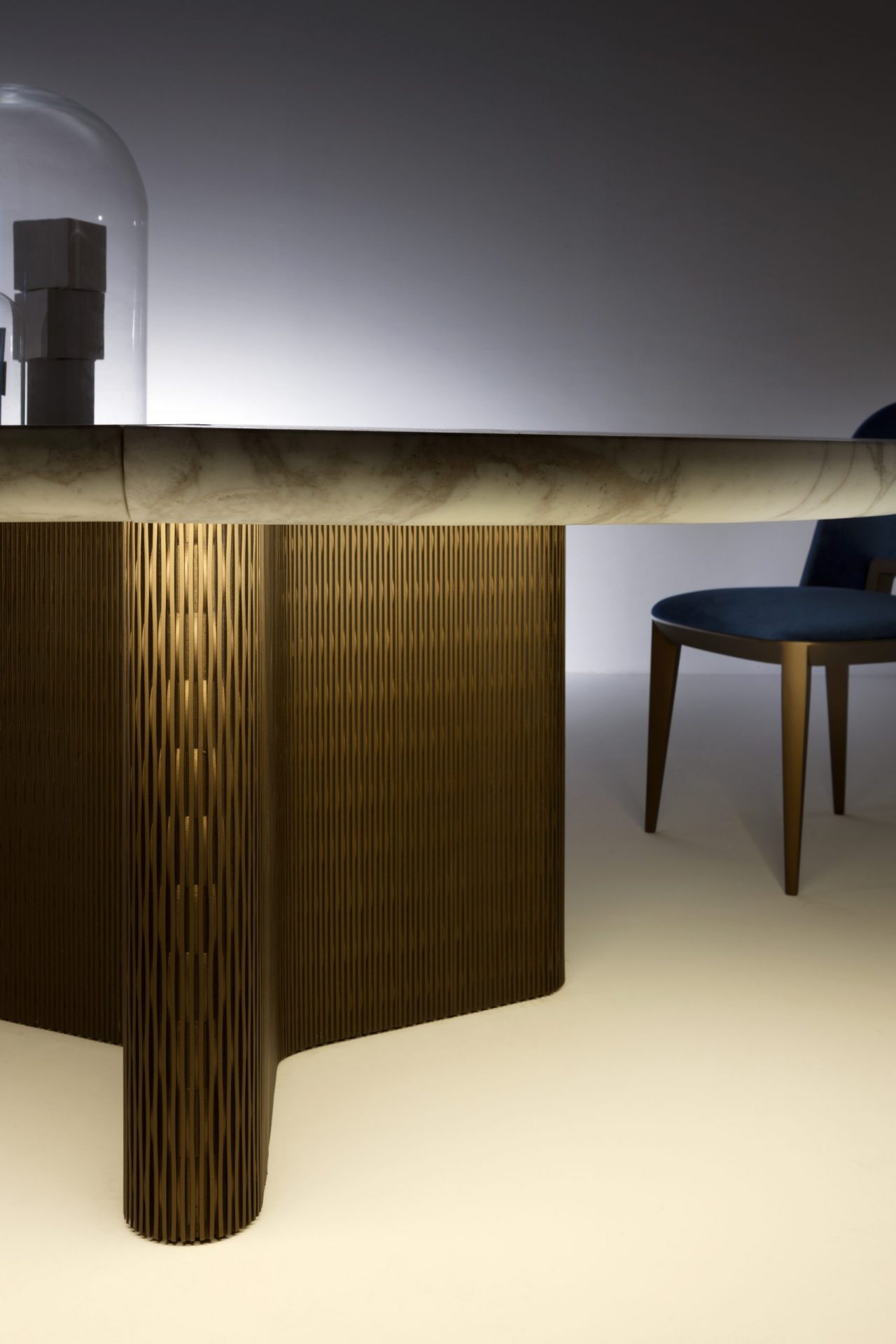
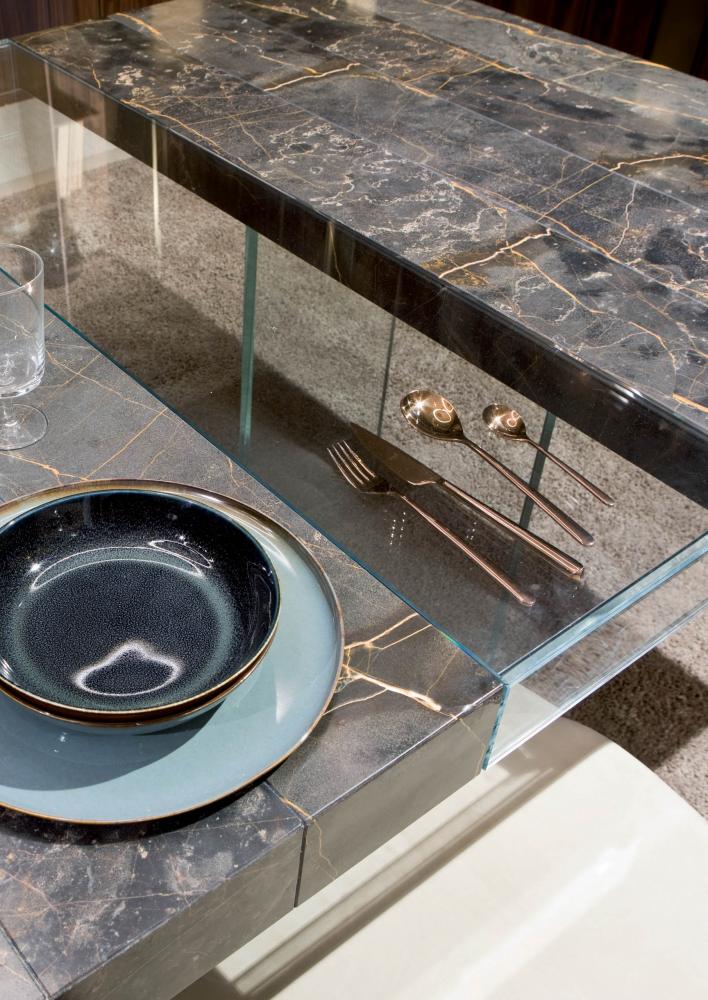
A marble dining table has an immediate sense of permanence. It gives the dining room a focal point before anything else is added. The veining, color movement, and natural variation make each surface feel unique, which is one reason marble and natural stone remain strongly associated with luxury dining rooms.
In a formal dining room, marble can create a dramatic center of gravity. In an open-plan residence, it can visually separate the dining zone from the kitchen and living area without needing walls. In a penthouse, waterfront home, or hospitality space, stone can give the room a gallery-like presence, especially when paired with refined lighting, upholstered chairs, and architectural wall surfaces.
The appeal of stone is not only visual. It has physical presence. It feels cool, dense, and substantial. That sensory quality matters in a luxury environment because people do not only see the table; they sit around it, touch it, serve on it, and experience it from close range.
A marble dining table is especially effective when the goal is to create:
A strong dining room centerpiece.
A refined entertaining space.
A formal or semi-formal dining atmosphere.
A contrast against wood floors, wall panels, or upholstered seating.
A room where natural variation and one-of-a-kind surface movement are part of the design.
However, stone should be chosen with realistic expectations. Natural marble and stone surfaces can require sealing and careful maintenance. Depending on the material, finish, and use, they may be sensitive to staining, etching, scratching, heat, or acidic substances. A highly polished marble surface may feel more glamorous, while a honed or matte stone finish can feel softer and more architectural, but each has its own maintenance profile.
Weight also matters. A stone dining table requires proper delivery planning, structural awareness, and professional installation. This is particularly important in high-rise residences, luxury apartments, and penthouses where elevator access, floor protection, and room layout must be considered before installation.
In high-end design, stone rarely stands alone. It is often paired with wood, metal, lacquer, glass, or architectural wall paneling to create contrast and depth. A marble top with a sculptural wood or metal base can feel warmer than an all-stone piece. A natural stone table placed near a textured sideboard or custom wall finish can make the entire dining room feel more layered and considered.
Materia Collection’s broader material language makes this especially relevant. The brand’s work spans custom surfaces, natural stone, exotic woods, metals, artisan finishes, and bespoke projects, so a luxury italian dining table can be understood as part of a larger approach to material-rich interiors rather than a standalone furniture purchase.
Fine wood, veneer, and exotic wood finishes
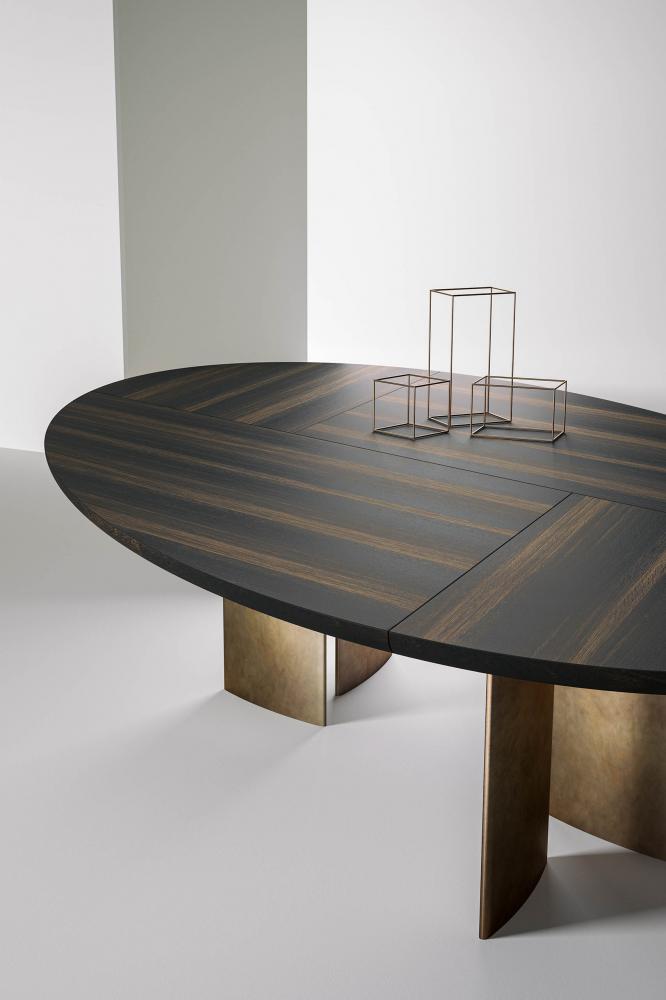
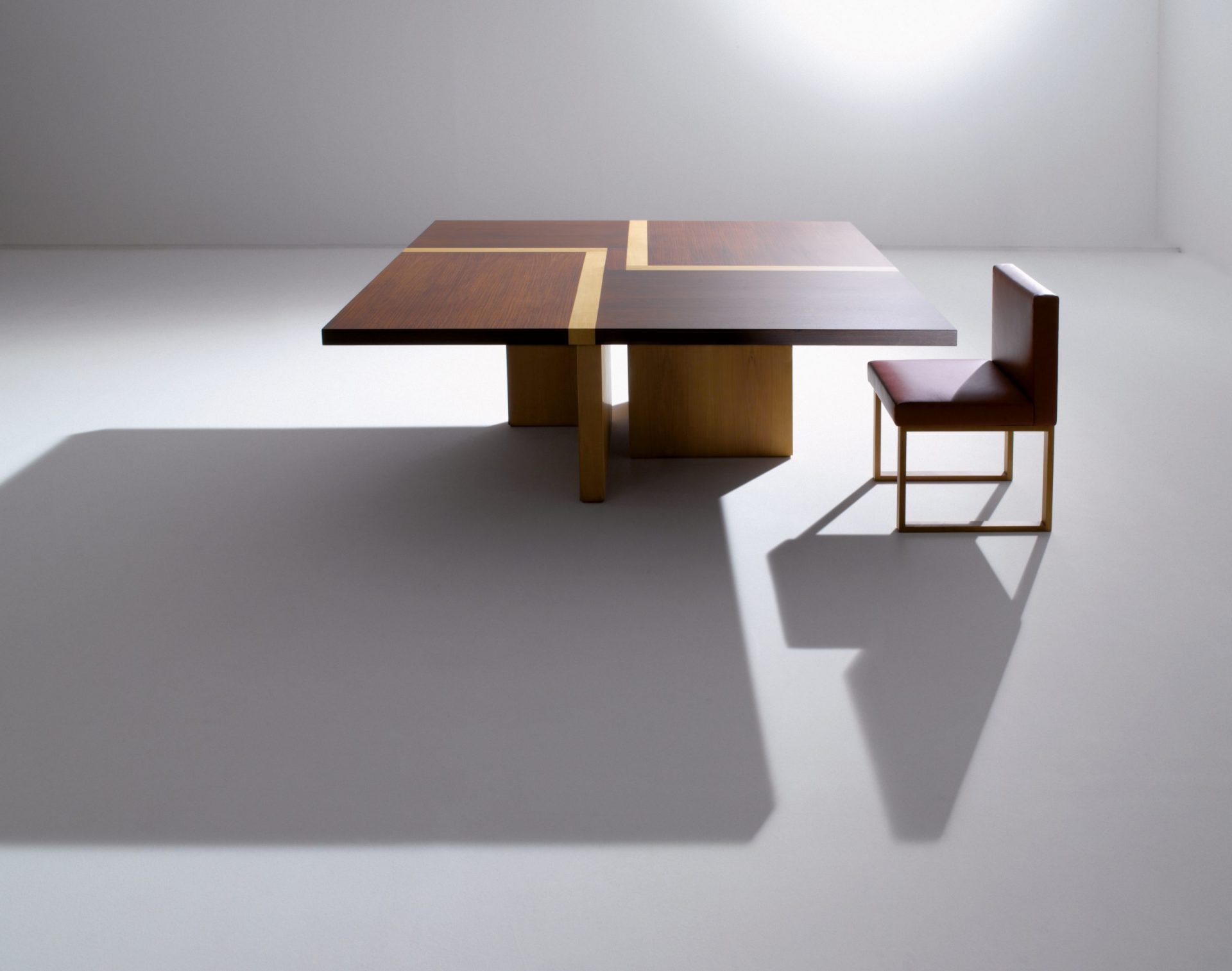
Wood brings a different kind of luxury to the dining room. Where stone often feels formal and monumental, wood feels warm, tactile, and residential. A fine wood dining table can still be dramatic, but its drama usually comes from grain, tone, depth, and craftsmanship rather than from sheer visual weight.
For many homes, wood is the most livable luxury choice. It works beautifully in dining rooms that need elegance without becoming cold. It softens contemporary architecture, adds warmth to minimalist interiors, and creates continuity with wall panels, cabinetry, flooring, and sideboards.
Veneer is often misunderstood by buyers who associate luxury only with solid wood. In high-end Italian furniture, veneer can be an intentional and sophisticated choice. It allows rare or exotic wood grains to be used with greater visual consistency, better control over pattern direction, and improved stability when applied to expertly engineered structures. The result can be more refined than a heavy solid slab, especially when the goal is precision rather than rusticity.
The quality of a wood or veneer dining table depends on details that are easy to overlook at first glance:
Grain direction across the top and edges.
How the veneer is matched or patterned.
The thickness and profile of the tabletop.
The finish sheen, from matte and natural to deeper polished tones.
The way the base connects to the top.
The relationship between wood tone and surrounding furniture.
A darker exotic wood finish can create a dramatic, formal dining environment. A lighter wood can make a dining space feel calm, modern, and open. A richly figured veneer can act almost like artwork, especially in a room with restrained chairs and quiet lighting. A more subtle grain can support a minimalist interior where proportion matters more than pattern.
Wood also pairs especially well with other pieces in the fine furniture collection, including sideboards, consoles, wall units, chairs, and complementary tables. This is important because a dining table is rarely the only furniture piece in the room. When wood is repeated carefully across the dining table, sideboard, wall paneling, or cabinetry, the result feels cohesive. When the wood tones are poorly matched, the room can feel accidental.
A luxury wood dining table is ideal for clients who want longevity, warmth, and material depth. It can work in a formal dining room, but it is equally strong in a modern open-plan home where the dining area must feel connected to the kitchen, living space, and surrounding architecture.
Lacquered dining tables
Lacquer is one of the most refined finishes for modern interiors because it gives the designer control over color, sheen, and visual smoothness. Where wood emphasizes natural grain and stone emphasizes variation, lacquer creates a cleaner and more architectural surface. It can make a dining table feel crisp, polished, and highly intentional.
The best use of lacquer depends on the room’s mood:
Matte lacquer suits calm, architectural interiors.
Satin finishes can balance refinement and practicality.
Gloss lacquer suits more formal or dramatic spaces.
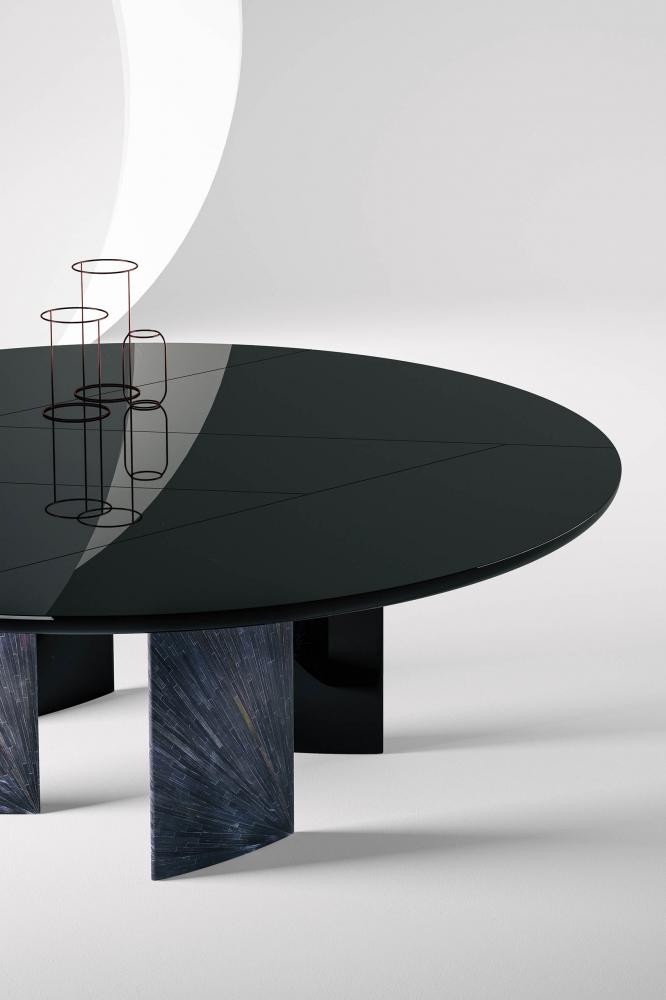
Dark lacquer can make the table feel sculptural and graphic.
Light lacquer can keep the dining room visually open.
Lacquer should still be selected carefully. Depending on sheen and color, fingerprints, surface marks, dust, or scratches may be more visible. Dark glossy lacquer can look striking in the right setting, but it usually asks for more care than a textured wood or stone-look surface. For households with frequent daily dining, children, or heavy use, the finish should be discussed realistically before purchase.
In luxury design, lacquer works best when it is not treated as a shortcut to modernity. It should have depth, proper surface preparation, and refined detailing. A poorly finished lacquer table can feel flat or commercial. A beautifully finished lacquer table can feel sleek, composed, and completely integrated into the architecture of the room.
Glass dining tables
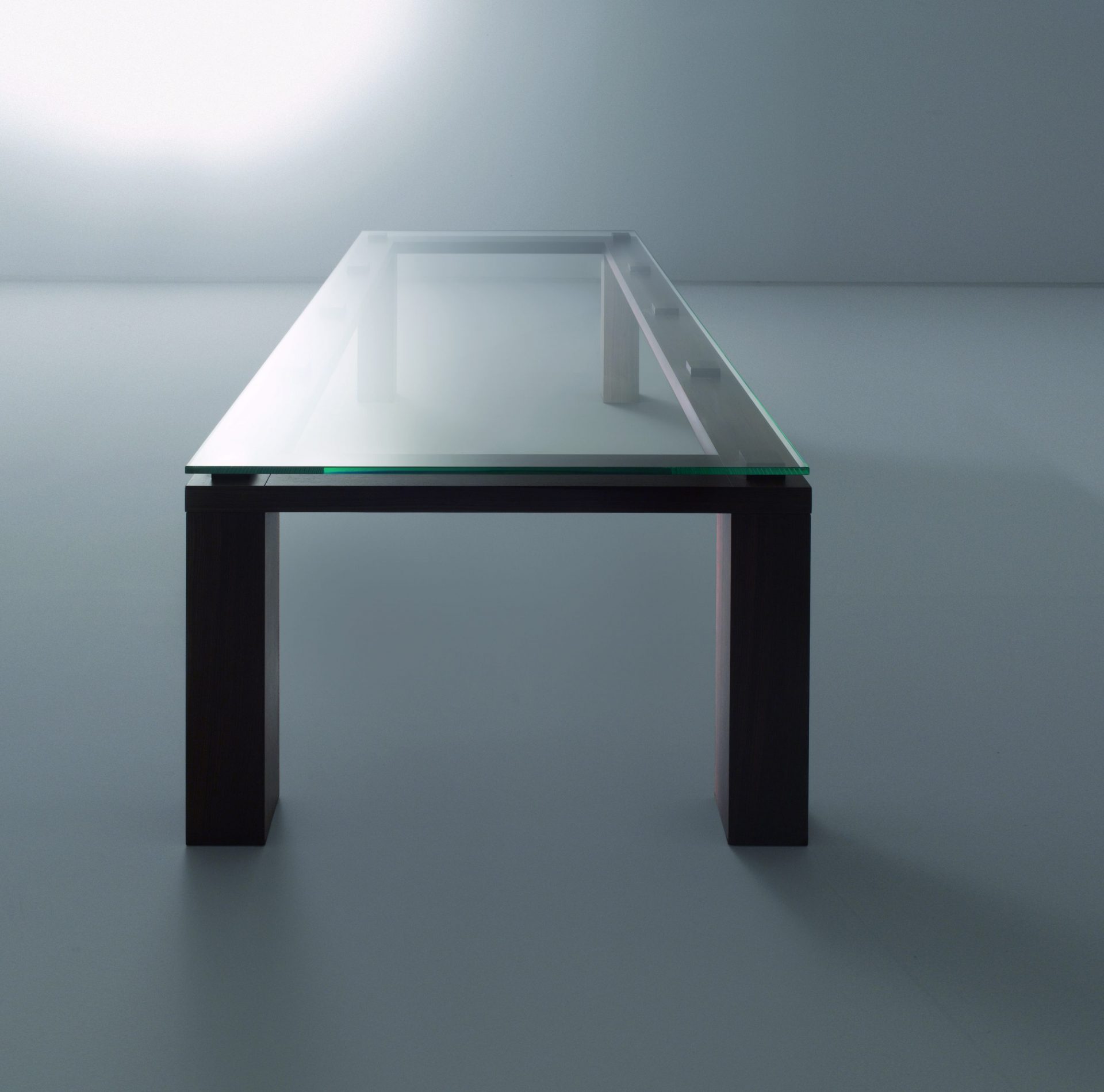
Glass brings lightness to the dining room. It is especially useful when the base of the table is sculptural and deserves to remain visible, or when the room itself cannot visually support a heavier top. In smaller apartments, narrow dining zones, or open-plan spaces where sightlines matter, glass can reduce visual weight while still allowing the table to feel designed.
A glass dining table can be clear, smoked, tinted, textured, or paired with metal and wood details. Clear glass feels lighter and more transparent. Smoked glass adds mood and sophistication. Bronze or warm-tinted glass can connect beautifully with metal finishes, warm woods, and ambient lighting.
Choosing the right shape: rectangular, round, oval, or sculptural
Shape affects more than appearance. It determines how people sit, how the room circulates, how chairs are arranged, where lighting should be centered, and how the dining table relates to nearby furniture. A modern Italian dining table can be beautiful in any shape, but the best shape is the one that fits the room’s geometry and the way the space is used.
| Dining Table Shape | Best For | Design & Planning Notes |
|---|---|---|
| Rectangular dining table | Formal dining rooms, long rooms, larger families, and entertaining. | Offers efficient seating and works well with sideboards, linear lighting, rugs, and rooms with a clear long axis. Check circulation at the ends and sides before choosing a large size. |
| Round dining table | Square rooms, breakfast areas, intimate dining spaces, and smaller luxury apartments. | Creates better conversation and a softer, more relaxed dining experience. Diameter matters because very large round tables can make the center harder to reach. |
| Oval dining table | Transitional dining rooms, open-plan homes, and spaces where softer circulation is important. | Combines the elegance of a rectangular table with softer movement around the ends. Seating capacity depends heavily on base placement, chair width, and the curve of the tabletop. |
| Sculptural or modular dining table | Gallery-like interiors, penthouses, statement dining rooms, and luxury residences with strong visual identity. | Works as a functional centerpiece when the base, material, and form are part of the room’s architecture. Keep chairs, lighting, and sideboards more controlled so the table remains the main focal point. |
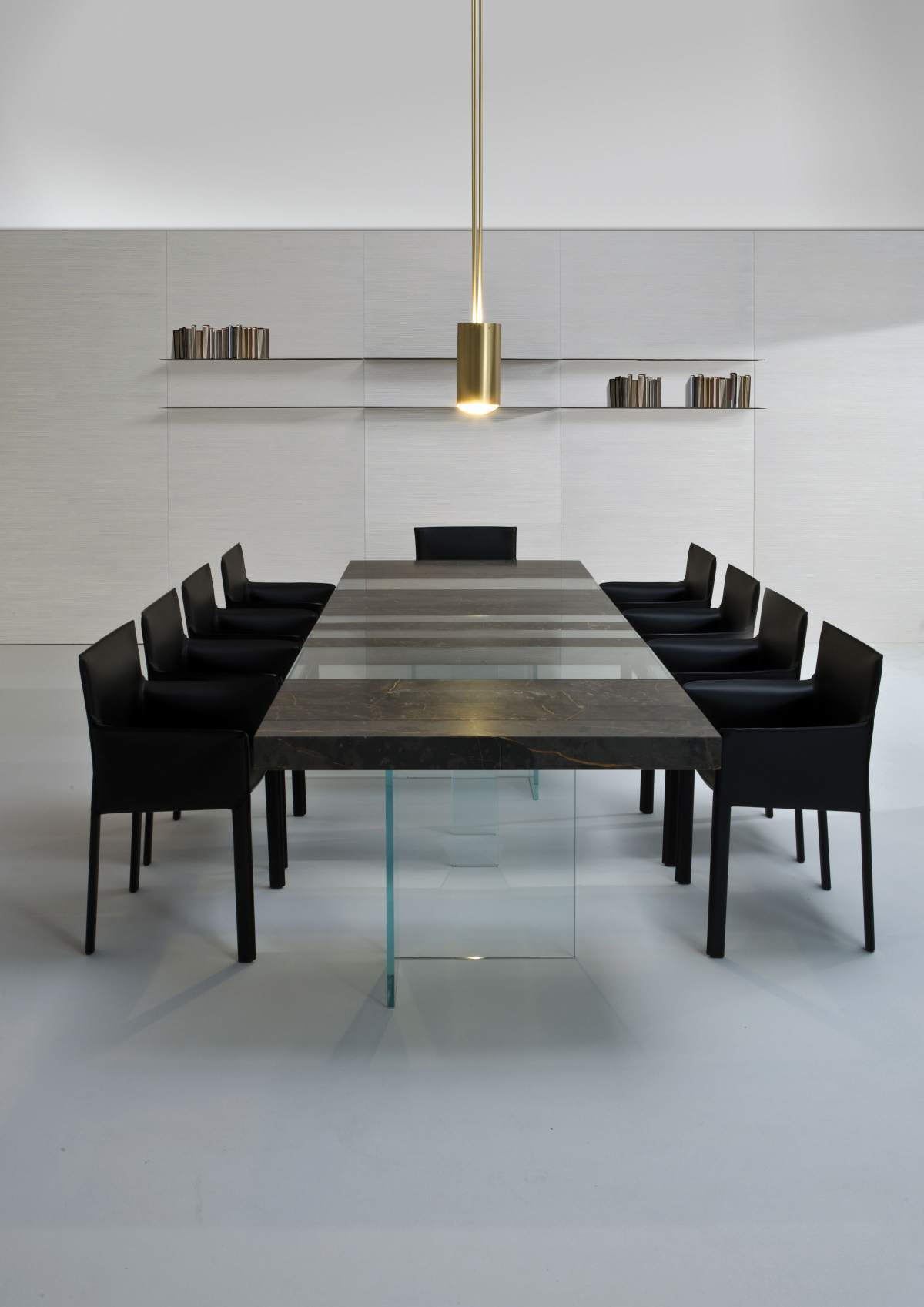

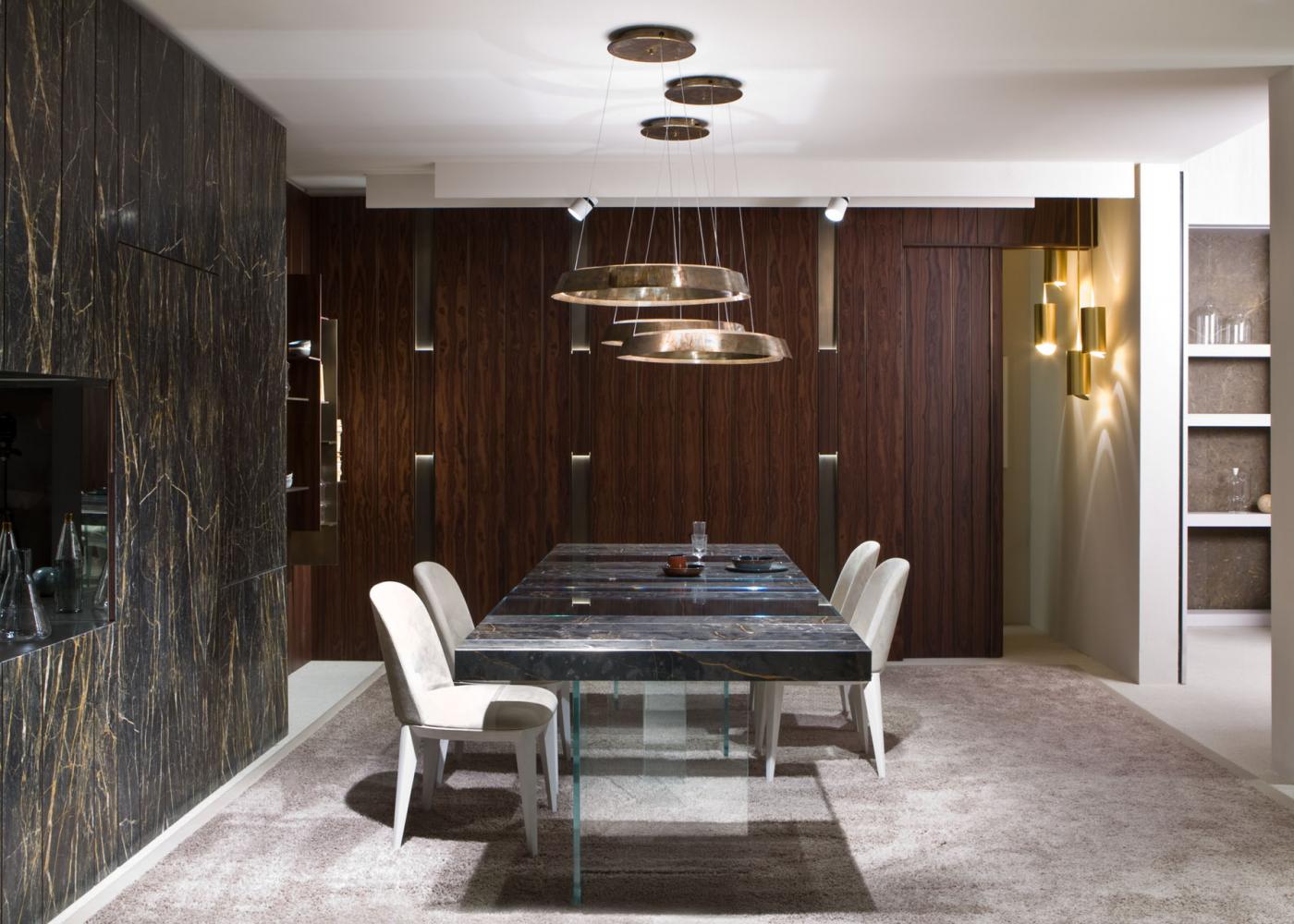
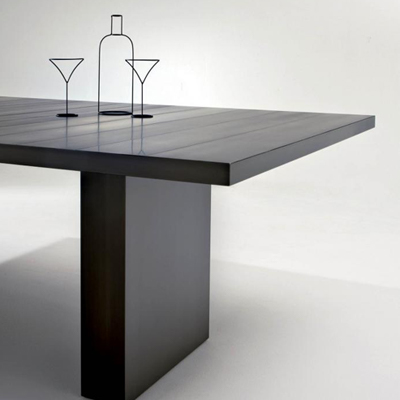
Should you choose an extendable dining table?
An extendable dining table is one of the most practical options for homes that entertain occasionally but do not need a large table every day. It allows the dining room to remain comfortable for daily living while still offering flexibility for holidays, dinner parties, family gatherings, or formal events.
In luxury furniture, the extension mechanism matters as much as the appearance. A high-end extendable dining table should feel smooth, stable, and integrated. It should not look like a compromise when closed. The lines should remain clean, the proportions should still feel balanced, and the extended version should feel like part of the original design rather than an afterthought.
Before choosing an extendable dining table, several details need to be reviewed carefully:
How large the table is when closed.
How large it becomes when fully extended.
Whether the extension leaves are stored inside the table or separately.
Whether the mechanism can be operated easily.
Whether the table remains stable when extended.
How chair count changes in both positions.
Whether pendant lighting still feels centered when the table expands.
Whether the room has enough clearance when the table is fully open.
The most common mistake is measuring only the closed table. That can lead to problems later when the table is extended and suddenly interferes with walls, sideboards, kitchen islands, doorways, or circulation paths. The fully extended size must be tested in the room plan before purchase.
When an extendable table makes sense
An extendable dining table makes sense when flexibility is more important than permanent scale. It is especially useful in luxury apartments, open-plan homes, and residences where the dining area serves more than one purpose.
For example, a family may use the table daily for four or six people but host eight or ten during holidays. A couple in a New York apartment may want a refined dining area that does not dominate the living room every day, but still needs the ability to entertain. A Miami condo owner may want daily openness between the kitchen and living area, with the option to expand the table when guests arrive.
An extendable dining table is especially useful for:
Luxury apartments with flexible dining zones.
Families who host holidays or formal dinners.
Open-plan spaces where daily circulation matters.
Homes where the dining table is used for both meals and work.
Clients who want entertaining capacity without dedicating the entire room to a large table.
Secondary residences where guest count changes throughout the year.
The best extendable tables preserve the feeling of luxury in both positions. They do not appear unfinished when compact, and they do not feel unstable when open. The extension should support the lifestyle without visually weakening the design.
When a fixed table may be better
A fixed dining table may be the better choice when the dining room is formal, spacious, and designed around the table as a permanent centerpiece. Fixed tables often have cleaner proportions because they do not need to accommodate a hidden mechanism. They may allow for stronger sculptural bases, more refined material continuity, and a more architectural relationship between top and support.
For clients who entertain often and have the space, a fixed table can feel more resolved. It is always ready, always proportioned as intended, and always visually complete. There is no need to adjust the room, store leaves, or think about how lighting aligns in different configurations.
A fixed table is often best for:
Formal dining rooms.
Large homes with dedicated entertaining areas.
Residences where the dining table is visible from major living spaces.
Interiors where the table is intended as a permanent centerpiece.
Sculptural designer dining tables where the base is central to the design.
Projects where maximum material continuity matters.
The decision ultimately depends on lifestyle. If the room needs flexibility, an extendable table can be the smarter luxury choice. If the room is designed around permanence, ceremony, and architectural presence, a fixed table may offer the strongest result.
Dining table sizing: how to choose the right dimensions
Sizing is where a beautiful dining table either succeeds or fails in real life. A table can have perfect materials and a stunning base, but if it is too large, too small, too narrow, or poorly positioned, the room will never feel truly comfortable.
The core rule is simple: the dining table must fit the room, the chairs, and the circulation, not just the number of seats. Many buyers start by saying they need a table for six, eight, or ten people. That is useful, but it is only the beginning. The correct size also depends on chair width, whether the chairs have arms, the position of the sideboard, pendant lighting, door swings, walkways, and how the room is used during entertaining.
| Table Size and Shape | Typical Seating Capacity | Best Use Case |
|---|---|---|
| 72-inch rectangular table | Usually 6 seats | Smaller formal dining rooms or daily dining areas |
| 84–96-inch rectangular table | Usually 8 seats | Family dining rooms and entertaining spaces |
| 108–120-inch rectangular table | Usually 10 seats | Larger dining rooms and formal entertaining |
| 48–54-inch round table | Usually 4–5 seats | Breakfast areas, square rooms, intimate dining zones |
| 60-inch round table | Usually 6 seats | Balanced round-table dining for medium spaces |
| 72-inch round table | Usually 8 seats | Larger square rooms and statement round dining areas |


Matching the dining table with chairs, sideboards, and the room
A dining table should never be chosen as an isolated object. Even the most beautiful designer dining table can feel wrong if it does not coordinate with the chairs, sideboards, lighting, wall panels, flooring, and nearby cabinetry.
In a luxury dining room, the table is the anchor, but the surrounding pieces decide whether the room feels complete. The chairs affect comfort and rhythm. The sideboard adds storage and visual balance. Lighting defines the table from above. Flooring and wall treatments frame the entire composition. Nearby cabinetry, kitchen finishes, or bar seating can either support the dining table or make it feel disconnected from the rest of the home.
The goal is not to match every element exactly. In fact, luxury interiors often feel stronger when materials are related rather than identical. A marble dining table does not need a marble sideboard. A wood dining table does not require matching wood chairs. A modern Italian dining table should feel connected to the room through proportion, tone, finish, and detail.
Pairing dining tables with sideboards and credenzas
A sideboard or credenza is one of the most important companion pieces for a dining table. It provides storage for tableware, linens, glassware, and serving pieces, but it also gives the room a second visual anchor. Without it, a dining room can sometimes feel unfinished, especially in larger residences or formal entertaining spaces.
The best luxury sideboards complement the dining table without copying it exactly. If the table is stone, a wood sideboard can add warmth and soften the room. If the table is wood, a lacquered, metal-detailed, or textured sideboard can create contrast. If the table is sculptural and visually strong, the sideboard may need to be quieter so the room does not feel overloaded.
Useful pairings include:
A marble dining table with a warm wood sideboard.
A dark wood table with a lacquered or metal-accented credenza.
A glass table with a textured sideboard to add depth.
A sculptural table with a restrained, linear sideboard.
A minimalist table with a more expressive storage piece.
Scale is critical. A heavy table paired with a heavy sideboard can make the room feel dense. A very delicate sideboard beside a substantial table can feel underpowered. The two pieces should have a clear relationship in height, width, material strength, and visual weight.
For a more detailed approach to storage, proportion, and finish selection, the guide to choosing the perfect sideboard or credenza is a natural extension of the dining table decision.
Coordinating dining tables and chairs
Dining chairs affect the experience of the table more than many buyers expect. A table may look perfect in a showroom, but if the chair height, seat width, arm height, upholstery, or leg finish is wrong, the dining experience will feel uncomfortable or visually unbalanced.
The most important measurements are seat height, table clearance, chair width, and arm height. Upholstered chairs often need more space than slim wood or metal chairs. Armchairs at the heads of the table can create a more formal look, but they also require more clearance. Chair legs should also be considered, especially if the dining table has a strong base or unusual support structure.
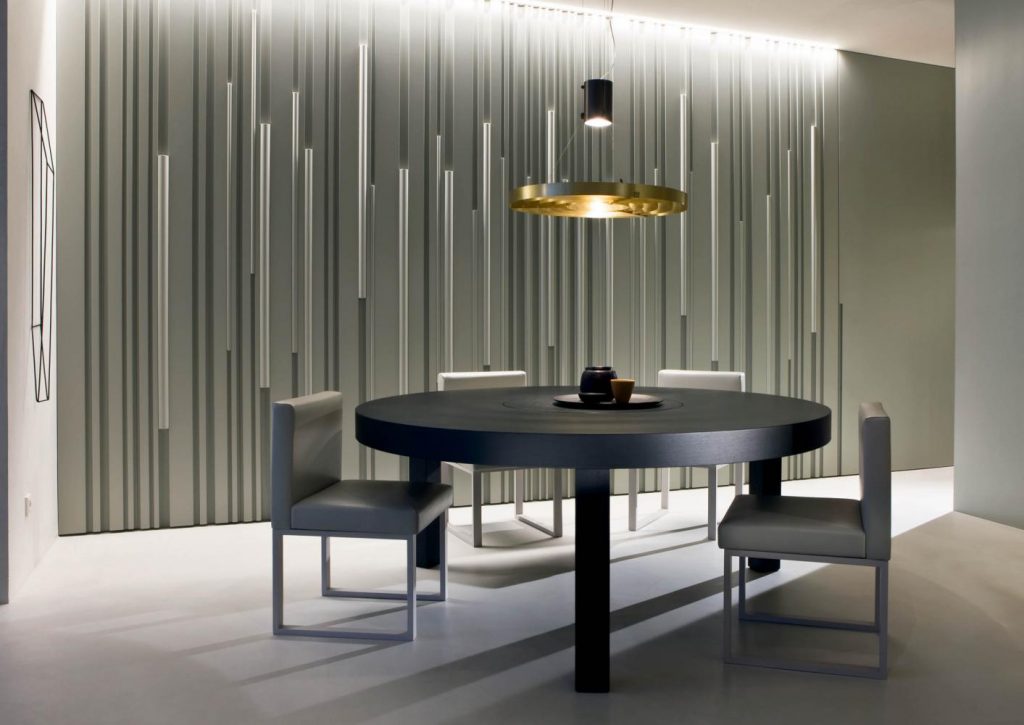
A modern Italian dining table can be softened beautifully with upholstered chairs. This works especially well when the table is stone, glass, or lacquered, because fabric adds warmth and comfort. A sculptural designer dining table may need quieter chairs so the table remains the main statement. A minimalist table may allow for more expressive seating, whether through shape, upholstery, or material contrast.
The best combinations usually follow one clear rule: let one element lead. If the table is dramatic, keep the chairs refined. If the table is restrained, the chairs can carry more personality.
Connecting the dining area to kitchen and bar seating
In open-plan homes, the dining table often sits near the kitchen island, bar area, or breakfast counter. This is especially common in Miami residences, luxury condos, and modern apartments where the kitchen, dining area, and living space are visually connected.
In these layouts, dining chairs and bar stools should feel related, but not identical. Exact matching can make the space feel flat. A better approach is to repeat one or two design cues across the dining and kitchen areas.
Those cues may include:
Similar wood tones.
Repeated metal finishes.
Related upholstery colors.
Similar silhouettes.
Matching stitching or texture.
A shared sense of proportion.
For example, dining chairs may use a warm upholstered seat while the kitchen stools repeat the same tone in a slimmer form. A dining table with dark metal details may connect naturally to bar stools with dark metal legs. A wood dining table may relate to counter stools through a similar grain tone, even if the forms are different.
The goal is continuity. The dining table should remain the central piece, while the kitchen seating supports the overall design language. For homes where the dining area and island seating are seen together, the guide to Italian bar stools and counter stools and the bar stools collection can help create a more complete furniture plan.
Style direction: modern, timeless, sculptural, or formal?
A modern Italian dining table can take several design directions. It can be minimal, sculptural, timeless, formal, warm, dramatic, or quietly architectural. The right choice depends on the room, the client’s lifestyle, and the role the table needs to play.
The mistake is assuming that “modern” means only slim, simple, and understated. In Italian furniture, modern can also mean expressive craftsmanship, bold material contrast, unique finishes, and sculptural form. The table should match the emotional character of the room, not only the design trend of the moment.
Modern minimal dining tables
Modern minimal dining tables work best in clean architectural interiors, warm minimalist homes, and contemporary apartments. These tables usually rely on slim profiles, refined materials, quiet finishes, and excellent proportions rather than decorative detail.
A minimal dining table should not feel empty or basic. Its luxury comes from precision. The edge profile, surface quality, base shape, and finish must be carefully resolved because there is nowhere to hide weak detailing.
This style is ideal when the room already has strong architecture, beautiful flooring, wall paneling, or a carefully edited material palette. The table supports the space instead of competing with it.
Sculptural designer dining tables
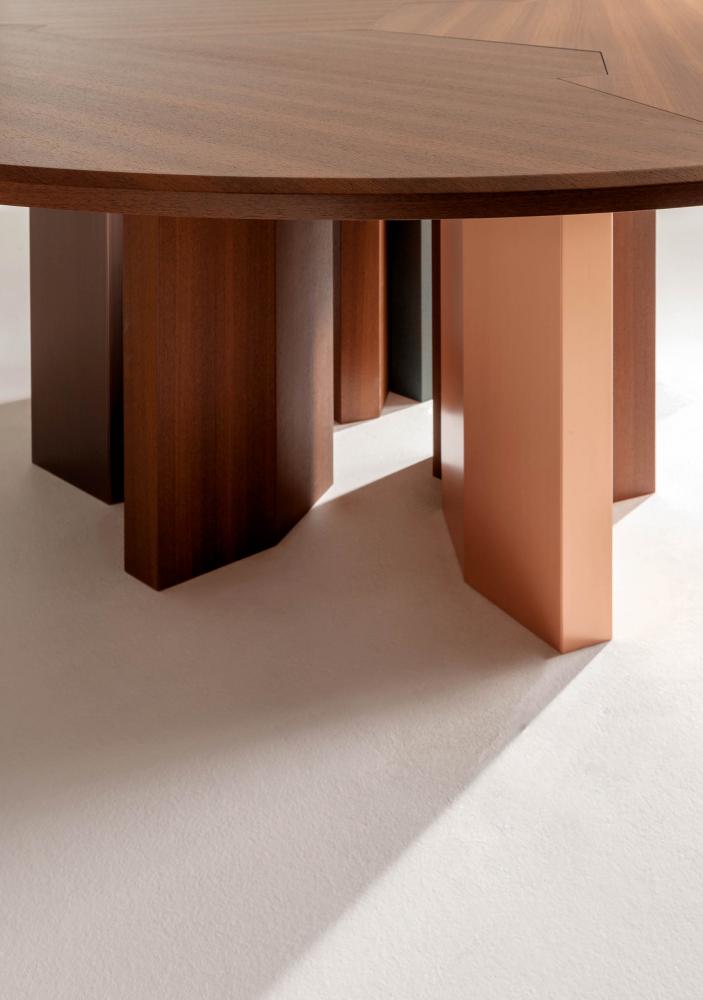
Sculptural designer dining tables are made for rooms where the table is meant to be noticed. They work especially well in statement dining rooms, penthouses, open-plan residences, and interiors where the dining area is visible from the entry, living room, or kitchen.
These tables often feature strong bases, dramatic materials, unusual geometry, or a gallery-like presence. They can make the room feel more architectural and memorable, but they need discipline around them.
A sculptural table usually works best with:
Carefully edited chairs.
Controlled lighting.
A restrained sideboard.
Minimal visual clutter.
Enough space around the table to appreciate the form.
If everything in the room is trying to be the focal point, the table loses its power. The more expressive the dining table, the more considered the surrounding pieces should be.
Timeless luxury dining tables
Timeless luxury dining tables are best for clients who want longevity rather than trend-led design. These tables may still feel modern, but they avoid overly fashionable shapes, extreme proportions, or finishes that may date quickly.
A timeless table usually has balanced proportions, high-quality materials, and a finish that can work across changing interiors. Wood, stone, metal, glass, lacquer, and mixed-material construction can all be timeless when used with restraint.
The key qualities are:
Balanced scale.
Honest materials.
Refined detailing.
Comfortable seating.
Finishes that age well.
Enough character without excessive decoration.
A timeless luxury Italian dining table should feel relevant now and still feel appropriate years later. That is especially important in high-end residences, where furniture is often expected to function as a long-term investment rather than a seasonal design choice.
How to choose the right luxury Italian dining table for your home
Choosing the right luxury Italian dining table begins with the room, not the catalog. The first step is to measure the space carefully and understand how many people need to sit comfortably on a daily basis and during special occasions.
The table should then be selected according to the room’s geometry. A long dining room often favors a rectangular or oval table. A square room may work better with a round table. An open-plan home may need a table that defines the dining area without blocking circulation.
A practical decision framework looks like this:
Start with room dimensions and seating needs.
Decide whether the table is for daily meals, formal entertaining, or both.
Choose the shape based on the room’s geometry.
Select materials based on lifestyle, maintenance, and desired atmosphere.
Decide whether an extendable dining table is necessary.
Coordinate the table with chairs, sideboards, lighting, flooring, and nearby cabinetry.
Review the piece in person whenever possible.
A showroom visit is especially valuable for luxury furniture because scale and finish are difficult to judge online. The thickness of a tabletop, the depth of lacquer, the texture of wood, the movement of stone, and the stability of a base are all better understood in person.
Materia Collection’s Miami and New York City presence gives clients, homeowners, and designers the opportunity to experience luxury, craftsmanship, custom furnishings, and unique design with greater clarity. For broader planning beyond the table itself, Materia’s guide to luxury dining room design can help connect the dining table to the full room composition.



Why choose Materia Collection for luxury Italian dining tables?
Materia Collection offers modern luxury dining tables that showcase the Italian craftsmanship of Laurameroni and the refined material language expected in high-end interiors. The dining table collection is part of a wider world of fine furniture, wall treatments, closet and cabinet systems, office furniture, luxury doors, kitchens and appliances, lighting, and luxury bathroom solutions.
Founded by Yana Pojidaeva, Materia Collection opened in 2016 with a vision inspired by Italian design and its history. Based in Bay Harbor Islands, Florida, the brand works with prominent designers on bespoke projects around the world, including private residences, houses, luxury apartments, refined restaurants, corporate offices, and boutiques.
Materia’s project experience includes notable custom work such as Buddha-Bar in New York, with bespoke and personalized elements, artisan finishes, pattern overlays, exotic woods, natural stone, metals, and skillful installation. This background matters because a luxury dining table is rarely just a furniture purchase. It is part of a larger interior strategy.
For clients choosing a luxury Italian dining table, Materia Collection offers more than a selection of beautiful pieces. It offers a design context where craftsmanship, material precision, customization, and room-level thinking come together.
Explore Materia Collection’s dining tables or visit the Miami and New York City showrooms to experience the finishes, proportions, and craftsmanship in person.
Frequently Asked Questions - Luxury Italian Dining Tables
What materials are used in luxury Italian dining tables?
Luxury Italian dining tables can use fine woods, veneers, metals, glass, marble, natural stone, lacquer, and mixed-material construction. The best choice depends on the desired look, maintenance expectations, and how the table will be used.
Is a marble dining table practical for everyday use?
Yes, a marble dining table can be practical if it is properly sealed and cared for. Buyers should still understand that marble can be sensitive to staining, etching, weight, and surface wear.
What size dining table do I need for eight people?
Many eight-person rectangular dining tables are around 84–96 inches long. A round table for eight usually needs around 72 inches, depending on chair width, table base, and room clearance.
Are extendable dining tables worth it?
Yes, extendable dining tables are useful for flexible entertaining, especially in apartments and open-plan homes. The mechanism, stability, storage of leaves, and fully extended dimensions should be checked before buying.
How do I match a dining table with a sideboard?
A dining table and sideboard should balance each other through scale, contrast, and finish coordination. They do not need to match exactly; in many luxury interiors, complementary materials look more refined than identical finishes.
Can Materia Collection customize dining tables?
Yes, Materia Collection offers customization options so a dining table can better fit the space and match the client’s style, material preferences, and interior design direction.