

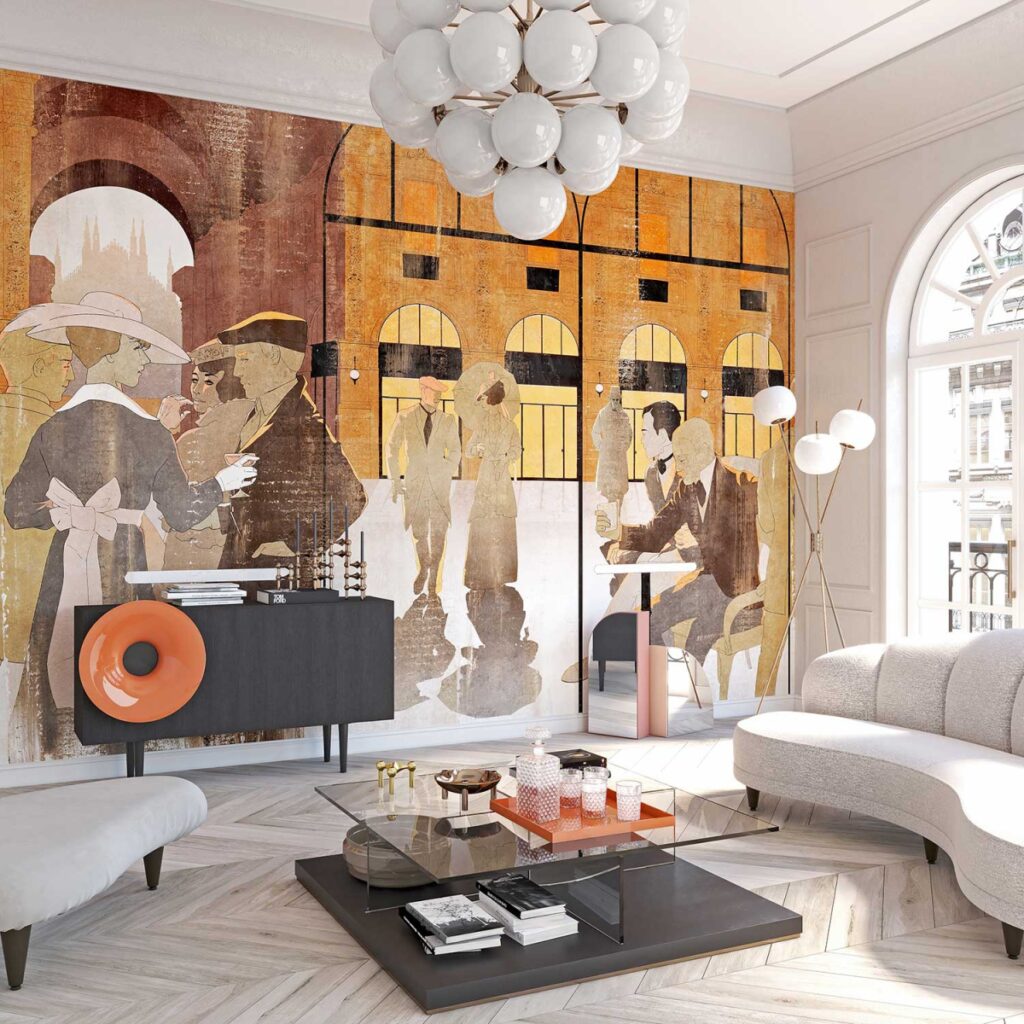
Retail millwork for luxury boutiques is the architectural layer that controls how products are seen, touched, approached and remembered, shaping the customer’s perception before a sales conversation ever begins. In premium physical retail, millwork is not simply shelving or cabinetry; it is the framework for product presentation, guest movement, lighting, storage, service and brand atmosphere, especially in highly competitive luxury environments such as NYC and Miami, where boutique interiors must feel intentional, memorable and aligned with the brand’s price point.
| Boutique Area | Millwork Role | Luxury Impact |
|---|---|---|
| Display walls | Frame hero products with shelving, niches, panels and integrated lighting. | Makes the collection feel curated, valuable and easy to understand. |
| Cash wrap | Conceals POS equipment, packaging, cables and service storage. | Turns checkout into a refined concierge-style experience. |
| Fitting rooms | Integrates mirrors, wall panels, hooks, seating, lighting and doors. | Creates a private, comfortable space where purchase decisions feel natural. |
| Product niches | Give jewelry, accessories and luxury objects their own architectural frame. | Adds focus, rarity and visual importance to smaller premium pieces. |
| Hidden storage | Stores inventory, packaging, trays and client materials behind refined surfaces. | Keeps the boutique calm, polished and free from visual clutter. |
What retail millwork means for luxury boutiques
Retail millwork in a luxury boutique setting refers to the custom-built architectural elements that organize, display, protect and elevate products inside a physical retail space. It includes the built-in surfaces and fixtures that customers interact with directly, as well as the concealed systems that help staff maintain a clean, calm and high-performing boutique floor.
In this context, retail millwork can include built-in displays, product walls, recessed niches, wall panels, custom cabinetry, cash wrap counters, fitting room elements, mirrors, integrated lighting zones and hidden storage. These elements work together to create the boutique’s rhythm. They decide where the eye goes first, how close a customer gets to a product, where the body naturally moves and how the brand feels in person.
The difference between standard retail fixtures and luxury boutique millwork is important. Standard fixtures usually exist to hold inventory. They may be modular, practical and easy to replace, but they rarely create a strong architectural identity. Luxury boutique millwork does more than support products physically. It frames them visually, gives them proportion, controls the atmosphere around them and supports the perceived value of the brand.
For a broader explanation of built-in commercial interiors, see our guide to commercial interior millwork.
In a luxury boutique, millwork influences several connected parts of the customer experience:
Product visibility and how easily key pieces are noticed
Customer circulation and the way people move through the store
Boutique organization and the balance between open display and hidden storage
Staff efficiency during appointments, browsing, packaging and checkout
Visual hierarchy between hero products, seasonal collections and supporting items
Client confidence in the brand’s level of quality
Brand memory after the customer leaves the space
This is why boutique millwork must be treated as part of the brand experience, not as a late construction detail. For fashion boutiques, jewelry stores, accessory retailers, design showrooms and premium lifestyle stores, the interior itself becomes part of the selling environment. Customers are not only evaluating the product; they are also evaluating the world created around the product.
Display walls, shelving and product niches
Display wall millwork is one of the most important elements in luxury boutique interiors because it turns inventory into a curated visual composition. A product wall should not feel like a storage wall that happens to face the customer. It should feel like a designed presentation surface, where every shelf, niche, panel, light source and closed cabinet has a reason to exist.
In a premium boutique, product walls help establish the first impression. They can introduce the brand’s material language, create a strong focal point, organize categories and make the space easier to understand. When designed well, they allow customers to see the most important pieces quickly while still encouraging slower exploration. When designed poorly, they create visual noise, crowd the products and make the boutique feel less valuable.
Boutiques that rely on product walls, art objects or collectible pieces can also benefit from the same principles used in millwork for galleries and display walls.
A strong display wall may include several types of custom retail fixtures working together:
Wall-mounted shelving for folded pieces, accessories, footwear or objects
Recessed niches for jewelry, handbags, decorative objects or hero products
Backlit product displays for depth, glow and premium atmosphere
Integrated cabinetry for concealed stock and service needs
Panel-backed product walls that create a refined architectural background
Open and closed storage combinations for display and practicality
Feature walls for limited collections, seasonal launches or signature items
Display plinths and floating shelves for sculptural presentation
MATERIA’s Italian wall treatments and panel systems offer a strong design direction for boutiques that need more than a plain painted backdrop. Decorative wall panels, marble-effect panels, metal-effect panels, acoustic wall panels, textured wallpapers and natural-inspired surfaces can create depth and atmosphere without overpowering the product. These surfaces are especially valuable in boutiques where the wall itself must function as a luxury presentation layer.
A fashion boutique may use warm veneer panels behind a carefully edited clothing display. A jewelry retailer may choose darker, more intimate panels with integrated niche lighting. A lifestyle showroom may use marble-effect, metal-effect or textured surfaces to frame objects and furniture. In each case, the wall treatment and millwork should work together, so the display feels architectural rather than improvised.
Niches for jewelry, accessories and luxury objects
Niches create intimacy and focus. Unlike open shelving, a niche gives a product its own architectural frame. It creates a small stage, which can be especially powerful for pieces that need detail, rarity or emotional attention.
For jewelry, small illuminated niches can make pieces feel rare and protected. A ring, necklace or watch displayed inside a precise recess with controlled lighting has a different presence than one placed on a generic counter. The niche creates distance from visual clutter and signals that the object deserves close attention.
For accessories, niches can create category moments. Handbags can be displayed individually rather than crowded together. Shoes can be framed by height and silhouette. Belts, sunglasses and small leather goods can be grouped in a way that feels organized but not overly commercial. This helps the boutique maintain a luxury atmosphere even when it carries multiple product categories.
For design showrooms, niches can frame decorative objects, vases, lighting pieces, sculptural accessories or collectible furniture. A niche can make an object feel like part of a curated installation rather than a product placed on a shelf. This is particularly useful for premium lifestyle retail, where the customer is buying into a complete interior vision.
Niches also allow more control over lighting. A recessed display can include concealed linear lighting, directional accent lighting or a softly illuminated back panel. This gives the product shape and depth, which is essential when materials such as metal, stone, glass, leather, fabric or polished wood are part of the product story.


Cash wraps, fitting rooms and service areas
Boutique millwork is not limited to product displays. The cash wrap, fitting rooms and service zones are where the customer experience becomes more personal and operational. These areas must support real work, but they should still feel consistent with the luxury environment.
The cash wrap is both a transaction point and a brand statement. In a standard retail store, it may function only as a checkout counter. In a luxury boutique, it should feel more refined, proportionate and discreetly functional. It is often where packaging is prepared, final details are discussed, appointments are confirmed and the customer’s last impression of the store is formed.
A well-designed cash wrap may include:
Concealed POS equipment
Cable management
Packaging storage
Lockable drawers
Product hold areas
Integrated lighting
Stone, veneer, lacquer or metal detailing
Brand-aligned counter proportions
The same thinking applies to fitting rooms and service areas. These spaces must be comfortable, practical and visually connected to the rest of the boutique. A customer should not move from a beautiful sales floor into a fitting room that feels unfinished, poorly lit or disconnected from the brand.
Cash wrap counters as boutique service anchors
The cash wrap should never look like an afterthought. Because it is often one of the final physical touchpoints in the customer journey, it has a strong influence on how the boutique is remembered. A luxury customer may browse slowly, try on products, ask questions, compare options and then complete the purchase at the counter. If the cash wrap feels generic or cluttered, it can weaken the entire experience.
For luxury boutiques, the cash wrap should feel more like a hospitality desk or concierge counter than a standard checkout station. It should be welcoming but not overly exposed. It should allow staff to work efficiently without making the technology, packaging or operational side of the business too visible.
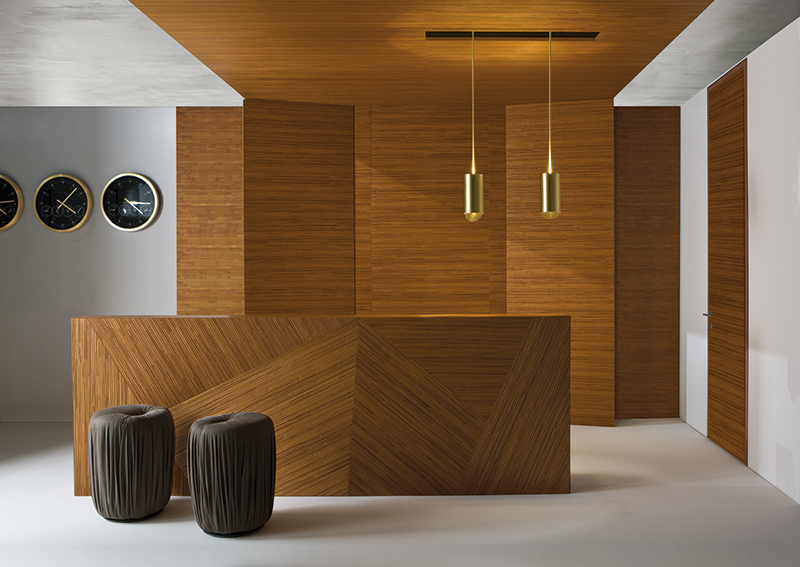
Material selection plays a major role. Wood veneer can create warmth and refinement. Lacquer can make the counter feel polished and contemporary. Stone can add visual weight, especially when used on the top surface or front face. Metal inlays can introduce precision and subtle branding. Glass can create lightness or display opportunities. Textured panels can connect the counter to the surrounding wall treatment. Branded surfaces can be used carefully, as long as they do not overpower the space.
The counter’s proportions matter as much as the materials. If it is too large, it can dominate the boutique and interrupt circulation. If it is too small, it can feel insufficient for luxury service. The best cash wrap design balances presence with restraint. It anchors the service area without making the boutique feel transactional.
Fitting rooms as conversion spaces
Fitting rooms are among the most commercially important areas in fashion retail because they are where interest becomes decision. The customer has already moved beyond browsing. They are interacting with the product personally, evaluating fit, comfort, silhouette, color and confidence. The design of the fitting room can either support that decision or weaken it.
A luxury fitting room needs more than a mirror and a curtain. It should include flattering lighting, refined wall panels, comfortable seating, practical hooks, privacy, soft surfaces, well-designed doors and discreet storage. The mirror should be proportionate and positioned correctly. The lighting should help the customer see the product clearly without creating harsh shadows. The wall surfaces should feel finished, not secondary. Seating should be comfortable enough for a companion or stylist conversation when the boutique model requires it.
Fitting room doors and transitions also matter. A sliding, pivot or swing door can become part of the boutique’s interior language when it is coordinated with panels, hardware and surrounding finishes. The customer should feel that the fitting room belongs to the same world as the sales floor.
The fitting room should never feel like a back-of-house necessity. In a luxury boutique, it is often one of the most intimate brand spaces. It is where customers spend time with the product, imagine ownership and decide whether the piece belongs in their life. Millwork supports that moment by creating comfort, privacy and visual continuity.
Materials and lighting for premium retail presentation
Materials influence how expensive, warm, minimal, dramatic or intimate a boutique feels. They also influence how customers perceive the products displayed inside the space. A luxury handbag shown against a flat, poorly finished wall does not create the same impression as the same handbag placed within a refined millwork system with carefully selected surfaces and integrated lighting.
This is why material selection should not be treated as decoration alone. In retail millwork for luxury boutiques, materials are part of product presentation. They create contrast, atmosphere and expectation. Warm wood can make a boutique feel more personal and refined. Polished lacquer can create a sleek contemporary setting. Stone can add permanence and weight. Metal can add precision. Glass and mirrors can create reflection, depth and sparkle. Textured panels can make walls feel architectural rather than blank.
MATERIA Collection’s strength in Italian design, unique finishes, artisan surfaces, natural materials, exotic woods, natural stone, metals and precise installation is especially relevant for luxury retail environments. Boutique interiors often need finishes that feel distinctive in person, not just attractive in photographs. The surface should reward close viewing, because customers in a boutique are physically near the walls, counters, shelves and displays.
A deeper look at commercial millwork materials can help owners and designers decide where premium finishes will have the strongest visual impact.
Veneer, lacquer, stone and metal details
Wood veneer is one of the most effective materials for creating warmth and refinement in boutique millwork. It can soften a retail space without making it casual. In fashion boutiques, veneer can create a calmer backdrop for clothing and accessories. In lifestyle showrooms, it can help connect displays, wall systems and furniture into one continuous interior language.
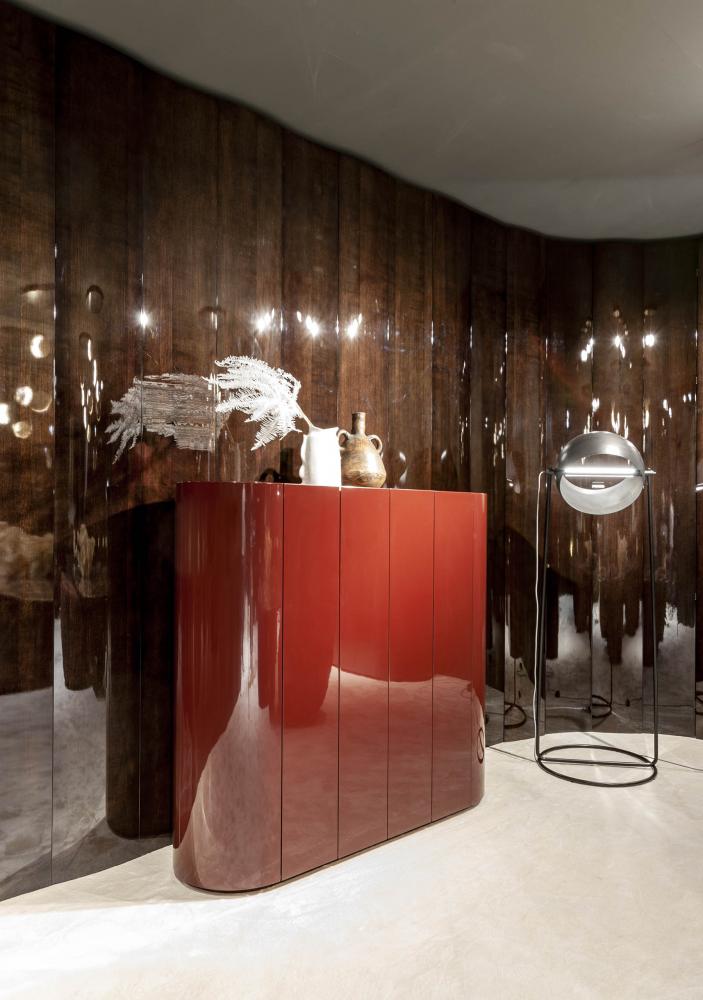
Lacquer brings a more polished and contemporary feeling. It works especially well in boutiques that need clean lines, strong color control or a more minimal atmosphere. Matte lacquer can feel quiet and architectural, while glossier finishes can create reflection and drama when used selectively.
Natural stone is often best used in areas where visual weight matters. Cash wraps, feature counters, display plinths and premium product areas can benefit from stone because it communicates permanence and value. Even when stone is used in restrained amounts, it can make a boutique feel more grounded and expensive.
Metal details add precision. Brass, bronze, dark metal, brushed metal or custom metal inlays can create contrast against wood, lacquer, stone or glass. In luxury boutique interiors, metal should usually be used with discipline. Too much can feel cold or decorative, but carefully placed metal accents can define edges, emphasize joints and introduce a subtle sense of craftsmanship.
Glass and mirrors are important for reflection, depth and jewelry or accessory presentation. They can make a boutique feel larger, brighter and more layered. In jewelry environments, they can enhance sparkle and detail. In fitting rooms, mirrors must be carefully planned for scale, lighting and comfort.
Textured panels add atmosphere and architectural depth. MATERIA’s wall treatment offering provides inspiration through marble-effect panels, metal-effect panels, precious-stone directions, bamboo, tatami, line, maxima, stars and other Italian panel systems. These surfaces can help boutique walls become part of the presentation rather than passive backgrounds.
Lighting integrated into millwork
Lighting should be coordinated with millwork early, not added at the end. In a luxury boutique, lighting is not simply a ceiling decision. It is part of the fixture design, the product display strategy and the customer experience.
Integrated lighting can appear in several parts of boutique millwork:
Backlit display walls that create depth and atmosphere
Shelf lighting that makes products easier to read
Niche lighting that frames jewelry, accessories or luxury objects
Jewelry case lighting that supports detail, sparkle and close viewing
Mirror lighting that improves fitting room comfort
Spotlights for hero products and seasonal displays
Ambient wall panel lighting for a softer boutique atmosphere
Lighting concealed within cabinetry, panel grooves or vertical reveals
Lighting changes perceived value. Poor lighting can flatten expensive products, hide texture and make colors look inaccurate. It can also make fitting rooms uncomfortable, which directly affects how customers feel about the products they try on. Precise lighting can make materials, textures, hardware and craftsmanship feel more desirable.
The relationship between lighting and material is especially important. Stone needs light that reveals depth and veining. Metal needs controlled reflection. Veneer needs warmth that brings out grain without making the space feel yellow or dim. Jewelry needs brightness and precision without glare. Fashion needs accurate color rendering and flattering fitting room conditions.
When lighting is integrated into millwork, the boutique feels more intentional. Shelves glow from within. Niches become focused display moments. Wall panels gain depth. Cash wraps feel more refined. Mirrors become more useful and more luxurious. The result is a space where products are not merely placed under light, but presented through light.
Durability without losing elegance
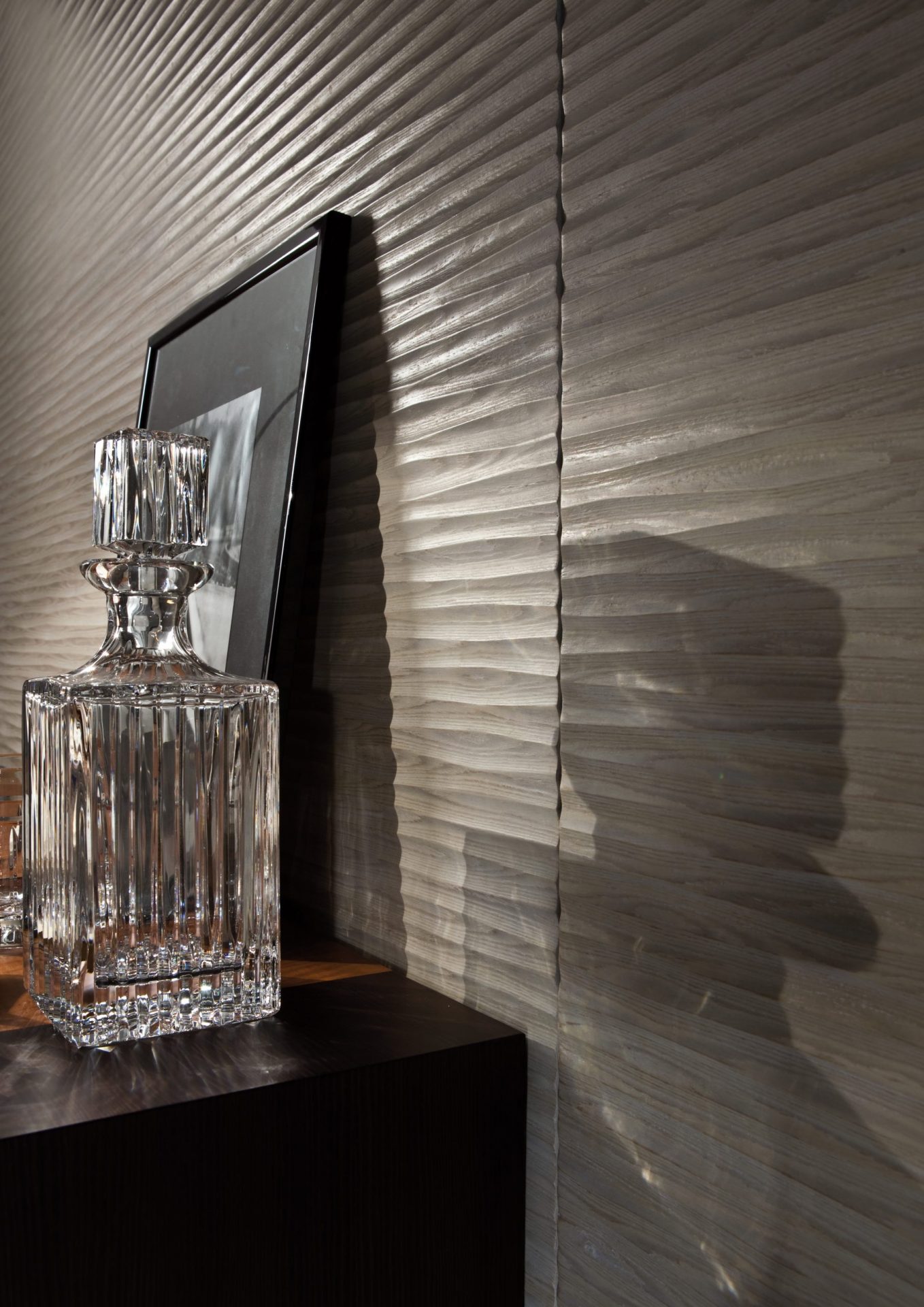
Retail millwork must look refined, but it also has to handle daily use. Boutique interiors may feel calm and curated, but the fixtures are touched, opened, cleaned, leaned on and used throughout the day. Drawers are pulled repeatedly. Doors open and close. Cash wrap edges are contacted by staff, customers, packaging and devices. Fitting room hooks carry garments and bags. Display shelves hold valuable products. Floor-level cabinetry is exposed to more wear than most customers realize.


NYC and Miami boutique interiors
NYC and Miami both attract luxury retail clients, but their boutique interiors often require different design sensitivities. The customer in both markets expects refinement, but the way refinement is expressed can vary by location, architecture, lifestyle and retail context.
In New York, boutique interiors often have to communicate luxury quickly and efficiently. A storefront may be compact, the customer may be moving through a dense shopping district and the design must make a strong impression within a limited footprint. In Miami, luxury retail often has a stronger connection to lifestyle, hospitality, art, wellness, waterfront living and international design culture. The interior may feel more open, more atmospheric and more connected to leisure, resort living or gallery-like presentation.
For projects with a stronger Manhattan or New York focus, MATERIA’s guide to New York custom interior millwork offers a closer look at custom built-ins and refined interior applications.
The important point is that boutique millwork should not simply repeat the same formula in every city. The product category, customer profile, storefront size, surrounding architecture and brand position should shape the interior. A jewelry boutique in Manhattan may need intimate lighting, secure display cases and highly efficient concealed storage. A luxury lifestyle showroom in Miami may need larger display gestures, statement wall panels and a softer hospitality-inspired atmosphere.
In both markets, custom retail millwork helps the boutique create a more controlled and memorable environment. It connects product display, circulation, lighting, service, storage and material identity into one physical experience. That is especially important for brands that need to compete not only with nearby retailers, but also with hotels, galleries, restaurants, private clubs and other visually sophisticated spaces.
Boutique millwork in NYC
NYC is a dense, high-visibility retail market where every square foot has to work hard. Whether a boutique is located near Madison Avenue, SoHo, Tribeca, the Upper East Side or within a Manhattan showroom setting, the interior must make a clear impression quickly. Customers are surrounded by strong storefronts, established luxury brands, refined hospitality spaces and highly curated design environments.
This makes boutique millwork in NYC especially important. A compact footprint cannot afford wasted walls, awkward corners or generic fixtures that fail to support the brand. Product walls may need to carry more visual responsibility. Vertical display opportunities become valuable because wall height can help compensate for limited floor area. Cash wraps, fitting rooms and storage must be planned carefully so the sales floor remains calm and premium.
NYC boutique millwork often needs to solve several challenges at once:
Compact footprints that require precise fixture dimensions
Vertical display opportunities that use height without creating clutter
Premium storefront expectations in visually competitive neighborhoods
High-value inventory that needs secure, elegant presentation
Design-conscious customers who notice material and detail quality
Hidden storage within limited floor plans
Boutique interiors that must feel distinctive almost immediately
A small boutique can still feel luxurious when the millwork is disciplined. A narrow product wall can become a powerful display moment if the shelves, niches, lighting and background panels are coordinated. A compact cash wrap can feel like a refined concierge counter when equipment, packaging and cables are concealed. A small fitting room can feel generous when the mirror, lighting, seating, hooks and wall treatment are properly integrated.
Brands comparing the retail landscape can also explore MATERIA’s perspective on luxury furniture stores in NYC.
For boutique millwork NYC projects, the goal is not to add more fixtures, but to make every fixture more intelligent. The best interiors use custom millwork to create visual clarity, storage efficiency and a stronger sense of brand identity in spaces where every inch matters.
Boutique millwork in Miami
Miami luxury retail is shaped by a different atmosphere. The city’s premium interiors are influenced by waterfront residences, hospitality, design districts, art, fashion, wellness, jewelry, international clientele and a strong culture of visual presentation. A boutique in or near the Miami Design District, Bal Harbour, Brickell, Coral Gables or Miami Beach may need to feel refined, but also open, memorable and connected to lifestyle.
Boutique millwork in Miami often benefits from a slightly different material and spatial approach. Lighter luxury palettes can make interiors feel more relaxed and elegant. Statement finishes can create stronger visual moments for fashion, jewelry and lifestyle retail. Hospitality-inspired retail details can make a boutique feel less transactional and more experiential. Showrooms may blend retail, gallery and lounge qualities, especially when they serve clients who are shopping for homes, wardrobes, accessories or design objects as part of a broader lifestyle.
Miami-specific retail millwork considerations often include:
Lighter luxury palettes that feel refined without becoming cold
Statement finishes that support strong visual identity
Hospitality-inspired retail counters, seating and consultation areas
Boutique showrooms connected to lifestyle, design and private appointments
Premium interiors that blend retail, gallery and lounge qualities
Materials that photograph well while still feeling sophisticated in person
In Miami, display walls may feel more sculptural. Product niches may be used to create moments that feel closer to an art installation. Seating areas may be more prominent because boutique retail can overlap with private appointments, styling conversations, showroom visits or hospitality-style client service. Wall panels, mirrors, lighting and custom fixtures can work together to create a space that feels immersive without becoming overly decorative.
MATERIA Collection is based in Bay Harbor Islands, FL, which gives the brand a natural connection to Miami’s luxury design environment. MATERIA works with designers on bespoke projects across private residences, luxury apartments, refined restaurants, corporate offices and boutiques. This experience is relevant for retail spaces that need to feel more architectural, more atmospheric and more carefully finished than a standard store.
For boutique millwork Miami projects, the strongest results usually come from treating the store as a complete luxury environment. The product still remains central, but the surrounding millwork, wall treatments, lighting, furniture and finishes create the emotional context that makes the product feel more desirable.
How custom fixtures support brand value
Custom retail fixtures influence the way customers judge a product before they touch it. In a luxury boutique, the customer is not only reading the label, material or price. They are reading the entire environment around the product. The display wall, shelf thickness, lighting temperature, fitting room mirror, cash wrap finish and hidden storage all contribute to the feeling of value.
This does not mean boutique millwork should become theatrical or distracting. The most effective custom fixtures often work quietly. They give the product more space, create a clear hierarchy, reduce visual clutter and make the boutique feel composed. When the interior feels composed, the product feels more intentional. When the product feels intentional, the brand feels more valuable.
Custom millwork supports brand value in several connected ways:
It increases perceived product value through better presentation
It gives each category a clear place within the boutique
It builds customer confidence through visible attention to detail
It makes the boutique easier to remember
It supports premium service and smoother staff movement
It creates better conditions for appointment-based selling
It allows private client experiences to feel more polished
It creates designed corners, mirrors and display moments that photograph naturally
These benefits are strategic, but they remain rooted in the physical interior. A boutique does not need custom millwork because it sounds impressive. It needs custom millwork because the built environment shapes how customers behave, how products are understood and how the brand is remembered after the visit.
Circulation and customer comfort
Fixture placement affects how people move. A boutique can look beautiful in photographs but feel uncomfortable in person if the circulation is poorly planned. Customers should be able to enter, orient themselves, approach products, browse without pressure, move toward fitting rooms or consultation areas and complete a purchase without feeling blocked or rushed.
Retail millwork helps structure this movement. The entry moment should introduce the brand and create a clear first impression. Main product walls should guide attention without overwhelming the customer. Browsing zones should allow enough room for movement, especially around display tables or accessory walls. Fitting room flow should feel natural, not hidden or inconvenient. The cash wrap should be accessible without dominating the entire boutique.
Private consultation areas also matter in luxury retail. Jewelry boutiques, fashion brands, design showrooms and premium lifestyle retailers often need space for slower conversations. A client may want to compare pieces, discuss customization, review materials or prepare for a private appointment. Custom millwork can support this by integrating seating, display surfaces, storage and lighting into a more comfortable experience.
Luxury boutiques often need customers to slow down. The goal is not always fast movement through the store. In many premium environments, the customer should feel comfortable enough to explore, pause, touch materials, try products, ask questions and imagine ownership. Millwork helps create that rhythm by shaping the physical journey.
Brand memory through materials and details
Customers may remember a boutique by its atmosphere as much as by its product selection. They may remember the texture of the wall behind the display, the glow of the lighting, the cash wrap that felt like a concierge desk, the fitting room mirror, the stone counter, the niche where a product was framed or the way the boutique felt calm despite carrying valuable inventory.
These details build brand memory. A boutique that uses generic fixtures may be functional, but it is less likely to leave a distinct impression. A boutique with custom retail millwork can create recognizable material cues and spatial moments that stay with the customer. The brand becomes associated with a certain level of finish, proportion and care.
For brands drawn to European refinement, MATERIA’s guide to Italian style in interior design explains how proportion, materiality and craftsmanship shape a luxury atmosphere.
MATERIA’s Italian design language and unique finishes are especially relevant here. Italian-inspired interiors often rely on proportion, material richness, refined surfaces and a strong relationship between architecture and furniture. In boutique millwork, that can translate into custom display walls, integrated cabinetry, detailed panel systems, sculptural counters, refined shelving and carefully coordinated furniture pieces.
Brand memory is rarely created by one element alone. It comes from the relationship between many details. The wall panels relate to the display shelves. The shelves relate to the lighting. The lighting relates to the product. The cash wrap relates to the service experience. The fitting room relates to the customer’s personal decision. When these details work together, the boutique feels complete.
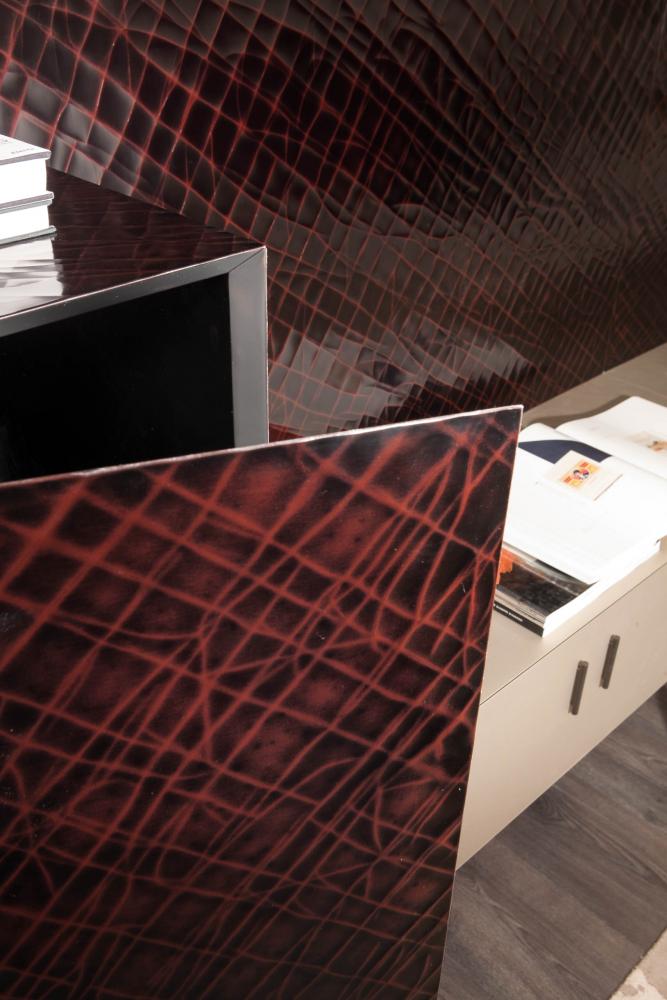

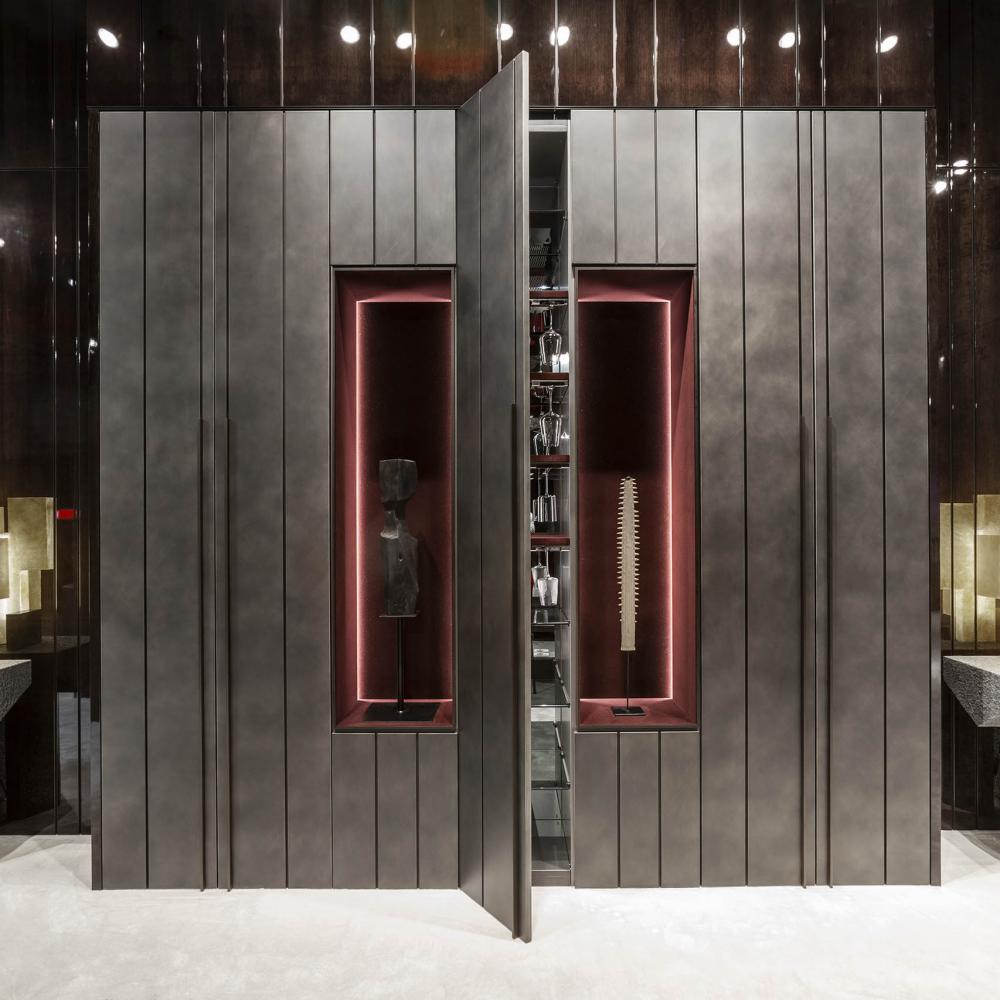


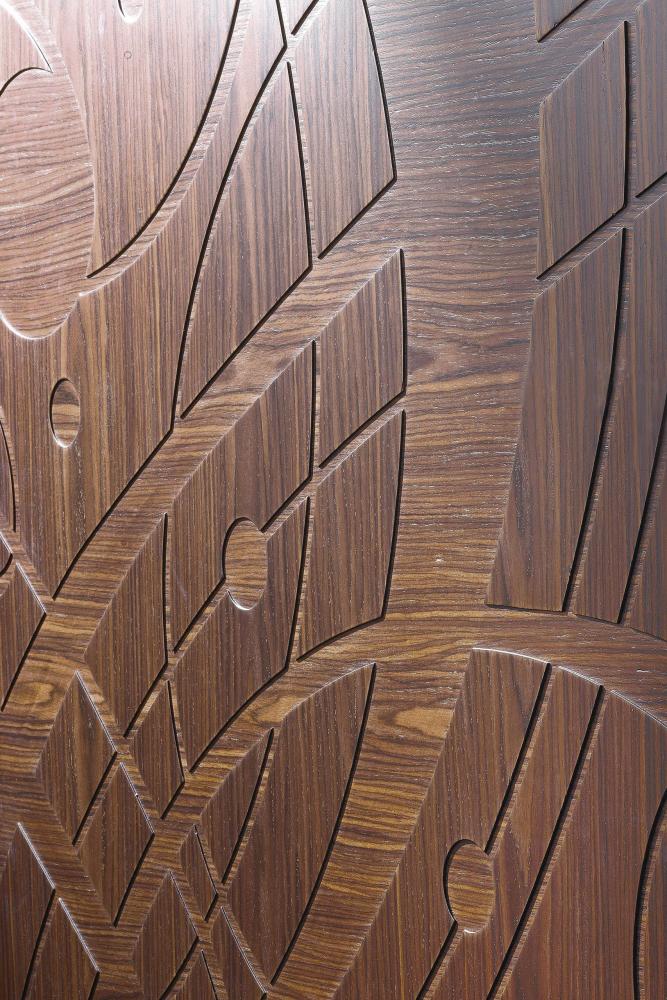
Coordinating millwork with lighting, flooring, wall panels and furniture
Boutique millwork should be planned as part of a complete interior system. It should not be treated as a separate package added after flooring, lighting, wall finishes and furniture have already been selected. In luxury retail, every visible element contributes to the same brand atmosphere, so the millwork must relate to the surfaces and objects around it.
The relationship between millwork and the wider interior affects both appearance and function. A product wall may need to align with ceiling lighting. A cash wrap may need flooring that supports circulation and durability. A fitting room mirror may need lighting and wall panels designed together. A display table may need to relate to surrounding built-ins. Doors and hardware may need to match the boutique’s material language.
Custom retail millwork should be coordinated with:
Flooring
Wall panels
Ceiling details
Lighting
Mirrors
Loose furniture
Display tables
Seating
Doors
Hardware
Decorative surfaces
Cabinet systems
MATERIA offers wall treatments, fine furniture, closet and cabinet systems, office furniture, luxury doors, kitchens, lighting and luxury bathroom solutions. This broad design universe makes it easier to think about a boutique as one complete interior language rather than a collection of unrelated parts.
For luxury boutiques, this level of coordination is especially important because customers experience the space at close range. They notice how a mirror feels inside a fitting room. They notice whether the display table looks connected to the product wall. They notice whether the seating feels like it belongs in the same world as the cabinetry. When these elements are aligned, the boutique feels more refined and more credible.
Wall panels and product display backgrounds
Wall panels create the backdrop for retail storytelling. In a boutique, the wall is rarely just a boundary. It is a presentation surface, a material statement and often the main visual field behind the product. When the wall is treated with care, it gives depth and atmosphere to the entire boutique.
Decorative panels can make a product area feel more architectural. Boiserie can bring structure and classical refinement when used in the right context. Acoustic panels can support comfort in appointment-based or hospitality-inspired retail spaces. Marble-effect panels can add a sense of luxury without making every surface heavy. Metal-effect panels can bring contrast, precision and a more contemporary edge. Textured wallpapers and natural shapes can soften the interior and create a more layered atmosphere.
The key is balance. A wall panel should support the product, not overpower it. A dramatic surface may be appropriate for a hero wall, while quieter panels may work better behind larger product categories. A jewelry niche may benefit from a darker, more intimate background. A fashion boutique may need a warmer, more neutral surface that allows color, fabric and silhouette to remain central.
MATERIA’s wall treatment categories give designers and boutique owners many ways to approach this. Decorative panels, wall panel systems, textured wallpapers, architecture and geometric wallpapers, modern affresco, marble-inspired collections, metal-effect panels, precious-stone directions and Venetian plaster can all shape the boutique’s atmosphere when used with discipline.
Furniture and built-ins should feel connected
Loose furniture should not look disconnected from the millwork. In luxury boutique interiors, every chair, console, display table, sideboard, lounge seat or consultation piece should feel like it belongs within the same design language as the built-in fixtures.
This does not mean everything must match exactly. In fact, luxury interiors often become more interesting when there is contrast between materials. A stone display table can sit beautifully near veneer wall panels. A lacquered sideboard can relate to a cash wrap through proportion rather than identical finish. A lounge chair can soften a boutique with strong metal or stone details. The point is that the relationship should feel intentional.
A boutique lounge chair, console, display table or sideboard can relate to the millwork through finish, proportion, texture or design language. If the product wall uses warm wood veneer, a nearby display table may repeat the tone in a more sculptural form. If the cash wrap uses metal inlays, a console or sideboard may include a subtle metal detail. If the boutique uses textured panels, seating and fabric choices can echo that softness.
MATERIA’s fine furniture offering, including designer sideboards, consoles, wall units, chairs and tables, helps support this type of coordination. Instead of treating furniture as a separate purchase, boutique owners and designers can use furniture to reinforce the same atmosphere created by the millwork.
Mirrors, doors and fitting room transitions
Mirrors, doors and fitting room transitions should feel integrated into the boutique’s millwork language. These elements are often touched, used and remembered by customers, especially in fashion, jewelry and accessory retail. If they feel generic, they can weaken the atmosphere created by the main sales floor.
Mirrors should be planned for scale, lighting and placement. A large mirror can make a compact boutique feel more open, but it must be positioned carefully so it supports the customer experience rather than creating visual confusion. In jewelry boutiques, mirrors can support close viewing. In fitting rooms, they must help the customer see the product clearly and comfortably. In lifestyle showrooms, mirrors can add depth and reflect important display moments.
Doors are equally important. A fitting room door, private appointment room door or VIP area transition should not feel like a standard back-of-house element. Luxury doors, including sliding, pivot or swing doors, can become part of the boutique’s architectural identity when coordinated with wall panels, hardware and surrounding millwork.
The transition into a fitting room should feel natural. The surrounding panels, mirror placement, lighting, hooks, seating and door detail should all support the same brand atmosphere. When the customer leaves the sales floor and enters the fitting area, the experience should become more intimate, not less refined.
Planning retail millwork with MATERIA
Boutique owners, fashion brands, jewelry retailers, showroom operators, designers and retail developers should approach a retail millwork project by first defining the experience they want the customer to have. The fixture plan should not begin with shelf dimensions alone. It should begin with the boutique category, product value, customer journey, brand atmosphere and operational needs.
A strong retail millwork plan usually follows a clear sequence:
Define the boutique category and customer journey
Identify hero products and key display moments
Plan storage before designing visible displays
Coordinate lighting and electrical needs early
Select materials based on atmosphere and durability
Align wall panels, furniture, mirrors and fixtures
Review installation requirements and site dimensions
Work with designers, architects and millwork providers before final build-out
This sequence helps prevent common problems. A boutique may look impressive in concept but fail in daily use if storage is underestimated. A product wall may appear beautiful but underperform if lighting is not integrated properly. A fitting room may look finished but feel uncomfortable if mirror scale, lighting and seating are not coordinated. A cash wrap may look elegant but become frustrating for staff if packaging, cables and devices are not planned.
For retail millwork to support a luxury boutique properly, it must balance brand, product, customer and operation. The boutique should look refined, but it should also function smoothly. Staff should be able to access inventory, prepare packaging, manage appointments and maintain order without exposing the behind-the-scenes work to the customer.
For boutique owners, fashion brands, jewelry retailers, showroom operators, designers and retail developers, MATERIA Collection offers a refined approach to custom retail fixtures, display wall millwork, fitting room environments, cash wrap counters, Italian wall treatments and complete luxury boutique interiors. The result is a retail space that does more than hold products. It gives them atmosphere, structure and lasting presence.
Frequently Asked Questions - Retail Millwork for Luxury Boutiques in NYC and Miami
What is retail millwork for luxury boutiques?
Retail millwork for luxury boutiques includes custom built-in displays, shelving, niches, cash wraps, fitting room elements, wall panels, lighting and concealed storage. It shapes how products are presented, how customers move and how refined the boutique feels.
How is retail millwork different from standard retail shelving?
Standard shelving mainly holds products. Custom retail millwork is designed around the boutique’s brand, space, product type, lighting, storage and customer experience, making the fixtures feel like part of the architecture.
What elements should be included in luxury boutique millwork?
Luxury boutique millwork can include display walls, product niches, custom shelving, cash wrap counters, fitting rooms, mirrors, wall panels, integrated lighting, storage cabinets and private service areas.
Why is display wall millwork important in boutiques?
Display wall millwork creates visual hierarchy, reduces clutter and helps key products stand out. It makes the collection feel curated rather than crowded.
Can retail millwork be used for jewelry boutiques?
Yes. Jewelry boutiques benefit from illuminated niches, secure display cases, refined counters, mirrors, controlled lighting and luxury finishes that make each piece feel rare and valuable.
Why should NYC and Miami boutiques consider custom millwork?
NYC and Miami boutiques operate in competitive luxury markets where interiors must feel memorable, polished and brand-aligned. Custom millwork supports better product presentation, storage, circulation and overall atmosphere.