Material Language & Surface Art
Woods, stones, and metals-how to specify the palette
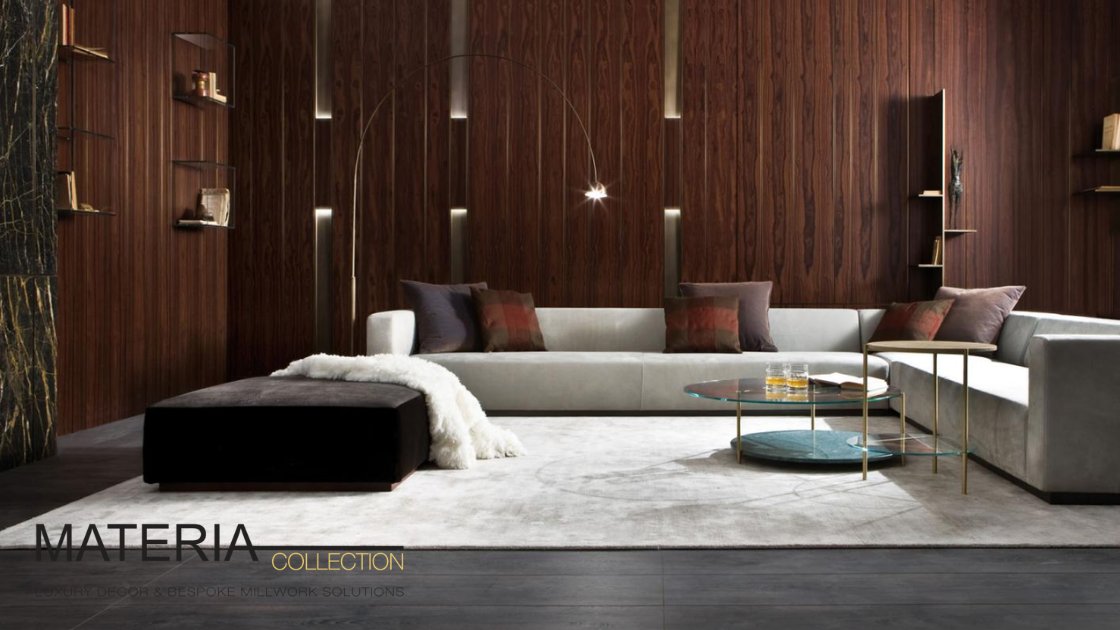
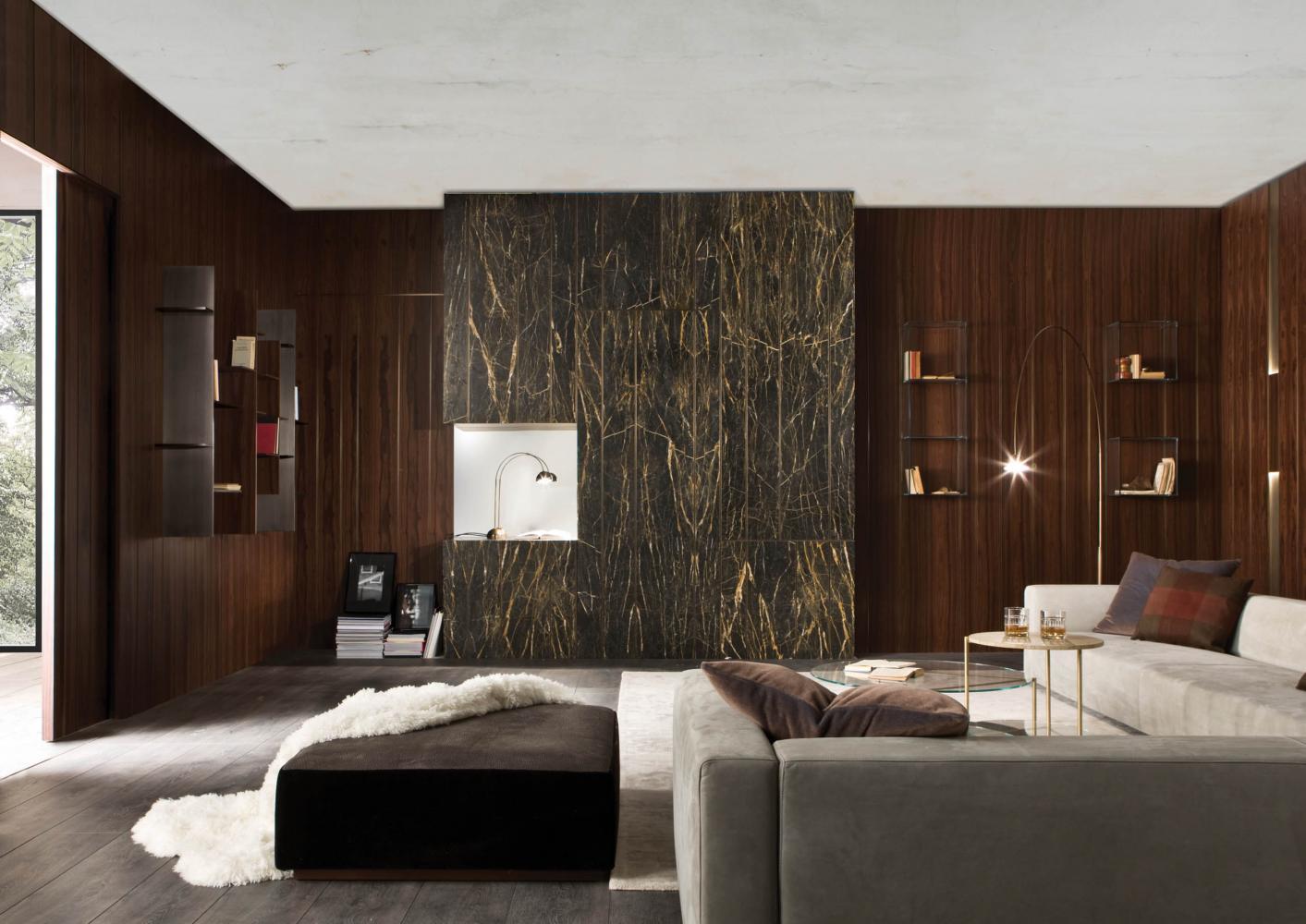
Start with a primary wood that sets the chromatic temperature of the project, then lock every other finish to that anchor. For warm schemes, European walnut or smoked oak provides the right depth without going orange; for cooler, contemporary schemes, straight-grain oak with a neutral stain or thermo-treated ash keeps the palette crisp. Specify cut and match up front-quarter-cut for linear calm, rift-cut for tight, consistent grain, and flat-cut only where figure is desired as an accent. Request veneer flitches in sequential order and assign them to elevations, not individual components, so doors, wall panels, and integrated casework read as one continuous surface.
Pairing marble and composite stones with brushed or patinated metals
Stones should temper, not compete with, the wood.
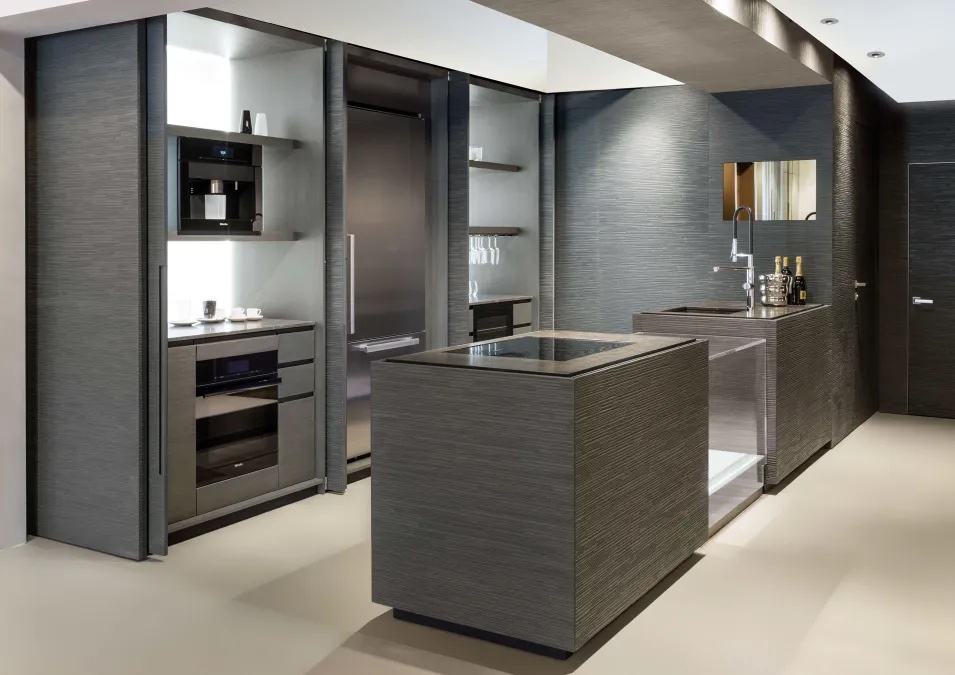
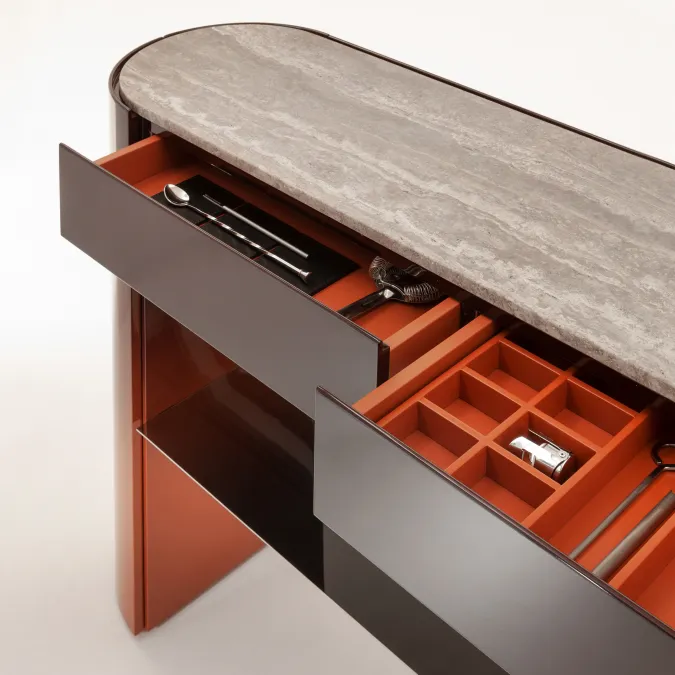
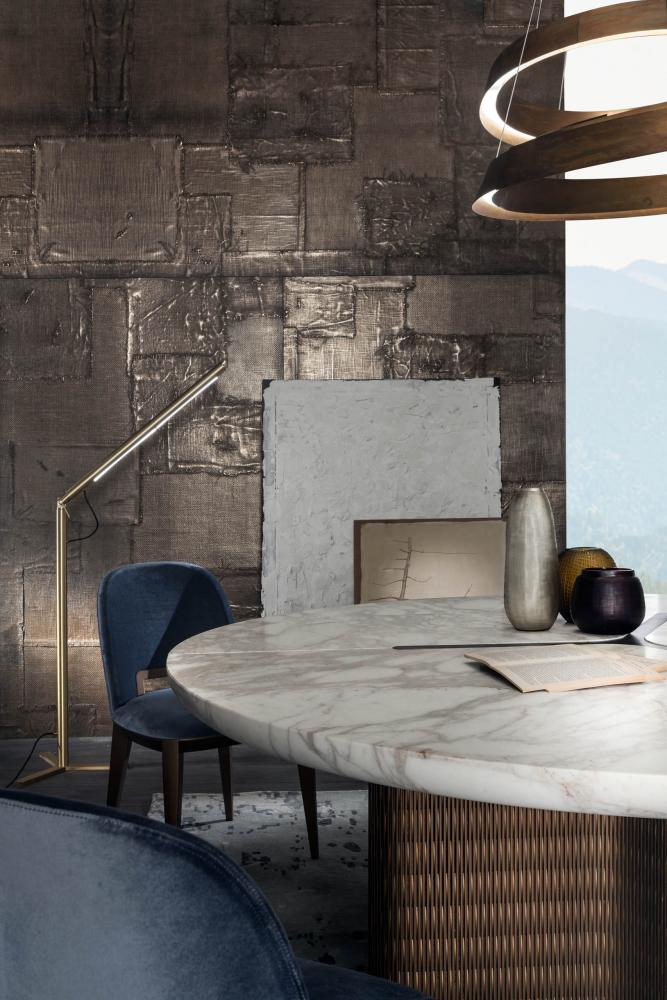
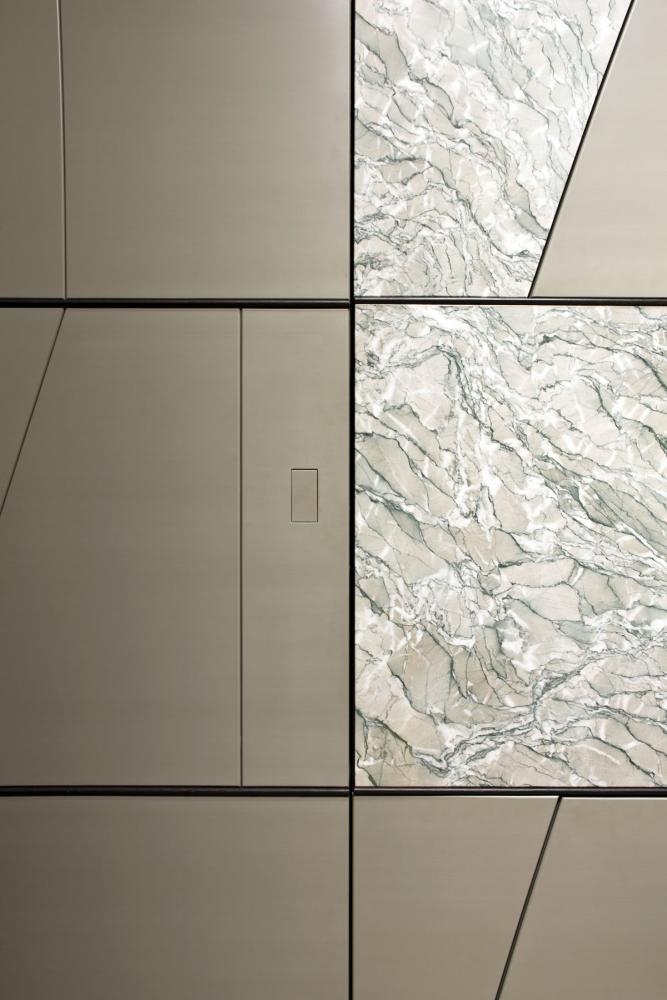
Honed marble or limestone in neutral greys and beiges will absorb light and reduce glare; sintered surfaces deliver stain resistance in kitchens and bathrooms while maintaining a stone-like tactility. For veined stones, use book-matching or slip-matching in a consistent orientation across planes. Where slabs meet millwork, maintain a 2–3 mm shadow line to avoid material “kissing” and to provide tolerance for movement.
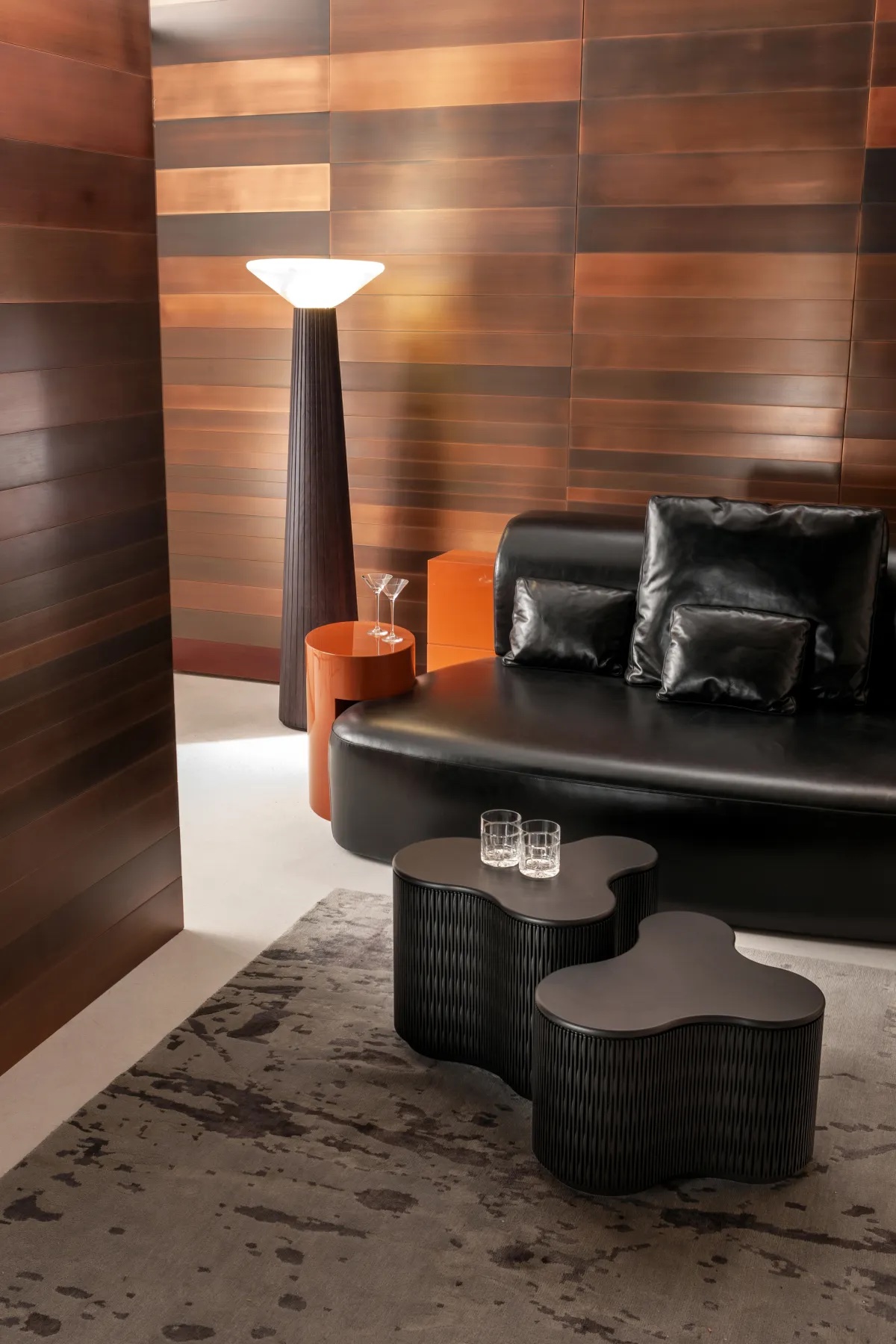
Choose metal as a quiet accent that binds wood and stone together. Brushed brass, gunmetal, or patinated bronze work well as inlays, pulls, slim reveals, and lighting trims. Specify a hand-feel finish (e.g., light brush, matte clear topcoat) with published rub resistance and a field-repair method for inevitable scratches. Avoid mirror-polished finishes in residential day-to-day areas; they amplify fingerprints and visually fragment the composition.
Performance notes: substrate prep, movement joints, VOC compliance, maintenance cycles
Substrates: Require flatness of ±2 mm over 2 m for panel walls and wardrobe runs. Gypsum assemblies should be paper-faced and primed before panel rails mount; masonry walls need furring to deliver a true plane. Moisture reserves must be stabilized before install (target interior 40–60% RH).
Movement joints: For stone floors larger than 25 m² or exposed to radiant heat, include saw-cut movement joints at 3–5 m intervals, aligned with architectural lines. At walls and tub surrounds, seal perimeter joints with neutral-cure silicone or high-performance hybrid sealants to accommodate thermal and moisture shifts.
VOC compliance: Specify low-VOC adhesives (≤50 g/L where feasible) and waterborne or high-solid finishing systems that meet current limits. Require certificates for primers, sealers, and topcoats, and coordinate with HVAC to maintain negative pressure during finishing and curing.
Maintenance cycles: Provide a surface care schedule at handover. Honed stones: ph-neutral cleaner, annual reseal where appropriate. Oiled wood: light re-oil in high-wear zones every 12–18 months. Brushed/patinated metals: dry wipe and occasional balm per maker’s instructions-no ammonia or acidic agents.
Italian wall panel systems (Maxima, Stars, Line) as architectural backdrops
Maxima: carved, made-to-measure wood panels that sculpt light
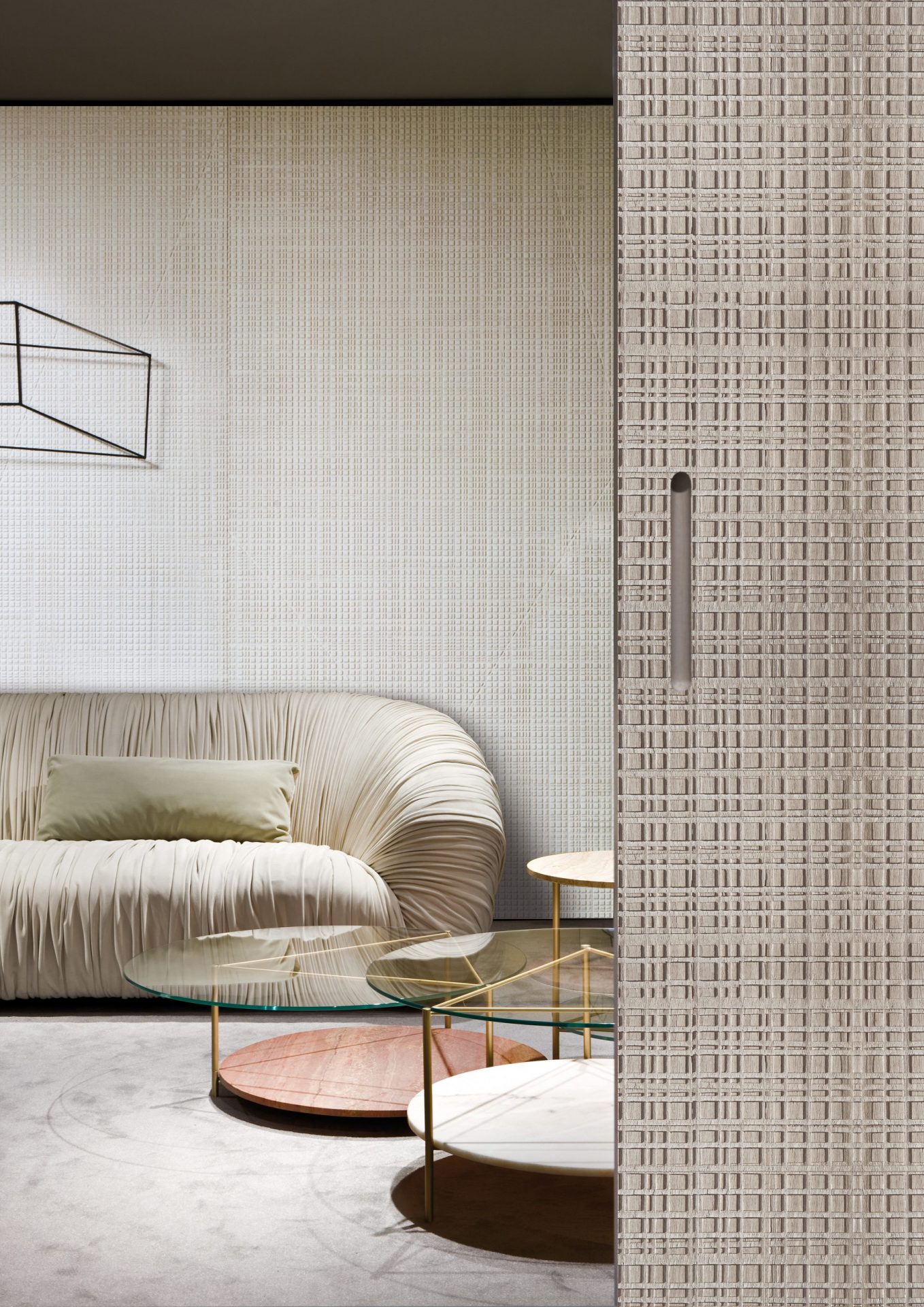
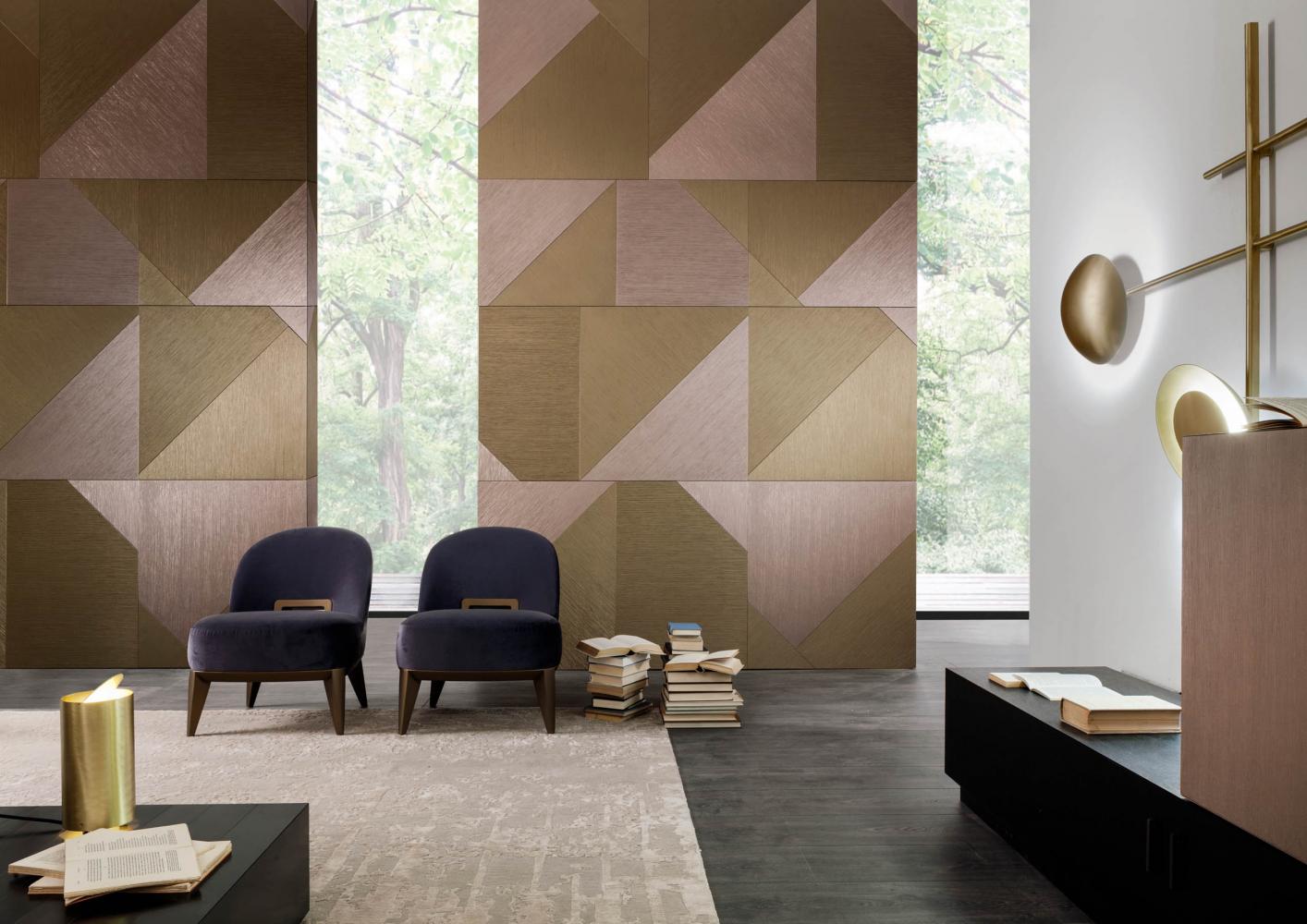
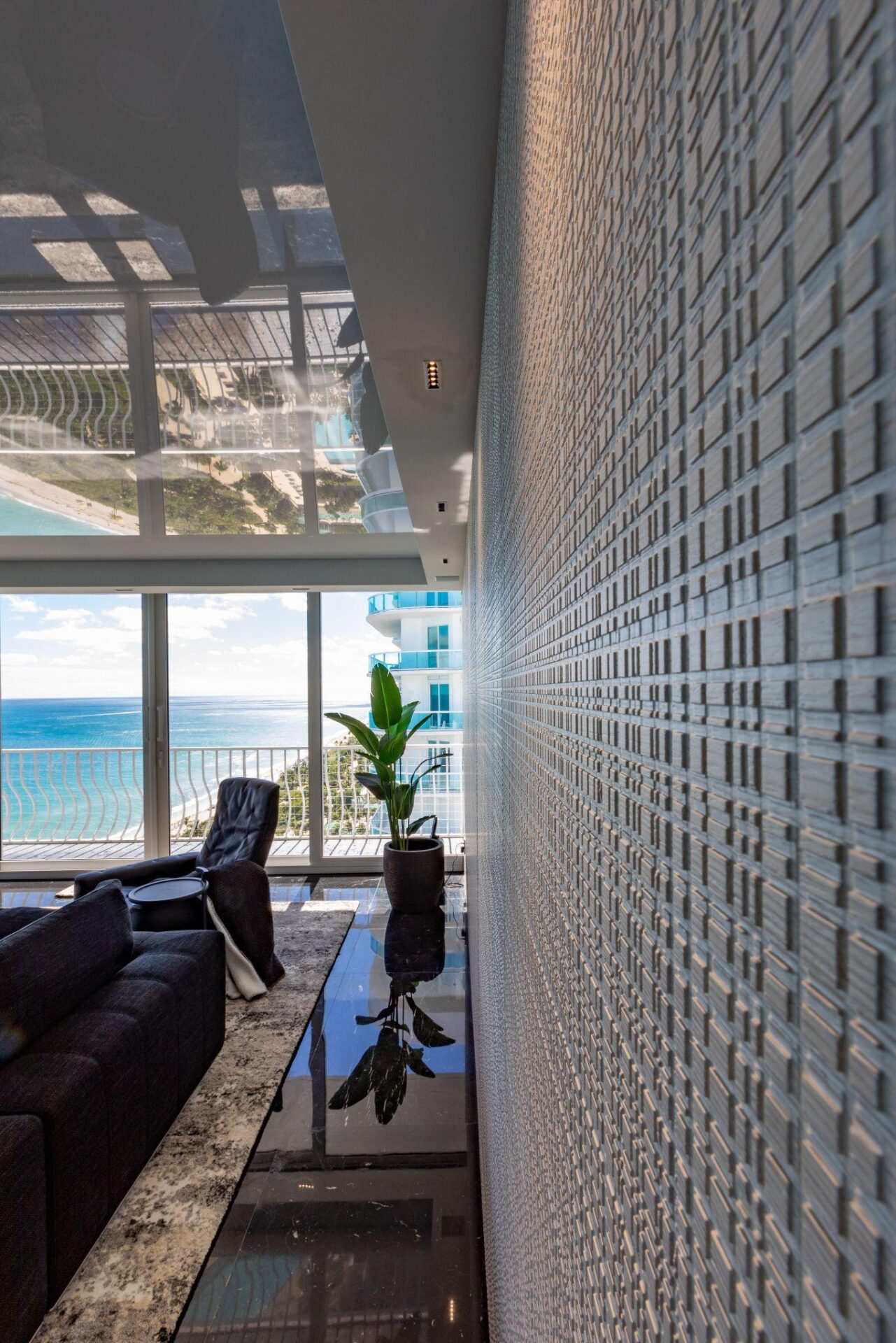
Maxima-style carved panels are the quintessential example of depth without noise. The relief is engineered to catch grazing light, creating a slow rhythm along circulation walls and focal backdrops. Use them on entry axes, behind reception consoles, or as the proscenium to dining rooms and lounges. In practice, you will:
Establish a datum height and plot the panel module so seams align with door heads, console lengths, and pendant centers.
Integrate concealed doors with continuous grain; specify leaf thickness to match panel depth so the door disappears in profile.
Coordinate lighting early. Perimeter grazers recessed 50–70 mm from the face will animate relief; keep beam angles tight to avoid veiling glare.
Stars & Line: linearity for galleries, corridors, dining niches
Linear collections-whether expressed as fine reeding, linear brass insets, or micro-slat systems-guide movement and calm long walls. In galleries and corridors, they double as wayfinding. In dining niches, they provide a tactile counterpoint to smooth table tops and upholstered seating. To detail correctly:
Fix a repeat and stick to it across rooms. Even minor spacing drift reads as visual noise.
Where metal insets are used, mill precise channels and pre-finish metal to avoid site scratching. Provide slip joints at logical reveal breaks.
For acoustic softening, place a thin acoustic fleece behind slatted or perforated backers; maintain breathable spacing for performance.

Where they shine: case placements, acoustics, lighting integration, and plank alignment across doors
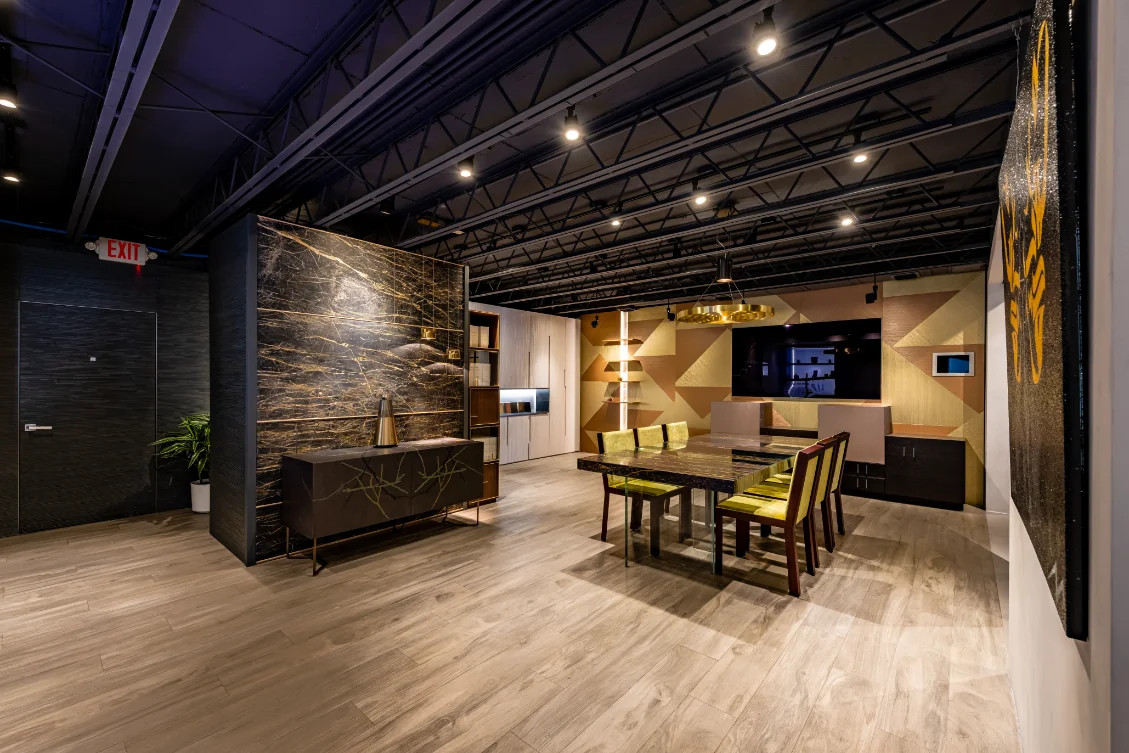
Case placements: Float sideboards and consoles 60–80 mm off the floor with a recessed plinth; align the casework’s top with a panel seam or brass inlay so object and wall read as one composition.
Acoustics: Carved and ribbed panels scatter mid/high frequencies, mitigating flutter in hard-surfaced rooms. For larger rooms, combine relief with dense rugs, upholstered seating, and lined draperies.
Lighting integration: Reserve channels for LED grazers in the subframing. Maintain service access through removable panel sections; never bury drivers without ventilation.
Plank alignment across doors/panels: Treat door leaves as part of the wall. Assign the veneer sequence through the door zone; reinforce edges with hardwood lippings or aluminum to protect fragile miters. Use magnetic latches or minimal pulls so hardware doesn’t interrupt the grain.
Textiles & leathers
Choosing weave density and finishes for longevity
Textiles must feel luxurious yet survive real use. Specify high double-rub counts for sofas and dining chairs, but avoid shiny, slick finishes that can cheapen the palette. Wool blends and tightly woven bouclés deliver warmth and dimensionality; linen weaves with performance backings give relaxed elegance without sag. For drapery, interline to improve hang and acoustic absorption, and keep hems weighted so folds stack precisely.
Tone-on-tone layering for quiet luxury
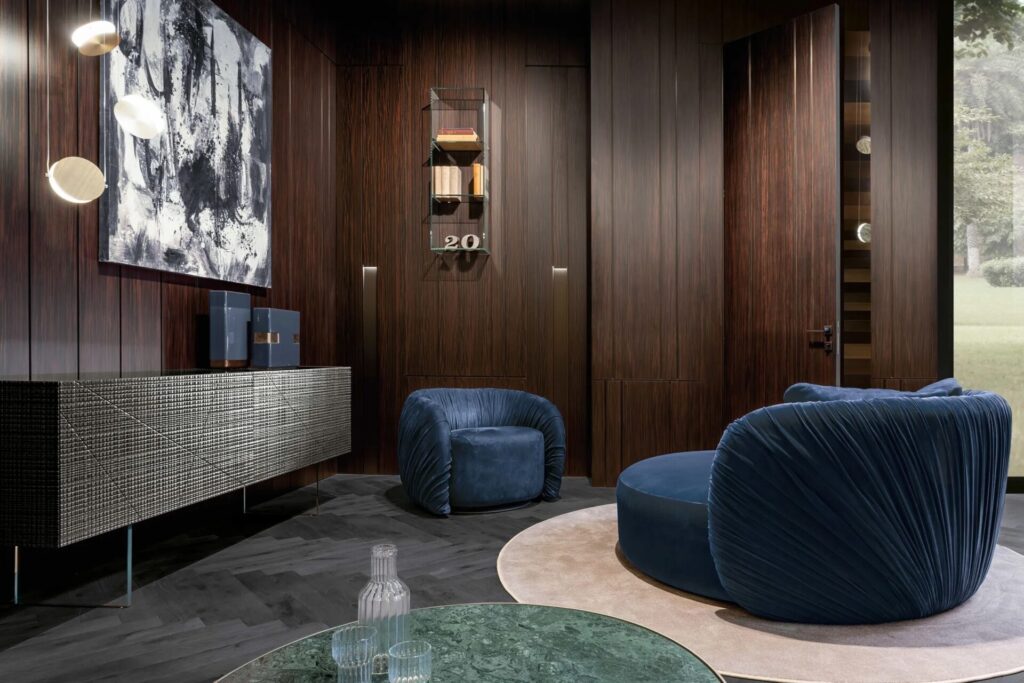
Resist the urge to “decorate.” Build depth by stacking similar hues and varied textures: matte paneling, a slightly sheened lacquer on a console, a honed stone hearth, a soft-wash rug. Leather accents-straps on wardrobe pulls, stitched desk inlays, saddle-wrapped handrails-introduce human-scale detail. Select protected leathers for heavy-use touchpoints and aniline for statement pieces away from direct sunlight. The aim is to let the room breathe: a tactile score where every surface participates, none shouts.



Fine Furniture – Italian Style
Seating & lounges
Modularity that supports zoning and acoustic comfort
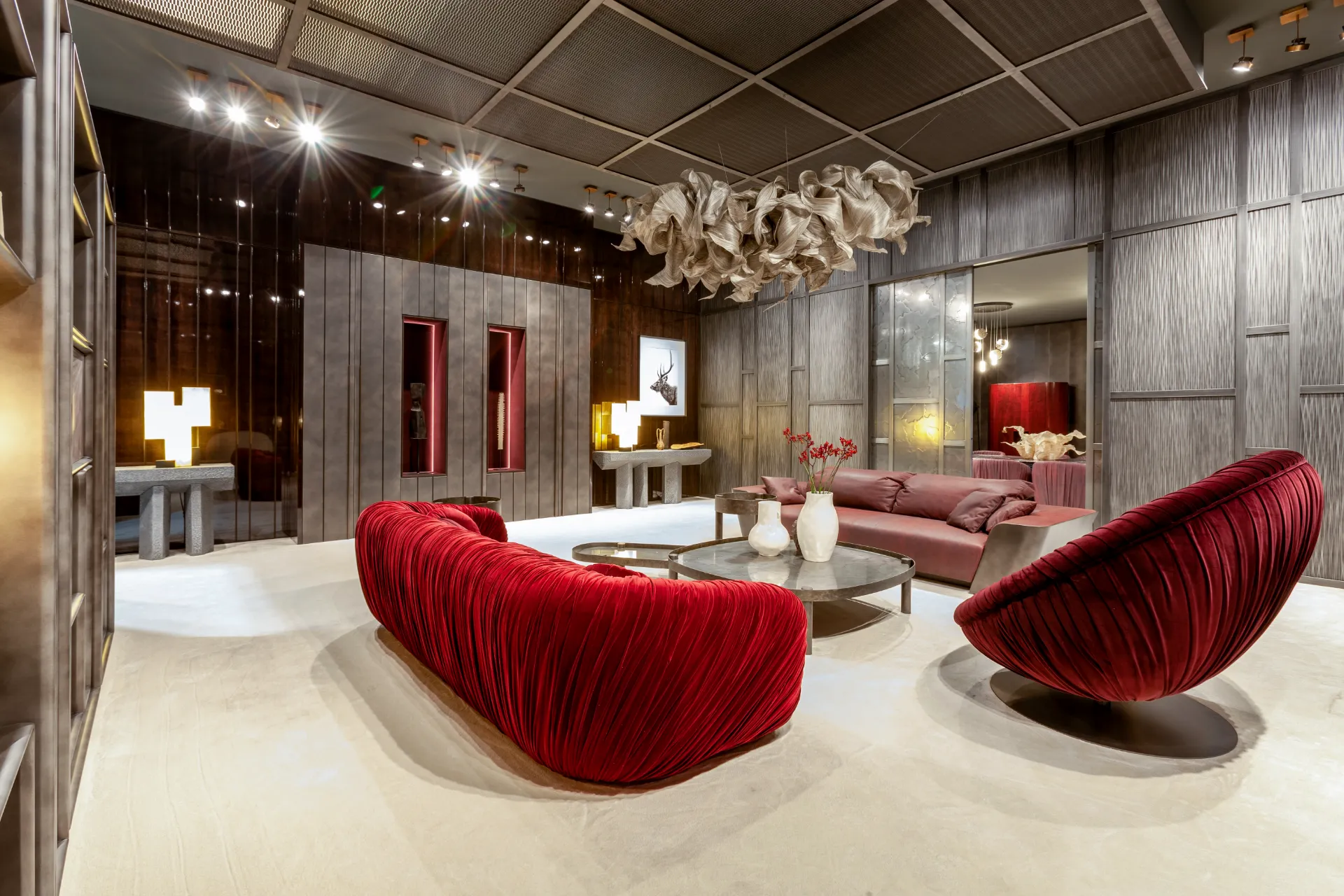
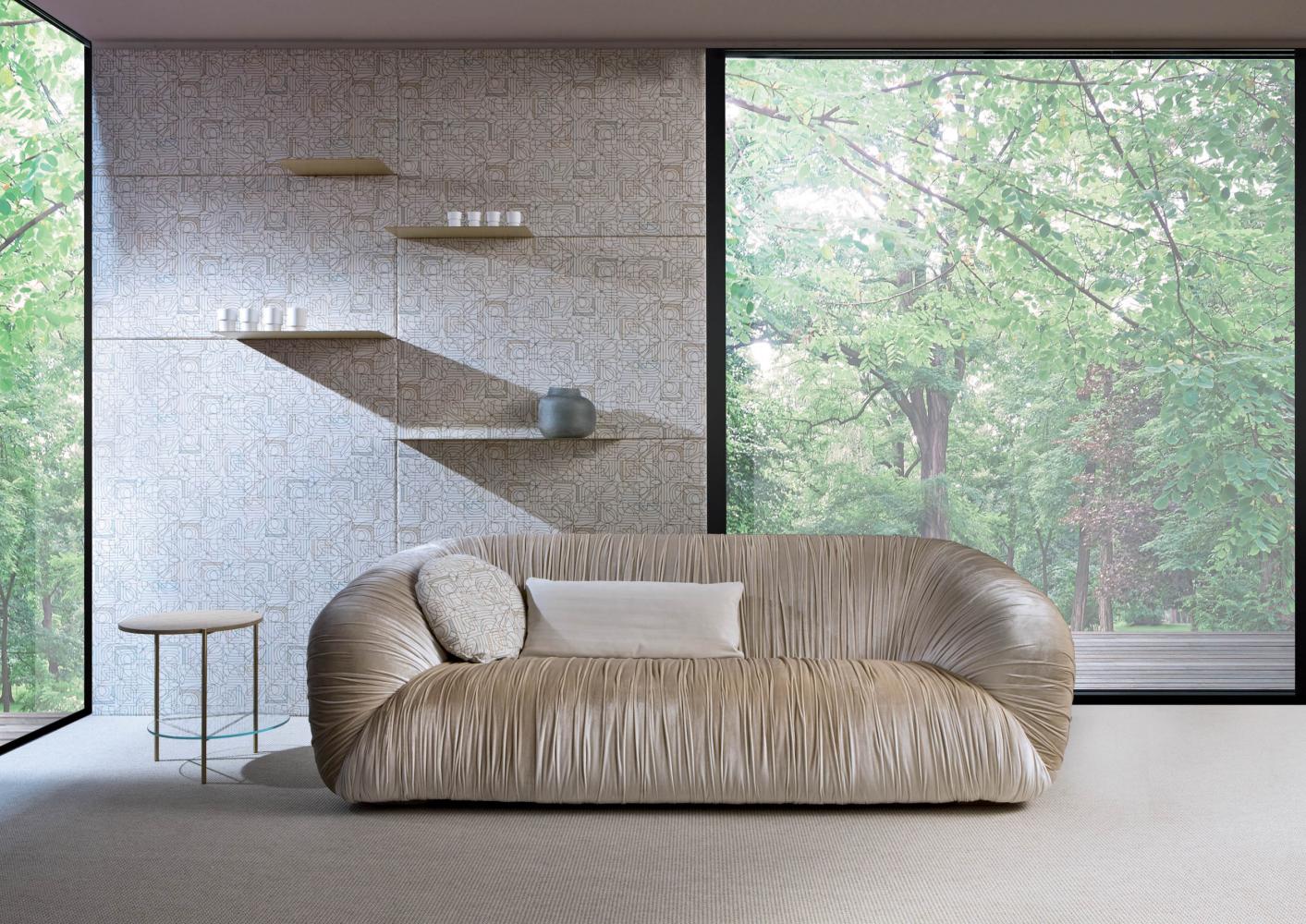
Think of sofas and lounge pieces as architectural tools rather than isolated objects. A Rialto Sofa placed on axis with a focal wall establishes a formal reception line; a Symphony Modular Sofa can be broken into peninsula, corner, and armless segments to build micro-zones-conversation, media, and reading-without erecting hard partitions. Depths in the 950–1050 mm range provide lounge comfort while maintaining pass-throughs of at least 900 mm for ADA-conscious circulation. Corner modules should resolve at clean 90° or soft 30–45° chamfers to keep the grid legible.
Acoustically, modular groupings add soft mass where it matters: near reflective expanses of paneling or stone. Combine a low-pile area rug (dense felt backing) under the footprint with lined drapery at the window wall to damp flutter echo. If the space includes carved or ribbed wall panels, orient the longest sofa edge parallel to the relief so grazed light reads as a calm backdrop rather than visual noise behind the headrests.
Upholstery choices for real traffic
Select textiles by hand-feel and duty cycle. For high use, specify tight weaves with performance backings; avoid high sheen that will telegraph creases. Bouclé and wool blends deliver dimensionality and temperature regulation; protected aniline leathers work well on Drapè Lounge/Club silhouettes where the crease-and-fold gesture is part of the design language. For families or hospitality, keep seat cushions reversible and zipper-accessible; set a maintenance plan: light vacuum weekly, professional steam or leather balm at 12–18 months. Always approve final fabrics under the project’s lighting temperature to confirm hue stability.
Casegoods & storage
Sideboards and consoles as anchors
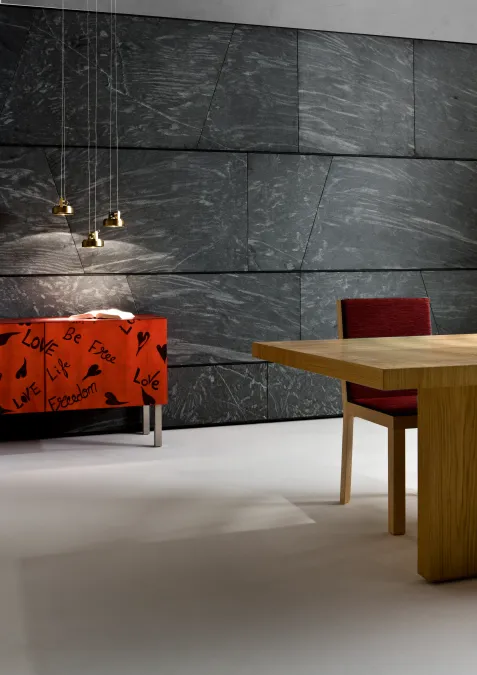
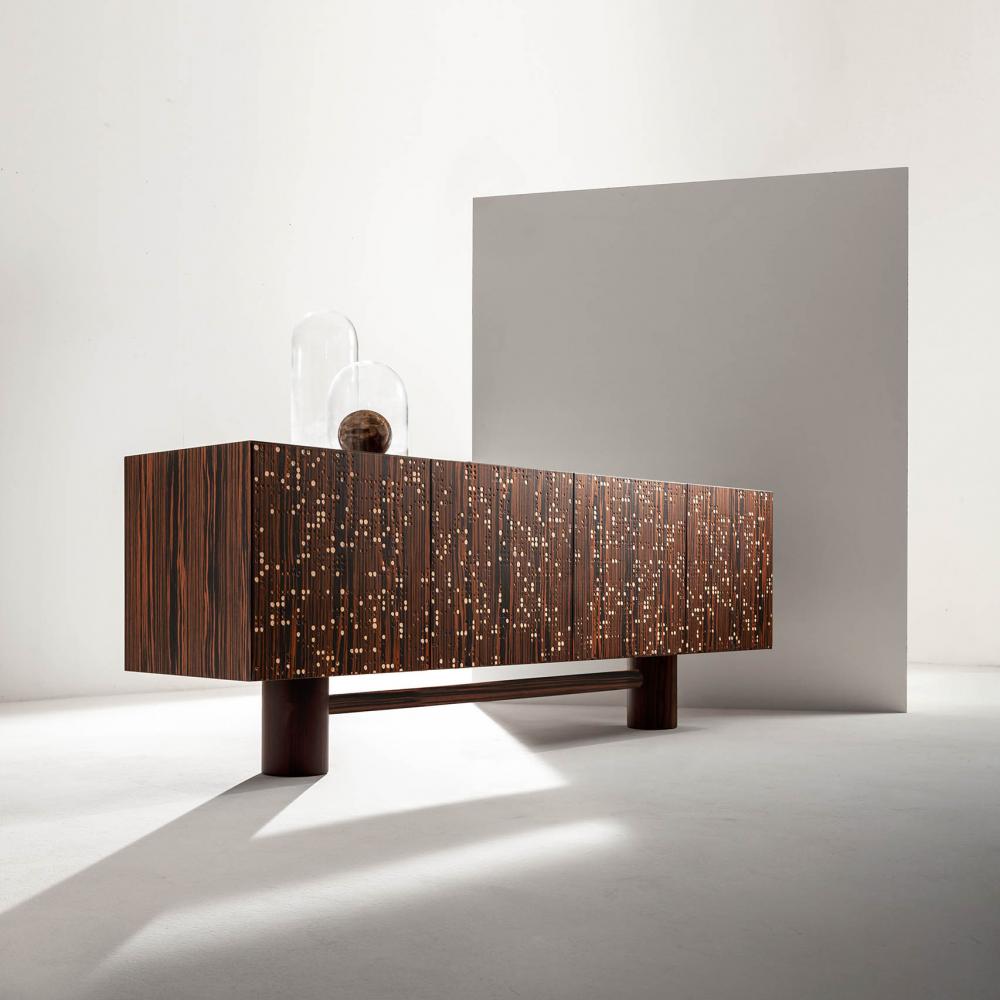
Long walls crave rhythm and negative space. Use a single confident piece-Infinity, Talento, or ML22/ML23-instead of a scatter of small items. Center the top at a datum line that aligns with panel seams or door heads, typically 800–900 mm high for consoles and 700–750 mm for sideboards. Float volumes on recessed plinths (60–80 mm set back 30–40 mm) so they read as architectural insertions rather than heavy boxes. When walls are fluted or carved, choose a case front with calmer grain or lacquer to avoid pattern competition. Cable management is non-negotiable: pre-route grommets from wall boxes to the back panel, and specify ventilated backs if the cabinet hosts media components.
Wardrobes and walk-ins as architecture
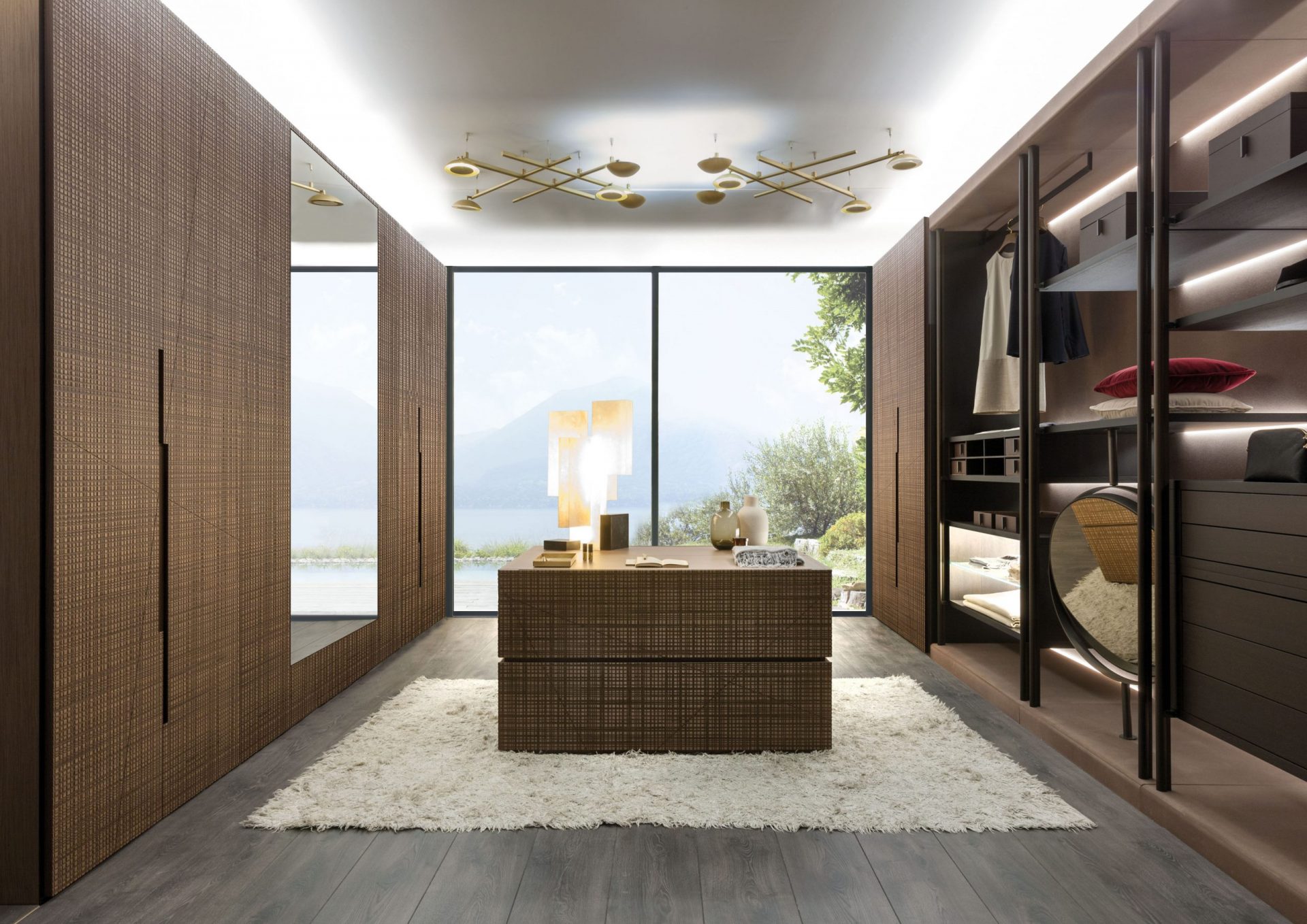
Treat closets like rooms within rooms. LINE Walk-In and Harvey systems are easiest to rationalize when you begin with a module (often 600 mm or 24 in) and keep that logic through shelves, drawers, and doors. Integrate lighting at three levels: linear at the fascia for global light, vertical strips at pilasters for even garment illumination, and low plinth lights for night navigation. Ventilated plinths (hidden slots behind the shadow line) prevent mustiness; felt-lined drawers and soft partitions protect delicates and accessories. For mirrored panels, maintain a 2–3 mm shadow gap to adjacent wood so thermal movement never pinches glass.
Beds and nightstands: the proportion game
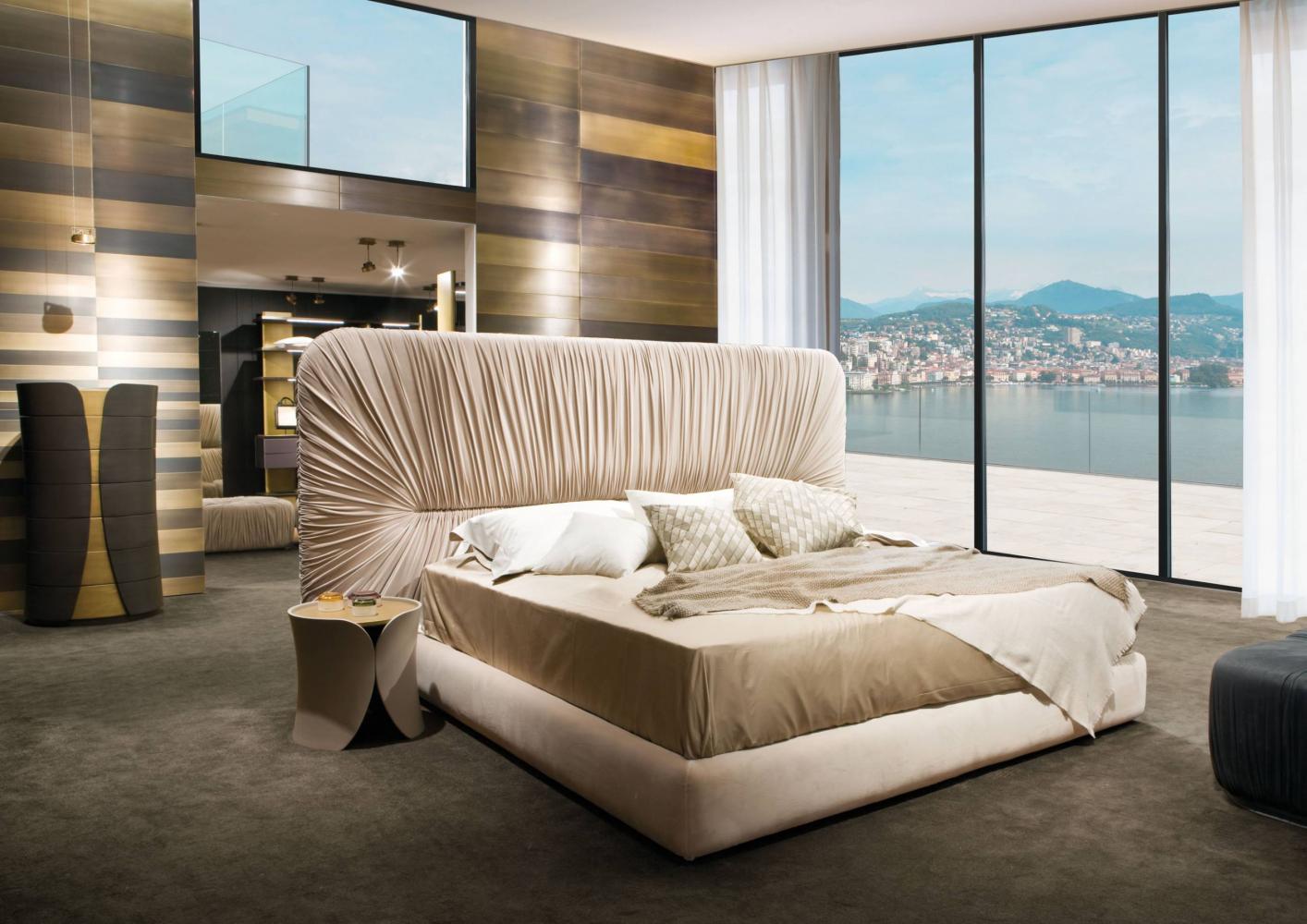
A bed sets the octave of the room. Drape Bed and Symphony Bed succeed when the headboard aligns with a panel field or becomes a panel itself. Fix these relationships early: headboard top within 50–100 mm of a horizontal seam; nightstands-such as the Corteccia nightstand-centered on verticals. Maintain at least 700 mm between bed edge and opposing wall or furniture for flow. Integrate low-glare reading lights and hidden power inside nightstands; specify soft-close hardware and protective top finishes (ceramic or anti-scratch lacquer) so daily use does not scar the composition. If the room is compact, swap thick frames for upholstered platforms flush with the mattress edge to win circulation without visual compromise.