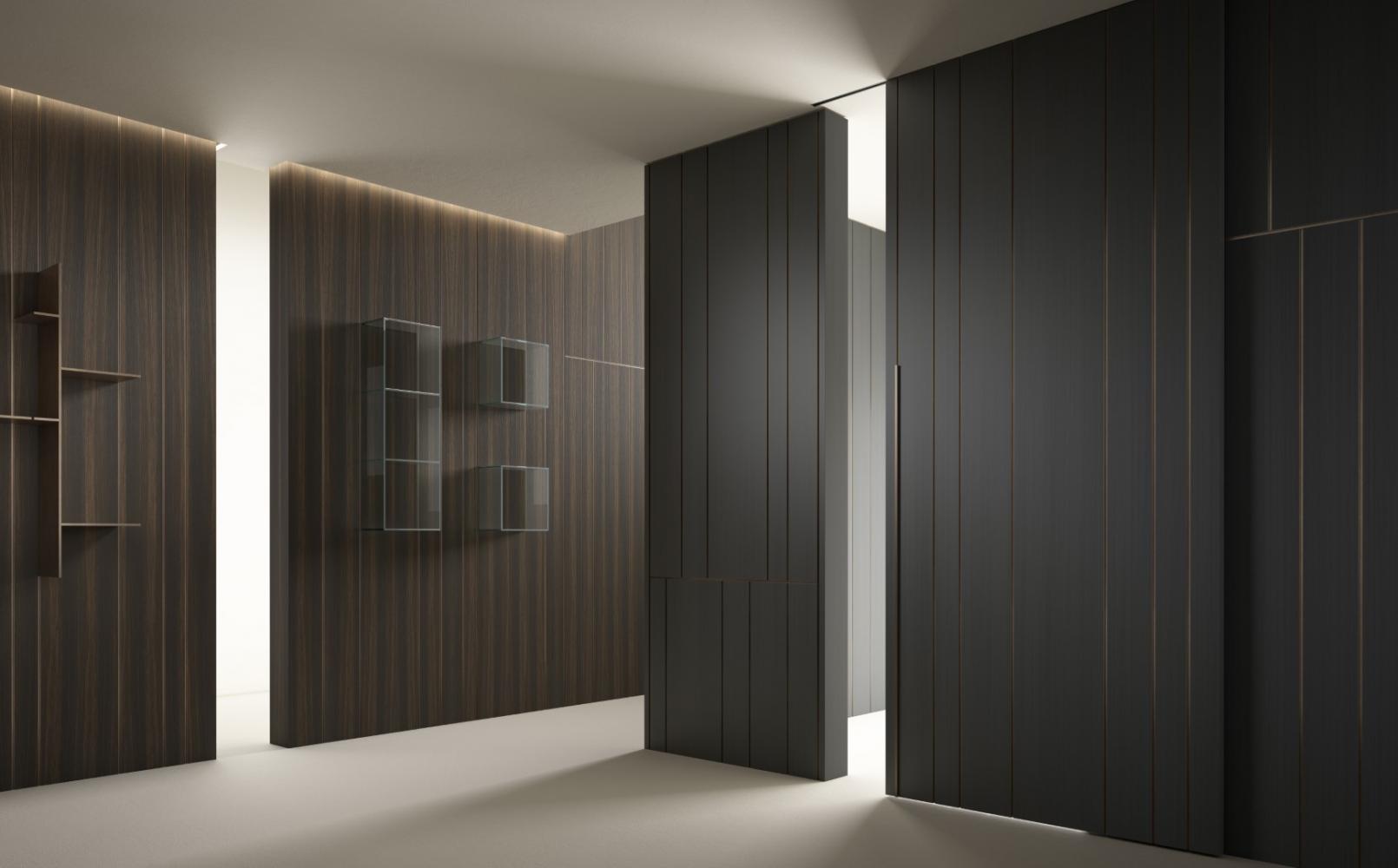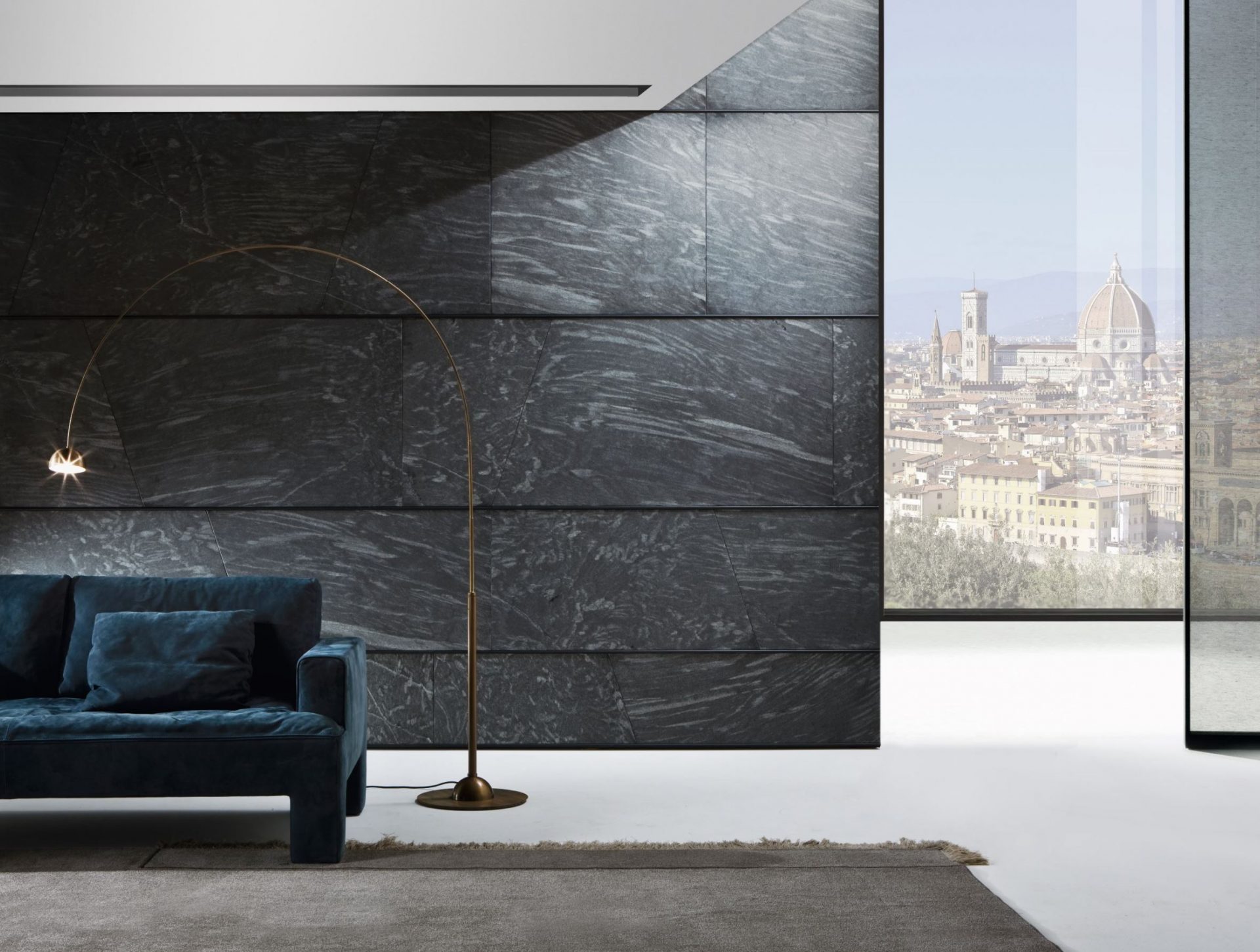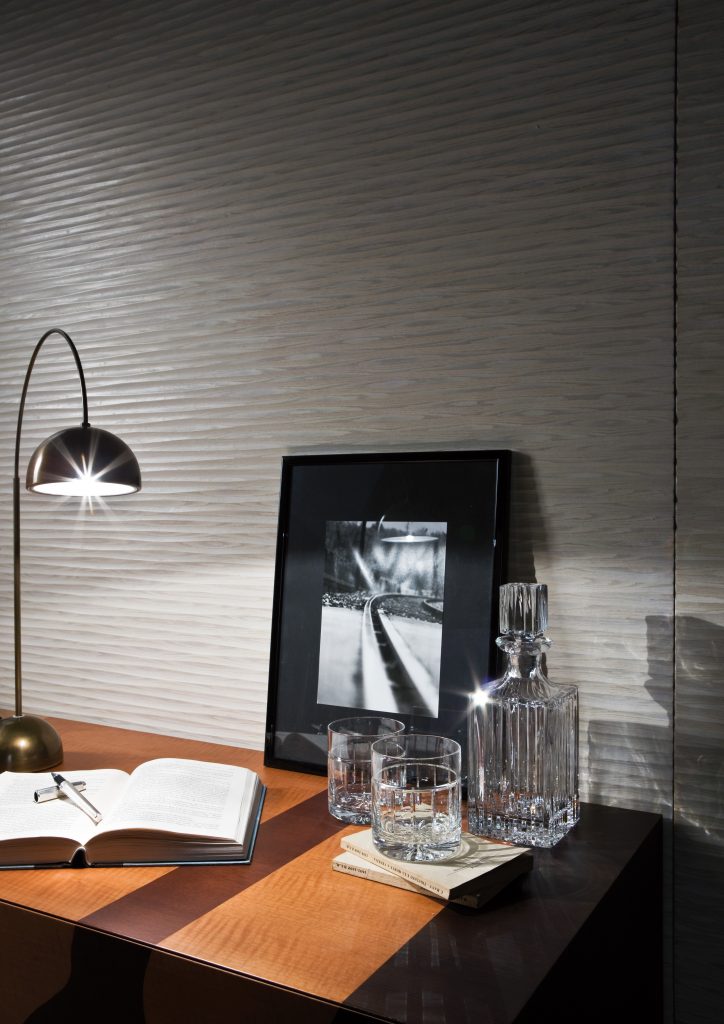
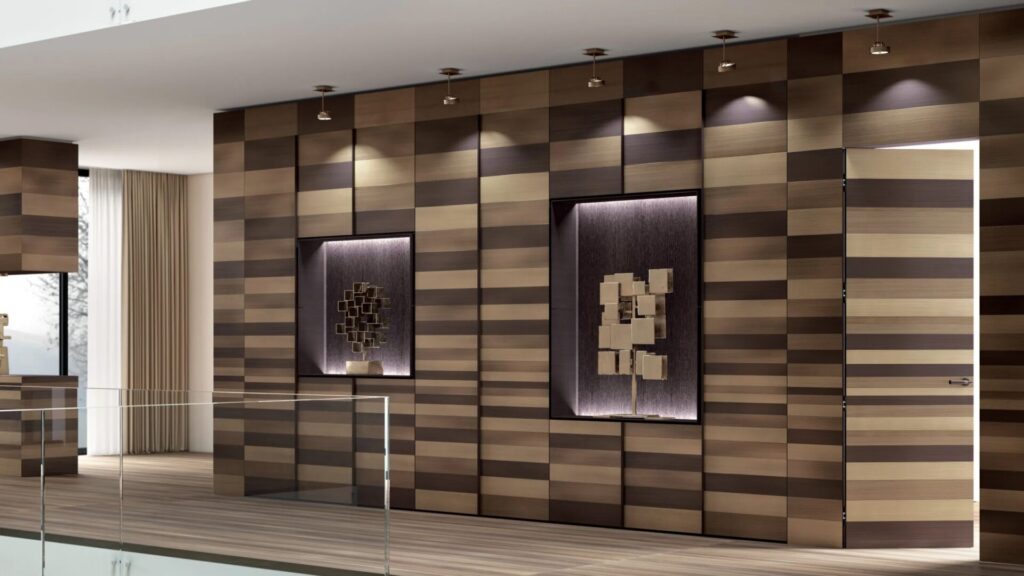
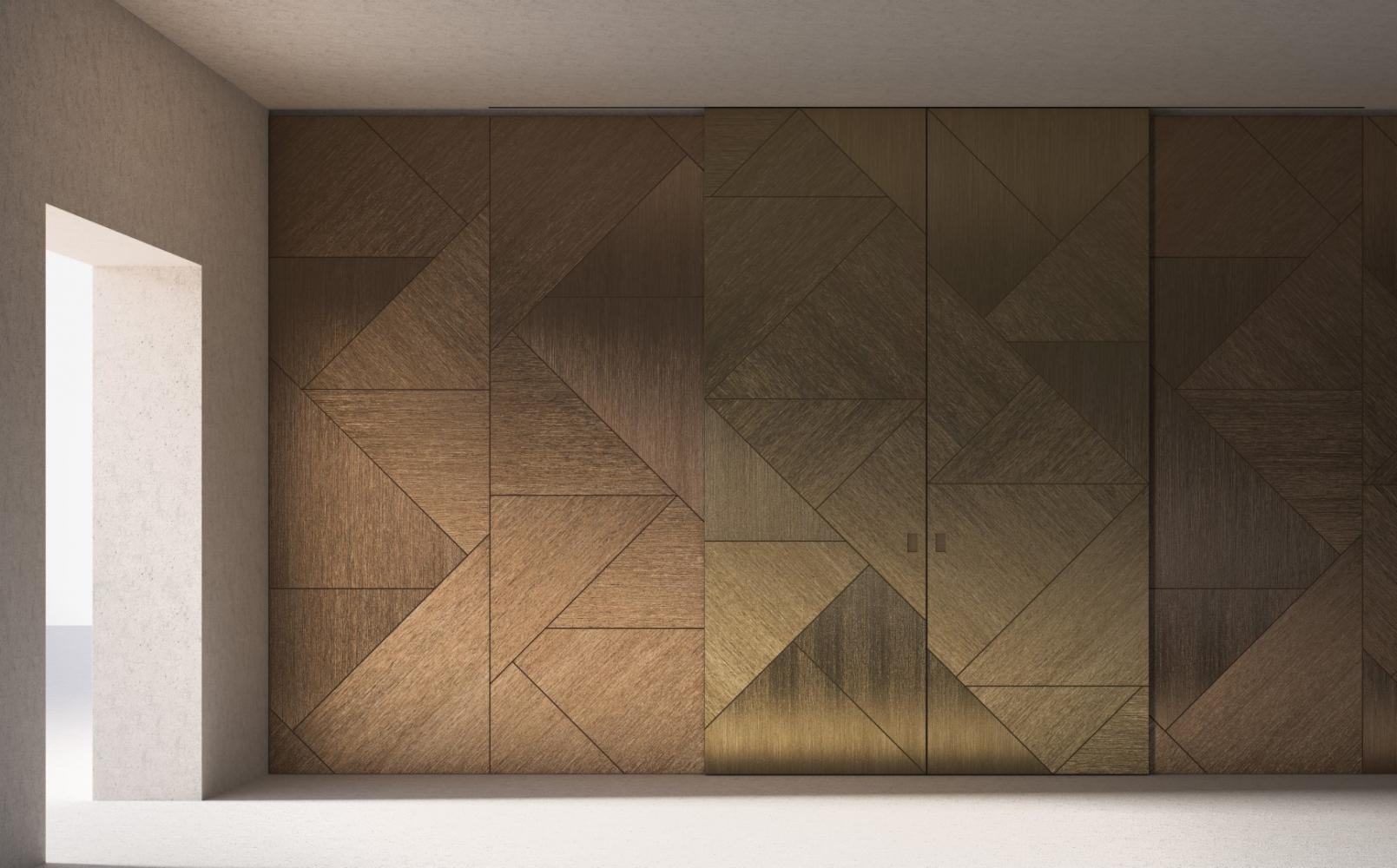
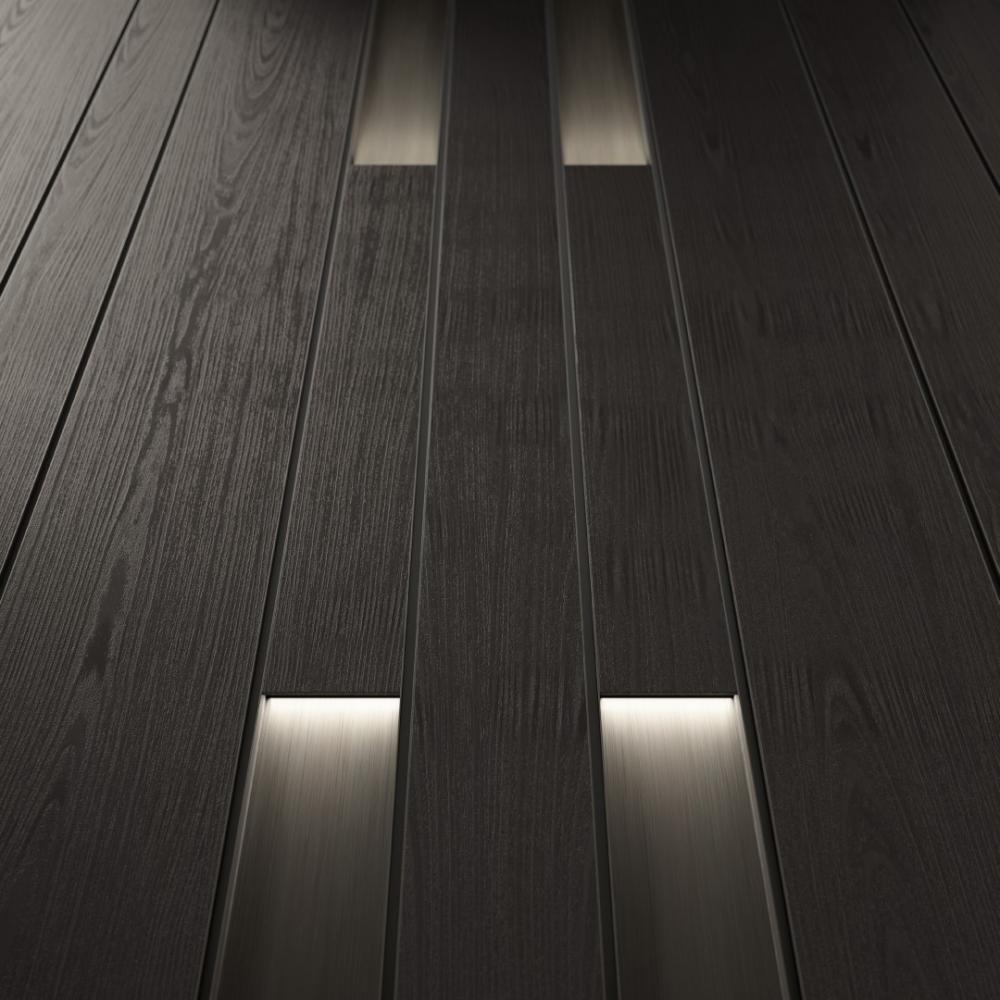
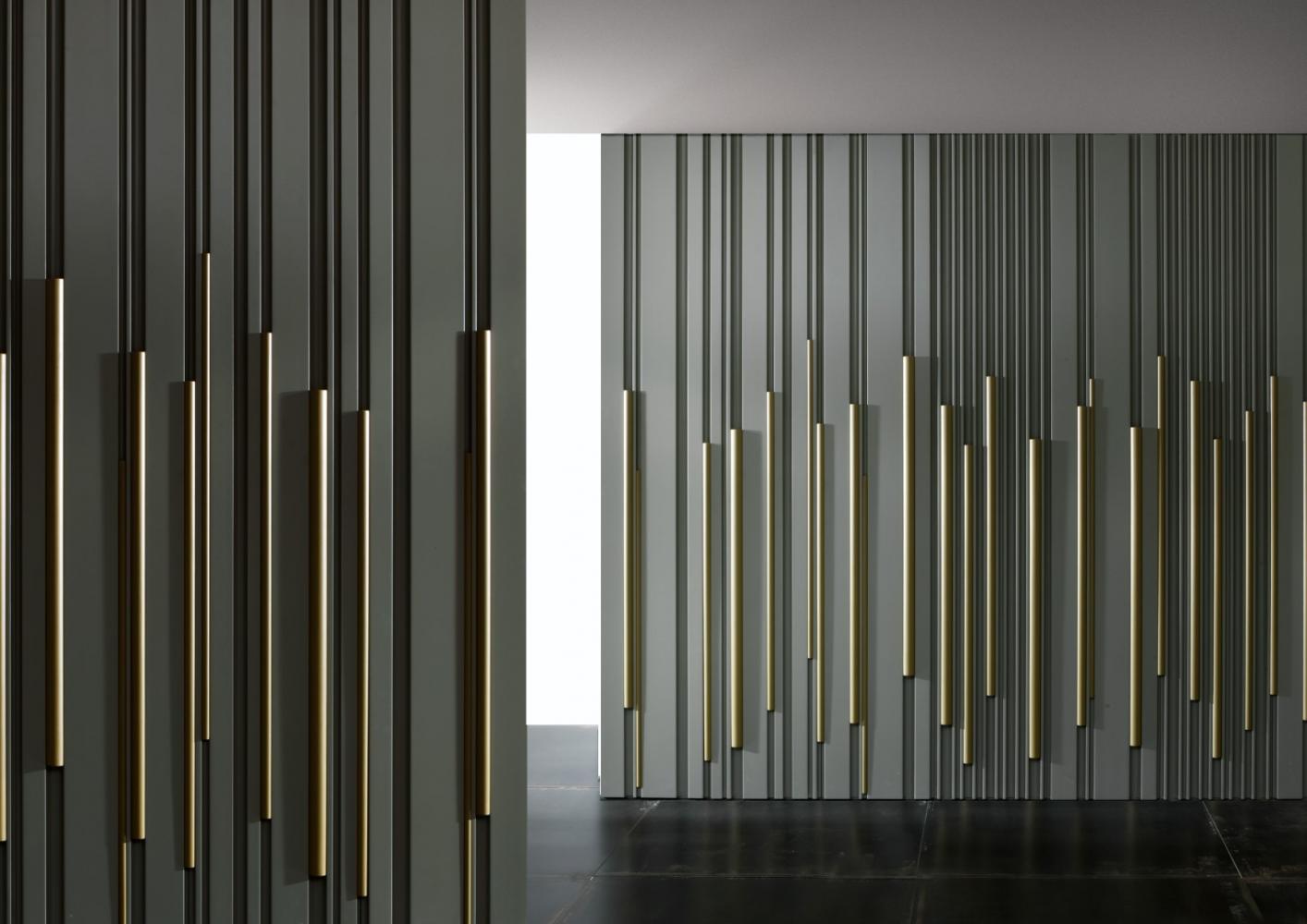
Millwork defines the architectural “canvas” on which art is installed: the rhythm of panels, the depth of niches, the precision of joints, and the integration of lighting all influence how a painting, a sculpture, or a collectible object appears in space. A carefully designed wall system can amplify the presence of a single piece or create a coherent storyline across an entire collection.
In luxury projects, millwork is also the place where craftsmanship and technology meet. Behind a seemingly simple wall can be a complex system of substructures, acoustic layers, lighting channels, and concealed storage. When executed well, all of that complexity disappears, leaving only a sense of calm and effortless refinement.
Key principles for designing millwork backdrops for art and objects
| Design Principle | Key Considerations | How It Shapes Millwork for Galleries & Display Walls |
|---|---|---|
| Neutral Support vs. Character Statement | Determine whether millwork should visually disappear or become a strong design element. Neutral: understated tones, smooth textures, minimal joints. Character: sculptural surfaces, deep hues, high visual impact. | Guides whether the wall acts as a quiet backdrop or as part of the curated environment. Neutral supports dense or diverse collections, while expressive panels are ideal for iconic venues, permanent displays, or bold interior identity. |
| Scale, Proportion & Sightlines | Alignment of panel modules with artwork sizes and hanging heights. Control of vertical rhythms, reveal lines, and perspective in long corridors or double-height spaces. | Ensures that artworks do not collide visually with panel joints. Creates rhythm, hierarchy, and viewer comfort from all vantage points. Supports both curated storytelling and clarity in spatial navigation. |
| Technical & Conservation Requirements | Weight-bearing capacity, hidden reinforcements, museum-grade hanging systems. Integration of lighting, climate responsiveness, and acoustic treatment. | Millwork becomes part of the building’s performance layer. Prevents damage to artworks, supports heavy pieces safely, and maintains appropriate lighting and sound conditions. |
| Flexibility & Future-Proofing | Modular panels, removable sections, adjustable shelving. Access zones for wiring, upgrades, and evolving collections. | Supports rotating exhibitions, changing curatorial narratives, and long-term adaptability. Ensures that millwork remains relevant even as art, branding, or technology evolves. |
What Is Millwork and How Does It Shape Galleries and Display Walls?
In architectural and interior design, millwork refers to a broad category of wood and wood-based products fabricated in a mill. Traditionally, this includes doors, trims, crown molding, wainscoting, wall paneling, ceiling details, and various built-in elements. In contemporary projects, millwork often incorporates additional materials – metals, stones, glass, and composites – while still following the same principle: precise, custom-made components that are installed as integral parts of the architecture.
When we narrow the focus to millwork for galleries and display walls, we are talking about all of the elements that define the vertical surfaces around art and objects, such as:
Wall paneling and cladding that create the primary backdrop for artworks.
Trims, frames, and reveals that visually organize wall compositions and separate different materials.
Plinths and bases integrated into the wall system for sculptures, objects, and curated displays.
Integrated shelving and ledges that behave like architectural extensions of the wall, rather than freestanding furniture.
Niches and recessed boxes designed specifically around artworks, books, or decorative pieces.
Display surrounds and portals framing a single key piece or a series of objects.
Materia Collection – Italian Millwork Expertise for Curated Spaces
In 2016, MATERIA Collection opened its doors with a curated display of Italian wall paneling, unique custom surfaces and furniture, kitchen cabinets, lighting, and doors. The showroom, located in Bay Harbor Islands, Florida, was conceived not as a traditional retail space, but as a physical library of possibilities. Architects, interior designers, and clients could experience:
The depth of exotic wood veneers.
The tactility of textured wall panels.
The subtle interplay between finishes, lighting, and architectural volumes.
Over time, Materia Collection evolved into a design partner rather than a simple product provider. The focus shifted from individual pieces to complete millwork and wall panel systems that structure entire spaces – residences, offices, hospitality venues, and, increasingly, galleries and display walls where art and objects are given room to breathe.
Types of millwork for galleries and display walls
While the design possibilities are almost endless, most gallery-quality backdrops are built from a family of recurring elements. Materia Collection’s portfolio is organized precisely around these categories, making it easier to design millwork for galleries and display walls in a coherent, layered way.
Architectural wall panels as the primary backdrop
Architectural wall panels are the foundation of most contemporary display environments. They transform a simple gypsum wall into a deliberate architectural surface, offering control over texture, joints, and material transitions.
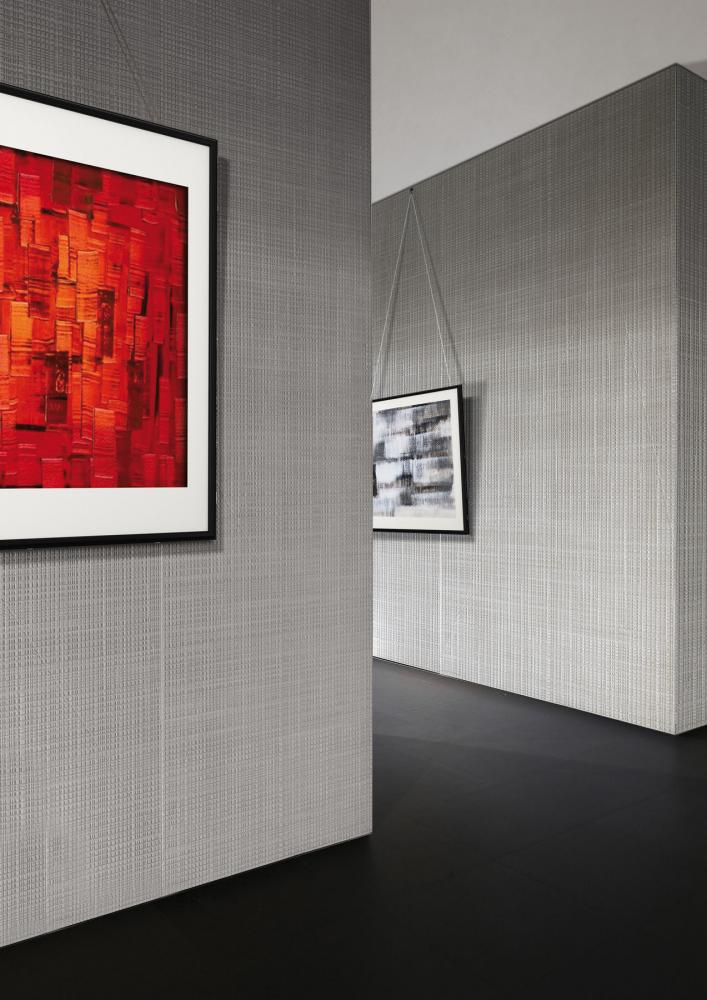
For Materia Collection, panel series such as STARS, MAXIMA, LINE, BAMBOO, TERRE, ONDA, DECOR, JUTA, TATAMI and others provide a wide vocabulary of:
Linear grooves and fluting.
Geometric reliefs and abstract patterns.
Soft, woven-like textures and bamboo-inspired rhythms.
Calm, flat planes with refined edge detailing.
These panels are more than decoration. They are compositional tools:
Rhythm: the repetition and spacing of panels guide the eye across the wall, helping define where artworks sit and where negative space should remain.
Texture: subtle relief catches light and shadow, creating depth behind art without dominating it.
Joint detailing: carefully positioned joints, reveals, and corner treatments give the wall a precise, tailored look – essential for luxury interiors.
In practice, a gallery wall might be conceived first as a MAXIMA or LINE panel composition, with specific zones reserved for artworks. The art is then hung, recessed, or framed within that architectural logic, rather than applied to a neutral, undefined surface.
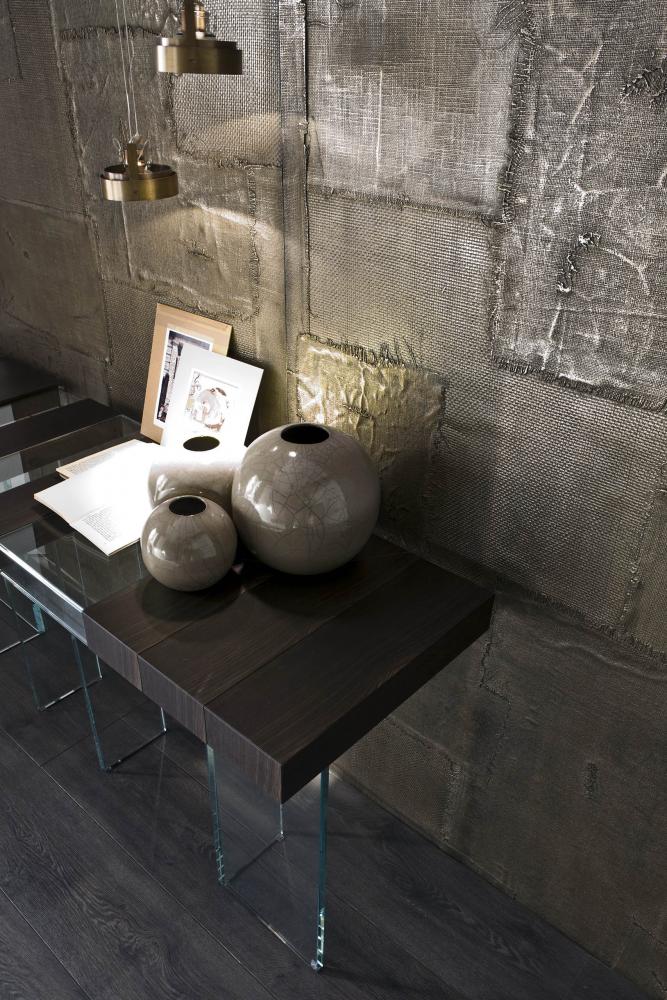
Decorative panels – stone, metal, and precious finishes
Some spaces demand a stronger gesture, particularly at entrances, feature walls, or intimate niches. Here, Materia’s decorative panels in marble effects, metal finishes, and precious stone-inspired surfaces come into focus.
Marble-effect panels evoke the gravitas of stone while offering the flexibility and lightness of panel systems. They are ideal for reception walls, key axes, or the background to a single monumental artwork.
Metal-effect decor – bronzed, brushed, patinated – introduces a luminous, reflective quality that can dramatize sculptures or create moody, atmospheric corridors.
Precious stone panels can be used sparingly, for example, behind a single sculpture, in a display niche, or on the back wall of a private viewing room, to magnify the sense of luxury.
The key is placement. Dramatic surfaces are most effective when used strategically:
Entrance and reception: to set the tone and establish an immediate impression of quality and identity.
Feature gallery walls: to support a small number of important works that can stand their ground against a strong visual backdrop.
Intimate niches: where a heightened sense of preciousness is desired for specific objects or collections.
In the rest of the space, quieter panel families can create balance, ensuring that the environment remains cohesive and not over-stimulating.
Acoustic and performance wall panels
Many display environments also function as social spaces. In restaurants, bars, hotel lobbies, and multi-purpose rooms, hard surfaces can create challenging acoustics. Acoustic wall panels solve this problem while maintaining a refined, gallery-like quality.
Collections such as ONDA and other textured panels from Materia can be designed to:
Disrupt sound waves through irregular, sculpted surfaces.
Incorporate acoustic substrates or perforations behind decorative faces.
Provide a sense of movement and depth across large walls, even before art is added.
In galleries and hospitality spaces where art and people coexist, acoustic panels allow conversations, music, and ambient sound to remain comfortable, so that visitors can actually enjoy the artworks and objects without fatigue. The functional layer (sound control) and the aesthetic layer (texture, rhythm, shadow) become one.
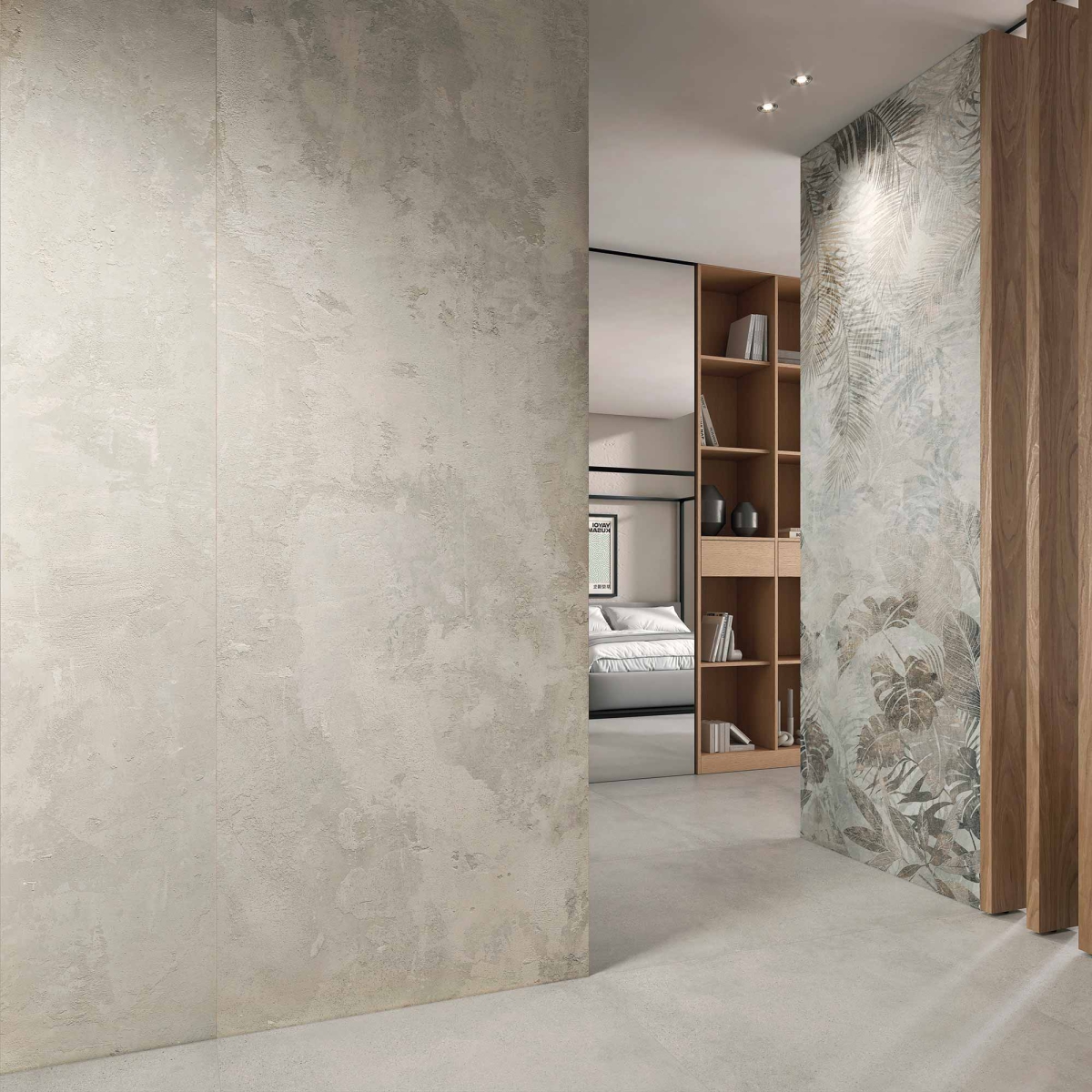
Wall panel systems and Italian wall treatments
Beyond solid panels, Materia’s world extends into Italian wall treatments and sophisticated wallpapers that can be combined with millwork frames and reveals.
Italian wall treatments include:
Venetian plaster: slaked lime and marble powders applied in multiple coats to create smooth, polished, or subtly clouded surfaces that catch light in a distinctive way.
Marble-inspired effects: painted or plastered finishes that recall stone veining and depth without the weight of real slabs.
Textured/cement finishes: matte, mineral surfaces that give a contemporary, architectural feel, ideal behind bold artworks or sculptural pieces.
High-end wallpapers further expand the toolkit:
Floral and nature-inspired designs for soft, intimate areas or private galleries.
Urban/cities and architecture/geometric motifs for contemporary, graphic interiors.
Kids and playful themes for children’s rooms where art, illustration, and objects blend.
Modern affresco, marbles, handmade collections for deeply expressive, painterly surfaces.
These treatments are particularly powerful when combined with millwork:
A wallpaper or plaster field can be framed by LINE or MAXIMA panels, turning the wall itself into a curated piece.
Thin reveals and integrated LED lines can be used to outline areas of special finish, giving them a “lit frame” that guides the eye.
Different treatments can be layered – for example, a Venetian plaster base with inset decorative panels – to create subtle transitions between zones.
In this way, walls become multi-layered compositions rather than single-material surfaces.
Designing millwork for different gallery and display contexts
Although the principles remain consistent, the application of millwork for galleries and display walls varies depending on the typology of the space. A private living room, a restaurant like Buddha-Bar New York, a concept store, and a corporate lobby all have different behavioral patterns, expectations, and technical demands.
Private residences and apartment galleries
In private homes and apartments, art lives alongside everyday life. The challenge is to create backdrops that feel both gallery-like and deeply residential.
Living rooms and salons
Here, millwork can:
Integrate bookcases, fireplaces, and media units into a continuous wall composition.
Provide calm panel fields behind key artworks, with concealed wiring for picture lights or integrated LEDs.
Introduce niches for sculptures or ceramics, subtly lit to create evening atmospheres.
Hallways and corridors
Circulation spaces are often underused as display opportunities. Wall panel systems can:
Turn long corridors into linear galleries, with repeating panels and occasional highlighted zones for art.
Conceal doors or storage behind paneling, keeping the focus on the artworks.
Staircases
Vertical circulation offers dramatic views. Millwork along stair walls can:
Emphasize the verticality with LINE or BAMBOO panels.
Provide strategic ledges or wall boxes at landing levels for three-dimensional pieces.
The overall goal in residences is to blur the line between gallery and home: everyday activities unfold against backdrops that are as considered as any exhibition space.
Hospitality – restaurants, bars, and luxury hotels
In hospitality spaces, wall paneling and decorative millwork are central to atmosphere. They must withstand intensive use, host lighting and technical systems, and still feel effortlessly luxurious.
Setting the mood
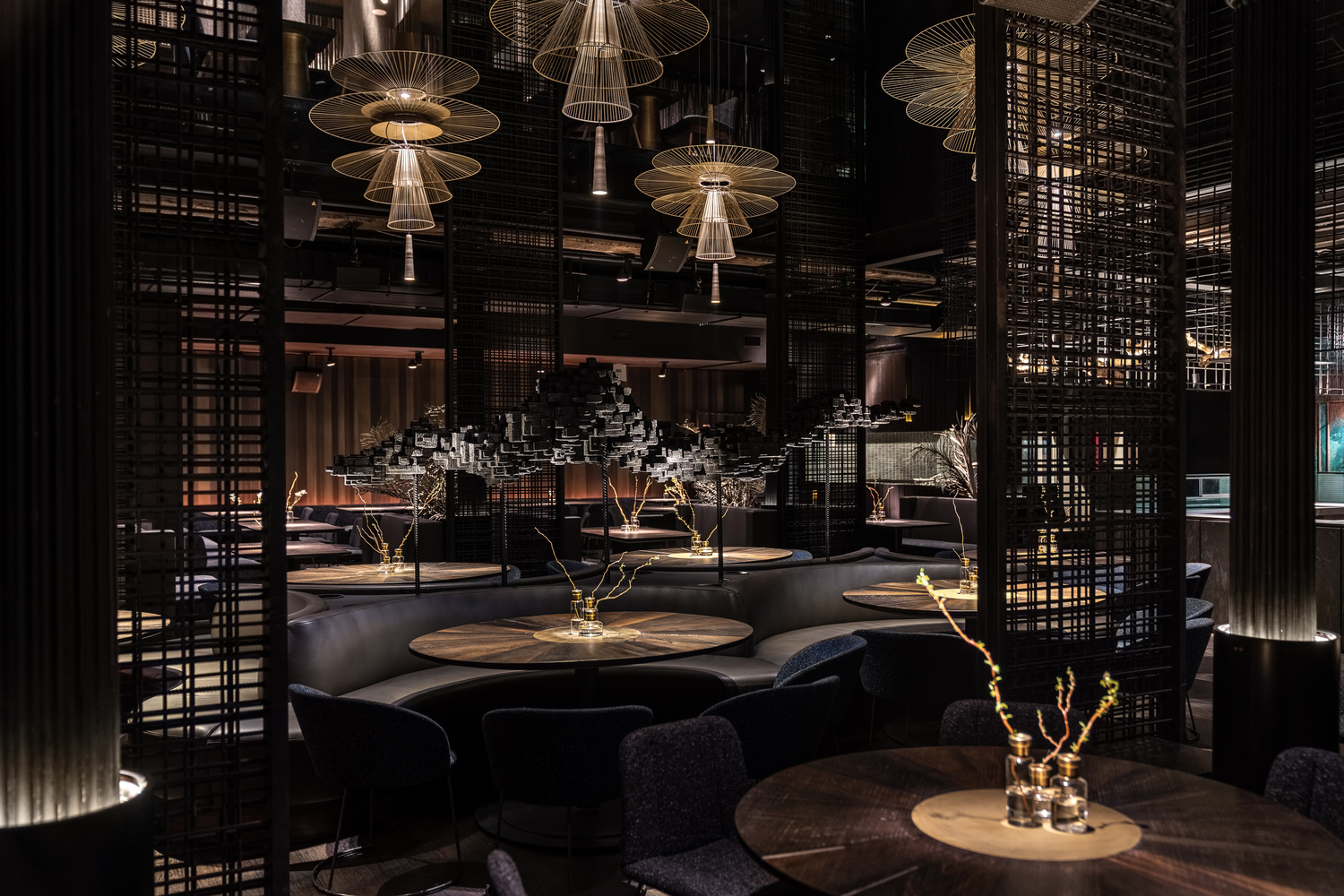
Projects like Buddha-Bar New York demonstrate how millwork defines identity:
Rich, patterned panels such as Maxima Stars and Line wall panels create immersive envelopes.
Integrated lighting emphasizes textures, casting controlled shadow and highlighting objects or art.
Selected walls act as dramatic display surfaces for artworks, sculptural pieces, or brand-specific objects.
Framing content
In restaurants and bars, millwork also frames:
Bottles and glassware, arranged as if in a gallery.
Mirrors that expand the space and reflect both people and art.
Artworks that punctuate seating areas, private dining rooms, and corridors.
Here, performance is crucial: finishes must resist scratches, stains, and frequent cleaning, while acoustic panels help manage noise so that both conversation and music remain pleasant.
Retail boutiques and concept stores
Retail environments increasingly treat products as art objects, with display walls acting as narrative devices.
Storytelling through millwork
Wall systems in boutiques and concept stores can:
Use panel families and Italian wall treatments to create distinct thematic zones (for example, one area with cement-textured panels for streetwear, another with marble-effect panels for luxury accessories).
Integrate adjustable shelving, hanging rails, and plinths that adapt to seasonal collections.
Conceal stock and technical equipment behind refined fronts, ensuring that the visible portion of the wall remains curated.
Highlighting key pieces
Specific niches or feature walls can be reserved for:
Limited-edition products presented as artworks.
Collaborations, art–fashion crossovers, or branded installations.
By aligning millwork, lighting, and product placement, retail environments become immersive stories rather than simple shelves and racks.
Corporate offices, lobbies, and boardrooms
In corporate settings, millwork for galleries and display walls must support both brand storytelling and daily functionality.
Lobbies and public areas
Here, wall systems can:
Provide a backdrop for corporate art collections, sculptural pieces, or signature installations.
Integrate company logos or subtle brand cues into the panel design, without resorting to overt signage.
Incorporate acoustic and technical layers, ensuring that the space is comfortable and efficient.
Boardrooms and meeting spaces
In these rooms, millwork can host:
Media walls that combine screens, conferencing equipment, and concealed storage with flanking panel fields suitable for art.
Display zones for awards, models, or historical artefacts that tell the story of the company.
Finishes are often warm and sophisticated – fine woods, matte lacquers, and textured panels – creating an environment that feels both professional and human, where art and objects contribute to identity and culture
Choosing materials and finishes for display backdrops
Selecting the right materials and finishes is one of the most decisive steps in creating millwork for galleries and display walls. The backdrop is not a passive surface; it influences how artworks or objects are perceived, how light behaves, how the room feels, and how the space ages over time. Each material carries its own visual character, acoustic properties, maintenance requirements, and emotional atmosphere. When chosen deliberately, these materials elevate both the architecture and the collection it supports.
| Material / Factor | Key Characteristics | Best Use in Galleries & Display Walls |
|---|---|---|
| Exotic Woods & Fine Veneers | Warm, organic, emotionally resonant; natural grain movement; available in matte or satin sheen; softens cool-toned artwork and photography. | Ideal for sculptural objects, residential galleries, intimate environments; adds depth without competing with art; excellent for calm, non-reflective backdrops. |
| Natural Stone | Conveys permanence and gravity; inherent veining adds drama; visually weighty; luxurious; timeless architectural presence. | Feature walls, monumental sculpture backdrops, statement niches; environments requiring prestige and lasting visual impact; marble-effect panels for lighter installations. |
| Metals (Brushed, Patinated, Polished) | Reflective or matte; industrial or refined; dynamic under light; can appear cool, contemporary, or theatrical depending on finish. | Contemporary art, conceptual installations, geometric sculptures, hospitality spaces with dramatic lighting; matte metals for glare control near artwork. |
| Texture & Micro-Tactility | Includes ribbing, brushing, woven patterns (JUTA, BAMBOO), micro-embossed finishes; subtle shadow play under grazing light; refined yet quiet. | Adds sophistication without visual noise; ideal behind sculptures or smaller works; enhances visitor engagement without overpowering the display. |
| Sheen Level: Matte vs High-Gloss | Matte absorbs light and reduces glare; high-gloss amplifies reflections and creates a theatrical, dramatic effect; gloss requires more maintenance. | Matte for art-heavy walls and close-view environments; high-gloss for retail or hospitality feature walls where reflection is part of the design narrative. |
| Color Strategy: Neutrals | Includes greige, soft gray, taupe, desaturated earth tones, light woods, matte mineral shades; visually calm and flexible. | Rotating exhibitions, mixed media collections, spaces prioritizing clarity and light distribution; ideal for maintaining focus on artwork. |
| Color Strategy: Bold Statements | Deep greens, blues, burgundies, metallic tones, and patterned panels; strong emotional and curatorial presence; memorable and immersive. | Permanent exhibitions, thematic environments, hospitality and retail displays, feature wall moments; best used on selected surfaces only. |
| Durability & Maintenance | Stone and composites resist wear; veneers require care but age beautifully; metals patinate over time; matte hides smudges, gloss shows fingerprints. | High-traffic galleries, hospitality venues, commercial settings; spaces requiring longevity and easy cleaning; millwork walls that support frequent reinstallation of art. |
| Long-Term Architectural Value | High-quality millwork increases property value, extends lifespan of display environments, accommodates curatorial change, and resists aging. | Investment-grade interiors where longevity, flexibility, and aesthetic integrity are essential; museums, luxury residences, curated corporate spaces. |
How to choose the right partner for millwork for galleries and display walls
Not all millwork providers have the experience or expertise required for gallery-quality backdrops. Selecting the right partner is essential.
What to look for in a millwork partner
A strong partner should offer:
Experience in galleries, luxury residences, hospitality, or high-end retail, where precision and visual clarity are essential.
Breadth of materials and finishes, including wood, stone, metal, plaster, wallpapers, and acoustic surfaces.
Technical coordination, working smoothly with designers, curators, architects, lighting consultants, and contractors.
Ability to handle complex details, such as concealed lighting, structural reinforcement, integrated niches, and custom patterns.
Consistency between design intent and execution, ensuring that the final installation precisely matches the approved concept.
Choosing correctly ensures both aesthetic excellence and long-term performance.
Why Materia Collection stands out
Materia Collection distinguishes itself through a combination of artistry, precision, and Italian design philosophy.
Key advantages include:
Exclusive partnerships with Italian designer brands, providing access to collections not available elsewhere in the region.
A refined material palette, from exotic woods to metals, stone-inspired panels, textured wall treatments, and Laurameroni cabinet systems.
Proven experience with demanding luxury projects, such as Buddha-Bar New York, refined restaurants, high-end residences, and corporate environments.
Capability to deliver one-of-a-kind pieces, including artisan finishes, applied pattern overlays, sculptural panels, and custom architectural elements.
A collaborative approach, supporting clients from concept through installation and beyond.
This combination makes Materia Collection a trusted partner for designers and clients seeking gallery-quality millwork for walls, niches, and display environments.
For clients seeking to transform walls into finely crafted, gallery-quality surfaces, visiting the Materia showroom or consulting the team is the first step toward creating spaces where architecture and art exist in perfect harmony.
Frequently Asked Questions - Millwork for Galleries and Display Walls
Why should I choose Materia Collection instead of a local carpenter or millwork supplier?
Materia Collection provides access to Italian craftsmanship, exclusive designer-brand panel systems, and a level of finish precision rarely achieved in local fabrication. Beyond supplying panels, Materia offers expertise in:
curatorial alignment,
high-performance materials,
artisan finishes,
integrated lighting and technical detailing,
and global project experience including Buddha-Bar New York and numerous luxury residences.
The result is not just millwork, but a fully curated architectural backdrop worthy of fine art and luxury interiors.
What makes millwork for galleries and display walls different from standard wall finishes?
Millwork for galleries and display walls is not merely decorative. Unlike standard gypsum walls or off-the-shelf panels, gallery-grade millwork is engineered to:
support heavy artworks and objects,
improve acoustics,
conceal lighting and technical systems,
create precise visual alignment for artworks,
and provide durable surfaces that age gracefully.
It forms an architectural framework rather than a simple finish and is designed with curatorial intent, modularity, and long-term adaptability in mind.
Are textured wall panels appropriate behind artworks?
Yes, when chosen carefully. Subtle textures such as ribbing, fine fluting, or micro-embossed surfaces enhance depth without distracting from the artwork. Deep or highly reflective textures, however, are best reserved for areas without art or where the intent is to make the wall itself a visual statement. Materia’s collections such as LINE, BAMBOO, and ONDA are frequently used in gallery contexts for this reason.
Can millwork support very heavy artworks or large sculptures?
Yes. Structural capacity is planned early in the design process. Behind decorative panels, installers can incorporate steel reinforcement, plywood backers, or continuous mounting rails. For extremely heavy pieces, millwork becomes an engineered system rather than a mere decorative layer. Materia works with architects and structural specialists to ensure safety and stability.
Can millwork be adapted for rotating or evolving art collections?
Absolutely. Many of Materia’s panel systems are modular and allow:
removable sections,
concealed hanging tracks,
adjustable shelving,
and reconfigurable niches.
This ensures future exhibitions or changes in personal collections can be accommodated without renovating the entire space.
Are Italian wall treatments like Venetian plaster compatible with millwork systems?
Yes. Italian wall treatments, including Venetian plaster, textured cements, and high-end wallpapers, combine beautifully with panel systems. They can be framed with reveals, bordered by wood or metal trims, or integrated within panel grids. Materia often layers these treatments with its wall panels to create rich, curated compositions suitable for both art and luxury objects.