

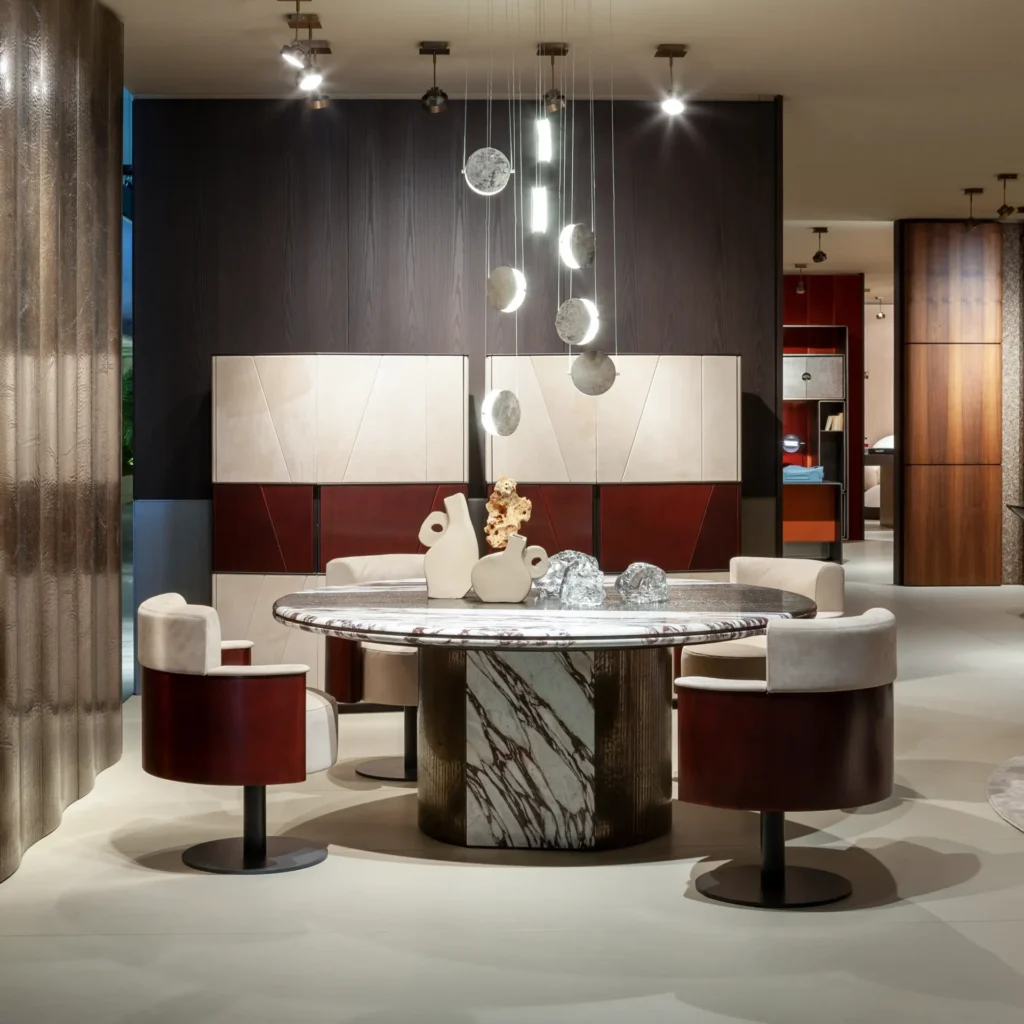
A luxury residence is not defined by one impressive sofa, one sculptural dining table or one dramatic wall treatment. The most refined homes feel intentional because furniture, wall panels, doors, built-ins, wardrobes, media walls, lighting and finishes are planned as one complete interior language.
Custom furnishings for luxury residences sit between collectible furniture and architectural millwork, connecting the pieces people touch every day with the permanent surfaces that shape the home. For homeowners, developers, interior designers and architects, MATERIA Collection offers this broader approach through Italian custom furnishings, wall panel systems, fine furniture, closet systems, luxury doors, kitchens, lighting and bathroom solutions.
| Interior Element | When Selected Separately | When Planned as Custom Furnishings |
|---|---|---|
| Living room furniture | Sofas, chairs and tables may look luxurious, but feel disconnected from the walls, lighting and room proportions. | Seating, panels, tables, media walls and lighting work together as one composed living environment. |
| Wall panels and surfaces | Decorative walls can compete with furniture or feel added after the main design decisions were made. | Panels frame furniture, support scale, create depth and connect the room to the larger interior language. |
| Wardrobes and built-ins | Storage may solve function, but appear visually separate from the bedroom, closet or surrounding architecture. | Wardrobes, doors, shelving and built-ins become part of the home’s rhythm, proportion and daily comfort. |
| Finishes and materials | Wood, lacquer, stone, metal, leather and fabric may feel mismatched from room to room. | Materials repeat with intention, creating continuity without making every room look identical. |
Why furniture and millwork should be planned together?
A unified design language creates stronger interiors
Furniture and millwork influence each other more than many homeowners realize at the beginning of a project. Wall panels affect how large a sofa feels. Built-ins influence how people move through a room. Doors and wardrobes shape sightlines. Sideboards, consoles and wall units determine whether a room feels balanced when it is being used, photographed or experienced from the next space.
This is why furniture and millwork should not be planned in separate phases with no shared design logic. When they are coordinated early, the room can be designed as a complete composition rather than a sequence of disconnected purchases.
For example, a living room with a large sectional, sculptural lounge chairs and a custom media wall needs more than furniture placement. The media wall must be scaled correctly for the seating distance. Shelving and display niches should not overcrowd the room. The wall panel finish should complement the upholstery and tables. Lighting should reveal texture without creating glare. Storage should be hidden where possible, especially in luxury homes where visual calm is part of the experience.
The same principle applies to dining rooms, bedrooms, closets and entertaining areas. A dining sideboard should relate to the dining table and chairs, but also to wall panels, pendant lighting, nearby doors and the transition into the kitchen or living room. A bedroom wardrobe should relate to the bed, nightstands, doors and wall treatments, not simply fill an available wall. A custom bar or lounge zone should connect with seating, shelving, stone surfaces, lighting and circulation.
For a deeper look at how architectural built-ins shape high-end homes, see residential custom millwork.
When furniture and millwork are planned together, the home gains a stronger design language. Materials can repeat in subtle ways. Details can align. Wall planes can become more useful. Storage can disappear into the architecture. Most importantly, the interior begins to feel intentional from every angle.
Custom planning prevents visual fragmentation
One of the most common problems in luxury interiors is not a lack of quality. It is a lack of coordination. A residence may have a beautiful sofa, expensive dining chairs, a dramatic stone surface, a custom closet and high-end lighting, yet still feel visually fragmented because these elements were selected independently.
Fragmentation often appears in small but noticeable ways. A wood tone in the living room may not relate to the wood used in the dining area. A lacquered cabinet may feel too glossy next to a matte wall panel. A media wall may overpower the furniture. A sideboard may be too small for the wall behind it. A bedroom may have luxury pieces but no clear relationship between the bed, wardrobes, nightstands and doors.
These issues can make a home feel expensive but not cohesive. The problem is rarely one bad piece. The problem is the absence of a shared interior logic.
Custom planning helps prevent this by coordinating decisions before procurement and installation. Designers and project teams can compare finish samples, review room proportions, adjust dimensions, plan lighting and decide where visual emphasis should happen. This is especially important in residences where multiple rooms are being developed at once.
A unified approach helps coordinate:
wood, veneer and lacquer finishes
stone, marble-effect surfaces and metal details
leather, fabric and upholstered elements
glass, mirrors and reflective surfaces
wall panels, wallpapers and textured wall treatments
built-ins, shelving, wardrobes and media walls
lighting temperature, placement and emphasis
This type of planning is not about making the home predictable. It is about controlling the visual rhythm. A residence can still include contrast, drama and statement pieces, but those moments should feel intentional rather than accidental.
The strongest luxury interiors usually have both continuity and hierarchy. Continuity gives the home a sense of calm. Hierarchy tells the eye where to focus. Custom furnishings make both possible because they allow furniture, panels, built-ins and finishes to be designed as parts of the same environment.
Custom millwork versus mass-produced cabinetry in luxury homes
Mass-produced cabinetry can solve basic storage needs. It can work in simpler projects where standard dimensions, standard finishes and standard configurations are acceptable. But luxury residences often require a more refined level of control.
In high-end homes, storage is rarely only about capacity. It is also about proportion, concealment, surface quality and the relationship between cabinetry and architecture. A wardrobe should not look like it was forced into the room. A media wall should not appear separate from the wall around it. A built-in bar should not feel like furniture placed against a wall when it could feel integrated into the home itself.
Custom residential millwork allows the design to respond to the actual space. Dimensions can be adjusted to ceiling heights, wall lengths, openings, existing architecture and desired sightlines. Finishes can be coordinated with furniture, doors, panels and flooring. Details can be refined so the result feels more architectural and less standardized.
For homeowners and designers comparing custom work with standard cabinetry, see custom millwork versus mass-produced cabinetry.


Living rooms, dining rooms and entertaining areas
Living rooms as the main expression of the home
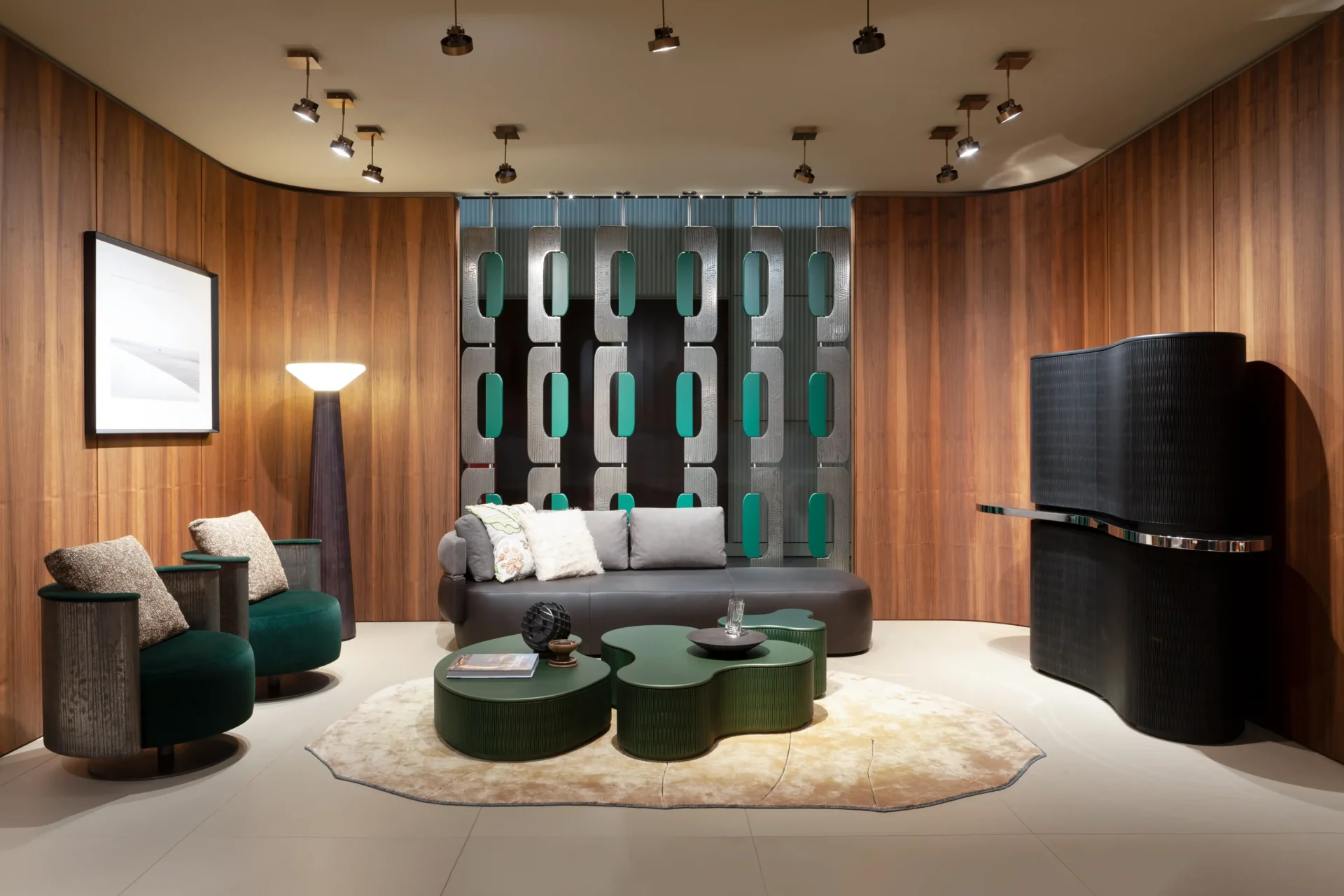
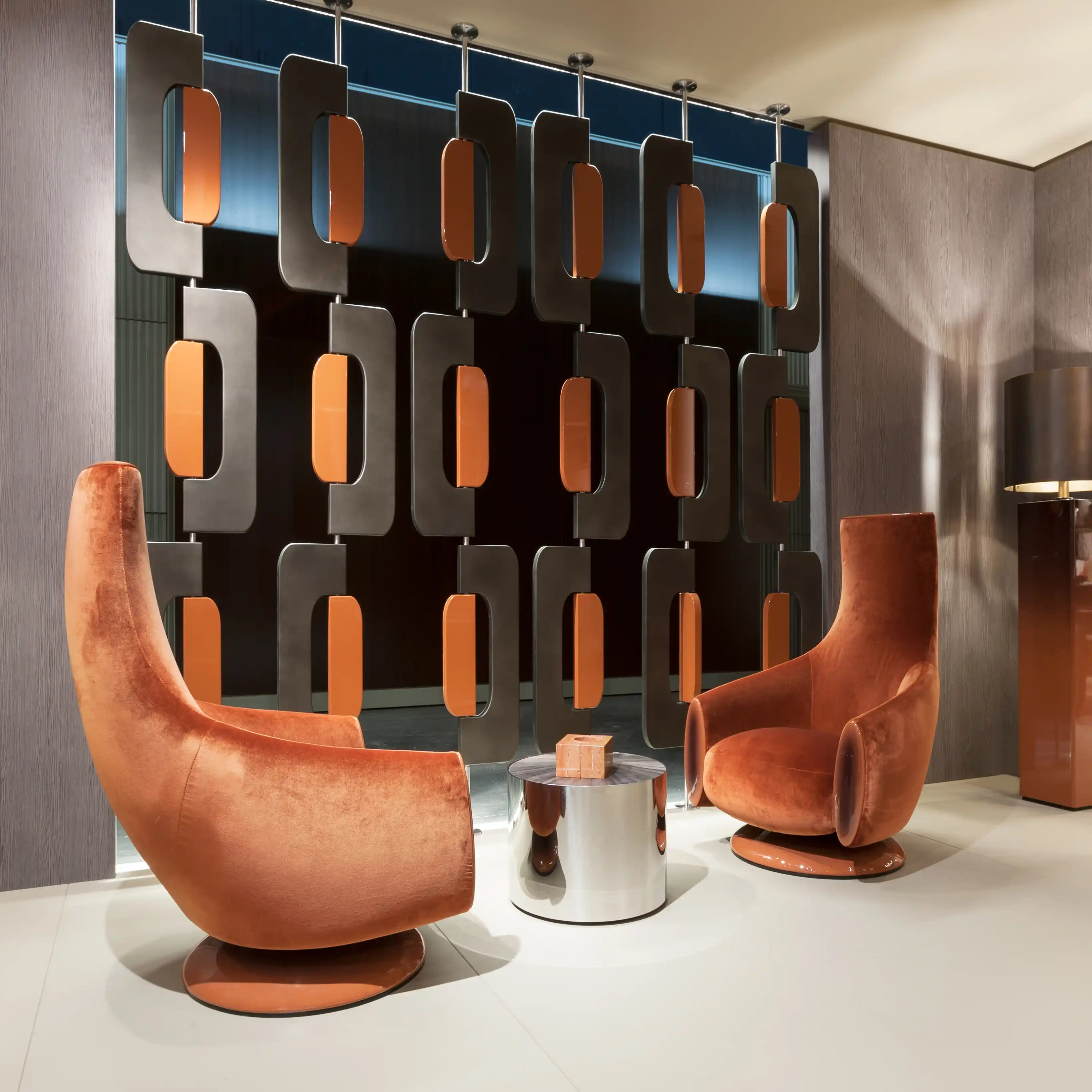
The living room is often the most visible expression of a luxury residence. It is where guests gather, where homeowners relax, where art and views are framed, and where the overall taste of the home becomes immediately clear. Because of that, it is also one of the rooms where furniture, wall panels and millwork must work together most carefully.
A luxury living room is rarely successful because of one dominant piece alone. A beautiful sofa matters, but it depends on the room around it. Armchairs need the right scale. Coffee tables need the right relationship to seating. Consoles and sideboards need to support both storage and display. Wall units and shelving need to feel integrated rather than heavy. Media walls need to be functional without reducing the room to a television zone.
MATERIA’s fine furniture direction supports this kind of layered composition through designer sofas, armchairs, consoles, sideboards, wall units, chairs and tables. These pieces can be considered not as isolated objects, but as parts of a complete living environment.
For readers focused specifically on living room composition, see high-end furniture in the living room.
In a high-end residence, the living room often has to serve several roles at once. It may be a formal receiving space, a family room, a media room, a lounge, a display area and a transition into dining or outdoor entertaining areas. Custom furnishings help manage these roles without making the room feel crowded or confused.
The most important living room elements usually include:
sofas and lounge seating arranged around conversation, views or media
coffee tables and side tables that support daily use without interrupting movement
consoles and sideboards that add storage, display and visual balance
wall panels that create depth behind seating, art or media
shelving and wall units for books, objects, sculpture and integrated storage
lighting that defines atmosphere in the evening and highlights material texture
This is where the bridge between furniture and millwork becomes especially visible. A sofa may define the center of the room, but the walls define the room’s character. A sideboard may provide storage, but the paneling behind it can turn that wall into a composed feature. A media wall may contain technology, but its finish, detailing and lighting determine whether it feels architectural or merely functional.
Dining rooms as architectural and social spaces
The dining room in a luxury residence is not only a place for meals. It is a hosting space, a design statement and often a key transition between the kitchen, living room and entertaining areas. Because it has both social and architectural importance, it should be planned as a complete environment rather than as a table-and-chair selection.
The dining table is usually the anchor, but it is not the only important decision. Chairs determine comfort, rhythm and visual softness. Lighting shapes the atmosphere above the table. Sideboards and buffets support storage, serving and display. Wall panels create a backdrop for the entire room. Doors, openings and nearby built-ins affect how the space is entered and experienced.
A luxury dining room should feel composed from multiple angles. It should look balanced when viewed from the living room. It should feel intimate when seated. It should support formal entertaining without feeling stiff. It should also connect with adjacent spaces, especially in open-plan residences where dining areas are visible from the kitchen, lounge or terrace.
Materials play a central role in this balance. Marble, glass, metal, wood, lacquer and stone-inspired surfaces can each create a different type of dining atmosphere. A wood table may bring warmth and permanence. A stone or marble surface may add visual weight. Metal details may create precision and contrast. Lacquered elements can introduce polish and refinement. Glass can lighten the composition and help a room feel more open.
A custom furnishing approach helps determine which material should lead and which should support. Not every surface needs to compete for attention. In many luxury dining rooms, the strongest results come from a clear hierarchy: one major focal point, supported by quieter finishes and carefully integrated lighting.
Entertaining spaces in penthouses, waterfront homes and branded residences
Luxury residences increasingly include spaces designed specifically for entertaining. In penthouses, private apartments, waterfront properties, branded residences and high-end developments, entertaining is often part of the lifestyle brief from the beginning. These areas may include custom bars, lounge zones, wine storage, display walls, built-in shelving, dramatic wall panels and integrated lighting.
The important distinction is that residential entertaining spaces should not feel like hotel or restaurant interiors copied into a home. They need drama, but they also need privacy, comfort and a clear relationship to the rest of the residence. A private bar should feel tailored to the homeowner’s lifestyle. A lounge should support conversation, not only visual impact. A wine display should feel integrated, not like a commercial installation placed into a residential room.
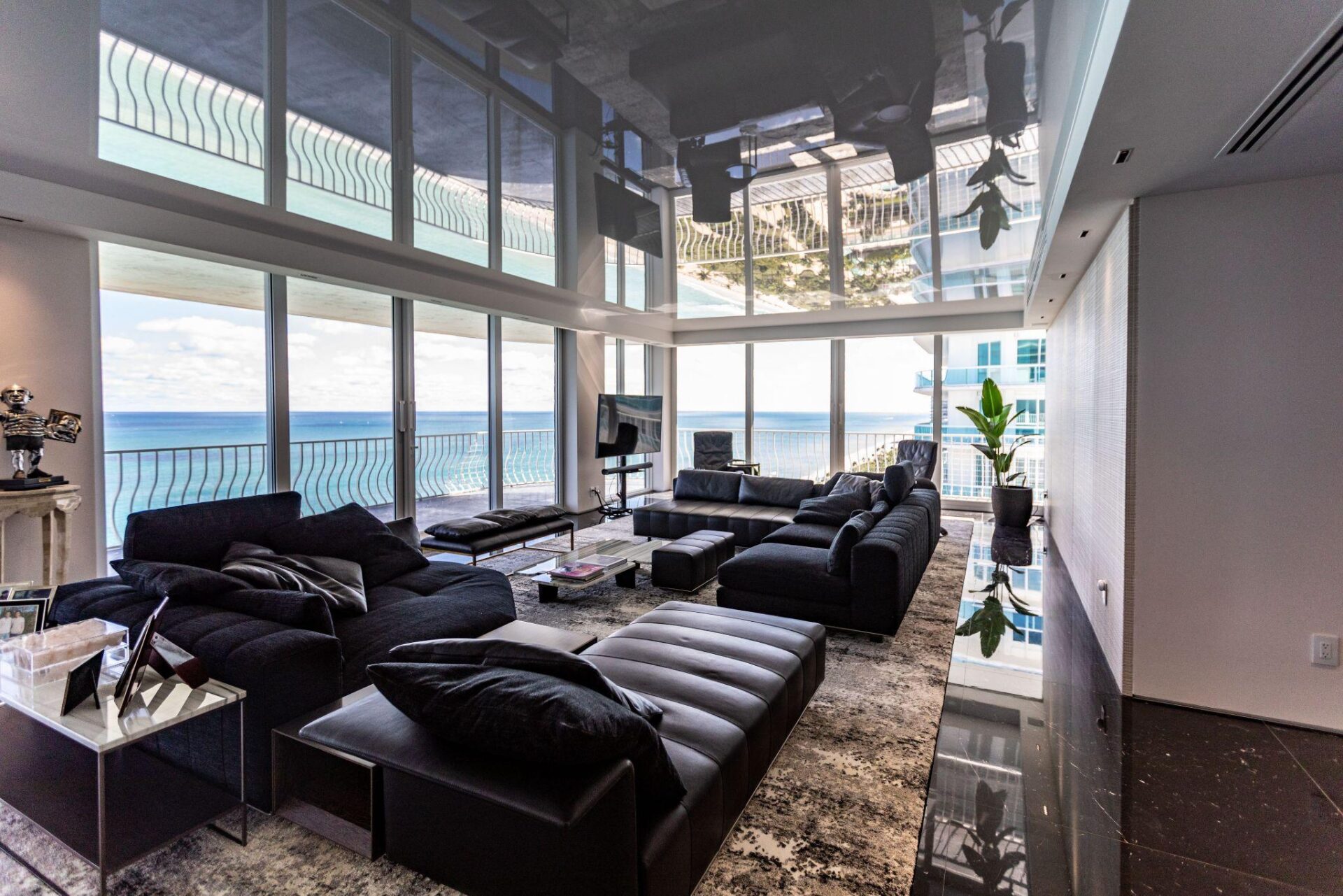
In NYC residences, this may mean making a compact penthouse entertaining area feel refined, efficient and visually memorable. In Miami residences, it may mean connecting open living spaces, waterfront views, custom bars, lounge seating and dramatic wall treatments into one relaxed but polished environment. In both contexts, the principle is the same: entertaining spaces should feel residential, intentional and cohesive.
Custom furnishings are especially useful in these areas because entertaining spaces often require multiple functions in limited or highly visible zones. Storage, display, seating, lighting and circulation must be resolved together. A built-in bar may need concealed storage, open shelving, stone surfaces, lighting and metal accents. A lounge area may need soft seating, cocktail tables, wall panels and display elements. A wine wall may need to coordinate with nearby furniture, flooring and lighting.
When these elements are planned separately, the space can become visually busy. When they are planned together, the entertaining area feels like a natural extension of the home.
Bedrooms, closets and private spaces
Bedrooms as complete private interiors, not only bed-and-nightstand layouts
The bedroom should not become the entire focus of an article about custom furnishings for luxury residences, but it is one of the clearest examples of why integration matters. A luxury bedroom is not simply a bed with matching nightstands. It is a private interior where furniture, wall treatments, wardrobes, lighting, doors and soft finishes must work together to create calm, comfort and refinement.
Beds, nightstands, dressers, vanities and benches all contribute to the daily experience of the room. But the architectural elements around them are just as important. Wall panels can frame the bed. Wardrobes can define the room’s rhythm. Doors can influence privacy and movement. Lighting can change the mood from morning to evening. Textiles, leather, wood and lacquer can make the room feel either warm, dramatic, minimal or deeply layered.
For a dedicated bedroom furniture guide, see luxury modern bedroom furniture.
The bedroom is also where poor coordination becomes easy to notice. A bed may be beautiful but too small for the wall behind it. Nightstands may not relate to the wardrobe finish. A dresser may feel disconnected from the paneling. Lighting may be chosen after furniture placement, leaving the room functional but not atmospheric.
Custom planning prevents these issues by treating the bedroom as a complete suite. The bed, panels, wardrobes, seating, vanities, doors and lighting can be arranged around comfort, symmetry, storage and personal routine. This is especially important in primary suites, where the bedroom often connects directly to walk-in closets, dressing areas and bathrooms.
For styling and room composition, see luxury furniture in the bedroom.
Walk-in closets and wardrobe systems as part of the residence
Walk-in closets and wardrobe systems have become much more than storage areas in luxury homes. In high-end residences, they are part of the private living experience. They influence the rhythm of daily life, the organization of personal belongings and the perceived value of the bedroom suite.
A well-designed closet system should feel connected to the rest of the residence. It should not look like a purely functional room with no relationship to the bedroom, bathroom or dressing area. Materials, lighting, hardware and door details can all help the closet feel like part of the same custom furnishing plan.
MATERIA’s closet and cabinet systems include high-end Italian wardrobes, walk-in closets and cabinet systems that can support this level of integration. The value is not only in storage capacity, but in the way the system contributes to the residence as a whole.
A luxury closet or wardrobe area may include:
open and closed storage for clothing, shoes, bags and accessories
glass-fronted sections for display
integrated lighting for visibility and atmosphere
drawer systems and concealed organization
seating, vanities or dressing surfaces
finishes that relate to bedroom furniture, doors and wall panels
When closets are planned early, they can support both beauty and function. The dimensions can reflect the homeowner’s actual wardrobe. Lighting can be integrated instead of added later. Materials can relate to the bed, nightstands, bathroom vanities and doors. Circulation can be planned so the closet feels comfortable rather than cramped.
This is why wardrobe systems should be understood as part of custom furnishings for luxury residences, not as a separate technical storage category. They are part of the private architecture of the home.
Private rooms need softer integration
Private spaces usually require a different kind of luxury than public rooms. A living room or dining room may allow for more drama, contrast and visual statement. A bedroom, dressing room, private lounge or study often needs a softer type of integration.
In these rooms, the goal is not only to impress. The goal is to create comfort, privacy and atmosphere. Materials should feel refined, but also livable. Wood can add warmth. Leather can bring depth. Fabric can soften acoustics and touchpoints. Textured wall coverings can create intimacy. Concealed storage can reduce visual noise. Soft lighting can make the room feel calm in the evening and comfortable in daily use.
This softer integration is especially important in large homes, where private spaces should feel distinct from formal entertaining areas. The material language may be related, but the mood should shift. A residence can use similar woods, metals or wall treatments throughout, while still making private rooms feel quieter and more personal.
Custom furnishings make this possible because they allow the design to respond to how each room is actually used. A bedroom may need reading light, concealed charging, wardrobe access and soft seating. A private study may need desk space, shelving, acoustic comfort and display surfaces. A dressing area may need mirror placement, lighting accuracy, drawer organization and seating.
When these details are planned together, private rooms feel effortless. They do not simply look luxurious; they support the way the homeowner lives.
Wall panels, media walls and architectural details
Wall panels as the link between furniture and architecture
Wall treatments are one of the strongest links between furniture and architecture. They transform the surfaces around furniture into active parts of the design. Without them, even beautiful furniture can feel like it is floating in an unfinished room. With the right wall panels or treatments, the same furniture can feel grounded, framed and connected to the architecture.
MATERIA Collection offers Italian wall treatments, decorative wall panels and wallpapers designed to transform walls into high-end visual surfaces. This includes wall panel systems, decorative panels, wallpapers, Venetian plaster, boiserie, marble-effect panels, acoustic panels, textured surfaces, metal-effect panels and natural-inspired wall coverings.
In a luxury residence, wall panels can serve several purposes at once. They can create a focal point, add depth, improve proportion, conceal storage, frame furniture, support lighting or bring texture to a room that would otherwise feel flat. They can also help connect separate furniture pieces into one composition.
A paneled wall behind a sofa can make the seating arrangement feel more architectural. A decorative surface behind a dining sideboard can turn a simple storage wall into a formal feature. A textured panel behind a bed can create intimacy and softness. A marble-effect or metal-effect panel can add drama to an entry, lounge or entertaining space.
The key is to use wall treatments as part of the furnishing plan, not as decoration added at the end. If panels are selected after furniture, they may compete with the room. If they are planned with the furniture, they can support scale, proportion and mood.
Media walls and wall units in modern residences
Media walls have become central features in many modern luxury residences. They are functional, but they are also highly visible. A poorly planned media wall can dominate a living room for the wrong reasons. A well-designed one can integrate technology, storage, display and architecture into a refined composition.
A media wall may include a television, speakers, shelving, display niches, concealed cabinets, decorative panels, lighting, acoustic consideration and open or closed storage. It may also need to relate to the main seating arrangement, coffee tables, consoles, sideboards and circulation through the room.
The challenge is balance. The media wall should not feel like an afterthought, but it should also not overwhelm the residence. It should support the way the room is used while maintaining a luxury atmosphere. That means considering both technical function and visual presence.
In open-plan homes, this becomes even more important. A media wall may be visible from the kitchen, dining room or entry. Its materials, lines and lighting should therefore relate to more than one zone. It may need to connect with nearby wall panels, stone surfaces, metal accents, shelving or furniture pieces.
Wall units work in a similar way. They can provide storage, display and architectural rhythm, but only when their scale is carefully controlled. If they are too heavy, the room can feel crowded. If they are too minimal, they may not provide enough function. Custom planning allows the wall unit to respond to the actual room, rather than forcing the room to adapt to a standard solution.
Doors, shelving and built-ins as part of the same composition
Doors, shelving and built-ins are often treated as background elements, but in luxury residences they have a major impact on the overall design language. They define rhythm, proportion, privacy and movement. They also influence how one room transitions into another.
MATERIA’s luxury exterior and interior doors, including pivot, swing and sliding doors, can be considered part of this broader furnishing and millwork system. A door is not only a functional opening. It can become a surface, a vertical line, a material statement or a quiet continuation of surrounding wall panels.
Shelving and built-ins work in a similar way. They can organize books, objects, art, lighting and storage, but they also shape the wall visually. A built-in shelf in a living room should relate to seating and tables. A hallway built-in should relate to doors and circulation. A bedroom built-in should relate to wardrobes and soft furnishings. A dining built-in should support serving, display and storage.



Finish continuity across the entire home
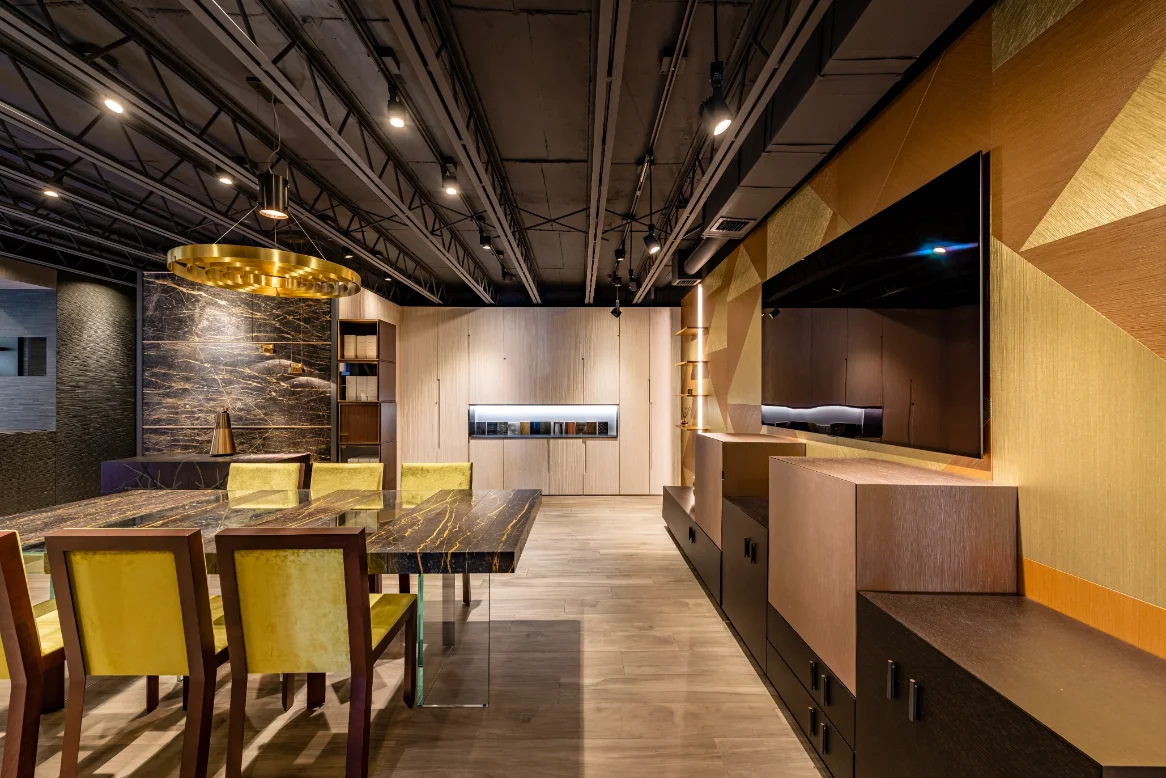
Finish continuity is one of the quiet differences between a residence that looks expensive and a residence that feels truly resolved.
Luxury interiors are not only judged by the value of individual pieces. They are judged by the way materials repeat, transition, contrast and support each other from one room to the next.
Wood, veneer and natural materials
Wood and veneer are among the most important materials in custom furnishings for luxury residences because they bring warmth, depth and permanence. They can make a room feel grounded without making it heavy. They can soften stone, balance metal, support upholstery and create a visual connection between furniture and architecture.
In a luxury home, wood is rarely used in only one place. It may appear across wall panels, sideboards, wardrobes, dining tables, shelving, bedroom furniture, doors and built-ins. When these applications are planned together, wood becomes more than a finish. It becomes part of the home’s identity.
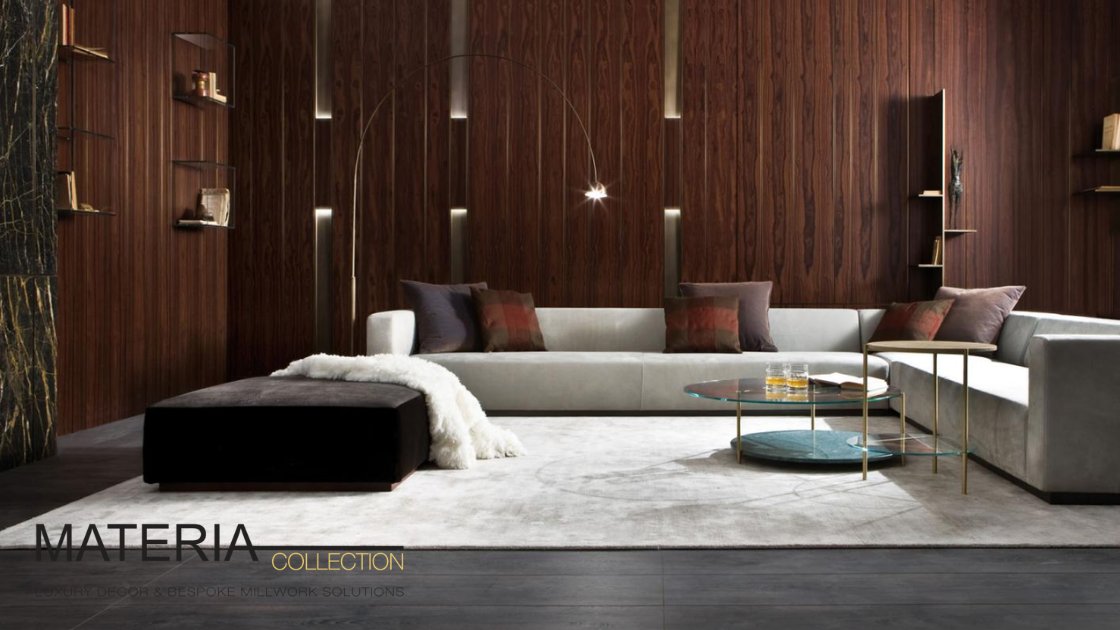
A wood-paneled wall behind a sofa can make the living room feel calmer and more architectural. A veneer sideboard in the dining room can echo the tone of nearby panels or doors. A wardrobe system in the primary suite can relate to nightstands, dressers, benches or wall treatments. A custom media wall can use wood to soften the presence of technology and make the space feel more residential.
The strongest use of wood in a luxury residence usually depends on control. Tone, grain direction, scale and placement all matter. A rich wood finish can feel elegant in one room and overwhelming in another if it is not balanced with lighter materials, soft lighting or quieter surfaces. A lighter veneer can make a residence feel open and contemporary, but it still needs enough depth to avoid looking generic.
Natural materials also help custom interiors feel more authentic. MATERIA’s work with natural materials, artisan finishes, exotic woods, natural stone and metals allows a residence to move beyond standard surface choices. Exotic woods should be used with intention, not simply for rarity. Their value is strongest when they support a clear design concept, whether through a statement wall, a refined sideboard, a custom wardrobe or a special built-in feature.
Wood and veneer can create continuity across several areas of the home:
wall panels and boiserie in living rooms, dining rooms and corridors
sideboards, consoles and wall units in social spaces
wardrobes and walk-in closet systems in private suites
doors, shelving and built-ins that connect rooms visually
bedroom furniture, office furniture and occasional pieces
custom millwork details that make storage feel architectural
Lacquer, metal, stone and glass
While wood brings warmth, lacquer, metal, stone and glass bring precision, contrast and architectural definition. These materials help a luxury residence feel tailored. They can sharpen the design language, create focal points and add the kind of surface variation that makes interiors feel layered rather than one-dimensional.
Lacquer is especially useful when a room needs refinement and visual control. A lacquered cabinet, wall unit, sideboard or door surface can create a clean, polished atmosphere. Matte lacquer can feel understated and architectural, while glossier lacquer can bring a more formal or dramatic effect. In custom residential interiors, lacquer works best when it is coordinated with surrounding materials. It should not feel like an isolated finish applied to one cabinet without relationship to the room.
Metal adds detail and contrast. Brass, bronze, dark metal and brushed metal can all shift the character of a space. A bronze detail may make a sideboard feel warmer and more refined. A dark metal frame can add definition to shelving, glass doors or display units. Brass accents can bring a subtle decorative quality when used with restraint. Metal inlays can make custom furniture and millwork feel more tailored, especially when they are aligned with panel joints, door details, lighting elements or furniture legs.
Stone brings weight and permanence. Natural stone, marble-effect surfaces and stone-inspired panels can create a sense of luxury that feels architectural rather than decorative. In a residence, stone may appear on dining pieces, consoles, bars, kitchen elements, bathroom vanities, wall panels or feature surfaces. It can make an entertaining area feel more substantial, a dining room more formal or a bathroom more spa-like.
Glass can lighten the composition. It is useful in shelving, cabinet fronts, display areas, wine storage, doors, tables and wall units. Clear glass can create openness. Smoked glass can add depth and privacy. Mirror and reflective glass can make compact areas feel larger and more layered. In custom furnishings, glass is often most effective when it is used to balance heavier materials such as wood, stone or metal.
A sophisticated finish plan often asks three questions:
Which material should define the room?
Which materials should support that main finish?
Which details should repeat elsewhere in the residence?
When those questions are answered early, lacquer, metal, stone and glass become part of a complete design system rather than separate decorative effects.
Leather, fabric and lighting
The softer finish layers are what make a luxury residence feel livable. Wood, stone, lacquer and metal may define the architecture of a room, but leather, fabric, textured wall coverings and lighting shape the emotional experience. They determine whether a space feels formal, relaxed, intimate, dramatic or calm.
Upholstered seating is often the first layer people notice physically. Sofas, lounge chairs, dining chairs, benches, beds and stools all influence comfort. In luxury custom furniture, upholstery should not be selected only for color. Texture, scale, durability, stitching, softness, depth and relationship to surrounding materials all matter. A heavy fabric may ground a living room. A refined leather detail may add structure to a bedroom or study. A soft textile may make a private lounge feel more inviting.
Leather can bring richness without becoming overly decorative. It may appear on seating, panels, drawer pulls, doors, headboards, desks, wardrobe interiors or accent details. Used carefully, leather can add warmth and tactility to areas that might otherwise feel too hard or architectural. It works especially well when balanced with wood, metal, soft lighting and textured wall surfaces.
Fabric panels and textured wallpapers add another layer of depth. They can soften acoustics, reduce the flatness of large walls and make rooms feel more intimate. In bedrooms, dressing areas, private studies and lounges, fabric and textured wall coverings can be especially effective because they create a quieter atmosphere. In living and dining spaces, they can add subtle richness behind furniture, art or lighting.
Lighting is the layer that changes everything. The same wood, stone, fabric or lacquer can look completely different under different lighting conditions. This is why lighting should be coordinated with panels, furniture and built-ins early in the design process, not added after the major decisions have already been made.
MATERIA’s lighting range, including floor lamps, table lamps, pendants and spotlights, supports this more complete approach. A pendant over a dining table should relate to the table’s scale and the room’s ceiling height. Floor lamps should support seating arrangements. Table lamps should work with consoles, nightstands and sideboards. Spotlights should highlight wall panels, art, shelving or special finishes without flattening the room.
Italian style as a system of proportion and finish
Italian style in interior design should not be reduced to a generic idea of luxury. Its strongest value lies in proportion, material intelligence, craftsmanship and the relationship between furniture and architecture. In the context of custom furnishings for luxury residences, Italian design is less about decoration and more about a disciplined way of composing space.
A well-designed Italian-inspired interior often feels refined because the details are controlled. A sideboard is not only beautiful from the front; its depth, height, finish, handle detail and relationship to the wall behind it are considered. A sofa is not only selected for comfort; its scale, upholstery and position are coordinated with tables, panels and lighting. A wardrobe is not only a storage unit; it becomes part of the bedroom’s architectural rhythm.
This approach is closely connected to the main idea of the article. The best luxury residences do not separate furniture from millwork, or wall treatments from furniture, or lighting from finishes. They create a complete language where each element strengthens the next.
For a broader design perspective, see Italian style in interior design.
MATERIA’s Italian design direction is especially relevant because the brand works across furniture, wall treatments, closet systems, doors, kitchens, lighting and bathroom solutions. This allows a residence to be planned with a more cohesive eye. Instead of selecting a sofa from one source, a wall panel from another, a wardrobe from another and lighting from another, the project can be approached as a complete interior composition.
Italian style at this level is not about filling a home with recognizable pieces. It is about proportion, finish continuity and the ability to make furniture and architecture feel inseparable. That is the difference between a room that contains luxury items and a residence that feels truly designed.
Custom furnishings in NYC and Miami luxury residences
NYC residences: apartments, townhouses and penthouses
NYC luxury interiors often require precision. Apartments, townhouses, penthouses and high-end residential renovations may have strong architectural character, compact footprints, valuable views or unusual layouts that require careful planning. In these homes, every furnishing decision has to work hard.
A penthouse living room may need custom furniture that respects dramatic views without interrupting sightlines. A townhouse may need wall panels, doors, built-ins and furniture that feel appropriate to the architecture while still supporting modern living. A luxury apartment may need storage intelligence because every square foot has value. A renovation may need custom residential millwork to solve awkward dimensions, transitions or existing structural conditions.
Custom furnishings are especially valuable in NYC because they can bring order to complex spaces. A standard console may not fit a narrow entry properly. A mass-produced wardrobe may waste valuable height. A media wall may need to integrate storage without making the room feel smaller. A dining area may need a sideboard, lighting and wall treatment that create formality without taking too much space.
In this context, proportion becomes critical. Furniture cannot simply be beautiful; it has to be correctly scaled. Built-ins cannot simply provide storage; they have to improve the room. Wall panels cannot simply add texture; they have to support the architecture.
NYC luxury residences often benefit from custom furnishings that prioritize:
built-in storage that feels architectural
wall units and media walls scaled to compact or open-plan rooms
wardrobes and closet systems that maximize height and organization
refined material continuity across apartments, duplexes and townhouses
furniture pieces that support entertaining without overcrowding the space
paneling, doors and millwork that create a polished residential rhythm
The best results feel effortless, but they are usually the result of careful planning. In dense residential environments, custom furnishings help a home feel more spacious, more organized and more refined.
Miami residences: waterfront homes, condos and branded residences
Miami luxury residences often have a different rhythm. Waterfront homes, high-end condos, branded residences and large private apartments frequently prioritize open entertaining areas, indoor-outdoor lifestyle, dramatic finishes and visual continuity across larger living spaces. The design language may feel more relaxed than in some urban interiors, but it still requires precision.
In Miami homes, custom furnishings often need to support openness. Living rooms may connect to terraces, water views or large dining areas. Entertaining spaces may include custom bars, lounge zones, wine storage, display walls and dramatic paneling. Primary suites may include generous closets, soft seating, bathroom connections and carefully coordinated finishes.
Because many Miami luxury interiors are highly visual, the relationship between furniture, wall panels, lighting and materials becomes especially important. A large living space can feel empty if the furniture is not strong enough. It can feel busy if every surface becomes a statement. The right custom furnishing plan creates structure without making the home feel heavy.
Material selection and finish specification should also be approached carefully in coastal environments. Without making broad technical assumptions, it is reasonable to say that finishes, hardware, surfaces and installation details should be selected with the specific residence, exposure, maintenance expectations and project requirements in mind. This is where experienced specification and coordination become important.
Miami residences often benefit from custom furnishings that emphasize:
open-plan living and dining continuity
dramatic wall panels and feature surfaces
custom bars and entertaining zones
walk-in closets and wardrobe systems
large-scale furniture with refined proportions
lighting that supports both daytime openness and evening atmosphere
material palettes that feel luxurious, relaxed and cohesive
The best Miami luxury homes do not feel like collections of impressive pieces. They feel composed around lifestyle, views, entertaining and comfort. Custom furnishings help create that composition by connecting furniture, built-ins, wall panels, lighting and finishes into one continuous residential experience.



Create a residence where furniture, panels and millwork work as one
A luxury residence should not feel assembled piece by piece. It should feel composed. The most refined homes achieve this through a clear relationship between furniture, wall panels, built-ins, doors, wardrobes, lighting, materials and architectural details.
Custom furnishings for luxury residences make that possible. They allow each room to serve its own purpose while still belonging to the same interior language. The living room can feel social and expressive. The dining room can feel architectural and formal. The bedroom can feel soft and private. The closet can feel tailored and precise. The media wall, panels, sideboards and built-ins can all support the home’s overall rhythm.
This is the difference between selecting luxury pieces and creating a luxury residence. Individual furniture can be beautiful. But when furniture, panels and millwork are planned together, the entire home becomes stronger.
Planning a luxury residence, penthouse, waterfront home or private apartment? MATERIA Collection can help coordinate custom furnishings, wall panels, built-ins, closet systems, doors, lighting and Italian finishes into one cohesive interior. Contact MATERIA Collection to discuss a whole-home furnishing and millwork project.
Frequently Asked Questions - Custom Furnishings for Luxury Residences
What are custom furnishings for luxury residences?
Custom furnishings for luxury residences include bespoke furniture, wall panels, wardrobes, built-ins, media walls, sideboards, doors, lighting and custom residential millwork planned as one complete interior system.
How are custom furnishings different from luxury furniture?
Luxury furniture usually refers to individual high-end pieces, while custom furnishings consider how furniture, finishes, storage, wall treatments, lighting and architecture work together across the entire residence.
Why should furniture and millwork be planned together?
Furniture and millwork should be planned together because they influence proportion, finish continuity, storage, circulation, lighting and the overall visual flow of a luxury home.
Which rooms benefit most from custom furnishings?
Living rooms, dining rooms, bedrooms, walk-in closets, media rooms, penthouses, entertaining spaces and large open-plan areas benefit most from custom furnishings.
Does MATERIA Collection work on complete residential interiors?
MATERIA Collection offers luxury Italian furniture, wall treatments, closet and cabinet systems, doors, kitchens, lighting and bathroom solutions for cohesive residential interiors.