

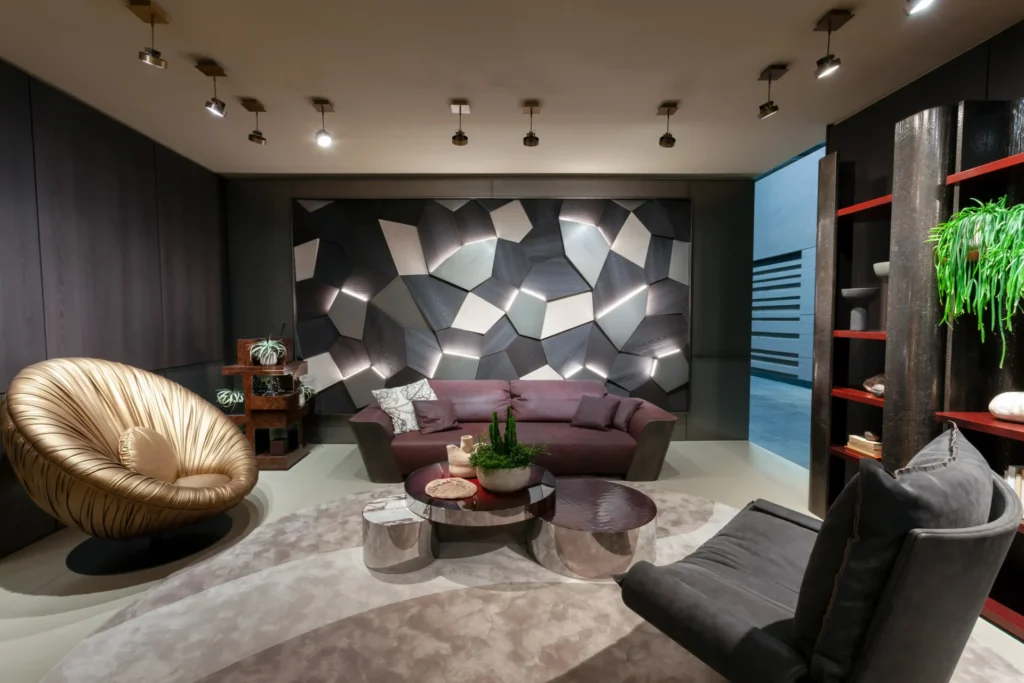
Miami luxury interiors often bring together open-plan living, waterfront views, entertaining areas, high-rise layouts and premium finishes, which means every visible surface has to feel intentional. For homeowners, developers, designers and architects searching for custom millwork Miami, MATERIA Collection offers a refined way to connect Italian design, custom millwork, wall treatments, closet and cabinet systems, luxury doors, kitchens, lighting, bathroom solutions and fine furniture into one cohesive interior language.
| Miami Design Need | How Custom Millwork Helps | Why It Matters in Luxury Properties |
|---|---|---|
| Open-plan living | Built-ins, media walls, bars and panels define zones without closing the space. | The home feels organized, spacious and intentional instead of visually unfinished. |
| Waterfront views and glass walls | Wood, textured panels and refined cabinetry add warmth, depth and balance around large windows. | The interior supports the view without feeling cold, empty or overly reflective. |
| Entertainment-focused spaces | Custom bars, display shelving, concealed storage and integrated lighting support hosting. | Entertaining areas feel polished, functional and ready for everyday use or private gatherings. |
| High-rise condo layouts | Tailored cabinetry uses fixed walls, corridors, corners and compact areas more efficiently. | Storage improves without adding bulky furniture or blocking clean sightlines. |
| Premium finish expectations | Wall panels, cabinetry, wardrobes, doors and vanities can follow one controlled material palette. | The residence feels cohesive, curated and designed for the property, not assembled from separate pieces. |
| Resale and buyer appeal | Well-planned built-ins create a stronger first impression during showings, photography and staging. | Custom details can support perceived value by improving finish quality, function and visual continuity. |
Readers who want a broader foundation can explore MATERIA’s guide to residential custom millwork, which explains how luxury homes are built through integrated interior details rather than isolated pieces.
Custom wall panels, media walls and built-ins
Wall panels are one of the most recognizable elements of luxury custom millwork, but they should not be treated as a separate decorative layer. In a serious Miami interior, wall panels work best when they are part of a larger plan that includes built-ins, media walls, storage, furniture, lighting and architectural detailing.
Miami wall panels can do several things at once. They can create a feature wall, frame a media area, add depth to a long condo wall, soften a large open-plan room or introduce a richer material language into a property dominated by glass, stone and smooth surfaces. They can also help organize the room visually. Instead of leaving a wall flat and unfinished, a panel system gives the eye structure, rhythm and proportion.
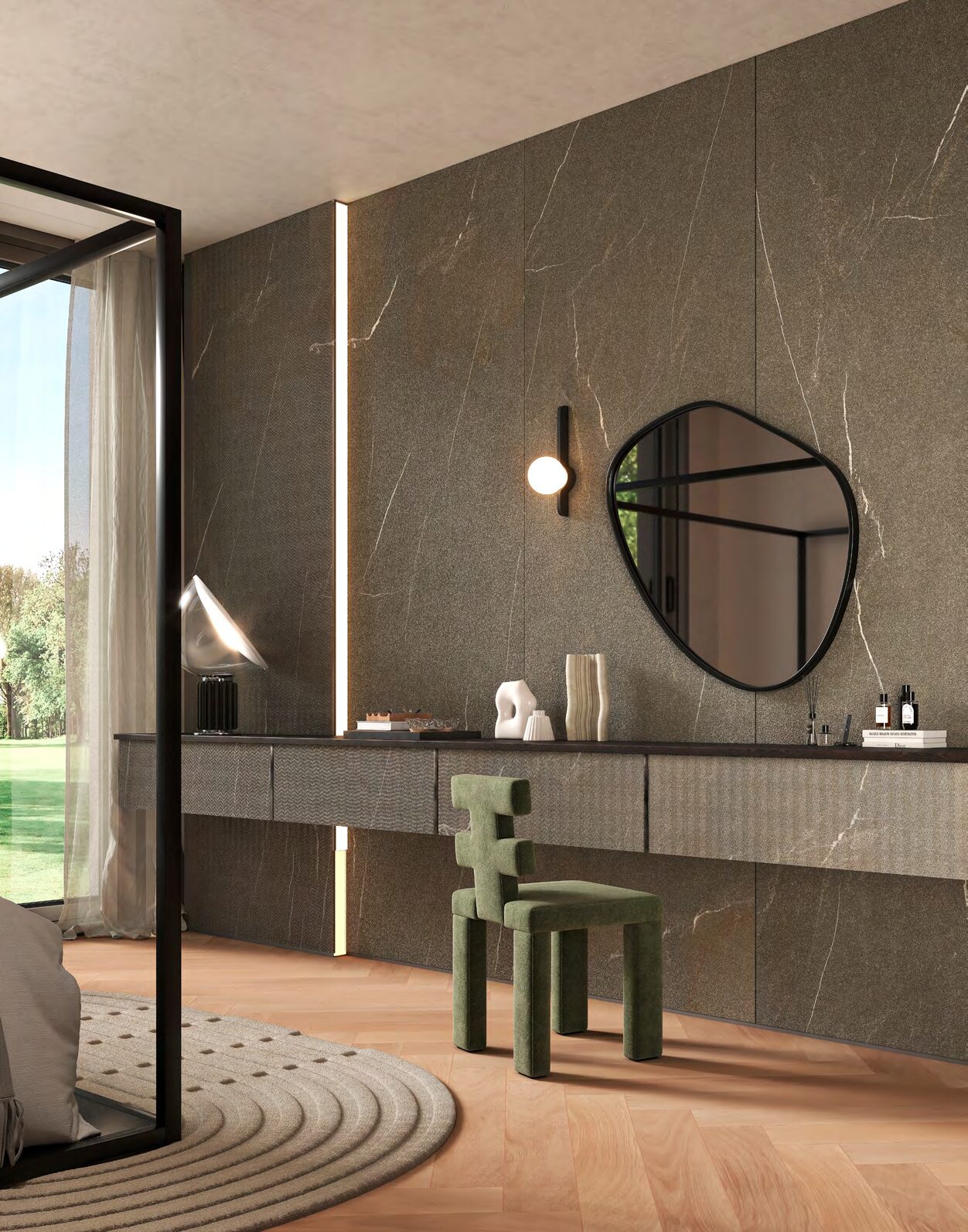
MATERIA Collection’s world of wall treatments includes Italian wall panel systems, decorative wall panels, wallpapers and sophisticated surfaces that can be used in different ways depending on the project. Some interiors may need a warm wood panel system that makes the room feel more intimate. Others may need marble-effect panels, metal-effect surfaces, textured panels or decorative finishes that create a stronger visual statement.
For projects where the wall treatment becomes the main visual statement, MATERIA’s guide to luxury wall panels offers a deeper look at high-end Italian panel systems.
Wall panels as architectural structure
A wall panel system can be decorative, but in luxury interiors it should also feel architectural. It can introduce vertical lines that make a ceiling feel taller, horizontal rhythm that makes a room feel wider or framed sections that create balance around furniture and lighting.
In a Miami condo or penthouse, this can be especially valuable because many rooms are shaped by fixed structural conditions. Columns, glass walls, elevator cores, service walls and mechanical zones can limit how furniture is placed. Custom wall panels help designers create order around these constraints.
A strong wall panel plan can help define:
The main living room focal point
The dining room backdrop
The primary bedroom headboard wall
The entry sequence
The hallway rhythm
The media wall composition
The bar or lounge feature area
The relationship between cabinetry and surrounding surfaces
The goal is not to cover every wall. In fact, the most refined interiors often use panels selectively. One strong wall, one integrated media zone or one continuous panel rhythm can be more effective than treating every surface.
Media walls as more than TV walls
In many luxury homes, the media wall has become one of the most important millwork elements in the residence. It is no longer simply a place to mount a television. It is often the main architectural wall of the living room.
A well-designed media wall can combine several functions:
Television integration
Concealed equipment storage
Speaker and sound planning
Decorative wall panels
Open display shelving
Closed cabinetry
Integrated lighting
Stone, wood or marble-effect surfaces
Hidden wiring
Visual balance with sofas, rugs, sideboards and lounge furniture
For interiors that need the drama of stone without making the entire room feel heavy, the guide to marble wall panels for luxury interiors can help designers evaluate the look, scale and design impact.
Built-ins that make the room feel finished
Built-ins are where custom millwork becomes especially practical. While wall panels shape the surface, built-ins give the space structure and function. They allow storage, display, seating, lighting and technical requirements to be built into the architecture instead of added later.
In a Miami residence, built-ins may include:
Floating consoles beneath media walls
Integrated shelving for books, objects and art
Bar cabinetry for entertaining areas
Entry storage for daily use
Bedroom wardrobes and nightstand integrations
Dining room sideboards
Bathroom vanities
Office storage and wall units
Display niches for sculpture, glassware or collectibles
Concealed storage along corridors or underused walls
The value of built-ins is not only that they save space. It is that they reduce visual clutter. When storage is planned properly, the home feels calmer. When shelving is proportioned correctly, display areas feel curated instead of crowded. When cabinetry follows the wall line and finish palette, the interior feels more expensive because it looks designed rather than assembled.
The best built-ins do not call attention to themselves unnecessarily. They make the room work better, look cleaner and feel more complete.
Penthouses and condos: maximizing space without visual clutter
Miami condos and penthouses often have a unique design challenge. They may offer spectacular views, premium building amenities and impressive architecture, but the interiors still have practical limits. Wall space may be interrupted by glass. Structural columns may define the layout. Corridors may be narrow. Mechanical zones and fixed plumbing locations may influence where storage, vanities and cabinetry can be placed.
Built-ins for open-plan condo living
Open-plan condo living is one of the defining features of Miami luxury interiors. The kitchen, dining area, lounge and terrace connection may all be visible from one central space. That openness feels impressive, but it also requires discipline. Without clear design structure, the room can feel undefined.
Built-ins help create that structure without closing the space. A custom media wall can define the living zone. A built-in sideboard can anchor the dining area. A bar cabinet can create an entertaining moment between the kitchen and lounge. Architectural shelving can introduce display and storage without interrupting circulation.
The best built-ins for open-plan condo living usually share several qualities:
They follow the scale of the room rather than standard cabinet dimensions.
They keep storage hidden where possible.
They use finishes that relate to the flooring, wall panels, kitchen or doors.
They allow technology to be integrated cleanly.
They create focal points without blocking views.
They help one space transition naturally into another.
For example, a floating media wall in a Miami condo can include closed lower storage, vertical wall panels, integrated lighting and a slim display shelf. The design can feel light enough for a high-rise residence while still giving the room a strong architectural anchor. In a larger penthouse, the same concept may become more dramatic, with stone-inspired panels, metal accents, wider shelving and a stronger relationship to the dining or bar area.
Display niches are another important option. They allow art, objects and personal collections to be presented in a controlled way. Instead of filling a room with separate display cabinets, the architecture itself becomes the display system. This is particularly useful in luxury condos where the goal is to keep the floor plan open and uncluttered.
Wardrobes, closets and dressing areas
Storage is one of the most important parts of luxury condo and penthouse planning. A residence may have beautiful views and premium finishes, but if wardrobes, closets and dressing areas are not well designed, everyday living becomes less elegant.
Italian closet and cabinet systems are especially valuable in these spaces because they can combine customization, craftsmanship and visual refinement. MATERIA Collection’s closet and cabinet systems include high-end Italian wardrobes, walk-in closets and cabinet systems designed for adaptability and finish control. In a Miami condo or penthouse, these systems can support both beauty and daily function.
A well-planned wardrobe system should do more than hold clothing. It should respond to the owner’s lifestyle. Some clients need long hanging sections, shoe walls and accessory drawers. Others need luggage storage, concealed compartments, open display shelves, integrated lighting or a full walk-in dressing experience. In luxury interiors, the wardrobe is part of the architecture of the bedroom, not just storage behind doors.
Important planning considerations include:
The relationship between wardrobe finishes and bedroom wall panels
Interior lighting for visibility and atmosphere
Drawer configuration and accessory organization
Door style, handle details and opening clearance
Mirror placement and dressing circulation
Connection between bedroom, closet and bathroom
The balance between open display and concealed storage
In a penthouse, a walk-in closet may become a private boutique-like space. It can include shelving, cabinet systems, islands, lighting, mirrors and seating. In a condo, the wardrobe may need to be more compact, but it can still feel luxurious through proportion, finish quality and careful detailing.
The main goal is continuity. A bedroom should not feel like one design language, the wardrobe like another and the bathroom like a third. When custom millwork connects these areas, the private suite feels calmer, more complete and more valuable.
Custom vanities and bathroom millwork
Bathrooms in Miami luxury residences are often expected to feel like private spa environments. Stone surfaces, refined lighting, large mirrors, elegant fixtures and carefully selected finishes all contribute to that feeling. But the vanity and surrounding millwork are what often determine whether the bathroom feels truly custom.
A mass-produced vanity can look out of place in a high-end bathroom, especially when the rest of the residence has custom wall panels, wardrobes, doors and cabinetry. Custom bathroom millwork allows the vanity to match the scale of the room, support the owner’s storage needs and connect with the broader finish palette of the home.
Custom vanities may include:
Floating or floor-mounted cabinet designs
Integrated drawers and concealed storage
Stone or stone-inspired tops
Wood veneer or lacquer finishes
Metal details and refined hardware
Mirror and lighting integration
Tall storage cabinets
Matching wall panels or side panels
Furniture-quality detailing
In Miami condos, where bathrooms may be compact, custom millwork can make the space feel more efficient and more elegant. In penthouses, larger bathrooms may allow for double vanities, makeup areas, linen storage, display shelving and stronger material statements. In both cases, the vanity should not feel disconnected from the rest of the residence.


Waterfront homes: entertaining, storage and finish continuity
Miami waterfront homes are often designed around hospitality. The interior connects to terraces, pools, outdoor kitchens, lounges, water views and social spaces. These homes need to support daily family living, but they also need to perform during gatherings, dinners, weekends, holidays and private events.
That makes custom millwork especially important. Waterfront homes often have larger rooms, longer sightlines and more opportunities for built-in design. A standard cabinet or freestanding furniture piece may look too small or too disconnected in this type of architecture. Custom millwork allows the interior to match the scale and lifestyle of the property.
Custom bars and entertainment areas
A custom bar is one of the strongest millwork opportunities in a Miami luxury home. It can become a design centerpiece, a practical entertaining hub and a storage solution at the same time. In waterfront properties, where indoor and outdoor living often flow together, the bar may be visible from the lounge, dining area, terrace or pool-facing spaces. It has to look refined from every angle.
A custom bar may include closed cabinetry, open display shelving, glass shelving, integrated lighting, wine storage, refrigeration coordination, stone or composite surfaces, decorative panels and metal details. It can be subtle and architectural, or it can become one of the most dramatic features in the home.
The best custom bars are planned around how the owner actually entertains. A client who hosts formal dinners may need glassware storage, wine display and a strong relationship to the dining room. A client who hosts casual waterfront gatherings may need a bar that connects more naturally to the lounge and terrace. A penthouse owner may want a compact but visually striking bar that works as an evening focal point.
Custom bar millwork can support:
Bottle and glassware display
Hidden storage for supplies
Integrated lighting for evening atmosphere
Durable work surfaces
Decorative panel backdrops
Metal, stone or wood detailing
Connection to nearby kitchen or dining millwork
A stronger sense of hospitality in the home
A bar should never feel like an afterthought. In a luxury Miami residence, it should feel like part of the architecture of entertaining.
Kitchens as part of the millwork system
In waterfront homes, the kitchen is rarely just a cooking space. It is often connected to dining, entertaining, family living and views. Because of that, kitchen cabinetry must work as part of the larger millwork system.
MATERIA Collection’s modern Italian kitchens are designed for clients seeking luxury solutions where uniqueness and sophistication matter. These kitchens combine art, function and lifestyle, with customization options for cabinetry materials, finishes, appliance choices and layouts. In a Miami residence, that flexibility is important because the kitchen often sits in direct visual conversation with the living room, dining area, bar and terrace.
A kitchen may share a wood finish with nearby wall panels. It may repeat a metal accent used in the bar. It may coordinate with a dining sideboard or integrated shelving. It may use stone-inspired surfaces that connect to a feature wall or bathroom detail elsewhere in the home.
When the kitchen is planned as part of the millwork system, the whole interior feels more intentional. The cabinetry does not appear as a separate kitchen package placed inside the home. It becomes part of the home’s design language.
Important kitchen millwork considerations include:
Cabinet proportions and ceiling height
Island scale and relationship to seating
Appliance integration
Pantry and hidden storage planning
Finish relationship to the living and dining areas
Lighting above and within cabinetry
Material durability and maintenance needs
Connection to bars, sideboards and adjacent built-ins
For Miami waterfront homes, the kitchen often has to be elegant enough for entertaining and practical enough for daily life. Custom cabinetry helps balance both needs.
Coastal specification and finish planning
Miami’s coastal and humid context should be considered carefully when planning custom millwork. Luxury materials can be beautiful, but they still need proper specification, installation planning and maintenance. No responsible designer or millwork provider should suggest that any finish is completely immune to humidity, salt air, sunlight, wear or daily use.
Instead, the goal is to specify materials and finishes intelligently for the property, the room and the way the space will be used. A powder room, a primary closet, a waterfront lounge, a kitchen and a bar may all require different levels of durability, cleaning access, ventilation and finish protection.
Professional planning matters because coastal interiors can be affected by several factors:
Humidity levels
Air conditioning and ventilation
Sun exposure through large glass walls
Proximity to exterior doors and terraces
Cleaning routines
Frequency of entertaining
Contact with water, oils, cosmetics or food
Material movement and long-term maintenance
This does not mean Miami properties should avoid refined materials. It means those materials should be selected with care. Wood veneer, lacquer, metal details, natural stone, stone-inspired surfaces, decorative panels and textured finishes can all play a role in luxury interiors when they are properly specified for the intended use.
For homeowners, developers and designers, the smartest approach is to discuss finish performance early. The material palette should be chosen not only for beauty, but also for how the residence will function over time. Proper specification can help support durability, visual quality and long-term satisfaction without relying on unrealistic promises.
Materials and finishes for a refined Miami look
Wood veneer and warm architectural surfaces
Wood veneer is one of the most effective ways to bring warmth into Miami luxury interiors. Many local properties feature glass, stone, polished floors, expansive windows and open layouts. These elements can be beautiful, but without warmth and texture, they can also feel cold or overly hard.
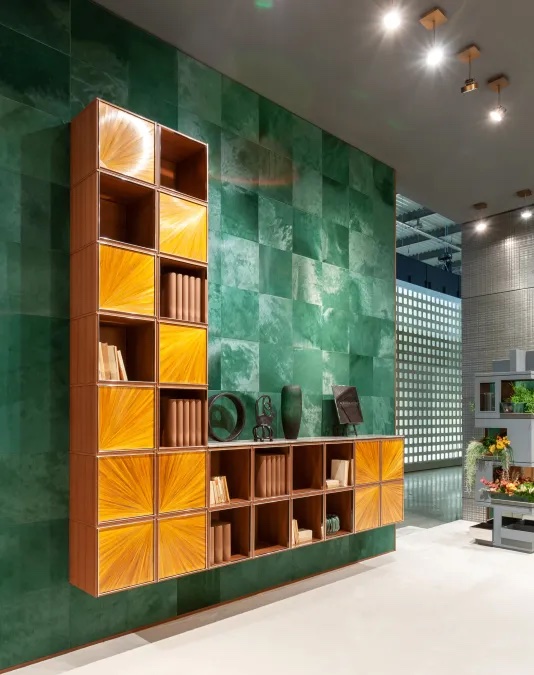
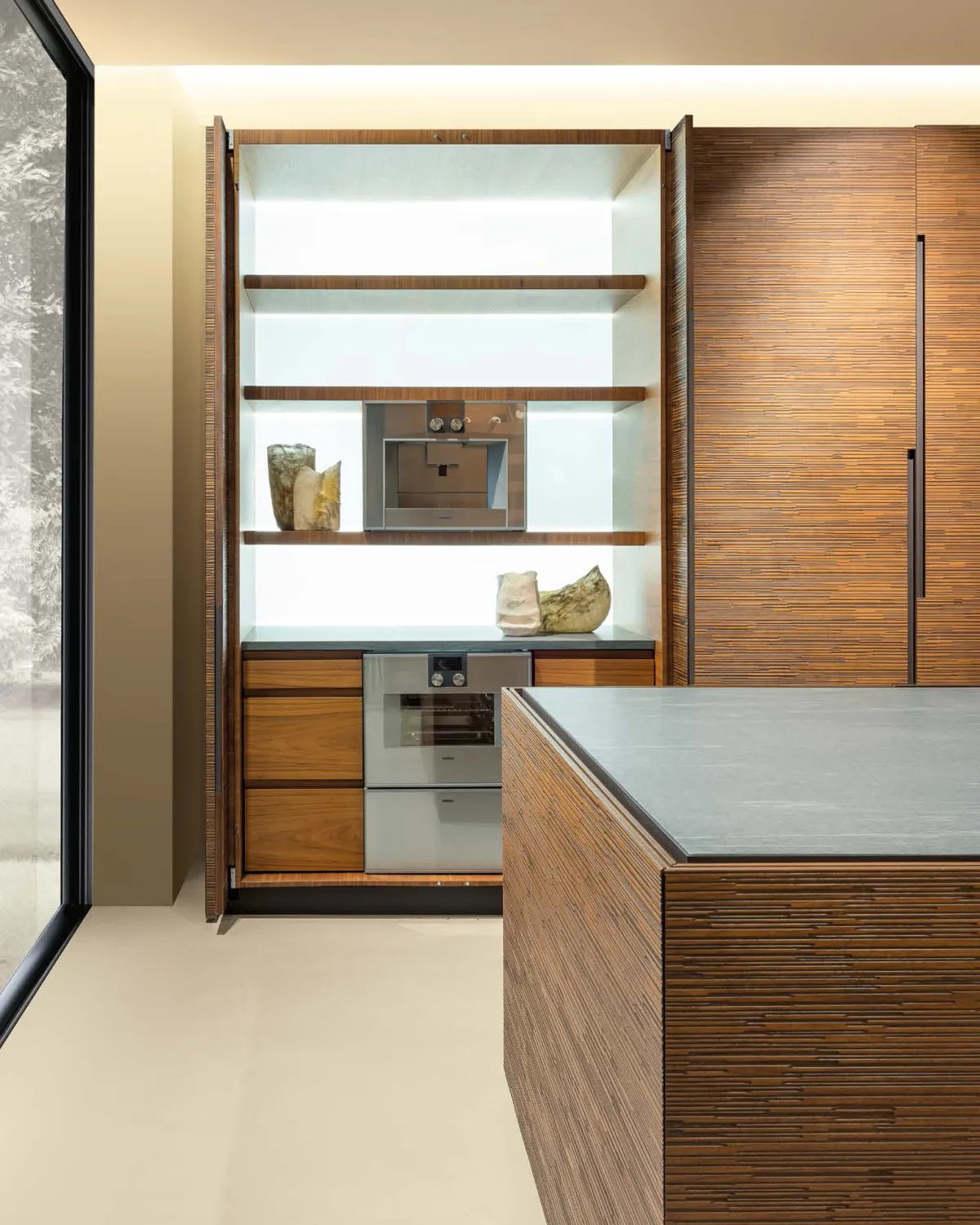
Wood surfaces help balance that effect. They add depth, tactility and rhythm. A wood-paneled media wall can soften a glass-heavy living room. A wood wardrobe system can make a bedroom feel more intimate. A wood sideboard or cabinet wall can bring warmth to a dining area. A wood vanity can make a bathroom feel more furniture-like and less clinical.
The value of wood veneer in custom millwork is not only visual. It also gives designers control over grain direction, panel proportion, finish tone and the relationship between surfaces. In a luxury home, those details matter. A poorly matched wood finish can make a room feel inconsistent. A well-planned veneer system can make the interior feel calm and expensive.
Wood can be used in several ways:
Full-height wall panel systems
Media wall backdrops
Wardrobe and closet doors
Cabinet fronts
Bar millwork
Bathroom vanities
Dining room sideboards
Office wall units
Door and panel coordination
In Miami interiors, wood does not need to look traditional. It can be sleek, modern and architectural. When paired with lacquer, stone, metal or integrated lighting, it can support a highly contemporary look while still adding warmth.
Lacquer, metal inlays and stone-inspired finishes
Lacquer, metal and stone-inspired surfaces can create a more polished Miami aesthetic. These finishes are especially effective in penthouses, branded residences, waterfront homes and entertainment-focused interiors where the design needs to feel precise and memorable.
A refined Miami palette may combine:
Warm wood veneer
Soft lacquer cabinetry
Bronze or dark metal accents
Marble-effect wall panels
Natural stone in key feature areas
Integrated lighting
Textured decorative panels
Neutral upholstery and rugs
Carefully selected glass or mirror details
The strongest interiors usually avoid using every luxury material at once. Instead, they select a few materials and repeat them with discipline.
Textured panels and integrated lighting
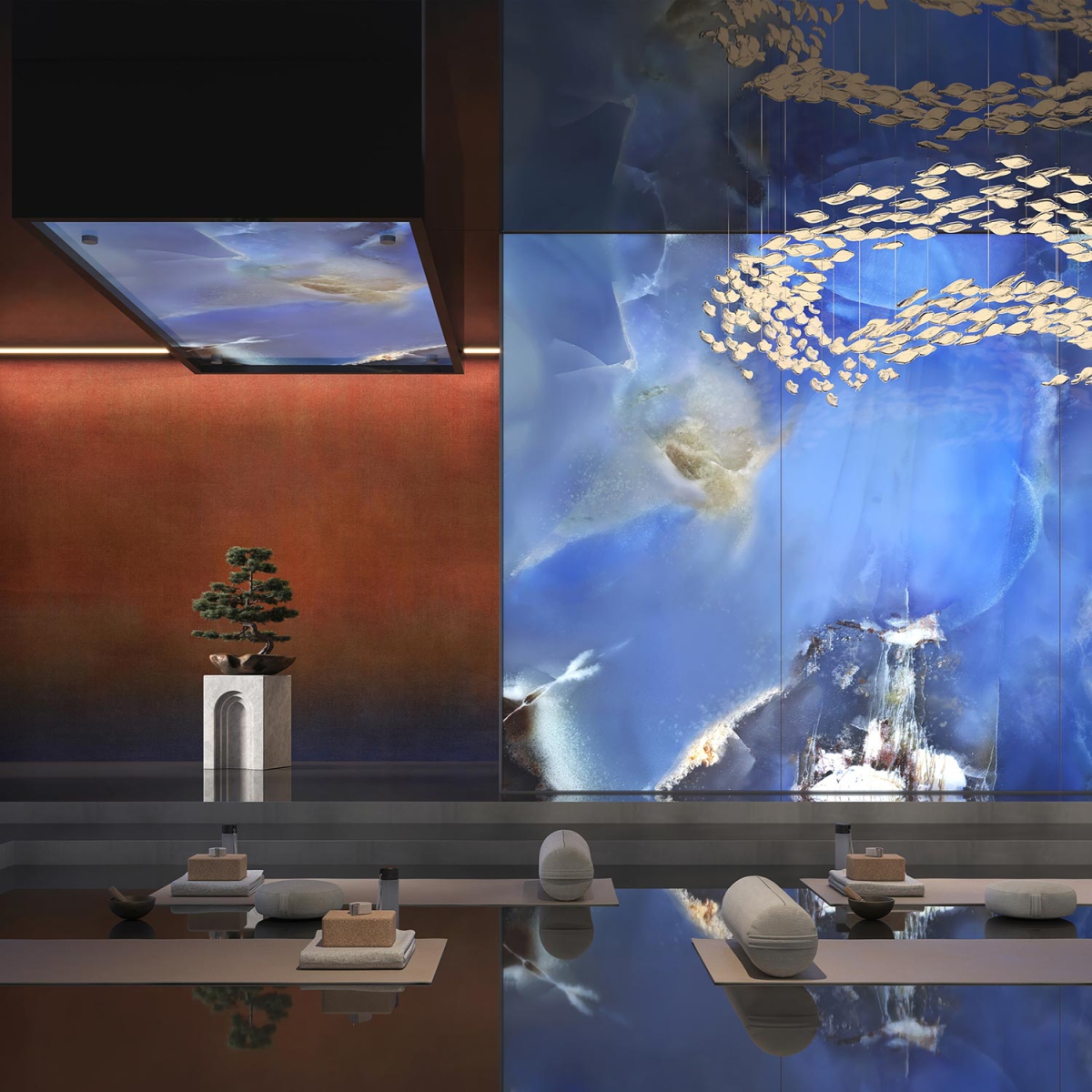
Texture and lighting are especially important in Miami homes because many interiors transform throughout the day. Morning light, afternoon brightness, sunset views and evening entertaining all change how surfaces are experienced. A flat wall may look acceptable during the day, but at night it can feel empty. A textured wall panel with integrated lighting can become an atmospheric feature.
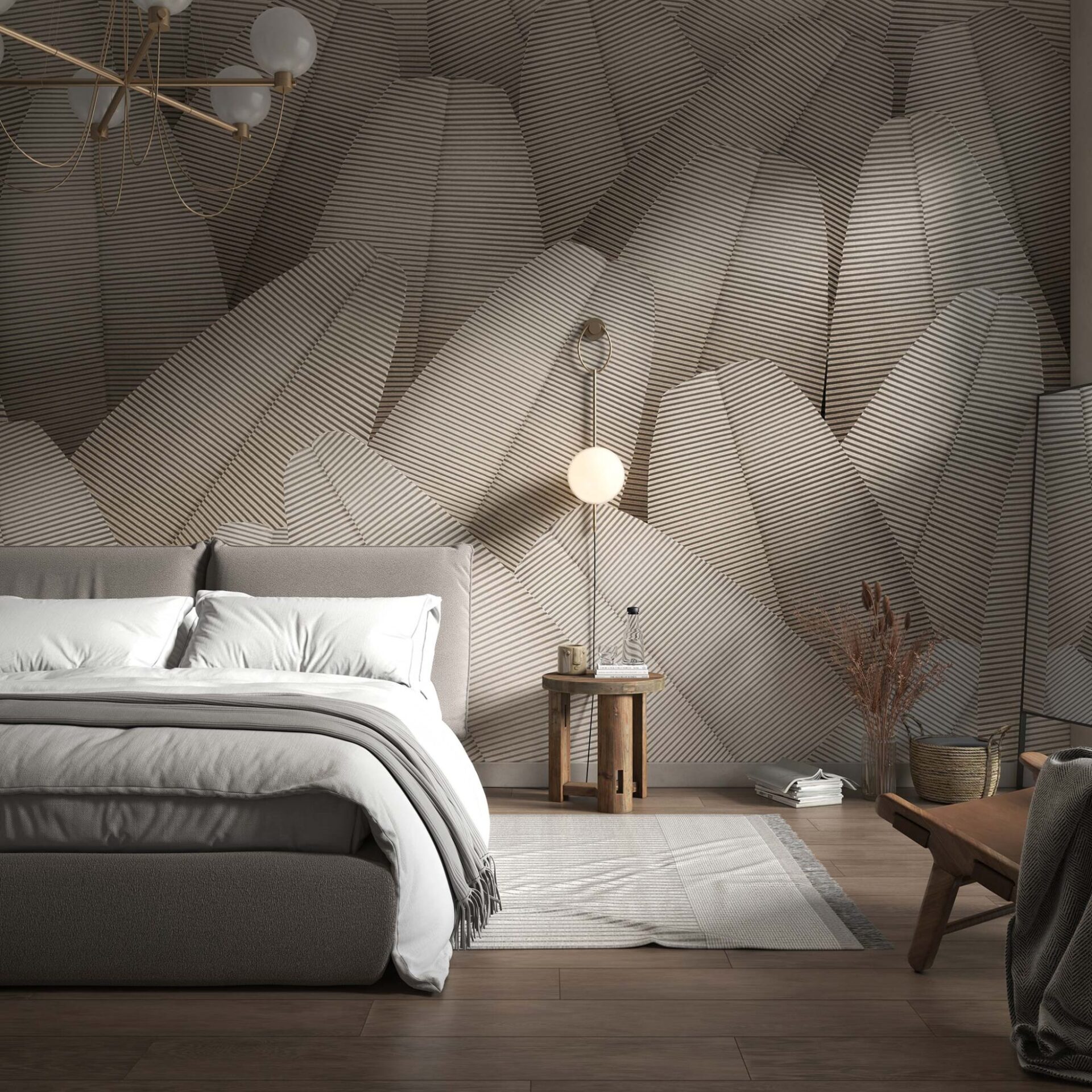
Textured panels add depth without requiring excessive decoration. They can make a hallway more interesting, soften a bedroom, create a lounge backdrop or add sophistication to a bar. When paired with concealed lighting, the surface becomes more dynamic. Shadows reveal the panel rhythm, material depth and craftsmanship.
Integrated lighting can be used in many millwork applications:
Backlit wall panels
Illuminated shelving
Bar display lighting
Closet interior lighting
Vanity lighting
Media wall accent lighting
Cabinet toe-kick lighting
Display niche lighting
Soft cove lighting around panel systems
The goal is not to make the home overly theatrical. The goal is to create atmosphere. In luxury interiors, lighting should support the material, not overwhelm it. A textured wall panel should be visible because the lighting reveals its depth. A bar should feel inviting because the shelves glow softly. A wardrobe should feel practical and elegant because the lighting helps the owner use the space comfortably.
This is where custom millwork and lighting become part of the same conversation. If lighting is added after the millwork is designed, the result may feel forced. If it is planned from the beginning, the final space feels more intentional.


How custom millwork connects with bespoke furnishings
Custom millwork and bespoke furnishings should not be planned as separate layers in a luxury Miami interior. When they are selected independently, the result can still be expensive, but it may not feel fully resolved. A wall panel system may look beautiful on its own, a sideboard may be well crafted, a bar may use premium materials and a wardrobe may offer excellent storage, yet the residence can still feel fragmented if those elements do not speak the same design language.
MATERIA Collection’s world of Italian design supports this kind of complete interior thinking. Fine furniture, designer sideboards, consoles, wall units, chairs, tables, office furniture, luxury doors, lighting, bathroom solutions, closet systems and kitchens should not be treated as unrelated categories. In a luxury project, they can become parts of one larger system, where each piece contributes to the same visual and material direction.
For example, a Miami penthouse may use a refined wall panel system in the living room, a custom media wall with concealed storage, a designer sideboard in the dining area, a bar with related finishes and a primary suite with wardrobes that continue the same tone in a softer way. The residence does not need to repeat the exact same material in every room, but it should feel like each decision belongs to the same project.
Millwork as the architectural foundation
Custom millwork gives the interior its architectural foundation. It defines the walls, storage zones, built-ins, bars, wardrobes, vanities, media areas and transitions between rooms. It is often fixed to the space, so it has to be designed with precision from the beginning.
Bespoke furnishings then complete the experience. A sideboard can soften a dining room wall. A console can define an entry. A table can connect with the proportions of nearby cabinetry. Chairs and lounge pieces can bring comfort into a room shaped by panels, shelving and built-ins. Lighting can highlight the material depth of both the millwork and furniture.
This relationship matters because luxury is rarely created by one dramatic feature alone. It is usually created through the accumulation of thoughtful details. A panel reveal, a drawer line, a metal accent, a furniture profile, a lighting position and a stone surface all work together to create the final impression.
When millwork and furnishings are planned together, the home feels more intentional in several ways:
Rooms have better proportion and balance.
Furniture feels selected for the architecture, not added after it.
Built-ins do not compete with loose furnishings.
Materials repeat naturally without feeling forced.
Storage is integrated instead of visually disruptive.
The interior feels calmer, more expensive and more personal.
This is one of the main reasons luxury homes benefit from bespoke planning. A standard furniture package can decorate a property, but it cannot fully resolve the relationship between architecture, function and finish.
Bespoke millwork versus mass-produced cabinetry
Mass-produced cabinetry can work well in simpler projects where standard dimensions, basic finishes and predictable storage needs are enough. It can be practical for secondary rooms, budget-conscious renovations or spaces where the cabinetry does not need to carry the visual identity of the interior.
Luxury residences are different. They often require custom dimensions, finish control, integrated lighting, special materials, hidden storage, exact alignment with walls and coordination with architects, interior designers and contractors. A Miami condo may need cabinetry that fits around structural columns. A penthouse may require a media wall scaled to a large open living area. A waterfront home may need a custom bar, kitchen, wardrobes and vanities that all connect through one finish strategy.
For designers comparing project approaches, MATERIA’s article on custom millwork versus mass-produced cabinetry explains why high-end interiors often require more control over dimension, finish and integration.
The distinction is not only about quality. It is about control. Custom millwork gives the project team control over how a piece fits, how it opens, how it aligns, how it is lit, how it relates to adjacent surfaces and how it supports the larger design concept.
That control can affect the entire feeling of a home. A standard cabinet may provide storage, but a custom cabinet can become part of the wall. A loose bar unit may hold bottles, but a custom bar can define an entertaining zone. A standard wardrobe may organize clothing, but a bespoke wardrobe system can shape the bedroom suite. A basic vanity may serve a bathroom, but a furniture-quality custom vanity can make the room feel like part of a private retreat.
When furnishings complete the millwork story
Bespoke furnishings are most powerful when they complete the story already started by the millwork. A wall panel system may create a strong architectural backdrop, but the right console or sideboard can give that wall purpose. A custom bar may define the entertaining area, but the surrounding chairs, lighting and tables determine how people actually experience the space. A wardrobe may bring order to a primary suite, but the bed, nightstands, mirrors and bathroom millwork complete the private atmosphere.
In Miami luxury interiors, furnishings should be selected with the same discipline as built-ins. Scale matters. A small furniture piece can look lost in a large waterfront home. A heavy piece can make a condo feel crowded. A finish that is too different from the surrounding millwork can interrupt the room. A chair, table or console that is beautiful on its own may not be right for the project if it does not support the architecture.
This is why a complete design system is so valuable. It allows the home to feel luxurious from every angle, not only in isolated moments.
The design value of custom millwork in Miami luxury interiors
Custom millwork adds value to a Miami luxury interior because it improves how the home looks, functions and feels. It can make the property appear more complete during private showings, photography, staging and everyday living. It can also help owners use the home more comfortably by reducing clutter, improving storage and creating a more logical relationship between rooms.
It is important to discuss resale carefully. No single design decision can guarantee resale value. However, well-planned custom millwork can support perceived value and buyer appeal because it improves finish quality, functionality and design cohesion. Buyers often respond to interiors that feel intentional, especially in luxury markets where expectations are high.
A room with a custom media wall, concealed storage, refined wall panels and integrated lighting usually feels more finished than a room with a freestanding console and unrelated furniture. A primary suite with coordinated wardrobes, panels, doors and vanities usually feels more luxurious than a bedroom with standard closets and a disconnected bathroom. A kitchen connected to a custom bar and dining storage system usually feels more architectural than a kitchen planned in isolation.
Custom millwork can create design value through:
Better use of difficult spaces, niches, corridors and open-plan walls
Stronger first impressions in entries, living rooms and entertainment areas
More cohesive material language across rooms
Improved storage without adding bulky furniture
Cleaner integration of media equipment, lighting and display
A more tailored feeling compared with standard cabinetry
Stronger photography and staging potential
Better connection between architecture and furnishings
More efficient use of space in condos and penthouses
Greater personalization for homeowners and developers
In Miami interiors, this value is often visual and practical at the same time. A built-in wall may make a living room look more refined, but it can also hide storage and technology. A wardrobe system may improve the bedroom’s appearance, but it also makes daily routines easier. A custom bar may create a beautiful entertaining moment, but it also organizes glassware, bottles, lighting and service needs.
The best custom millwork is not only decorative. It makes the property easier to live in.
Visual continuity
Visual continuity is one of the clearest benefits of custom millwork. When wall panels, cabinetry, doors, wardrobes, bars, vanities and furnishings are coordinated, the residence feels calmer and more expensive. The eye moves through the home without constant interruption.
This is particularly important in open Miami interiors. If the kitchen cabinetry, media wall, dining storage, bar and doors all use unrelated finishes, the space can feel busy. If those elements are coordinated, the same layout can feel polished and intentional.
Visual continuity can be created through repeated materials, but it can also come from proportion, rhythm, hardware, lighting and detail. A bronze accent in a bar can relate to a handle detail in the kitchen. A wood tone in the wardrobe can relate to a bedroom panel. A textured wall treatment can repeat in a hallway or lounge. These small connections help the home feel designed as a whole.
Efficient use of space
Space efficiency is especially valuable in condos and penthouses, but it matters in waterfront homes as well. Custom millwork can turn underused walls, corners, niches and corridors into functional areas without adding visual clutter.
A narrow hallway can include concealed storage. A long wall can become a media and display system. A bedroom wall can integrate wardrobes and panels. A dining area can include a sideboard built to the exact room dimensions. A bathroom can gain storage through a custom vanity and tall cabinet system.
This type of planning helps the home feel larger because fewer loose pieces are needed. Storage disappears into the architecture. Circulation remains cleaner. Furniture can be selected for comfort and beauty instead of being forced to solve every storage problem.
A stronger lifestyle experience
Luxury interiors are not only about appearance. They are about how the space supports the owner’s lifestyle. In Miami, that lifestyle may include entertaining, working from home, hosting guests, relaxing after travel, enjoying waterfront views or using the residence seasonally.
Custom millwork can support these patterns. A bar can make entertaining easier. A media wall can make the living room more organized. A walk-in closet can make daily routines more enjoyable. A custom office wall unit can improve focus. A bathroom vanity can create a more spa-like experience. A kitchen planned as part of the full millwork system can support both cooking and hosting.
When these details are planned together, the home feels more personal. It no longer feels like a generic luxury property. It feels tailored to how the owner actually lives.



Planning a Miami project with MATERIA
A successful Miami custom millwork project begins with clarity. Before materials, finishes or furniture are selected, the project team should understand the property, the lifestyle, the design intent and the practical needs of the space. A condo renovation, penthouse interior, waterfront home and branded residential development may all require different planning priorities.
The process should begin with the overall design direction. What should the interior feel like? Warm and natural? Sleek and contemporary? Dramatic and hospitality-inspired? Quiet and architectural? Once the direction is clear, the millwork can be planned as part of a complete interior language rather than a series of isolated features.
Clients planning a larger residence can also review MATERIA’s guide on how luxury interior projects work, from design concept to final installation.
A thoughtful Miami custom millwork project usually includes:
Review of the property type, layout and architectural conditions
Definition of the design concept and lifestyle goals
Measurements and spatial planning
Selection of wall panels, cabinetry, wardrobes, vanities, bars or built-ins
Material and finish direction
Coordination with architects, designers and contractors
Review of lighting, hardware and technology integration
Technical drawings and production planning
Delivery and installation coordination
Final adjustment and finish review where applicable
The most important point is that millwork should be discussed early. If custom cabinetry, wall panels, bars, wardrobes and lighting are treated as late-stage additions, the project may lose opportunities for better integration. Early planning allows the design team to coordinate dimensions, electrical needs, lighting positions, appliance integration, door clearances, material transitions and installation requirements.
From design intent to technical planning
Design intent gives the project its direction, but technical planning makes it possible. A wall panel system may look simple in a rendering, but it must respond to real walls, outlets, switches, openings, ceiling heights and adjacent materials. A wardrobe may look elegant in concept, but it must fit the owner’s storage needs and the room’s circulation. A bar may look beautiful, but it must coordinate with lighting, refrigeration, plumbing where relevant, glass storage and work surfaces.
This is why custom millwork requires close coordination. Homeowners, developers, designers, architects and contractors should understand what each built-in element needs before production begins.
Important planning questions include:
Which walls will become feature walls or millwork walls?
Where should storage be concealed?
Which finishes should repeat across the home?
Which areas need integrated lighting?
How will technology be hidden or accessed?
What materials are appropriate for each room?
How will doors, wardrobes, vanities and built-ins relate visually?
What installation conditions need to be considered?
Which pieces should feel quiet, and which should become statement elements?
The answers to these questions shape the entire project. They also help avoid a common luxury interior problem: beautiful individual selections that do not work together in the finished space.
MATERIA’s Italian design perspective
MATERIA Collection is inspired by Italian design and its history. Founded by Yana Pojidaeva, MATERIA brings together custom furnishings, wall paneling, unique surfaces, furniture, kitchen cabinets, lighting and doors through a refined design perspective. The collection includes Italian wall treatments, closet and cabinet systems, luxury doors, modern kitchens, lighting, luxury bathroom solutions and fine furniture.
MATERIA’s work extends across private residences, luxury apartments, refined restaurants, corporate offices and boutiques. This range is important because luxury residential interiors often borrow from hospitality, retail and architectural design. A Miami home may need the warmth of a private residence, the precision of a boutique, the drama of a hotel lounge and the functionality of a modern kitchen or office.
The Italian design influence is especially relevant for clients who value proportion, material discipline, craftsmanship and refined detailing. For readers drawn to the elegance of Italian design, the guide to Italian style in interior design explains the principles behind proportion, material discipline and refined detailing.
MATERIA’s strength is not only in offering individual products. It is in helping those products become part of a larger interior vision. Wall panels, wardrobes, doors, kitchens, lighting, bathroom solutions and bespoke furnishings can all be coordinated so that the final residence feels complete.
A Miami-focused project conversation
For Miami homeowners, condo owners, developers, designers and architects, the best starting point is a focused project conversation. The discussion should not begin only with one product, such as a panel, bar or cabinet. It should begin with the full interior goal.
A client may come in asking for a media wall, but the real opportunity may include a living room panel system, concealed storage, a coordinated sideboard and lighting. A developer may begin with kitchen and wardrobe needs, but the broader opportunity may include model residence presentation, doors, vanities and finish continuity. A homeowner may ask about a custom bar, but the design may connect naturally to a dining wall, lounge area and kitchen finish.
This broader view helps create better outcomes. It allows the project to move from isolated decisions to a complete custom solution.
Plan your custom millwork project in Miami with MATERIA
Planning a custom millwork project in Miami requires more than choosing beautiful materials. It requires a clear understanding of the property, the lifestyle, the architecture and the level of refinement expected in a luxury interior. MATERIA Collection helps homeowners, developers, designers and architects create luxury interiors with Italian wall panels, custom cabinetry, closet systems, kitchens, doors, lighting, bathroom solutions and bespoke furnishings.
Whether you are designing a waterfront home, condo, penthouse or branded residence, MATERIA can help shape a custom solution around materials, finishes, storage, architectural details and the complete interior experience.
Frequently Asked Questions - Luxury Custom Millwork in Miami
What is custom millwork in a luxury Miami home?
Custom millwork refers to built-in interior elements designed specifically for the property, such as wall panels, media walls, wardrobes, bars, vanities, shelving, cabinetry and architectural storage. In a luxury Miami home, it helps connect function, finishes and interior architecture.
Why is custom millwork important for Miami condos and penthouses?
Miami condos and penthouses often have open layouts, fixed structural conditions, limited wall space and important views. Custom millwork helps maximize storage, reduce visual clutter and create a more seamless interior without blocking the openness of the residence.
Can custom millwork include bespoke furniture?
Yes. Custom millwork and bespoke furniture can be planned together so wall panels, sideboards, consoles, wardrobes, bars, doors, lighting and cabinetry feel connected. This creates a more cohesive interior than selecting furniture and built-ins separately.
Are wall panels part of custom millwork?
Yes. Wall panels are often an important part of custom millwork, especially in luxury interiors. They can create feature walls, frame media areas, add texture, support lighting and connect visually with cabinetry, doors, wardrobes and furnishings.
What materials work well for luxury custom millwork in Miami?
Luxury Miami millwork may include wood veneer, lacquer, natural stone, marble-effect panels, metal details, textured decorative panels, wallpapers, glass and integrated lighting. The right choice depends on the room, design intent, maintenance needs and professional specification.
Is custom millwork better than mass-produced cabinetry?
For high-end interiors, custom millwork usually offers more control over dimensions, finishes, storage, lighting, materials and integration with the full design concept. Mass-produced cabinetry can work in simpler projects, but luxury residences often need a more tailored solution.
How should I start a custom millwork project in Miami?
Start by defining the property type, design goals, functional needs and key spaces, such as the living room, kitchen, closets, bar, bathrooms and bedrooms. Then coordinate measurements, materials, finishes, technical drawings and installation planning with the design and project team.