Residential Custom Millwork: How Luxury Homes Are Really Built

Custom millwork is not decoration. In a truly high-end residence, it is the architectural layer that makes the home feel intentional, resolved, and expensive in a way that cannot be replicated by furniture alone. It is the difference between a space that looks “nicely furnished” and a space that feels engineered: built-in cabinetry that aligns perfectly with ceiling lines, wall panel systems that create depth and rhythm, doors that sit precisely within a consistent grid, and detailing that turns transitions into design features rather than compromises. When millwork is done correctly, you don’t notice individual components first-you experience a calm, cohesive interior where everything belongs.

Millwork Phase What Happens in This Phase Why It Protects Luxury & Long-Term Value
Phase 1 – Design concept Design direction is translated into elevations, proportions, alignment grids, and repeatable detailing rules. Materials, panel rhythm, shadow lines, and hardware logic are defined so the interior can be fabricated as a system. Prevents one-off decisions and visual chaos; Ensures all rooms follow the same architectural language; Allows millwork to be engineered instead of improvised.
Phase 2 – Wall materials & surfaces Italian wall treatments, Venetian plaster, panel systems, and luxury wallpapers are selected and coordinated with millwork, lighting, and doors. Creates depth, texture, and architectural presence; Aligns wall finishes with cabinetry and panel grids; Increases perceived quality and resale appeal.
Phase 3 – Built-in cabinetry Kitchens, media walls, bars, and utility zones are engineered for perfect fit, integrated lighting, concealed technology, and architectural alignment. Eliminates visual clutter and awkward gaps; Improves daily usability and durability; Turns storage into part of the architecture.
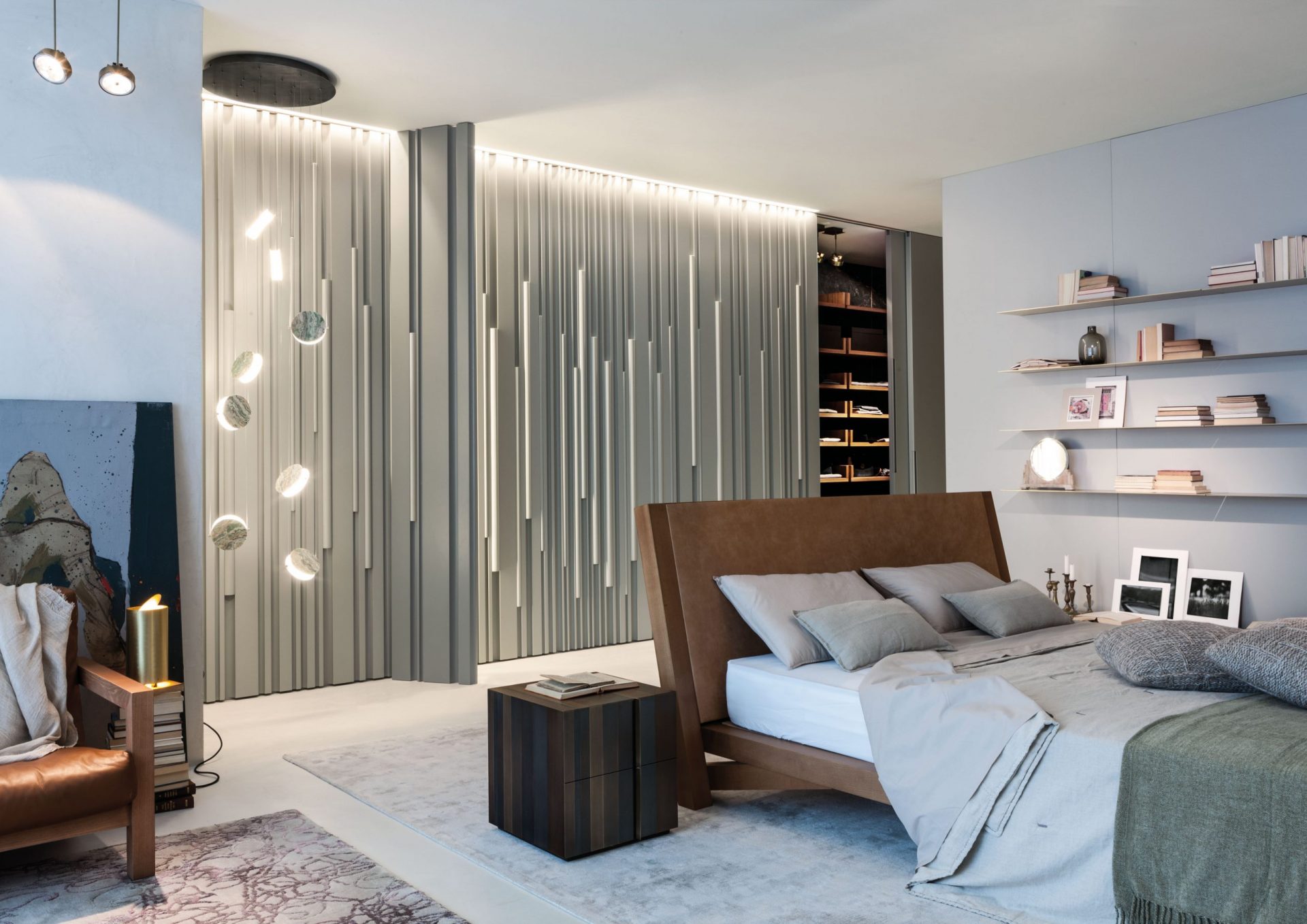
Phase 4 – Wardrobes & walk-in closets Modular luxury systems organize clothing, shoes, and accessories with integrated lighting, adaptable layouts, and refined materials. Creates boutique-style spaces that feel intentional; Allows reconfiguration as lifestyles change; Shows craftsmanship in a high-use environment.
Phase 5 – Doors & transitions Pivot, swing, and sliding doors are aligned with wall panels, trim, and ceiling datums to maintain a unified architectural grid. Maintains visual consistency across rooms; Improves tactile quality and acoustic comfort; Prevents misalignment that cheapens interiors.
Phase 6 – Architectural detailing Wall panels, trims, ceilings, and integrated lighting are composed into a hierarchy that differentiates public and private spaces. Creates depth and spatial hierarchy; Ensures consistency across the home; Makes interiors feel authored rather than assembled.
Phase 7 – Fabrication & quality control Shop drawings, joinery, veneers, finishes, and mockups are produced and approved to lock in precision before site delivery. Prevents costly rework; Controls tone, sheen, and pattern alignment; Ensures craftsmanship is repeatable and measurable.
Phase 8 – Installation Millwork is installed in coordination with floors, ceilings, stone, lighting, and MEP, with strict protection and alignment control. Preserves tight reveals and clean geometry; Prevents damage to finished surfaces; Ensures the home looks as designed, not patched together.
Transform Your Walls into Architectural Art
Discover Italian wall treatments that go beyond paint and wallpaper. From Venetian plaster to sculptural wall panels and luxury decorative surfaces, Materia Collection brings depth, texture, and architectural presence to every wall in your home.
Explore Italian Wall Treatments

Design concept: turning taste into buildable geometry

Establishing a design direction that can be fabricated

Luxury interiors do not begin with products. They begin with a disciplined design direction that can survive the transition from concept to construction. The difference between a beautiful reference image and a truly buildable residential interior is that a buildable interior has a repeatable system—a set of rules that can be drawn, engineered, fabricated, and installed without improvisation.

A premium project typically moves through a sequence that looks simple on paper, but is highly structured when done correctly:

  • Mood references: a curated set of visuals that define atmosphere, restraint level, and material character

  • Elevations: wall-by-wall compositions that establish proportions, alignment, and architectural hierarchy

  • Details: precise solutions for reveals, corners, terminations, transitions, and hardware integration

This is not “collecting inspiration.” It is building an interior logic. Mood references are valuable only when they are translated into elevations, and elevations matter only when they are supported by details. Without that chain, the project risks becoming a series of attractive decisions that do not align when the house is built.

The strongest luxury interiors are designed like architecture. They use symmetry where it adds calm and authority, but they also use intentional asymmetry when function demands it. The difference is that every deviation still respects the same underlying grid. This is where style becomes geometry.

Key design rules that make the concept fabricable and repeatable across the home include:

  • A consistent alignment grid: door heads, cabinet datum lines, panel breaks, and lighting lines all reference a shared set of horizontal and vertical alignments

  • Rhythm and spacing: repeated panel widths, consistent stiles and rails, predictable spacing between elements, and controlled negative space

  • Panel proportions that hold up at full scale: what looks balanced in a small image can feel awkward when a wall is 14 feet wide; proportions must be tested on elevations

  • Shadow lines and reveals as design tools: controlled gaps create crispness and depth; inconsistent gaps create visual noise

  • Hardware consistency: a limited, intentional family of finishes and profiles across rooms so the home reads as one authored environment

A practical way to confirm the direction is truly fabricable is to ask whether the design can be described as a small set of rules rather than a long list of exceptions. Luxury millwork thrives when the interior is governed by a system. It fails when every wall is a one-off.

Choosing materials that read “luxury” up close, not only in photos

In high-end residences, materials must perform on two levels. They must photograph well, but more importantly, they must feel expensive in real life—at arm’s length, in changing daylight, and after years of daily use. The defining feature of luxury millwork is often the confident use of natural materials, paired with precision fabrication and installation.

The most common luxury material families in residential millwork include:

  • Exotic woods: selected for depth, grain character, and warmth; often used as veneers, fluted details, or full-height architectural surfaces

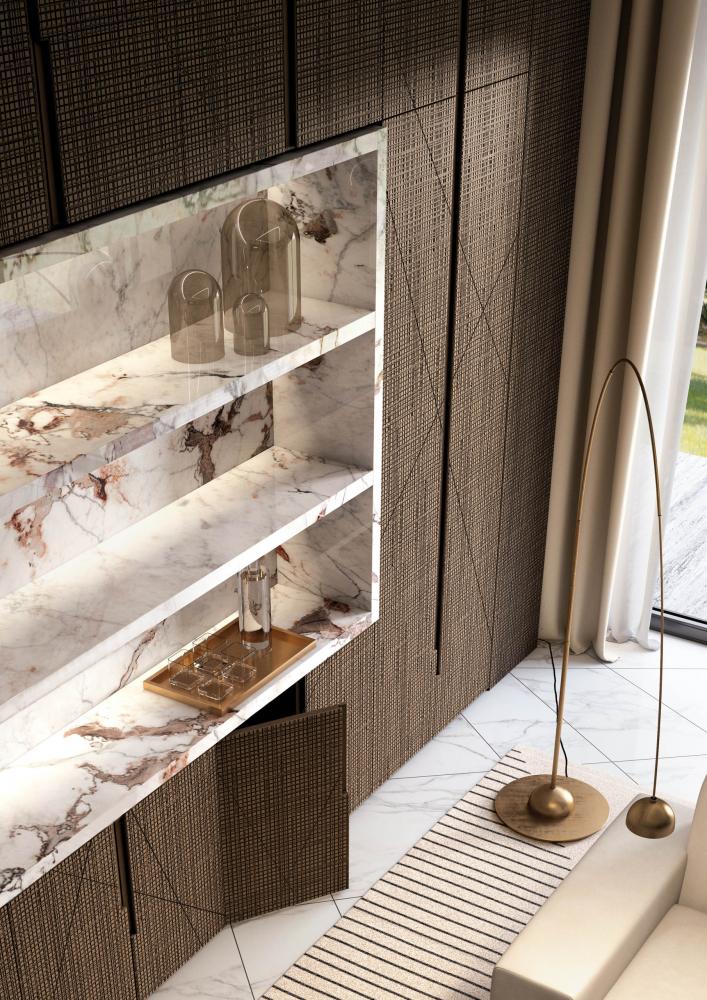
  • Natural stone: used for backsplashes, counters, fireplace cladding, integrated shelves, and transitions that elevate built-ins into architecture

  • Metals: used as inlays, trims, toe-kicks, reveals, hardware, and accent framing; the finish quality and consistency matter as much as the metal itself

What makes these materials “luxury” is not only the species or the stone name. It is how the materials are composed and finished. Bespoke projects often include artisan finishes and applied pattern overlays that cannot be replicated by standard production cabinetry. These finishes add depth in ways that feel subtle rather than decorative.

Elements that create a bespoke look without visual clutter include:

  • Artisan finishing techniques: hand-applied stains, layered tones, controlled sheen, and finishes that reveal rather than hide material character

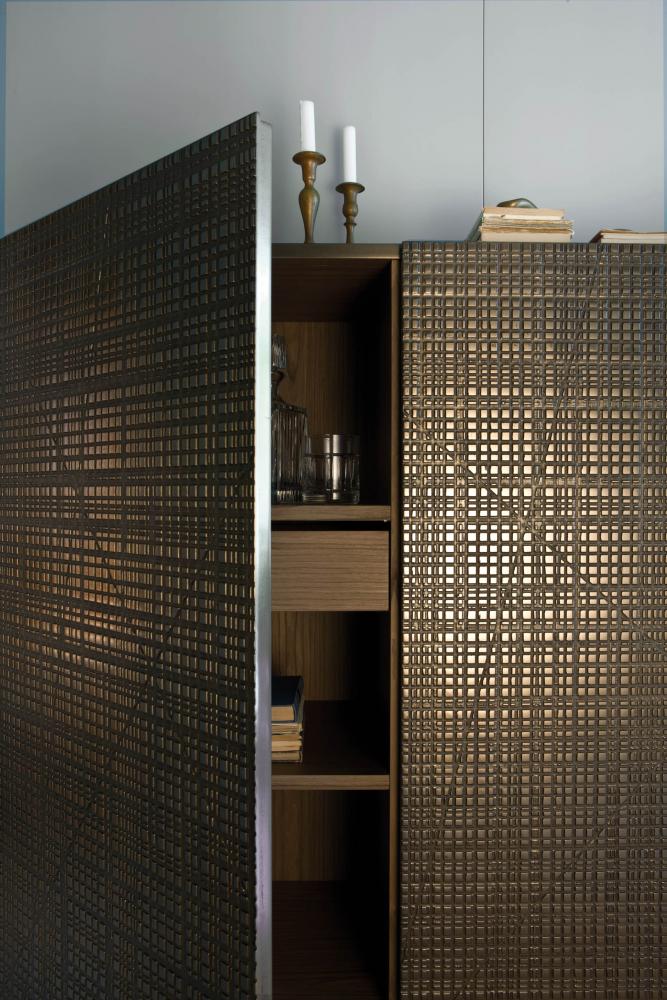
  • Applied pattern overlays: geometric or linear overlays that add dimensionality and shadow without relying on heavy ornament

  • Tactile contrast: pairing matte woods with soft metals, or polished stone with textured wall treatments, so the interior feels curated and intentional

Luxury should also be judged through a practical lens. A beautiful material that cannot survive daily use is not a luxury choice-it is a future repair bill. Before final selections are locked, it is essential to evaluate touch points, durability, and maintenance expectations.

Materials and surfaces that define the walls (the largest visual canvas)

Luxury Wall Finish Type What It Delivers Visually & Functionally Best Use in High-End Residences
Venetian plaster Smooth, luminous surfaces created from imported Italian plaster made of slaked lime and marble. Reflects light in a refined, layered way that paint cannot. Breathable, durable, and eco-friendly when properly specified. Entry foyers and corridors with changing daylight; Living rooms and formal sitting areas with large wall planes; Primary suites seeking calm elegance; Powder rooms where small spaces benefit from high-impact finishes.
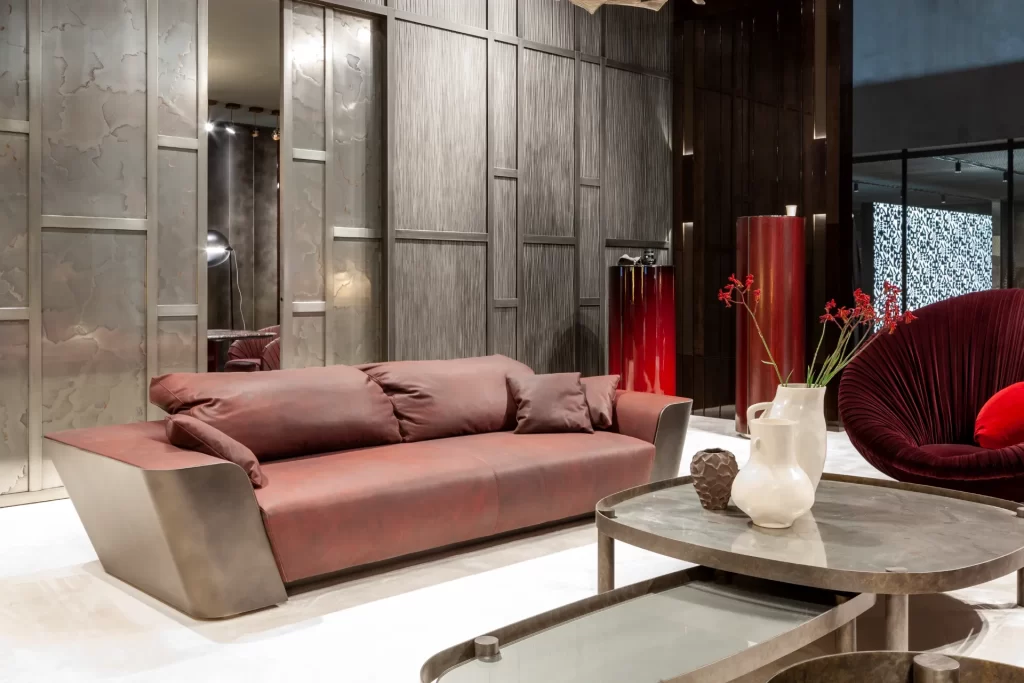
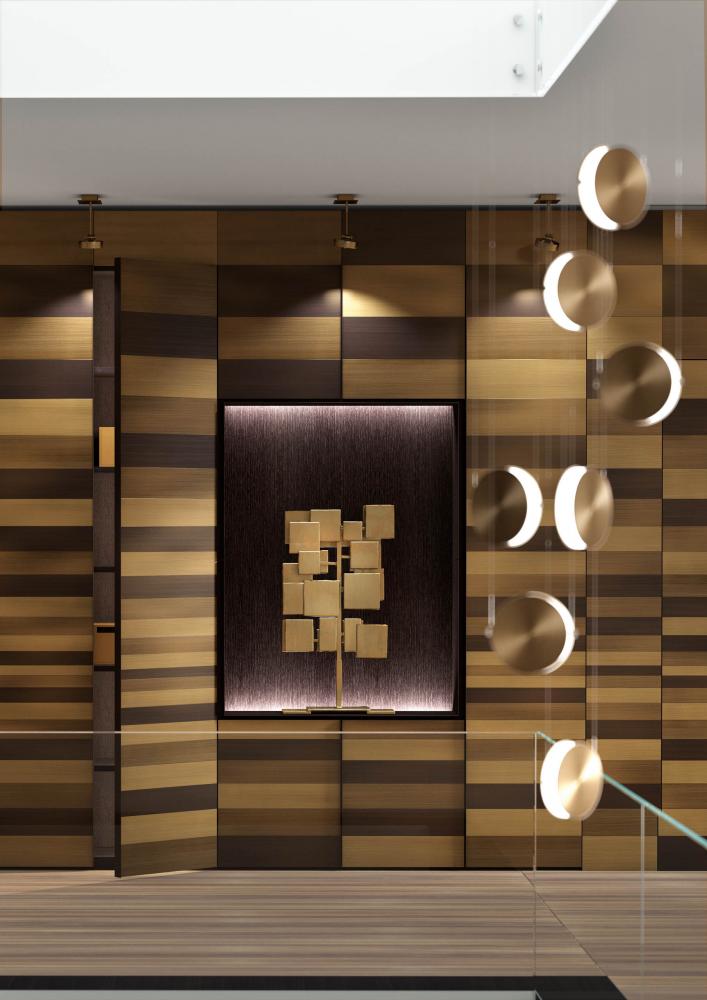
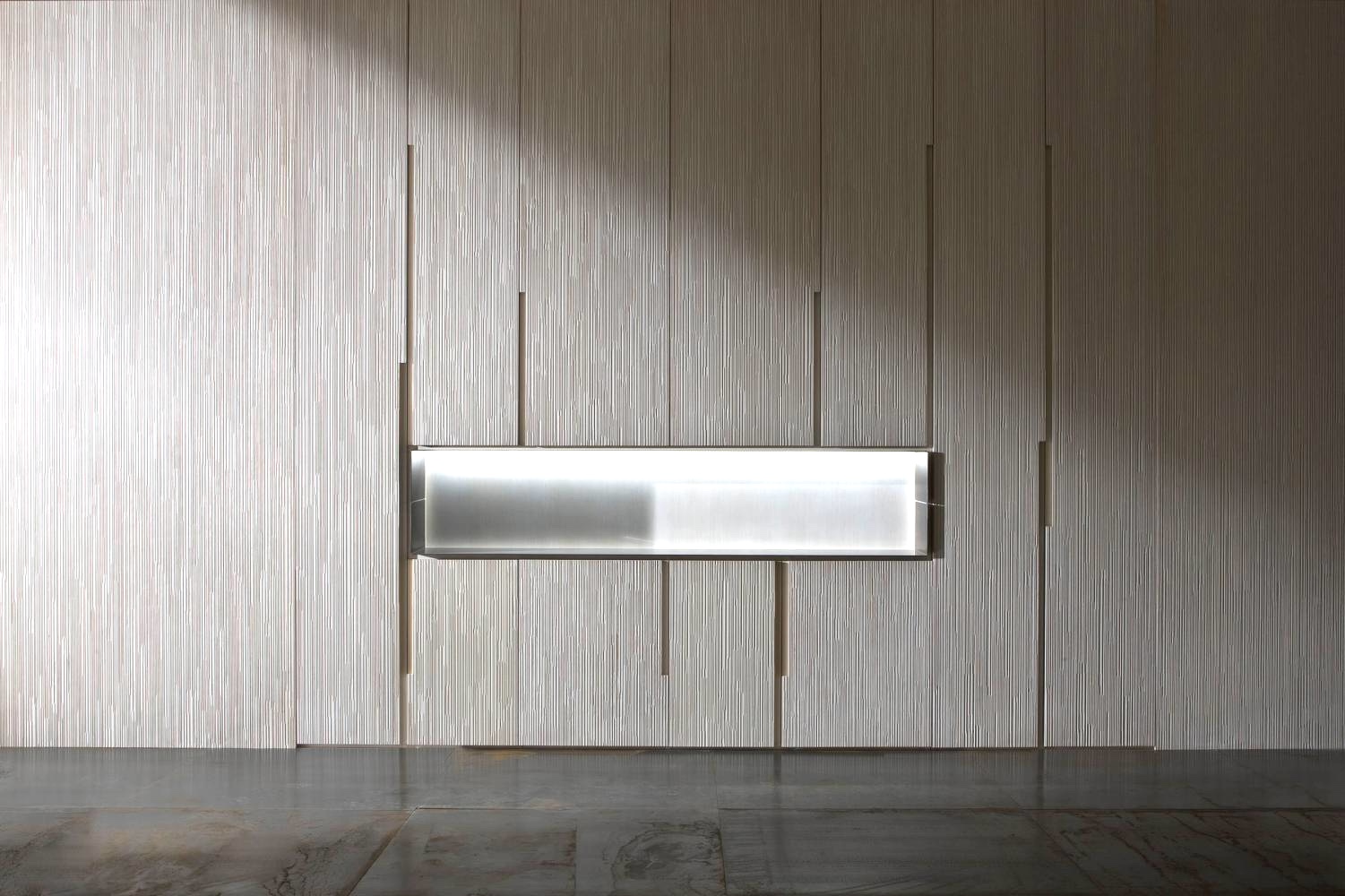
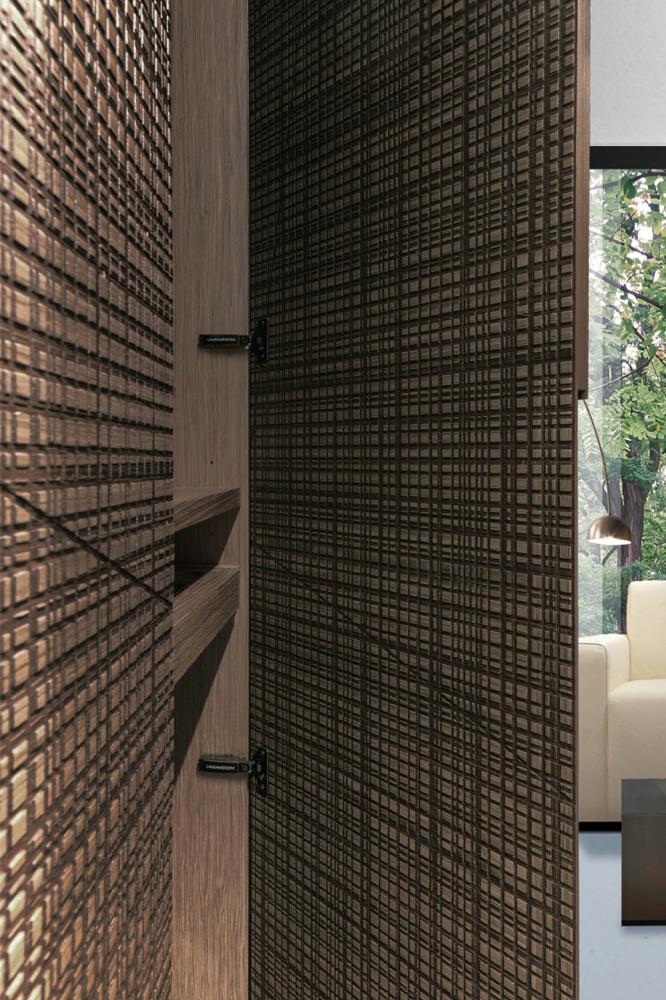
Wall panel systems Architectural wall surfaces with precision alignment, consistent shadow gaps, and rhythmic panel layouts. Supports wood, metal, glass, fabric, and mixed-material compositions. Can integrate lighting, acoustic treatment, and hidden storage. Feature walls in living rooms and entry halls; Media walls requiring acoustic and ventilation planning; Long corridors and stair halls needing architectural rhythm; Zones that combine storage, lighting, and wall composition.
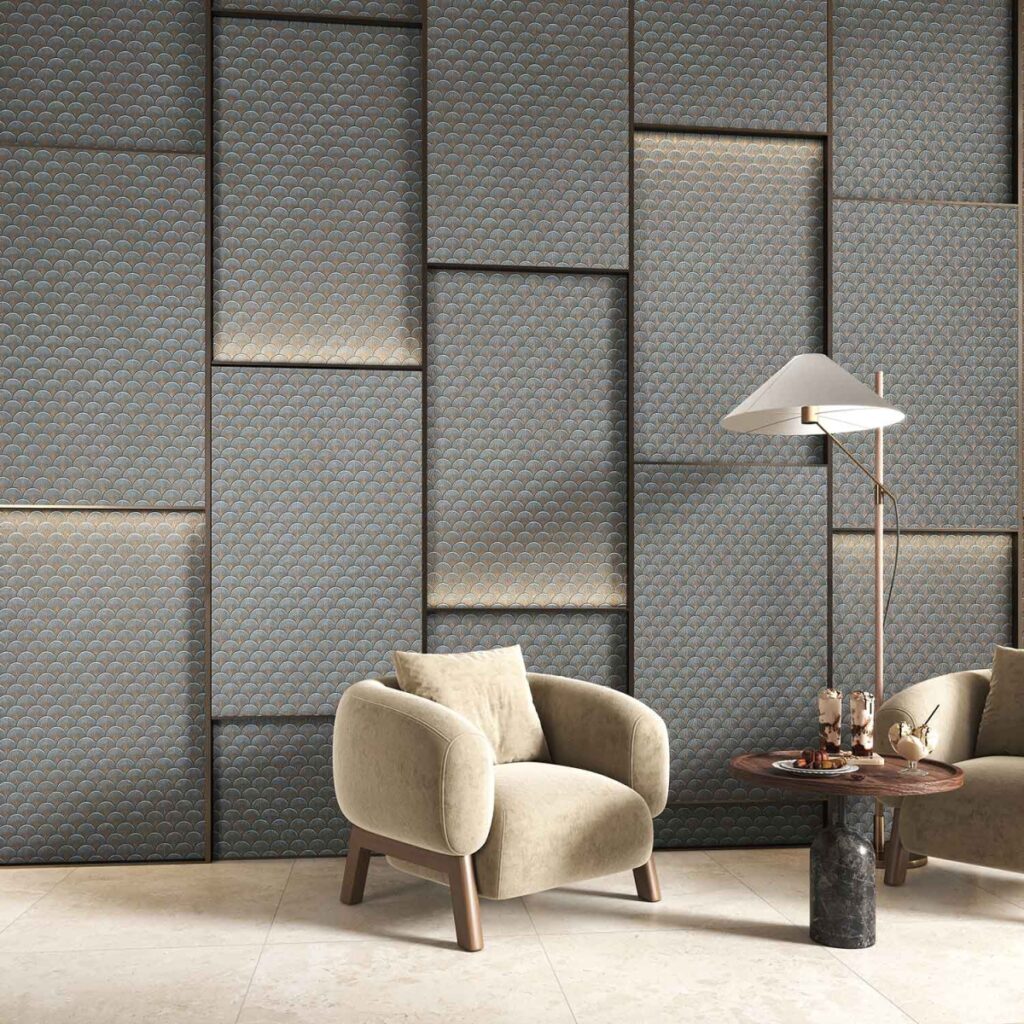
Luxury wallpapers High-definition prints with richer textures and refined materials. Supports architectural patterns such as florals, geometry, marble, cement, and nature-inspired themes. Works as a design layer that complements millwork and lighting. Feature walls in bedrooms, dining rooms, and entry zones; Dressing rooms and walk-in closets for boutique-style atmosphere; Powder rooms for dramatic effect in small spaces; Private studies and libraries for depth and character.

Built-in cabinetry: where luxury becomes daily function

What “luxury built-ins” solve that standard cabinets can’t

Built-ins are where luxury becomes personal. They turn a residence into a tailored environment because they address the homeowner’s real routines while preserving a refined appearance. Standard cabinets can provide storage, but luxury built-ins solve the deeper problems: awkward architectural conditions, visual inconsistency, and clutter that destroys the calm of a premium interior.

The first advantage is architectural fit. Luxury built-ins are engineered to the home so they avoid the giveaways that instantly cheapen a space:

  • No awkward gaps: cabinetry meets ceilings, walls, and adjacent surfaces with controlled terminations

  • No excessive fillers: sizing is planned so runs feel intentional rather than “made to work”

  • No misaligned uppers and lowers: datum lines are consistent across the room and often across the entire floor

The second advantage is integrated function. High-end built-ins hide complexity. They anticipate modern living and conceal it without sacrificing access.

Examples of integrated, high-value functions include:

  • Appliance garages: keeping countertop zones calm while maintaining convenience

  • Concealed charging and cable management: integrated power inside drawers or closed compartments

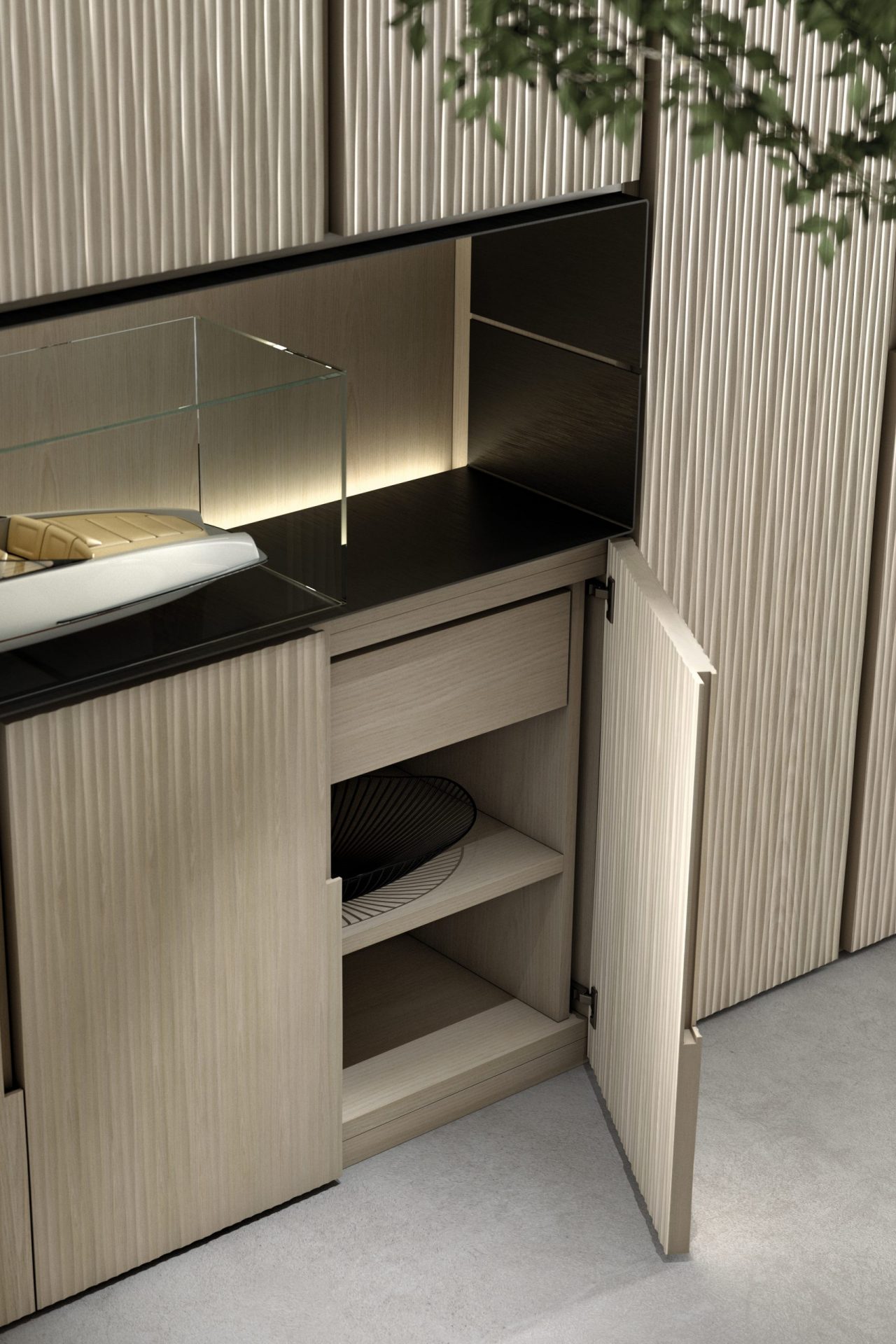
  • Flush toe-kicks and recessed bases: creating a cleaner, more architectural look

  • Integrated lighting: task lighting, display lighting, and ambient effects built into the millwork rather than added later

Luxury built-ins are not only about storage capacity. They are about eliminating visual noise while improving daily life.

Wardrobes and walk-in closets: the new “luxury room”

Why closet systems are central to modern luxury

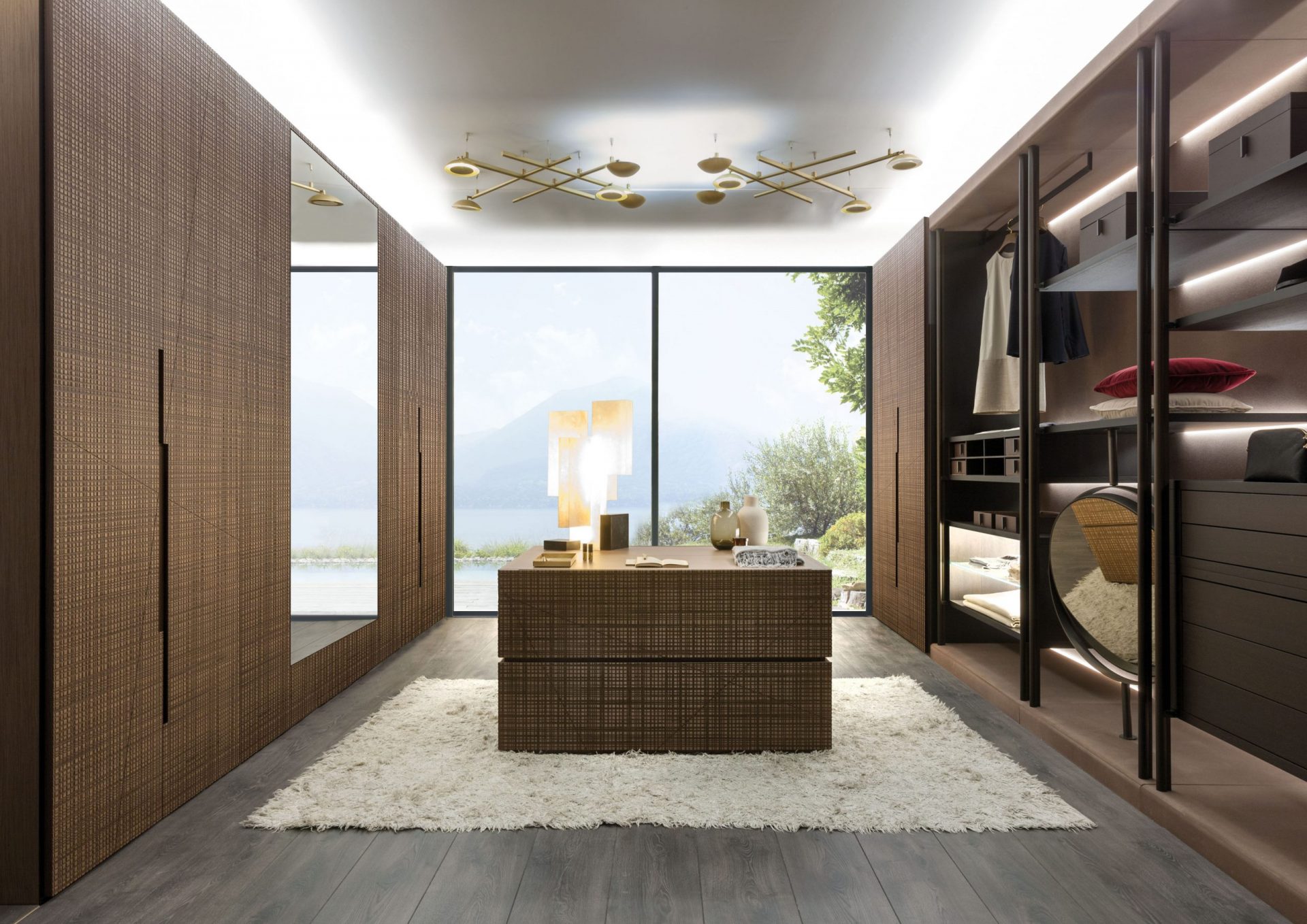
Luxury residences have changed in a quiet but significant way: the closet is no longer treated as leftover space. In premium homes, wardrobes and walk-in closets have become fully designed rooms-spaces that express the same architectural intent as kitchens, living rooms, and primary suites. This shift matters because storage is one of the most constant daily interactions in a home. If millwork defines how a house looks, wardrobe systems define how a house lives.

The old approach was “closet as storage.” The goal was to fit as many items as possible behind doors. The modern luxury approach is “closet as experience.” The goal is to create a calm, tailored environment where everything has a place, lighting supports decision-making, and materials make routine feel refined rather than utilitarian. When a closet is designed as a room, it stops feeling like a hidden corner and starts feeling like part of the home’s identity.

The most important driver of this evolution is adaptability. High-end clients do not want a closet that works only for a single moment in time. They want a system that can evolve as wardrobes change, seasons shift, and life patterns adjust. That is why complete customization and endless adaptability are not marketing language in luxury millwork; they are functional requirements.

A luxury wardrobe system typically delivers value in three connected ways:

  • Visual order: a coherent structure that reduces clutter and creates a boutique-like calm

  • Functional precision: compartments and storage solutions sized for real items, not generic assumptions

  • Long-term flexibility: modular logic that can be reconfigured without rebuilding the entire room

When this is done correctly, the closet becomes one of the most persuasive proof points of overall construction quality. It is difficult to fake. Poor materials, weak detailing, and sloppy alignment reveal themselves quickly in wardrobes because these systems are used constantly and viewed up close.

What high-end wardrobe systems include in real builds

A premium wardrobe is not defined by a single feature. It is defined by a complete, coordinated set of components that support how people actually dress, store, and maintain belongings. The goal is not to “add accessories,” but to design a system that is intuitive, efficient, and visually consistent.

At the core is modular organization. This typically includes a balanced mix of hanging, folding, and specialty storage so that the system works across formal wear, daily basics, and accessories.

Common high-end wardrobe components include:

  • Modular shelving: adjustable shelves that can adapt to different storage categories and seasonal rotation

  • Drawer banks: smooth-glide drawers sized for folded clothing, undergarments, and accessories

  • Valet rods: pull-out or swing-out elements that support outfit planning and garment handling

  • Jewelry storage: felt-lined or compartmented drawers that protect and organize small valuables

  • Bag solutions: structured shelving or cubbies designed for handbags and clutches to prevent deformation

  • Shoe systems: angled shelves, pull-out racks, or dedicated cubbies sized for real footwear collections

Luxury wardrobes also require planning that most homeowners do not realize is time-sensitive: lighting and power. If electrical planning is delayed until after drywall, the project loses the ability to integrate lighting cleanly. That is why wardrobe design should occur early enough to coordinate with power locations, switching logic, and low-voltage drivers.

A strong wardrobe lighting plan often includes:

  • Integrated LED lighting: within vertical panels, under shelves, and inside display zones for even illumination

  • Sensor and control strategy: door-activated lighting, occupancy sensors, and layered controls that feel seamless

  • Driver placement and access: hidden locations that remain serviceable through discreet access panels

  • Heat management: ensuring LED components remain within safe operating conditions in enclosed cabinetry

Materials and finishes matter more in closets than people expect because closets.
Luxury doors and architectural transitions (pivot, swing, sliding)

Why doors are millwork, not an afterthought

In luxury homes, doors are not merely functional closures. They are architectural elements that control proportion, alignment, and visual rhythm across the entire interior. A door is one of the few elements repeated throughout a residence, which means it has outsized influence on how cohesive the home feels. When doors are treated as an afterthought, the interior grid fractures. When doors are designed as millwork, they unify spaces.

Doors “reset” the visual grid of a home. They establish consistent heights and horizontal lines, they define how wall panels and trims terminate, and they often determine where cabinetry alignments begin and end. In premium interiors, a door is not separate from wall treatments and built-ins. It is part of the same composition.

Different door types change both structure and experience, which is why selection must be intentional rather than trend-driven:

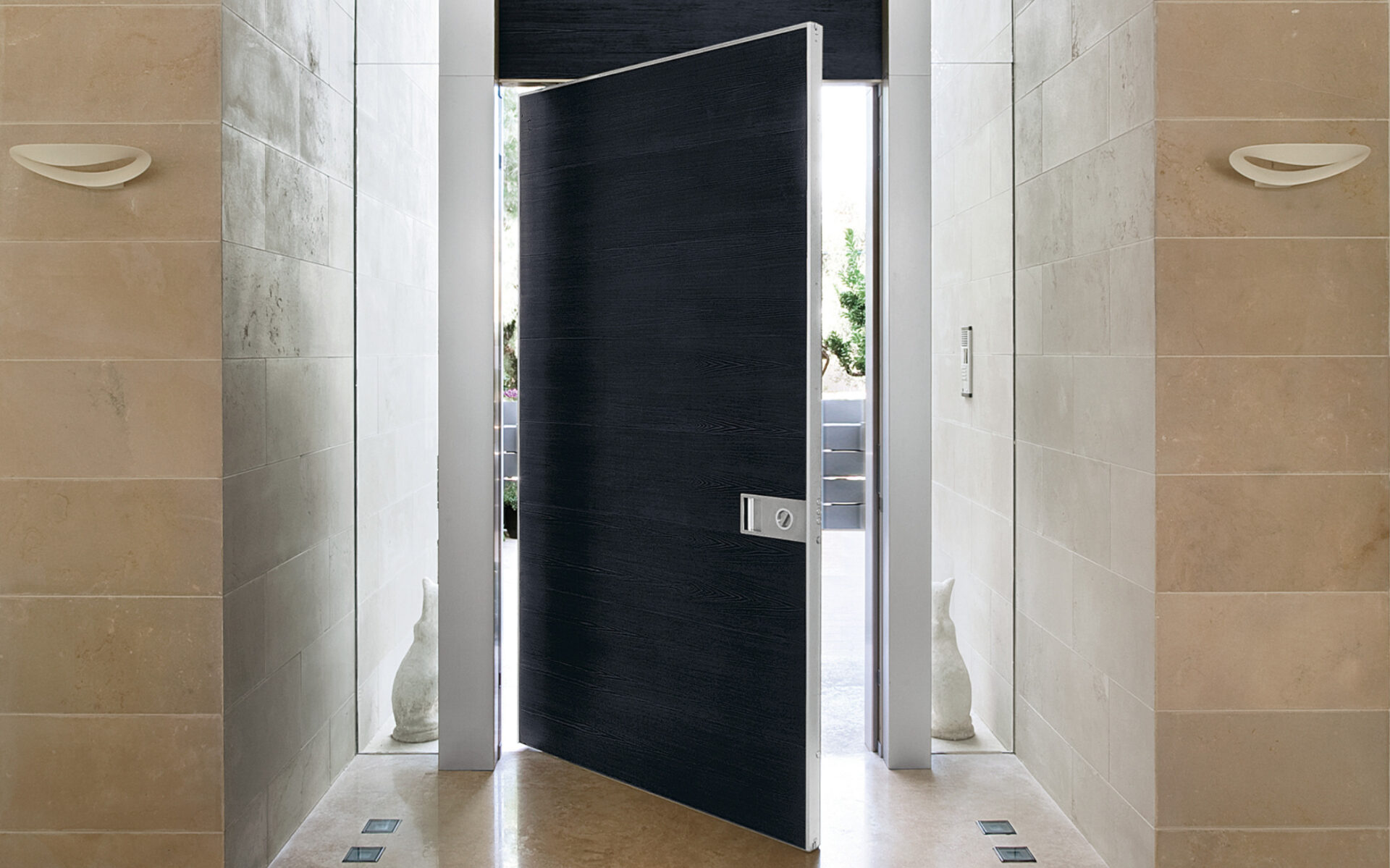
  • Pivot doors: create a strong architectural statement, often used for primary entries or major interior transitions; they require careful structural planning and hardware coordination

  • Swing doors: the most common type, but luxury execution depends on weight, balance, hinge quality, and consistent gaps

  • Sliding doors: ideal for saving space and creating clean transitions, but they require high-quality tracks, precise pocket planning, and excellent alignment to avoid feeling flimsy

Each type also changes how the home flows. Pivot doors emphasize arrival. Swing doors emphasize privacy and solidity. Sliding doors emphasize openness and flexibility. In a luxury residence, these are not casual choices. They shape how the home is experienced room to room.

What makes a luxury door feel expensive in use

People often recognize a luxury door without knowing why. That recognition is tactile and acoustic as much as visual. A premium door feels expensive because it behaves like a precision object: it moves smoothly, closes cleanly, and maintains consistent geometry over time.

The most important signals of quality include:

  • Weight and balance: the door should feel substantial without being difficult to operate

  • Sound: a refined close without rattling, hollow resonance, or uneven contact

  • Hardware smoothness: hinges, pivots, and sliding mechanisms that operate quietly and consistently

  • Tight tolerances: controlled gaps and consistent alignment across the frame

  • Consistency over time: the door remains true through seasonal changes when engineered and installed properly

Frame integration is equally important. In high-end homes, the frame is not a separate object visually attached to the wall. It is integrated into the wall language. This is where doors connect to millwork and architectural detailing.

Luxury frame integration typically requires:

  • Alignment with wall panel systems: door positions and casing decisions must respect panel rhythm and reveal strategy

  • Consistency with trim language: casing profiles and widths should match the home’s architectural grammar

  • Controlled terminations: clean transitions where panels meet frames, without awkward offsets or patchwork solutions

A door that looks beautiful but feels light, noisy, or inconsistent is not a luxury door. In high-end residential work, the “feel” is part of the specification.

Architectural detailing: the quiet layer that makes homes feel designed

Wall panels, boiserie, trims, and ceiling details

Architectural detailing is the layer that gives a residence hierarchy. Without it, rooms may be attractive, but they often feel interchangeable. With it, the home gains structure: public spaces feel intentional and ceremonial, private spaces feel calm and tailored, and transitions feel resolved rather than accidental.

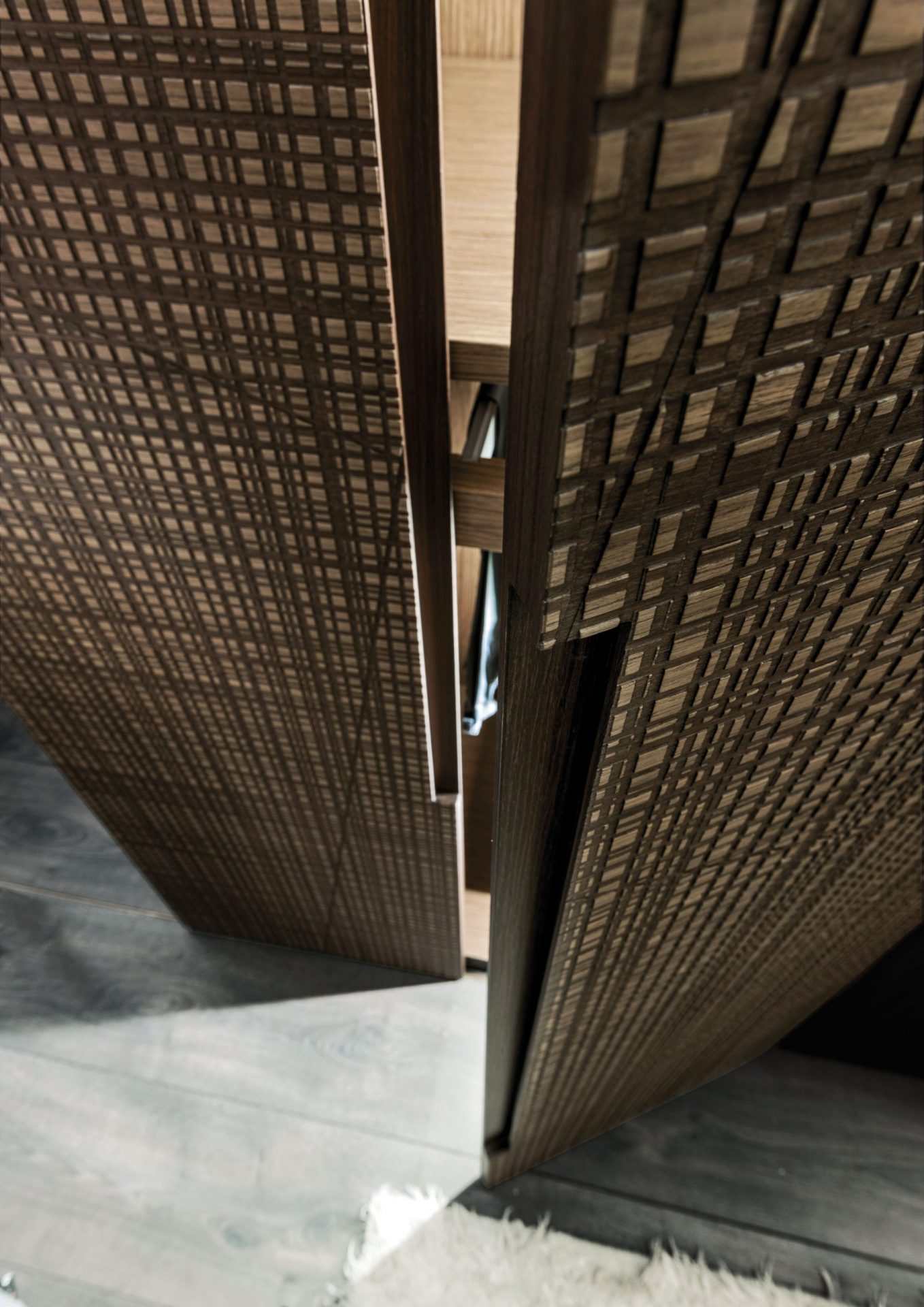
Wall panels and boiserie create depth and rhythm across large surfaces. They also provide a framework for other elements: doors, built-ins, and lighting. The key is not to over-design. Luxury comes from proportion and consistency, not from excessive pattern.

Trims and ceiling details are equally influential because they frame the room. A ceiling line can make a space feel taller, more grounded, or more refined depending on how it is detailed. In luxury homes, ceilings are rarely “blank.” They are controlled surfaces that support lighting, air distribution, and visual harmony.

A successful detailing strategy typically follows a hierarchy:

  • Public areas: stronger architectural definition, clearer feature walls, more deliberate rhythm

  • Private areas: quieter detailing, softer emphasis, and comfort-forward composition

  • Feature walls vs supporting walls: one wall may carry the design statement while others maintain calm continuity

Consistency across rooms is where luxury becomes believable. That consistency is achieved through repeating the same panel rhythm and reveal strategy across multiple spaces, even when the room functions differ. When a residence uses a coherent detailing system, it feels like a complete work rather than a set of separate rooms.

Key principles that keep detailing refined:

  • Repeatable proportions: panel sizes and divisions that remain consistent room to room

  • Controlled reveals: shadow gaps that provide crispness without visual clutter

  • Aligned datums: trim heights, door heads, and panel breaks that respect a shared grid

  • Intentional transitions: corners, terminations, and intersections designed as part of the composition

Integrating lighting into millwork without looking added later

Lighting is one of the most powerful tools in luxury interiors, but it becomes a liability when it appears as an add-on. The goal is integration: lighting that feels designed into the architecture rather than installed onto it. This requires early planning and precise coordination.

Common millwork-integrated lighting approaches include:

  • Linear lighting in shelving: integrated strips that create even illumination and elevate display zones

  • Backlit panels: feature walls that glow subtly, adding depth and drama without ornament

  • Spotlighting art walls: controlled accent light that reinforces architectural composition and highlights curated pieces

Integration requires practical planning, not only aesthetic intention. The most frequent failure point is delaying decisions until too late, which forces visible compromises like surface-mounted fixtures, awkward driver locations, or inaccessible service points.

Critical planning considerations include:

  • Driver placement: hidden but accessible locations, planned before fabrication and installation

  • Access panels: discreet service access that does not disrupt the design grid

  • Heat management: ensuring components remain safe and stable within enclosed millwork

  • Maintenance strategy: the homeowner should be able to service lighting without dismantling major components

When lighting is integrated correctly, it becomes part of the millwork’s architectural depth. It reinforces panel rhythm, clarifies material texture, and makes the home feel layered and deliberate at night as well as during the day.

Design a Walk-In Closet That Feels Like a Luxury Boutique
Experience Italian-designed wardrobe and cabinet systems engineered for perfect organization, visual harmony, and long-term adaptability. Materia Collection transforms storage into a fully designed architectural space.
Discover Luxury Closet Systems

From shop drawings to fabrication: where craftsmanship becomes measurable

What happens in the shop and why it matters

A luxury millwork concept becomes real through engineering. This stage is where design ambition is translated into joinery, substrates, veneers, and finish systems that will perform over time. The shop environment is also where tolerances can be controlled more strictly than on site, which is why fabrication quality is one of the strongest predictors of final outcome.

Engineering the design typically involves:

  • Joinery decisions: how components connect, how strength is achieved, and how seams are controlled

  • Substrate selection: choosing stable cores and construction methods appropriate to the environment and finish

  • Veneer planning: grain direction, pattern matching, and how surfaces read across large elevations

  • Finish system selection: stain strategy, sheen control, protective topcoats, and compatibility with high-touch use

Luxury work often combines precision manufacturing with artisan finishing. This is not a contradiction. The best results come from the marriage of consistency and craft: clean fabrication ensures alignment and accuracy, while artisan finishing adds depth and individuality that mass production cannot replicate.

A well-run shop process treats craftsmanship as measurable. The goal is repeatability with refinement-surfaces that align, doors that sit true, drawers that glide, and finishes that read consistent across changing light.

Quality control checkpoints that protect the final result

Quality control in luxury millwork is not a single inspection at the end. It is a sequence of checkpoints that prevent defects from reaching the site, where repairs become costly and compromises become visible.

Two of the most important checkpoints are finish sampling and approvals. Luxury finishes must be controlled for tone, sheen, and pattern alignment. A finish that looks correct on one sample can look wrong when scaled up across an entire wall. Sampling is how the project avoids surprises.

Finish approval should typically confirm:

  • Sheen level: matte vs satin vs gloss and how it reacts in real light

  • Tone accuracy: stain tone consistency across different pieces and materials

  • Pattern alignment: veneer matching and continuity across adjacent panels

  • Touch durability: how the finish handles oils, cleaning, and daily contact

Mockups are another luxury-home habit that prevents expensive rework. A mockup is not overkill; it is insurance. It allows the team to test a critical condition at real scale before committing to full production.

Mockups are especially valuable for:

  • Complex reveals and shadow gaps: where small tolerance errors become obvious

  • Panel transitions and corners: where the eye reads discontinuity quickly

  • Integrated lighting conditions: where brightness, diffusion, and glare must be validated

  • Door and frame relationships: where alignment defines the room’s visual grid

These checkpoints protect the project’s credibility. They ensure that craftsmanship is not a hope, but a controlled outcome.

Installation: razor-sharp precision is earned on site

Why installation is not the easy part

Installation is where luxury either becomes permanent or becomes fragile. Even perfectly fabricated millwork can look average if site conditions and sequencing are not controlled. The site environment is variable in ways the shop is not, and luxury tolerances do not tolerate chaos.

The most important site conditions include humidity, floor flatness, and wall straightness. Wood and wood-based products respond to moisture. Floors are rarely perfectly level. Walls are often not perfectly plumb. In standard construction, these imperfections are accepted. In luxury millwork, they must be managed.

Common condition-related challenges include:

  • Humidity swings: can cause movement that affects reveals, door alignment, and long-term stability

  • Uneven floors: can compromise cabinetry alignment and create visible inconsistencies across long runs

  • Out-of-plumb walls: can distort panel systems and force on-site adjustments that should have been anticipated

Sequencing is equally critical. Millwork interacts with many other trades and finishes. If the order is wrong, millwork gets damaged, alignment gets compromised, or details that required clean substrates become impossible.

Millwork installation must coordinate with:

  • Floors and base details: to maintain consistent lines and avoid patchwork terminations

  • Ceilings and lighting: so reveals and integrated lighting align as designed

  • Stone and slab work: to achieve crisp transitions and avoid uneven jointing

  • MEP and paint: to ensure access, ventilation, and finish boundaries are resolved cleanly

Luxury is not forgiving when the schedule compresses at the end. A rushed site creates visible flaws. A disciplined site creates calm.

What high-level installation looks like

High-level installation is defined by what is not visible: minimal patching, no forced filler strips, no irregular gaps, no misaligned lines across adjacent elements. The work appears effortless because it was planned thoroughly and executed with care.

Signals of excellent installation include:

  • Clean reveals: consistent shadow gaps and tight seams that read as intentional architecture

  • Tight alignment: horizontal and vertical lines that carry across long distances without drifting

  • Minimal on-site patching: because fit was engineered properly and site readiness was confirmed

  • Hardware tuning: doors and drawers that operate smoothly and close cleanly

Protection and punch-list discipline are also part of luxury. Finished millwork must be protected from damage during remaining construction. The punch process must be managed with precision so repairs do not compromise finishes or alignment.

A luxury-level protection and punch strategy typically includes:

  • Surface protection: films, coverings, and controlled access where needed

  • Final cleaning protocol: appropriate cleaning methods for each finish type

  • Controlled punch repairs: refinishing and adjustments done by qualified professionals, not improvised labor

  • Final alignment review: ensuring doors, panels, and reveals remain consistent at completion

When wall panels, wardrobes, doors, lighting, and furniture come from coordinated design families, the home gains a visual and material coherence that is extremely difficult to achieve through fragmented sourcing.

Complete Your Interior with Italian Designer Furniture
Elevate your home with curated Italian fine furniture crafted from the finest woods, metals, and fabrics. From statement sideboards to elegant tables and seating, Materia Collection delivers timeless design and exceptional craftsmanship.
Browse Italian Fine Furniture

Frequently Asked Questions - Residential Custom Millwork

Architectural millwork is designed as part of the building. It includes built-in cabinetry, wall panels, wardrobes, doors, and detailing that align with the home’s structure and proportions. Custom furniture, even when beautifully made, remains movable. Millwork is fixed, engineered, and integrated into the architecture, which is why it has a much stronger impact on how a home feels and functions.

Kitchens, pantry walls, wardrobes, media walls, feature walls, bars, mudrooms, and entry foyers benefit the most. These are the zones where storage, proportion, lighting, and material transitions matter every day, and where stock solutions tend to fail visually and functionally.

A typical luxury residential millwork package can take several months from concept to final installation. This includes design development, shop drawings, approvals, fabrication, finishing, and site installation. The timeline depends on complexity, material sourcing, and coordination with other trades, but precision always requires time.

Exotic woods, natural stone, and refined metals are most common because they provide depth, durability, and long-term visual value. These materials age better than synthetic alternatives and support artisan finishing techniques that give luxury interiors their character.

Venetian plaster is durable, breathable, and easy to maintain when properly sealed, making it suitable for many rooms. Wall panel systems are even more robust in high-traffic areas because they are constructed as architectural elements that can better resist impact and wear. Both are premium choices when specified correctly.

I would like to receive an access to the technical drawings and catalogs. I agree to receive company products updates.