

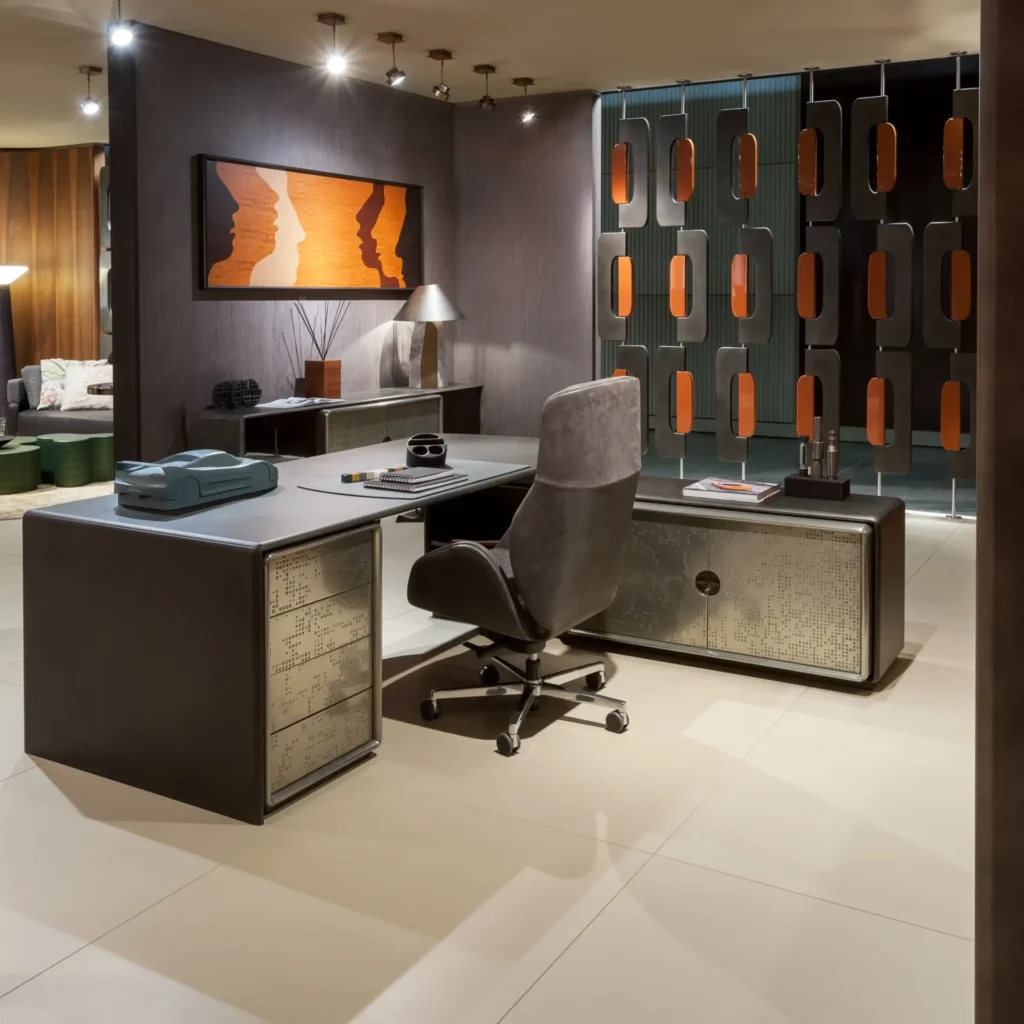
In New York, commercial interiors need to work harder than standard furniture layouts because a reception desk, executive office, boutique wall, restaurant feature panel or conference-room built-in shapes how clients, tenants, guests and buyers judge the business before a conversation even begins. That is why custom commercial millwork NYC projects are often chosen when a space must feel intentional, premium, brand-aligned and durable under daily use, and why MATERIA Collection brings Italian design, custom millwork, unique finishes, wall treatments, office furniture, cabinet systems, lighting, doors and refined commercial interior solutions to corporate offices, boutiques, restaurants and bespoke business environments.
| Millwork Element | Use in Commercial Interiors | Business Value |
|---|---|---|
| Reception desks | Support visitor flow, staff work, storage and branding. | Creates a polished first impression in compact NYC entrances. |
| Built-in storage | Organizes files, equipment, display items and daily tools. | Reduces clutter and makes offices feel more refined. |
| Wall panel systems | Adds depth, texture and durability to key walls. | Turns plain walls into branded architectural surfaces. |
| Retail display walls | Frames products, samples, accessories or branded objects. | Helps merchandise feel more valuable and organized. |
| Conference-room built-ins | Integrates screens, storage, wiring and presentation surfaces. | Creates a cleaner, more professional meeting environment. |
The key difference is control. Custom commercial millwork allows the designer, architect, developer or business owner to control dimensions, materials, finish, storage, lighting, proportion and visual hierarchy with far greater precision than off-the-shelf furnishing. For a broader explanation of categories and examples, see MATERIA Collection’s guide to commercial interior millwork.
Why NYC commercial spaces need a custom approach
New York commercial interiors rarely have the luxury of wasted space. Offices, boutiques, showrooms, clinics, restaurants, galleries and building lobbies often operate within tight footprints, high rents and demanding visual expectations. Every surface must contribute to the overall effect, and every built-in element must justify the square footage it occupies.
This is where custom millwork becomes especially valuable.
NYC commercial projects often require a custom approach because of several overlapping pressures:
Tight floor plans where every inch has to be measured carefully
High client expectations in premium office towers, retail corridors and hospitality spaces
Dense visual competition, especially in boutique retail and branded showroom environments
Coordination with architects, interior designers, contractors, lighting consultants and installers
Need for exact measurements, clean transitions and precise installation
Premium finish expectations from tenants, investors, customers and guests
Pressure to make a space look complete, valuable and professionally resolved
Durability requirements in areas exposed to repeated public use
In New York, a commercial interior is often judged quickly. A visitor may form an opinion from the elevator lobby, reception desk, waiting area, conference wall or boutique display before they ever speak to the team. That makes commercial millwork more than a construction detail. It becomes part of the business image.
The broader project context is covered in MATERIA Collection’s guide to New York custom interior millwork.
Where commercial millwork creates the biggest impact
The most successful commercial millwork projects do not necessarily customize every object in the room. They identify the areas that carry the most visual, functional and emotional weight, then design those areas with greater care. This is especially important in NYC, where budgets, timelines and square footage are often tightly managed.
Commercial millwork creates the biggest impact where people directly interact with the brand. These are the points where a client places a hand on the reception counter, a buyer views a product wall, an investor sits across from an executive desk, a tenant enters a lobby, or a team gathers around a conference room. In those moments, the interior either supports confidence or weakens it.
The highest-value areas usually include:
Reception areas, because they establish the first impression
Executive offices, because they communicate leadership, privacy and authority
Conference rooms, because they host important business conversations
Retail display walls, because they influence product perception and buying behavior
Branded feature walls, because they create memorable visual identity
Built-in storage, because it keeps commercial spaces clean, organized and efficient
Hospitality and showroom zones, because they need atmosphere as much as function
For many NYC commercial projects, the best investment is not to add more decorative pieces. It is to design the surfaces and built-ins that define the experience of the space. A reception desk, wall panel system, display wall or conference-room built-in can become the visual center of the interior, while also solving practical needs such as storage, technology integration, lighting and circulation.
This approach is particularly relevant for architects and interior designers working on high-end business interiors. A well-designed millwork element can make the rest of the room feel more intentional. It can connect furniture, lighting, flooring, wall treatments and branding into one clear design language.
Reception desks and first-impression areas
The reception desk as a brand statement
The reception area is often the first physical expression of a company’s identity. Before a visitor sees the conference room, meets the team or experiences the service, they encounter the entrance and reception zone. That first impression can feel quiet and discreet, bold and architectural, warm and welcoming, or polished and corporate. The reception desk plays a central role in creating that impression.
Reception desk millwork must support the person working behind it, guide the visitor approaching it, fit the scale of the entrance, conceal technology, coordinate with lighting and reinforce the tone of the business. In New York, where many commercial entrances are compact, the desk also has to feel impressive without overwhelming the room.
A custom reception desk can communicate different brand values through proportion and material. A dark veneer desk with metal inlays may suggest privacy, strength and executive confidence. A lighter wood tone with soft lighting may feel more approachable and hospitality-driven. A lacquered surface with stone or composite details can create a clean, gallery-like impression for a boutique, showroom or luxury service business.
Strong reception desk millwork should consider:
Proportions matched to the lobby, entrance width and ceiling height
A clear visitor approach, so the desk is visible without blocking circulation
Integrated storage for staff items, documents and daily operational tools
Concealed cable management for computers, phones, charging points and screens
Stone, veneer, lacquer, metal or composite details that support the brand tone
Logo integration that feels architectural rather than applied as an afterthought
Lighting under counters, along front panels or behind surrounding wall panels
Durable surfaces that can handle daily contact in a public-facing environment
Accessibility, comfort and the practical relationship between seated staff and standing visitors
A reception desk also has to connect visually with the surrounding room. If the desk feels separate from the walls, lighting, doors and flooring, the entrance may look assembled rather than designed. When the desk is coordinated with the surrounding millwork, it becomes part of a complete arrival experience.
Wall panels, doors and lighting around the reception zone
Reception design is not only the desk. The surrounding surfaces complete the impression. Wall treatments, custom panels, lighting, doors, shelving and material transitions determine whether the entrance feels complete or unfinished. In a compact New York lobby or office entrance, these details often matter even more because visitors see them at close range.
A reception desk placed against a plain wall may still function, but it may not create the level of presence expected in a premium commercial interior. A desk placed in front of a refined wall panel system, with integrated lighting and coordinated doors or shelving, can turn the same footprint into a much stronger brand moment. This is where MATERIA Collection’s wall treatment and panel systems become especially relevant for commercial projects.
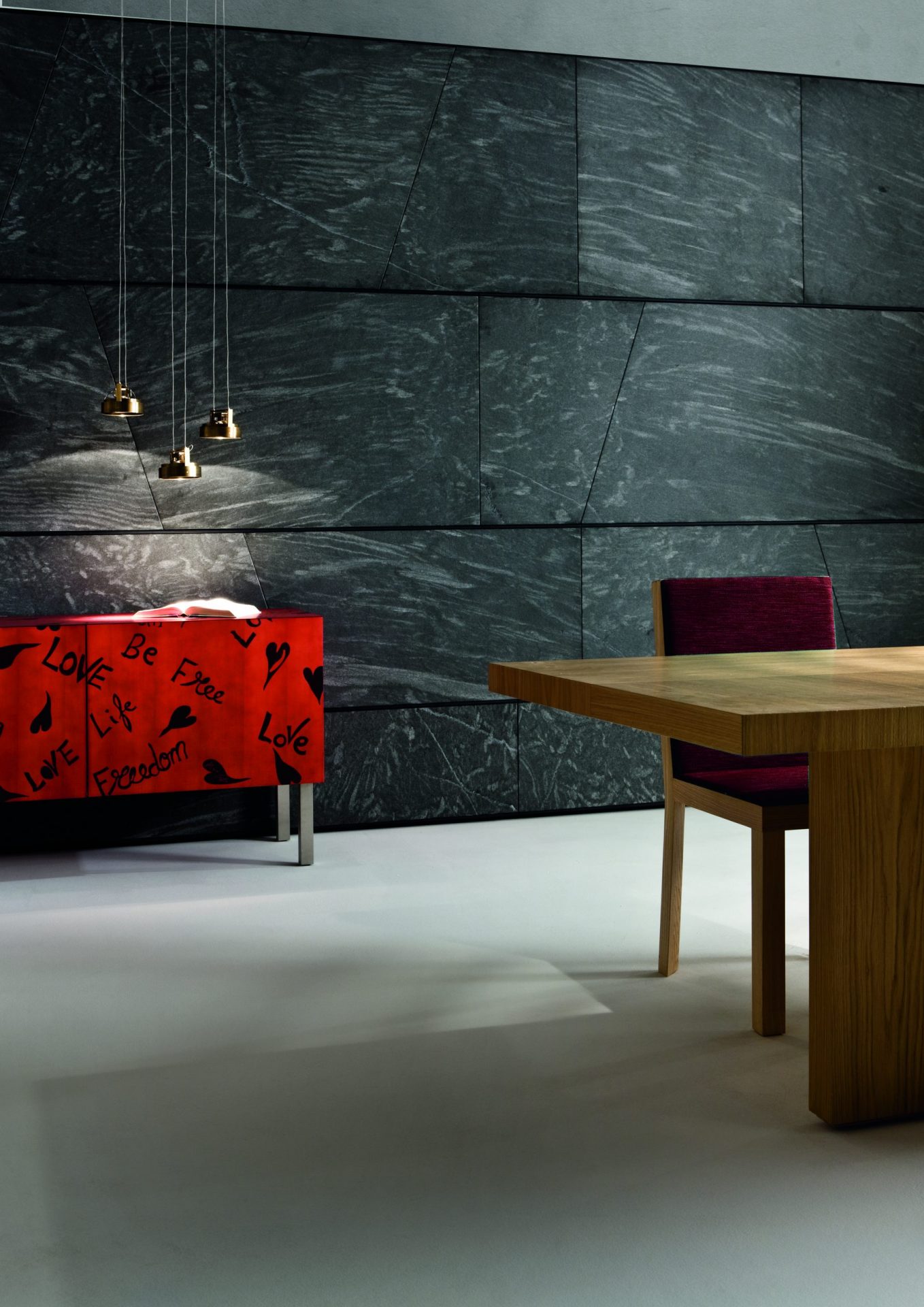
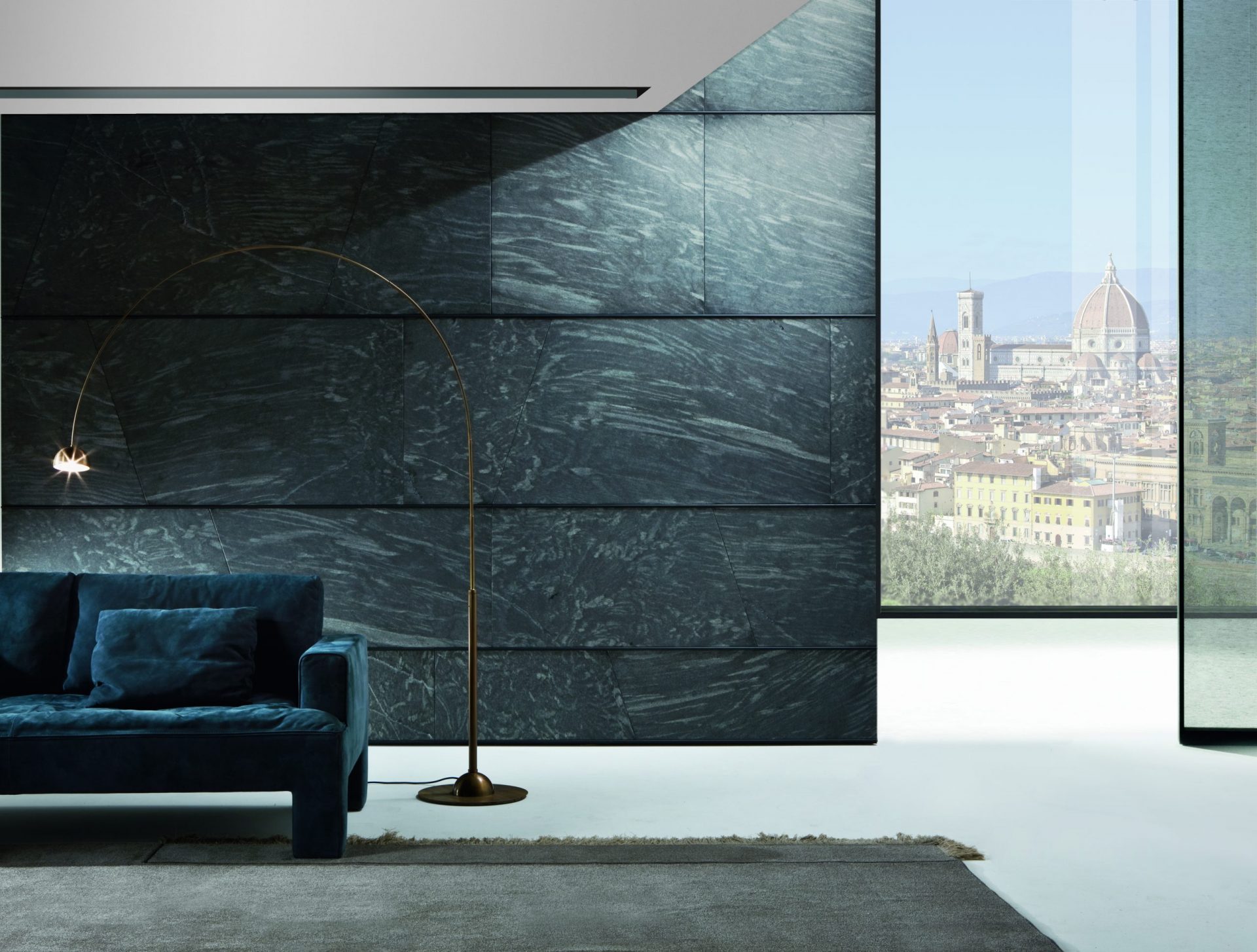
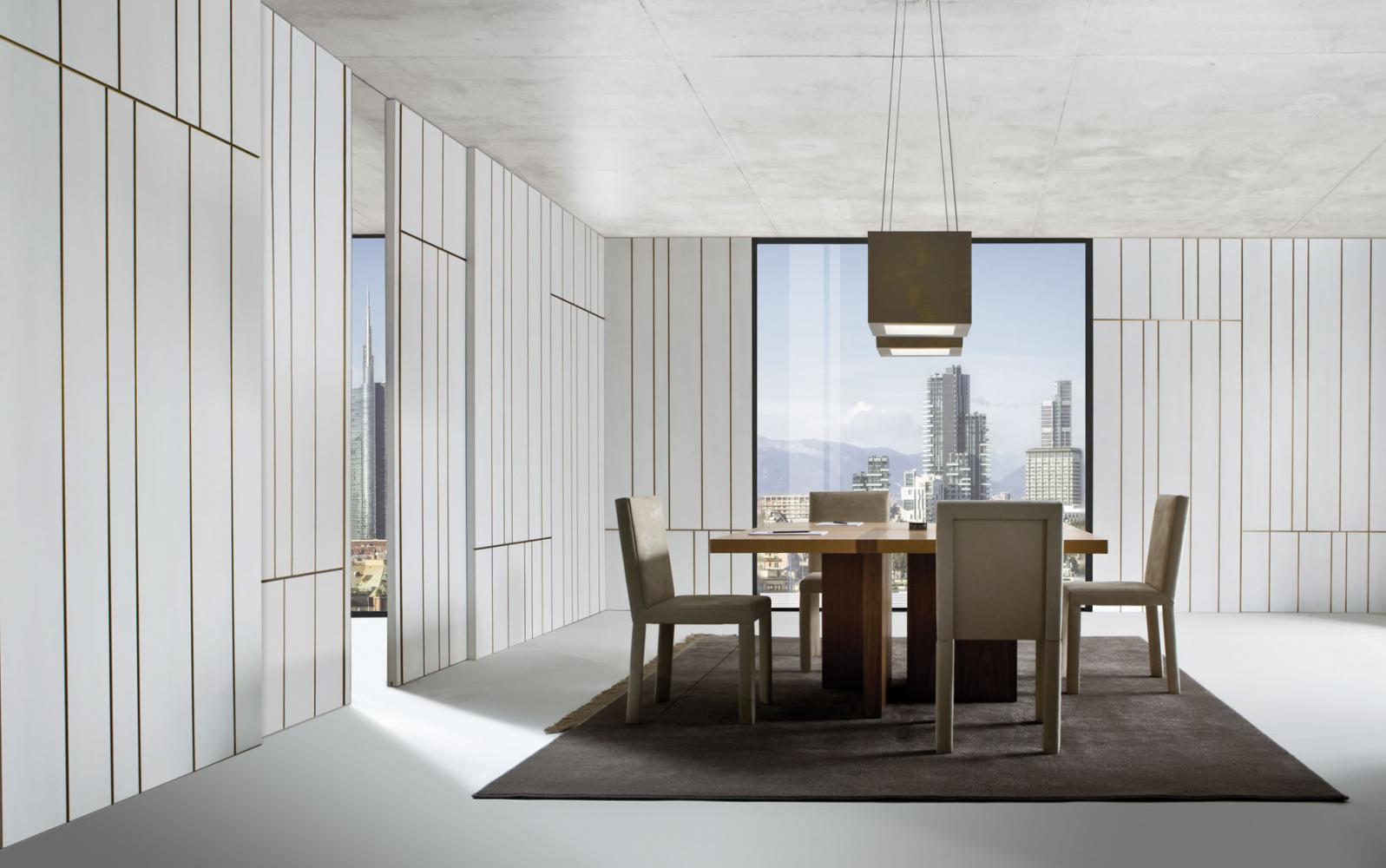
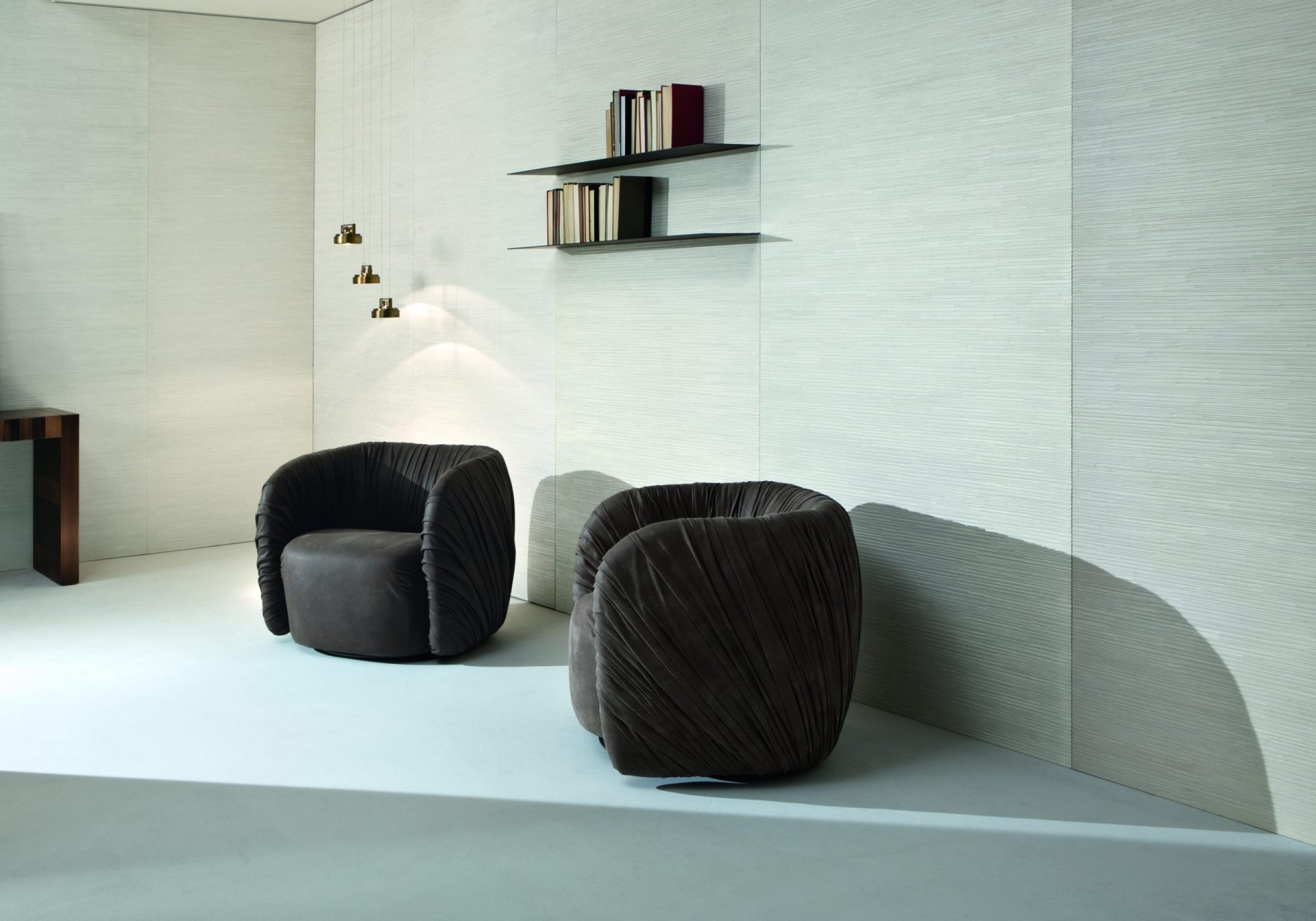
MATERIA Collection offers wall panel systems realized in different materials, from wood and metal to marble and fabric, with sophisticated design and the possibility of made-to-measure solutions. These systems can integrate shelves, doors and other fittings, which is especially valuable in commercial reception areas where the wall has to be both decorative and functional.
For example, a reception wall can be designed to include concealed doors, logo placement, display shelving, acoustic comfort, textured panels or lighting that emphasizes the surface. This avoids the common problem of treating the desk, wall and lighting as separate decisions. Instead, the entire entrance can be designed as one coordinated composition.
MATERIA’s wall panel direction can support many different reception moods:
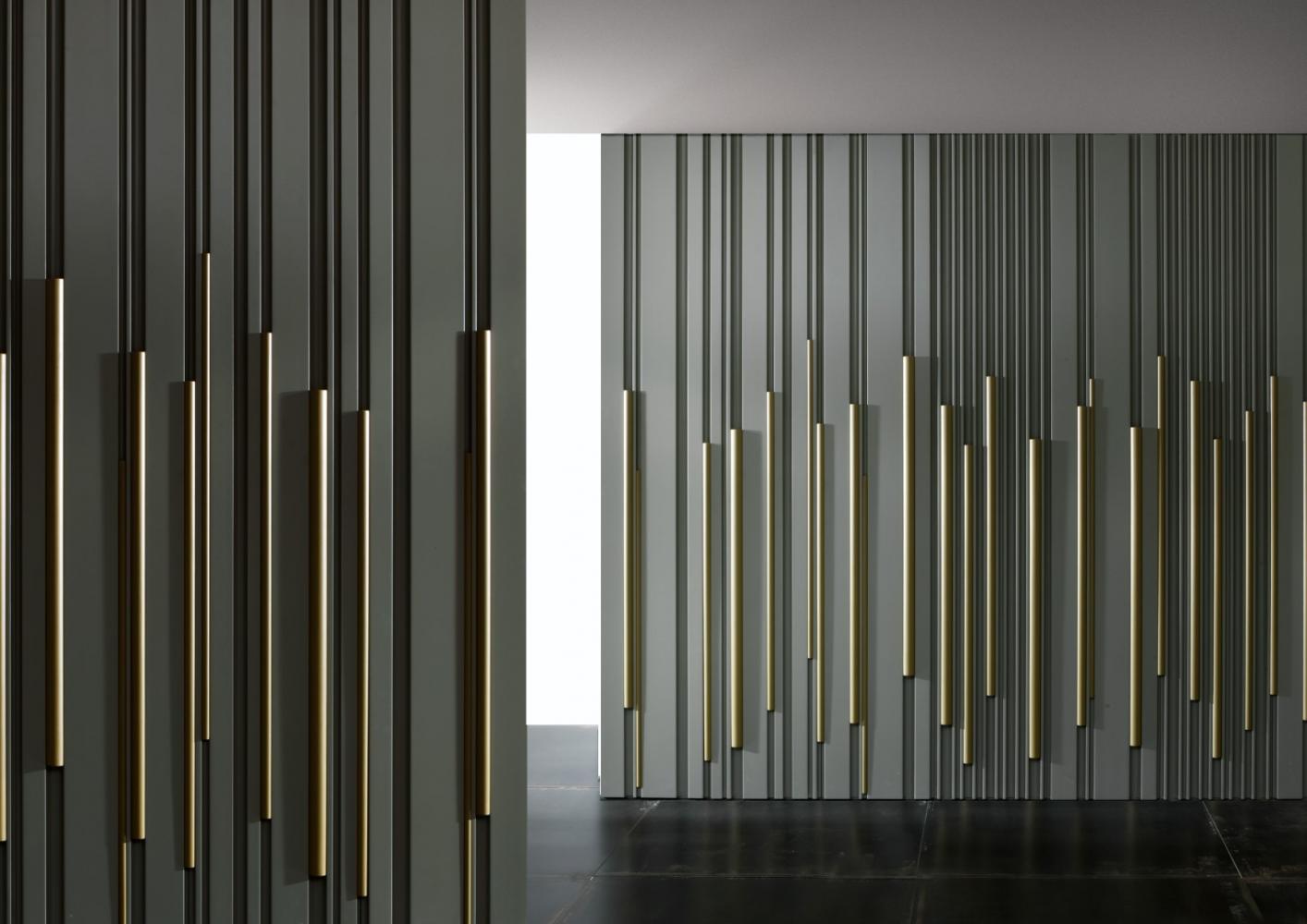
Line wall panels can contribute to a refined architectural rhythm
Maxima wall panels can support a more luxurious and expressive interior language
Stars wall panels can add a distinctive decorative identity
Bamboo wall panels can bring warmth, texture and natural character
Terre wall panels can support a grounded, material-rich atmosphere
Decor acoustic wall panels can be useful where sound comfort and visual finish both matter
Boiserie panels can create a more classic, formal or layered wall treatment
Doors and lighting should also be considered early. In a commercial reception zone, doors may lead to private offices, treatment rooms, meeting spaces or staff areas. If those doors are generic or visually disconnected, they can weaken the overall impression. Custom doors or panel-integrated doors can help maintain a cleaner and more continuous look.
In NYC, reception zones often need to do more with less. The right combination of reception desk millwork, wall panels, doors and lighting can make a small entrance feel more complete, more premium and more aligned with the business behind it.

Executive offices, conference rooms and built-in storage
Office millwork for leadership spaces
Executive offices in NYC often need to combine authority, comfort and function. These spaces are used for focused work, private conversations, client meetings, investor calls, negotiations and internal decision-making. They must feel professional without becoming cold, refined without becoming impractical, and impressive without wasting space.
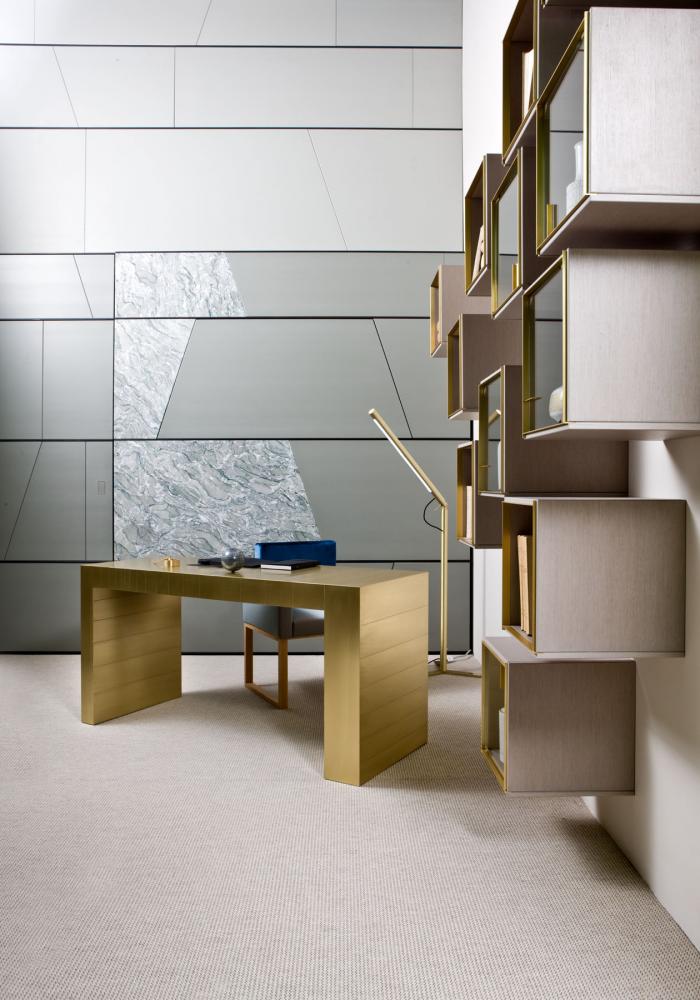
Office millwork can create a more complete environment than separate furniture pieces because desks, storage, shelving, wall panels and conference elements can be designed as one architectural composition. Instead of selecting a desk, then a cabinet, then shelves, then a wall treatment, custom millwork allows all of those elements to relate to one another in scale, material, finish and function.
In an executive office, custom millwork can support:
Executive desks sized to the room, view, circulation and meeting needs
Custom bookcases that combine display, storage and architectural presence
Credenzas and sideboards for documents, personal items and presentation materials
Integrated file storage that reduces visible clutter
Display shelving for books, awards, art, products or collected objects
Hidden technology for screens, cables, charging, conferencing tools and speakers
Wall paneling behind the desk to create a stronger visual background
Built-in lighting that adds atmosphere and improves usability
Material continuity between furniture, walls, doors and storage elements
This type of design is especially valuable in New York, where executive offices may be smaller than expected but still need to feel premium. A room does not have to be large to feel important. It has to be well proportioned, carefully finished and free from visual clutter. Custom millwork can make a compact office feel calmer and more resolved because storage, surfaces and display areas are planned from the beginning.
MATERIA Collection’s office offering includes high-end office chairs, modern executive desks, bespoke tables, bookcases, consoles and sideboards, which can support a complete office environment rather than isolated furniture selection. This is important for leadership spaces because the office should not feel like a collection of unrelated objects. It should feel like a coherent interior.
Conference rooms that support presentation, privacy and presence
Conference rooms are high-value business spaces because they host conversations that matter. A company may use them for client presentations, board meetings, investor discussions, legal reviews, design approvals, strategy sessions, interviews or private negotiations. Because of that, a conference room has to do more than hold a table and chairs.
A well-designed conference room should support communication. People need to see the screen, hear each other clearly, access technology easily, store equipment discreetly and feel that the space reflects the level of the business. Custom millwork can help organize all of these needs into a room that feels polished and practical.
In conference rooms, custom millwork can improve:
Acoustic comfort through appropriate wall treatments or panel systems
Presentation walls that frame screens, artwork or brand messaging
Integrated screens that feel built into the room rather than attached later
Concealed wiring for monitors, microphones, charging points and conferencing tools
Storage for equipment, samples, documents or hospitality items
Wall paneling behind screens to create a more refined visual background
Credenzas and serving surfaces for meetings, coffee, documents or presentation materials
Lighting atmosphere for different meeting formats
Brand consistency between the conference room, reception area and executive offices
Decorative acoustic wall panels and textured wall systems may be especially useful in conference rooms where sound, comfort and visual polish all matter. A hard, empty room can feel uncomfortable even if it looks expensive. A room with the right combination of surfaces, panels, storage and lighting can feel more focused, private and professional.
Retail interiors and branded display walls
Why retail millwork in NYC has to sell visually
Retail millwork NYC projects have a different pressure than office interiors. They need to support brand identity, but they also need to help products sell. In dense New York retail environments, customers move quickly, competition is close and the visual quality of the interior can directly influence how merchandise is perceived.
A product displayed on generic shelving may look ordinary. The same product placed within a custom display wall, with the right lighting, spacing, material background and brand context, can feel more valuable. This is why custom millwork is so important in boutiques, showrooms, luxury retail spaces and hospitality-adjacent commercial interiors.
Retail millwork can help organize the customer experience. It can guide attention toward hero products, create clear zones inside a small store, improve product visibility and make the brand feel more refined. In NYC, where many retail spaces have narrow footprints, unusual layouts or high rent per square foot, built-in display solutions can make the difference between a crowded store and a curated one.
Custom retail millwork may include:
Display walls that organize products by collection, category or visual priority
Built-in shelving that fits the exact width, height and rhythm of the space
Product niches that frame select items as premium focal points
Cash-wrap counters designed for transactions, storage and brand presentation
Fitting-room details that make the customer experience feel more private and refined
Feature walls that create an immediate visual identity
Wall panels behind hero products to create depth and contrast
Integrated lighting that highlights texture, shape, color and product value
Durable surfaces that can handle frequent use, cleaning and customer interaction
Material choices that reinforce the brand’s position in the market
The best retail millwork does not simply add shelves. It creates hierarchy. It tells the customer where to look first, what matters most and how the brand wants to be understood. A luxury boutique may need quiet surfaces and refined materials that allow the product to lead. A showroom may need stronger display architecture that helps clients compare finishes, samples and collections. A hospitality-adjacent retail space may need warmer materials and lighting that encourage people to stay longer.
Material selection is particularly important in retail. Surfaces must look refined up close, because customers often touch them, lean on them and view them from a short distance. Veneer, lacquer, metal details, textured panels, stone elements and integrated lighting can all contribute to a more memorable sales environment when they are specified carefully.
Boutique, showroom and hospitality crossover
Retail millwork often overlaps with hospitality and showroom design. A boutique, gallery-like showroom, restaurant entrance or branded lounge may need custom millwork that feels more architectural than traditional furniture. In these environments, the interior is not just a backdrop. It becomes part of the experience people remember, photograph and associate with the brand.
This is especially relevant in New York, where commercial spaces often serve multiple roles. A boutique may function like a showroom. A showroom may host private events. A restaurant entrance may operate like a branded arrival sequence. A corporate hospitality space may need to feel closer to a luxury lounge than a conventional office. Custom millwork helps connect these uses through surfaces, display areas, seating zones, lighting and material continuity.
For boutique and showroom environments, custom millwork can help create:
A stronger sense of arrival
Better product presentation
More controlled lighting around merchandise or materials
Built-in storage that keeps the sales floor uncluttered
A more refined background for client meetings and private appointments
Consistent branding across walls, counters, displays and doors
A balance between visual drama and practical daily use
For hospitality environments, millwork often has to carry even more atmosphere. Restaurant walls, bar fronts, host stands, private dining features and lounge display areas must feel durable, memorable and aligned with the concept. The materials need to support the mood of the space while standing up to repeated use.
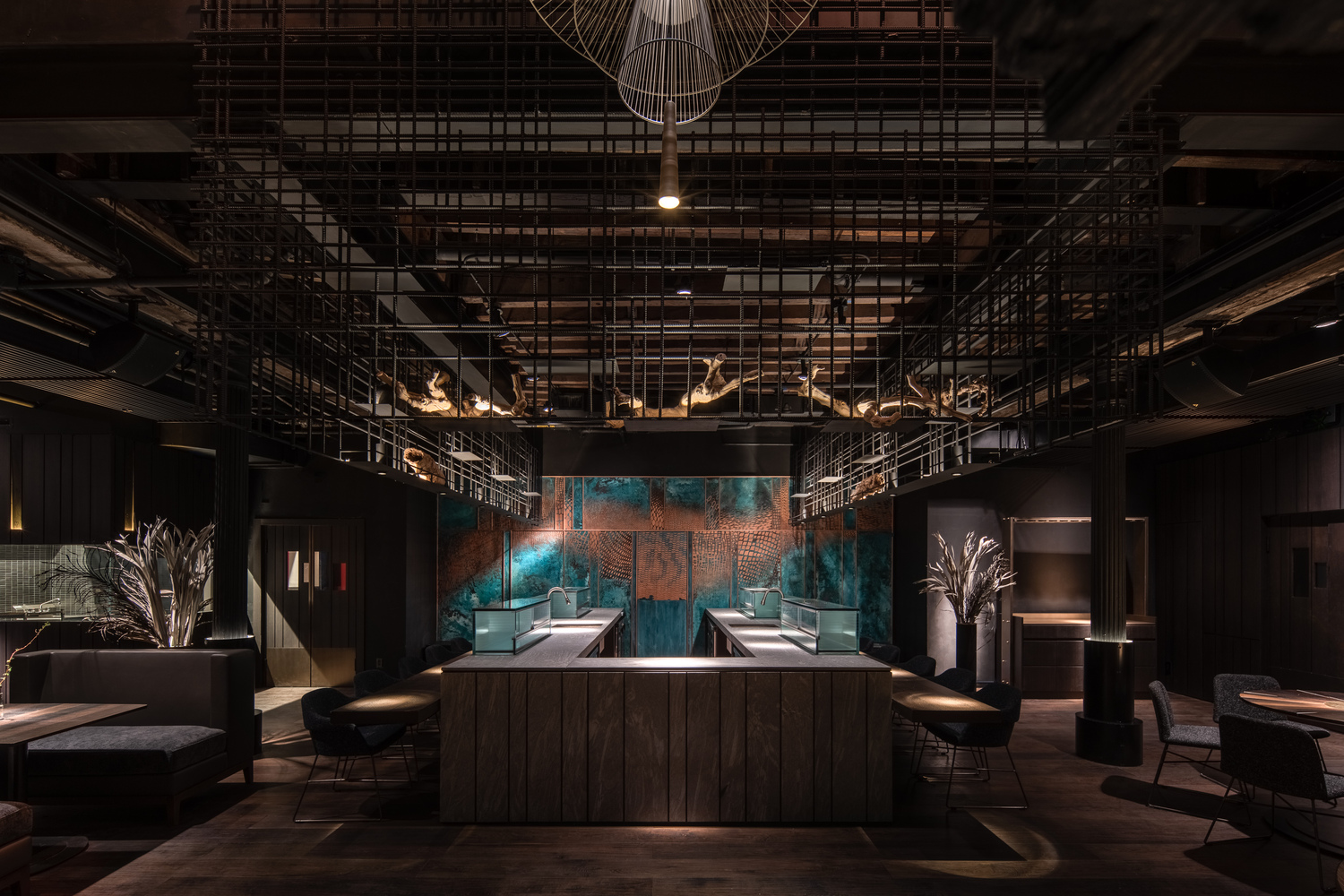
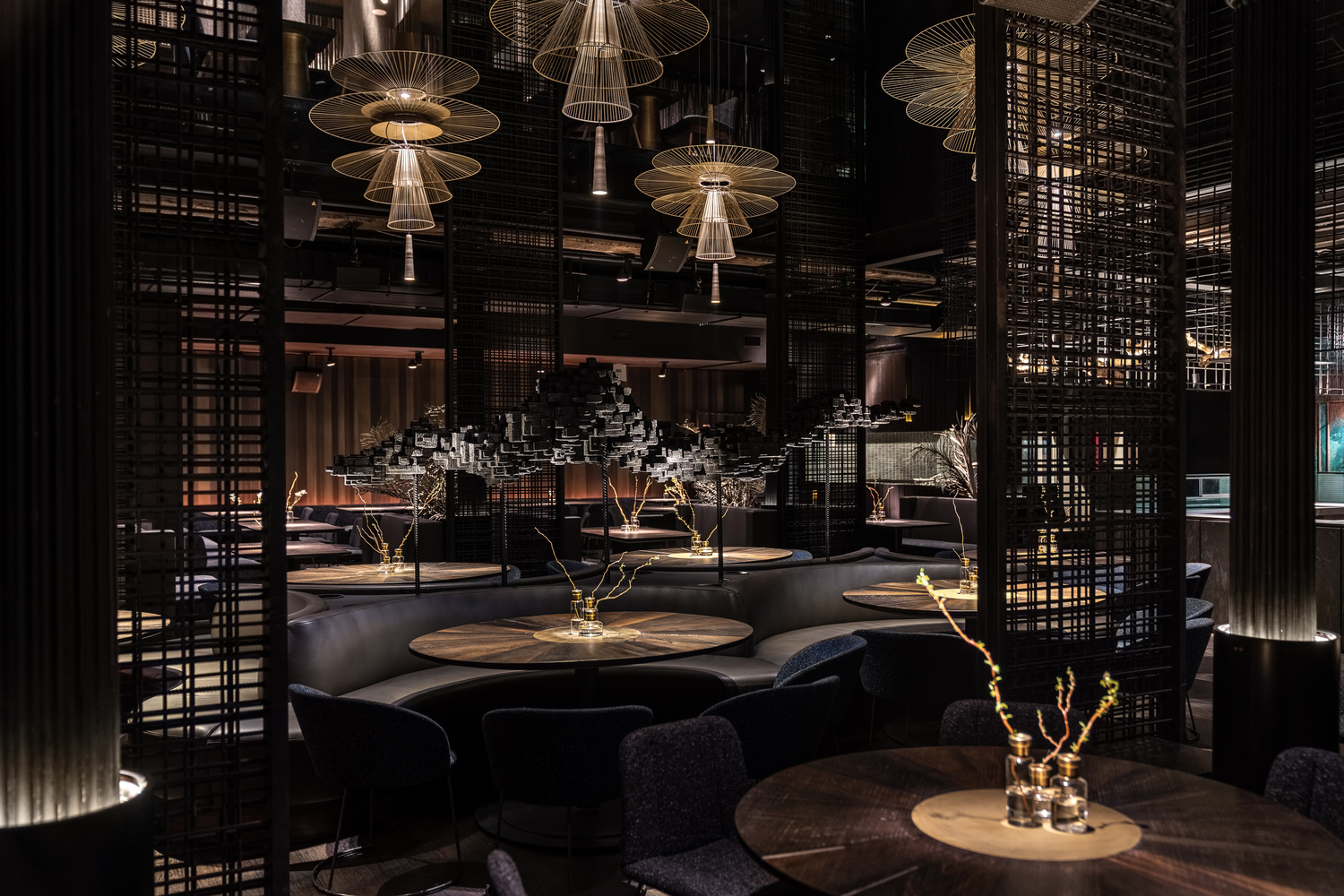
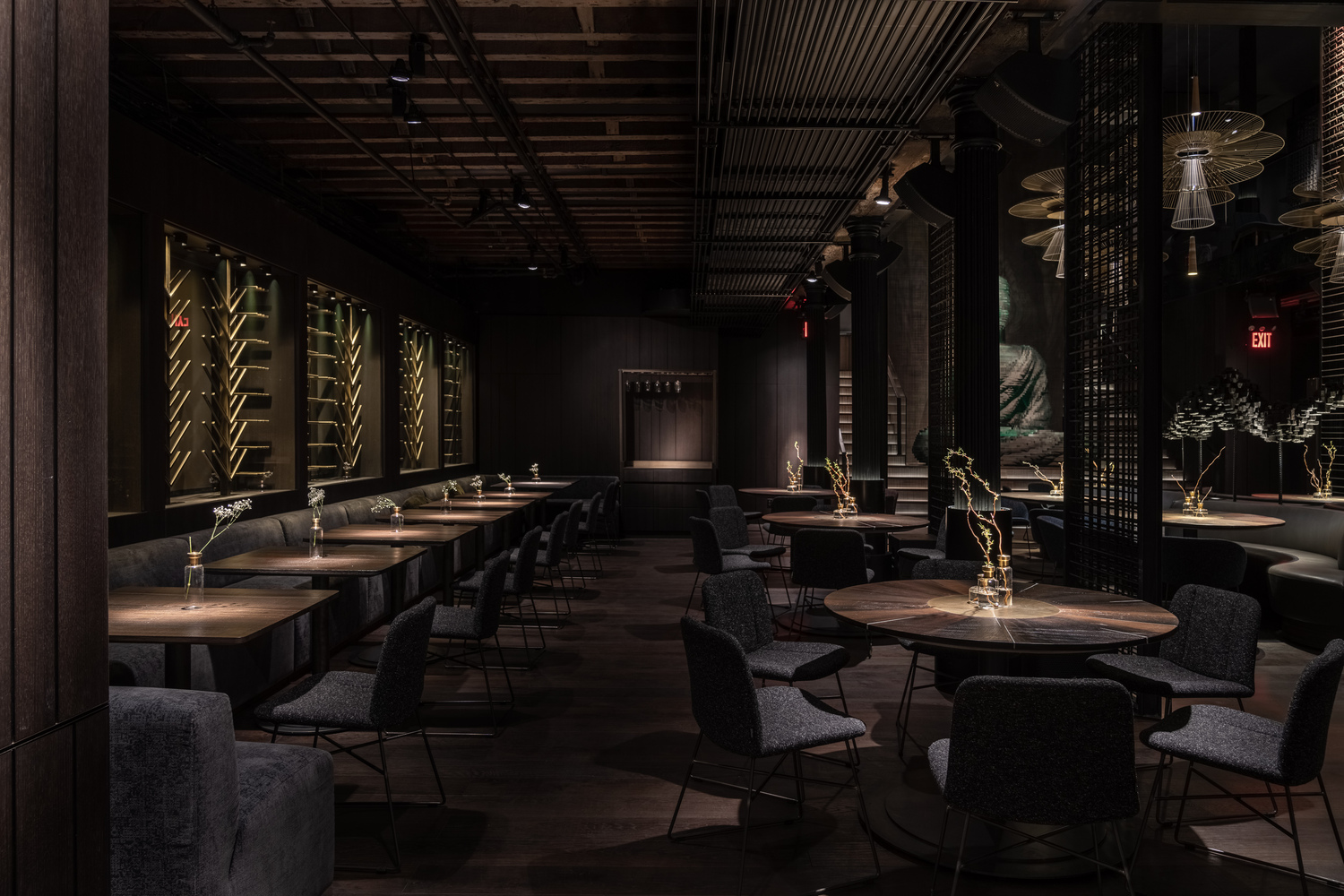
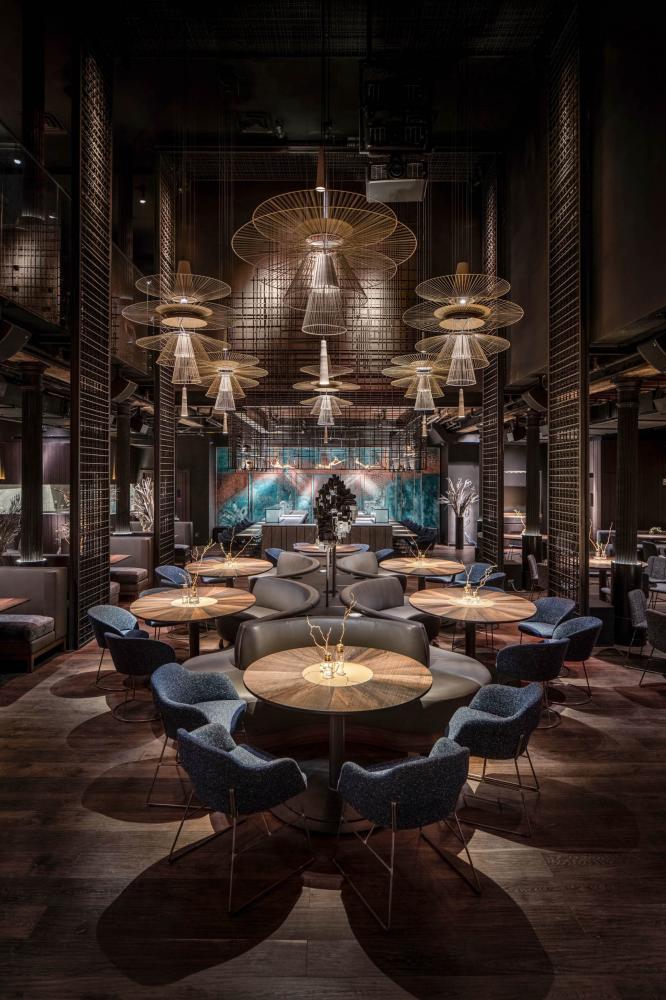
MATERIA Collection’s work on the Buddha-Bar project in New York, with YOD Design Lab, is a strong example of how bespoke furnishings and wall panel systems can support a highly branded commercial interior. The project was fully furnished with Maxima Stars and Line wall panels, including numerous bespoke and personalized items, showing how custom surfaces and refined detailing can contribute to a restaurant and hospitality environment with a distinct identity.
Materials, finishes and durability considerations
Veneer, lacquer and natural wood surfaces
Wood veneer and refined wood finishes are often used in commercial interiors because they bring warmth without sacrificing sophistication. In an office, veneer can soften a space that might otherwise feel too corporate or technical. In a lobby, it can make the arrival experience feel more welcoming and substantial. In a boutique or showroom, it can create a calmer background that allows products, artwork or branded details to stand out.
The advantage of veneer in commercial millwork is control. It allows designers to achieve a high-end wood appearance while maintaining consistency across custom dimensions, wall panels, desks, doors, built-ins and storage systems. This is especially useful in NYC projects where a reception desk, feature wall and cabinet system may need to feel visually connected even though they serve different functions.
A refined wood surface can help communicate:
Warmth in a client-facing reception area
Authority in an executive office
Quiet luxury in a private consultation room
Natural texture in a boutique or showroom
Visual continuity across walls, doors and built-in storage
A more permanent, architectural feeling than loose furniture alone
Lacquer adds another layer of control. It can create a smooth, polished, matte or high-gloss effect depending on the design direction. In a commercial setting, lacquered millwork can feel clean and contemporary, especially when paired with stone, metal, glass or integrated lighting. It works particularly well when the space needs a more tailored look, such as a luxury office, gallery-like showroom or polished reception environment.
Natural wood surfaces also carry emotional value. They can make a commercial interior feel more human, less temporary and more intentionally designed. In high-end business spaces, this matters because the interior has to communicate trust. Clients and guests may not know the exact species, finish or construction method, but they can feel the difference between a generic laminate surface and a carefully specified wood or veneer finish.
MATERIA Collection’s use of natural materials, artisan finishes and refined Italian design is especially relevant here. Exotic woods should be used thoughtfully, not as a decorative excess, but as part of a larger material language where grain, tone, precision and craftsmanship support the identity of the space.
Metal inlays, stone composites and luxury surfaces
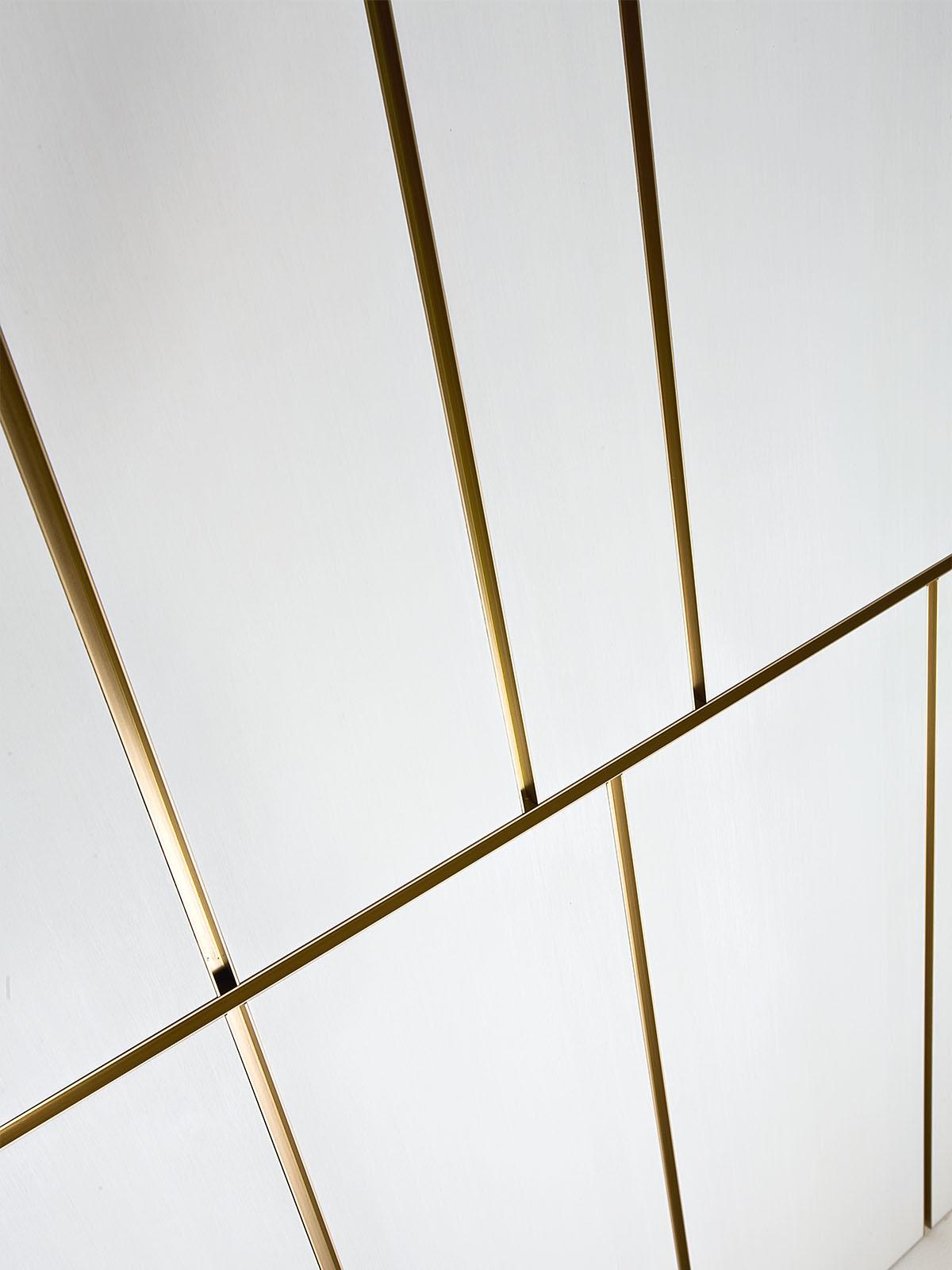
Metal inlays can support:
Precision in panel layouts and reception desk detailing
Contrast between wood, lacquer, stone or textured surfaces
Subtle brand expression through tone and linework
A more architectural look in executive offices and lobbies
Visual continuity between furniture, doors, lighting and wall systems
Stone composites and natural stone surfaces bring a different type of value. They add visual weight and a sense of permanence. For reception desks, hospitality host stands and boutique counters, stone or stone-inspired surfaces can make the central millwork element feel grounded and substantial. In many commercial interiors, this is exactly what the space needs: a focal point that feels durable, expensive and built into the architecture rather than placed into the room as an afterthought.
Natural stone can be especially effective in premium feature areas. It may not be necessary for every surface, but it can have strong impact when used selectively. A stone reception counter, marble-inspired wall feature, stone composite side panel or integrated surface detail can raise the perceived value of the entire room.
Luxury commercial surfaces may include:
Metal inlays for precision, contrast and branding
Stone composites for visual weight and durability
Natural stone for premium reception or feature areas
Marble-inspired surfaces for lobbies, restaurants and hospitality settings
Brass, bronze, dark metal or brushed-metal details for refined interiors
Mixed-material compositions where wood, lacquer, metal and stone support one another
A deeper look at commercial interior millwork materials and costs can help clarify where premium finishes create the strongest return.
Textured panels, fabric, marble and decorative wall systems
In a commercial environment, wall panels can serve several purposes at once. They can create a focal point behind a reception desk, protect surfaces from everyday wear, improve the feeling of a conference room, frame retail displays or add warmth to a corridor. They can also conceal doors, integrate shelves or create a more continuous visual language across different parts of the interior.
Decorative wall systems can help commercial interiors by adding:
Visual depth to otherwise flat walls
Protection from everyday wear in high-contact areas
A more finished background for reception desks and seating areas
Texture behind retail displays or product walls
Acoustic comfort in meeting rooms and executive spaces
Better continuity between doors, shelving and built-in storage
A premium surface language that supports the brand identity
The most important point is that decorative wall systems should not be treated as surface decoration alone. In commercial millwork, they are part of the spatial strategy. They help determine what visitors notice first, how the room feels at eye level and how the brand is remembered after someone leaves.
Integrated lighting and technical details
In commercial interiors, integrated lighting is often used in areas where the millwork needs to make a strong impression. A reception desk may use under-counter lighting to create a floating effect. A retail display wall may use shelf lighting to highlight merchandise. A conference room may use cove lighting or backlit panels to create a calmer, more professional environment. A hospitality entrance may use subtle illumination to emphasize material texture.
Lighting can be integrated through:
Under-counter lighting for reception desks, host stands and service counters
Backlit wall panels that create depth behind logos or feature surfaces
Shelf lighting for retail displays, product walls and office shelving
Cove lighting around reception features or ceiling transitions
Lighting inside display walls, niches and branded shelving systems
Subtle illumination that reveals wood grain, stone veining or textured panels
The technical side matters as much as the visual effect. Lighting should be coordinated early because it affects wiring, panel depth, access panels, heat management, maintenance and installation sequencing. If lighting is added too late, it may lead to visible wires, awkward fixtures, shallow panels or difficult service access.
For architects, designers and contractors, this means lighting-integrated millwork should be discussed before production details are finalized. The location of power, drivers, switches, dimming controls, access points and surrounding finishes can all affect the final appearance. In a high-end commercial project, the goal is for lighting to feel natural to the millwork, not added after the design was complete.
For material inspiration, MATERIA Collection’s 2026 luxury material palette offers a useful direction for combining veneer, metal inlays, stone composites and refined surface treatments in premium interiors.
How MATERIA coordinates luxury commercial projects
Collaboration with architects, designers and contractors
In a luxury commercial project, the millwork team has to understand both the design intention and the practical conditions of the space. An architect may define the spatial concept. An interior designer may lead the finish direction. A contractor may manage site preparation and scheduling. The millwork partner has to coordinate with all of them so that the final piece fits the room, supports the design and can be installed properly.
This coordination is especially important in New York, where commercial spaces may have complex building rules, limited freight access, tight installation windows and demanding expectations for finish quality. A reception desk, wall panel system or custom cabinet wall may look straightforward in a rendering, but it has to be measured, produced, delivered and installed with precision.
A well-managed commercial millwork process should include:
Review of architectural intent and the role of the millwork in the overall space
Coordination with interior designers on material, proportion, finish and brand tone
Material and finish selection based on durability, appearance and maintenance
Custom dimensions based on site measurements and functional needs
Shop drawings or technical coordination before production
Integration with lighting, doors, surfaces, office furniture and wall systems
Delivery and installation planning around building access and project schedule
Attention to high-end detailing, transitions, reveals, seams and alignments
MATERIA Collection’s background supports this kind of coordination. Inspired by Italian design and its history, MATERIA Collection was founded by Yana Pojidaeva and opened in 2016 with a display of wall paneling, custom surfaces, furniture, kitchen cabinets, lighting and doors. With more than 15 years of combined design-industry experience, MATERIA works with prominent designers on bespoke projects around the world, including private residences, luxury apartments, refined restaurants, corporate offices and boutiques.
That experience matters because commercial interiors often require more than one category at the same time. A reception area may involve wall panels, a desk, doors and lighting. An executive office may need a desk, shelving, cabinetry, sideboards and wall treatments. A boutique may require display walls, counters, lighting and material continuity. The more connected these pieces are, the more important coordination becomes.
From concept to installation
Luxury commercial interiors move through stages. Skipping or rushing those stages can lead to misaligned finishes, late technical problems, awkward proportions or installation issues. A clear process helps everyone understand what decisions need to be made and when.
A practical custom millwork process often includes:
Initial consultation to understand the project type, location, goals and timeline
Project goals and space review to identify the most important commercial zones
Material direction based on brand identity, traffic, durability and visual impact
Design coordination with architects, designers, owners and contractors
Technical development for dimensions, details, lighting, storage and installation needs
Production based on approved specifications and finish direction
Delivery planning that accounts for building access and project sequencing
Installation with attention to alignment, protection and final fit
Final review to confirm that the millwork performs visually and functionally
This process is not only administrative. It directly affects the quality of the finished interior. A reception desk that is planned early can align with flooring, lighting, signage and wall panels. A conference room wall that is developed technically can hide wiring and support integrated screens. A retail display wall that is coordinated properly can fit the merchandise, lighting and customer flow.
For commercial decision-makers, the value of this process is clarity. It helps avoid the common problem of making expensive interior decisions in isolation. Instead of choosing furniture, then discovering that storage is missing, or selecting wall panels, then realizing that lighting was not planned, the project can move as a connected system.
For a broader breakdown of this process, see MATERIA Collection’s guide on how luxury interior projects move from concept to installation.
When to choose custom millwork instead of standard furnishing
Custom millwork is not necessary for every commercial space. Some projects need speed, flexibility or a lower initial cost more than permanence. However, when the interior has to influence client perception, support a premium brand or solve several functional problems at once, custom millwork often becomes the stronger long-term choice.
The decision should not be based only on whether custom millwork looks better. It should be based on what the space needs to accomplish.
Choose custom millwork when the space must solve several problems at once
Custom commercial millwork is usually worth the investment when the project needs more than a decorative upgrade. It is strongest when the space needs exact fit, visual impact, built-in function, premium durability and brand expression at the same time.
A reception desk is a good example. It cannot be judged only as a piece of furniture. It has to welcome visitors, support staff, conceal technology, match the brand, fit the entrance and hold up under daily use. A standard desk may solve one or two of those needs, but custom reception desk millwork can address all of them in one designed element.
The same logic applies to other commercial spaces:
A retail wall must display products beautifully while withstanding daily customer interaction
An executive office needs concealed storage, visual authority and a calm working environment
A conference room needs technology integration, acoustic comfort and a polished presentation wall
A boutique or restaurant needs a memorable interior identity that feels connected to the brand
A lobby or reception area needs durability, proportion and a strong first impression
A showroom needs flexible display, refined lighting and material consistency
Custom millwork is also valuable when a space has difficult dimensions. Many NYC interiors include narrow rooms, irregular walls, columns, mechanical constraints, unusual ceiling heights or limited storage. Standard furnishing may leave awkward gaps or force compromises, while custom millwork can be designed around the actual conditions of the site.
The investment is strongest when the millwork affects a high-visibility or high-use area. A private back-office storage cabinet may not need the same level of customization as a reception desk or retail display wall. The question should always be: will this element influence how people experience the business, use the space or perceive the brand?
Standard furniture may be enough when flexibility matters more than permanence
Standard furniture and mass-produced cabinetry still have a place in commercial interiors. They may be appropriate for temporary offices, lower-budget areas, short leases, fast move-ins or spaces that do not define the customer experience. If a company expects to relocate soon, test a new layout or furnish a back-office area quickly, standard furniture may provide the flexibility needed.
Standard furnishing can work well when:
The lease is short or the future layout is uncertain
The space is not client-facing
The area does not require exact built-in storage
Budget is the main constraint
Speed matters more than long-term finish quality
The furniture may need to move or be reconfigured often
However, when the space is client-facing, brand-sensitive or architecturally important, custom millwork often gives a stronger long-term result. A standard cabinet may hold items, but it may not improve the room. A mass-produced reception desk may provide function, but it may not communicate the quality of the business. A generic display shelf may show products, but it may not help them feel valuable.
Residential customization, such as closets, bedrooms or home bars, follows a different set of priorities. Commercial millwork has to consider public use, brand perception, operational workflow, durability and coordination with other professionals. That difference is important. A business interior is not only about personal taste. It is about how the space performs for clients, teams, guests and buyers.
For budget context on broader project planning, MATERIA Collection’s guide to commercial interior design fees in New York can help frame how design, materials and project scope influence commercial interior decisions.


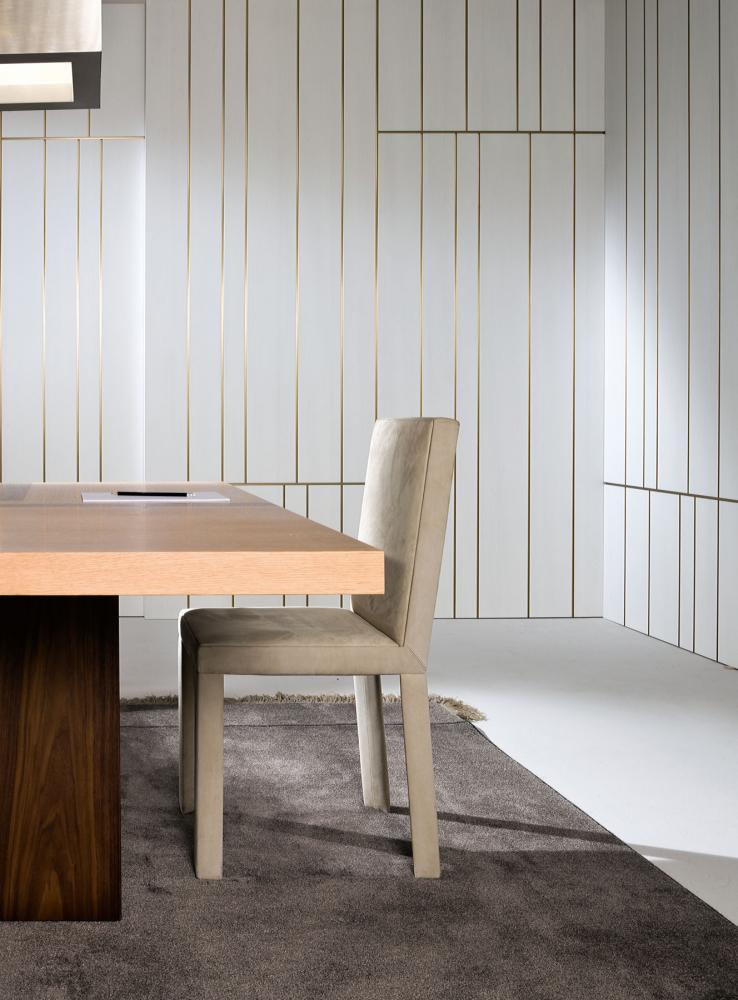
Custom commercial millwork in NYC for branded business interiors
The strongest NYC commercial interiors are not built from isolated pieces. They are composed through surfaces, proportions, finishes, lighting, storage and brand-specific details. A reception desk, office wall, display system or conference-room built-in should not feel separate from the rest of the interior. It should help organize the space and express the business behind it.
This is why custom commercial millwork NYC projects are so valuable for businesses that need more than a furnished room. They allow the interior to become part of the brand experience. The materials, lines, built-ins, lighting and details can all communicate whether the company is discreet, bold, creative, established, luxurious, modern or hospitality-driven.
Custom millwork can support many high-value commercial applications, including:
- Reception areas that establish the first impression
- Executive offices that communicate authority and calm
- Conference rooms that support presentation and privacy
- Retail display walls that make products feel more valuable
- Restaurants that need atmosphere, durability and memorable surfaces
- Boutiques that require brand-specific display and material identity
- Corporate interiors that need consistency across public and private areas
- Luxury showrooms that depend on refined presentation
- Hospitality spaces where guests remember the environment as part of the experience
MATERIA Collection is positioned for businesses that want Italian design, bespoke millwork, wall panels, custom surfaces, luxury furniture, lighting and refined installation support within a cohesive commercial project. The advantage is not only access to beautiful products or finishes. It is the ability to think about the commercial interior as a complete environment, where reception areas, offices, retail walls, lighting, doors and built-in systems work together.
If you are planning a reception area, executive office, retail interior, branded showroom, restaurant feature wall or full commercial interior in New York, MATERIA Collection can help translate the project vision into custom millwork, Italian wall systems, luxury office furniture, unique finishes and made-to-measure solutions.
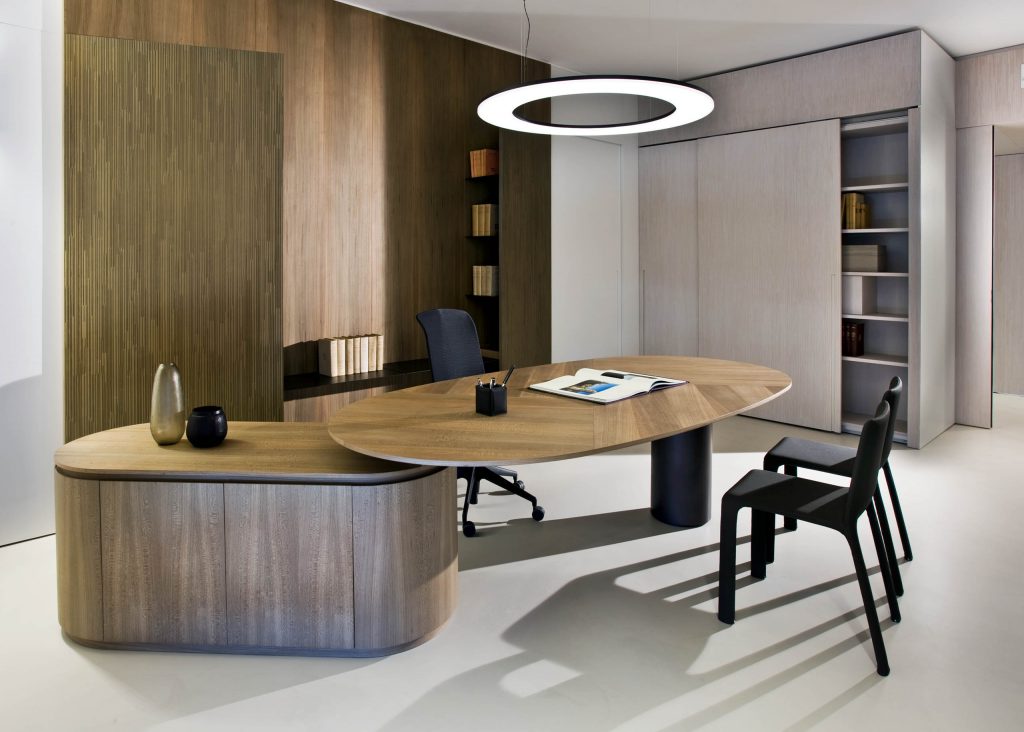
Frequently Asked Questions - Custom Commercial Millwork in NYC
What types of commercial millwork are most common in NYC projects?
Common examples include reception desks, built-in office storage, wall panel systems, conference-room cabinetry, retail displays, feature walls, branded counters and executive shelving.
Is custom commercial millwork worth it for a small NYC office or boutique?
Yes. In smaller NYC spaces, custom millwork can make every inch more useful while improving storage, branding and the overall visual quality of the interior.
What materials work best for high-end commercial millwork?
Popular high-end options include veneer, lacquer, metal inlays, stone composites, marble-inspired surfaces, textured panels, fabric panels and integrated lighting.
How early should custom millwork be planned in a commercial project?
Custom millwork should be planned early, because dimensions, wiring, lighting, wall conditions and installation details all affect the final result.
Can MATERIA Collection support retail, office and hospitality interiors in New York?
Yes. MATERIA Collection works on bespoke commercial interiors, including offices, boutiques, refined restaurants and branded hospitality spaces such as the Buddha-Bar project in New York.