Lux Veneer, Metal Inlays & Stone Composites: Material Palette for 2026

Lux Veneer, Metal Inlays & Stone Composites: Material Palette for 2026

The high-end interiors of 2026 are shaped by a convergence of restraint, material literacy, and durability. Luxury clients want surfaces that feel composed rather than loud, age gracefully, and can be repeated across large programs without compromising character. Lux veneer, metal inlays, and stone composites meet these expectations from both an aesthetic and technical standpoint.

Material Primary Purpose Best Applications
Lux Veneer Adds architectural warmth and refined grain consistency with controlled patterns and finish sheen. Wall paneling, flush pivot and swing doors, closet/cabinet fronts, fine furniture, integrated portals.
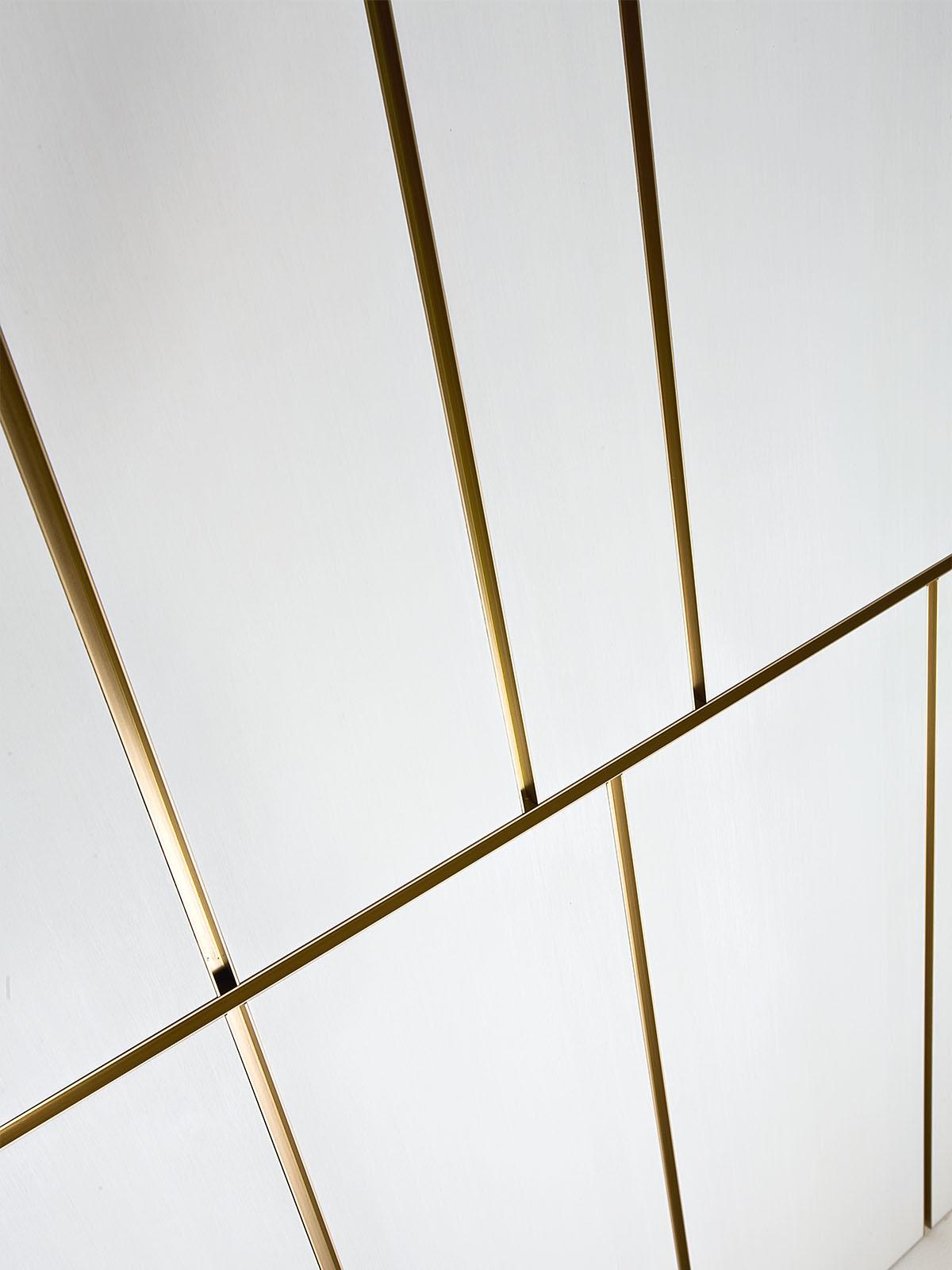
Metal Inlays Establishes visual rhythm, proportion, and edge protection with quiet linear geometry. Accent lines in doors and wall treatments, console and table borders, office desk detailing.
Stone Composites Provides durable, non-porous surfaces with monolithic aesthetics for high-use environments. Kitchens, bathrooms, fireplace surrounds, large wall panels, conference and dining tops.
Craft the Interior That Tells Your Story
Explore the full spectrum of Italian-inspired materials and custom surfaces. From walls to furniture and bespoke millwork solutions, build a palette that defines quiet luxury with confidence and precision.
Explore Materia Collection

Lux veneer: warmth, precision, repeatability

Lux veneer is not a shortcut or a compromise; it is a specification choice that delivers the visual and tactile sophistication of real wood with far greater controllability.

At its core, veneer is a thin layer of genuine timber sliced from a log and pressed onto a stable substrate. This construction separates the aesthetic surface from the structural core, unlocking a series of advantages that matter on both boutique residences and multi-site hospitality programs.

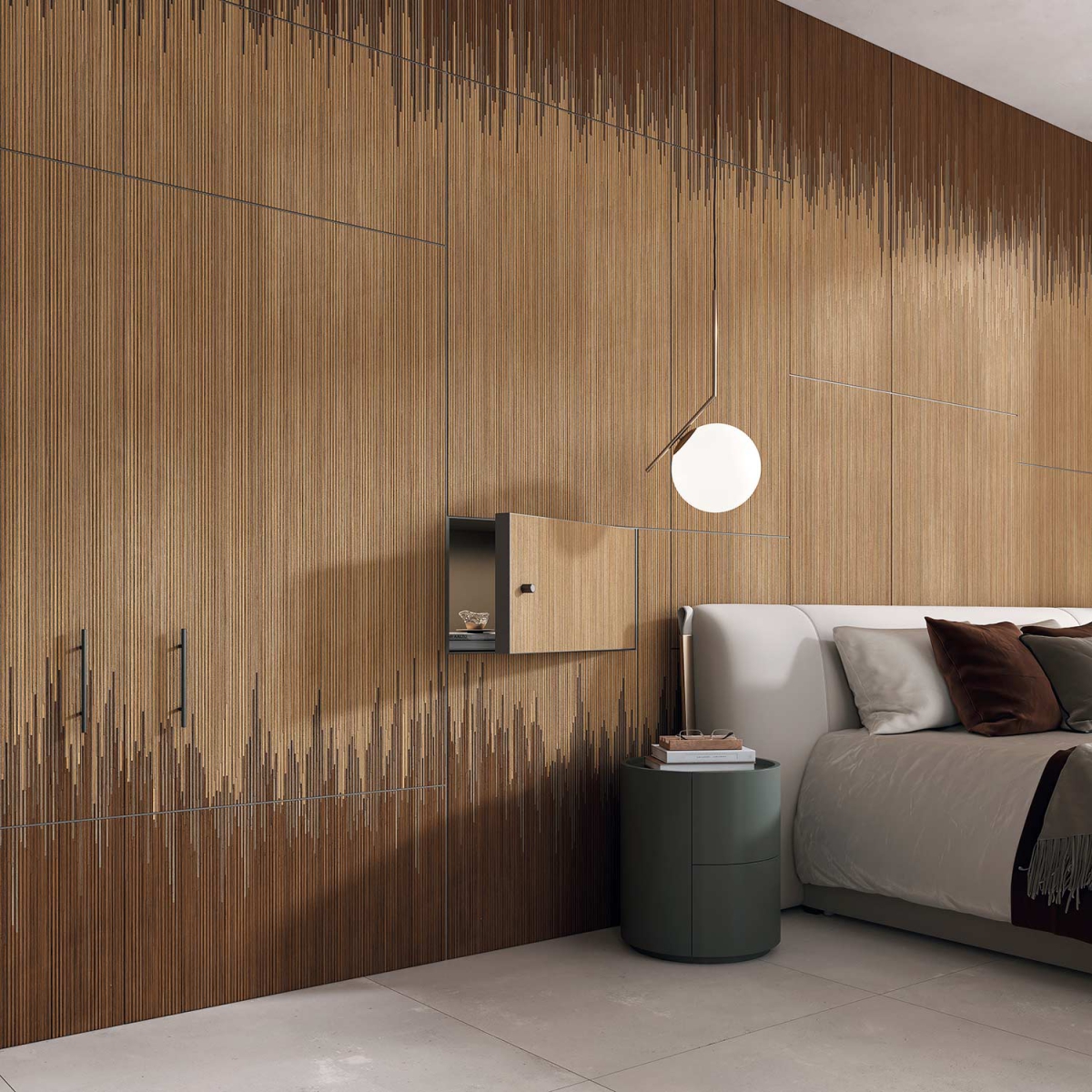
From a design standpoint, veneer allows you to orchestrate grain as if it were a graphic pattern. Sequenced flitches can be laid out so that a wall run reads as one continuous field, a door bank moves with a consistent vertical rhythm, or an entire room wraps in book-matched symmetry. Because sheets are numbered during slicing, you can plan how the eye travels: calm, slip-matched horizontals in a living room, or a high-energy book-matched chevron in a dining gallery.

Practical benefits to emphasize in specifications

  • Control over tone and grain for long, continuous visual fields

  • Reduced weight and movement compared to solid wood assemblies

  • Stable substrates that support tight tolerances and complex geometries

  • Efficient use of premium timber with the warmth of genuine wood

  • Compatibility with modern fabrication: CNC, kerfing, and concealed hardware

Species & looks for 2026

2026 leans into calm, tonal palettes with depth rather than gloss. The most specified options balance familiar warmth with disciplined grain structure, allowing metal and stone elements to read clearly against them.

  • White oak (rift and quartered): The reference species for quiet luxury. Rift cut delivers straight, parallel grain with minimal figure-perfect for serene wall planes and door banks. Quartered introduces medullary ray fleck for subtle shimmer under grazing light. Both accept bleaching, fuming, or smoked treatments without losing discipline.

  • American walnut: A richer, moodier counterpoint to oak. Straight-grain and modest cathedral variations suit studies, primary suites, or hospitality lounges. Tonal stability can be enhanced with toned lacquer to unify panels from different flitches.

  • Eucalyptus: Finely textured, with a refined, silky sheen when finished in satin. Works beautifully in spaces that need gentle reflectivity without high gloss. Smoked treatments deepen the color toward espresso without losing the species’ tight grain.

  • Smoked and bleached options: Smoking darkens and enriches pore structure, ideal for brass or bronze accents. Bleaching cools undertones for gallery-like interiors, pairing well with nickel or stainless details.

  • Reconstituted veneers: When absolute color consistency is required across phases or multiple floors, engineered veneers reproduce oak or walnut tones with near-zero batch drift. These are especially useful for multi-unit programs or long schedule buffers where replacement sheets must match existing installs.
Cuts, matches & seam strategy

Veneer isn’t just a material; it’s a layout exercise. Your cut, match, and seam plan will determine whether a space feels serene or restless.

  • Cut

    • Rift: Boards are sliced at an angle to the growth rings, producing straight grain with minimal figure. Best for walls, portals, and closet faces where you want unbroken vertical calm.

    • Quartered: Boards are sliced perpendicular to the growth rings, creating a linear grain with ray fleck that shimmers subtly. Ideal for feature doors and areas with planned grazing light.

  • Match

    • Slip-match: Consecutive sheets placed in the same orientation. The result is a quiet, linear flow with minimal “V” cathedrals. Perfect for long corridors and continuous cladding.

    • Book-match: Every other sheet is flipped to mirror the previous one, creating symmetrical “butterfly” figures. Use strategically on focal walls or furniture where you want controlled energy.

    • End-match (select furniture & limited wall moments): Sheets matched end-to-end to extend figure vertically-use sparingly to avoid visual “seams” cutting the room’s height.

  • Seam strategy

    • Datum alignment: Establish a horizontal or vertical datum that governs all seam locations. Door tops, reveal lines, and furniture heights should snap to this.

    • Panel width tuning: Adjust panel widths to avoid slivers around portals and corners. A repeating module (e.g., 450/600/900 mm) keeps field seams legible and reduces cut waste.

    • Corner choreography: For monolithic effects, miter veneer at outside corners and align grain through the apex. On inside corners, consider a slim shadow reveal to manage tolerances discretely.

Finish systems & touch

Finish is where appearance meets maintenance. The goal is to choose a system that reads exactly as intended in the project’s lighting while supporting realistic care routines.

  • Ultra-matte, open-pore finishes: Tactile, low-gloss membranes that leave the wood feeling like wood. Excellent on rift oak or bleached ash where you want a soft, architectural read. Pair with edge protection or gently radiused edges in high-touch zones to avoid burnishing.

  • Satin polyurethane and modern 2K systems: A subtle sheen that deepens color and provides strong everyday resistance. Often the best balance for kitchens, dressing rooms, and hotel guest rooms where cleaning frequency is high.

  • High-gloss polyester: A specialty look for select furniture or feature walls. Demanding in fabrication and touch-up; specify only where controlled lighting and minimal direct handling are expected.

  • Ceruse and pore treatments: Limed or cerused finishes emphasize open grain, creating a cross-laminated visual texture that pairs beautifully with brushed brass. Works best on quartered oak where rays and pores are pronounced.
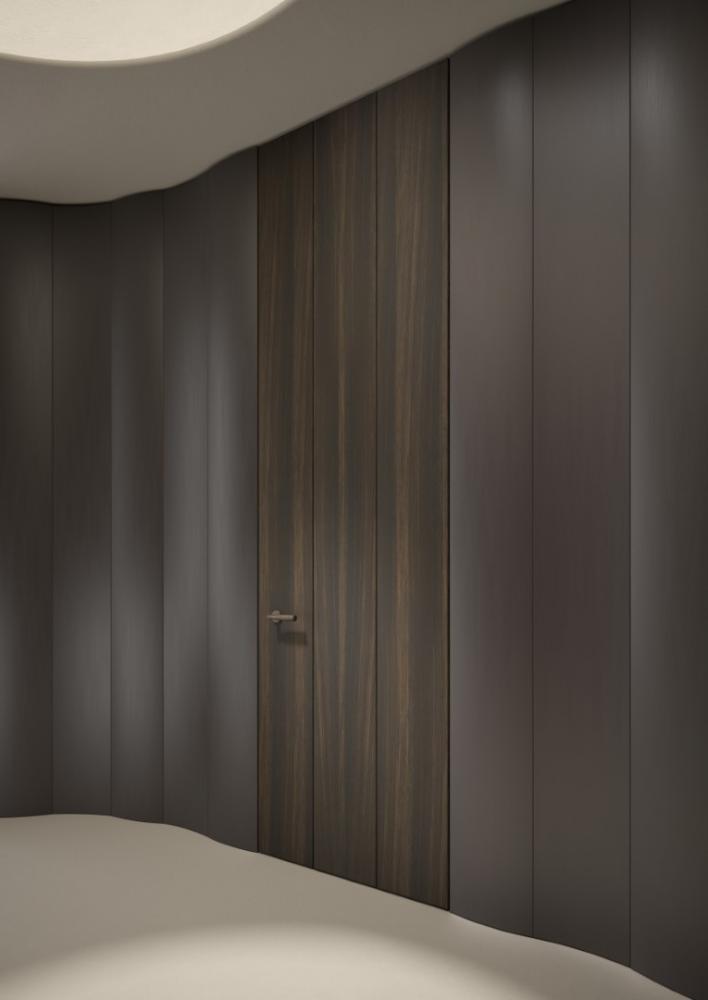
  •  
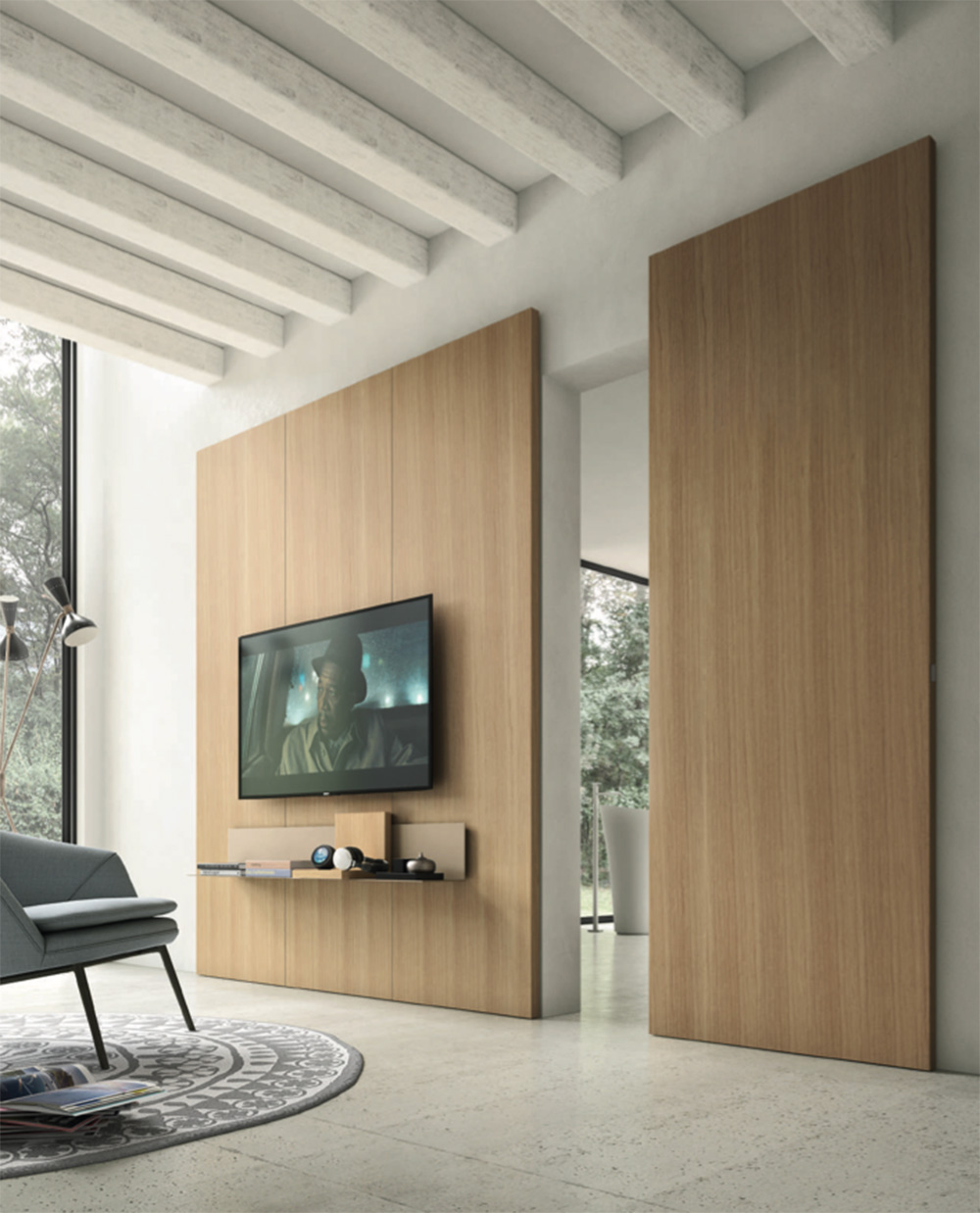
Walls with Architectural Intention
Define each room with surfaces that hold structure, proportion, and crafted elegance. Veneer systems, detailed reveals, and integrated doors—engineered to perform and designed to impress.
View Wall Systems

Metal inlays: linework that elevates volume

Metal inlays are the quiet geometry that gives millwork and portals their authority. Material choice should follow the room’s tone and the intended patina behavior.

  • Alloys: Brass and bronze for warmth; stainless and aluminum for cooler schemes and sharper reflectivity.

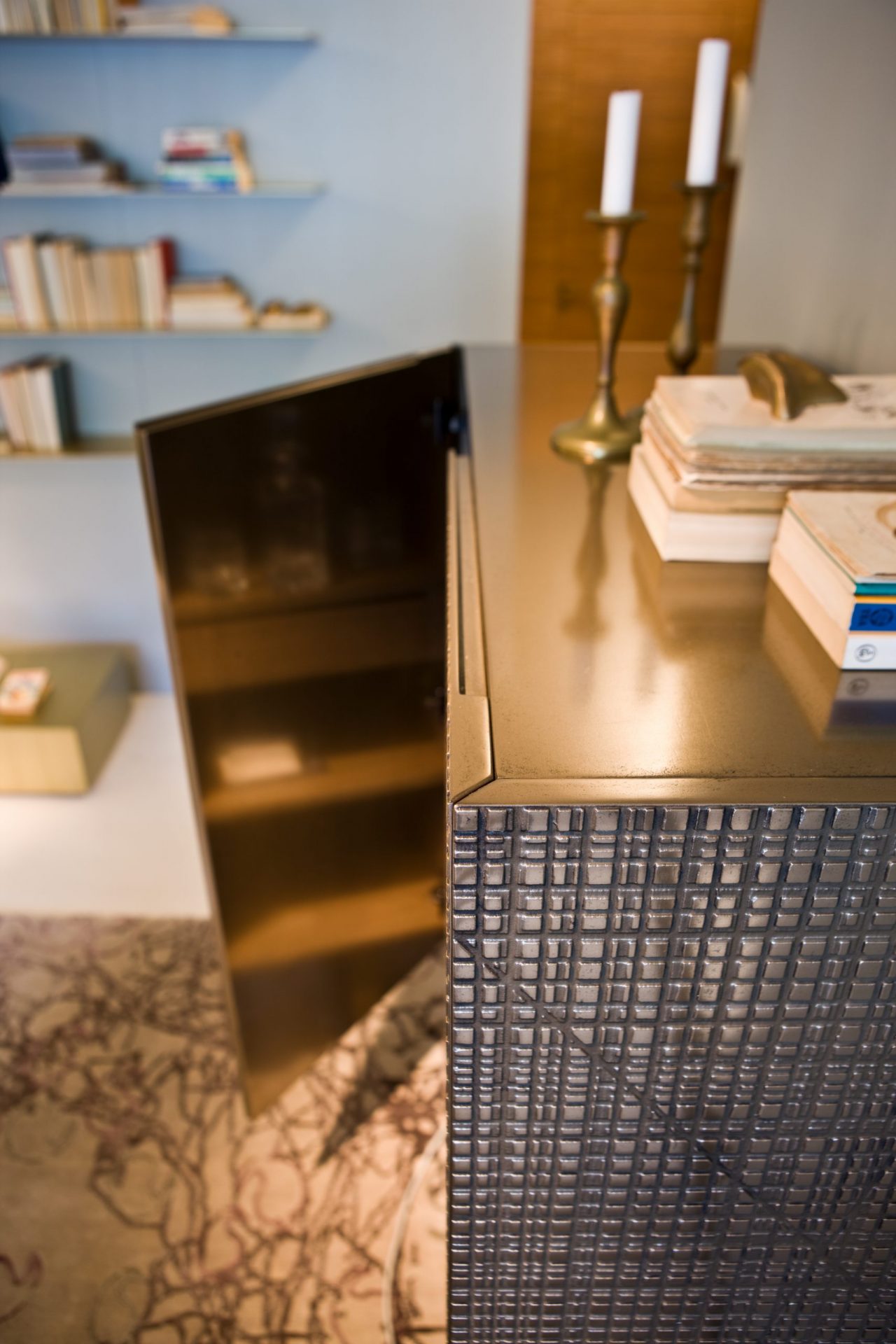
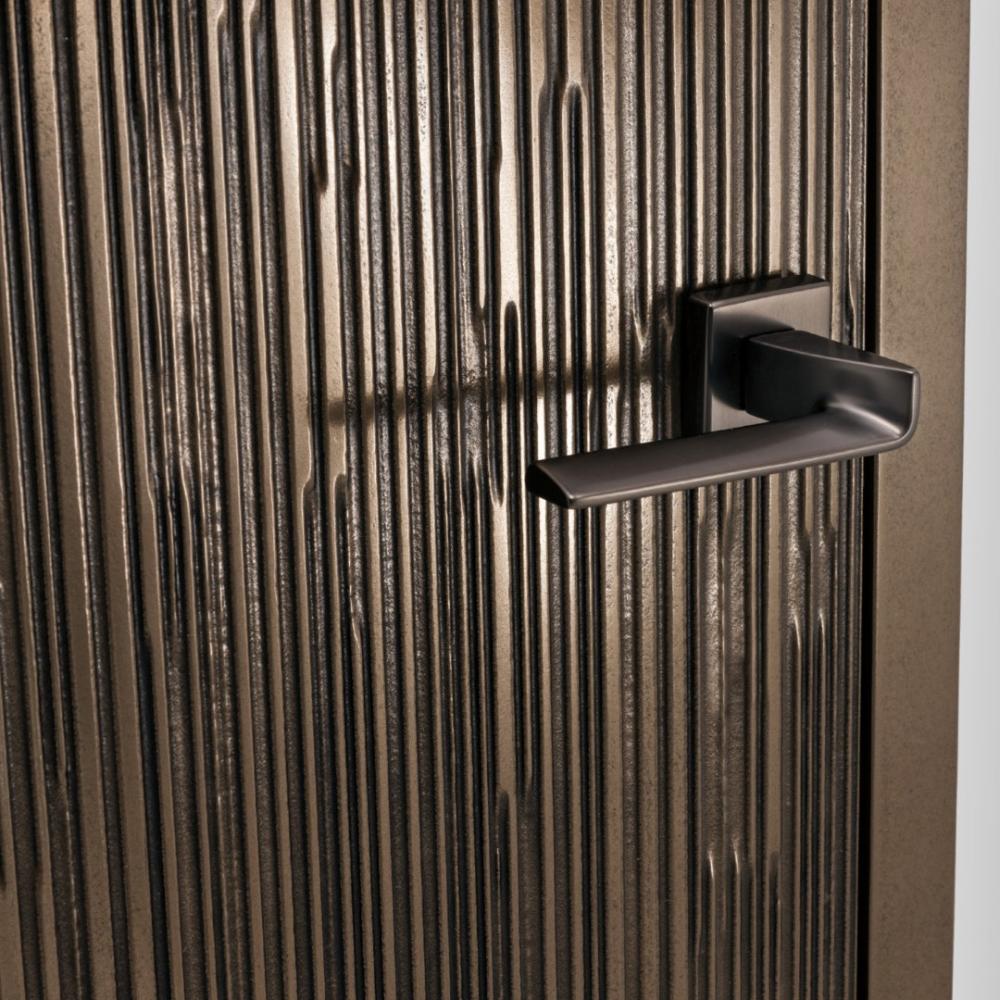
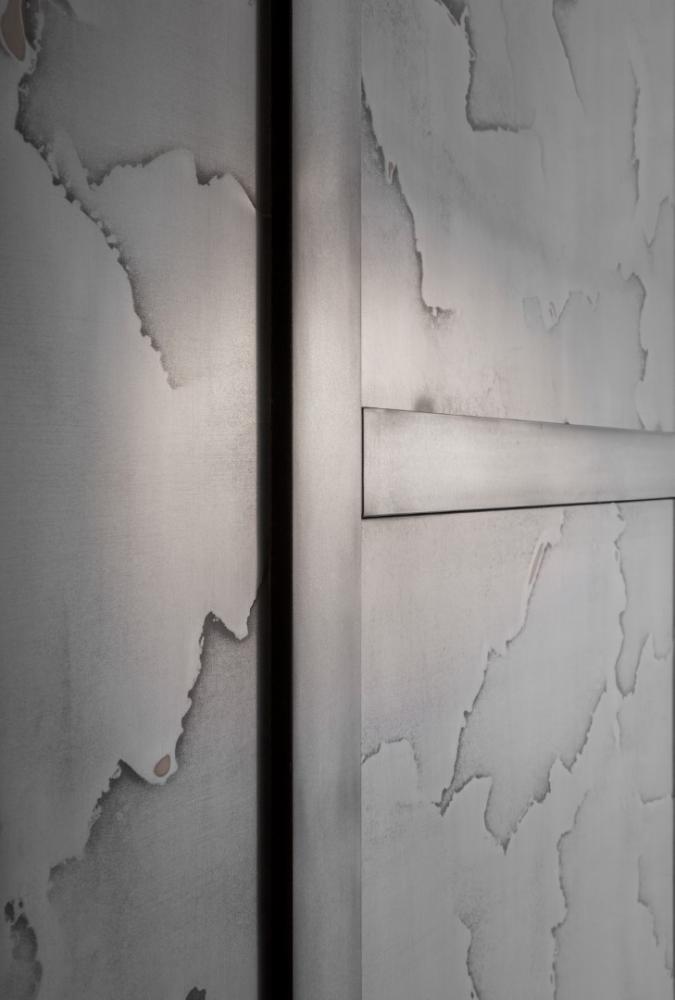
  • Surface treatments: Brushed or satin defaults minimize fingerprint visibility. PVD/titanium-nitride coatings reproduce brass and bronze hues on stainless, improving durability where clients prefer a stable color. Traditional patinations produce living finishes that evolve; sealed options freeze a moment in time.

  • Living vs. sealed: Living finishes develop character and soften edges visually-ideal for intimate spaces and residential touchpoints. Sealed finishes preserve a new-coin look for corporate or high-traffic hospitality areas.

Finish family alignment: Coordinate inlays with hardware, lighting, and plumbing so that the room reads as one decision, not three similar guesses.

Fabrication techniques & tolerances

The elegance of an inlay is measured in tenths of a millimeter. Good drawings and disciplined shop practice are non-negotiable.

  • Kerf-cut channels: CNC-routed kerfs keep width and depth consistent. Specify tolerances for kerf width relative to inlay stock and adhesive bed to avoid squeeze-out or rattle.

  • Adhesive strategy: High-strength epoxies provide gap-filling and long open time; cyanoacrylate (CA) can be used for pinning short sections during layout. Heat and finish chemistry must be compatible-confirm with the finisher before freezing the spec.

  • Flush-sand finishing: To achieve a true “cast-into-wood” look, the inlay is set slightly proud and sanded flush before final coats. On open-pore finishes, plan for pore filling near the inlay so the metal sits in a crisp channel rather than a soft trough.

  • Movement allowances: Wood moves; metal doesn’t. Break long inlay runs at natural panel joints, or introduce hairline “breather” joints at datum shifts. On doors, keep inlays clear of hinge and latch pockets to avoid stress concentrations.

  • Edge governance: Where inlays terminate at panel edges, chamfer or cap the metal to avoid sharp corners and to resist delamination during cleaning.

Patterns & design language

Linework should clarify the form, not decorate it. The best patterns read as proportion devices.

  • Linear banding: Single or double rails that align with plinths, chair lines, or door latch heights.

  • Grids: Useful on large wall fields to set a subtle cadence-keep module sizes generous to avoid visual noise.

  • Chevrons and borders: High-impact moves best reserved for feature walls or select furniture faces; maintain comfortable field-to-border ratios (e.g., 1:6 to 1:10) so the motif frames rather than consumes the surface.

  • Portal emphasis: On doors, a slim perimeter inlay can announce hierarchy without adding bulk, especially effective on tall pivots.

Applications & detailing

Metal inlays tie the entire palette together when applied with restraint.

  • Luxury Doors:
    A 3–6 mm brass fillet can track latch height across a hall, turning a row of flush leaves into a disciplined sequence. On extra-tall pivots, vertical inlays elongate the proportion without adding width. Keep clear of hardware pockets and seals.

  • Wall Treatments:
    Use linework as a datum to align artwork rails, sconces, and furniture heights. On feature walls, a large, slow grid creates a gallery feel without competing with art or stone portals.

  • Fine Furniture:
    Consoles and tables gain refinement with inlay borders that echo door banding. For tops, coordinate with stone edges so metal never interrupts a miter or waterfall.

  • Office Furniture:
    On desks and credenzas, inlays can double as cable-management cues or discreet pull indicators when paired with concealed hardware.

Stone composites: ultra-compact performance for modern living

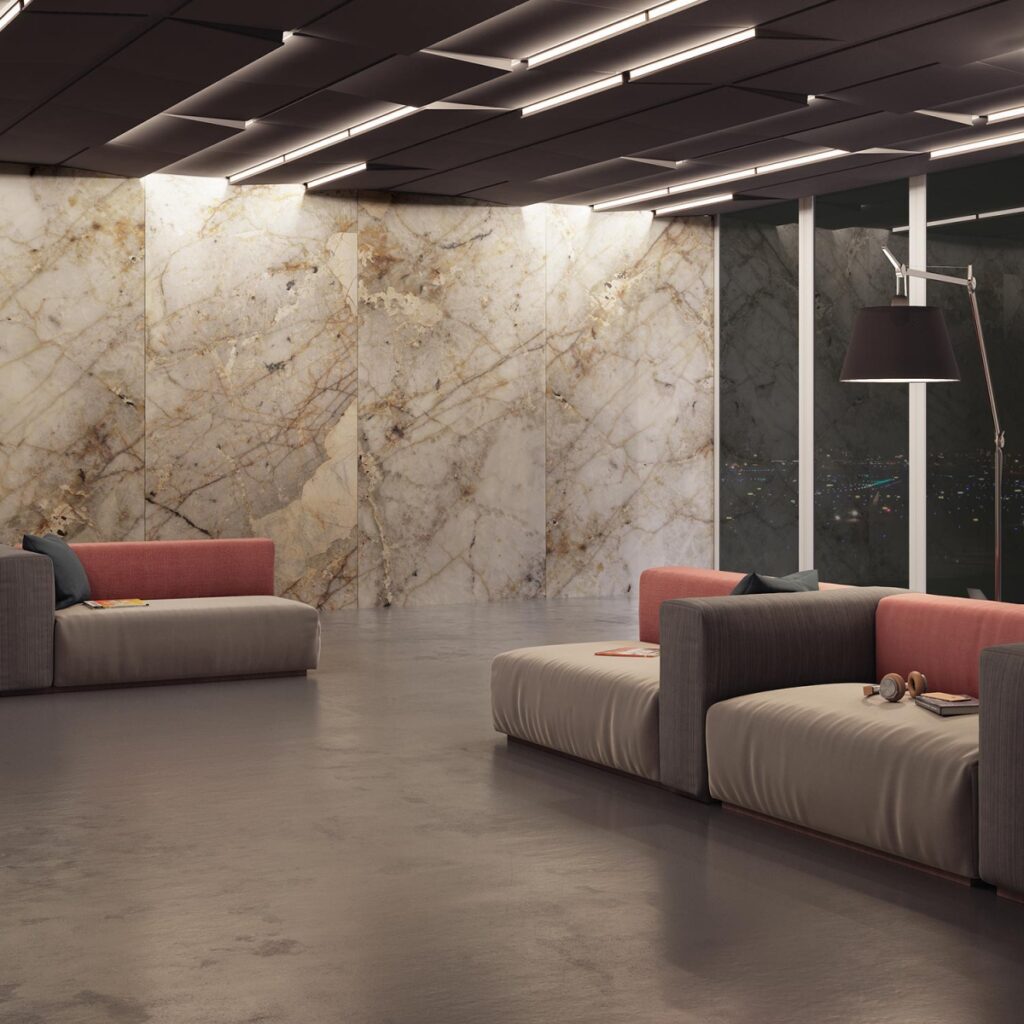
Sintered stone is a category of engineered slab made by fusing mineral particles under extreme heat and pressure. The result is a dense, non-porous surface that resists staining, scratching, and UV exposure far better than many natural stones, while offering large formats suitable for seamless planes. For kitchens, baths, cladding, and fireplace surrounds, it solves the designer’s perennial conflict between sculptural purity and daily durability.

Key characteristics include color and veining consistency from slab to slab, excellent thermal shock resistance for cooktop adjacency, and minimal water absorption-critical in showers and spa zones.

Beyond sintered stone

Other engineered surfaces earn a place in the 2026 palette depending on use case and client preference.

  • Engineered quartz: Highly stain-resistant, widely available, and offered in colorways that range from quiet cement looks to convincing marbles. Less heat tolerant than sintered stone-protect near cooktops and fireplaces.

  • Large-format porcelain/ceramic slabs: Extremely thin profiles with robust surface hardness. Excellent for wall cladding and shower surrounds; surfaces are often structured to improve slip resistance in wet areas.

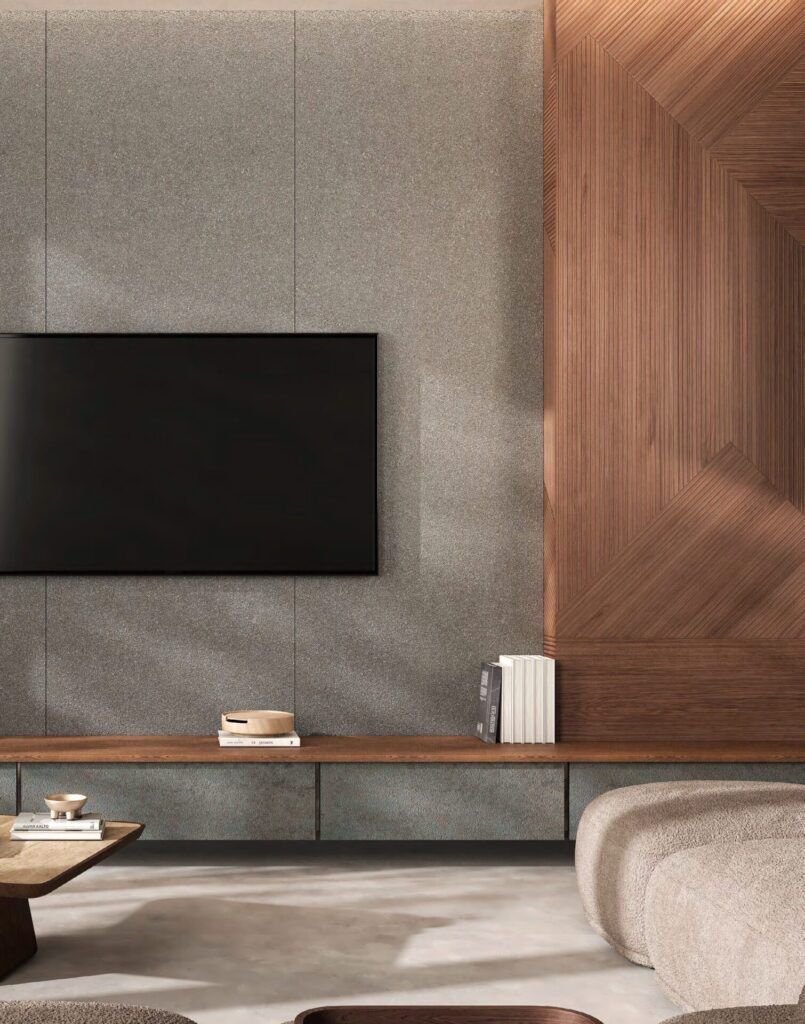
  • Hybrid strategies: In kitchens, use sintered stone or porcelain behind heat and UV exposure, and deploy engineered quartz on island interiors where tactile warmth and easy repairability matter more than thermal extremes.

Applications & detailing

Stone composites complement veneer and metal with quiet strength.

  • Kitchen & Appliances:
    Worktops, full-height splash panels, integrated drainboards, and appliance paneling where heat and moisture converge. Waterfall edges tie islands to the floor, while thin shadow reveals keep the composition light. Coordinate with metal inlays only on fixed verticals-avoid inlay on horizontal tops that see knives and cookware.

  • Luxury Bathroom:
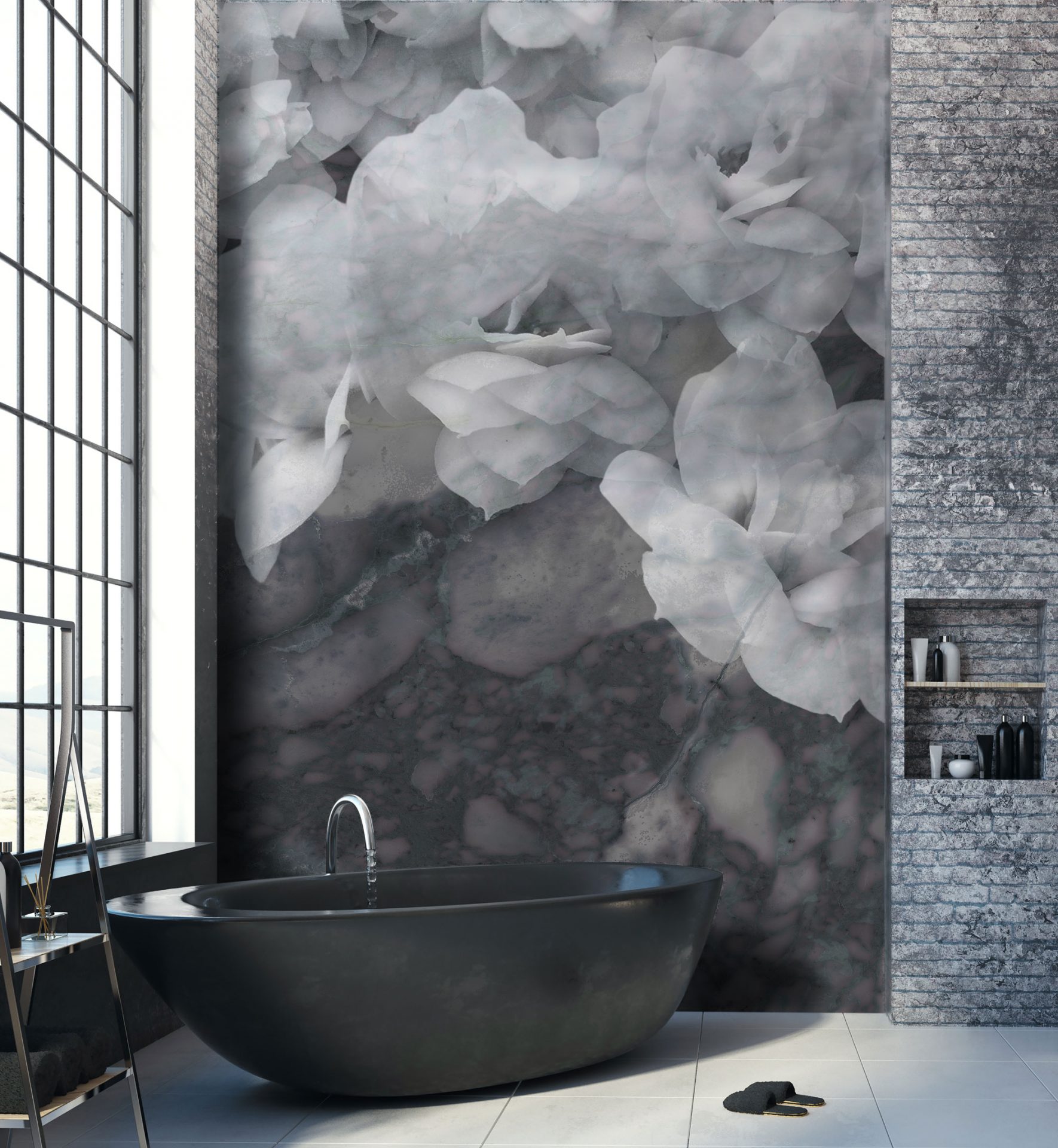
    Vanities, shower walls, tub aprons, and bench seats benefit from non-porosity and color fidelity. Specify textured finishes for floors in wet zones and maintain a consistent joint module that aligns with wall lighting and mirrors.

  • Wall Treatments:
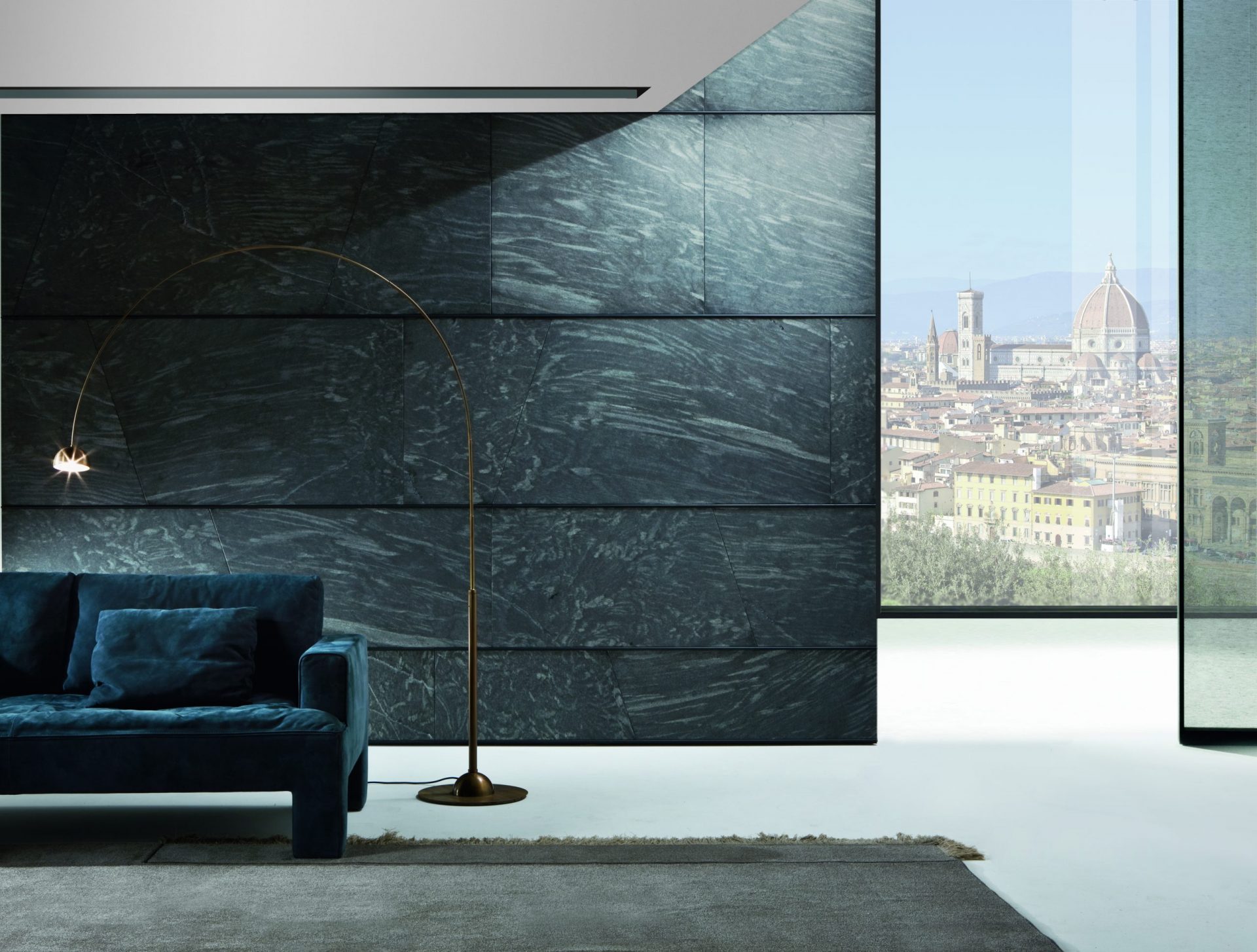
    Large monolithic fields behind a fireplace or in a dining niche set a sculptural counterpoint to veneer. Introduce a 3–6 mm shadow gap to articulate the transition to wood without resorting to bulky trims.

  • Office Furniture:
    Conference tables with stone composite tops resist coffee, ink, and abrasion. Pair with veneer aprons and inlaid alignment lines to carry the room’s datum across furniture and wall systems.

Sustainability cues

Durability is sustainability you can see. Because sintered stone and related composites resist staining, UV degradation, and scratching, they reduce replacement frequency and the resource footprint associated with frequent refinishing. Pairing these surfaces with efficient veneer usage and recyclable metal alloys creates a palette that is materially responsible without aesthetic compromise.

To close the loop, provide clients with a simple care plan: pH-balanced cleaners, microfiber cloths, and avoidance of harsh abrasives. In hospitality or multifamily settings, this guidance locks in appearance standards and simplifies housekeeping. On long programs, document selected colorways and finishes so re-orders match completed phases, avoiding waste from off-tone substitutions.

Why these three materials now

Design drivers: coherence, restraint, and proportion

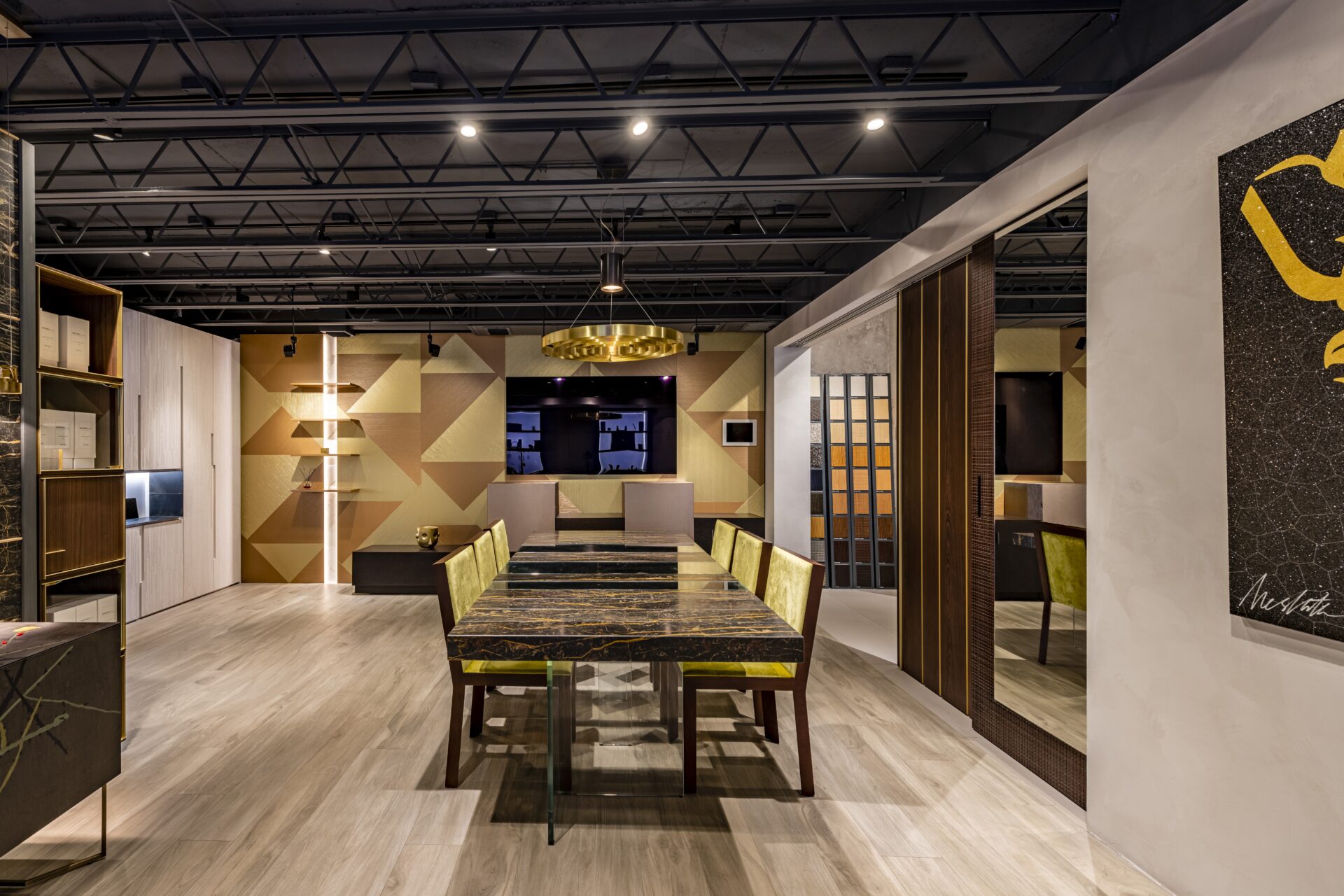
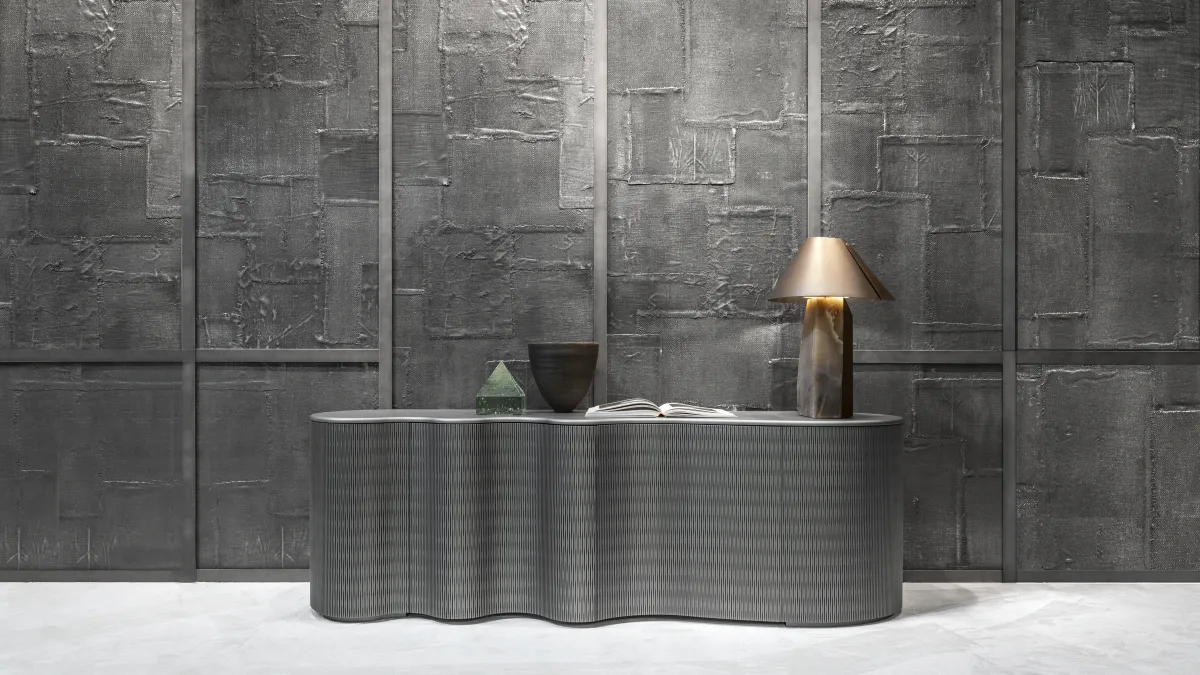
The most compelling luxury interiors of 2026 are unified rather than busy. Veneer offers the visual continuity required for monolithic walls and door runs; metal inlays provide proportion lines that guide the eye and break large planes with subtle precision; stone composites create calm, planar surfaces that anchor kitchens, bathrooms, and fireplaces. The combined effect is clarity of form-quiet rooms with strong structure-achieved through controlled repetition of materials that are inherently compatible.

Technical drivers: performance, precision, and repeatability

  • Performance: Stone composites deliver non-porous, stain-resistant surfaces that tolerate heat, water, and heavy use. Veneer systems, when correctly specified on stable substrates with appropriate finishes, remain dimensionally consistent and resistant to telegraphing or checking. Metal inlays add mechanical reinforcement to vulnerable edges and establish crisp transitions that survive daily handling.

  • Precision: CNC-routed kerfs for inlays, calibrated substrates, and sequenced veneer flitches allow millimeter-level control over joints, reveals, and grain direction. Large-format stone slabs minimize seams and enable book-matching or vein-matching at miters.

  • Repeatability: Multi-residence or multi-site hospitality programs require finishes that can be replicated accurately over time. Veneer species and cuts can be standardized; metal finishes can be held within tolerance via PVD or controlled patination; engineered stone colors and textures maintain batch-to-batch consistency that natural stone cannot guarantee at scale.

Logistic drivers: availability, lead-time control, and risk management

Large developments and extensive renovations succeed when materials are available on predictable schedules. Veneer programs can be secured through early flitch reservations, ensuring visual match across phases. Metal inlays, sourced as strip stock or fabricated to order, are less exposed to quarry variability. Stone composites, produced in controlled environments, offer reliable lead times and more flexible re-order capacity than rare natural stones. Together, these characteristics reduce schedule risk, change-order exposure, and client dissatisfaction caused by finish mismatches.

Furniture That Completes the Architecture
Select sculptural pieces crafted with refined veneers, metal accents, and stone elements. Sideboards, consoles, and wall units designed to elevate everyday living.
Shop Fine Furniture

Frequently Asked Questions - Material Palette for 2026

Lux veneer is made from real, premium-grade wood sliced directly from the log, while standard veneer may use lower-grade or less consistent timber. Unlike laminate, which uses printed or synthetic patterns, lux veneer carries the authentic grain, pore texture, and natural tonal variation of real wood. It is pressed onto stable substrates that allow for precise alignment, crisp reveals, and large-scale sequencing. Because flitches are numbered during production, designers can plan how grain flows across walls, doors, and cabinetry to achieve a unified visual field. Lux veneer delivers the warmth and pedigree of solid wood with significantly better stability and more efficient use of material resources.

When correctly specified and finished, lux veneer is highly durable. The wear layer is typically thick enough to withstand years of use without thinning or delaminating. Solid wood is prone to seasonal movement, cupping, and checking, especially on wide panels. Veneer, bonded to a stable core, resists those issues and maintains tight seams and flatness over time. Proper edge protection, acclimation prior to installation, and maintenance with non-abrasive cleaners extend lifespan significantly, often exceeding that of solid lumber installations in the same environment.

Metal inlays can be exceptionally robust when designed with appropriate stock thickness, adhesive bonding, and edge detailing. In high-touch zones such as closet pulls or chair-line panels, the inlay becomes an actual protection strip for the veneer edges beneath. To enhance longevity, designers can select brushed or satin surfaces that diffuse contact marks and choose sealed finishes in busy hospitality or corporate settings. In residential environments, many clients welcome the natural patina of living metals such as brass and bronze, which evolve in character as they age.

Maintenance depends on the chosen finish. Sealed or PVD-coated inlays maintain their original appearance with simple wiping and periodic cleaning using pH-neutral products. Living finishes, preferred in high-end homes for their warmth and authenticity, develop a soft patina. Maintenance in this case is intentionally light-occasional wiping with a mild product-and any subtle aging is considered part of the design intent. Documenting the maintenance approach at handover ensures that household or facilities staff preserve the specified look.

Sintered stone is engineered under extreme heat and pressure to form an ultra-compact, non-porous surface. Unlike natural marble, it does not require sealing and will not etch from acidic foods or cosmetics. Unlike some granites, it remains stable under UV exposure, making it suitable for areas with strong sunlight. Because the material is manufactured, color and veining consistency are much easier to control across multiple slabs or project phases. It handles heat, stains, and abrasion exceptionally well, making it ideal for kitchens, bathrooms, and heavy-use commercial environments.

Yes, provided the assembly is engineered correctly. Veneer systems can be specified on fire-rated cores and finished with compliant coatings. Sintered stone meets stringent requirements for moisture and flame exposure, and many products are suitable for food-service or healthcare applications due to non-porosity. Metal inlays themselves are inherently non-combustible. For commercial programs, the specification package typically includes fire-rating documentation, emissions test data, substrate certifications, and maintenance protocols aligned with operational standards.

I would like to receive an access to the technical drawings and catalogs. I agree to receive company products updates.