

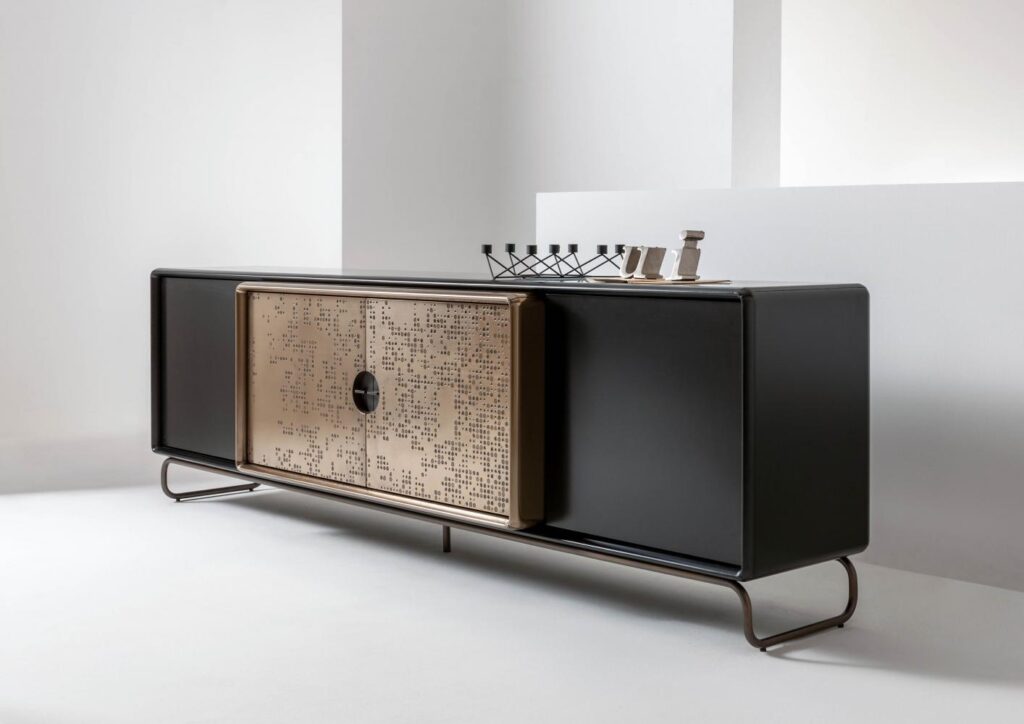
A luxury sideboard or credenza is never just a storage unit. The right piece shapes the mood of a room, introduces material depth, and brings together function, proportion, and design in a way that feels intentional from every angle.
What makes a sideboard or credenza truly luxurious?
| Luxury Element | What It Means in Practice | Why It Matters in a High-End Interior |
|---|---|---|
| Design integrity | The piece has a clear design language, balanced proportions, disciplined lines, and a silhouette that feels intentional from every angle rather than decorative for the sake of attention. | Creates visual authority; Helps the sideboard or credenza feel timeless instead of trend-driven; Makes the furniture read as part of the architecture, not just added storage. |
| Craftsmanship | Joinery, alignment, door reveals, drawer movement, edge treatment, and finish application are handled with precision by skilled makers using refined construction methods. | Ensures durability and consistency; Gives the piece a more substantial and confident feel; Distinguishes genuine luxury from furniture that only looks expensive in photos. |
| Material quality | Fine woods, metals, glass, natural stone, and carefully selected exotic materials are chosen for their depth, durability, and compatibility with the design concept. | Adds richness, tactility, and visual depth; Improves how the piece interacts with light; Supports a more collectible and lasting impression. |
| Proportion and scale | The sideboard or credenza is sized correctly for the wall, circulation space, ceiling height, and nearby furniture, with thoughtful balance between storage capacity and visual lightness. | Prevents the room from feeling crowded or underfurnished; Helps the piece feel custom-tailored to the space; Strengthens harmony with the surrounding architecture. |
| Finish quality | Surfaces are executed with consistency, depth, and control, whether matte, polished, textured, brushed, or artisan-applied, with attention to tone, sheen, and tactile character. | Shapes the mood of the piece; Enhances perceived value through depth and refinement; Helps the furniture coordinate elegantly with floors, walls, lighting, and decorative surfaces. |
| Functional elegance | Storage is practical and easy to use, with interior layouts, shelves, drawers, and opening systems that support daily life without interrupting the beauty of the design. | Keeps rooms organized without visible clutter; Improves day-to-day comfort and usability; Proves that luxury furniture should perform as beautifully as it looks. |
| Longevity | The design, materials, and construction are chosen to age well physically and visually, allowing the piece to remain relevant and beautiful over many years of use. | Protects the investment; Supports sustainable buying by reducing replacement cycles; Gives the home furniture with lasting cultural and aesthetic value. |
| Emotional and architectural presence | The piece contributes more than storage by anchoring the room, supporting styling, and creating a mood through materiality, form, and visual rhythm. | Turns a practical object into a focal design element; Strengthens the identity of the room; Makes the sideboard or credenza feel like an integral part of the home’s character. |
Sideboard vs credenza vs dresser: understanding the differences
Although these terms are sometimes used interchangeably, they do not mean exactly the same thing. Understanding the difference helps buyers choose a piece that truly fits the room, the intended function, and the overall design direction.
In practice, all three categories can overlap. A sideboard may work in a living room, a credenza may be used in a dining area, and a dresser may extend beyond the bedroom. But each term still carries a distinct design expectation, and those expectations can guide a more confident purchase.
At a glance, the difference is usually this:
- A sideboard is versatile, substantial, and often visually prominent
- A credenza is sleek, lower in profile, and more restrained in presence
- A dresser is drawer-oriented and traditionally associated with bedrooms, though often adaptable
The importance of terminology is not just semantic. It affects how you evaluate storage needs, height, room placement, styling potential, and scale. The more precisely you understand the category, the more likely you are to choose a piece that feels resolved in its setting.
What is a sideboard?
A sideboard is one of the most versatile storage pieces in interior design. Traditionally associated with dining rooms, it is typically a long, low-to-medium-height cabinet designed to store serving pieces, tableware, linens, or decorative objects. Today, however, the sideboard has expanded far beyond its traditional role and is equally at home in living rooms, hallways, transitional areas, and even bedrooms.
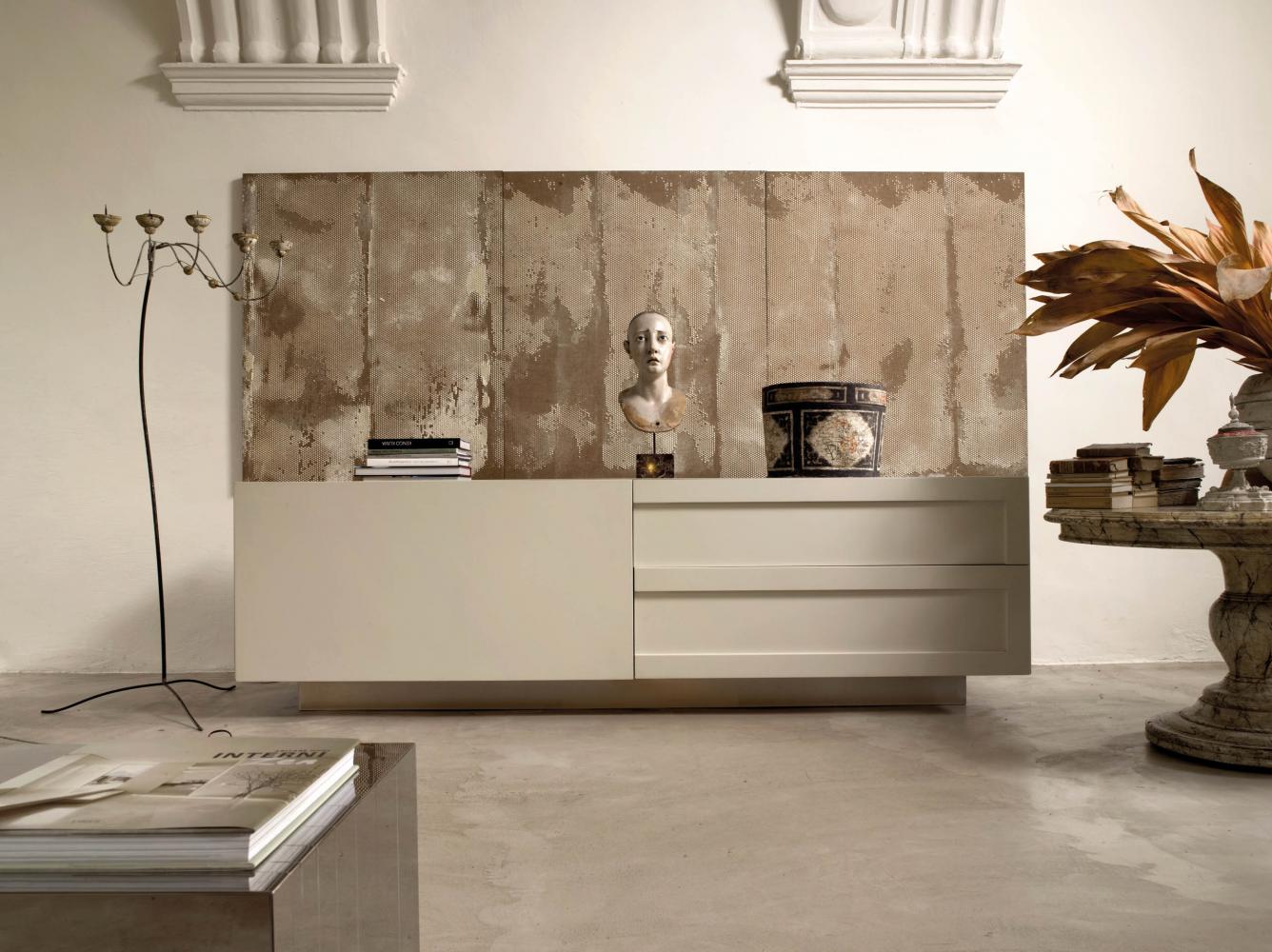
What distinguishes a sideboard is usually its width and visual presence. It tends to occupy a meaningful stretch of wall, making it both practical and compositional. Because of that, it often serves two functions at once: concealed storage below and a display surface above.
A sideboard is especially effective when you need a piece that can do all of the following:
- Anchor a wall with visual confidence
- Offer substantial internal storage
- Support lamps, art, books, or curated objects on top
- Work across multiple room types
- Contribute strongly to the identity of the space
In luxury interiors, sideboards often become signature pieces. Their breadth allows for richer material expression, more dramatic detailing, and stronger dialogue with the surrounding architecture. A sideboard can feel sculptural, elegant, minimalist, or highly decorative depending on its design language, but it almost always has presence.
Because it is often wider and more visible than other storage forms, a sideboard should be selected with particular attention to scale, finish, and proportion. It will rarely disappear into the background. Instead, it tends to become one of the room’s most important visual anchors.
What is a credenza?
A credenza is generally more restrained and more linear than a sideboard. While the distinction is not rigid, the credenza is often understood as a lower-profile storage piece with a sleek, elongated presence. It is especially common in living rooms, formal entertaining spaces, executive offices, and interiors where a cleaner horizontal line is preferred.
The appeal of a credenza lies in its refinement. It does not need to dominate a room in order to have impact. Its strength often comes from proportion, disciplined geometry, and subtle surface expression. In that sense, a credenza is ideal for spaces where visual calm and elegant continuity matter.
A credenza often works best when the design goal is to create:
- A sophisticated low-profile statement
- A continuous horizontal line beneath art or wall features
- Refined storage in an office or formal living area
- A more architectural rather than decorative effect
- A sense of polish without visual heaviness
In offices, credenzas are particularly useful because they combine practical organization with executive presence. They can store documents, technology, accessories, and presentation materials while keeping the room composed and uncluttered. In living spaces, they are often used beneath artwork, mirrors, or wall panels where a lower silhouette helps preserve openness and proportion.
The credenza’s sleek presence also makes it well suited to contemporary and design-led interiors. It allows materials and detailing to speak without relying on bulk. When beautifully executed, it can create a sense of quiet luxury that feels both substantial and understated.
When a dresser can work beyond the bedroom
A dresser is usually associated with bedroom storage, particularly clothing, linens, and personal items. It often features a stronger emphasis on drawers rather than a combination of doors and shelving. Yet in luxury interiors, that traditional definition is no longer limiting. A beautifully designed dresser or chest of drawers can function well beyond the bedroom when chosen with the right scale, material, and context in mind.
This is especially relevant when looking at collections that blur the line between storage categories, such as MATERIA Collection’s Sideboards / Dressers offering. In such collections, the distinction becomes less about strict labels and more about how the piece performs in the space.
A dresser can work beautifully in:
- Bedrooms and dressing areas
- Guest suites
- Large walk-in closets
- Transitional spaces between bedroom and bath
- Refined multipurpose interiors where drawer storage is preferred
The advantage of a dresser in these settings is its ability to provide highly organized storage while maintaining a strong decorative identity. In a bedroom, it may act as the central horizontal element beneath artwork or a mirror. In a dressing area, it can support trays, lighting, and accessories while concealing wardrobe essentials. In a luxury guest suite, it may introduce both hospitality and order.
The most important point is that category boundaries are increasingly fluid in high-end interiors. When the design is strong enough, a dresser can function as a sideboard. A sideboard can perform like a credenza. What matters most is not the label, but whether the piece responds appropriately to the room’s needs, architecture, and aesthetic direction.
Why luxury sideboards and credenzas matter in interior design
Luxury sideboards and credenzas are often underestimated because they are not as immediately obvious as a sofa, bed, or dining table. Yet in well-composed interiors, they frequently do some of the most important work. They anchor walls, define transitions, support decorative layering, conceal visual clutter, and establish a material language that can influence the rest of the room.
In other words, they are not secondary furnishings. They are strategic design elements.
A room without the right sideboard or credenza can feel unresolved, even when all major furniture is in place. There may be nowhere for the eye to rest, no clear relationship between wall and floor, and no elegant solution for objects that need to be stored. The right piece solves these problems while adding depth, polish, and compositional clarity.
Their importance becomes even greater in luxury interiors where every item is expected to contribute more than one thing. A sideboard should not only store. It should also elevate. It should not only fill a wall. It should also create proportion, continuity, and atmosphere.
This is why designers often rely on these pieces to achieve several goals simultaneously:
- Strengthen the room’s focal structure
- Add rich materials at eye level
- Introduce balance between open and closed elements
- Support lighting, art, and styling
- Conceal daily necessities without sacrificing elegance
When chosen well, a sideboard or credenza makes the room feel finished. More than that, it makes the room feel considered.
Creating a focal point in the room
One of the most valuable roles of a sideboard or credenza is its ability to create a focal point without overwhelming the space. Not every focal point needs to be dramatic in the obvious sense. In many luxury interiors, the strongest focal points are composed through proportion, material richness, and quiet confidence rather than scale alone.
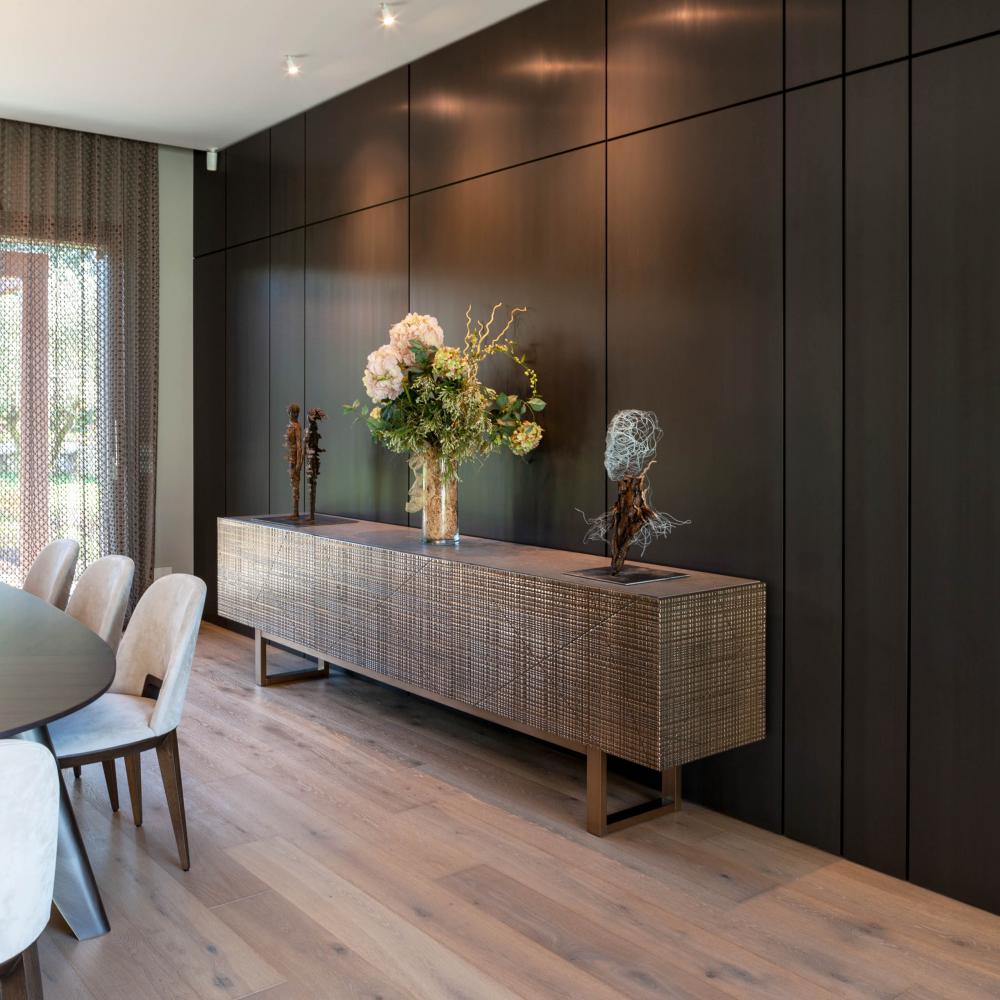
A sideboard anchors a wall by giving it purpose. Instead of leaving a large vertical plane visually empty or filling it with isolated decorative objects, the piece creates structure at the base of the composition. It establishes a visual platform from which art, mirrors, lighting, or wall treatments can rise.
This is particularly effective in rooms such as:
- Dining rooms with open wall areas
- Living rooms that need a low architectural anchor
- Entryways where first impressions matter
- Hallways that require elegance without crowding
- Bedrooms where the furniture arrangement needs horizontal balance
The best focal-point sideboards do not call attention to themselves in a forced way. Their effect comes from coherence. The silhouette relates to the room. The material responds to the light. The finish enriches rather than distracts. The piece feels intentional, as though the room was arranged around it rather than it being added afterward.
Styling also plays a role, but it should never be asked to compensate for weak furniture. A luxury sideboard should already possess enough design integrity to hold the eye on its own. Decorative objects, lamps, or artwork should enhance that presence, not create it from scratch.
Balancing storage with visual lightness
One of the greatest challenges in furniture selection is adding useful storage without making a room feel heavy. Storage naturally introduces volume, and volume can quickly become visual weight if not handled well. This is where luxury design proves its value. A refined sideboard or credenza solves practical needs while still preserving elegance and airiness.
This balance is achieved through several design strategies. Proportions are carefully controlled so the piece does not feel block-like or oversized. Legs or recessed bases may lift it visually from the floor. Surface treatment may soften mass, reflect light, or introduce pattern that breaks up monotony. The front elevation may use subtle detailing, rhythm, or geometry to create movement instead of heaviness.
A well-designed piece can feel substantial without appearing bulky because it pays attention to:
- Base design and floor clearance
- Thickness and visual weight of top and sides
- Rhythm of doors, drawers, or panel divisions
- Interaction between solid and reflective surfaces
- Use of texture to add depth without clutter
For example, a credenza in a darker finish might still feel elegant and light if its proportions are disciplined and its lines are clean. A wider sideboard may feel less imposing if it sits on a refined base and uses mixed materials to create visual variation. Even richly expressive pieces can avoid heaviness when scale and detailing are carefully resolved.
This is especially important in urban interiors, open-plan homes, and rooms with layered luxury finishes. In these settings, every large item must earn its visual footprint. A sideboard or credenza that stores beautifully while still feeling poised and balanced becomes far more than functional. It becomes essential.
Enhancing everyday functionality with elegance
Luxury furniture should improve daily life, not simply photograph well. A sideboard or credenza is one of the clearest examples of this principle because it supports both visible beauty and invisible order. It keeps essential items accessible but out of sight. It reduces clutter. It supports routines. And it does all of this while contributing to the identity of the room.
In dining rooms, these pieces can store serving dishes, glasses, linens, and entertaining essentials. In living rooms, they can conceal electronics, books, board games, or seasonal accessories. In bedrooms, they can hold clothing, accessories, and personal items. In hallways and entryways, they provide a sophisticated place for objects that would otherwise create visual noise. In offices, they preserve a sense of calm and authority by organizing materials that need to be nearby but not constantly visible.
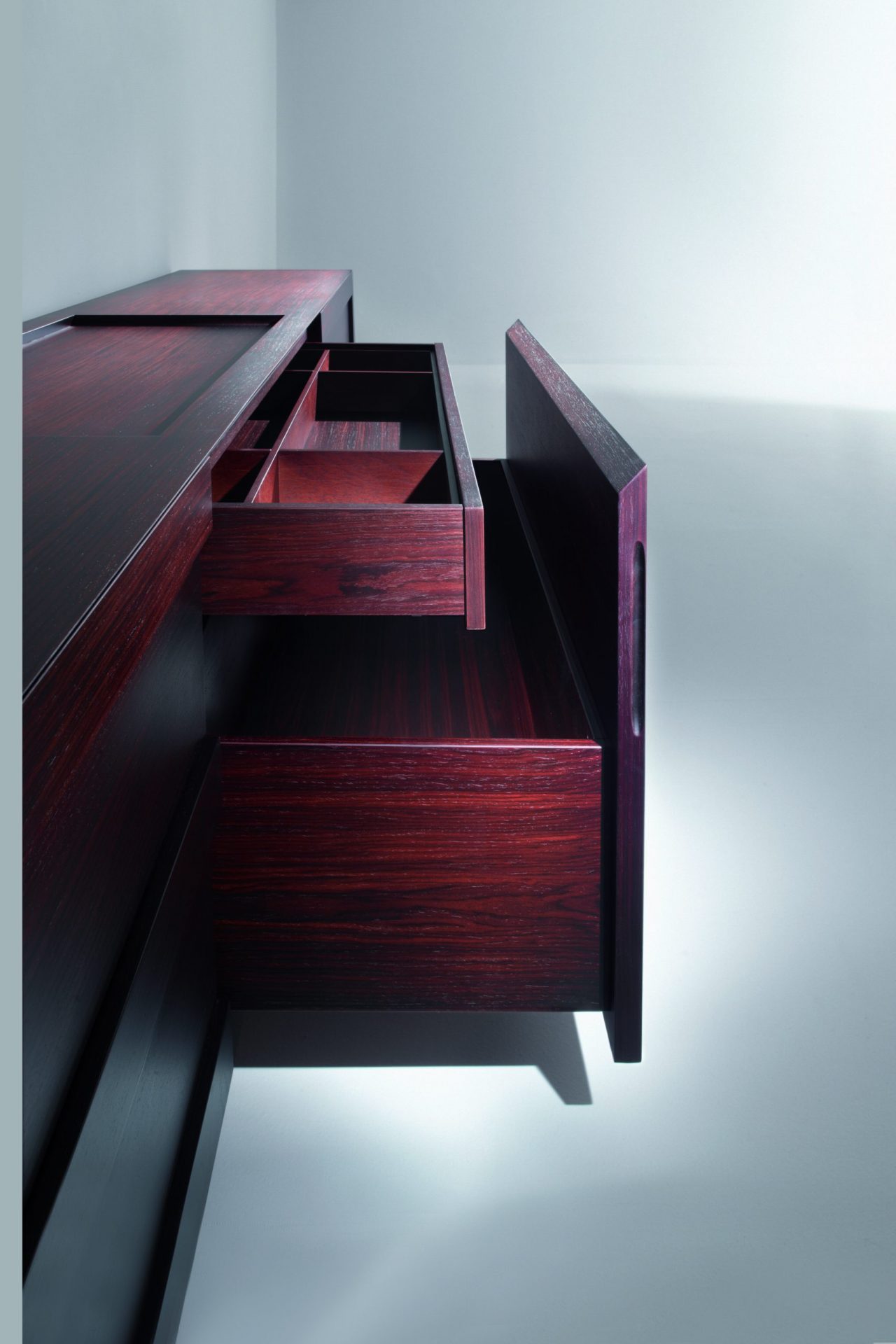
Their practical value becomes even stronger when internal storage is considered thoughtfully. Shelves, drawers, push-pull systems, and concealed compartments all affect how the piece performs over time. A beautiful exterior matters, but so does the experience of living with the piece every day.
A truly successful luxury sideboard or credenza offers:
- Elegant concealment of necessary items
- Easy access without visual disorder
- A useful surface for lighting and styling
- Flexibility across changing needs and room functions
- Lasting beauty in both formal and everyday settings
This dual role is one of the reasons such pieces are so important in high-end interiors. They bridge aspiration and reality. They allow the home to remain polished without becoming impractical. And they show that elegance is not something separate from daily life, but something built into it.
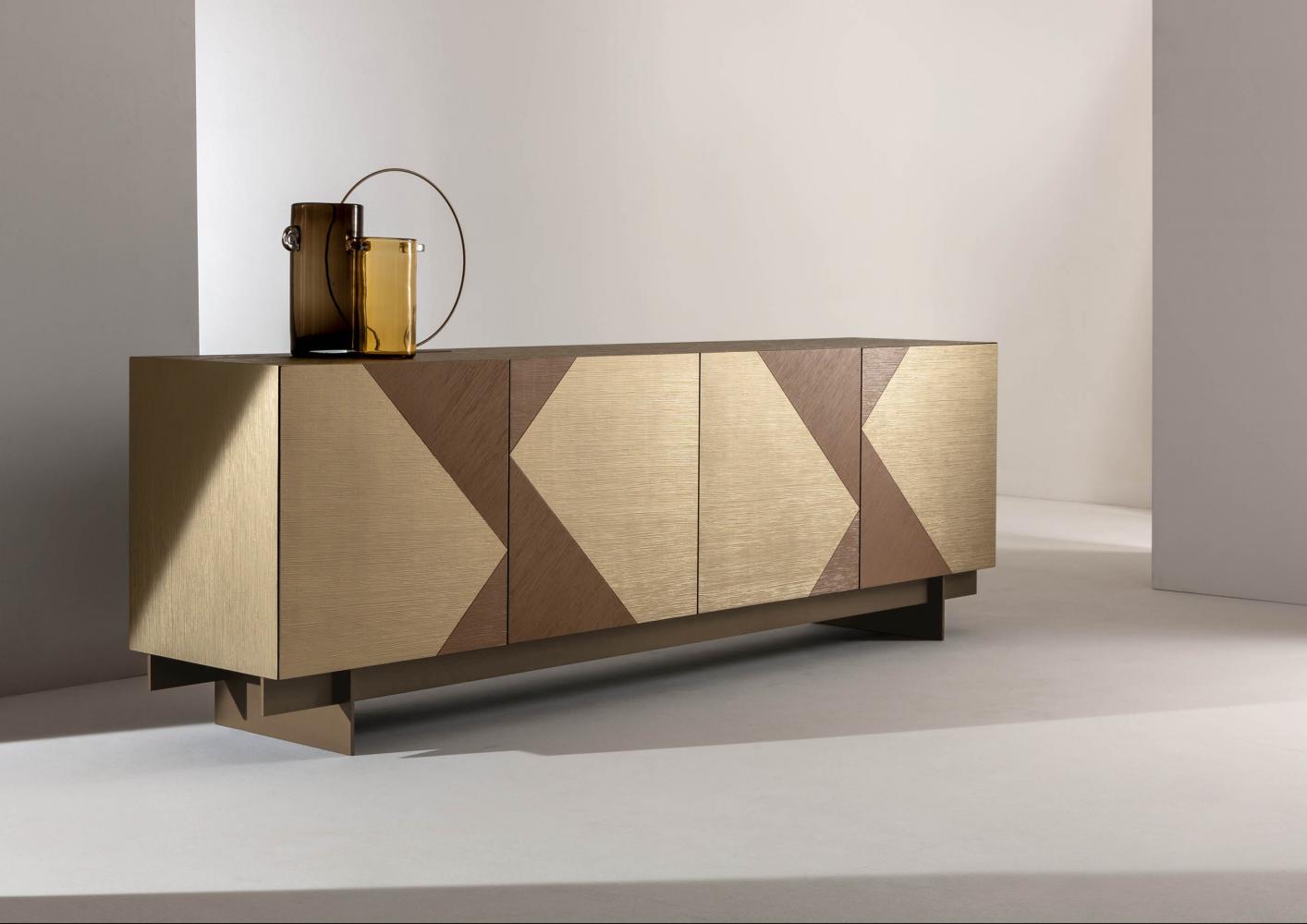
How to choose the right size and proportions?
Measure the wall, the room, and the circulation space
The first step in choosing the right piece is accurate measurement. This sounds obvious, yet many purchasing mistakes happen because people measure only wall width and ignore the rest of the room’s constraints. A luxury sideboard or credenza needs not only to fit the wall, but also to respect doors, dining chairs, walkways, and the natural movement of the space.
Start with the wall itself. Measure the full width, then identify how much of that width should realistically be occupied. In many cases, leaving breathing room at each side creates a more sophisticated result than filling the wall edge to edge. Also note any architectural interruptions such as outlets, vents, switches, trim, wall panels, or door swings.
Then measure the room depth and surrounding clearances. A beautiful piece that projects too far into circulation can make the room feel cramped and disrupt everyday comfort. This is especially important in dining rooms where chairs are pulled back, in hallways where passage must remain easy, and near doors that require full clearance.
Pay close attention to these dimensions:
- Total wall width
- Available wall width after allowing side breathing room
- Maximum workable depth
- Distance to dining tables, islands, or seating
- Door swing zones
- Main circulation paths
A useful rule is to view the piece in action, not only in isolation. Ask how the room will function when drawers are open, chairs are moved, people pass by, or doors swing fully. Luxury furniture should support ease, not complicate it.
In many interiors, the best result is achieved not by choosing the largest possible piece, but by selecting one whose proportions feel natural in use. Generosity matters, but so does restraint.
Choosing the right height for your needs
Height has a major impact on both function and visual composition. It influences what the piece can store, how the top surface will be used, and how the furniture interacts with nearby windows, art, millwork, and lighting.
A lower credenza tends to feel sleek, architectural, and calm. It is ideal beneath artwork, decorative wall treatments, or long horizontal compositions. A medium-height sideboard often feels more versatile, especially in dining rooms and living spaces where both storage and a useful top surface are needed. Taller pieces can provide more capacity but must be handled carefully so they do not disrupt the visual line of the room.
When considering height, think about:
- Whether you will style the top with lamps, art, or objects
- Whether the piece needs to align with nearby furniture heights
- How much internal storage is required
- Whether the room benefits from a lower, quieter horizontal line
- Whether the wall above should remain open or visually activated
For example, in a formal living room, a lower credenza can preserve a spacious feeling and allow a painting or wall panel composition to dominate. In a dining room, a slightly taller sideboard may be more practical for serving and storage. In a bedroom, dresser height often needs to relate to mirrors, bedside elements, and the overall furniture rhythm.
Height should also be considered in relation to comfort. A piece used frequently for entertaining or everyday access should feel easy to use, not too low to be convenient or too tall to feel refined.
Matching scale to architecture
Furniture should not be chosen as though it exists independently from the room. In luxury interiors, the most convincing results come when scale is matched to architecture. That means the sideboard or credenza should relate not only to floor area, but also to ceiling height, wall articulation, millwork, openings, and adjacent furnishings.
A wide but low credenza may be perfect in a room with long wall planes and strong horizontal emphasis. A more compact but visually rich sideboard may suit a room where wall panels, art, or architectural detailing already play a major role. In a space with tall ceilings, a very low and minimal piece may need stronger styling above it to maintain compositional balance. In a more intimate room, that same piece might feel perfectly poised.
This is where MATERIA Collection’s broader design language becomes especially relevant. When an interior includes wall panel systems, decorative wall treatments, custom millwork, luxury doors, and curated lighting, the sideboard should not be an isolated choice. It should participate in the wider architectural story of the home.
To match scale successfully, consider:
- Ceiling height and vertical proportion
- Width and rhythm of wall panels
- Size of nearby tables, sofas, or beds
- Strength of architectural trim or millwork
- Presence of large art, mirrors, or lighting elements
- Whether the room needs calm continuity or a stronger statement
A credenza that is correctly scaled to architecture feels almost inevitable in the room, as though it belongs there naturally. This is one of the strongest qualities luxury furniture can achieve. It does not appear inserted. It appears integrated.
Choosing the perfect material for a luxury sideboard or credenza
Fine woods for warmth, depth, and timeless appeal
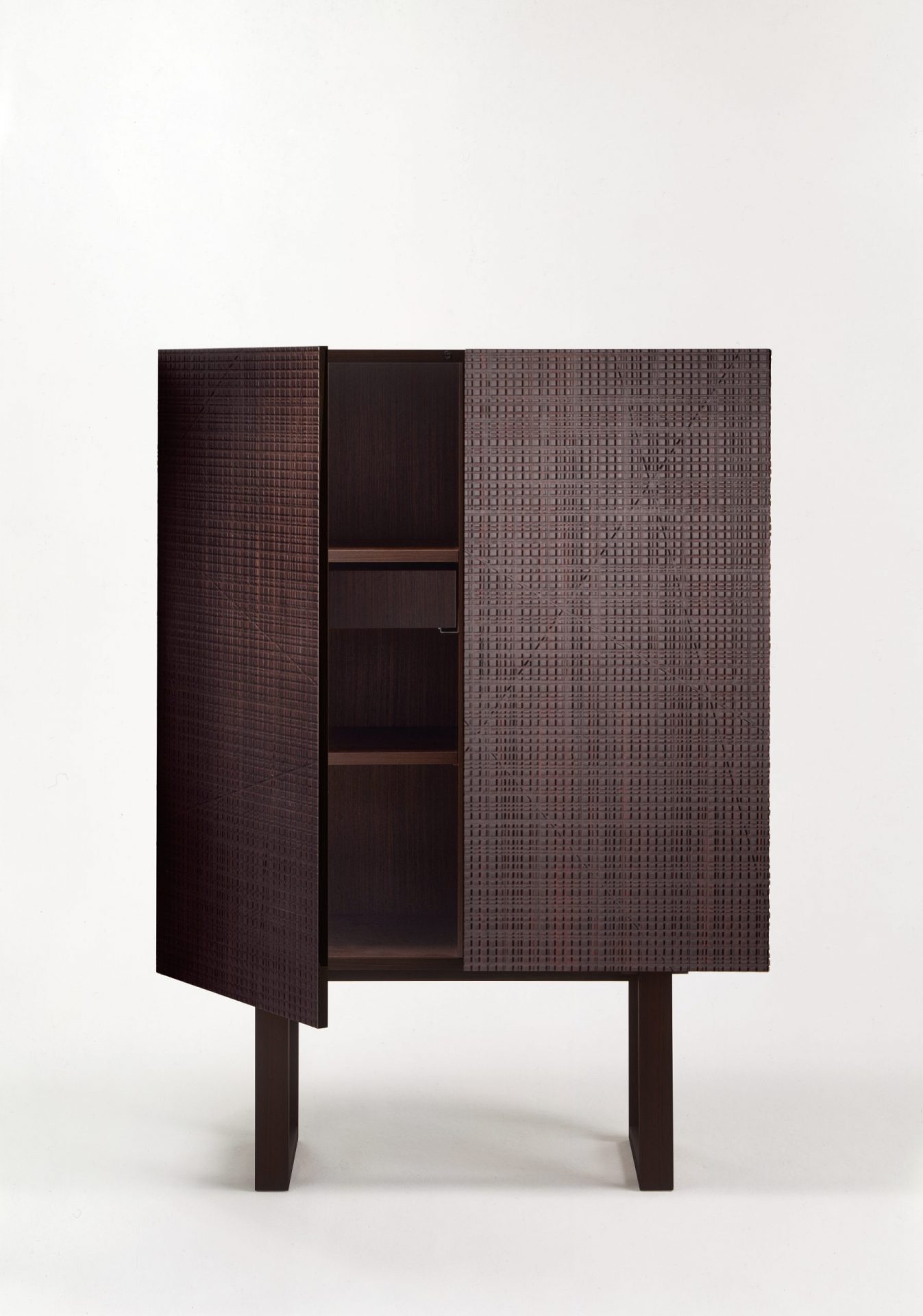
Wood remains one of the most powerful materials in luxury furniture because it combines natural beauty with remarkable versatility. It can feel formal or relaxed, minimalist or expressive, architectural or organic depending on the cut, grain, finish, and detailing. More than almost any other material, wood adds a sense of permanence to a sideboard or credenza.
Fine woods introduce visual warmth and subtle variation. Unlike flat industrial surfaces, natural wood has movement, character, and depth. Grain can be quiet and uniform or dramatic and animated. Tone can range from pale and airy to dark and enveloping. This allows wood to perform across many interior styles while still maintaining a strong identity.
Its appeal comes from several qualities:
- Natural texture and visual richness
- Warmth that softens architectural spaces
- Timelessness across changing trends
- Capacity for exceptional artisan finishing
- Compatibility with metals, glass, and stone
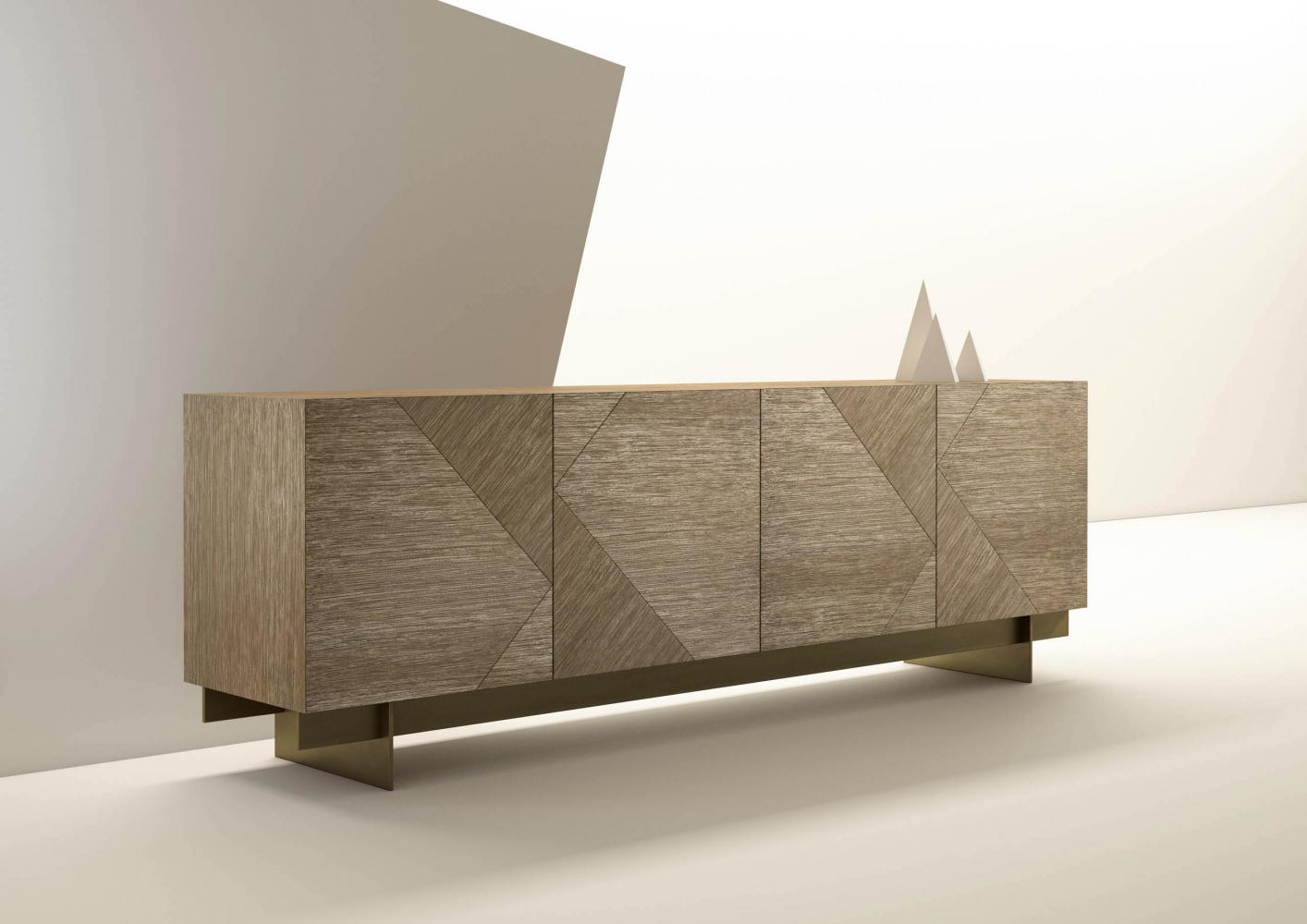
Artisan finishing plays a major role here. The same wood species can feel entirely different depending on how it is treated. A matte finish may bring out calm depth and natural softness. A richer polished treatment may emphasize pattern and formality. Brushed, open-pore, or textured finishes can highlight grain in a way that makes the surface feel more tactile and alive.
Grain selection is equally important. In luxury furniture, wood is not chosen casually. The direction, rhythm, and continuity of grain contribute to the overall refinement of the piece. Well-selected veneers and carefully matched surfaces can make a sideboard feel composed and expensive even before one notices any hardware or detailing.
Wood also has emotional strength. It makes interiors feel more grounded and more human. In spaces dominated by stone, metal, and glass, a wood sideboard can introduce the warmth necessary to make the room feel livable rather than severe.
Metal accents for structure and sophistication
Metal brings clarity and precision to luxury furniture. Whether used in a base, trim, frame, handle detail, or integrated structural element, it introduces contrast and sharpens the overall composition. In sideboards and credenzas, metal is often what gives a piece contemporary definition and visual discipline.
Brass is particularly associated with luxury because it carries warmth while still feeling refined. Other metal finishes may read more understated, industrial, or modern depending on their treatment. The key is not simply the presence of metal, but how it is used. Too much can feel excessive or decorative without purpose. The right amount can elevate the entire piece.
Metal contributes in several ways:
- It creates contrast against softer materials such as wood
- It gives edges and proportions more visual definition
- It can lighten or refine the base of a substantial piece
- It often improves the sense of craftsmanship and detailing
- It introduces a subtle reflective quality without relying on gloss
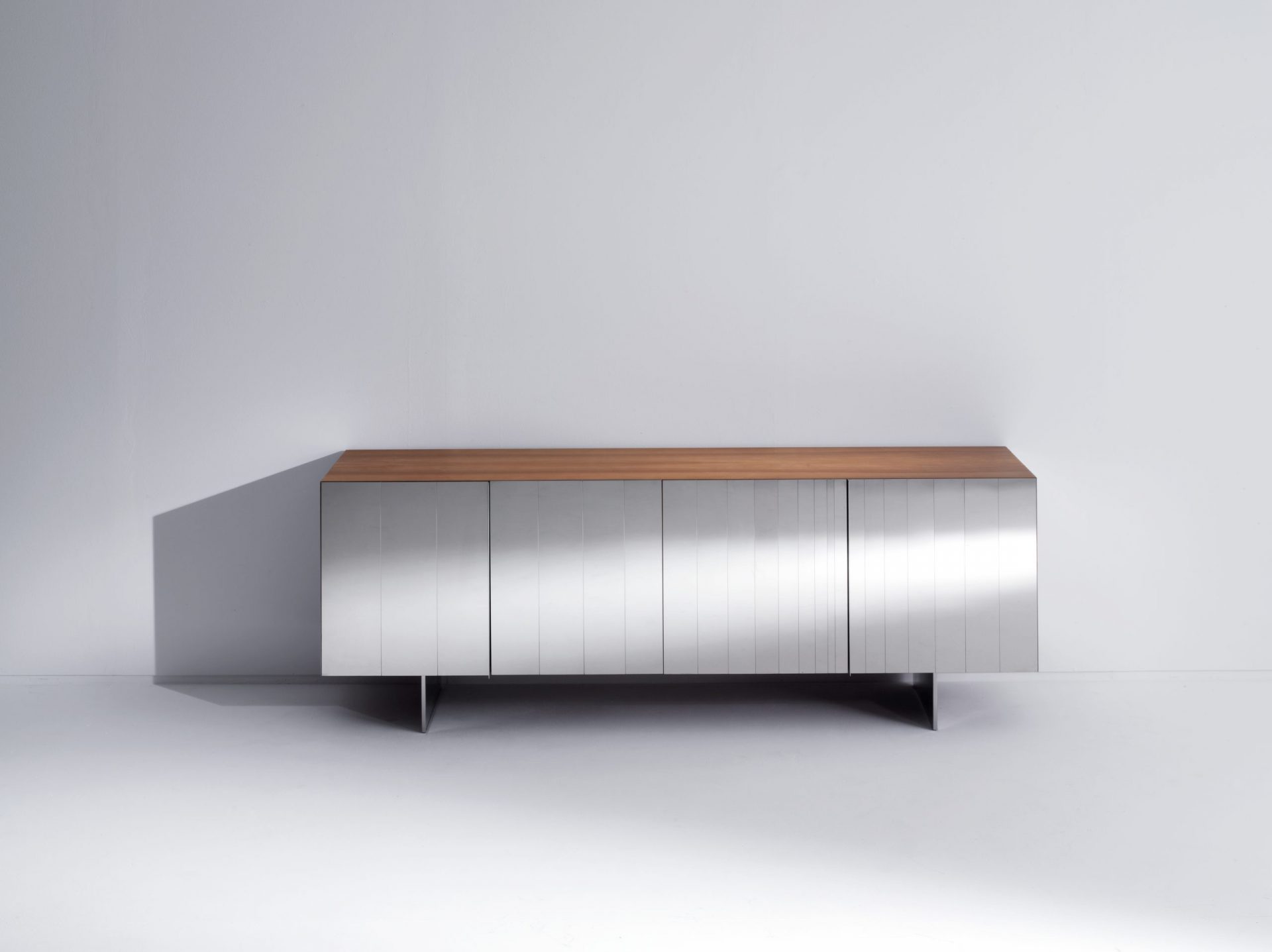
A metal base, for example, can visually lift a sideboard and reduce the sense of heaviness. A metal trim can frame doors or drawers in a way that emphasizes rhythm and geometry. Brass accents can add sophistication to darker woods or stone surfaces, while more subdued metal finishes can suit minimalist interiors that prioritize restraint.
In luxury design, metal should feel integrated rather than applied for effect. The best pieces use it to reinforce structure, material contrast, and compositional clarity. When done well, metal detailing adds confidence and polish without drawing attention away from the larger design idea.
Glass elements for refinement and visual lightness
Glass has a unique ability to reduce visual weight. In a sideboard or credenza, it can soften mass, increase brightness, and introduce refinement without competing with stronger materials. Even small amounts of glass can change the way a piece is perceived, especially in rooms where openness and lightness are important.
Its value lies partly in contrast. When paired with wood, metal, or stone, glass helps create a more layered and nuanced composition. It can break up large solid surfaces, add a sense of delicacy, and allow surrounding light to participate in the design.
Glass is especially effective when the goal is to create:
- A more open visual impression
- Additional reflectivity without full gloss
- Subtle sophistication in contemporary interiors
- Balance within a piece that might otherwise feel too heavy
- Greater interaction with natural and artificial light
Depending on the design, glass may be clear, tinted, textured, or integrated in a way that feels almost architectural. It can be used for fronts, inserts, tops, or layered detailing. In all cases, its purpose should be thoughtful. It should enhance proportion and atmosphere rather than feel fragile or merely decorative.
In rooms with limited natural light, glass can also help a piece feel more responsive to illumination throughout the day. It catches and diffuses light in a way that adds movement to the furniture surface. This makes it especially attractive in refined living areas, formal rooms, and interiors where calm elegance is preferred over visual density.
Natural stone and mixed materials for statement pieces
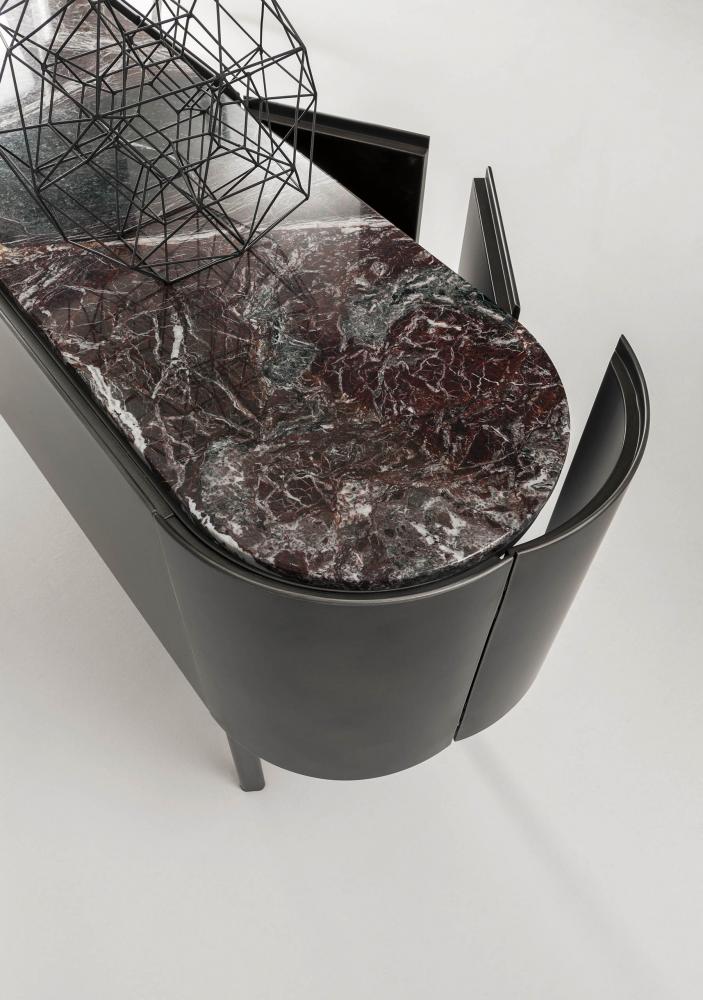
Natural stone brings gravity, richness, and a sense of rarity to luxury furniture. It is one of the most effective materials for transforming a sideboard or credenza from beautiful to unforgettable. Stone introduces not only pattern and depth, but also a feeling of permanence that few other materials can match.
When used well, stone can make a piece feel more architectural and more collectible. Its natural veining, tonal variation, and surface character ensure that no two applications are exactly alike. This uniqueness is central to luxury. It means the furniture carries individual material identity rather than mass-produced uniformity.
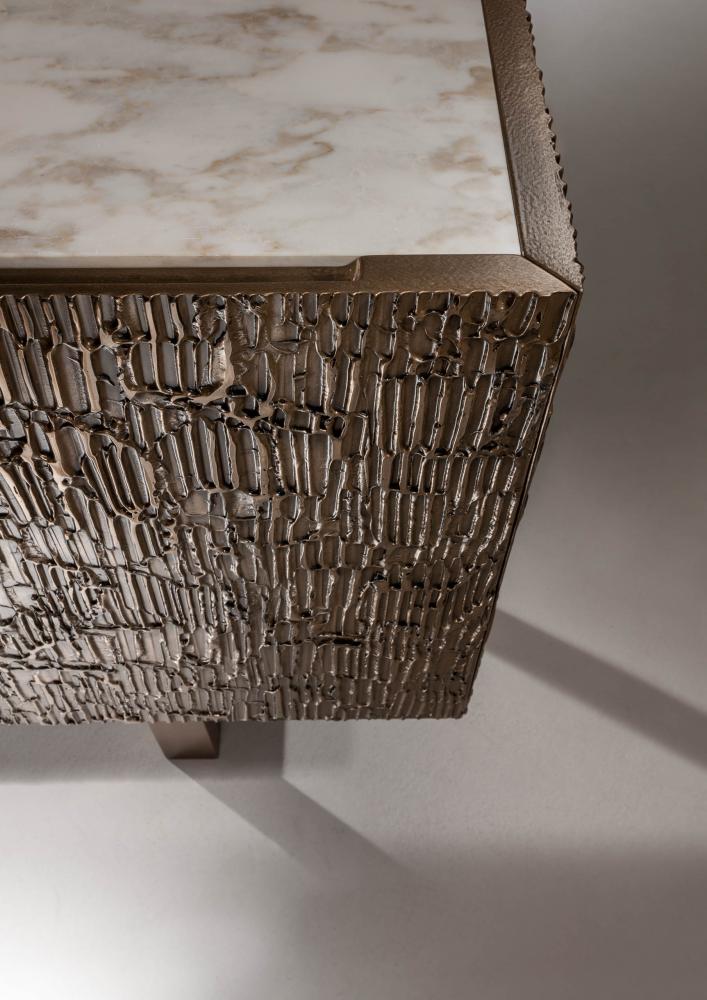
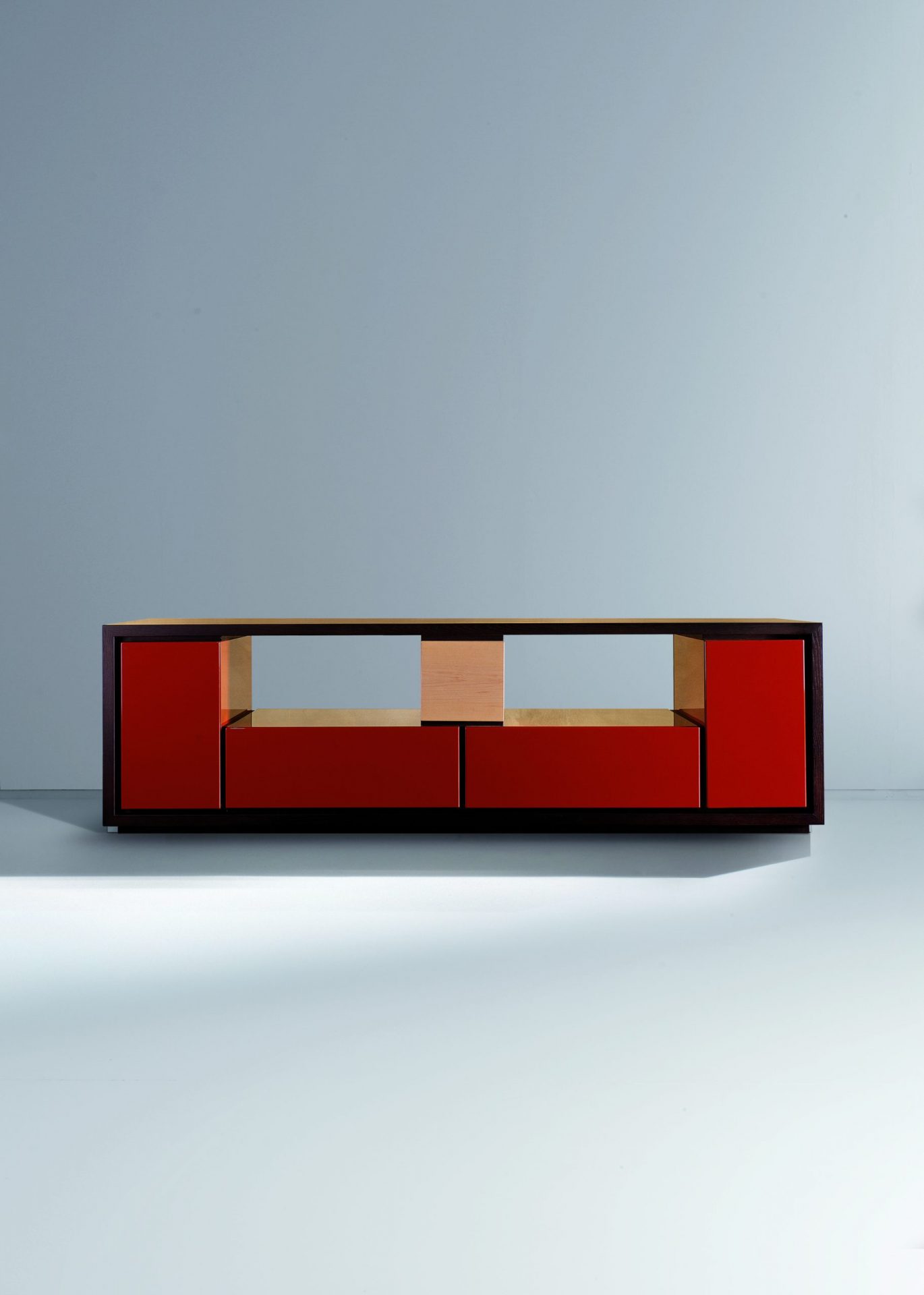
MATERIA Collection’s emphasis on natural stone, metals, exotic woods, and skilled precision highlights the power of mixed materials in high-end design. The combination of these elements creates complexity that a single-material piece often cannot achieve. A credenza may gain softness from wood, structure from metal, and depth from stone all at once. That layered relationship is what often gives luxury furniture its distinct character.
Mixed-material pieces are especially compelling because they can offer:
- Greater visual depth
- Stronger contrast and hierarchy
- More nuanced interaction with light
- A collectible, design-driven presence
- Clear evidence of craftsmanship and material discipline
The risk with mixed materials is imbalance. If too many strong elements compete equally, the result can feel busy or forced. But when the composition is carefully controlled, the effect is exceptional. Stone can serve as a grounding element. Metal can frame it. Wood can warm it. Glass can lighten it. Together, these materials create sideboards and credenzas that feel substantial, rare, and deeply intentional.



Storage planning: what should your piece actually hold?
A luxury sideboard or credenza should never be chosen based on appearance alone. While materials, silhouette, and finish are essential, a truly successful purchase also depends on what the piece is expected to store. Without that clarity, it is easy to fall in love with a design that looks perfect in photographs but functions poorly in everyday life.
Storage planning is where aesthetics become practical. It helps buyers move from vague admiration to intelligent decision-making. Before selecting a piece, it is worth asking a simple but often overlooked question: what exactly will go inside it?
That question immediately changes the way you shop. It affects not only the overall size of the furniture, but also the number of drawers, shelf depth, internal compartments, opening style, and long-term suitability for the room. A sideboard used for entertaining will need different storage logic than one used in an office or bedroom. A credenza chosen only for occasional display items may not need the same interior configuration as a piece used daily.
Good storage planning helps you avoid common mistakes such as:
- Buying a piece that is visually beautiful but internally impractical
- Choosing drawers when shelves would work better
- Underestimating the amount of concealed storage required
- Selecting a format that does not suit daily routines
- Overpaying for design without getting the right functionality
In luxury furniture, internal organization matters just as much as exterior beauty. The finest piece is not simply the one that looks exceptional from across the room. It is the one that feels equally satisfying to live with every day.
Everyday essentials vs occasional-use storage
The first storage question to answer is whether the piece will hold items used every day or only occasionally. This distinction may seem minor, but it significantly influences what kind of sideboard or credenza will work best.
If the furniture is meant for everyday essentials, accessibility becomes crucial. The piece should make daily life easier, not more complicated. Items used often should be easy to reach, simple to organize, and stored in a way that feels natural to the room’s routines.
Examples of everyday-use storage include:
- Dining essentials used throughout the week
- Living room accessories such as remotes or charging equipment
- Office supplies and documents
- Frequently worn bedroom accessories
- Household items that need to stay nearby but hidden
If the piece is intended for occasional-use storage, priorities may shift. In that case, visual presence and overall capacity might matter more than instant accessibility. The sideboard may store seasonal serving pieces, specialty linens, formal tableware, archived paperwork, or decorative items used only at certain times of year.
These questions can help clarify the intended use:
- Will I open this piece daily or only from time to time?
- Do I need quick access or simply concealed capacity?
- Should the most important items be on shelves or in drawers?
- Is the main purpose organization, presentation, or both?
- Will the contents likely change over time?
Once these answers are clear, the correct piece becomes easier to identify. Daily-use storage tends to benefit from convenience, intuitive layout, and robust usability. Occasional-use storage may allow for more formal or design-led decisions where access is less frequent but visual impact remains important.
The most successful luxury furniture responds to how people actually live. It does not force routines to adapt awkwardly to the design. Instead, it supports those routines with elegance.
Shelves, drawers, and concealed compartments
Interior configuration matters as much as exterior form because it determines how usable the piece will be once it enters the home. Two sideboards may look equally beautiful from the outside, but if one has the wrong internal layout for your needs, the difference in daily satisfaction will be substantial.
Shelves, drawers, and concealed compartments each serve different purposes:
- Shelves are best for larger items, serving pieces, books, boxes, or flexible storage
- Drawers are ideal for smaller items that need organization and quick access
- Concealed compartments help reduce visible clutter and support a more orderly experience
Shelves offer versatility, especially in dining rooms and living rooms where stored items vary in size. They can accommodate stacks of plates, serving bowls, decorative accessories, or office materials more easily than drawers in many cases. Adjustable shelving can add even more flexibility, especially for households whose needs evolve over time.
Drawers, on the other hand, bring a higher degree of precision. They are often more useful for:
- Flatware and dining accessories
- Personal items
- Office tools and smaller electronics
- Jewelry and accessories
- Miscellaneous objects that need contained organization
In luxury furniture, concealed compartments add another layer of sophistication. They help preserve visual calm by ensuring that objects remain completely hidden when not in use. This can be particularly valuable in formal living areas, executive offices, or entryways where the room should feel uncluttered and serene.
A good buying decision often depends on matching configuration to function. Ask whether you need:
- Flexible volume
- Structured organization
- A combination of both
- Storage for large objects, small objects, or both
- Hidden compartments for a more discreet user experience
In many cases, the best solution is not choosing between shelves and drawers, but selecting a piece that balances them intelligently. Exterior beauty may attract you, but internal planning is what makes the investment truly successful.
Push-pull openings, door systems, and user experience
In luxury furniture, the experience of using the piece is just as important as its appearance. This is where door systems, hardware, and opening mechanisms become highly relevant. A sideboard may look stunning, but if its doors feel awkward, its drawers resist movement, or its hardware disrupts the visual language, the sense of refinement begins to fade.
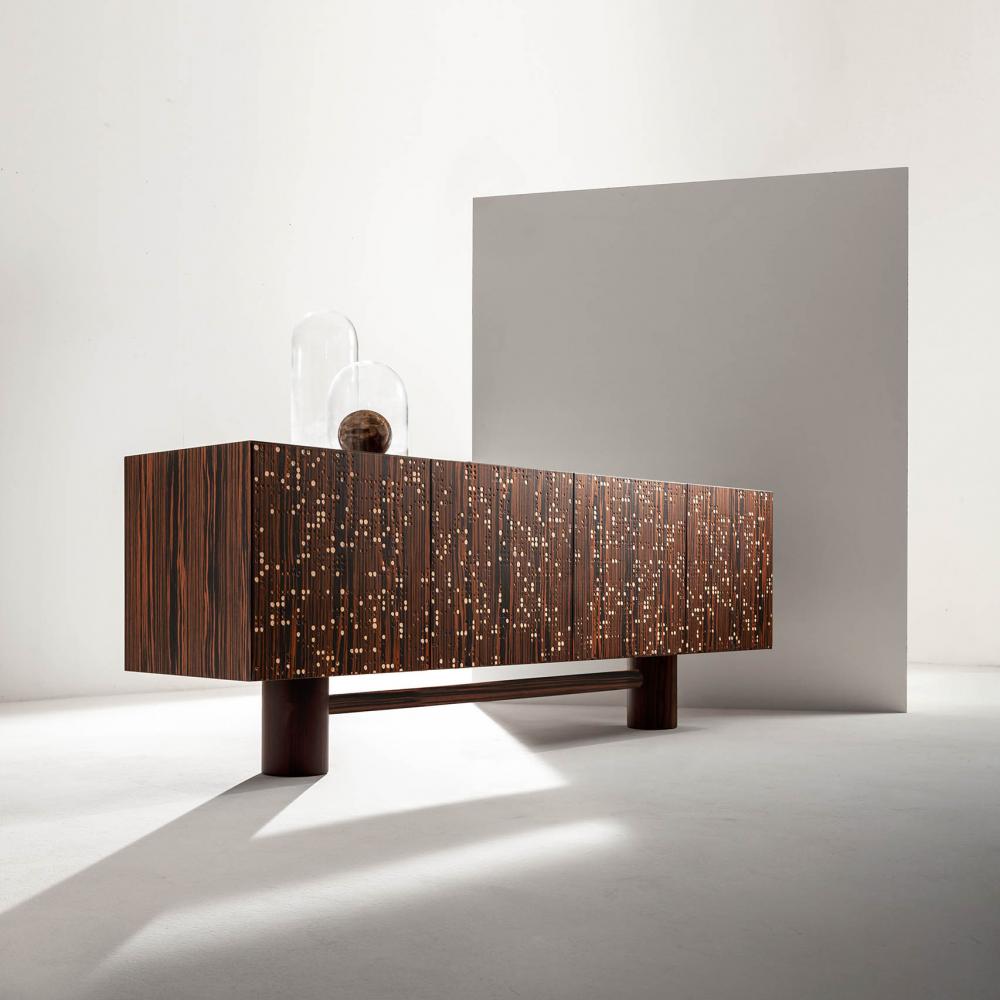
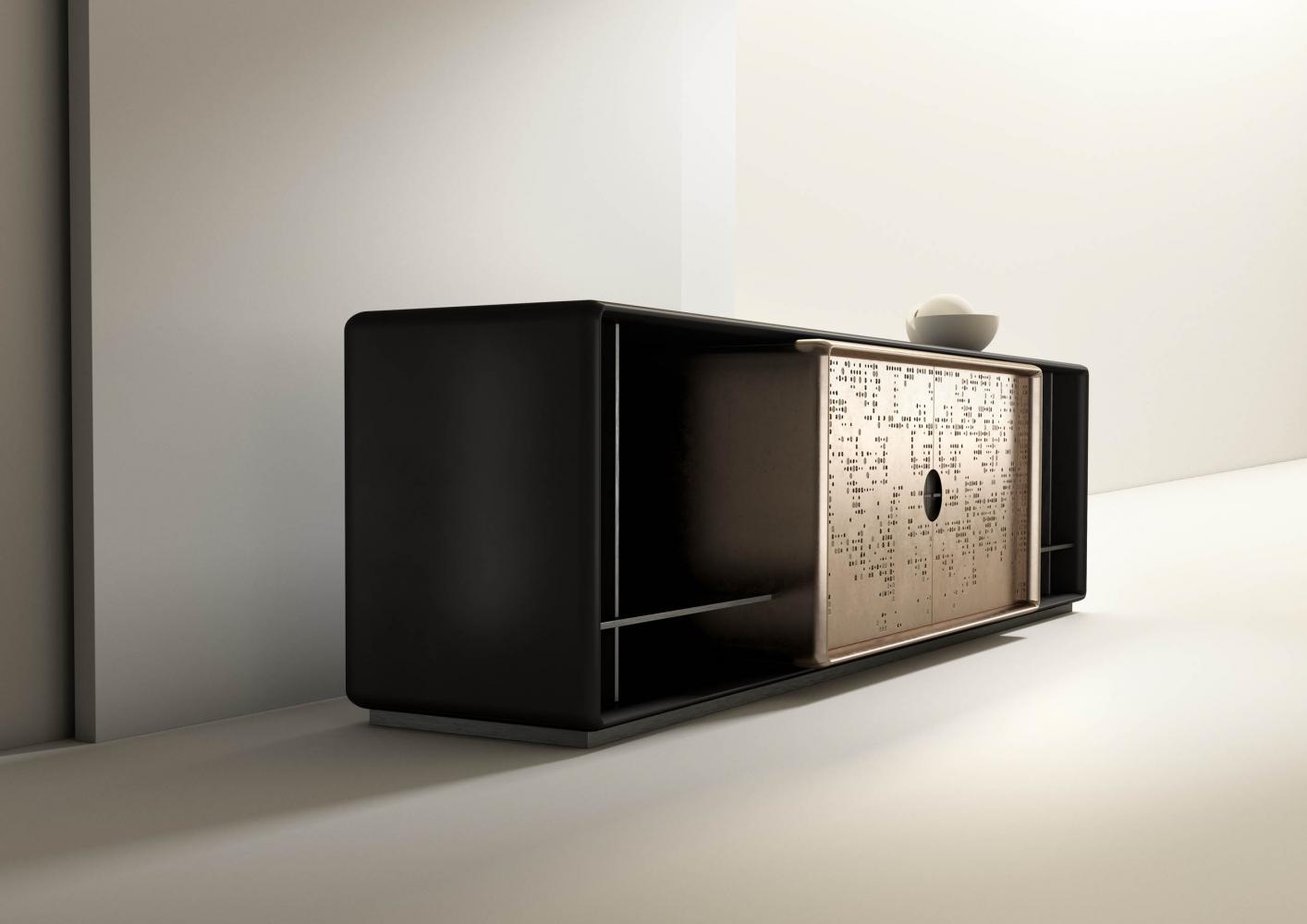
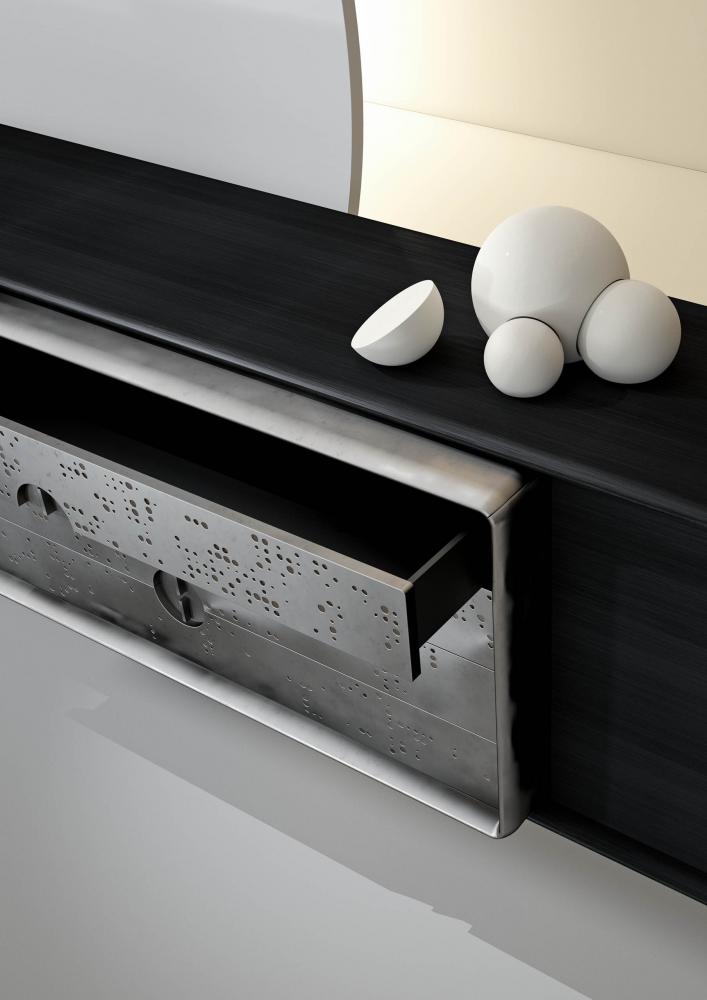
Push-pull systems are especially important in design-led pieces because they support clean, uninterrupted surfaces. Instead of visible handles, the furniture retains a more sculptural and architectural quality. This is one reason they are so effective in collections where the front elevation itself is a design feature.
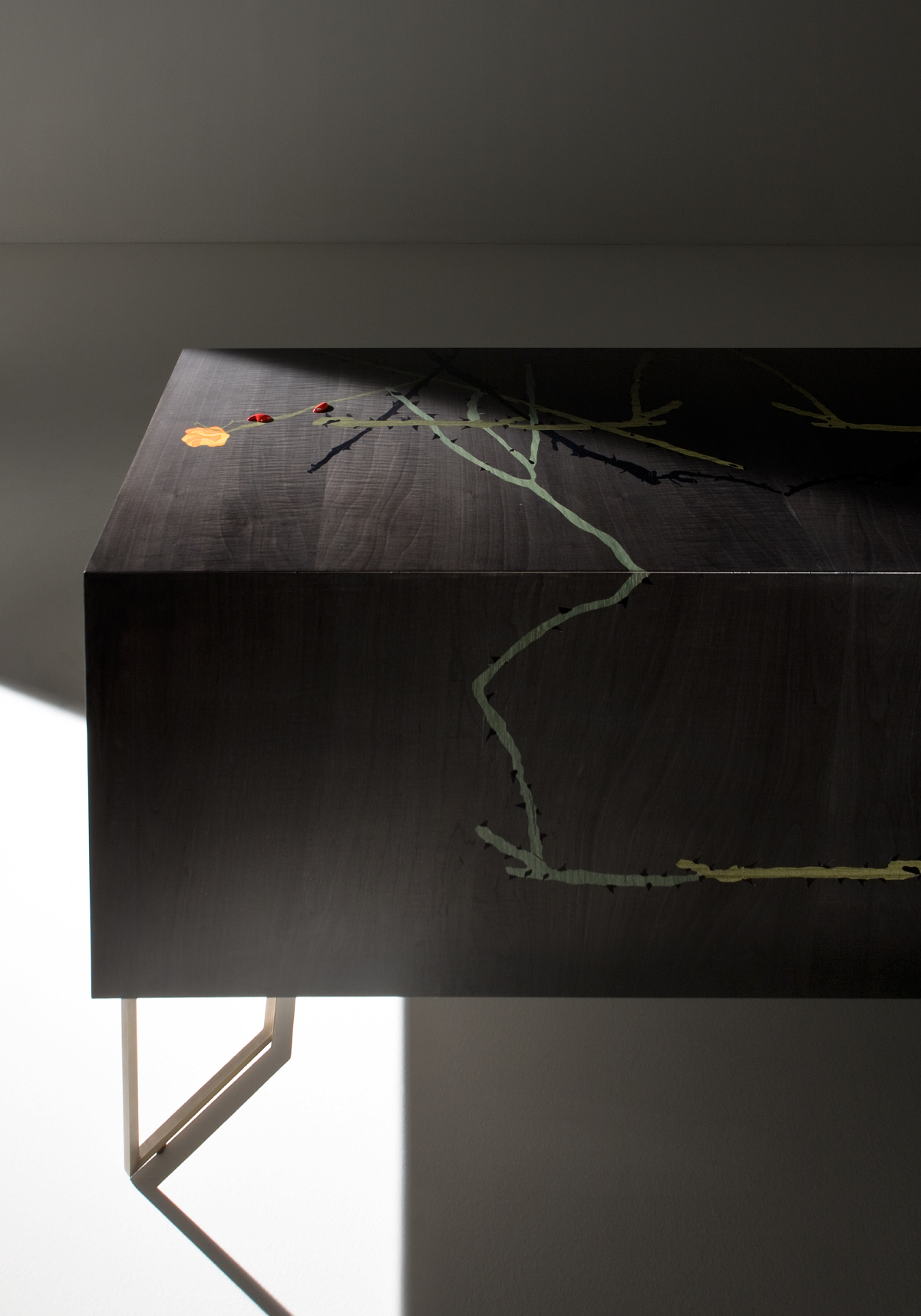
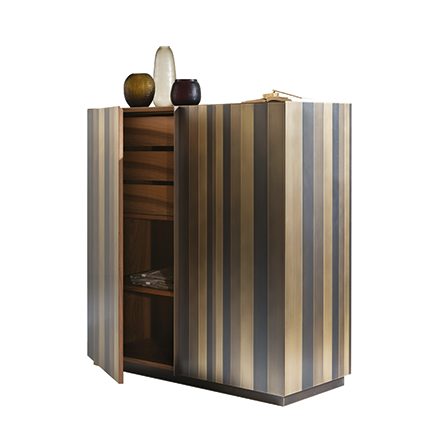
The Intarsia collection offers a particularly strong example of how user experience and artistry can work together. These sideboards are not only visually distinctive, but also equipped with a push-pull opening system, allowing the surface design to remain uninterrupted while still offering practical access. This detail matters because it respects the integrity of the furniture as an object. The front is experienced almost like a work of art, without hardware competing for attention.
Opening systems influence the overall feel of the piece in several ways:
- They affect how intuitive and satisfying the furniture is to use
- They shape whether the front reads as decorative, minimal, or architectural
- They influence maintenance and long-term ease
- They determine how much visual interruption appears on the surface
- They contribute to whether the piece feels truly premium in everyday interaction
Traditional hardware can also be luxurious when used with intent, especially if it adds tactile richness or complements the design language. But in many contemporary and collectible pieces, cleaner systems support a more seamless result.
The larger point is that user experience should never be overlooked. When buying luxury furniture, buyers should pay attention not just to how the piece looks in stillness, but how it behaves in motion. The opening of a door, the glide of a drawer, and the feeling of touch all contribute to the impression of quality.
Choose MATERIA Collection for luxury sideboards and credenzas
Selecting a luxury sideboard or credenza is not only about choosing a product. It is also about choosing the design perspective and level of expertise behind it. MATERIA Collection stands out because it approaches furniture not as isolated merchandise, but as part of a larger world of Italian design, custom craftsmanship, and integrated interior solutions.
Italian design heritage with a global project perspective
Inspired by Italian design and its history, MATERIA Collection brings that tradition into contemporary luxury interiors with a broad international outlook. The brand’s experience extends across private residences, luxury apartments, restaurants, boutiques, and corporate offices, giving it a perspective that goes well beyond standard retail furniture.
This combination of heritage and real-world project depth matters. It means the collection is informed not only by beautiful design, but by the practical and aesthetic demands of sophisticated spaces around the world.
A curated approach to fine furniture and interior solutions
MATERIA Collection is not limited to sideboards alone. Its offering extends across:
- Fine furniture
- Wall treatments
- Closet and cabinet systems
- Office furniture
- Lighting
- Kitchens and appliances
- Luxury bathrooms
- Interior and exterior doors
That breadth is important because it allows buyers and designers to think holistically. A sideboard can be selected not as a standalone item, but in dialogue with wall panels, lighting, cabinetry, and the broader material language of the interior.
Bespoke capability, rare finishes, and strong design identity
One of the defining advantages of MATERIA Collection is its ability to combine distinctive design with bespoke capability. The collection includes pieces with strong visual identity, but it also reflects a commitment to custom millwork, one-of-a-kind solutions, artisan finishes, and rare materials.
This is particularly valuable for buyers who want something more than generic luxury. The emphasis on exotic woods, natural stone, metals, pattern overlays, and skilled craftsmanship allows each project to achieve a more individual result.
Showrooms in Bay Harbor Islands and New York City
For buyers who want to experience the collection more directly, MATERIA Collection offers access through its showrooms in Bay Harbor Islands and New York City. These locations allow clients to encounter the scale, materiality, and design presence of the furniture in person, which is especially important when selecting statement pieces such as luxury sideboards and credenzas.
A showroom visit is also an opportunity to better understand the broader design world behind the collection and to explore how individual pieces might fit into a larger interior concept.
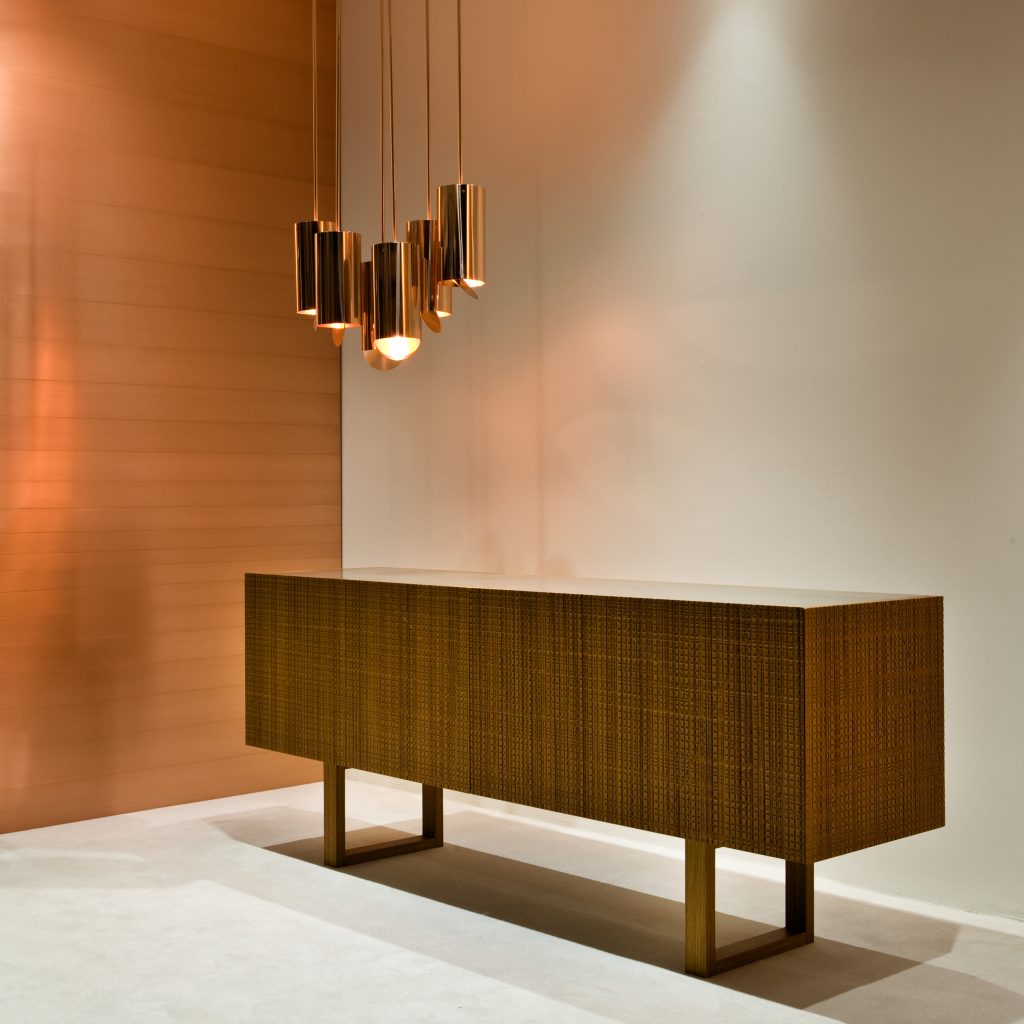
Frequently Asked Questions - Luxury Sideboards & Credenzas
What is the difference between a sideboard and a credenza?
A sideboard is generally a versatile storage piece often used in dining rooms, living spaces, and entryways, usually with a more prominent and sometimes slightly taller presence. A credenza is typically lower in profile and more linear, making it especially well suited to living rooms, offices, and formal interiors where a sleek architectural look is preferred.
Where should I place a luxury sideboard in my home?
Luxury sideboards and credenzas work especially well in dining rooms, living rooms, bedrooms, entryways, hallways, and offices. The best placement depends on what the piece needs to store and how it will contribute to the room’s visual balance. In most cases, it works best along a meaningful wall where it can serve both functional and compositional purposes.
What materials are best for luxury sideboards and credenzas?
Some of the most desirable materials include fine woods, metal accents, glass, natural stone, and mixed-material combinations. The best choice depends on the mood of the room, the surrounding finishes, and the desired level of warmth, contrast, or visual lightness.
Can I customize a sideboard to fit my space?
Yes, customization can be an excellent option, especially when the room has unusual dimensions, specific architectural requirements, or a broader design concept that calls for tailored sizing, finishes, materials, or detailing. Customization is particularly valuable in luxury interiors where integration matters as much as the furniture itself.
Are art credenzas practical for everyday use?
Yes, many art-driven credenzas are fully practical while also carrying collectible and artistic value. Pieces such as those in the Intarsia Collection combine storage function with craftsmanship, narrative design, and limited-edition appeal. They offer everyday usability while also acting as works of functional art.
How do I maintain the finish of a luxury sideboard?
Maintain the finish by dusting regularly with a soft cloth, using material-appropriate cleaning products, avoiding harsh chemicals, and handling the piece with care. Thoughtful maintenance is especially important for artisan finishes, wood surfaces, metal details, and mixed-material designs, all of which benefit from careful long-term care.