

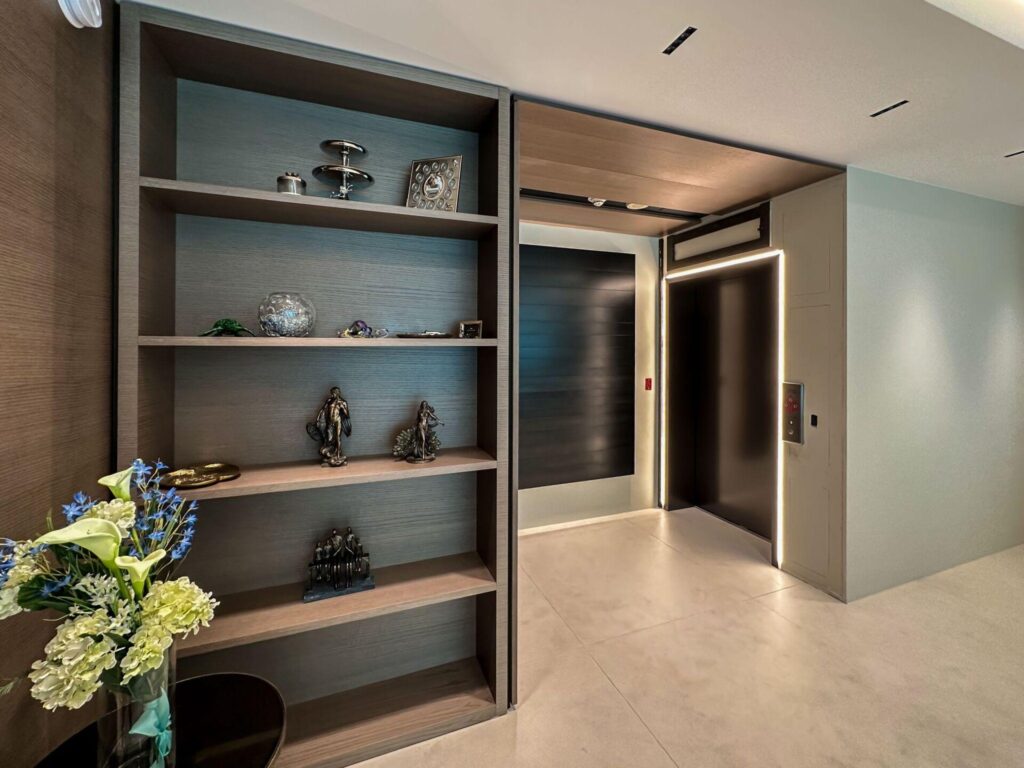
Italian design stands as a global symbol of elegance, innovation, and unparalleled craftsmanship.
The influence of Italian furniture designers on modern aesthetics is profound and lasting. Their work has not only reshaped interiors across the globe but has also challenged the boundaries between art, architecture, and industrial design.
The result is a body of work that continues to inspire furniture manufacturers, interior designers, and collectors worldwide.
1. Gio Ponti – The Father of Italian Modernism
A visionary with a poetic approach to design
Among Italian mid-century furniture designers, few names are as revered as Gio Ponti (1891–1979). Architect, designer, teacher, writer, and editor, Ponti was not only prolific in output but also philosophical in intent. A graduate of the Politecnico di Milano, he left an indelible mark on the cultural and artistic identity of Italy throughout the 20th century.
Ponti’s philosophy could be distilled into one beautifully paradoxical statement: “Enchantment – a useless thing, but as indispensable as bread.” This belief in the emotional and symbolic power of design defined his six-decade-long career, where he continually pursued elegance through lightness, fluidity, and minimalism.
Notable works: from Superleggera to Domus
Ponti’s contributions span across media, materials, and decades, yet several key works define his legacy:
- The Superleggera Chair (1957) for Cassina is perhaps his most iconic creation. Weighing just 1.7 kg, this chair is the perfect synthesis of strength, simplicity, and grace—revolutionary in its time and still a staple in design showrooms today.
- In 1928, Ponti founded Domus Magazine, which remains a leading voice in global architecture and design. Domus wasn’t just a magazine—it was his tool for spreading the gospel of modern Italian creativity to the world.
- The D.5551 Side Table, with its rosewood structure and graphic grid glass top, exemplifies Ponti’s attention to harmony between structural framework and visual poetics.
Throughout the 1940s and 50s, he also collaborated with Richard Ginori, blending traditional Italian porcelain with contemporary minimalism—proving his versatility across scales and materials.
Architect of the everyday and the exceptional
While Ponti’s furniture gained international recognition, his architectural pursuits further amplified his influence. From the Parco dei Principi Hotel in Sorrento to the Pirelli Tower in Milan, Ponti demonstrated how buildings, like furniture, could inspire joy, movement, and openness.
He rejected rigid formalism in favor of modularity, transformability, and lightness of being—principles that remain foundational in the work of many modern studios.
2. Carlo Mollino – The Surrealist Visionary
From alpine curves to sculptural elegance
Carlo Mollino (1905–1973) was a designer unlike any other—an engineer by training, an architect by profession, and an artist at heart. His work embodies an aesthetic of movement, sensuality, and surrealism, inspired as much by his love of skiing and racing as by the landscapes of Northern Italy.
His approach to furniture design was deeply personal, drawing upon metaphor and fantasy. He saw furniture not just as a utilitarian object but as an extension of human desire and imagination. His quote, “Only when a work is not explainable other than in terms of itself can we say that we are in the presence of art,” reveals the core of his creative spirit.
Iconic piece: The Fenis chair
Among Mollino’s standout designs is the Fenis Chair (1959), crafted from solid maple with a backrest composed of two sculpted slats. The chair appears almost anthropomorphic—part architecture, part folk sculpture, and entirely unforgettable.
His other works feature swooping wooden lines, aerodynamic silhouettes, and precise metal joinery—all testaments to his fascination with speed, flight, and organic form. These signature curves, especially in his tables and desks, resemble ski tracks or airplane wings, infusing motion into stillness.
Bridging surrealism and the Modern Movement
Unlike his contemporaries grounded in rationalism, Mollino infused his work with dreamlike ambiguity. He embraced aspects of Surrealist art and symbolism, often designing one-off pieces meant for specific rooms or personalities, rather than for mass production.
His unique style did not conform to popular trends, yet today, it is precisely this individuality that makes his work so valuable and revered.
3. Franco Albini – Rationalism and Craft Combined
An intellectual disciple of Gio Ponti
Franco Albini (1905–1977), one of the most important Rationalist Italian furniture designers, began his career under the mentorship of Gio Ponti, later establishing a practice that merged intellectual rigor with material sensitivity.
His background in architecture and fascination with engineering influenced everything he touched—from furniture to cityscapes. Albini wasn’t just a designer; he was a system-thinker, constantly seeking balance between structure and spirit, tradition and innovation.
Luisa chair: the embodiment of design refinement
Albini’s most iconic piece, the Luisa Chair (1955), took 15 years to perfect. Composed of solid wood and refined down to the smallest joinery, this minimalist chair with integrated armrests won him the Compasso d’Oro—Italy’s most prestigious design award.
He frequently worked with organic materials such as cane, rattan, and wood, combining traditional Italian techniques with modernist forms. Pieces like the Veliero bookcase and Fiorenza armchair reveal his precision, purity, and focus on visual weightlessness.
Architecture and systems thinking
Albini also brought his vision to large-scale public works, such as the Rinascente Department Store in Rome and the design of several Milan Metro Line 1 stations. With his partner Franca Helg, he developed cohesive architectural languages that blended minimalism with human warmth.
His designs remain in production today and are protected and promoted by the Fondazione Franco Albini.
4. Osvaldo Borsani – The Industrial Artisan
From artisan roots to Tecno’s global reach
Osvaldo Borsani (1911–1985) was born into a family of skilled furniture makers and trained from a young age in the craft of cabinetry at his father’s workshop, Atelier di Varedo. But Borsani was not content to merely follow tradition—he envisioned a future where industrialization and mass production could coexist with high design.
After earning his degree from the Politecnico di Milano, Borsani’s early success came at the 1933 Milan Triennale, where his Casa Minima concept—a fully furnished modular home—won a silver medal. With clean geometries, tubular steel elements, and efficient spatial planning, Casa Minima foreshadowed his life’s mission: to make modern design more accessible without compromising on quality or elegance.
P40 chair and the modular revolution
In 1953, Osvaldo and his twin brother Fulgenzio founded Tecno, a furniture company dedicated to producing industrially manufactured furniture that retained the soul of artisan craftsmanship. This move was groundbreaking: Tecno became a hub of experimentation where innovation met production.
His most celebrated design from this era is the P40 Lounge Chair (1955), often described as a “machine for sitting.” Capable of assuming 486 different positions, the P40 embodied flexibility, ergonomic comfort, and visual clarity. It perfectly expressed Borsani’s belief in adaptability and function—principles that would come to define Italian industrial design for generations.
Tecno soon gained international recognition, delivering solutions for offices, homes, and public spaces, all with a distinctly modern, understated elegance.
Legacy in merging design with accessibility
Borsani’s genius lay in his ability to bridge the gap between industrial production and high design. At a time when many designers resisted mechanization, he embraced it—understanding that technology could democratize beauty. His collaborations with artists like Lucio Fontana and Arnaldo Pomodoro further enriched Tecno’s design language with artistic flair.
Today, his pieces are celebrated in global museums and continue to influence contemporary furniture makers seeking to combine modularity, efficiency, and luxury.
5. Ettore Sottsass – The Postmodern Rebel
Founder of Memphis, defier of convention
Ettore Sottsass (1917–2007) was a revolutionary force in the world of Italian design. With his expressive use of color, pattern, and form, Sottsass defied the minimalist rigidity of mid-century design and offered a postmodern, poetic, and emotional alternative.
Trained as an architect at the Politecnico di Torino, Sottsass began his career designing electronics for Olivetti, including the Valentine typewriter, before launching his most famous venture: the Memphis Group, founded in Milan in 1981. Memphis challenged every design rule—embracing asymmetry, geometric chaos, synthetic materials, and vibrant hues.
Iconic pieces: Carlton, Casablanca, and beyond
Among his most enduring works is the Carlton Room Divider, a sculptural bookshelf composed of intersecting shapes and playful primary colors. It blurs the lines between utility and art, making a bold statement in any interior.
Another hallmark creation, the Casablanca Cabinet, showcases Sottsass’s love of laminate surfaces, biomorphic forms, and vivid contrasts. These pieces were unapologetically loud, emotionally charged, and often metaphoric.
Through his works, Sottsass promoted the idea that design should not merely be functional—it should provoke, delight, and narrate.
Design as poetry and protest
Sottsass famously said, “When I was young, all we ever heard about was functionalism. It’s not enough. Design should also be sensual and exciting.” With this mantra, he liberated furniture from utilitarianism and infused it with meaning and attitude.
His work extended into architecture, ceramics, jewelry, and theory—creating a multidisciplinary legacy that continues to ripple through contemporary design thinking.
6. Achille Castiglioni – Functional Whimsy
A master of clever simplicity
Achille Castiglioni (1918–2002) brought humor, logic, and experimentation to Italian design like no one else. Educated at the Politecnico di Milano and working closely with his brothers Pier Giacomo and Livio, Castiglioni transformed everyday objects into playful yet highly functional designs.
From early on, he was fascinated by the interaction between people and objects, believing that good design should be intuitive and joyful. With a keen eye for repurposing found objects and a passion for minimal construction, Castiglioni created some of the most memorable designs of the 20th century.
Best-known works: Arco lamp and Mezzadro stool
The Arco Lamp (1962), designed with Pier Giacomo, is a true icon of modern lighting. With its arched aluminum stem and marble base, the lamp allows overhead lighting without ceiling suspension—an elegant solution to a functional problem. It’s now a staple in luxury interiors across the world.
Another signature piece is the Mezzadro Stool (1957), which humorously repurposes a tractor seat into domestic seating. Both absurd and ergonomic, it exemplifies Castiglioni’s commitment to user-centered design with personality.
Design with longevity, not trendiness
Castiglioni once said, “Design shouldn’t be trendy. Good design should last over time, until it wears out.” This belief led him to create works that remain in production today—pieces that have withstood decades of evolving tastes without losing relevance or charm.
His archive is now a teaching ground for young designers, and his legacy is preserved in Fondazione Achille Castiglioni, housed in his original Milan studio.
7. Gae Aulenti – A Modernist with Monumental Vision
Pioneering woman in post-war Italian design
In a landscape dominated by men, Gae Aulenti (1927–2012) stood out not only as a female architect and designer but as one of the most visionary minds of the post-war period. A graduate of the Politecnico di Milano, she was one of only two women in her class—an early sign of the boldness that would define her career.
Aulenti became known for her refusal to conform to either modernist purism or decorative excess. Instead, she carved a path that blended architectural authority with artistic intuition, creating works that were as structurally commanding as they were emotionally expressive.
Iconic works: Pipistrello, Jumbo, and Musée d’Orsay
Among her most celebrated industrial designs is the Pipistrello Lamp (1965), created for Olivetti. Inspired by the wings of a bat (pipistrello in Italian), this lamp features an organically curved diffuser atop a telescopic base. It glows with a soft, ambient light—blurring the line between sculpture and function.
Equally iconic is the Jumbo Coffee Table (1972), a solid marble monolith that embodies the gravity and presence of architectural form in a domestic object. Its simplicity is deceptive; like much of Aulenti’s work, it commands space and attention.
Perhaps her most internationally recognized achievement is the conversion of Paris’s Gare d’Orsay into the Musée d’Orsay (1980s). With architectural sensitivity and inventive reuse of space, Aulenti transformed a defunct railway station into one of the world’s most beloved art museums.
Furniture as built form
Aulenti viewed her furniture as if it were architecture. She once said, “I aim to create furniture that appears in a room as buildings on a skyline.” Her pieces were substantial, often low-slung with industrial materials—enameled metal, glass, stone—creating a visual weight that grounded a room.
Her later works with FontanaArte, where she served as artistic director, introduced lighting and furniture that further emphasized clean lines, solidity, and modern clarity—a continuation of her philosophy of spatial harmony.
8. Vico Magistretti – Simplicity as Sophistication
A master of minimalist expression
Vico Magistretti (1920–2006) was a Milanese designer and architect who turned the language of simplicity into a sophisticated art form. Descended from a family of architects, he had design in his DNA, but it was his experience in wartime exile in Switzerland that shaped his humane, essentialist view of architecture and product design.
Upon returning to Italy, Magistretti’s design career blossomed through collaborations with some of the most prestigious names in Italian manufacturing, including Artemide, Cassina, and Oluce. His furniture and lighting are marked by graceful reduction—never cold minimalism, but emotionally resonant clarity.
The Eclisse lamp: functional elegance
Designed in 1965 for Artemide, the Eclisse Lamp is Magistretti’s most iconic object. A painted metal sphere with a rotating inner shell, the lamp allows users to “eclipse” the bulb and control the intensity of the light manually. This blend of form, metaphor, and interaction earned the design the Compasso d’Oro Award in 1967 and established Magistretti as a pioneer of user-focused, poetic minimalism.
His other notable creations include the Maralunga Sofa for Cassina and the Atollo Lamp for Oluce—each reflecting his belief that function must be elegant, intuitive, and universal.
Designing the rhythm of space
Magistretti didn’t just design objects—he shaped the spaces between them. His architecture, furniture, and urban plans worked together to create environments of flow, balance, and light. Every curve and surface was considered, every proportion refined, resulting in timeless forms that are still in production and beloved today.
9. Piero Fornasetti – The Dreamer in Black and White
Artistic surrealism in everyday life
Piero Fornasetti (1913–1988) was not a designer in the traditional sense—he was a visual poet who turned furniture, ceramics, and objects into theatrical canvases. A painter, printmaker, and sculptor, Fornasetti’s work defied categorization, characterized by whimsical motifs, illusionistic patterns, and imaginative detailing.
Expelled from Milan’s Brera Academy, he founded his Art Printshop in 1930 and quickly became a favorite of avant-garde artists and literati. His collaboration with Gio Ponti in the 1940s brought him deeper into the world of furniture design, where he created some of the most enigmatic and collectible pieces of the 20th century.
Signature motifs: Lina Cavalieri and La Stanza Metafisica
Fornasetti’s most recognizable motif is the face of Lina Cavalieri, an opera singer whose mysterious gaze appears on over 350 different objects in his “Tema e Variazioni” series. Her image has become a symbol of Fornasetti’s artistic obsession with repetition, mystery, and feminine beauty.
Other standout works include his “La Stanza Metafisica” installation and decorated furniture adorned with trompe-l’œil architectural elements, celestial bodies, playing cards, and classical sculptures. His designs often blurred reality and fantasy, inviting the user into a dreamlike experience.
Function meets fantasy
Despite the fantastical visuals, Fornasetti’s furniture was meticulously constructed and eminently functional. He believed that decorative art should be part of daily life. “What I did was something more than decoration—it was an invitation to the imagination,” he once said.
His Milanese atelier, revived by his son Barnaba Fornasetti, continues to produce original designs today, ensuring that his surreal vision lives on in contemporary interiors around the world.
10. Gaetano Pesce – Radical, Organic and Revolutionary
A leader of the Italian Radical Group
Gaetano Pesce (1939–2024) was a pioneering force in both the Italian Radical Design movement and the broader world of experimental furniture. Trained in architecture at the University of Venice, Pesce helped co-found the Gruppo N, a collective of forward-thinking creatives who challenged the norms of postwar design.
Unlike his modernist predecessors, Pesce rejected rigid formalism in favor of fluidity, spontaneity, and social commentary. For him, design was not just about utility or beauty—it was about communication, critique, and transformation. His works are often described as functional art: provocative in form, political in message, and unafraid of imperfection.
The La Mamma chair: design meets ideology
His most iconic creation, the UP5_6 “La Mamma” Chair (1969), designed for B&B Italia, stands as a bold feminist and political statement. The chair features a voluptuous, anthropomorphic form that resembles an ancient fertility figure, paired with a round ottoman tethered like a ball and chain. Pesce described the piece as symbolizing the oppression of women throughout history.
Beyond its symbolic resonance, the UP5 was also technologically groundbreaking. Made of vacuum-packed polyurethane foam, the chair was compressed flat and expanded upon opening—revolutionizing packaging and reshaping expectations of what furniture could be.
Design as storytelling and rebellion
Throughout his career, Pesce experimented with resin, foam, plastics, and unexpected combinations of textures and colors. Each piece he created was singular—a rebellion against the idea of mass-produced perfection. His works were about expression, not repetition, and each object told a story.
From his Organic Building in Osaka to chandeliers in European museums, Pesce brought his philosophy of democratic, human-centered design to every discipline he touched. His legacy is one of courage, imagination, and defiance.
| Piece | Designer | Year | Meaning / Innovation |
|---|---|---|---|
| Superleggera Chair | Gio Ponti | 1957 | Ultra-light yet sturdy; simplicity and rational elegance |
| Fenis Chair | Carlo Mollino | 1959 | Folk-inspired backrest, organic curves referencing nature and sport |
| P40 Lounge Chair | Osvaldo Borsani | 1955 | Adjustable “machine for sitting” with 486 positions |
| Carlton Room Divider | Ettore Sottsass | 1981 | A bookshelf that challenges symmetry, balance, and color norms |
| Pipistrello Lamp | Gae Aulenti | 1965 | Bat-wing shape symbolizing transformation and soft ambient light |
| Eclisse Lamp | Vico Magistretti | 1965 | Manual eclipse mechanism, metaphor for light control and emotion |
| La Mamma Chair (UP5_6) | Gaetano Pesce | 1969 | Feminist political statement; vacuum-packed innovation |
How MATERIA Carries Forward the Legacy of Italian Furniture Designers
At MATERIA Collection, the legacy of Italian furniture designers isn’t just admired—it’s actively continued. We draw inspiration from the timeless silhouettes of Ponti, the modular innovation of Borsani, the radical curiosity of Pesce, and the poetic minimalism of Magistretti. These influences are not only seen in our forms but are deeply embedded in our design processes and values.
Commitment to handcrafted, customizable pieces
Each piece we produce is a response to a specific space, a specific need, and a specific vision. Just as the great Italian masters worked closely with craftsmen, MATERIA partners with top-tier artisans to bring designs to life—whether through custom millwork, bespoke furnishings, or unique surface finishes. No two pieces are ever exactly alike.
Bespoke interiors influenced by Italy’s finest design minds
Our luxury interiors—spanning residential homes, refined restaurants, high-end offices, and hospitality spaces—are carefully designed to merge functionality with beauty. Like Gio Ponti and Franco Albini, we believe good design begins with human needs and evolves into environments that elevate everyday living.
Our work pays tribute to a rich heritage while boldly stepping into the future—one crafted surface, tailored piece, and timeless space at a time.
FAQ – Italian Furniture Designers and Their Legacy
What makes Italian furniture designers so influential?
Italian furniture designers are globally renowned for blending artistic vision with technical precision. Their work is deeply rooted in a tradition of fine craftsmanship, yet they constantly innovate with new forms, materials, and philosophies. From Gio Ponti’s minimal elegance to Gaetano Pesce’s radical creativity, Italian designers have shaped the global understanding of modern furniture as both functional and artistic.
How does MATERIA Collection embody the legacy of Italian design today?
MATERIA Collection draws on the legacy of Italy’s most influential furniture designers by offering bespoke, handcrafted, and modular solutions for luxury interiors. Each MATERIA piece is made with a deep respect for Italian craftsmanship and inspired by the values of timeless form, functional elegance, and artistic expression. Whether designing for private residences or high-end commercial spaces, MATERIA channels the spirit of Italian design into every detail.
Who is considered the most important Italian furniture designer?
While many names deserve mention, Gio Ponti is widely considered the father of modern Italian furniture design. With a career spanning six decades, Ponti introduced minimalist forms, founded Domus magazine, and designed the iconic Superleggera chair. His legacy continues to influence designers around the world.