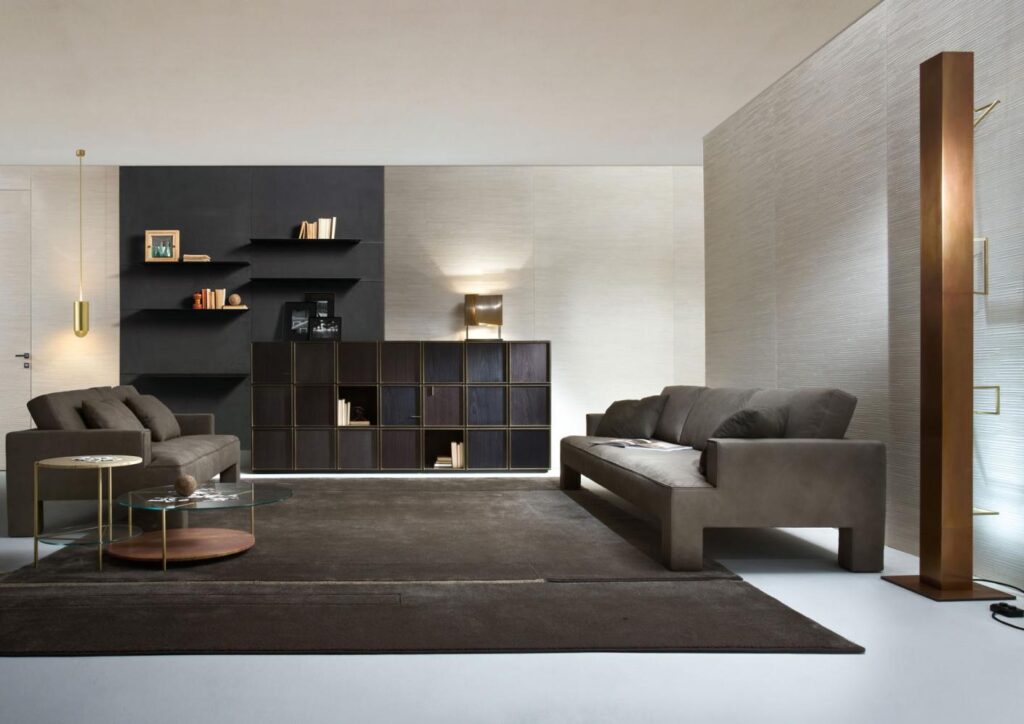
What Is Italian Bespoke Millwork – and Why It Matters in New York
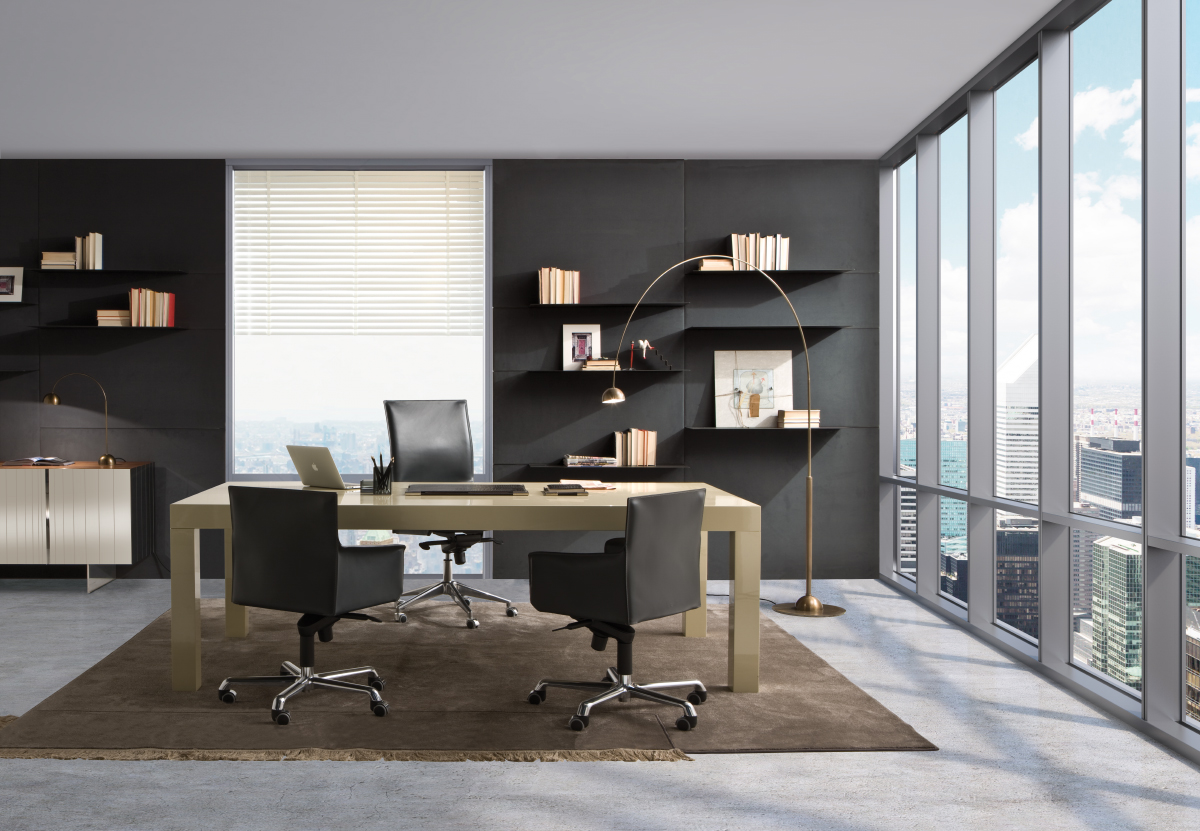
In its simplest definition, millwork encompasses the architectural elements made primarily from wood (and increasingly from composite and metal-wood hybrids) that are fabricated in a mill and installed as part of the building. In a New York apartment, millwork might include:
Interior doors and frames
Baseboards, casings, and crown molding
Wall paneling and decorative cladding
Built-in shelving and bookcases
Custom closets and wardrobe systems
Integrated media units and storage walls
These are not loose furniture pieces that can be shuffled around a room. They are components that become part of the apartment’s architecture, shaping how people move, where they store belongings, and how they experience light and shadow.
Casework, by contrast, is a more specific subset of built elements that focuses on “boxes”: kitchen cabinets, bathroom vanities, modular wardrobes, and other storage units. Casework is often semi-standardized, available in preset dimensions and configurations. It can be of high quality, but it usually starts from a fixed system into which the apartment must fit.
In New York, where apartments rarely conform to perfect grids, this distinction is crucial. Millwork can be truly custom:
It follows the exact angles of a prewar wall or a converted loft.
It wraps around structural columns or mechanical chases without leaving wasted pockets.
It bridges height differences and uneven slabs that would defeat a standardized cabinet line.
By blending millwork and casework into a single, coordinated package, Italian bespoke millwork gives designers the freedom to treat an NYC apartment as a complete three-dimensional envelope rather than a box filled with separate objects. The result is a more fluid, efficient and visually coherent space.
Elevating Aesthetics: Turning Apartments into Italian-Inspired Interiors
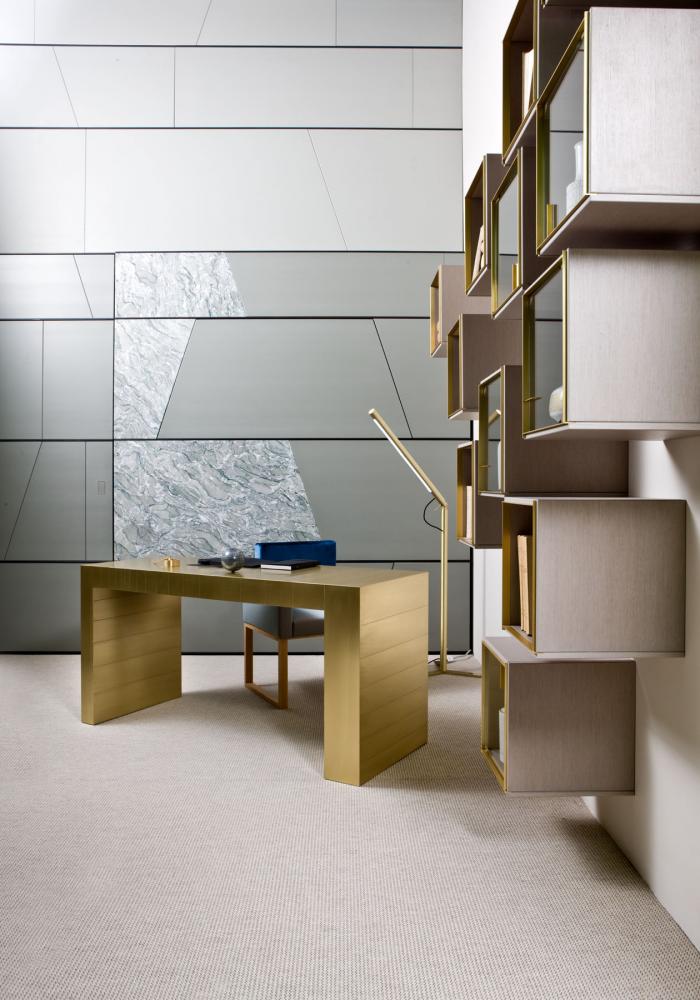
Architectural Wall Panels as the Backdrop for Art and Life
Italian wall panel systems represent a level of refinement that transforms ordinary rooms into sophisticated architectural compositions. Collections such as Maxima, Line, Terre, Stars, Bamboo, Onda, Juta, Tatami, and Decor offer a range of patterns, textures, and rhythms that can serve as the defining backdrop for an entire apartment.
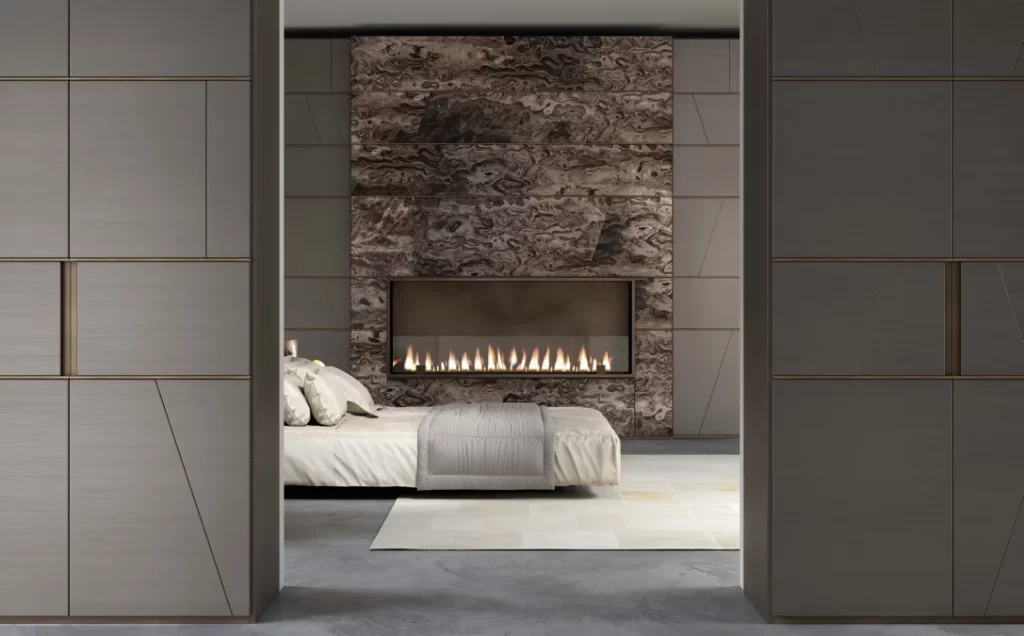
Behind a sofa, wall panels introduce depth without crowding the room. In a dining area, they provide a sense of formality and structure that elevates even compact spaces. In bedrooms, they serve as an alternative to loose headboards, bringing a tailored, hotel-like quality.
Because these panels are installed flush and in alignment with doors or cabinetry, they behave as architecture rather than decoration. This distinction is crucial in New York interiors, where clarity and calm are essential to counterbalance the intensity of the city beyond the windows.
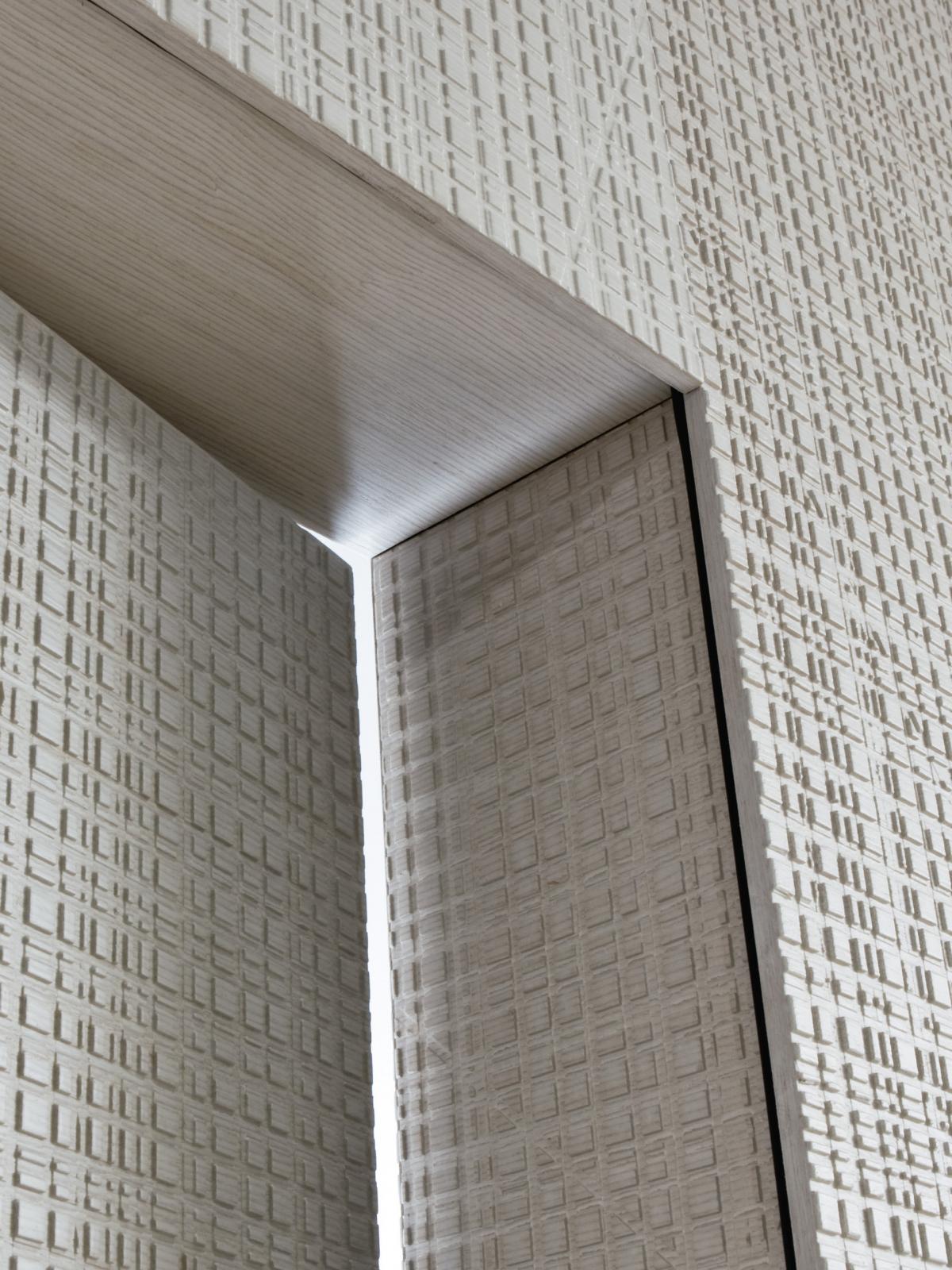
Italian Wall Treatments – From Decorative Panels to Luxury Wallpapers
Italian wall treatments extend far beyond paint or conventional wallpaper. The available range includes:
Decorative relief panels
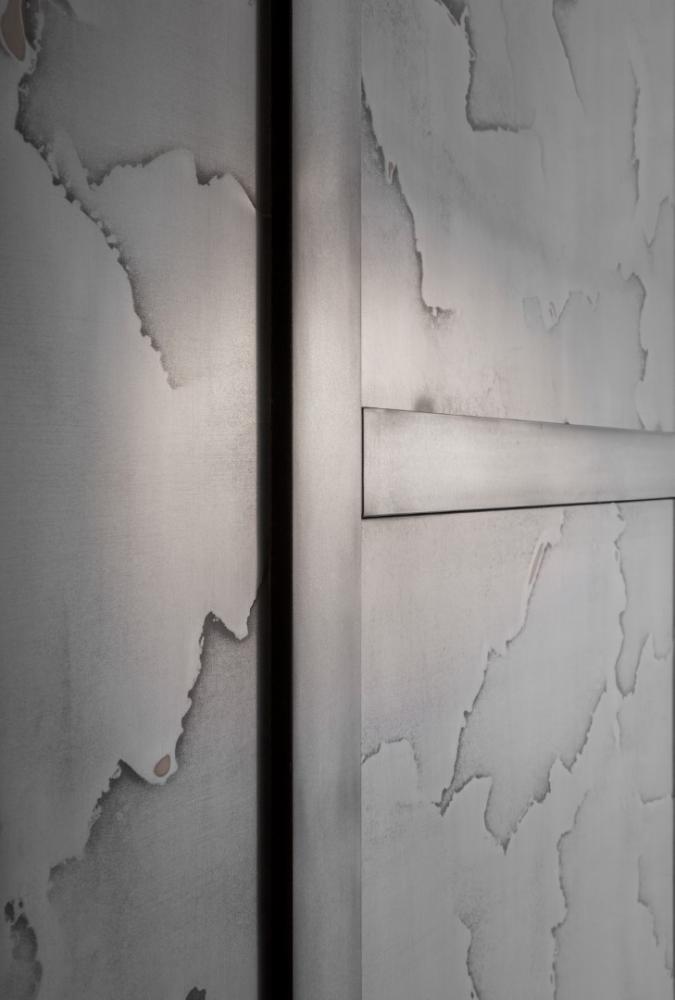
Metal-effect and marble-effect surfaces
Acoustic wall panels designed to soften sound
Luxury wallpapers with tactile or patterned finishes
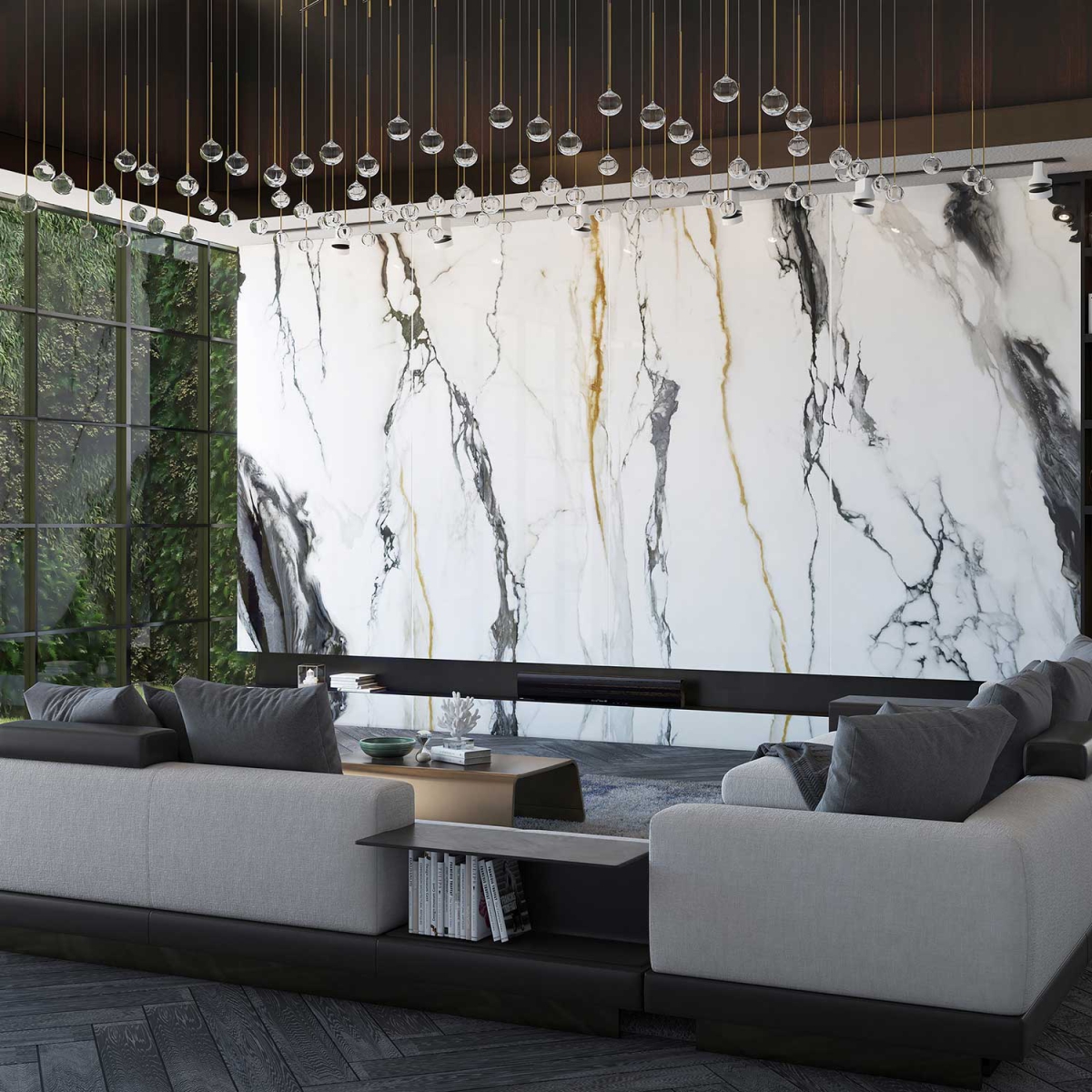
These wall treatments are particularly impactful in small apartments where every surface must contribute to the visual experience. Textured or marble-effect panels can replace heavy artworks, maintaining visual interest without occupying floor or wall depth.
Italian wallpapers offer another layer of nuance. Textured cement-like prints, urban scenes, botanical illustrations, geometric compositions, children’s motifs, and marble-inspired patterns can all be scaled to suit the proportions of a room. The key is balance: a bold feature wall should be paired with quieter adjacent surfaces to avoid overwhelming compact spaces.
Integrated Lighting and Shadow Play
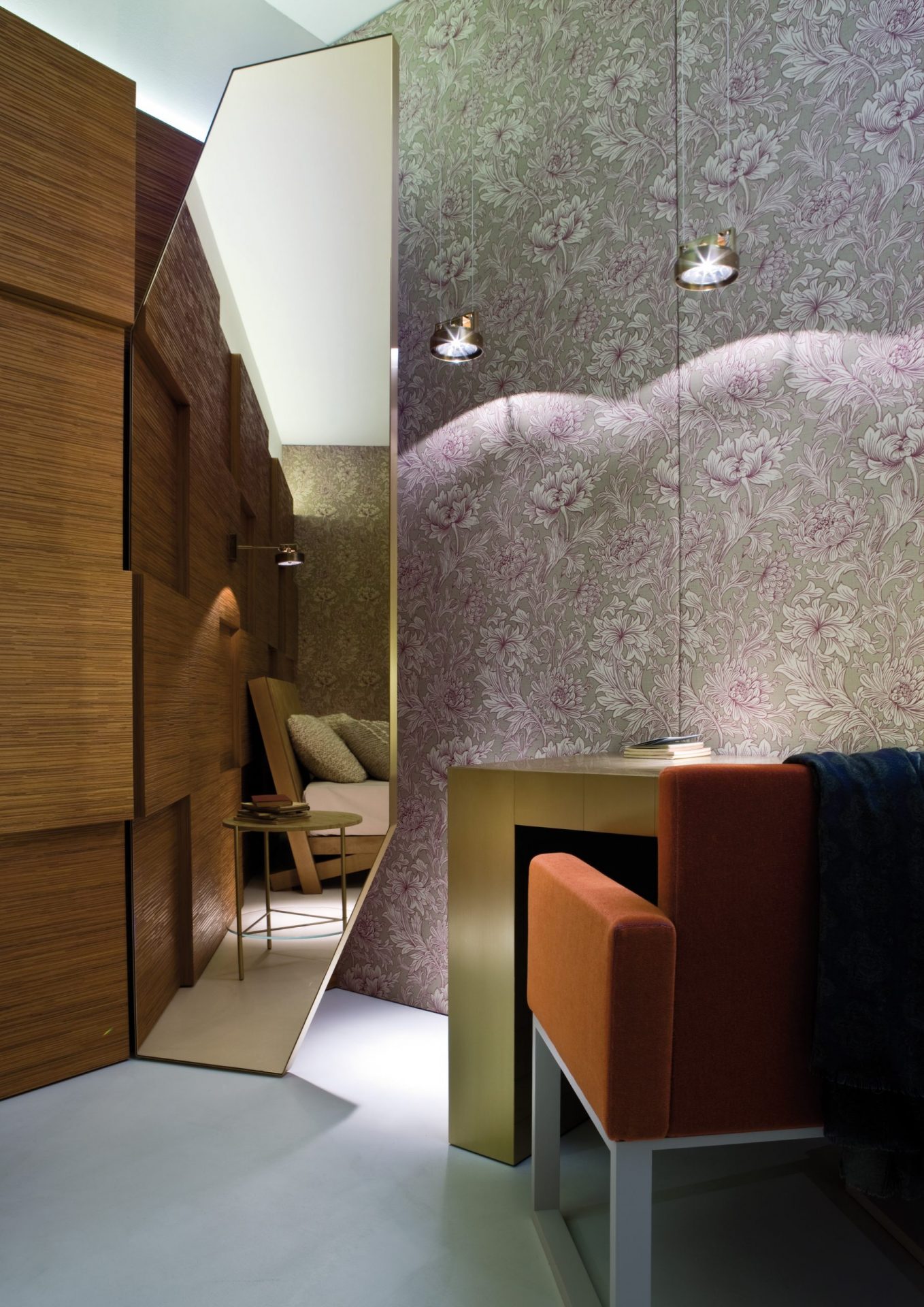
Lighting is as integral to millwork as the materials themselves. Italian bespoke solutions incorporate lighting directly into panels, shelves, ceiling details, and reveals, producing a soft and controlled atmosphere.
LED strips within shelving niches elongate walls by drawing the eye horizontally. Vertical lighting recessed into wardrobe sides creates a boutique-like glow that adds depth and improves visibility. Soft uplighting behind wall panels produces shadow play that animates the room without introducing bulky lamps or glaring overhead fixtures.
This layered approach to light gives even modest apartments a sense of richness and dimensionality, enhancing both function and mood.
Material and Finish Palettes for New York Apartments
Material selection defines the overall tone of an apartment. In New York, the interplay between natural light, orientation, and urban context determines which palette will thrive.
Warm woods work particularly well in north-facing rooms or in apartments shaded by neighboring buildings. They provide depth and comfort, counterbalancing the coolness of limited sunlight. Cool lacquers or light-toned veneers suit south- and west-facing rooms that receive abundant daylight, reflecting brightness and enhancing spaciousness.
Italian bespoke millwork often blends multiple finishes within one composition: exotic veneers paired with stone, metal inlays alongside matte lacquer, or subtle relief patterns set against smooth backgrounds. This combination yields a discreet but luxurious effect that aligns effortlessly with contemporary New York aesthetics.
Rather than relying on ornamentation, the luxury emerges from quality: the precision of a joint, the quiet sheen of a lacquer, the exact alignment of grain across panels. It is a minimalism that is not bare but richly layered, offering the refined experience that defines the best Italian interiors.


Modern Custom Millwork – Trends for 2026 and Beyond in New York
Minimalist Built-In Furniture
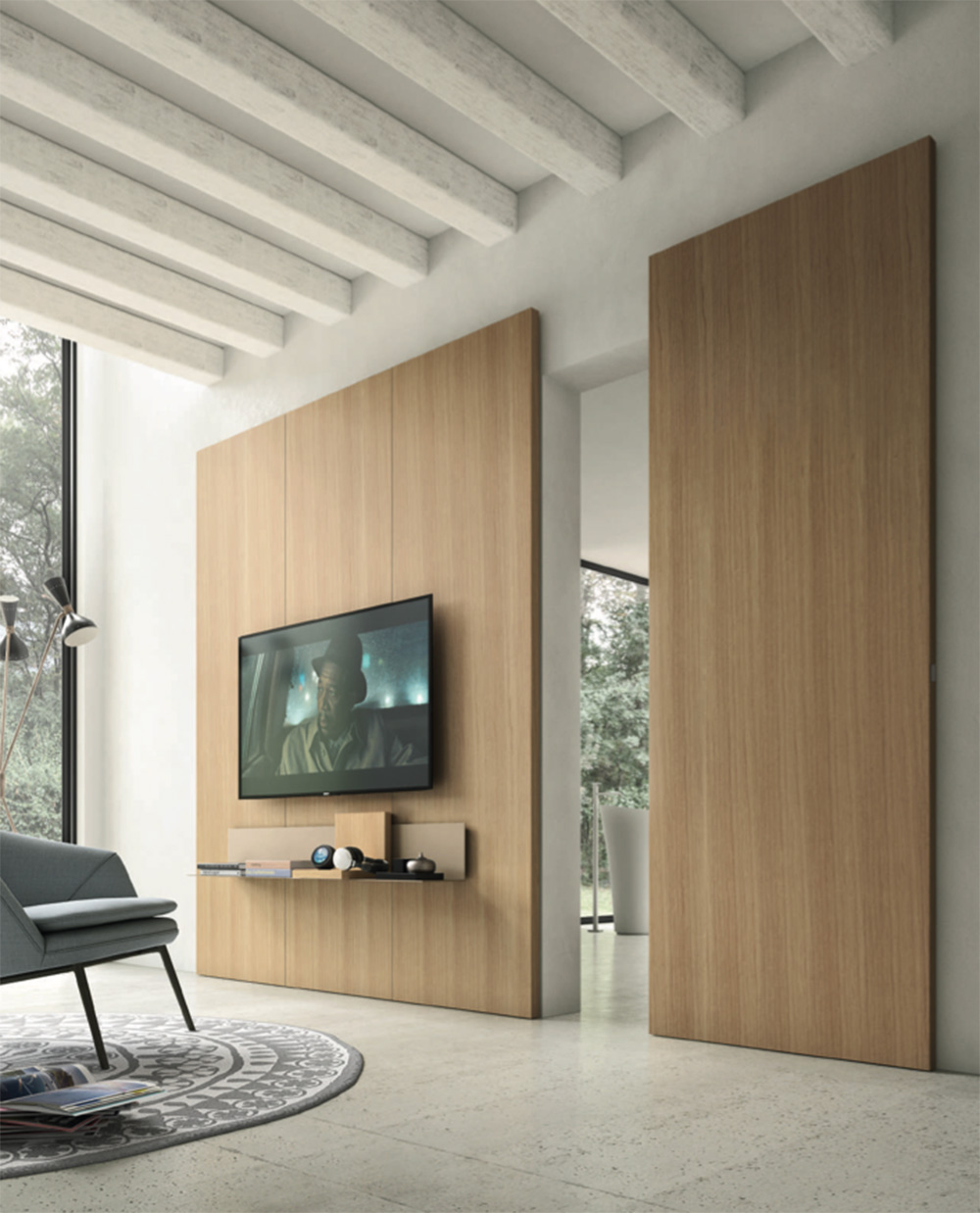
The defining movement in contemporary New York interiors is a shift toward refined minimalism, and Italian bespoke millwork leads this evolution. The emphasis is not on decoration, but on architectural clarity. One of the most influential trends for 2026 and beyond is the use of flush, handle-less fronts and precisely integrated pulls that erase visual interruptions. Instead of individual cabinets and separate storage pieces, millwork becomes a continuous surface, almost a second skin for the apartment.
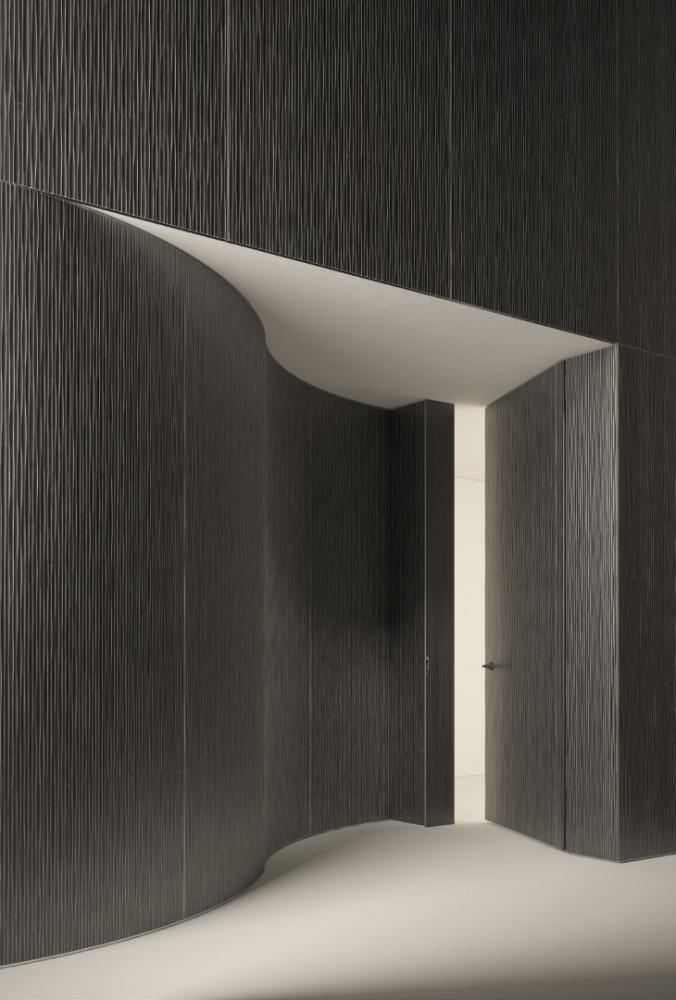
This approach is often described as the “wall of millwork” concept. A single installation may conceal wardrobes, media storage, coat closets, bookshelves, mechanical access, and even doors to adjacent rooms. When executed with Italian precision, these concealed zones function effortlessly while maintaining a clean, uninterrupted façade.
Customized Statement Ceilings and Artful Wall Paneling
While walls have long been a focus of interior design, the ceiling is becoming increasingly important in New York apartments. With rising demand for expressive yet understated architecture, Italian bespoke millwork is now extending upward into customized statement ceilings.
Complementing this is a surge of interest in artful wall paneling. Geometric panel layouts, three-dimensional reliefs, and subtle patterning create visual anchors for art and furniture arrangements. These panels are not mere decoration; they define spatial hierarchies. In long or narrow living rooms, a feature panel helps organize the room around a central axis. In compact bedrooms, a rhythmic headboard wall brings structure and dimension without overwhelming the space.
Sustainable Italian Millwork Materials
Sustainability is no longer a niche request among New York clients. It has become a core expectation in luxury design. Italian bespoke millwork aligns seamlessly with this shift because many Italian manufacturers have long prioritized responsible production, artisan techniques, and high-quality materials meant to endure for decades.
New trends for 2026 emphasize:
Reclaimed woods with unique histories and patinas
Eco-friendly veneers sourced from responsibly managed forests
Low-VOC paints, lacquers, and adhesives
Finishes and composites that reduce environmental impact while preserving aesthetic excellence
For New York homeowners, sustainable millwork is not simply a moral preference. It also supports long-term property value. Apartments featuring natural, responsibly sourced materials age gracefully and appeal to increasingly conscientious buyers. Italian sustainable luxury represents the intersection of ethics, longevity, and visual refinement.
From Iconic Hospitality to Intimate New York Homes – Materia’s Design DNA
The strength of the brand lies in its dual identity: global in reach, yet intimately connected to Italy’s artisan traditions. This combination allows Materia to translate the sophistication of European design into finely calibrated solutions for the spatial constraints and stylistic aspirations of New York living.
The Buddha-Bar New York as a Benchmark for Italian Bespoke Millwork
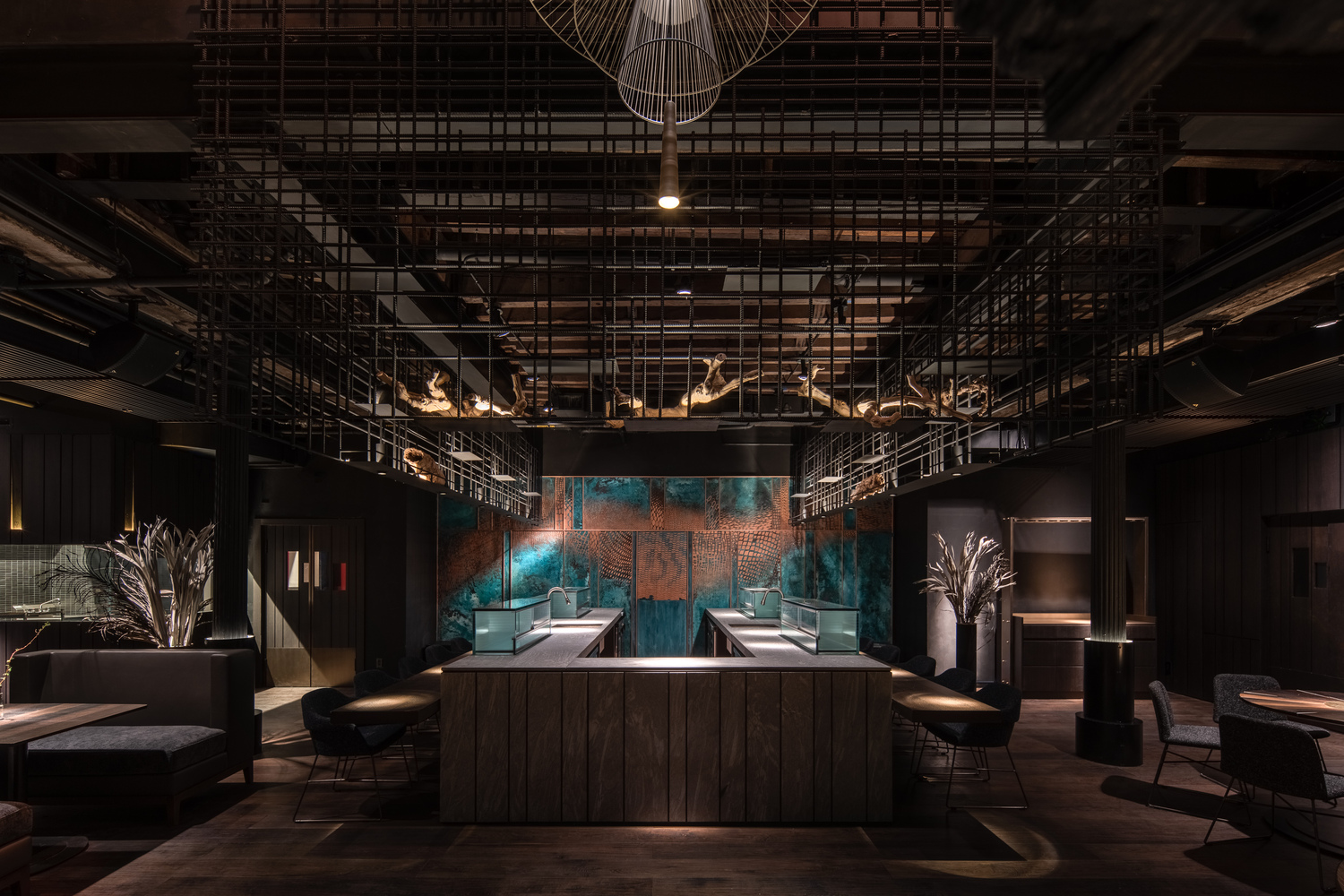
One of Materia Collection’s most significant achievements is its collaboration on the iconic Buddha-Bar New York, executed in partnership with YOD Design Lab. This large-scale project demonstrates how Italian bespoke millwork can shape an entire experiential environment.
For New York residents, this pedigree translates into something powerful: the same level of precision and artistry deployed in iconic hospitality interiors can be applied, on a more intimate scale, to their own apartments.
From One-of-a-Kind Pieces to Comprehensive Apartment Programs
Materia Collection is distinguished by its ability to scale from artisanal one-off pieces to comprehensive apartment programs. For some clients, this means commissioning a single custom cabinet or a unique wall panel installation with an artisan finish. For others, it involves coordinating an entire interior package:
Fine furniture
Closet and cabinet systems
Architectural wall panels
Luxury interior and exterior doors
Custom kitchens and appliances
Integrated lighting
This comprehensive approach ensures that every part of the apartment communicates the same design language. Doors align with wall panels; wardrobes share materials with kitchen cabinetry; lighting is integrated throughout. The result is a cohesive interior where millwork, surfaces, and furnishings feel designed as a unified whole rather than assembled from disparate sources.
Wall Treatments and Fine Furniture – Completing the Italian Millwork Story
When Italian bespoke millwork is used to its full potential, wall treatments, doors, and furniture are not separate decisions but components of a single, carefully orchestrated composition.
In a New York living room, for example, a Line wall panel system might define the main seating wall with vertical fluting, while the adjacent pivot or swing door uses the same pattern and finish. The door visually disappears into the paneling, and circulation is integrated into the architecture rather than marked by a separate trim package. A low sideboard in a complementary finish-perhaps a quieter, matte veneer from the Maxima or Terre families-grounds the composition without breaking the rhythm established by the wall.
Fine Furniture That Works with Integrated Millwork
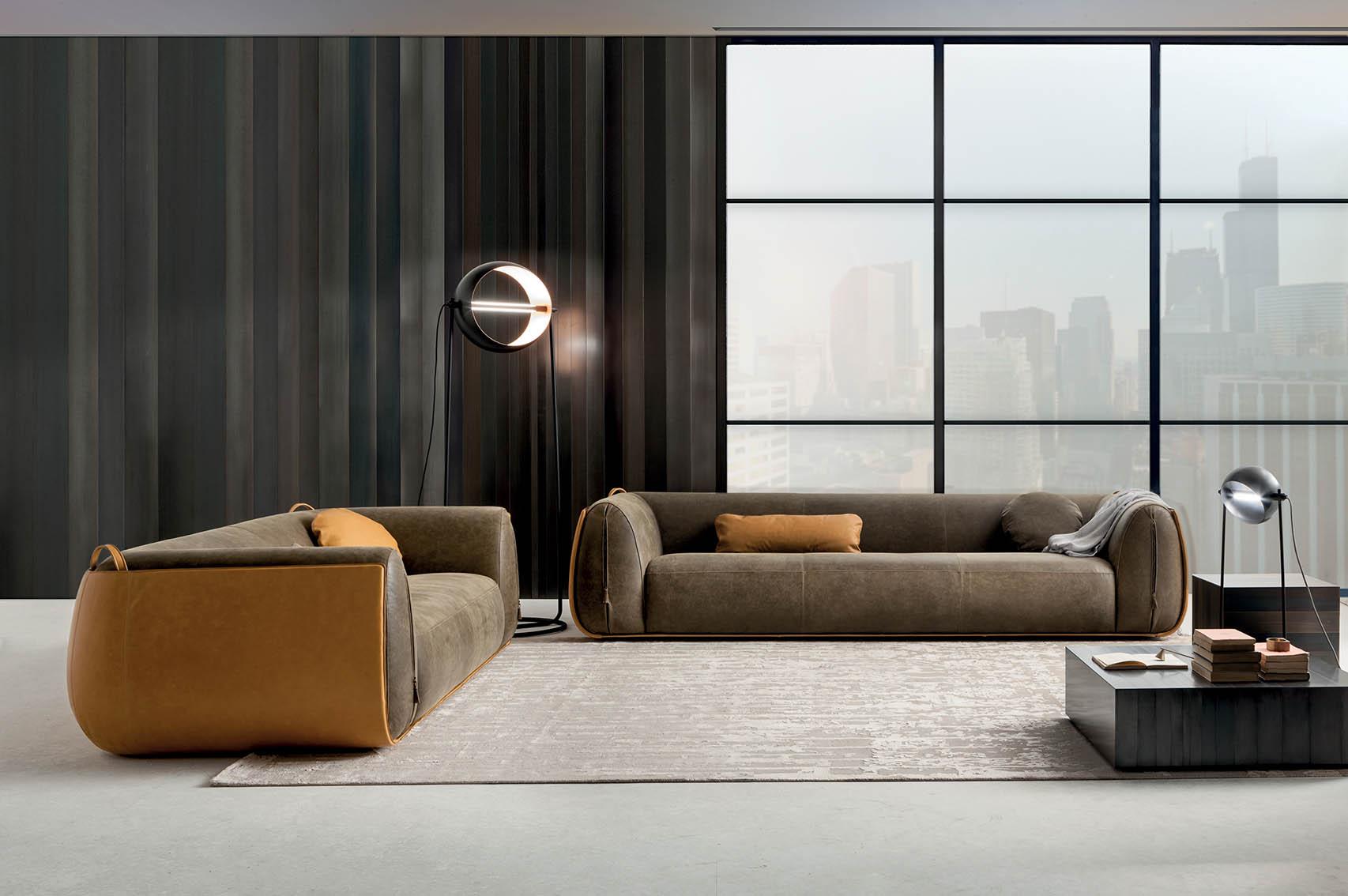
The effectiveness of Italian bespoke millwork is amplified when fine furniture is selected to support, not compete with, the built-in architecture. Sideboards, consoles, wall units, chairs, and tables can either reinforce the millwork’s geometry or clash with it. When both millwork and furniture come from a curated Italian collection, the proportions, materials, and detailing tend to align naturally.
There is also a practical benefit in sourcing both millwork and furniture from a single, curated ecosystem. Finishes can be matched across doors, wall panels, and freestanding pieces; stone selections for a dining table can echo a kitchen island; metal details in a coffee table can repeat those found in wardrobe handles. This reduces the risk of near-misses where tones or textures are almost-but not quite-aligned. Instead, the apartment feels resolved down to the smallest junction.
Choosing the Right Italian Bespoke Millwork Partner in New York
What to Look For in a Millwork Partner
When evaluating a millwork partner for an NYC apartment, certain criteria are particularly important:
Proven experience delivering Italian bespoke millwork in New York residences, not just in showrooms or overseas projects.
Access to reputable Italian brands and artisans, ensuring that the products are authentic, tested, and produced to a high standard.
The ability to provide detailed shop drawings and technical documentation that architects, contractors, and boards can review.
A library of material samples and mockups so clients can make informed decisions about finishes, textures, and hardware.
Realistic timelines that account for production, shipping, customs, and on-site installation, with clear communication at each stage.
A strong partner will also bring a consultative mindset-guiding clients toward solutions that are appropriate for their apartment, rather than simply selling catalog pieces. They will anticipate issues such as ventilation for enclosed appliances, access panels for building systems, and disassembly strategies for future maintenance.
How Materia Collection Supports Designers and Homeowners
Materia Collection operates at the intersection of Italian design and New York practicality. The New York showroom at 267 5th Ave, Unit 504, is more than a display space; it is a working hub where designers, homeowners, and project teams can explore materials, examine details, and test configurations.
In collaboration with architects and interior designers, Materia helps define the millwork scope, refine layouts, and select appropriate collections for each room. This collaborative approach ensures that the final design is cohesive and buildable, not merely theoretical. For homeowners working without a full design team, Materia can provide guidance on priorities, helping them allocate budget where bespoke millwork will make the greatest impact.
Perhaps most importantly, Materia is committed to razor-sharp precision and skillful installation. The company’s experience on complex projects-ranging from luxury apartments to hospitality landmarks such as Buddha-Bar New York-translates directly into an ability to manage details on site, coordinate with contractors, and deliver finished work that aligns with both the design intent and the realities of the building.