


Throughout history, the way people design and arrange their interiors has mirrored their cultural beliefs, economic conditions, and technological capabilities. From the opulent tombs of ancient Egypt to the symmetry of Greek and Roman villas, and from the medieval practicality of stone castles to the Renaissance grandeur of European palaces, interior design has continuously evolved to meet the changing needs of society.
The Ancient Origins of Interior Design
Long before interior design became a recognized profession, humans were already shaping their living environments to reflect their needs and cultural identities. The first known attempts at interior design can be traced back to prehistoric times, when early humans decorated their cave walls with paintings that depicted hunting scenes and daily life. As civilizations developed, so did their approaches to interior decoration.
Three of the most influential ancient civilizations—Egypt, Greece, and Rome—laid the foundation for many of the principles we still see in interior design today. Each of these cultures had distinct artistic and architectural styles that influenced not only their own societies but also the future of global interior design.
Egyptian Interior Design: Gold, Ivory, and Intricate Wall Paintings
Ancient Egyptian interior design was closely linked to religion, status, and the afterlife. The Egyptians believed in creating spaces that were not only functional but also spiritually significant. Their homes, temples, and tombs were adorned with vibrant colors, elaborate murals, and luxurious materials such as gold and ivory.
- Color Symbolism: Egyptians used bold colors with deep meanings. Gold represented divinity, blue symbolized the sky and water, while red was associated with energy and power. These colors were often applied in intricate patterns on walls, furniture, and decorative objects.
- Hieroglyphics and Wall Art: Unlike modern interior designers, Egyptians incorporated hieroglyphic writing directly into their decor. Walls were filled with detailed paintings that narrated stories of the gods, daily life, and the afterlife.
- Luxurious Materials: Wealthy Egyptians furnished their homes with ebony, ivory, and precious metals. Even everyday objects like chairs and tables were intricately carved and inlaid with jewels.
Perhaps the most famous example of Egyptian interior design is King Tutankhamun’s tomb, which was filled with gold-covered furniture, elaborate chests, and colorful murals. These designs were meant to ensure that the deceased had a comfortable and luxurious afterlife.

Greek Contributions: Symmetry, Balance, and Geometric Structures
The Greeks took a more structured and harmonious approach to interior design. Unlike the ornate and symbolic nature of Egyptian interiors, Greek design focused on simplicity, balance, and proportion. Greek architecture and design were heavily influenced by philosophical ideals, emphasizing order and beauty.
- Symmetry and Geometry: Greek interior design was all about proportion. The famous Golden Ratio was applied to architecture, furniture, and decorative elements to achieve perfect balance.
- Materials: The Greeks favored natural materials such as stone, marble, and wood. They used painted terracotta tiles for floors and white plastered walls to reflect light.
- Columned Interiors: Greek interiors often featured large, open spaces supported by Doric, Ionic, or Corinthian columns, adding both functionality and elegance to their homes and public buildings.
- Minimalist Aesthetics: Unlike the excessive decoration of Egyptian homes, Greek interiors were more refined and less cluttered, focusing on a few key artistic elements like sculptures, pottery, and frescoes.
Roman Influence: Mosaics, Frescoes, and Luxurious Materials
Roman interior design built upon Greek principles but introduced more luxury, complexity, and grandeur. Romans were known for their love of wealth and status, and their interiors reflected this.
- Mosaics and Frescoes: Roman homes, especially those of the elite, featured elaborate mosaic floors and fresco-painted walls. These artworks depicted mythological scenes, landscapes, and intricate patterns.
- Opulent Materials: Romans used marble, bronze, and exotic woods to create extravagant interiors. Even functional objects like benches and dining tables were adorned with decorative carvings and gold accents.
- Innovative Use of Space: Unlike Greek homes, which were often simple in layout, Roman homes featured complex villa designs, including courtyards, heated baths, and grand dining halls.

The Middle Ages: Functionality Over Aesthetics
As Europe entered the Middle Ages (5th to 15th century AD), interior design took a dramatic turn from luxury to functionality. The focus shifted from beauty to practicality, largely due to political instability, religious influence, and economic conditions.
Gothic and Medieval Designs: Heavy Wooden Furniture, Stone Castles, and Tapestries for Warmth
- Stone Walls and Small Windows: Medieval homes, particularly in castles, were built with thick stone walls and narrow windows to provide protection against invaders.
- Heavy Wooden Furniture: Furniture was large, bulky, and hand-carved, designed to last generations. It often featured intricate religious motifs.
- Tapestries for Warmth: Since castles and homes had cold stone walls, people used large tapestries as insulation, covering walls to keep rooms warm. These tapestries were often decorated with medieval scenes and heraldic symbols.
The Shift to Practicality: Dark Interiors, Religious Symbolism, and Fortress-Like Homes
The dark, fortress-like aesthetic of medieval interiors was heavily influenced by the power of the Catholic Church. Religious symbolism played a key role in decor:
- Gothic Style Emerges: By the 12th century, the Gothic architectural style brought higher ceilings, pointed arches, and large stained glass windows, making churches and castles more majestic yet functional.
- Simple Living Quarters: Unlike Roman villas, medieval homes had a one-room layout, with a central fireplace and wooden beams for structural support.
The Evolution from Medieval Austerity to Renaissance Elegance
As Europe moved into the Renaissance period (14th to 17th century), interior design transformed once again, bringing back artistic expression, balance, and elegance. The Renaissance revived many classical elements of Greek and Roman design, paving the way for more sophisticated and decorative interiors.
In the next section, we will explore how Renaissance and Rococo styles revolutionized interior design, bringing back luxury and artistic expression.

Renaissance to Rococo: The Age of Extravagance
The period from the 15th to the 18th century marked an era of luxury, artistic revival, and elaborate interior design. After the dark and functional aesthetics of the Middle Ages, the Renaissance brought back the grandeur of classical Greek and Roman styles, while Baroque and Rococo pushed interior design towards dramatic embellishments and aristocratic elegance.
The Renaissance (1450–1600 AD): Classical Revival and Grand Interiors
The Renaissance, meaning “rebirth,” was a cultural movement that began in Italy and spread across Europe. It emphasized classical principles of proportion, symmetry, and balance, drawing inspiration from Greek and Roman architecture. Interior design during this period became an expression of wealth, education, and artistic refinement.
Key Features of Renaissance Interiors:
- Grand Spaces: Interiors featured large, open rooms with high ceilings and intricate woodwork.
- Rich Fabrics and Materials: Velvet, brocade, silk, and tapestries were used for wall coverings, curtains, and furniture upholstery.
- Symmetry and Balance: Rooms were arranged using classical proportions, ensuring a harmonious aesthetic.
- Decorative Ceilings and Frescoes: Walls and ceilings were adorned with hand-painted frescoes, often depicting mythological scenes, religious narratives, or natural landscapes.
One of the best examples of Renaissance interior design is Palazzo Pitti in Florence, Italy, which showcases rich frescoes, intricate ceiling decorations, and classical sculptures.
Baroque Style (1600–1750 AD): Drama and Heavy Ornamentation
The Baroque era took Renaissance elegance and amplified it with grandeur, dramatic contrasts, and overwhelming decoration. This period reflected the power of monarchs and the Catholic Church, which sought to impress and inspire through art and architecture.
Key Features of Baroque Interiors:
- Ornate Decorations: Interiors were highly ornate, with gilded moldings, elaborate furniture, and intricate carvings.
- Dramatic Lighting: Chandeliers, candelabras, and large windows were used to create theatrical contrasts between light and shadow.
- Heavy Fabrics: Curtains, upholstery, and tapestries were made from luxurious materials such as silk and gold-threaded brocades.
- Elaborate Ceiling Frescoes: Many churches and palaces featured painted ceilings, giving the illusion of infinite space and movement.
A prime example of Baroque interior design is St. Peter’s Basilica in Vatican City, designed by Gian Lorenzo Bernini. The basilica showcases massive columns, gilded altars, and deeply carved woodwork, creating an awe-inspiring space.

Rococo (1700s AD): Light, Playful, and Elegant
While Baroque interiors were grand and theatrical, Rococo design brought a lighter, more whimsical approach. Originating in France during the reign of Louis XV, Rococo became the style of the aristocracy, replacing Baroque’s intensity with pastel colors, curving forms, and intricate details.
Key Features of Rococo Interiors:
- Soft Color Palettes: Light pastels like pale blue, pink, ivory, and gold accents replaced Baroque’s darker tones.
- Asymmetry and Curved Lines: Unlike the strict symmetry of previous styles, Rococo embraced flowing, organic forms.
- Delicate and Feminine Touches: Interiors featured floral motifs, dainty furniture, and sculptural details.
- Mirror Panels and Chandeliers: Large mirrors were placed strategically to reflect light and create an airy feel.
The Palace of Versailles, particularly the Salon de la Princesse in Paris, exemplifies the Rococo aesthetic with its intricately carved panels, pastel ceiling paintings, and gold accents.

The 19th Century: Victorian Excess and the Arts & Crafts Movement
As the world entered the 19th century, interior design experienced a period of excess followed by a return to craftsmanship. The Victorian Era brought rich, eclectic interiors, while the Arts & Crafts Movement emerged as a reaction against industrialization.
The Victorian Era (1837–1901 AD): Ornate and Eclectic Interiors
The Victorian Era, named after Queen Victoria of England, was a time of rapid industrialization, increased wealth, and mass production. Interiors became densely decorated, featuring a mix of styles that reflected the influence of global exploration and trade.
Key Features of Victorian Interiors:
- Heavy, Layered Textiles: Thick draperies, patterned carpets, and fabric-covered walls added a sense of warmth and luxury.
- Bold Color Schemes: Deep reds, dark greens, and royal blues dominated Victorian homes, contrasting with rich gold and wood tones.
- Elaborate Woodwork and Furniture: Interiors featured intricately carved furniture, dark mahogany panels, and upholstered chairs with floral patterns.
- Eclectic Influence: Inspired by travel and historical styles, Victorian decor blended elements from Gothic, Renaissance, and Middle Eastern designs.
- Overcrowded Spaces: Unlike earlier minimalist approaches, Victorian interiors embraced abundant decoration, with walls covered in paintings, shelves filled with collectibles, and tables adorned with ornaments.
A well-preserved example of Victorian interior design is Osborne House, Queen Victoria’s residence, showcasing intricately designed ceilings, heavy draperies, and antique furnishings.

Industrial Revolution’s Influence: Mass Production of Furniture and Decor
The Industrial Revolution (late 18th – 19th century) transformed interior design by making furniture and decorative items more accessible to the middle class.
- Furniture was no longer handcrafted but instead mass-produced in factories.
- Wallpaper production skyrocketed, allowing homes to be decorated more affordably.
- Cast iron and steel became commonly used for furniture, chandeliers, and stair railings.
- Pre-made furniture sets became popular, replacing custom-designed pieces.
While the Industrial Revolution expanded interior design accessibility, it also led to a decline in craftsmanship, prompting the birth of the Arts & Crafts Movement.
Arts & Crafts Movement (Late 19th Century): The Return to Handcrafted Design
As a response to the mechanization of design, the Arts & Crafts Movement emerged in the late 19th century under leaders like William Morris and John Ruskin. This movement rejected mass production and emphasized handmade, high-quality craftsmanship.
Key Features of Arts & Crafts Interiors:
- Handmade Furniture: Crafted with solid wood, intricate carvings, and simple yet elegant designs.
- Natural Materials: A return to organic materials like stone, wood, and clay.
- Decorative yet Functional: Every object had a purpose, eliminating excessive ornamentation.
- Floral and Nature-Inspired Motifs: Designs reflected elements of nature, from floral wallpaper to earthy color schemes.
Unlike the ornate and cluttered Victorian interiors, Arts & Crafts homes featured clean, open spaces with built-in furniture and handwoven textiles.
One of the best examples of this movement is The Red House, designed by William Morris, showcasing simple wooden furnishings, handcrafted wallpaper, and stained-glass windows.
The Early 20th Century: Art Nouveau, Art Deco, and Modernism
The early 20th century marked a significant shift in interior design. While previous centuries emphasized luxury, excessive ornamentation, and handcrafted details, the new era embraced modern technology, geometric patterns, and functional simplicity. This transformation was influenced by industrialization, changing social structures, and global artistic movements.
Three of the most defining design movements of this period were:
- Art Nouveau (1890–1910 AD) – Inspired by organic forms, intricate curves, and craftsmanship.
- Art Deco (1920s–1930s AD) – Emphasizing bold geometric shapes, metallic finishes, and a sense of opulence.
- Bauhaus & Modernism (1930s–1950s AD) – Promoting minimalism, functionalism, and the rejection of excessive decoration.
Art Nouveau (1890–1910 AD): The Beauty of Nature in Design
Emerging in the late 19th century, Art Nouveau was a reaction against mass production and industrialization. This movement focused on organic forms, floral motifs, and flowing lines, aiming to create a harmonious connection between nature and interior spaces.
Key Features of Art Nouveau Interiors:
- Curved and Asymmetrical Designs: Furniture, doorways, and decorative elements featured flowing, sinuous lines inspired by vines and natural shapes.
- Handcrafted Elements: Art Nouveau rejected mass-produced furniture, favoring handmade wood, stained glass, and wrought iron pieces.
- Nature-Inspired Motifs: Interiors were decorated with botanical illustrations, floral patterns, and insect-like shapes (such as dragonflies and peacocks).
- Rich, Muted Colors: The color palette consisted of earthy greens, deep purples, warm browns, and gold accents.

Art Deco (1920s–1930s AD): The Age of Luxury and Geometric Precision
With the dawn of the Roaring Twenties, the Art Deco movement emerged as a stark contrast to the organic and nature-inspired Art Nouveau. Art Deco reflected the modern world’s fascination with speed, luxury, and progress, drawing influences from cubism, futurism, and industrialization.
Key Features of Art Deco Interiors:
- Bold Geometric Shapes: Interior spaces were decorated with zigzags, chevrons, sunbursts, and stepped patterns.
- Luxurious Materials: Chrome, gold leaf, black lacquer, and exotic woods were used to create a sleek and opulent aesthetic.
- Symmetry and Order: Unlike Art Nouveau’s flowing forms, Art Deco emphasized sharp lines, structured furniture, and perfectly balanced designs.
- Dramatic Color Palettes: Art Deco interiors used black, silver, deep reds, and emerald greens, creating a glamorous contrast.
Famous Art Deco Interiors:
- The Chrysler Building (New York, USA) – An icon of stepped architecture, luxurious metallic finishes, and bold geometric design.
- The Grand Rex Cinema (Paris, France) – Featuring sleek furnishings, gold detailing, and polished surfaces.
Art Deco became synonymous with glamorous lifestyles, but by the late 1930s, the world was shifting toward a more practical and minimalist approach in interior design—giving rise to Modernism and the Bauhaus movement.
The Late 20th Century: Postmodernism and Eclectic Trends
As the 20th century progressed, interior design entered a phase of rebellion, experimentation, and personal expression. The rigid minimalism of Modernism and Bauhaus began to be challenged, giving way to a more eclectic and individualized approach to design.
During this period, Postmodernism emerged as a reaction against the uniformity and strict rules of modernist design. Homes became more playful, colorful, and experimental, incorporating elements from multiple historical styles. The late 20th century also saw the rise of psychedelic aesthetics, Feng Shui influences, and a renewed focus on comfort and self-expression.
Postmodernism (1970s–1990s AD): A Playful and Eclectic Fusion
Postmodernism arose in the 1970s as a response to the stark functionalism of Modernist design. Where Modernism had championed clean lines and simplicity, Postmodern interiors embraced bold colors, unusual shapes, and historic references.
Key Features of Postmodern Interior Design:
- Mix of Old and New: Interiors combined classic architectural elements (such as columns and arches) with modern materials like plastic, glass, and steel.
- Bold Color Palettes: Vibrant pinks, purples, oranges, and blues became popular, creating a lively and dynamic atmosphere.
- Playful and Exaggerated Forms: Furniture and decor often featured oversized proportions, asymmetrical designs, and unexpected material combinations.
- Irony and Whimsy: Unlike the serious, rigid approach of Modernism, Postmodernism used humor and irony in design—chairs might resemble abstract sculptures, and wallpapers could feature surreal, cartoonish prints.
Famous Examples of Postmodern Interiors:
- Memphis Group (Italy, 1980s) – An experimental design collective that created furniture with playful geometric shapes and neon colors.
- Michael Graves’ Swan and Dolphin Hotels (USA, 1980s) – A prime example of whimsical architecture and exaggerated proportions.
Although Postmodernism had its critics, it paved the way for greater artistic freedom in interior design, allowing people to decorate their homes in ways that reflected their individual personalities and cultural influences.

1980s & Feng Shui Influence: A Spiritual Approach to Interior Design
As people sought balance and well-being in their homes, Eastern philosophy and Feng Shui principles became increasingly popular in Western interior design.
Key Features of 1980s Interior Design & Feng Shui:
- Soft, Earthy Color Palettes: Beige, soft pink, pastel blues, and muted greens replaced the bold colors of previous decades.
- Feng Shui Principles: Many homeowners arranged their spaces based on energy flow (Chi), incorporating water elements, plants, and natural light to create harmony.
- Curved and Organic Shapes: Furniture shifted from sharp angles to softer, rounded designs.
- Lush Textures and Comfort-Focused Design: Velvet couches, overstuffed sofas, and plush carpets emphasized comfort over aesthetics.
These shifts set the foundation for contemporary interior design, where comfort, functionality, and well-being became top priorities.

Contemporary Interior Design: Smart Homes and Sustainability
As we moved into the 21st century, interior design underwent another major transformation, shaped by technological advancements, sustainability concerns, and changing lifestyles.
Today, interior design is not just about aesthetics—it is about functionality, efficiency, and adaptability. With the rise of smart home technology, modular furniture, and eco-friendly materials, contemporary interiors focus on convenience, sustainability, and personalization.
21st-Century Innovations: The Rise of Smart Homes
Technology has redefined how we interact with our living spaces. Modern interiors now integrate smart home systems, voice-controlled devices, and automated lighting to enhance daily life.
Key Features of Smart Home Interiors:
- Voice-Activated Controls: Smart assistants like Alexa and Google Home allow users to control lighting, heating, and security.
- Modular & Multi-Functional Furniture: Homes are becoming smaller, leading to the popularity of furniture that transforms (e.g., beds that fold into walls, expandable dining tables).
- Energy Efficiency: LED lighting, solar panels, and smart thermostats help reduce electricity consumption.
- Virtual Reality (VR) & Augmented Reality (AR) in Interior Planning: Many homeowners now use VR to visualize renovations before committing to changes.
Sustainability Focus: The Future of Interior Design
With climate change becoming a central concern, modern interior design prioritizes eco-conscious materials and sustainable practices.
Key Features of Sustainable Interior Design:
- Use of Recycled & Reclaimed Materials: Wood, glass, and textiles are repurposed for furniture and decor.
- Biophilic Design: Homes incorporate plants, natural light, and organic materials to create a connection with nature.
- Minimal Carbon Footprint: Many homeowners prefer locally sourced furniture and non-toxic paints to reduce environmental impact.
- Energy-Efficient Design: Solar-powered lighting, low-impact insulation, and smart appliances optimize energy use.
Sustainability has moved beyond being a trend—it is now an essential part of interior design for future generations.
| Era | Key Features | Influence |
|---|---|---|
| Ancient Egypt | Gold, symbolic wall paintings, luxurious tombs | Religious symbolism & afterlife beliefs |
| Ancient Greece | Symmetry, balance, geometric designs, minimal clutter | Philosophical ideals & mathematical proportions |
| Ancient Rome | Mosaics, frescoes, marble, opulent villas | Wealth & status through architecture |
| Medieval Period | Heavy wooden furniture, stone castles, tapestries | Defense, religion, and practical needs |
| Renaissance | Grand spaces, frescoes, symmetry, classical revival | Artistic expression & classical inspiration |
| Baroque | Dramatic contrasts, gilded moldings, theatrical lighting | Power, monarchy, and Catholic influence |
| Rococo | Light pastels, curved lines, delicate floral designs | Aristocratic taste & playfulness |
| Victorian Era | Eclectic styles, layered textiles, bold color schemes | Industrialization & global influence |
| Arts & Crafts Movement | Handcrafted furniture, natural materials, simple yet artistic | Reaction against mass production |
| Art Nouveau | Curved lines, organic motifs, handcrafted elements | Nature & craftsmanship against industrialization |
| Art Deco | Bold geometric shapes, metallics, luxury materials | Modernity, progress, and luxury appeal |
| Modernism & Bauhaus | Minimalism, functionality, industrial materials | Technology & mass production |
| Mid-Century Modern | Practical, ergonomic, clean lines, natural materials | Affordability, comfort, and space efficiency |
| Postmodernism | Playful, exaggerated forms, mix of old & new styles | Rebellion against modernist minimalism |
| Contemporary | Smart homes, sustainability, modular designs, AI integration | Technological advancements & sustainability |
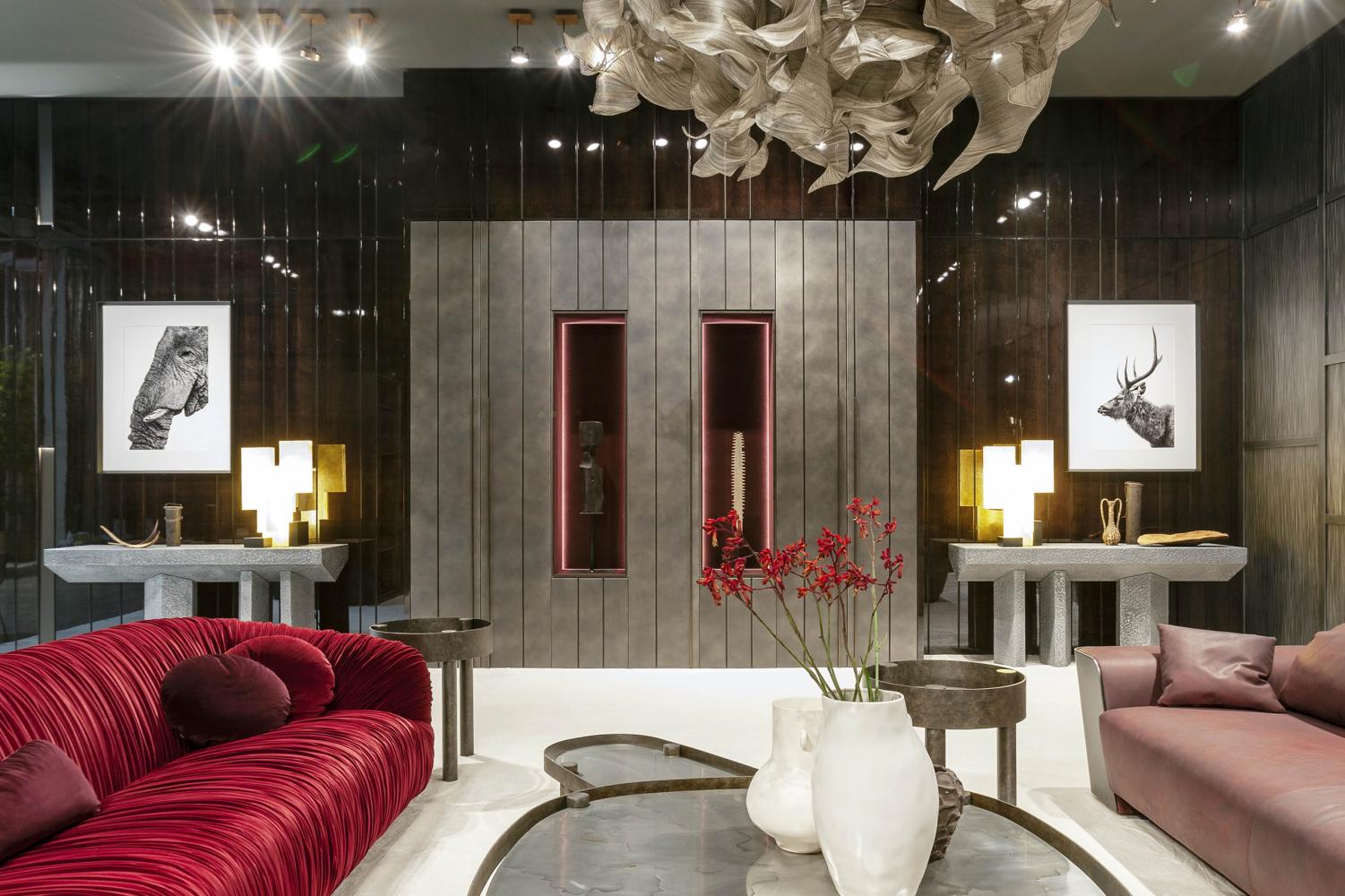
Collaborating with world-renowned designers, we bring unique projects to life, from luxury residences and high-end apartments to refined restaurants, corporate offices, and boutique spaces. Contact us today and elevate your living space with Materia Collection.