


Commercial interior millwork has become one of the clearest markers of quality in 2026 because commercial spaces are now expected to perform as brand statements, functional work environments, and long-term assets at the same time. For offices, restaurants, boutiques, hospitality venues, and luxury mixed-use projects, custom millwork is no longer an optional decorative layer, but a core part of how the space looks, works, and endures.
| Benefit | Description |
|---|---|
| Stronger brand identity | Custom millwork creates a more distinctive and memorable commercial interior. |
| More polished interiors | Reception walls, paneling, and built-ins make the space feel more complete and refined. |
| Better use of space | Made-to-measure solutions fit exact layouts and improve storage and functionality. |
| Higher durability | Quality millwork helps protect surfaces in high-traffic commercial environments. |
| Integrated storage | Shelving, cabinetry, and concealed doors reduce clutter and improve visual order. |
| Improved acoustics | Acoustic panels and fabric surfaces help create a more comfortable atmosphere. |
| Greater luxury appeal | Wood, metal, stone-effect surfaces, and decorative panels add depth and sophistication. |
| Stronger visual consistency | Coordinated finishes help different zones feel connected and professionally designed. |
| Better focal points | Statement walls and custom surfaces draw attention to key areas of the interior. |
| Long-term value | Well-made millwork keeps commercial spaces attractive and functional for longer. |
What is commercial interior millwork?
Commercial interior millwork refers to the custom-crafted architectural and decorative elements built into an interior space to give it structure, function, refinement, and visual identity. In practical terms, it includes the permanent and semi-permanent components that shape how a commercial interior is experienced, from wall panel systems and built-in cabinetry to integrated doors, shelving, display features, and made-to-measure surfaces.
The meaning of interior millwork in commercial spaces
Millwork is often misunderstood as something purely decorative, but in commercial interiors it carries a much broader role. Unlike basic finishing layers, which may simply cover a wall or complete a surface, millwork becomes part of the architecture of the room. It is planned around dimensions, circulation, storage needs, brand presentation, acoustics, and the expected level of use over time.
A standard finish may visually complete a space. A bespoke millwork system, by contrast, helps define it. That difference matters. A painted wall, a simple wallpaper, or an off-the-shelf storage solution can only do so much. Custom millwork can conceal structural transitions, integrate shelving, frame a reception area, improve wall protection, support acoustic comfort, and visually connect one zone to another. It introduces intention where generic design often feels temporary or unresolved.
In commercial environments, that distinction is especially important because the interior has to work harder. A hospitality lounge must feel elevated while absorbing constant foot traffic. A boutique must present merchandise elegantly while reinforcing its brand identity. A corporate office has to balance professionalism, comfort, acoustics, storage, and continuity between public and private areas. Millwork helps solve all of these needs at once.
This is why commercial interior millwork goes far beyond aesthetics. Its value lies in how it supports several priorities simultaneously:
- Brand identity, by creating a recognizable visual language
- Traffic durability, by protecting surfaces from repeated use
- Storage and concealment, by integrating practical functions elegantly
- Acoustic performance, especially when fabric or acoustic panels are involved
- Zoning, by helping organize open interiors into purposeful areas
- Visual continuity, by connecting different rooms and functions through consistent materials and finishes
For brands such as MATERIA Collection, this approach is central. Their design language is rooted in custom millwork, Italian design, and unique finishes, which means the emphasis is not on adding decoration after the fact, but on shaping a complete interior experience through coordinated materials, surfaces, and bespoke solutions.
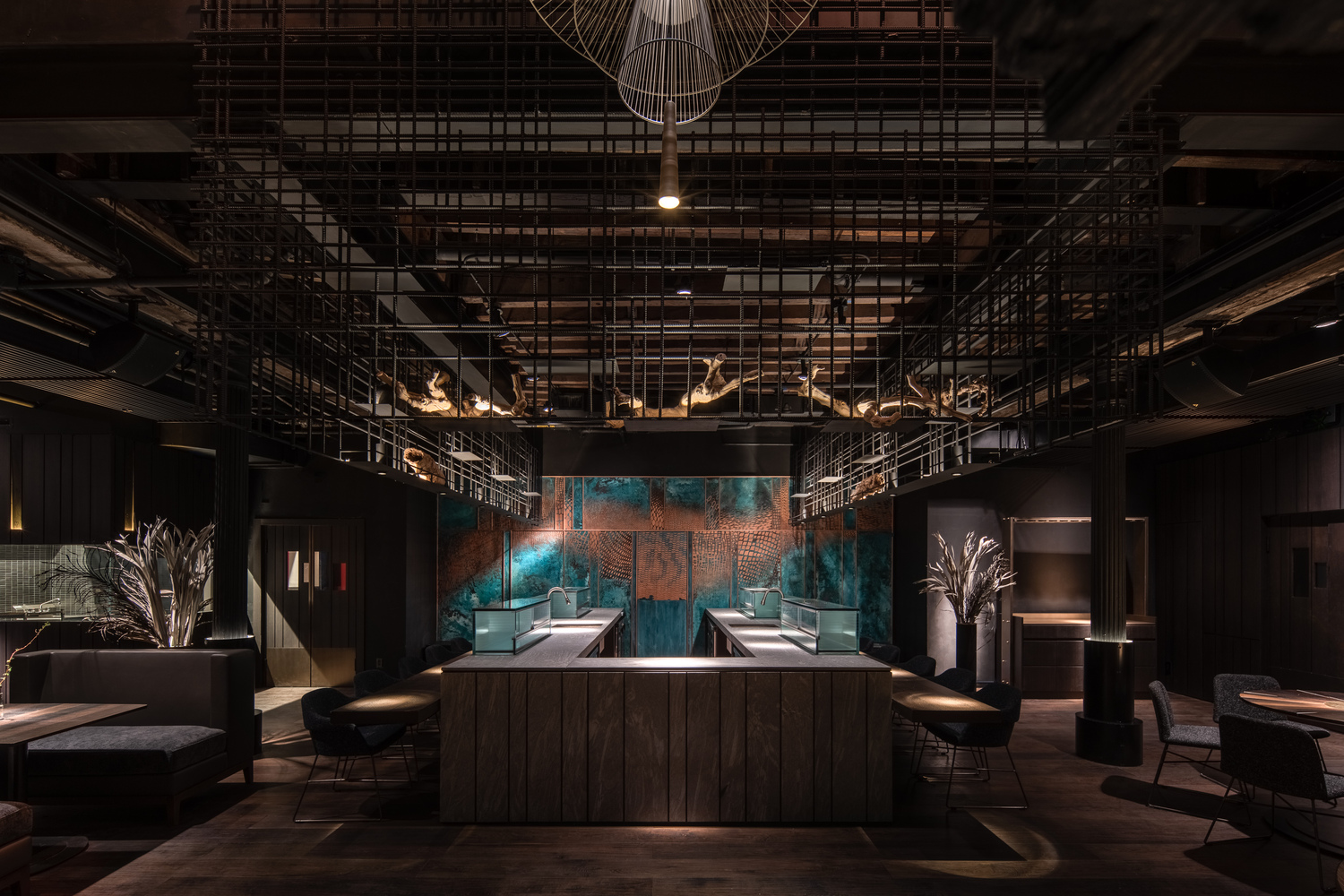
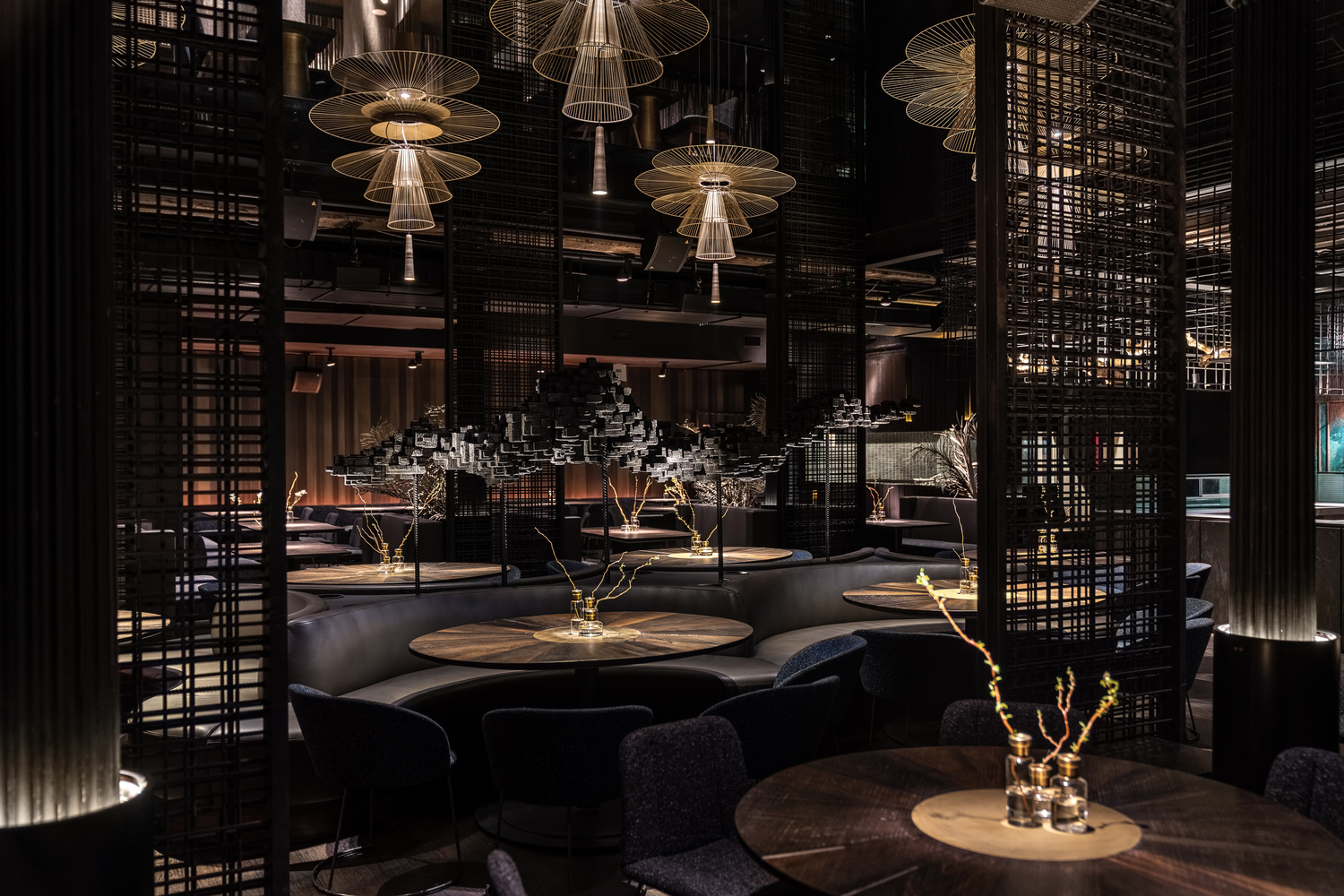
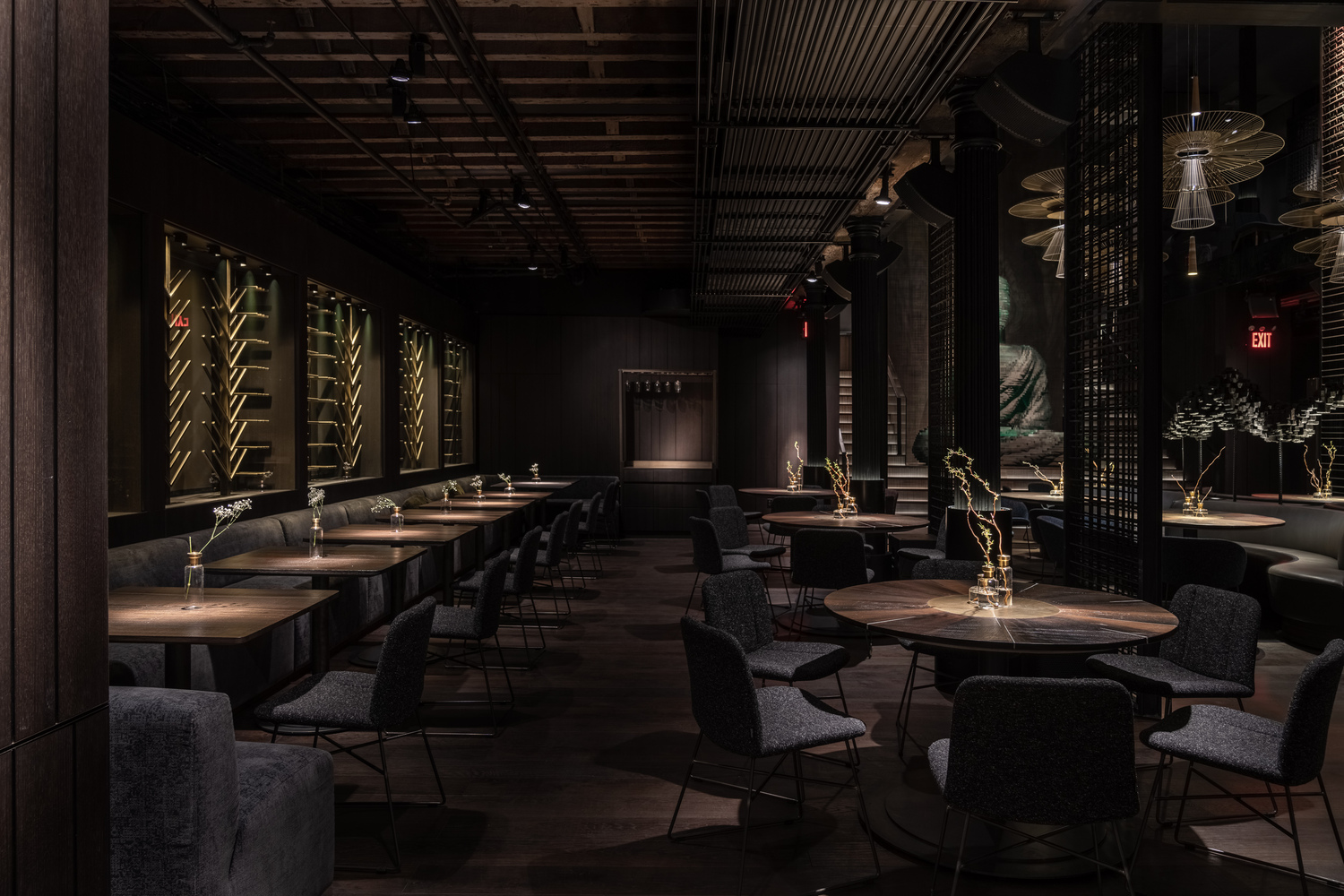
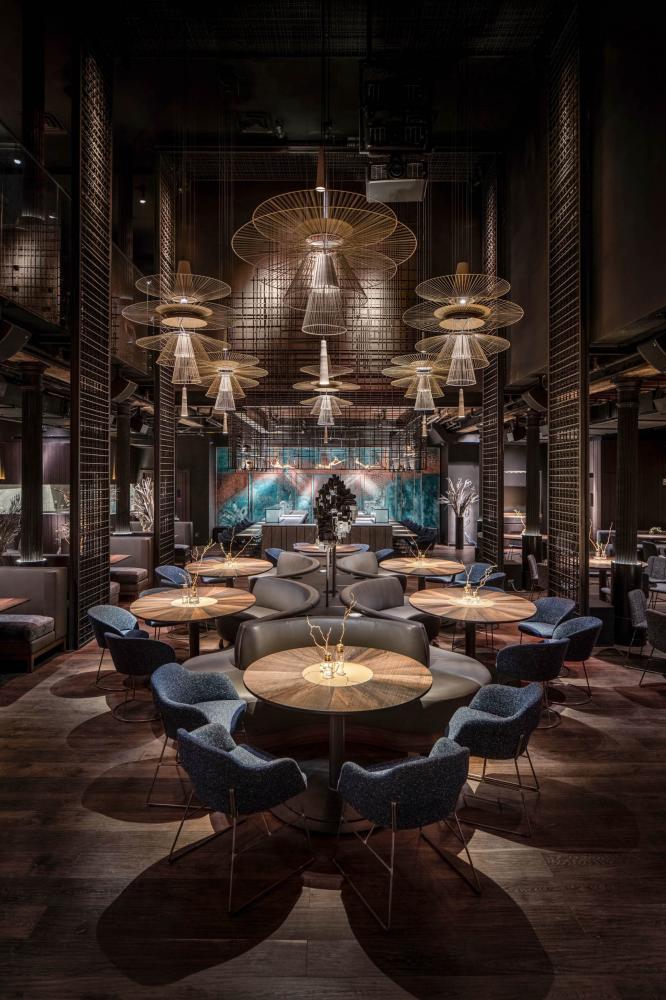
Why custom millwork is a smart investment for modern commercial interiors
Custom millwork is often evaluated first through the lens of aesthetics, but that is only one part of its value. In reality, it is a business decision as much as a design decision. Well-planned millwork influences how a brand is perceived, how efficiently a space functions, how well surfaces withstand wear, and how strong the overall impression remains over time.
Brand presence and visual identity
Every commercial interior communicates something, whether intentionally or not. Generic finishes communicate convenience. Off-the-shelf elements communicate standardization. Carefully designed millwork communicates purpose, investment, and distinction.
This is one of the main reasons custom millwork has become such a strong tool in modern interiors. It helps businesses create a recognizable environment rather than a forgettable one. A reception area with integrated wall paneling and refined detailing immediately tells visitors that the business cares about presentation. A boutique with customized display features and sculptural surfaces feels curated instead of temporary. A restaurant with layered materials and architectural wall treatments feels designed as an experience, not just fitted out for occupancy.
That shift matters because first impressions influence trust. Clients, guests, and customers often judge a business before any conversation begins. The interior becomes a silent introduction to the brand. When the space shows sophisticated design, a clear point of view, and visible attention to the tiniest details, it signals professionalism and quality without having to state it explicitly.
Custom millwork is particularly effective for brand expression because it is not limited to surface appearance. It can shape the tone of the entire environment through proportion, texture, rhythm, material contrast, and built-in functionality. Instead of relying on logos or superficial decorative themes, the brand is expressed through the space itself.
Functionality tailored to the space
One of the strongest advantages of custom millwork is that it fits the actual space rather than forcing the space to adapt to standard products. This becomes especially important in commercial interiors where every dimension has implications for circulation, operations, storage, and visual balance.
Made-to-measure solutions can respond precisely to:
- unusual wall lengths or ceiling heights
- awkward corners or structural interruptions
- premium square footage that must be used efficiently
- integrated storage requirements
- concealed doors and service access
- lighting coordination
- zoning in open-plan environments
This flexibility is one of the core strengths described in the source material. MATERIA Collection’s wall panel systems, for example, are defined not only by sophisticated design but also by the possibility of made to measure solutions with shelves, doors, and other fittings integrated into the system. That means the wall itself can do more than frame the room. It can hold function, conceal service elements, organize space, and improve usability.
In commercial projects, this kind of built-in thinking often leads to better results than relying on separate pieces added later. The space feels calmer, more architectural, and more complete. It also tends to use square footage more intelligently. In compact boutiques, for instance, integrated display and storage can free up valuable floor area. In executive offices, wall-integrated cabinetry can reduce visual clutter. In hospitality lounges, hidden storage and seamless transitions can preserve an atmosphere of luxury that freestanding pieces may disrupt.
Long-term durability and protection
Commercial interiors must withstand more than visual scrutiny. They must also survive constant contact, cleaning, movement, and operational stress. This is where custom millwork often proves its value most clearly over time.
High-quality wall panels and millwork features provide more than style. They can help protect surfaces from daily wear and tear, especially in high-contact or high-traffic areas such as reception zones, corridors, dining spaces, meeting rooms, and hospitality common areas. Compared with lower-grade decorative finishes, better materials and better fabrication typically deliver stronger lifecycle value.
The source material emphasizes that quality wall panels are durable and resistant to wear and tear, which is particularly important in commercial projects. In a space that receives visitors every day, walls and built-in elements are not passive backgrounds. They are used, touched, leaned on, cleaned, and exposed to repeated environmental stress. Choosing robust millwork means the space keeps its character longer and requires fewer aesthetic corrections over time.
This is one of the most common mistakes in cost planning: focusing only on installation cost while underestimating long-term performance. A lower-grade finish may seem more economical initially, but if it scuffs easily, ages poorly, delaminates, or looks visibly tired within a short period, the real cost becomes far higher.
Good millwork helps reduce that risk by combining structural stability with a controlled, high-quality finish. It also allows problem-prone areas to be designed more intelligently from the start, whether that means reinforced corners, more appropriate surface materials, or concealed practical elements that reduce clutter and impact.
Higher perceived value
There is also a less measurable but equally important return: perceived value. Commercial interiors that incorporate refined millwork tend to look more expensive, more intentional, and more trustworthy. This matters because customers and clients often associate material quality with service quality, brand maturity, and attention to standards.
A commercial space does not need to be excessive to feel luxurious. In most cases, perceived luxury comes from disciplined design, cohesive detailing, proportion, and material depth. Custom millwork supports all of these. It turns ordinary walls into architectural compositions, hides the functional elements that weaken visual clarity, and creates surfaces that feel considered rather than merely finished.
Sophisticated materials have a direct effect on confidence. A restaurant with rich wall paneling, carefully integrated lighting, and elegant transitions feels more established and more premium. A boutique with refined display surfaces and concealed storage feels more exclusive. A corporate office with integrated cabinetry, detailed wall treatments, and consistent finishes signals seriousness and long-term vision.
This is why premium finishes can improve the desirability of commercial interiors even when the square footage itself has not changed. They influence how the environment is valued emotionally and commercially. In that sense, custom millwork is not just about decoration. It is part of how a space earns its authority.
The most important materials used in commercial interior millwork
Material selection is one of the most important stages in any commercial millwork project because the chosen material affects appearance, durability, maintenance, cost, atmosphere, and brand fit all at once. A successful project rarely begins by asking which material looks best in isolation. It begins by asking which material performs best for the project’s goals.
Wood
Wood remains one of the most enduring materials in commercial interior millwork because it brings warmth, natural elegance, and a sense of permanence that many other surfaces struggle to replicate. In premium offices, restaurants, hospitality spaces, and feature walls, wood can make an interior feel grounded, tactile, and visually rich without appearing overly formal.
Its strength lies in its versatility. Wood can support classic environments, modern compositions, minimalist spaces, and more layered luxury settings depending on grain, tone, cut, finish, and detailing. It can appear architectural and sharp or soft and welcoming. This makes it especially useful in commercial spaces that want to feel refined but not cold.
For MATERIA Collection, the use of natural materials is part of a broader bespoke language. The source material refers to artisan finishes and natural materials such as exotic woods, which positions wood not as a basic commodity, but as a luxury design medium capable of carrying character and uniqueness.
That said, wood requires thoughtful specification. It can come at a higher price point depending on species and finish, and it may demand more attention in environments exposed to moisture, impact, or frequent cleaning. In return, however, it delivers authenticity, depth, and a timeless quality that can justify the investment in the right setting.
Metal
Metal introduces a very different character. It is sleek, architectural, and modern, with a visual precision that suits luxury retail, contemporary offices, hospitality environments, and statement wall systems. It can be used structurally, decoratively, or as a refined accent within mixed-material millwork compositions.
One of metal’s greatest strengths is clarity. It creates crisp lines, strong edges, and an unmistakably contemporary feel. Used carefully, it can make a commercial interior look sharper and more disciplined. Brushed, matte, polished, or textured metal finishes can all contribute different levels of visual drama, from understated refinement to bold contrast.
Metal is especially effective when used in:
- decorative wall panel details
- trims and transitions
- integrated shelving structures
- premium display elements
- mixed-material compositions with wood, fabric, or stone-effect surfaces
Because it is durable and often highly stable, metal is also well suited to commercial settings where long-term performance matters. It can support heavy use while maintaining a high-end appearance. The source material includes decorative panels with metal effect, reinforcing the relevance of this look in luxury wall treatment systems.
Marble and stone-effect surfaces
Marble and stone-effect materials bring immediate visual prestige. They are often selected when the goal is to create impact, permanence, and a clear sense of luxury in focal areas such as reception walls, hospitality spaces, executive zones, luxury bathrooms, and high-visibility commercial interiors.
Their appeal lies in the way they communicate substance. Even when used selectively, stone-inspired surfaces can change the perceived value of an interior dramatically. They create visual depth, pattern movement, and an unmistakable association with high-end design traditions.
The source material directly supports this category through references to decorative panels: marble effect and decorative panels: precious stones. These references are important because they show how luxury commercial millwork does not have to rely only on flat wood paneling or standard decorative boards. It can incorporate more expressive, prestige-oriented surfaces as part of a broader architectural concept.
Stone-effect surfaces are especially useful in spaces where one or two powerful moments are needed rather than uniform treatment everywhere. A reception backdrop, a restaurant feature wall, or a luxury washroom zone can all benefit from this approach. They create focal points that feel deliberate and memorable.
Fabric and acoustic surfaces
Fabric-based and acoustic wall surfaces play a different role from wood or stone-inspired materials, but one that is increasingly valuable in 2026. They introduce softness, tactility, and visual depth while also helping improve acoustic comfort. In commercial interiors where noise control matters, that functional benefit can be just as important as aesthetics.
These materials are particularly well suited to:
- corporate offices
- executive meeting rooms
- conference environments
- hospitality lounges
- restaurants with layered ambience
- boutique interiors that aim for warmth and intimacy
Fabric and acoustic surfaces help soften the harsher qualities of large commercial spaces. They reduce the visual and sensory rigidity that can come from too much glass, metal, or stone. They also support a more comfortable experience for users, especially in rooms where conversation, concentration, or privacy matter.
The source material includes a Decor Acoustic Wall Panel, which clearly indicates that acoustic considerations are already part of the design vocabulary. This is increasingly important in premium projects because clients do not want to choose between elegance and usability. They want both. Acoustic panel solutions make that possible when integrated carefully into the wider millwork concept.
Wallpaper and decorative coverings
Luxury wallpaper and decorative coverings have evolved far beyond their older perception as simple background treatments. In commercial interiors, they can now act as design-driven wall solutions that bring theme, texture, color, and atmosphere to carefully selected zones.
The source material presents a particularly rich range of wallpaper directions, including:
- textures and cement effects
- urban and city motifs
- florals
- kids collections
- architecture and geometric patterns
- nature-inspired themes
- marbles collections
- handmade collections
This breadth is useful because it shows that wallpaper is not one thing. It can be dramatic, quiet, graphic, natural, refined, or highly expressive depending on the project. In commercial interiors, that makes it ideal for spaces that need a strong visual story without full architectural reconstruction.
Luxury wallpaper works best when specified intentionally. It can quickly transform selected commercial areas such as:
- boutique fitting rooms
- restaurant feature walls
- hospitality corridors
- branded lounge spaces
- wellness or waiting areas
- selected niches within larger millwork compositions
Its advantage lies in speed and visual range. When paired with more permanent millwork features, wallpaper can add another layer of richness without overwhelming the space.
Venetian plaster and artisanal finishes
Venetian plaster and related artisanal finishes remain among the most elegant options for high-end wall treatment because they bring depth, reflection, craftsmanship, and material authenticity into the space. According to the source material, Venetian plaster is made from imported Italian plaster composed of slaked lime and marble, creating a smooth and glossy surface that reflects light beautifully.
This material is well suited to statement walls and refined commercial interiors because it carries a handcrafted quality that many mass-produced finishes cannot replicate. It feels alive in changing light, and it often gives walls a sense of softness and depth even when the finish itself is sleek.
Its main strengths include:
- a smooth and elegant appearance
- reflective qualities that enhance light
- compatibility with classic and modern luxury interiors
- a breathable material structure
- durable, eco-friendly qualities
- the ability to achieve effects such as stone, pearl, or metallic nuance
For premium commercial settings, Venetian plaster works especially well where the goal is to create subtle sophistication rather than visual noise. It is often most powerful in reception spaces, hospitality environments, private lounges, and statement architectural zones where craftsmanship matters.
Taken together, these materials show why commercial millwork in luxury settings is so much more than carpentry. It is a material strategy. MATERIA Collection’s emphasis on Italian-crafted wall treatments, natural stone, woods, metals, artisan finishes, and bespoke execution reflects exactly that mindset.


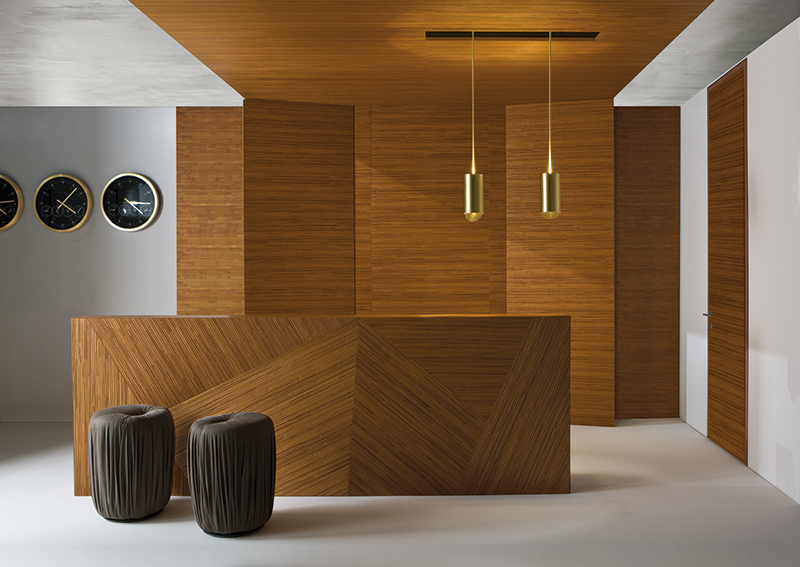


Commercial interior millwork cost in 2026: what affects pricing?
Millwork cost is one of the most discussed parts of any commercial project, but it is also one of the most misunderstood. There is no single standard price because commercial millwork is shaped by design ambition, material selection, fabrication complexity, installation conditions, and the required level of finish. The same square footage can lead to very different budgets depending on what is being created and how precisely it must be executed.
Why millwork pricing varies so widely
Pricing varies because custom millwork is not a commodity. It is a combination of design, material, fabrication, detailing, logistics, and installation. Even projects that appear similar on the surface can differ significantly in cost once those variables are examined.
Major reasons for cost variation include:
- the overall scope of the project
- material selection
- finish complexity
- custom fabrication requirements
- installation difficulty
- integration of doors, shelving, fittings, lighting, or acoustic features
- freight and lead times
- specialty sourcing for luxury imported materials
A straightforward wall treatment and a highly integrated wall system are not the same budget category, even if both occupy the same wall. One may be mostly decorative. The other may include concealed access, integrated lighting, multiple materials, acoustic performance, and precision detailing. This is why generalized cost assumptions can be misleading.
Main cost drivers to explain clearly
When evaluating a millwork proposal or comparing solution types, clients should understand the main variables that drive pricing.
The most important cost drivers are:
- Material type, such as wood, metal, marble-effect surfaces, fabric applications, or specialty artisan finishes
- Degree of customization, including whether the design is standard, modified, or fully bespoke
- Size and wall coverage, since larger areas require more material, labor, and coordination
- Curves, transitions, and special detailing, which increase fabrication complexity
- Site conditions and installation complexity, especially in existing spaces with constraints
- Level of craftsmanship and brand standard, which influences finish quality, consistency, and precision
Luxury imported materials and Italian-crafted systems can also introduce additional considerations such as sourcing timelines, specialist fabrication, and project coordination requirements. However, these factors often correspond to a significantly higher design and finish standard, which is precisely why they remain attractive in premium commercial environments.
Why low-cost millwork can become expensive later
One of the most common mistakes in commercial fit-outs is selecting millwork primarily by initial price rather than lifecycle performance. Lower-cost millwork can appear financially efficient at first, but it often carries hidden costs that emerge later.
These can include:
- Premature wear, especially in high-traffic areas
- Poor finish performance, such as visible aging, delamination, or easy surface damage
- Limited design impact, resulting in a space that still feels generic despite investment
- Weak installation quality, which can create alignment problems or early deterioration
- Higher replacement or repair costs, particularly when the original system was never robust enough for the intended use
In commercial interiors, aesthetic fatigue also has a cost. If a space begins to look tired too quickly, the brand image suffers and refurbishment pressure arrives sooner than expected. That makes the cheap option much less economical over time.
How to budget more intelligently
A better approach is to budget strategically rather than trying to reduce cost uniformly across the entire project. Not every surface needs the same level of investment, but the most important areas should be treated accordingly.
Practical budgeting strategies include:
- Prioritize focal areas first, such as reception walls, dining features, executive zones, or premium display areas
- Invest more in client-facing zones, where impression and brand perception are strongest
- Use mixed materials where appropriate, combining higher-end focal finishes with more restrained supporting surfaces
- Balance statement surfaces with simpler adjacent finishes, so the design remains impactful without becoming unnecessarily expensive everywhere
- Plan function and storage early, which helps avoid redesign costs and last-minute add-ons
The smartest commercial millwork budget is not the one that spends the least. It is the one that allocates resources where they will create the strongest long-term return in performance, perception, and design value.
Why Italian-inspired millwork stands out in luxury interiors
Italian-inspired millwork holds a distinct place in luxury interiors because it is associated not only with craftsmanship, but with a very specific way of thinking about space, proportion, materiality, and refinement. It is rarely about excess for its own sake. Instead, it tends to focus on balance, elegance, tactile richness, and design discipline.
Material refinement and design sophistication
One of the most consistent qualities of Italian-inspired interiors is the emphasis on proportion and material intelligence. Surfaces are not selected only because they are luxurious in isolation, but because they contribute to a balanced and composed whole. This gives the environment a quality that feels deliberate rather than decorative.
In millwork, that often translates into:
- cleaner visual rhythms
- stronger relationships between materials
- elegant transitions
- careful use of texture
- restrained but impactful detailing
- tactile richness without visual overload
This is one reason Italian-inspired wall treatments and panel systems remain so relevant in premium commercial interiors. They do not simply fill space. They elevate it. The wall becomes more than a boundary. It becomes part of the interior’s identity, rhythm, and architectural expression.
Millwork designed in this tradition is therefore not only built to fit. It is built to enhance the entire space. Its role is not limited to solving dimensions. It is also there to improve how the space is read, felt, and remembered.
Bespoke finishes and artisan execution
Luxury interiors often depend on the qualities that standard production cannot easily deliver. This is where bespoke finishes and artisan execution become especially important. One-of-a-kind pieces, applied pattern overlays, hand-finished surfaces, and custom material combinations can introduce the individuality that distinguishes a truly premium project from a merely expensive one.
The source material speaks directly to this through references to:
- one-of-a-kind pieces
- artisan finishes
- applied pattern overlays
- natural materials
- razor-sharp precision
- skillful installation
These phrases are valuable because they underline that luxury millwork is not defined only by the material itself, but by how that material is handled. Two projects may use similar categories of material, but the one with superior execution, finish control, and detailing will always communicate a higher level of quality.
Artisan execution matters in several ways:
- it gives surfaces greater depth and character
- it allows customization beyond standard formats
- it improves the distinctiveness of the project
- it supports a more precise response to the architecture
- it creates a stronger sense of permanence and care
High-end installation quality is the final stage of this process. Without it, even excellent materials can lose their impact. Italian-inspired millwork stands out because precision is treated as part of the design itself, not merely a technical requirement.
Coordinated interiors, not isolated products
Another major advantage of Italian-inspired luxury design is the tendency to treat the interior as an integrated ecosystem rather than a collection of unrelated items. This is especially important in commercial projects, where the difference between a premium environment and an inconsistent one often comes down to coordination.
When wall treatments, furniture, doors, cabinetry, lighting, and surface systems are developed within one consistent design language, the project feels more complete, more expensive, and more intentional. Each category reinforces the others instead of competing for attention.
For luxury commercial interiors, this matters because cohesion is one of the strongest visual signals of quality. A space may contain excellent individual pieces, but if they do not relate properly, the result can still feel fragmented. Coordinated design, by contrast, creates continuity and calm. It allows the user to experience the project as one complete environment.
This is particularly relevant to MATERIA Collection because the brand’s broader ecosystem includes wall treatments, fine furniture, closet and cabinet systems, office furniture, doors, kitchen solutions, lighting, and luxury bathroom solutions. In a commercial context, that range makes it easier to build interiors that feel connected in both function and appearance.
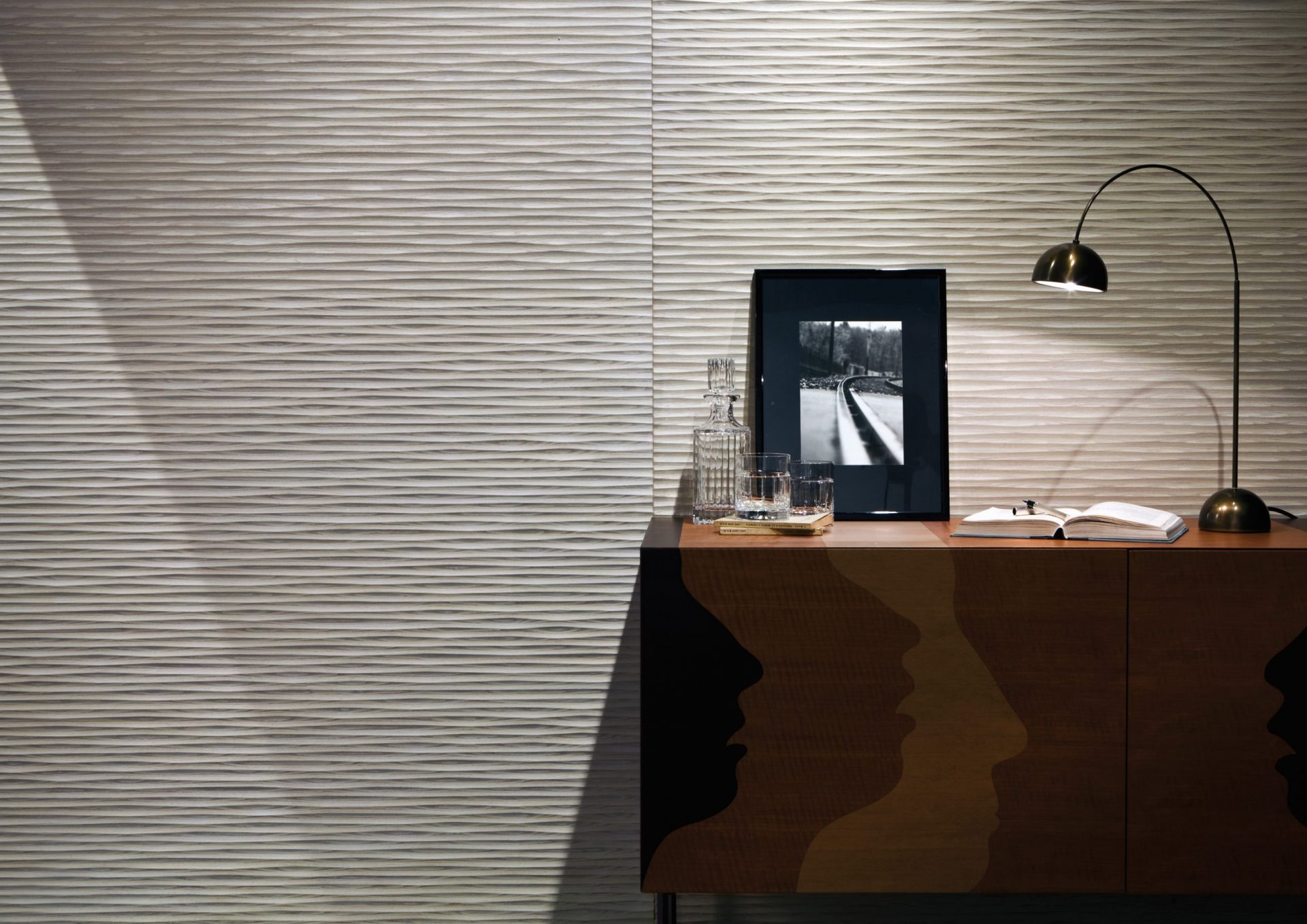
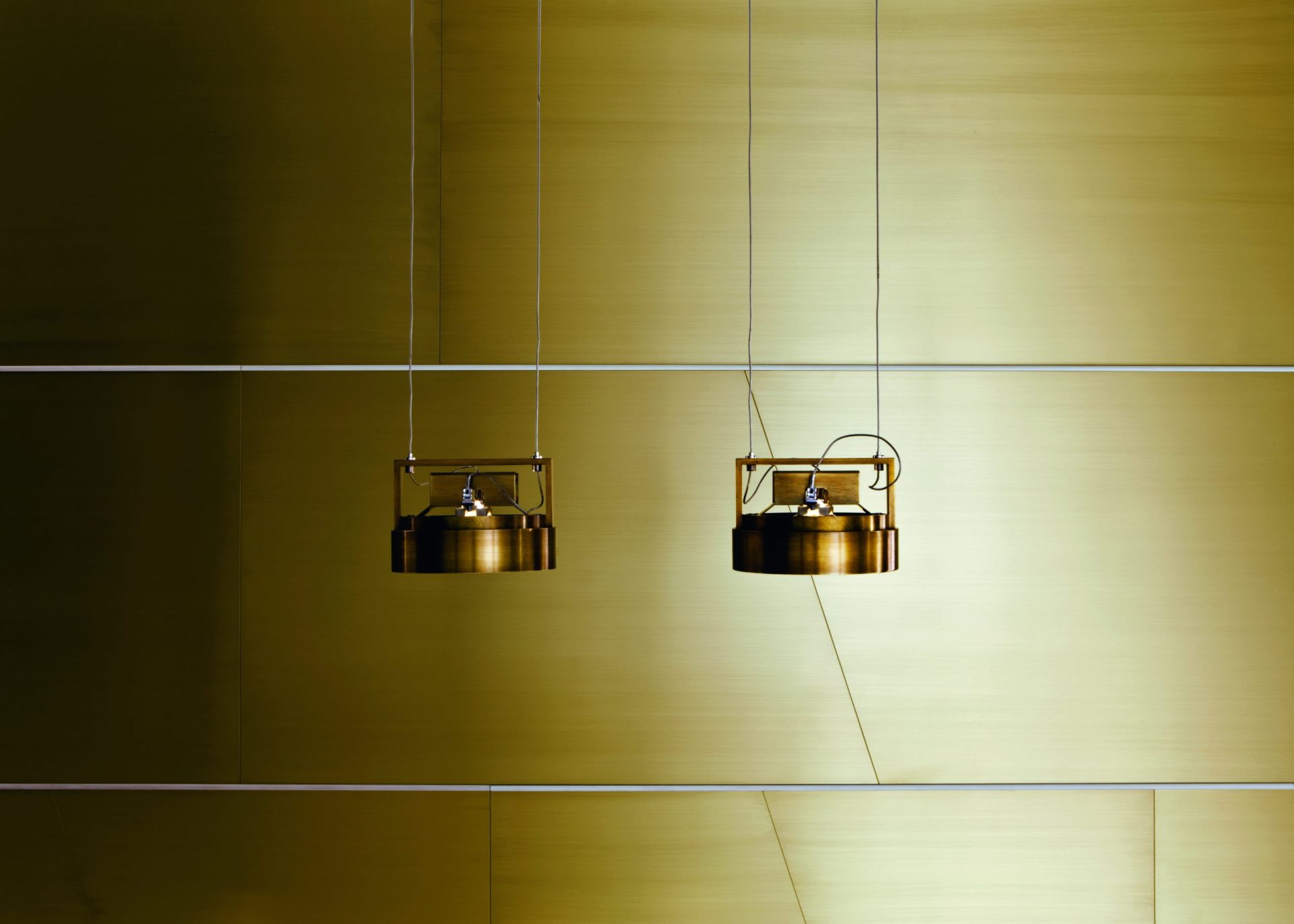
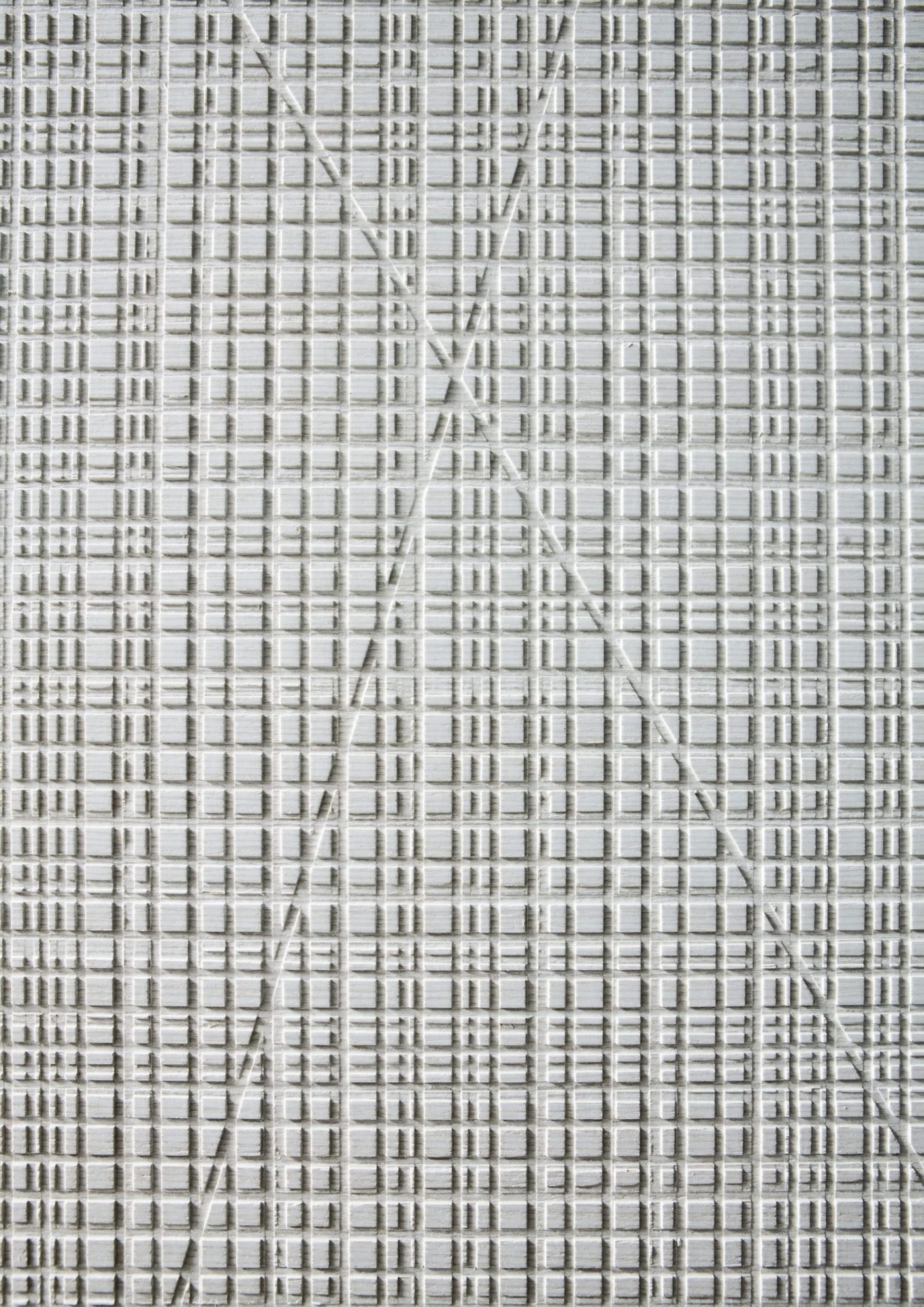
Why MATERIA Collection is a strong partner for bespoke commercial millwork
For clients seeking luxury commercial millwork, the value of a design partner lies not only in the beauty of individual products, but in the ability to deliver cohesive, made-to-measure solutions across multiple categories. This is where MATERIA Collection stands out.
A design-driven luxury approach
MATERIA Collection’s identity is rooted in several qualities that are particularly relevant to bespoke commercial interiors:
- custom millwork
- Italian design heritage
- unique finishes
- capability for bespoke project execution
This combination matters because premium commercial projects rarely succeed through standard specification alone. They require a design-led approach in which surfaces, materials, and architectural elements are selected for both functional performance and emotional impact.
The brand’s emphasis on Italian design brings a strong sense of proportion, elegance, and material refinement. Its focus on custom millwork and unique finishes supports the level of specificity that luxury projects often require.
Broad product and surface ecosystem
Another major strength is the breadth of the product and surface ecosystem available through MATERIA Collection. Rather than approaching the project through a single isolated category, clients can consider multiple coordinated elements within one design framework.
This ecosystem includes:
- wall treatments
- fine furniture
- closet and cabinet systems
- office furniture
- doors
- kitchen solutions
- lighting
- luxury bathroom solutions
For commercial interiors, this breadth is highly valuable because it supports consistency. A project does not have to be assembled from disconnected sources with conflicting design languages. Instead, it can be developed through a more unified material and aesthetic strategy.
Experience across global bespoke projects
Project experience is especially important in custom commercial work because complex interiors require more than product availability. They require an understanding of how bespoke solutions perform in real environments.
MATERIA Collection’s experience includes both residential and commercial reach, with projects spanning:
- refined restaurants
- corporate offices
- boutiques
- luxury apartments
- other bespoke high-end environments
The showroom presence in Bay Harbor Islands, Florida further reinforces this design-led positioning. It reflects a brand operating within the world of high-end interiors, where materials, finishes, and project coordination are treated with the seriousness luxury work demands.
Frequently Asked Questions - Commercial Interior Millwork
What is included in commercial interior millwork?
Commercial interior millwork typically includes custom-built architectural and decorative elements such as wall panel systems, integrated doors, reception features, built-in shelving, display systems, cabinetry, storage solutions, and other made-to-measure interior surfaces. In higher-end projects, it may also involve acoustic panels, decorative wall treatments, luxury bathroom cabinetry, kitchen systems, and coordinated surface details that shape the overall identity of the space.
What materials are best for commercial wall panel systems?
The best material depends on the type of commercial environment and the performance requirements of the project. Wood is often chosen for warmth and timeless elegance, metal for architectural precision and durability, marble or stone-effect surfaces for prestige and visual impact, fabric and acoustic materials for comfort and sound control, and decorative coverings for targeted visual transformation. In luxury interiors, mixed-material panel systems are often the most effective because they combine aesthetics and function more comprehensively.
How much does custom commercial millwork cost in 2026?
Custom commercial millwork cost in 2026 depends on the scope of the project, the material selection, finish complexity, level of customization, installation difficulty, and the degree of integration required. Projects with bespoke detailing, imported materials, integrated lighting, concealed doors, or acoustic functions typically cost more than simpler decorative applications. A more accurate way to evaluate cost is to consider long-term value, durability, and the role of millwork in brand perception rather than focusing only on initial fabrication price.
Are wall panel systems suitable for offices and restaurants?
Yes, wall panel systems are highly suitable for both offices and restaurants because they combine visual sophistication with practical performance. In offices, they can support reception design, executive paneling, acoustic improvement, and integrated storage. In restaurants, they can help create ambience, define focal points, reinforce brand character, and protect walls in high-traffic areas. Their adaptability is one of the main reasons they are so widely used in premium commercial interiors.
What is the difference between wall treatments and wall panel systems?
Wall treatments is a broader category that can include wallpaper, Venetian plaster, decorative coverings, and other surface-applied finishes. Wall panel systems are typically more architectural and structured, often involving physical panel compositions made from materials such as wood, metal, marble-effect surfaces, or fabric. In many cases, wall panel systems can also integrate practical elements like shelving, storage, doors, and acoustic functions, which makes them more multifunctional than simpler wall treatments.
Why choose made-to-measure millwork instead of ready-made products?
Made-to-measure millwork offers a more precise and valuable solution because it is designed around the exact dimensions, brand identity, functional needs, and architectural conditions of the space. It can integrate storage, conceal practical elements, improve visual continuity, and make better use of premium square footage. Ready-made products may be faster to source, but they rarely provide the same level of cohesion, refinement, and long-term performance in a luxury commercial interior.