Custom Millwork vs Mass-Produced Cabinets: What Interior Designers Really Choose

Interior designers rarely ask, “What’s the cheapest cabinet option today?” The real question is closer to how a builder or project manager thinks: what will still look right, function smoothly, and hold its alignment after years of opening, closing, cleaning, humidity shifts, and everyday use. Cabinetry is not a decorative purchase. It is a high-contact system that must tolerate stress, movement, load, and imperfect jobsite realities.

That is why experienced designers and luxury builders evaluate cabinetry the way logistics professionals evaluate equipment: by duty cycle, tolerances, risk, and serviceability.

Side-by-side comparison: Custom Millwork vs Mass-Produced Cabinets (the designer checklist)

Evaluation Criteria Custom Millwork Factory-Made Cabinetry
Materials and substrates Substrates, veneers, and finishes are specified as a coordinated system based on environment and performance, with tailored choices for kitchens, baths, and humidity-prone zones. Good material options exist, but choices are limited to the line’s catalog and not every substrate or finish performs equally under stress.
Joinery and construction tolerances Built to tighter tolerances for a precise architectural fit, with reinforcement strategies adapted to tall units, wide spans, heavy stone, and integrated appliances. Uses standardized joinery optimized for scale and shipping durability, which is efficient but less adaptable to unusual loads or dimensions.
Finishes and color control Enables custom-matched finishes, consistent sheen, and disciplined edge details across multiple rooms and future additions. Finishes can be strong, but batch-to-batch matching and long-term continuity are harder to guarantee.
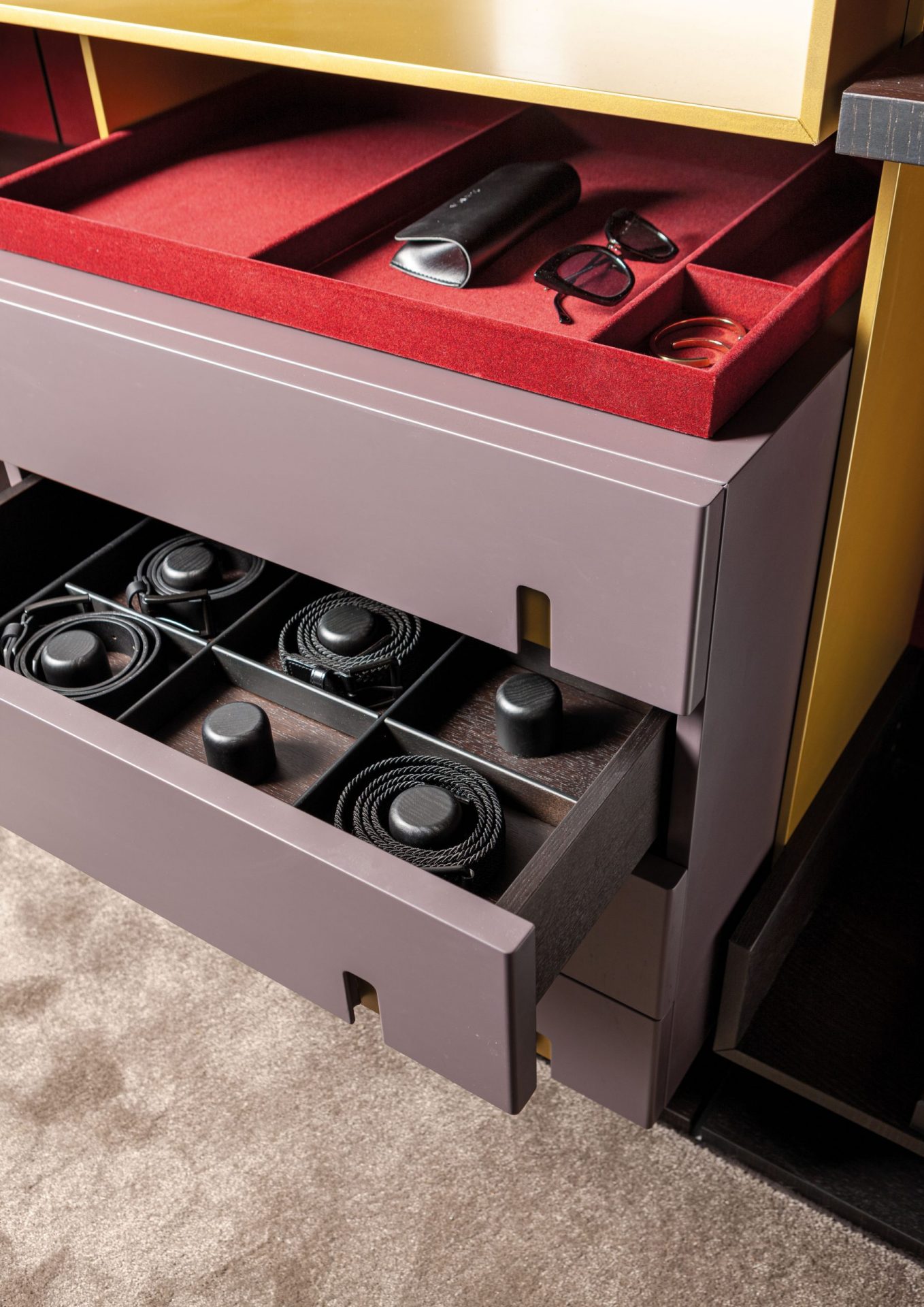
Hardware and load ratings Premium hinges, slides, and specialty mechanisms are specified based on actual usage, load, and cycle requirements. Quality hardware is often included, but upgrades and specialty solutions depend on what the product line offers.
Fit on imperfect sites Field-verified measurements, scribing, and alignment strategies accommodate out-of-plumb walls, uneven floors, and variable ceilings. Fits well in ideal conditions, but irregular sites often require fillers, trim, and visual compromises.
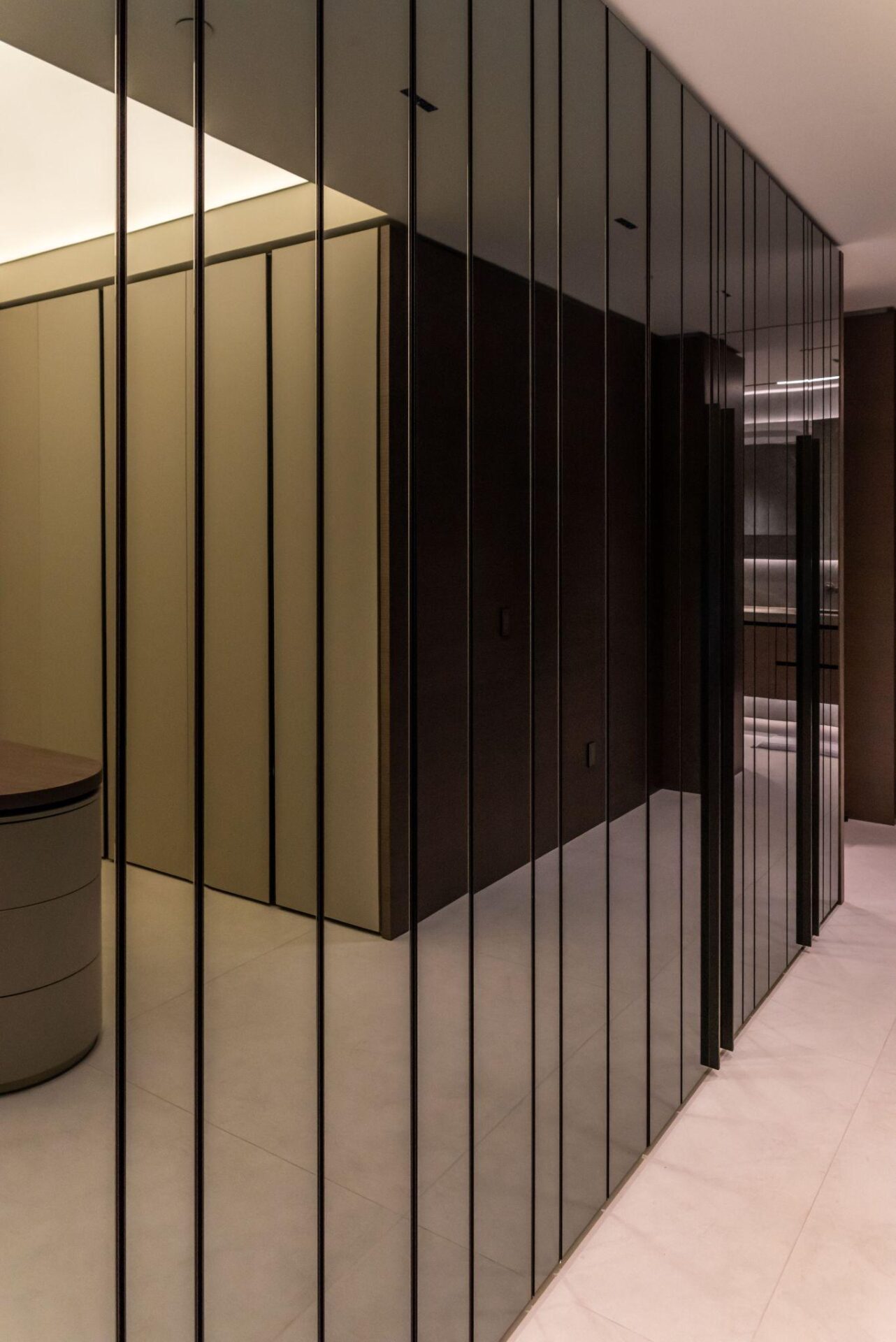
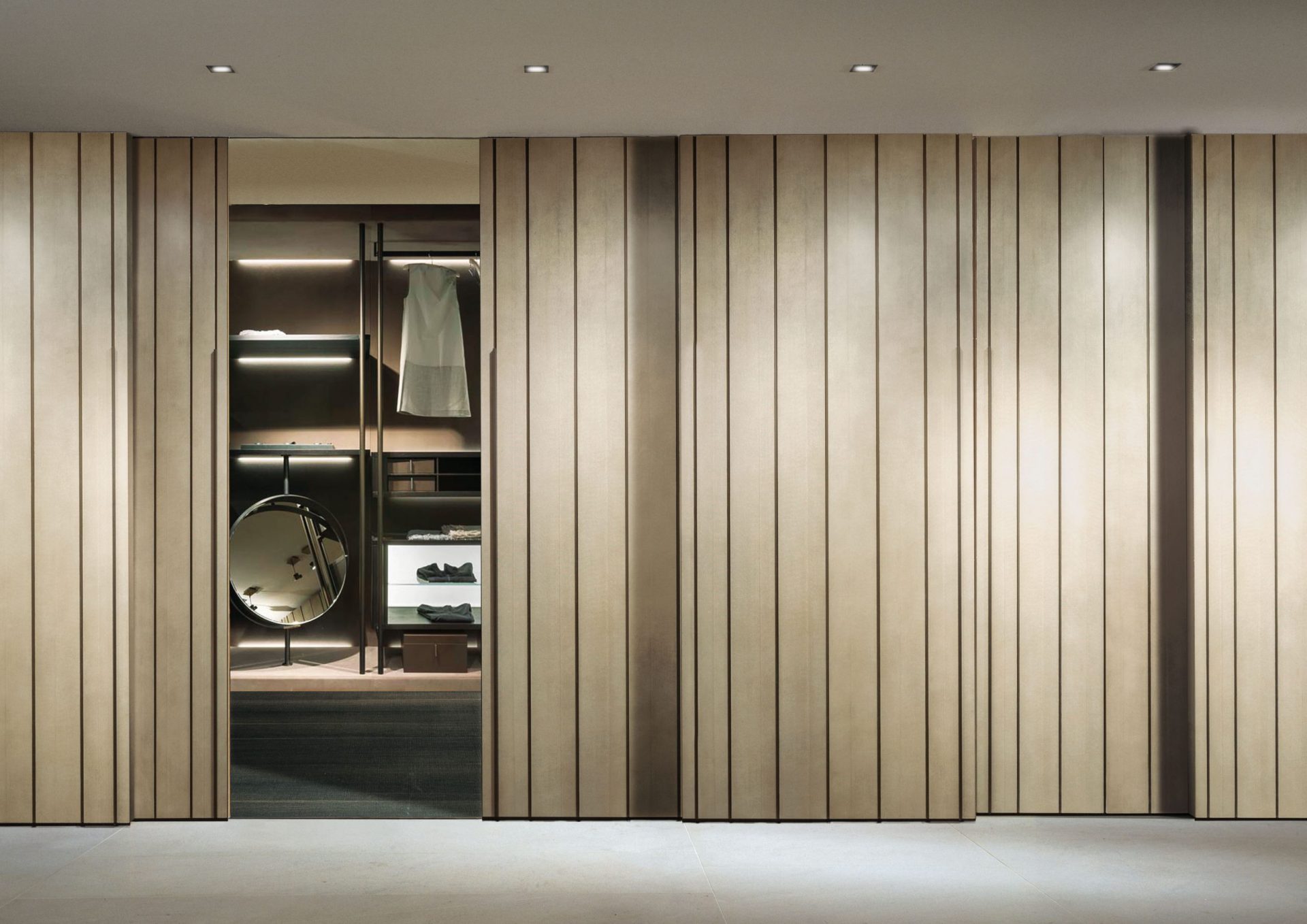
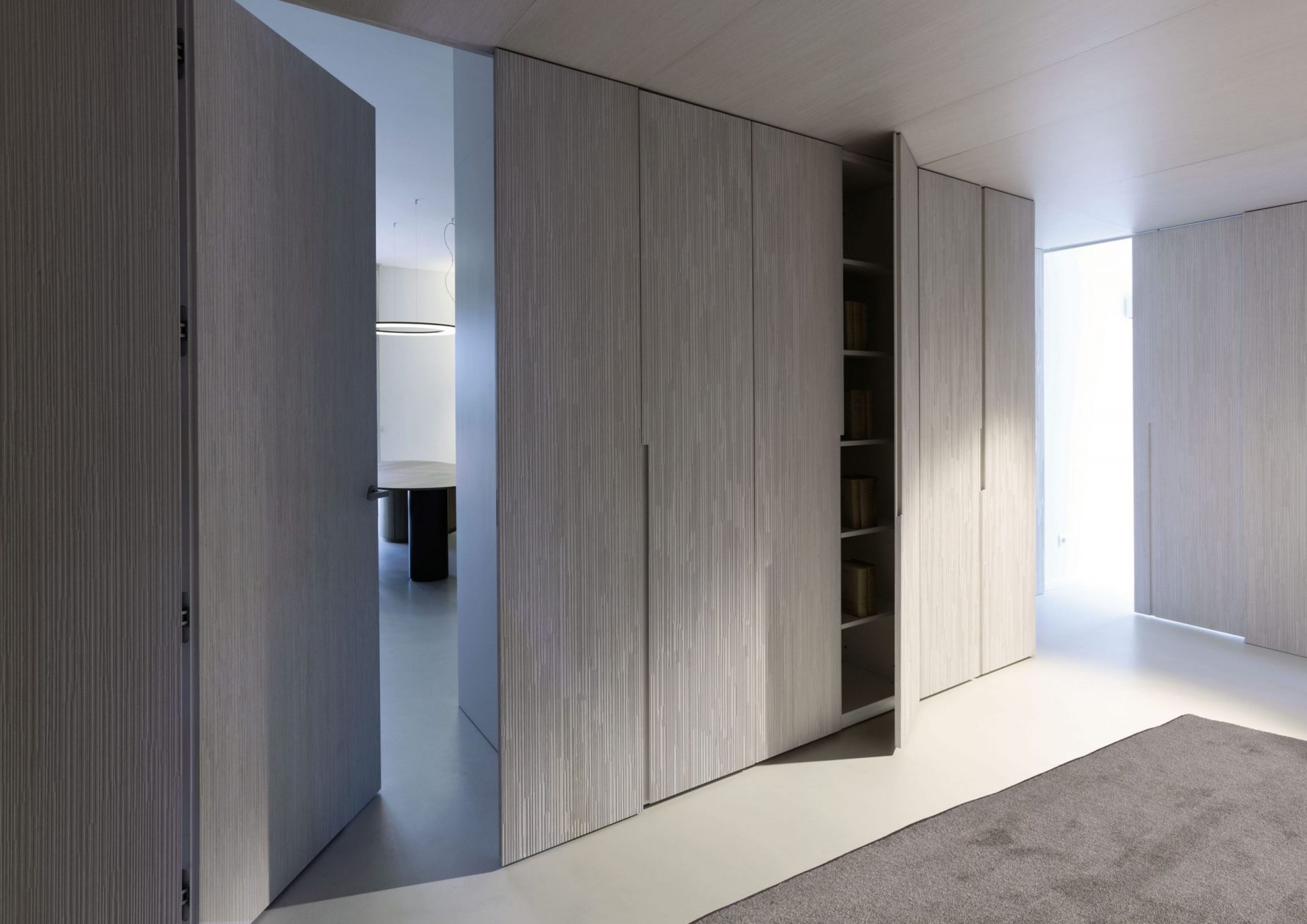
Design flexibility Supports continuous planes, flush integrations, curves, concealed doors, and integrated lighting, acoustics, and storage. Handles common layouts efficiently but struggles with nonstandard geometry and architectural integration.
Durability and repairability Designed for component-level repair, refinishing, re-alignment, and long-term servicing. Can be durable, but repairs are limited by discontinued finishes, unavailable profiles, and modular constraints.
Installation and coordination Requires detailed shop drawings, field verification, and coordination with other trades, reducing surprises when executed well. Installs quickly, but irregular rooms and ambitious designs often shift complexity elsewhere in the project.
Long-term value Supports refinishing and targeted updates, preserving the investment over time. Lower entry cost, but trends toward full replacement as styles, finishes, or components age out.
Explore Italian Luxury Wardrobes
Discover how bespoke Italian wardrobes bring order, elegance, and architectural beauty into luxury interiors. Each system is crafted to reflect your lifestyle with precision and timeless design.
View Wardrobe Collection

What “custom millwork” actually means

Custom millwork is not simply “more expensive cabinets.” It is a process and a delivery method. The work is built-to-spec and made-to-measure, typically driven by detailed shop drawings and field verification. The dimensions, reveals, panel lines, and functional details are engineered for the exact room, not a generic template.

A true millwork scope is installed as a system. Instead of treating cabinets as isolated boxes, millwork integrates adjacent conditions and design intent: wall planes, ceiling transitions, corner solutions, appliance panels, toe-kick alignment, filler strategy, and the visual rhythm of doors and drawers. The goal is controlled geometry, clean lines, and predictable performance.

Custom millwork often includes far more than kitchens. In high-end interiors it commonly covers:

  • Integrated wall paneling and feature walls

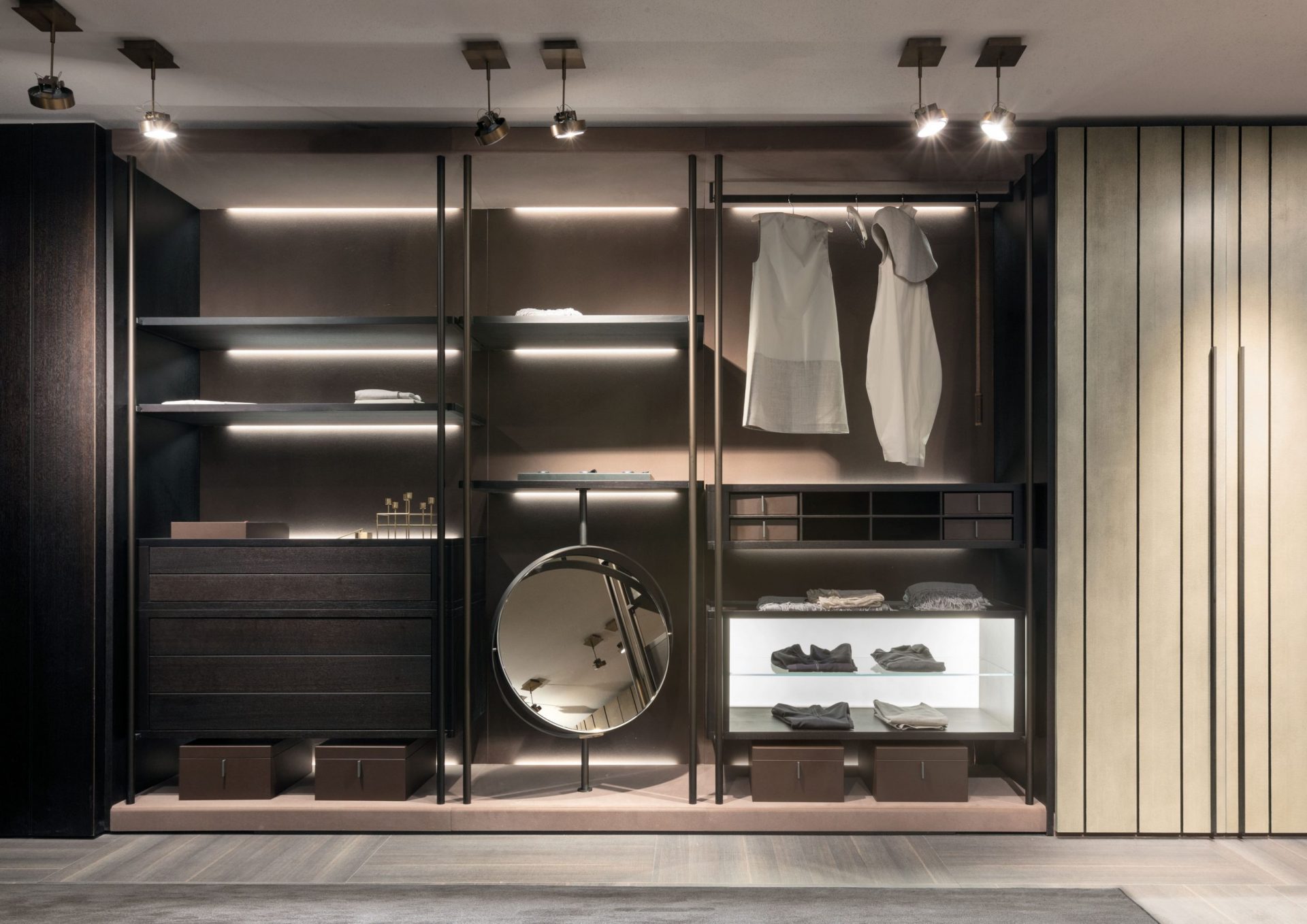
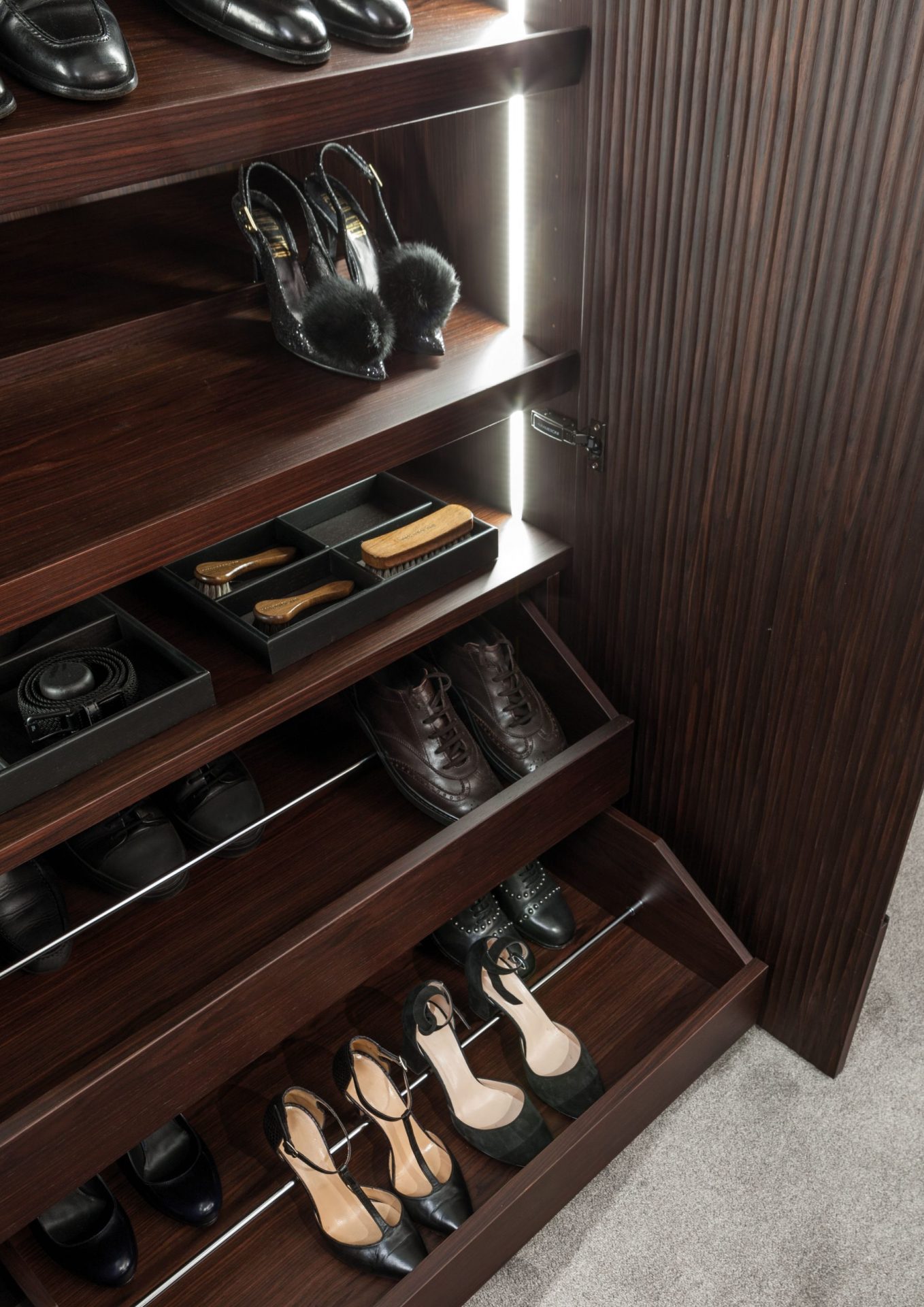
  • Closets and wardrobe systems tailored to a lifestyle and collection

  • Office built-ins and library walls with integrated lighting and storage

  • Bars, reception areas, and specialized commercial millwork

  • Door and trim integrations where cabinetry meets architecture

What “mass-produced” (factory-made) cabinetry includes

Mass-produced cabinetry is built around standardized modules and repeatability. That includes stock cabinets, many RTA (ready-to-assemble) systems, and a large portion of the market labeled “semi-custom.” While some factory lines offer a broad range of finishes and accessories, the underlying system is still governed by preset sizes, predetermined construction methods, and simplified installation assumptions.

The design logic is speed and scalability. Factories optimize for:

  • Standard cabinet widths, heights, and depths

  • Streamlined finishing processes and limited customization

  • Faster lead times when components are in stock

  • Efficient packaging, shipping, and predictable assembly steps

Factory cabinetry can be a strong fit when the room is straightforward, deadlines are tight, and the project’s value is better spent on other upgrades. The limitation is that standardized systems do not adapt gracefully to irregular or ambitious design conditions without visible compromises.

The biggest misconception designers see on the client side

The most common misunderstanding is thinking that two kitchens can be judged by photos alone. A factory cabinet can photograph beautifully on day one, especially when the lighting is favorable and the styling is intentional. But “looks similar” does not automatically translate to “performs similarly.”

Designers care about what is hard to see in pictures:

  • How tightly doors align across long runs

  • Whether drawers stay smooth under heavy load

  • How edges, seams, and finishes respond to cleaning and wear

  • How the system handles seasonal movement and humidity shifts

  • Whether the installation can be serviced and repaired without a full teardown

When you understand these factors, the custom vs factory decision becomes less emotional and more technical.

Materials (why the inside matters more than the door style)

When designers evaluate cabinetry, they start from the inside out. Door style is the most visible element, but it has very little to do with how a system performs over time. Materials determine stability, alignment, and whether the cabinetry will age gracefully or slowly fall out of tolerance.

Substrates and core construction

The substrate is the structural backbone of any cabinet or millwork system. It affects everything from screw-holding strength to how well the unit resists moisture and seasonal movement.

Designers pay close attention to:

  • Dimensional stability, especially in kitchens, bathrooms, and closets where humidity fluctuates

  • Screw-holding capacity, which directly impacts hinge alignment, drawer performance, and long-term adjustability

  • Resistance to warping and swelling, critical for tall units and wide panels

  • Compatibility with premium finishes, since not every core material behaves well under lacquer or veneer

In mass-produced cabinetry, substrates are chosen for consistency, cost control, and shipping durability. These materials can perform well, but they are optimized for standardized use cases. Custom millwork allows the substrate to be selected based on the room, the load, and the finish, rather than one-size-fits-all assumptions. This is especially important for full-height wardrobes, integrated wall systems, and cabinetry that spans entire elevations.

Veneers, lacquers, metals, and premium finishes

Luxury builders and designers look beyond surface appearance and focus on finish systems as a whole. A finish is not just a color or texture; it is a layered process that must remain consistent across doors, panels, fillers, and adjacent architectural elements.

Key considerations include:

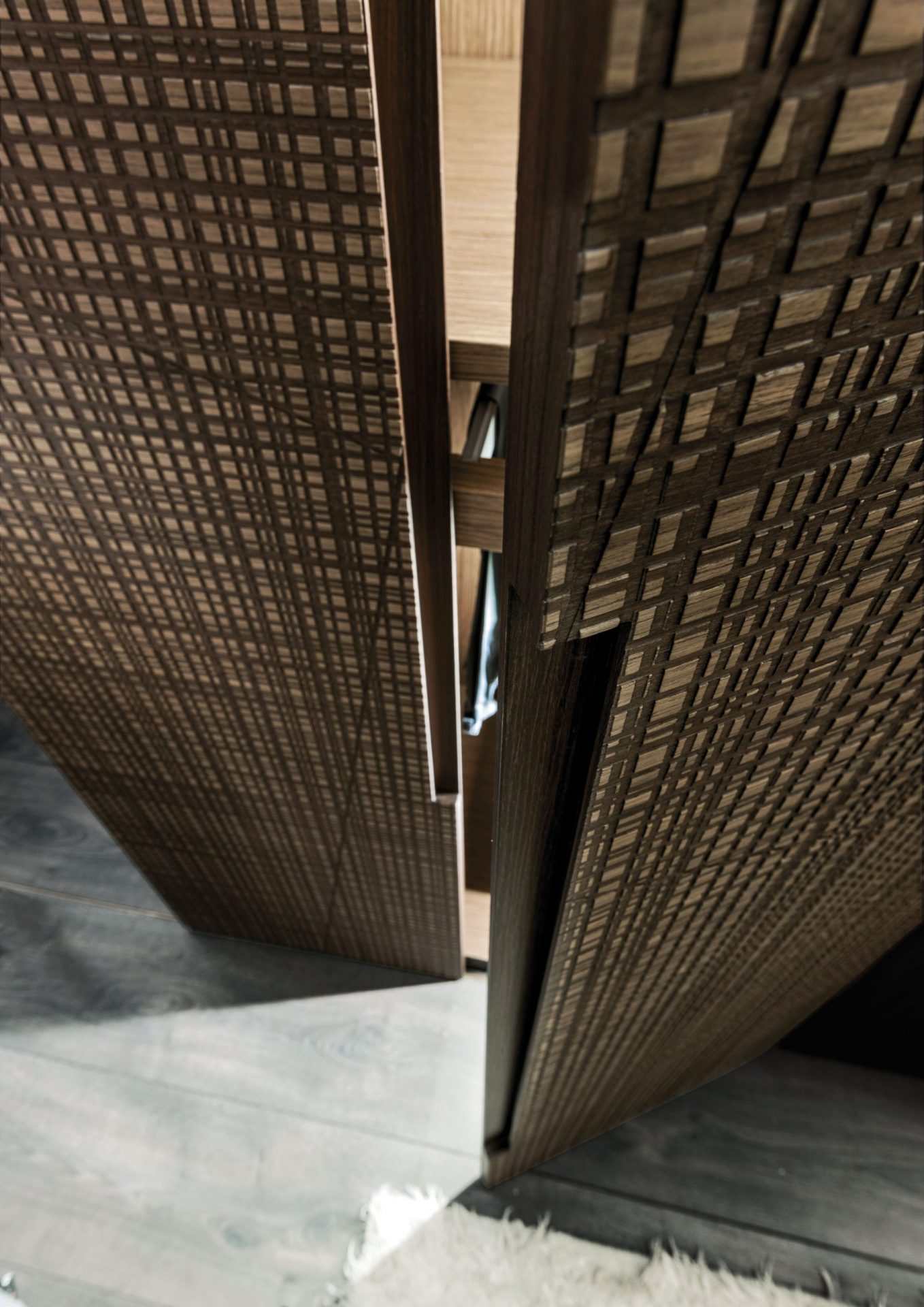
  • Veneer quality and matching, ensuring grain continuity and visual rhythm

  • Lacquer depth and durability, especially in high-touch areas

  • Metal finishes and inserts, which must age evenly and resist oxidation

  • Edge treatment discipline, where failures are most visible over time

Factory cabinetry often offers attractive finishes, but they are limited to controlled palettes and production methods. Custom millwork gives designers the ability to specify higher-grade veneers, deeper lacquer systems, and mixed materials that read as intentional rather than decorative.

Where Italian material culture shows up in high-end interiors

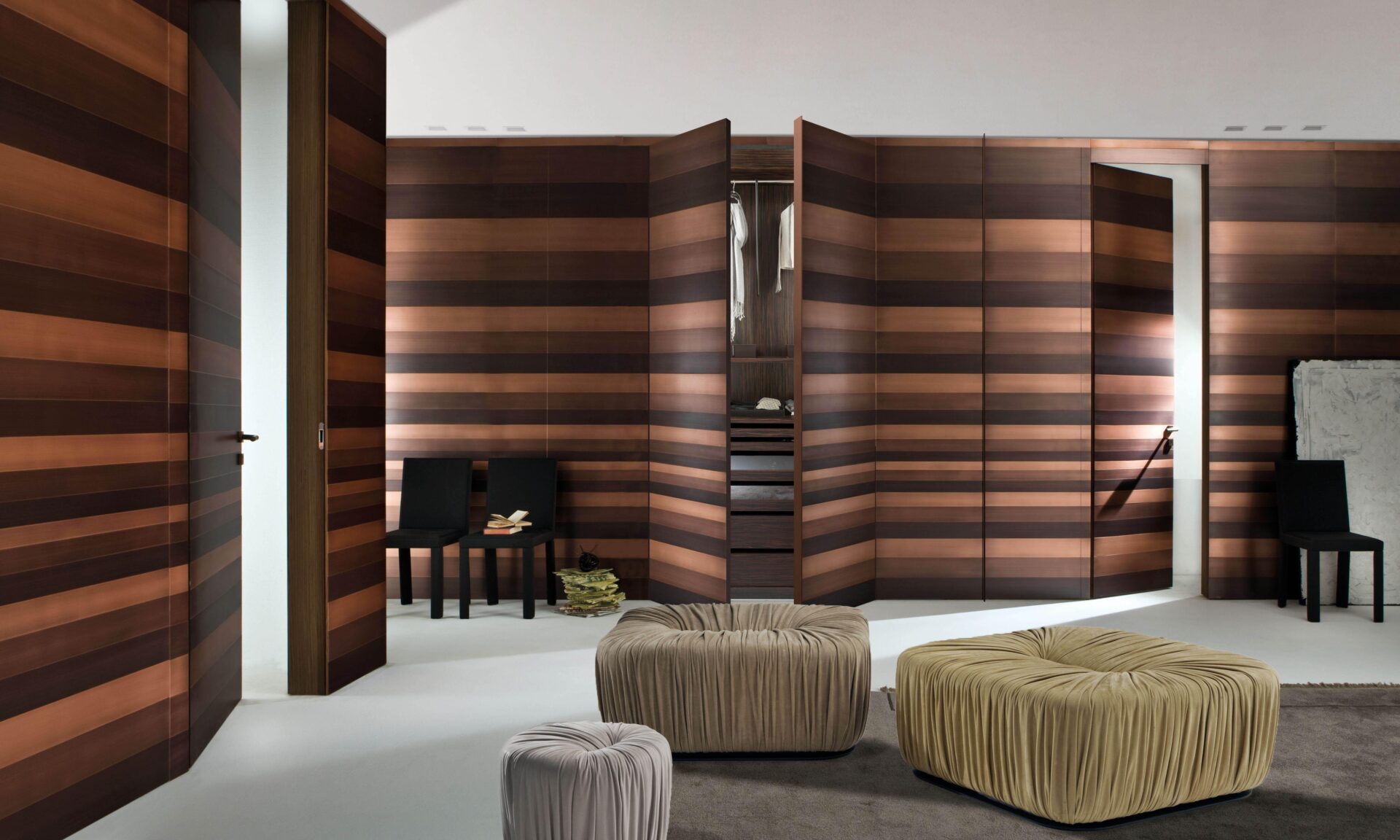
Italian material culture has become a benchmark in luxury interiors because it treats materials as architectural elements, not surface decoration. Italian-grade woods, metals, and lacquers are selected and processed with an emphasis on refinement, balance, and longevity.

This influence is especially visible in:

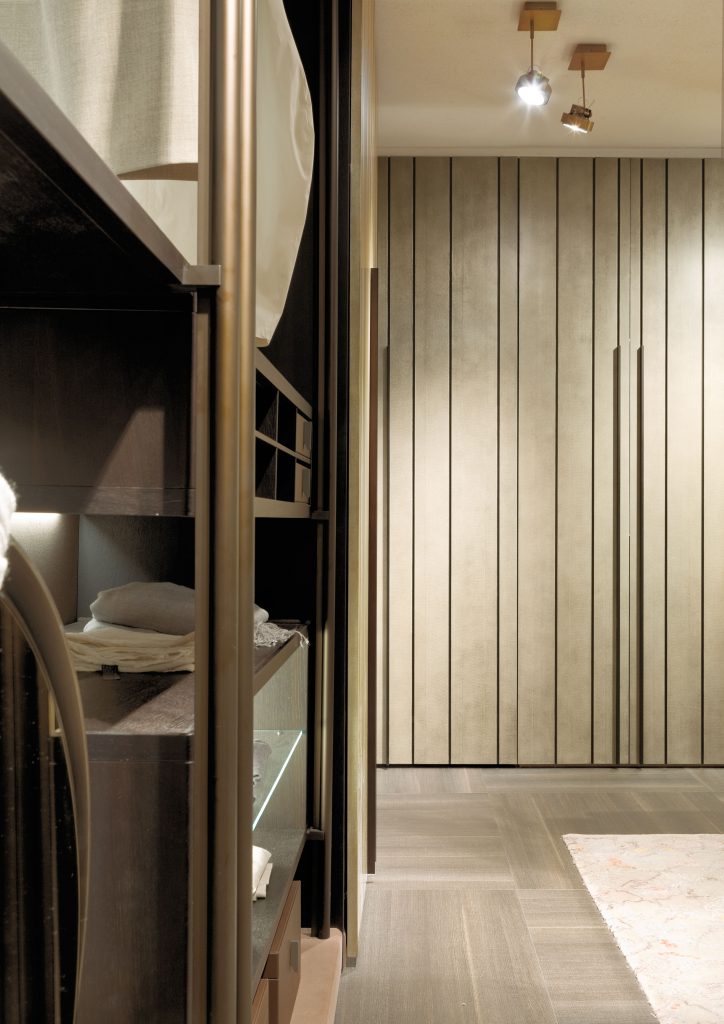
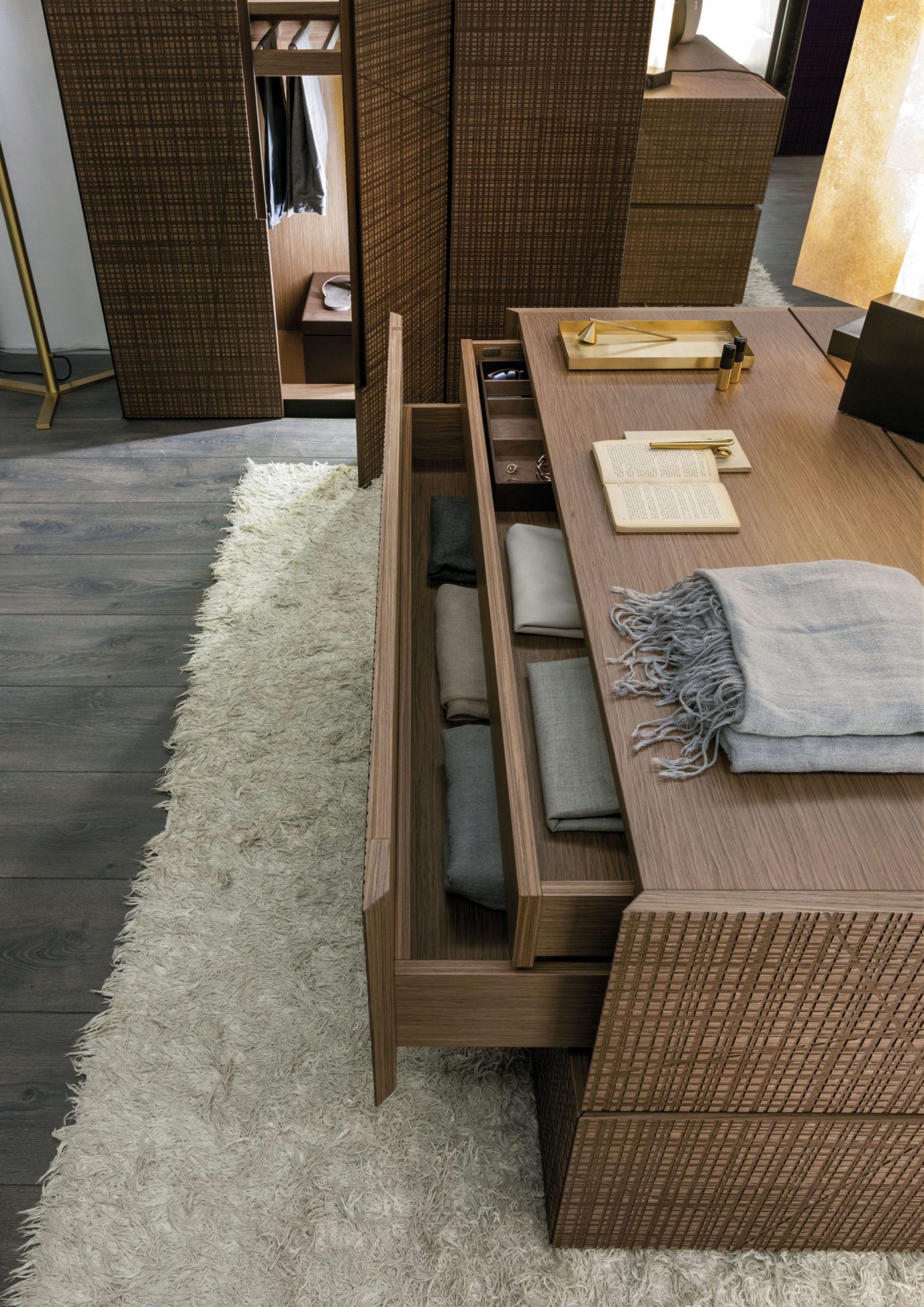
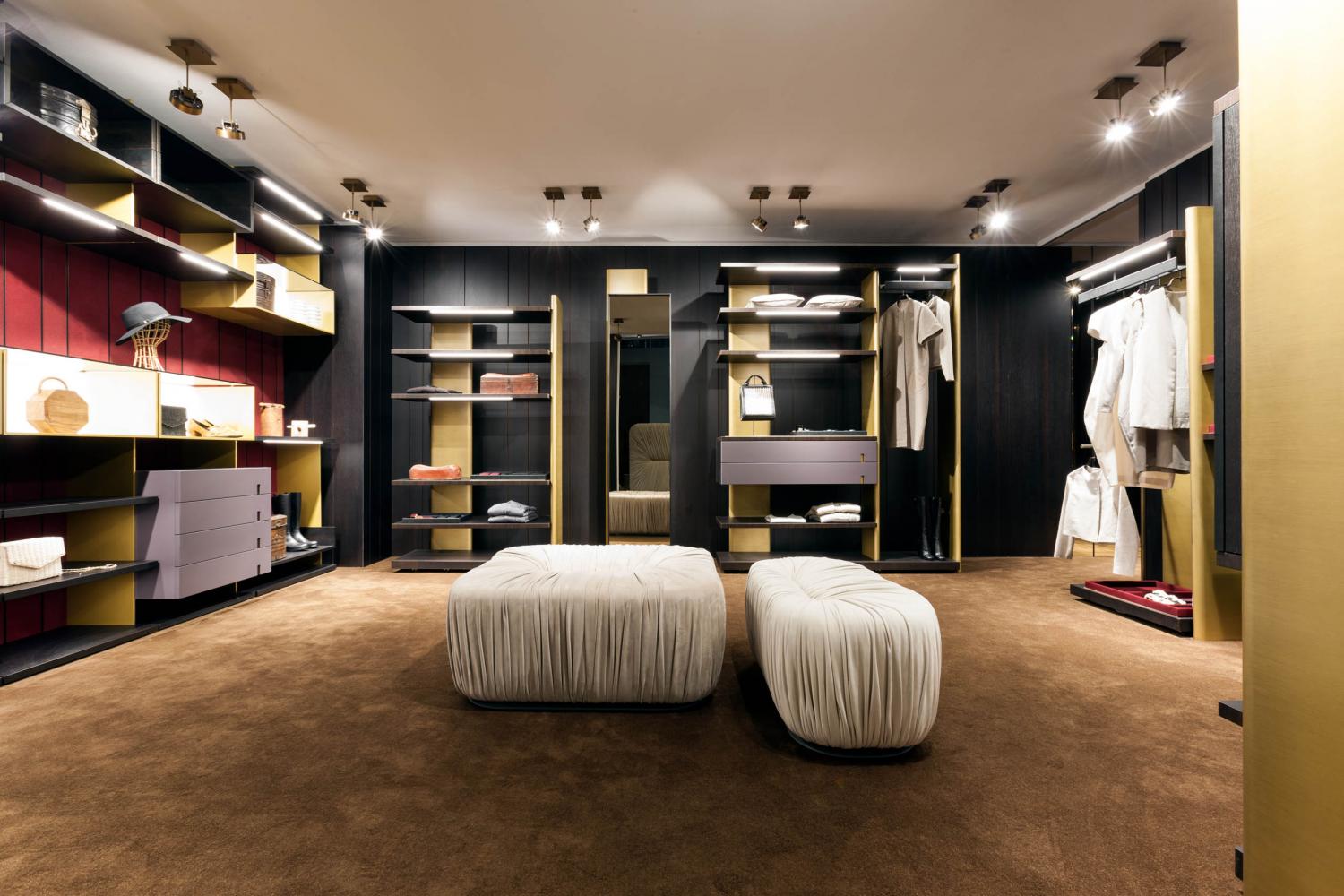
  • Custom wardrobes and walk-in closets, where wood and metal coexist seamlessly

  • Cabinet systems with sculptural presence, not just storage function

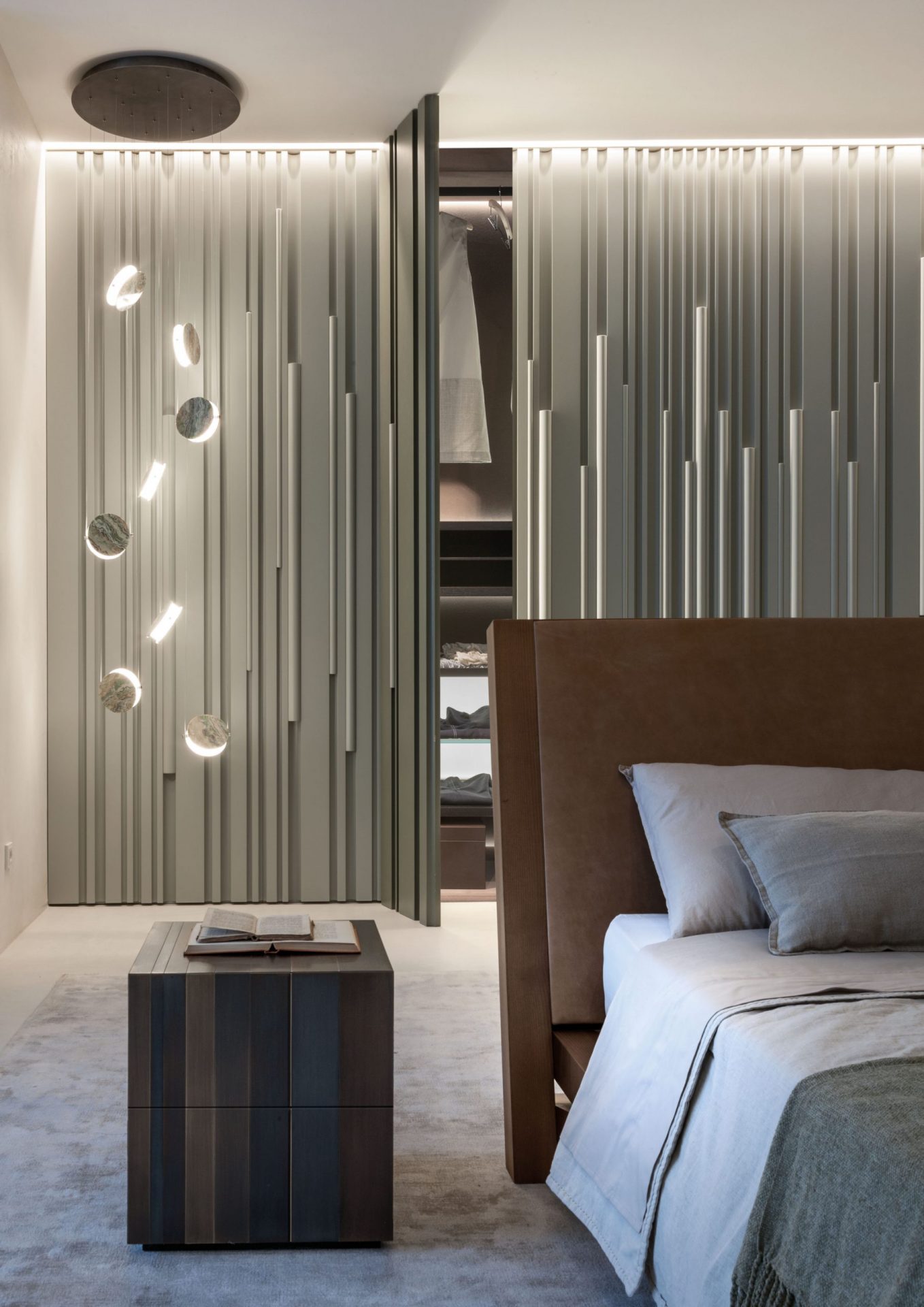
  • Wall paneling and integrated surfaces, where texture and depth define the space

Designers often reference Italian standards when they want cabinetry and millwork to feel calm, precise, and timeless rather than trend-driven.
Craftsmanship and engineering (where “custom” becomes measurable)

Craftsmanship in cabinetry is not subjective. Designers evaluate it through engineering decisions that affect load, alignment, and serviceability.

Joinery and structural logic

Joinery determines how a cabinet behaves under stress. While mass-produced cabinetry relies on standardized methods optimized for speed and consistency, custom millwork adapts joinery to the specific demands of the project.

Designers look for:

  • Appropriate joinery for the load, especially in tall or wide units

  • Reinforcement strategies for stone tops, integrated appliances, and heavy storage

  • Tolerance control, ensuring doors and drawers stay aligned over time

  • Structural logic, where every connection serves a purpose

In high-end projects, joinery is not hidden craftsmanship. It is performance engineering.

Finishing discipline: edge details, sheen matching, touch-up strategy

Experienced designers do not ask for a finish by name alone. They ask how the finish is built, applied, and maintained.

Critical factors include:

  • Sheen consistency across all components

  • Edge durability, where wear appears first

  • Touch-up and repair strategy, especially for occupied homes

  • Batch control, ensuring replacements match existing elements

A disciplined finish system ensures that cabinetry looks intentional not just at installation, but years later.

System thinking: panels, walls, lighting, storage working together

Custom millwork allows designers to think in systems rather than isolated components. Cabinetry becomes part of the architecture.

Integrated systems often include:

  • Wall paneling that aligns with cabinetry geometry

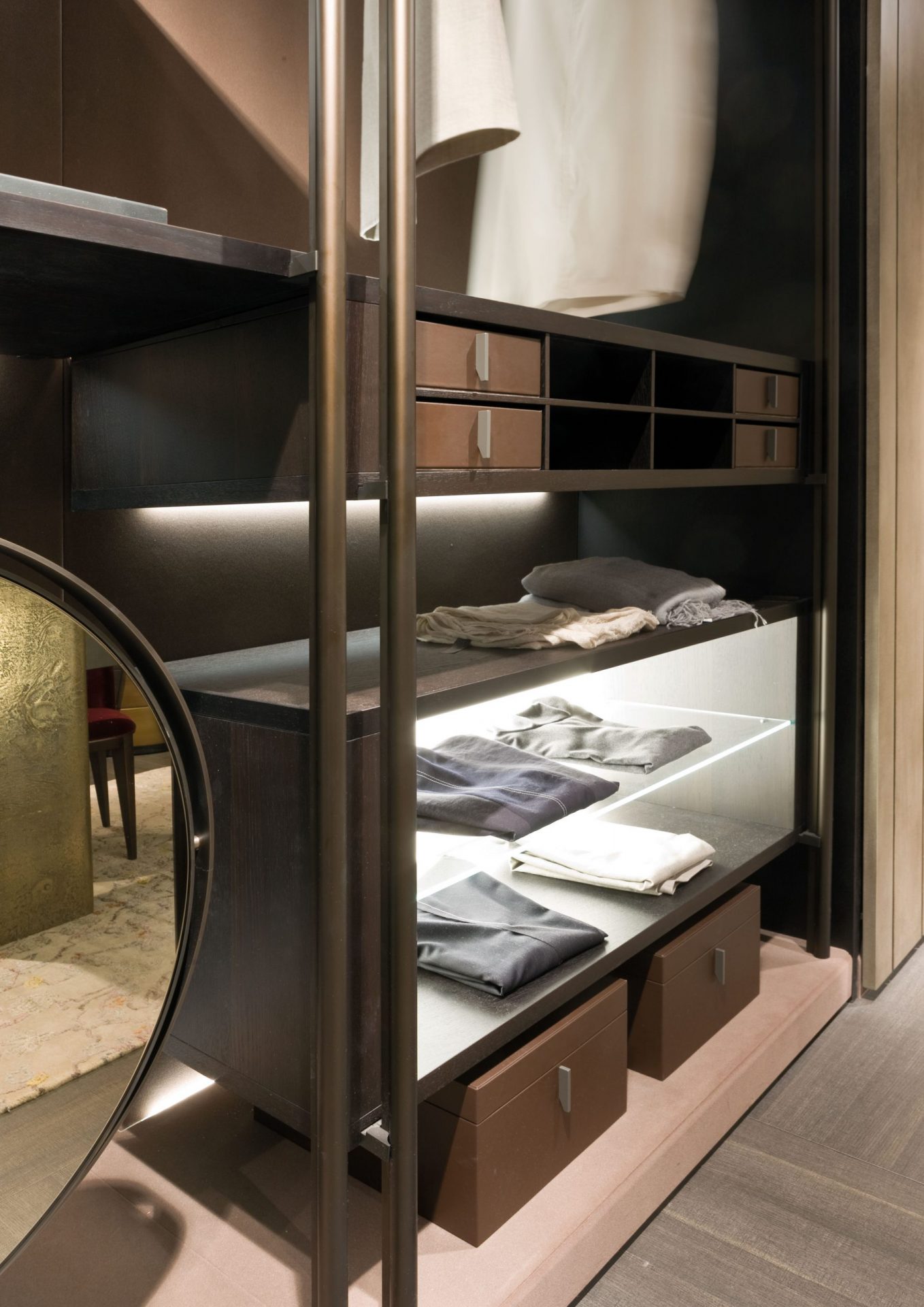
  • Built-in lighting that enhances depth and usability

  • Acoustic treatments concealed within panels

  • Hidden storage that preserves clean sightlines

This level of coordination is difficult to achieve with modular factory systems, but it defines high-end interiors.

Durability and lifecycle (the “10-year reality test”)

Designers often evaluate cabinetry by asking a simple question: what will this look like in ten years, not ten months?

What fails first in mass-produced cabinetry

Factory cabinetry does not usually fail catastrophically. Instead, it degrades at predictable stress points.

Common wear areas include:

  • Hinges and drawer slides losing alignment under daily use

  • Edge banding separating or discoloring

  • Toe kicks absorbing moisture and impact damage

  • Installer adjustments that cannot be re-corrected later

These issues may be minor individually, but they accumulate visually and functionally.

What “repairable” means in practice

Custom millwork is often designed with repair in mind. This changes the long-term equation significantly.

Repairable systems typically allow:

  • Replacement of individual doors or panels

  • Refinishing without full removal

  • Hardware servicing and re-alignment

  • Component-based upgrades over time

This approach preserves the original investment instead of forcing replacement.

The luxury-build expectation

In luxury residential and commercial projects, cabinetry is expected to remain consistent across rooms and resilient through ownership changes, staging, and resale. Designers choose systems that support this expectation.
Design a Luxury Walk-In Closet
Transform your storage into a personalized, high-end space where elegance meets function. Experience Italian-designed walk-in closets created around your lifestyle and space.
Discover Walk-In Closets

Where Materia Collection fits for luxury projects

Materia Collection sits in the space where architecture, interior design, and fine craftsmanship meet. It is not a single product category, but a fully integrated design ecosystem built for high-end residential and commercial interiors. Designers working at the luxury level do not want to coordinate ten different vendors for walls, cabinetry, closets, doors, lighting, and furniture. They want one coherent system where materials, finishes, proportions, and performance are aligned.

The Materia Collection scope includes:

  • Wall treatments and architectural surfaces

  • Fine furniture for living, dining, and feature spaces

  • Closet and cabinet systems for wardrobes, walk-ins, and built-ins

  • Office furniture for executive and commercial environments

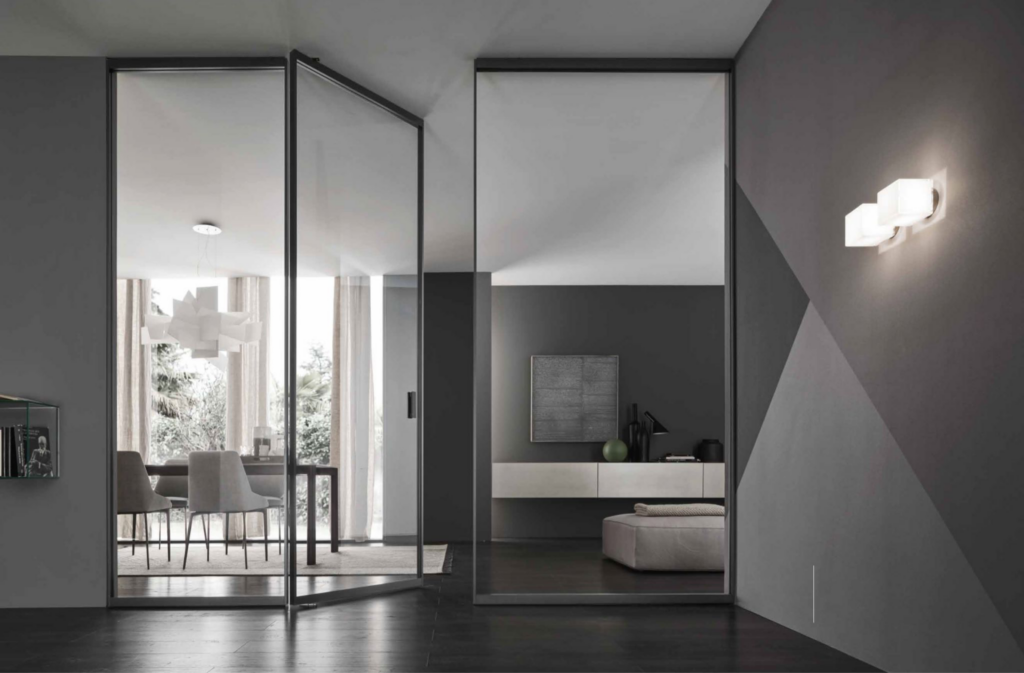
  • Luxury doors including pivot, swing, and sliding systems

  • Kitchens and appliances designed as integrated compositions

  • Lighting as a functional and aesthetic layer

  • Luxury bathroom solutions with customizable furniture

This breadth allows designers to build a complete visual and functional language across an entire project, rather than mixing unrelated components that never quite align.

Italian wall treatments as architectural finish, not decoration

In luxury interiors, walls are not backgrounds. They are architectural surfaces. Materia Collection’s Italian wall treatments are specified the same way cabinetry and stone are specified, based on performance, texture, and visual depth, not trend.

Designers choose from three primary systems:

  • Venetian plaster
    Made from imported Italian lime and marble, this finish creates a luminous, polished surface that reflects light and adds depth to walls. It is durable, breathable, and eco-friendly, making it suitable for both residential and commercial environments where air quality and longevity matter.

  • Wall panel systems
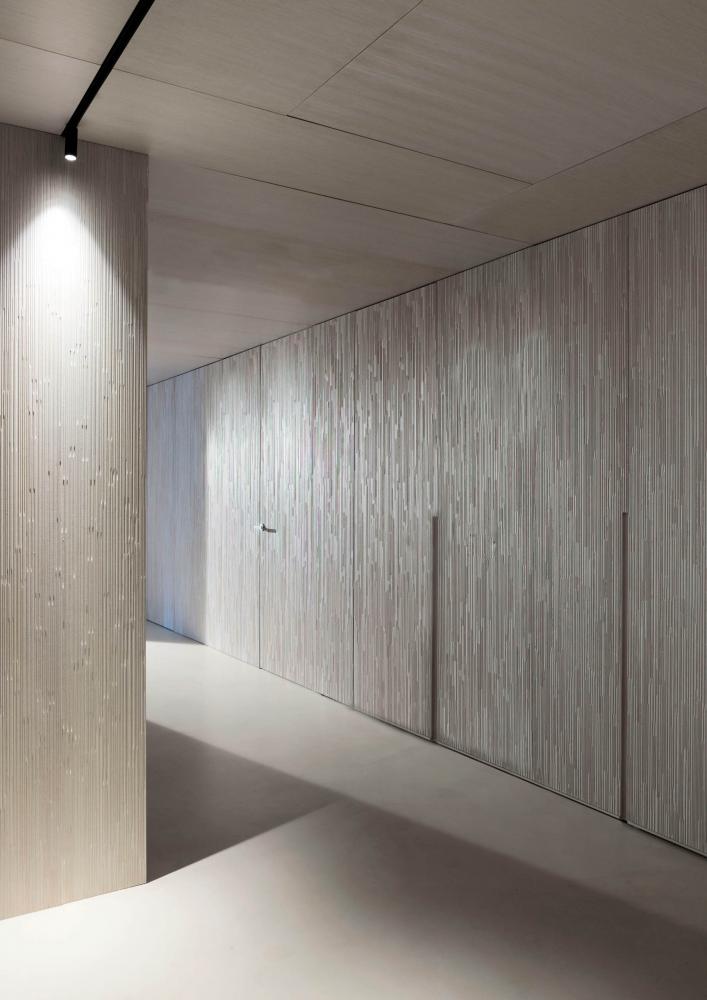
    These are customizable architectural panels in wood, metal, glass, or fabric that can integrate lighting, sound absorption, and storage. Designers use them to build feature walls, media walls, reception areas, and full-height elevations that feel sculpted rather than decorated.

  • High-end wallpapers
    Far beyond printed paper, these collections include silk, leather, velvet, textured, cement-inspired, urban, floral, geometric, and nature-based designs. They are used where a softer or more expressive surface is required without sacrificing quality.

Together, these systems allow walls to become part of the millwork and architectural composition.

Closet, cabinet systems, and wardrobes

Materia Collection’s storage systems are built around Italian craftsmanship and total customization. These are not pre-boxed closets or cabinets. They are bespoke architectural systems made from premium woods, metals, and lacquers.

Designers can align systems to the aesthetic of the project using families such as:

  • ONDA, STARS, MAXIMA, LINE, TERRE, DECOR

For modular planning, collections like:

For luxury walk-in environments:

Every system supports complete customization and endless adaptability, allowing layouts, finishes, and accessories to be built around how the client actually lives and works.

Materia Collection’s showrooms in Miami and New York City allow designers and clients to experience materials, finishes, and craftsmanship in person. This is where color accuracy, surface depth, hardware feel, and construction quality can be evaluated before anything is committed to a project.

Discover Italian Cabinet Systems
Elevate your home or office with custom Italian cabinet systems that combine refined materials, smart storage, and timeless design. Crafted for those who value performance and beauty in equal measure.
Explore Cabinet Systems

Frequently Asked Questions - Custom Millwork vs Mass-Produced Cabinets

Semi-custom cabinetry can be a smart choice in straightforward rooms with tight timelines. Custom millwork becomes the better option when the design requires precision, architectural integration, and long-term serviceability.

Custom millwork is built to be repaired, refinished, and adjusted. Factory cabinets are typically replaced when finishes or components fail.

They use controlled finish systems, sample approvals, and batch coordination, which are easier to manage with custom millwork.

At the high end, they are treated as architectural millwork, not movable furniture.

Custom projects take longer, but designers manage risk through shop drawings, field verification, and coordinated scheduling.

I would like to receive an access to the technical drawings and catalogs. I agree to receive company products updates.