

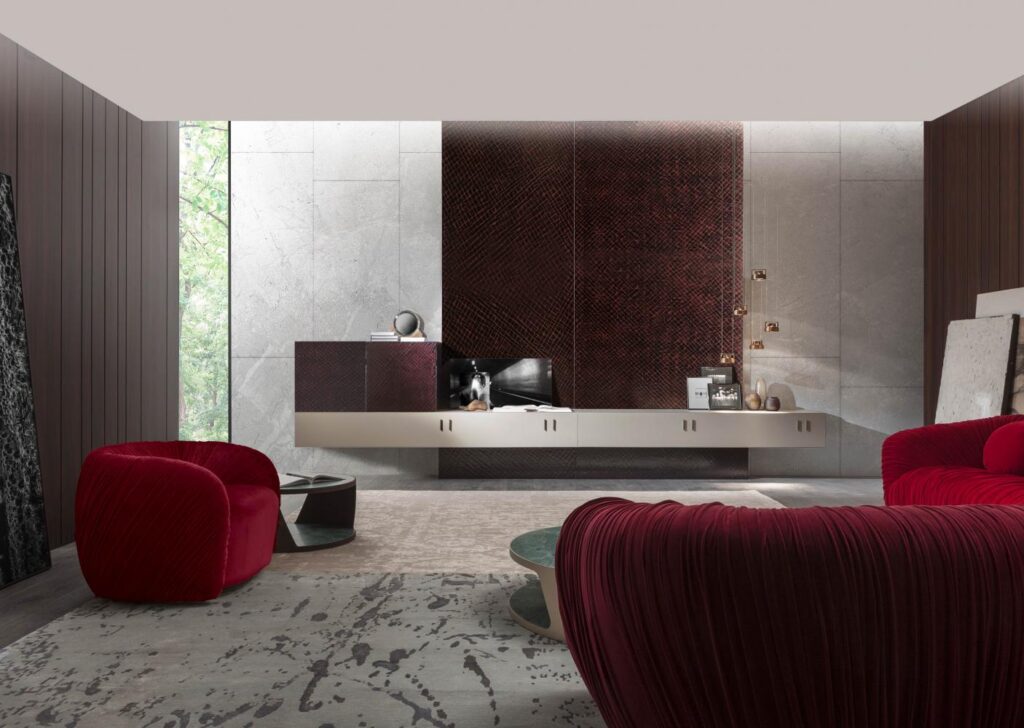
This blog post is your detailed guide to creating a cohesive yet expressive living room by skillfully combining high-end furniture from different styles, periods, and materials.
You’ll discover practical strategies for blending Italian furniture, textures, tones, and forms in a way that feels intentional and visually compelling. Inspired by leading designers and rooted in Materia Collection’s philosophy, this article will help you curate a space that exudes timeless sophistication without sacrificing authenticity.
Do You Have to Match Furniture in a Luxury Living Room?
For decades, traditional interior design promoted the idea that matching furniture was a hallmark of elegance. Entire living room sets – identical sofas, side tables, and entertainment consoles – were marketed as complete solutions for refined spaces.
However, this outdated formula often led to rooms that felt impersonal, overly rigid, and lacking in visual depth.
| Design Principle | Traditional Approach | Luxury Mix-and-Match Approach |
|---|---|---|
| Furniture Matching | Complete matching sets (sofa, chairs, tables) | Deliberate contrast between shapes, styles, and finishes |
| Material Selection | One or two surface types repeated | Rich combinations: leather, velvet, stone, metals |
| Wood Finishes | Uniform wood tones throughout | Mixed tones—light and dark woods harmonized intentionally |
| Wall Treatments | Flat painted walls | Textured panels and wallpaper define zones and add rhythm |
| Room Zoning | Single-purpose furniture arrangements | Multi-functional zones with layered lighting and seating |
| Design Philosophy | Uniformity and symmetry | Expression, texture, and curated contrast |
Why eclectic design creates warmth and personality
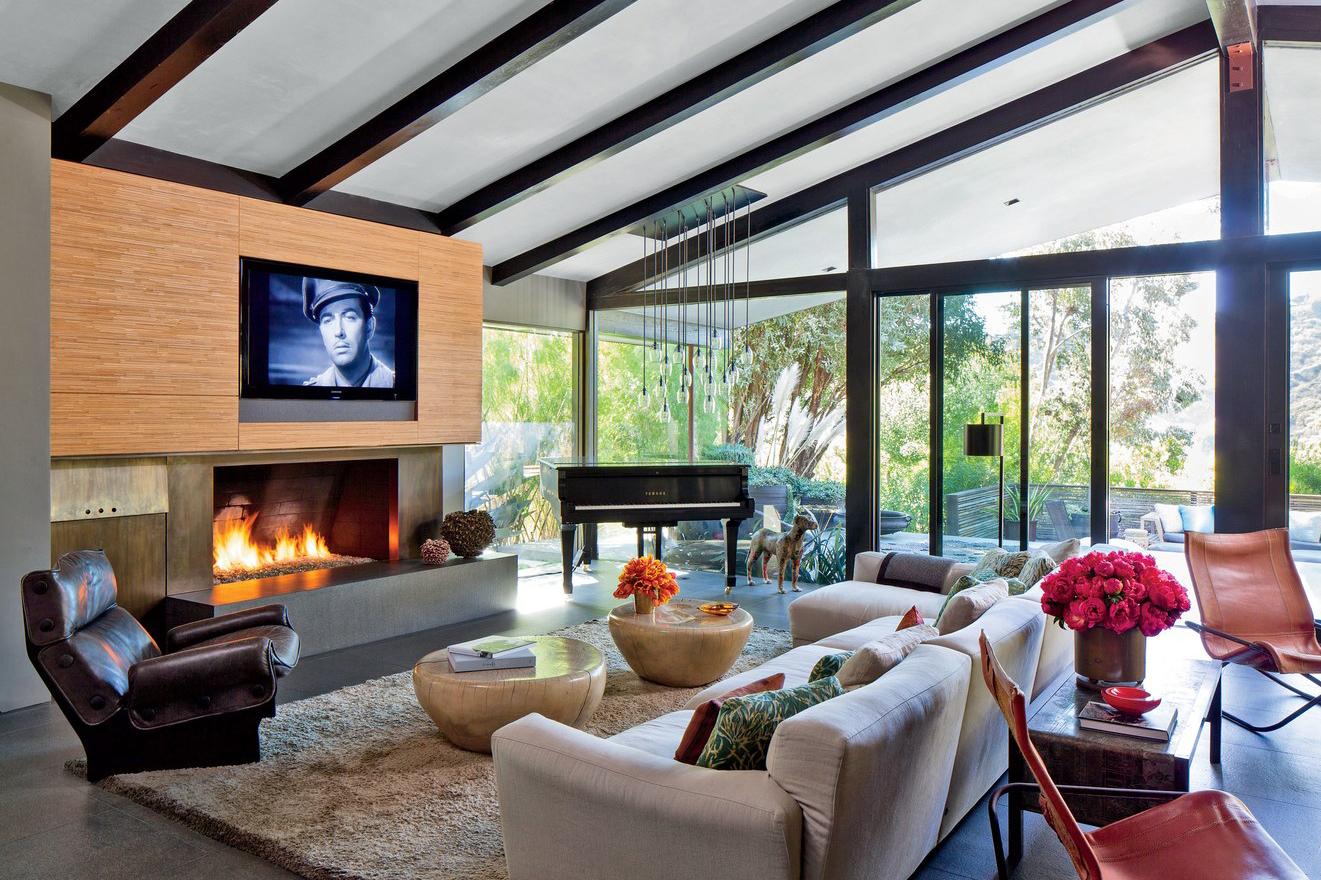
Eclectic design is not about randomness; it’s about balance and intention. When you combine high-end furniture from different styles – such as a sculptural Italian armchair next to a sleek, contemporary sofa – you add richness to your space. Each element offers its own texture, history, and character, resulting in a room that feels layered and alive. –
How top interior designers blend styles for visual sophistication?
Walk into any luxury residence designed by leading interior professionals, and you’ll rarely see a matching set. Instead, you’ll notice the artful fusion of old and new, smooth and textured, bold and understated. Top-tier designers understand that luxury doesn’t mean predictable. They mix materials – velvet, marble, brushed metal – alongside varying silhouettes to create intrigue and contrast.
The Sofa: Centerpiece of a High-end Living Room
Scale and proportion: why size and presence matter
In any luxury living room, the sofa typically commands the most visual and physical space. It’s where guests gather, families relax, and design statements are made. As such, getting the scale and proportion right is non-negotiable. A high-end sofa should anchor the room – not float awkwardly in it.
Start by assessing the dimensions of your living area. A sofa that’s too small will feel underwhelming and fail to support the other design elements, while one that’s too large may dominate the room and restrict circulation. In open-plan spaces, a larger sectional like the Symphony Modular Sofa by Materia can help define zones without needing walls or partitions.
Keep in mind that high-end furniture isn’t just about visual appeal – it’s about how it feels in space. A well-proportioned sofa will balance adjacent pieces like side tables, poufs, or coffee tables, and will draw the eye toward key focal points, such as wall treatments or artwork.
Mix-match rule: the sofa doesn’t need to match anything
Gone are the days when the sofa had to be part of a coordinated set. In luxury interior design, the goal is not to replicate a showroom but to create a living, breathing environment. The sofa should harmonize with the space, but it absolutely does not need to match any other furniture piece exactly.
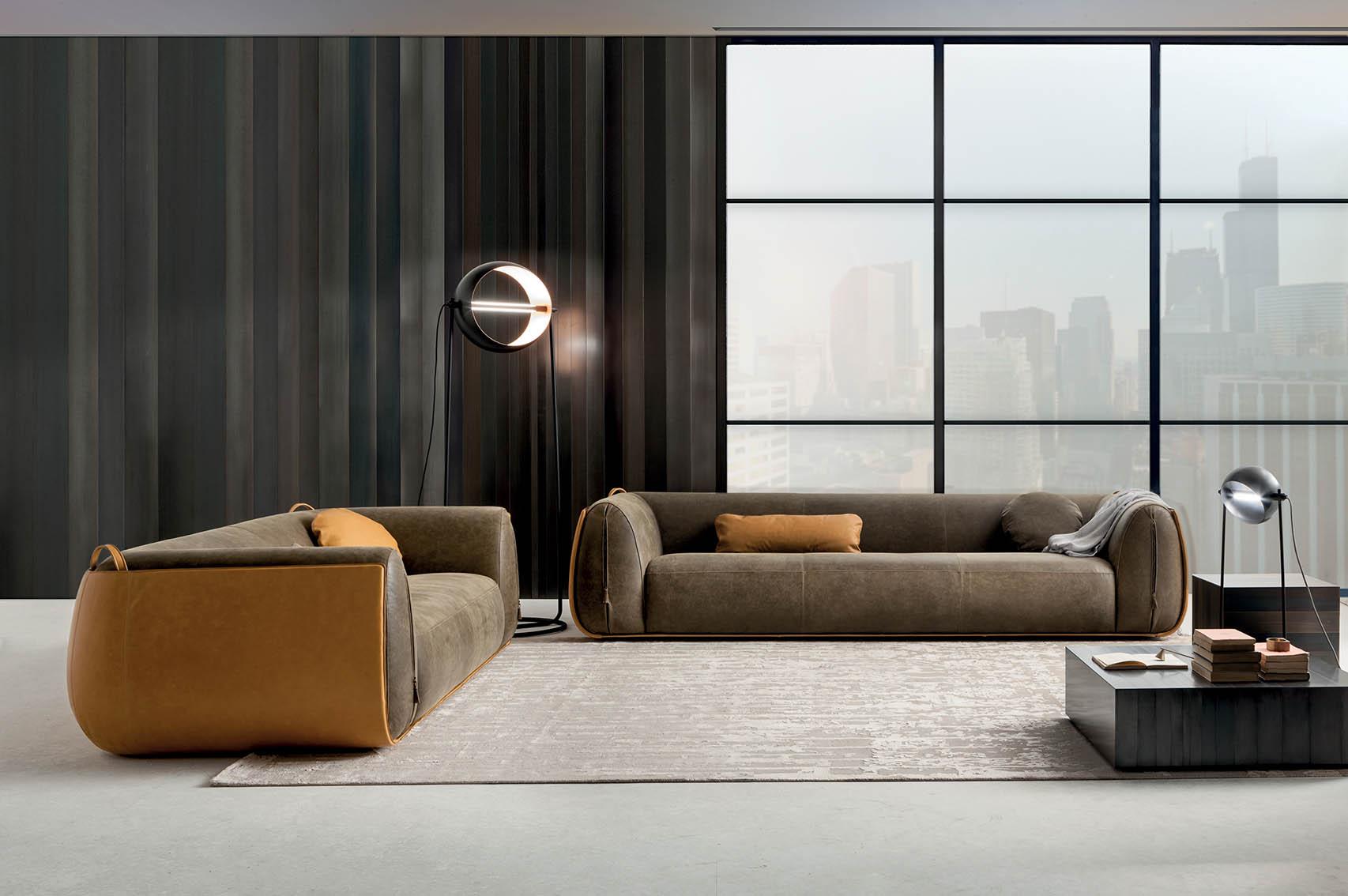
In fact, the most sophisticated interiors often juxtapose a modern sofa with vintage accessories or pair it with accent chairs in a completely different style. For example, a minimalist Rialto Sofa with clean lines might be placed opposite a richly upholstered Drapé Armchair, creating a visually engaging dialogue between simplicity and detail.
The key to making it work lies in connecting elements through tone, scale, or texture. You might pair a neutral sofa with patterned cushions that echo the colors of a nearby art piece, or choose a rug that picks up the sofa’s base color while contrasting its form.
Pairing luxury sofas with accent fabrics, wall treatments, or rugs
Textiles play a crucial role in integrating the sofa into the overall design. Whether you’re working with velvet, linen, boucle, or leather, the fabric on your high-end sofa should either establish the room’s palette or respond to it meaningfully.
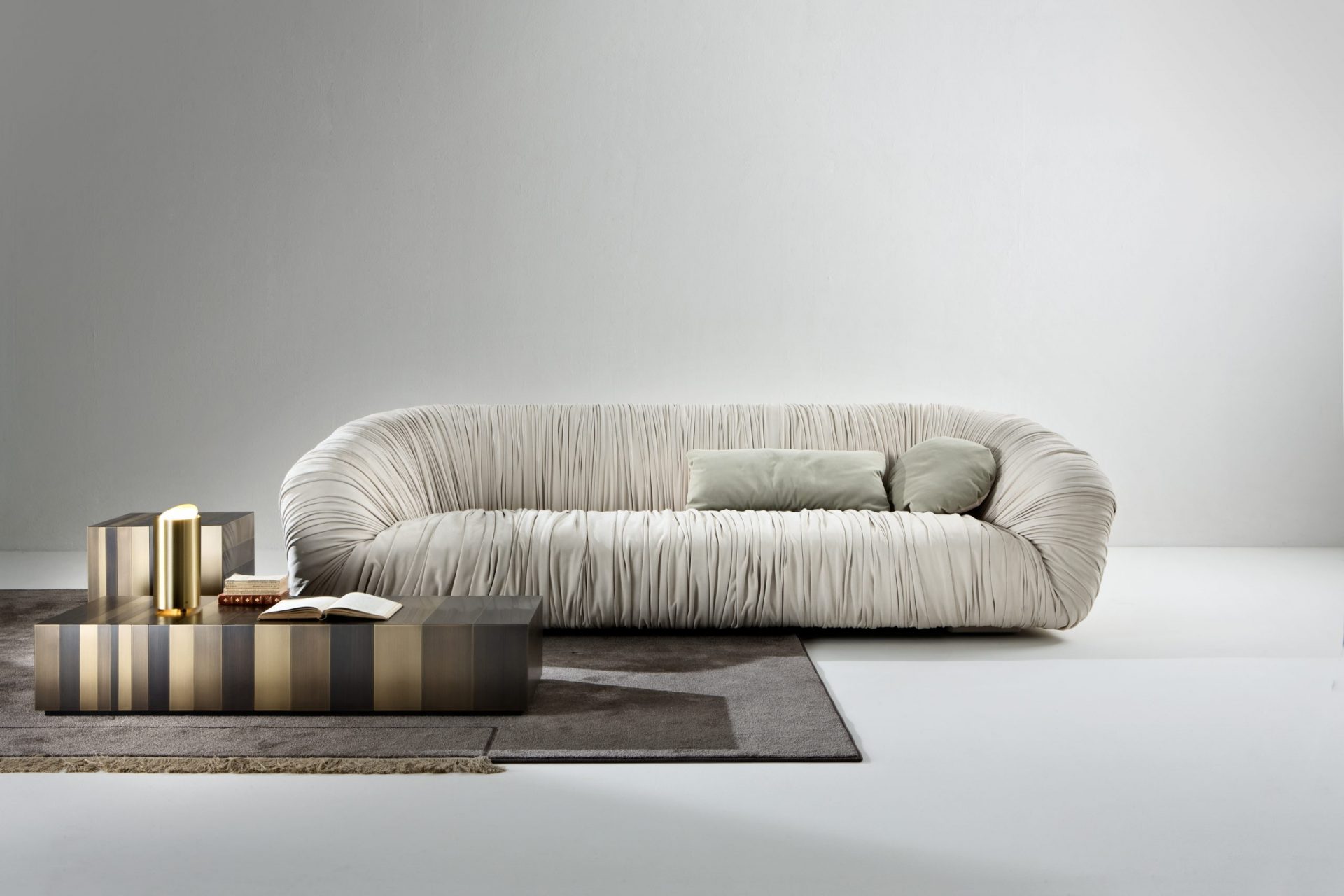
Materia Collection’s offerings – like the Drape Sofa – are not only sculptural in form but also come in bespoke finishes that can be tailored to your space. These sofas are designed to complement premium wall treatments and Italian wallpapers found in Materia’s Wall Panel Systems.
When combining these elements, think in layers:
A Symphony Modular Sofa in rich fabric can be grounded by a textured area rug in a neutral tone.
Behind it, a Maxima Line panel might introduce a vertical rhythm that adds dimension.
Metallic or stone side tables placed next to the armrests can reflect the tones of nearby lighting fixtures or art frames.
The result is a layered and luxurious look where the sofa doesn’t dominate but integrates, elevates, and enhances.

Statement Seating: Mixing Armchairs, Poufs, and Benches
How to select accent chairs to contrast the sofa
Once your sofa establishes the anchor of the living room, accent seating becomes your opportunity to introduce contrast, depth, and visual intrigue. The most elegant interiors often use high-end accent chairs and benches as statement pieces – deliberately chosen to stand apart from the main sofa both in form and style.
The key is to contrast, not compete. For instance, if your sofa features clean, modern lines, consider pairing it with a more sculptural or rounded armchair, like the Drapè Soleil from Materia Collection. Its soft, gathered design instantly adds a layer of artisan luxury and balances the minimalism of a streamlined seating arrangement.
Another consideration is placement. Use accent chairs to define secondary zones within your living space – like a reading corner or a two-chair conversation nook facing the fireplace. The goal is to diversify the visual rhythm while maintaining coherence with the overall luxury interior design narrative.
Guidelines for pairing different shapes and materials
Contrast should always be tempered by cohesion. This is best achieved through repetition of detail – perhaps through finish, color, or hardware. For example, a Margaret Armchair in walnut-stained wood can subtly echo the finish of a sideboard across the room, even if the shapes differ dramatically.
Using textures (leather, velvet, linen, wood) for a multi-dimensional look
Luxury is often felt more than it is seen. Texture is where high-end furniture truly excels. Layering materials like leather, velvet, linen, and exposed wood creates visual depth and tactile contrast. A buttery leather armchair beside a velvet pouf, for example, invites both aesthetic appreciation and physical comfort.
The Margaret Armchair adds sophistication through its structure and materiality. The BD 21 Maxima Collection Armchair, a blend of artistry and comfort, acts as a sculptural anchor in a sea of soft furnishings.
These pieces not only serve a functional purpose but become artworks in their own right – defining the character of your living room and elevating the overall design language.

Coffee Tables and Side Tables: Curated Contrast
Do they need to match each other or the sofa? No.
It’s time to move past the notion that coffee tables must match the sofa – or even one another. In luxury spaces, tables are curatorial elements, selected to enrich the spatial and material language rather than mimic it. Instead of a matching set, think of your tables as functional sculptures – pieces that tell their own stories while supporting the overall harmony of the room.
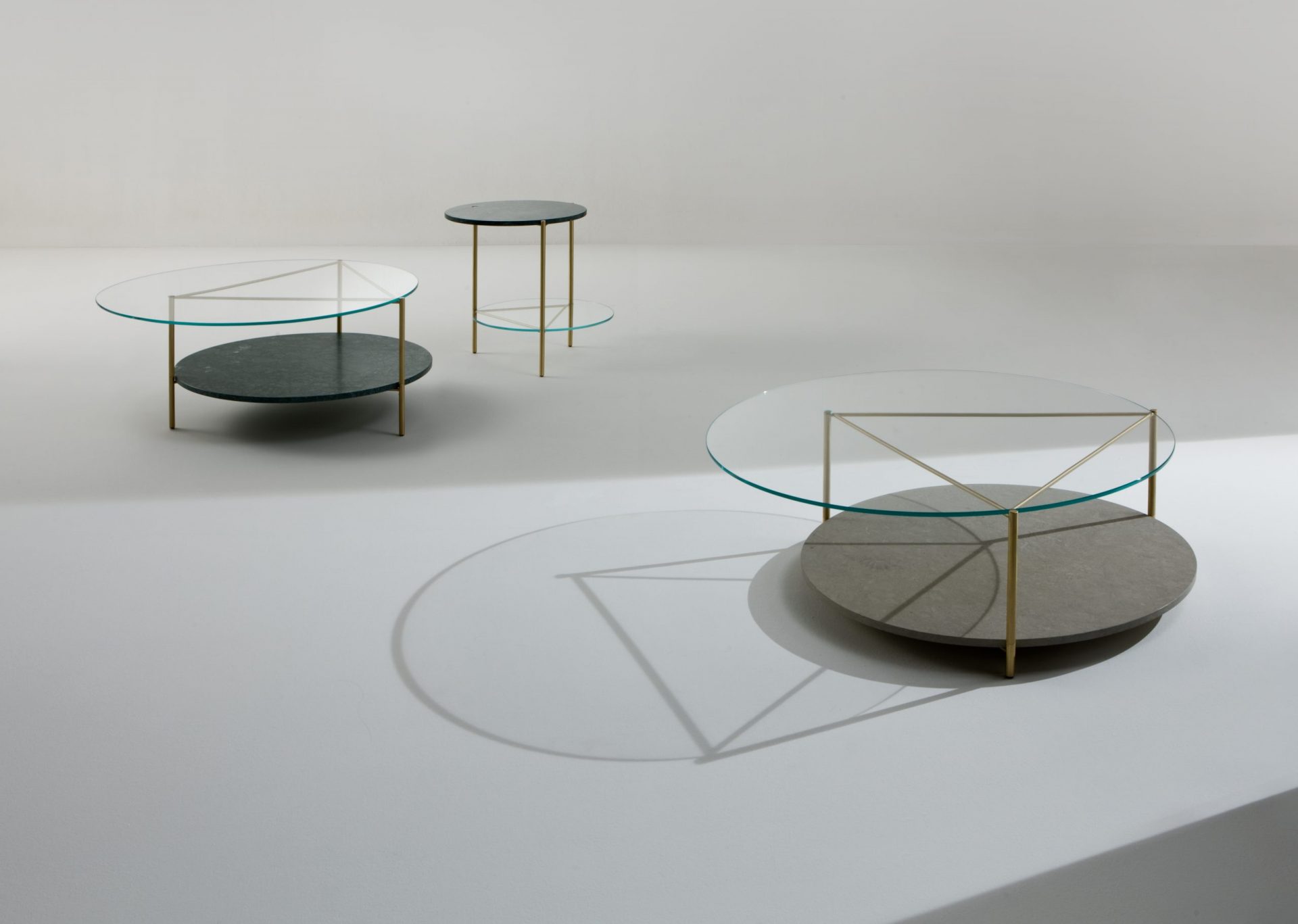
The coffee table especially serves as a design fulcrum. It draws the eye to the center, anchors furniture placement, and often becomes a showcase for curated objects. But its style does not need to mimic the sofa’s style. A structured modular sofa like the Symphony can be paired with a delicate metal-framed glass table for contrast. Conversely, a soft, rounded sofa might benefit from a bold, solid wood table with geometric weight.
Playing with sculptural forms and artistic surfaces
The evolution of luxury furniture has turned functional pieces into sculptural statements. Coffee tables today aren’t just horizontal platforms – they’re three-dimensional design objects. Echo Coffee Tables by Materia exemplify this concept with their layered, rippling surfaces that capture light and shadow.
Similarly, the Shadow Table introduces visual weight with its dark finish and minimalist form, offering grounding energy amidst brighter furniture. The HUGS Coffee Table, on the other hand, embraces a more organic sensibility with gentle curves and a soft matte finish. Each of these tables plays a different role – not just in terms of material, but also in mood and presence.
You can mix and match these sculptural pieces within the same room or across different zones in an open-plan layout. A coffee table in the central seating area might contrast with a slender side table in metal or marble, placed next to a reading chair or floor lamp. The variety of forms creates movement and keeps the eye engaged.
Cabinets, Cupboards, and Storage: Functional Focal Points
Storage furniture as art: not everything needs to blend in
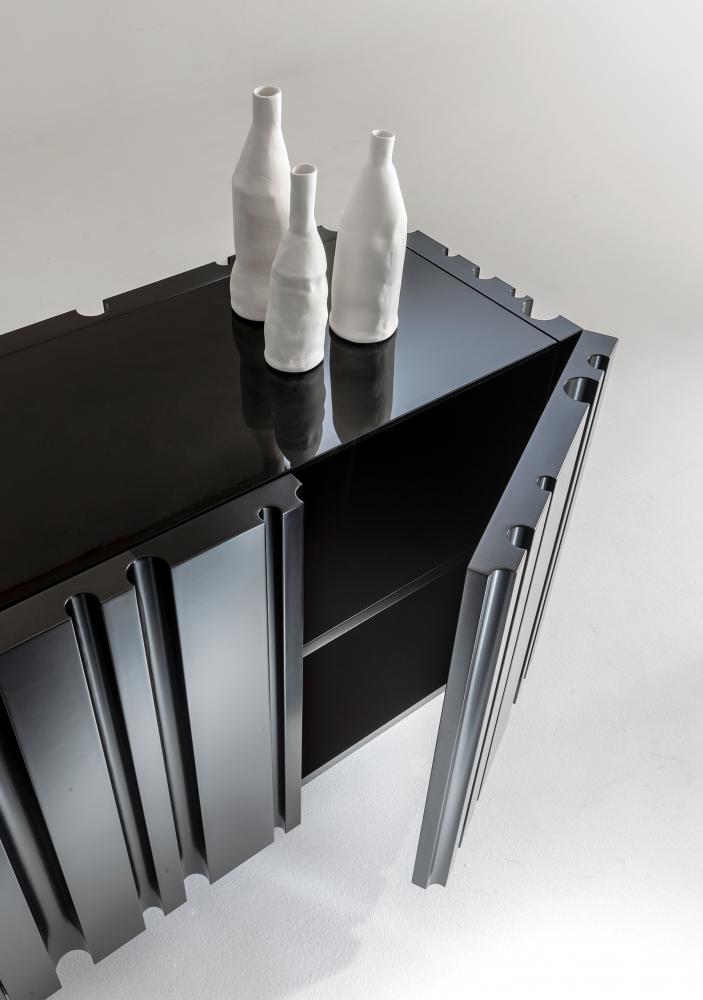
In luxury interiors, storage furniture is no longer a background player. Cabinets, consoles, and sideboards can be functional while also serving as artistic statements. In fact, one of the most effective ways to add personality and contrast to your living room is by using storage furniture to break the rhythm of the space rather than mirror it.
Rather than tucking a minimalist sideboard into the shadows, consider elevating it with bold form, vibrant color, or intricate texture. A lacquered cabinet in deep navy, for example, doesn’t just store – it commands attention. A console with brass inlays or ribbed wooden fronts becomes a sculptural feature, not just a utility.
Showcasing collectibles or designer objects
Your cupboards and cabinets are more than storage – they’re exhibition spaces. Open shelving, glass-front units, or console tops are prime areas to showcase art objects, heirlooms, or design-forward accessories. From stacked books to sculpture, from ceramics to framed photographs, every element placed on or inside your storage units contributes to the emotional and visual identity of the room.
Materia’s storage offerings are designed with this dual function in mind. For example:
A sideboard from the BD series with integrated lighting can spotlight a curated art piece.
A modular INFINITY cabinet can display both closed functionality and open niche shelving, ideal for rotating decor or collectibles.
This blend of function and curation not only serves your day-to-day needs but also elevates the aesthetic sophistication of your space. In the world of Italian design, beauty is never divorced from utility – and that principle is embodied in every piece Materia produces.
Wall Treatments and Decorative Backdrops
The role of wall paneling in framing and supporting furniture pieces
In a luxury interior, the walls are not just background – they are architectural features that can define the character of a space just as much as any piece of furniture. Thoughtfully designed wall treatments offer more than aesthetic beauty; they provide a structural rhythm, frame focal points, and establish visual boundaries in open-concept living rooms.
Wall paneling – whether subtle or ornate – can create a sophisticated backdrop that highlights high-end furniture rather than competing with it. For example, a modular Symphony Sofa placed against textured vertical wood panels immediately feels anchored, its soft contours contrasted by the paneling’s structure. Similarly, accent walls clad in rich wood or deep-hued materials can elevate an otherwise minimalist seating area into something sculptural and intentional.
Wall panels can also create a narrative link between adjacent zones – tying together the dining and living areas or subtly transitioning from a private to a public space within the home.
Italian wall systems from Materia – texture, depth, contrast
Materia Collection specializes in Italian wall panel systems that serve both functional and decorative purposes. Unlike simple painted drywall, these panels add depth, movement, and texture to the room. Two of the most iconic systems – Line Wall Panels and Maxima Stars Panels – embody the principles of Italian craftsmanship: precision, timeless design, and material excellence.
Line Panels are characterized by their geometric discipline – linear grooves that offer a rhythmic, architectural backdrop. Ideal for modern and minimalist environments, they introduce a refined repetition that frames the space and subtly directs the eye.
Maxima Stars Panels, on the other hand, bring more ornate visual interest. With layered dimensionality and intricate detailing, they are ideal for rooms where furniture acts more as sculpture than utility. These panels become part of the story – enhancing luxurious sofas, armchairs, or consoles with quiet drama.
Both wall systems are modular and customizable, allowing seamless integration into any room, whether you’re dressing an entire space or creating a singular accent wall.
Using wallpapers or wood paneling to separate or connect zones
In open-plan living areas, where dining, lounging, and entertaining happen within the same footprint, wall treatments play a key role in defining spatial zones without the need for partitions. Wallpaper and wood paneling provide visual separation that supports the functional layout of the room.
For instance:
A seating nook can be visually distinguished by a dark-stained panel wall, signaling intimacy and grounding the area without physical enclosure.
A lighter wood-paneled wall can serve as a transition to a dining area, keeping the visual language consistent but subtly evolving in tone and rhythm.
You might also use wallpaper with metallic threads or textured silk finishes to add a luminous quality behind open shelving or floating cabinets. With Italian wall systems from Materia, every surface becomes a tool for storytelling – enhancing furniture while building spatial coherence.
Mistakes to Avoid When Combining High-end Furniture
Overmatching (everything from one collection)
A common pitfall is selecting every piece from the same line or designer, which leads to a flat and overly orchestrated look. While cohesion is necessary, overmatching eliminates individuality and makes even the most luxurious furnishings feel generic. True refinement comes from careful curation, not rigid repetition.
Ignoring scale (too many small pieces)
Filling a room with multiple small-scale items can make it feel fragmented and cluttered. Instead, use larger anchor pieces – such as a substantial sofa or an oversized coffee table – to ground the space, and build around them with purposeful accessories.
Forgetting light sources and texture
In luxury design, texture and lighting are as important as furniture. Without layers of tactile contrast – soft against hard, matte against gloss – the room will lack dimension. Similarly, poor lighting can diminish the beauty of even the most exquisite pieces.
Not thinking in zones (entertaining, lounging, reading)
Failing to consider functional zoning within a living room leads to chaotic layouts and inefficient use of space. High-end interiors should support various activities: lounging, reading, conversation, even solo reflection. Defining each zone with appropriate furniture, lighting, and rugs ensures comfort and utility without sacrificing aesthetics.
Discover the Art of Italian Living with Materia Collection
Artisan craftsmanship, unique finishes, and global reach
Materia Collection’s strength lies not only in its furniture catalog but in the craftsmanship that defines every detail. From luxury wall panels crafted with precision and passion, to custom walk-in closets and modular sofas designed to evolve with your space, each piece reflects an uncompromising commitment to excellence.
Clients can choose from an extensive range of finishes – textured woods, lacquered surfaces, natural stone inlays, and brushed metals – all applied with artisan techniques that turn materials into masterpieces. These are not mass-produced objects but singular pieces, designed to live in harmony with their surroundings and with the people who use them every day.
With installations in the U.S., Europe, and the Middle East, Materia has become a globally respected name in Italian furniture and custom interiors. Whether you’re designing a modern Manhattan penthouse, a Miami beachfront villa, or a Parisian atelier, Materia brings the soul of Italy to every corner of your home.
Each project begins with a conversation – and ends in a space that is uniquely yours.