


Luxury furniture exists at the intersection of art and utility. It is where beauty, innovation, materials, and meticulous craftsmanship combine to create something timeless.
Many of the most expensive furniture pieces ever sold are antiques dating back to the 17th and 18th centuries, while others are more recent, created by world-renowned designers or conceived through rare commissions. What they all share is that elusive combination of art, story, and scarcity that drives their price into the millions.
The 12 Most Expensive Furniture Pieces Ever Sold (2025)
As of 2025, these furniture pieces have transcended their utilitarian roots to become multimillion-dollar treasures. Whether handcrafted by Renaissance artisans or created by visionary designers of the 20th century, they are symbols of wealth, prestige, and artistic ingenuity. Listed below are the top 12 most expensive furniture pieces ever sold, in order of price.
| Rank | Furniture Piece | Price (USD) | Year Sold | Origin | Key Material(s) |
|---|---|---|---|---|---|
| 1 | Badminton Cabinet | $36.7M | 2004 | Italy/England | Ebony, Pietra Dura, Semi-Precious Stones |
| 2 | Dragon’s Chair | $27.8M | 2009 | France | Lacquered Wood, Leather |
| 3 | Florentine Pietra Dura Cabinet | $24.3M | 2004 | Italy | Ormolu, Amethyst, Ebony |
| 4 | Wooton Desk | $12.1M | Undisclosed | USA | Carved Wood, Compartments |
| 5 | Antique Secretary Desk | $11.4M | 1989 | USA | Mahogany |
| 6 | Huanghuali Horseshoe-Back Chairs | $9.6M | 2015 | China | Huanghuali Wood |
| 7 | Huanghuali Plank-Top Table | $9M | 2013 | China | Huanghuali Wood |
| 8 | Clive of India Sofa | $7.8M | Undisclosed | Anglo-Indian | Teak, Ivory Inlay, Silk |
| 9 | Fisher-Fox Mahogany Tea Table | $6.7M | 2007 | USA | Mahogany |
| 10 | Troupeau D’elephants Table | $6.6M | 2021 | France | Bronze, Glass |
| 11 | Baldacchino Supreme Bed | $6.3M | 2021 | Italy/UK | 24K Gold, Chestnut, Velvet |
| 12 | Louis XIV Marquetry Table | $5.7M | 2000 | France | Ebony, Brass, Tortoiseshell |
1. The Badminton Cabinet – $36.7 Million
Sold: December 9, 2004 | Christie’s, London
Period: 1726 | Country: England/Italy
The Badminton Cabinet, often referred to as the most expensive piece of furniture in history, was commissioned by Henry Somerset, the 3rd Duke of Beaufort, at just 19 years old. Crafted in the Grand Ducal Workshops in Florence, this ebony behemoth took six years and thirty craftsmen to complete. It is adorned with pietra dura inlay—finely cut, polished semi-precious stones including amethyst quartz, lapis lazuli, and agate.
Standing over 12 feet tall, the cabinet features a clock face, gilded statues, and a central compartment surrounded by intricate drawers. It remained in the Beaufort family for over two centuries at Badminton House before being auctioned twice: first in 1990 for $16.5 million and again in 2004 for $36.7 million, purchased by Prince Hans Adam II of Liechtenstein, who later donated it to the Liechtenstein Museum in Vienna.
2. The Dragon’s Chair by Eileen Gray – $27.8 Million
Sold: February 24, 2009 | Christie’s, Paris
Period: 1917–1919 | Country: France
Created by Eileen Gray, one of the pioneers of 20th-century modernism, this iconic Art Deco armchair features curved lacquered wood and hand-formed dragon motifs wrapping around the arms. Commissioned by socialite Juliette Mathieu-Levy and later owned by fashion legend Yves Saint Laurent, the Dragon’s Chair was a personal favorite in his Parisian apartment.
Originally valued at $2.3 million, the chair ignited a bidding war at auction and was sold for a staggering $27.8 million, becoming the most expensive 20th-century furniture piece ever sold.
3. Florentine Pietra Dura, Ebony and Ormolu Cabinet – $24.3 Million
Sold: December 8, 2004 | Christie’s, London
Period: 1720–1732 | Country: Italy
Commissioned by the 3rd Duke of Beaufort and crafted in the Grand Ducal Workshops of Florence, this stunning cabinet is the largest known example of its kind. Featuring cedar-lined drawers, ormolu-mounted bronze sculptures, and semi-precious inlays of lapis lazuli and amethyst, it is a celebration of Baroque opulence and Florentine craftsmanship.
The attention to detail is staggering—satyr masks, female sculptures, seasonal allegories—all interwoven with a powerful coat of arms. The cabinet was sold for $24.3 million, solidifying its place in auction history.
4. The Wooton Desk – $12.1 Million
Sold: Private Auction | Date Undisclosed
Period: Late 19th century | Country: USA
Referred to as the “King of Desks,” the Wooton Desk was a technological and organizational marvel of the late 1800s. Designed by William S. Wooton, it featured a complex arrangement of drawers, secret compartments, and pigeonholes—all hidden behind exquisite carved doors.
While many Wooton desks exist, very few have survived in pristine condition, making them extremely rare. A particularly fine example was sold for $12.1 million, marking it as the most expensive desk of its kind.
5. Antique Secretary Desk – $11.4 Million
Sold: June 1989 | Christie’s, New York
Period: 1760s | Country: USA
Crafted by the Goddard and Townsend families—preeminent American furniture makers of the 18th century—this Antique Secretary Desk is one of only nine ever produced. It embodies the golden age of American furniture, with beautifully carved mahogany, detailed drawers, and a graceful silhouette.
Sold for $11.4 million in 1989, it remains the most expensive American furniture piece ever sold, revered for both its craftsmanship and historical significance.
6. Huanghuali Horseshoe-Back Armchairs – $9.6 Million
Sold: March 16, 2015 | Christie’s, New York
Period: 1600s | Country: China
Originating from the Ming Dynasty, these elegant armchairs are made of huanghuali, a rare and fragrant Chinese rosewood. Their sweeping horseshoe shape, slender arms, and minimalist elegance reflect ancient Chinese ideals of balance and harmony.
Valued initially at $900,000, the pair sold for $9.6 million, driven by their exceptional condition and cultural significance as icons of Chinese craftsmanship.
7. Huanghuali Plank-Top Pedestal Table – $9 Million
Sold: March 21, 2013 | Christie’s, New York
Period: 1600s–1700s | Country: China
Another Ming-era masterpiece, this plank-top pedestal table is carved from a single slab of huanghuali wood, supported by powerful trestle legs and adorned with beaded edges. Once part of the Auerbach Collection, it had been displayed at the Denver Art Museum before being sold for $9 million, reflecting the growing global market for Chinese antiquities.
8. The Clive of India Sofa – $7.8 Million
Sold: Date Undisclosed | Private Collection
Period: 18th century | Country: Anglo-Indian
This extravagant sofa belonged to Robert Clive, a controversial figure in the British Empire’s expansion into India. A blend of English and Indian craftsmanship, it features ivory inlays, silk upholstery, and intricately carved teakwood.
Its cultural and historical relevance, combined with its aesthetic grandeur, led to a final auction price of $7.8 million.
9. The Fisher-Fox Family Chippendale Mahogany Tea Table – $6.7 Million
Sold: October 2, 2007 | Christie’s, New York
Period: 1760 | Country: USA
Attributed to the legendary “Garvan carver,” this mahogany tea table is a supreme example of Chippendale-style American design. With ball-and-claw feet, shell motifs, and original brass casters, its exceptional condition and provenance with the Wharton Fisher family helped it fetch $6.7 million at auction.
10. Troupeau D’elephants Dans Les Arbres Table – $6.6 Million
Sold: June 9, 2021 | Christie’s, Paris
Period: 2001 | Country: France
Designed by François-Xavier Lalanne, this contemporary piece features freestanding bronze elephants supporting a glass tabletop. Its fusion of surrealism, sculpture, and furniture made it a standout at auction. Originally estimated at $1.5 million, it dramatically exceeded expectations and sold for $6.6 million, proving that modern collectible furniture is on the rise.
11. Baldacchino Supreme Bed – $6.3 Million
Sold: 2021 | Private Buyer
Period: Contemporary | Country: Italy/UK
A collaboration between Stuart Hughes and Nocera Superiore artisans in Italy, this bed redefines luxury. Made from ash, cherry, and chestnut woods, the frame is adorned with 107 kilograms of solid 24k gold, and topped with luxurious velvet drapes and gold-leaf filigree.
Only two were ever made, and one was sold for $6.3 million, making it the most expensive bed in history.
12. Louis XIV Ormolu-Mounted Ebony Marquetry Center Table – $5.7 Million
Sold: November 1, 2000 | Christie’s, New York
Period: 1685 | Country: France
Designed by André-Charles Boulle, the royal cabinetmaker for Louis XIV, this table combines ebony, brass, tortoiseshell, and pewter, all mounted with detailed ormolu (gilded bronze). The table is a masterpiece of Baroque design, featuring acanthus leaves, oak garlands, and mythical masks.
It fetched $5.7 million at auction, making it one of the most valuable pre-Revolution French furniture pieces ever sold.
What Drives Furniture Prices to the Millions
While to some a $5,000 dining table may already seem like a luxury, stepping into the realm of million-dollar furniture reveals an entirely different ecosystem—one where every inch, detail, and story behind the object justifies its exceptional value. But what exactly pushes a piece of furniture from being expensive to becoming the most expensive? Let’s break it down.
| Factor | Description | Examples from Top Pieces |
|---|---|---|
| Craftsmanship | Complex handwork using historic techniques | Pietra Dura on Badminton Cabinet |
| Materials | Use of rare or precious materials | 24K gold, Malachite, Lapis Lazuli |
| Rarity | One-of-a-kind or extremely limited pieces | Only 9 Antique Secretary Desks exist |
| Historical Provenance | Owned by notable figures or linked to royalty | Dragon’s Chair (YSL), Clive of India Sofa |
| Artistic Innovation | Design-led breakthroughs or avant-garde form | Floating Magnetic Bed, Lalanne Elephant Table |
| Auction Dynamics | Market competition and collector prestige | Dragon’s Chair sold 10x over estimate |
Craftsmanship: Timeless Techniques and Human Mastery
Pietra Dura, Marquetry, and Hand Carving
Craftsmanship is perhaps the most visible and tactile driver of value in high-end furniture. Ancient techniques like pietra dura—an Italian mosaic method using inlaid semi-precious stones—have adorned the likes of the Badminton Cabinet and other Florentine masterpieces. These techniques are so complex and labor-intensive that a single cabinet might take years to complete and require the coordinated effort of dozens of artisans.
Marquetry, the art of applying pieces of veneer to form decorative patterns, often using exotic woods and materials like mother of pearl or tortoiseshell, is another mark of premium craftsmanship. And then there’s hand carving—whether it’s Rococo flourishes or intricate figural dragons, as seen in Eileen Gray’s legendary Dragon’s Chair—the precision and imagination behind these forms are irreplaceable by machines.
Each technique not only speaks of artistic excellence but also of countless hours of meticulous labor—a factor that always drives prices higher.
Materials: From Ebony and Malachite to Gold and Technogel
Materials are the DNA of luxury furniture. The use of rare, exotic, or precious materials directly impacts both aesthetic and price.
- Ebony wood: Rare, dense, and strikingly dark, it features prominently in antique European cabinets.
- Malachite: A vivid green mineral used by Russian artisans, notably in the $10M Malachite Casket.
- Lapis lazuli, amethyst, lapidary inlays: These semi-precious stones transform cabinets and tables into living mosaics.
- Gold: Literal gold—such as the 107 kilograms of 24k gold used in the Baldacchino Supreme Bed.
- Technogel and Dynatec: In more modern examples like the Pininfarina Aresline Xten Chair, even futuristic materials contribute to price, merging form with elite performance.
The sourcing, rarity, and visual impact of these materials do more than elevate furniture—they align them with the highest forms of functional sculpture.

Rarity: One-of-a-Kind and Limited-Edition Icons
Scarcity is a fundamental pillar of value in luxury markets—and furniture is no exception.
Some pieces, like the Antique Secretary Desk or Tufft Table, exist in quantities of fewer than ten worldwide. Others, like the Badminton Cabinet, are entirely singular—never replicated and entirely unique in scale and design.
Modern pieces also play on this value through exclusivity. For instance, only two Baldacchino Supreme Beds were ever made. And Parnian Desks are made to measure, often custom-built for billionaires and celebrities, never to be mass-produced.
In a world saturated with sameness, rarity ensures emotional and financial value over time.
Historical Provenance and Prestige: Royalty, Designers, and Collectors
A chair is just a chair—until it belonged to Yves Saint Laurent. Provenance elevates furniture to artifact. Every item with a traceable history involving noble families, legendary designers, or iconic collectors gains an aura that no price tag can ignore.
- The Badminton Cabinet belonged to a British duke and was later acquired by a European prince.
- The Dragon’s Chair was handcrafted for a Parisian socialite and became a centerpiece in YSL’s private collection.
- Other items bear signatures of legendary craftsmen like Thomas Chippendale, whose name alone doubles the value.
Just as a Picasso painting comes with prestige, so does a cabinet made in the Grand Ducal Workshops of Florence or a bed sculpted by Stuart Hughes.
Artistic Innovation and Design Pedigree
Great design redefines boundaries. Whether it’s a floating magnetic bed that hovers 40 cm above the floor or a sofa encrusted with diamonds, furniture can be a vessel of human imagination.
Furniture by famous architects and industrial designers—like Pininfarina, creators of the Aresline Xten Chair—blurs the lines between automotive, architectural, and interior design.
Artists like Eileen Gray revolutionized modern design by incorporating Eastern lacquer traditions into Western Art Deco, creating masterpieces that today fetch tens of millions.
In each case, the price reflects more than function—it’s the cost of creative genius rendered in tangible form.
Market Dynamics: Auctions, Bidding Wars, and Global Collectors
The final, often overlooked, factor is the marketplace itself. Auctions are high-stakes environments where emotional bidding, scarcity, and prestige converge. An initial estimate of $2 million can skyrocket to $20 million in minutes when collectors compete for a trophy item.
Christie’s and Sotheby’s, as the most powerful auction houses in the world, curate these events like theater—bringing elite buyers, curators, and investors into a room (or screen) where money often becomes secondary to desire.
Collectors from around the world—royalty, billionaires, museums—are driving up the value of heritage pieces and creating a robust resale market that continuously rewrites the record books.
How Materia Collection Upholds This Tradition of Excellence
A Vision Rooted in Italian Craft and Global Design Values
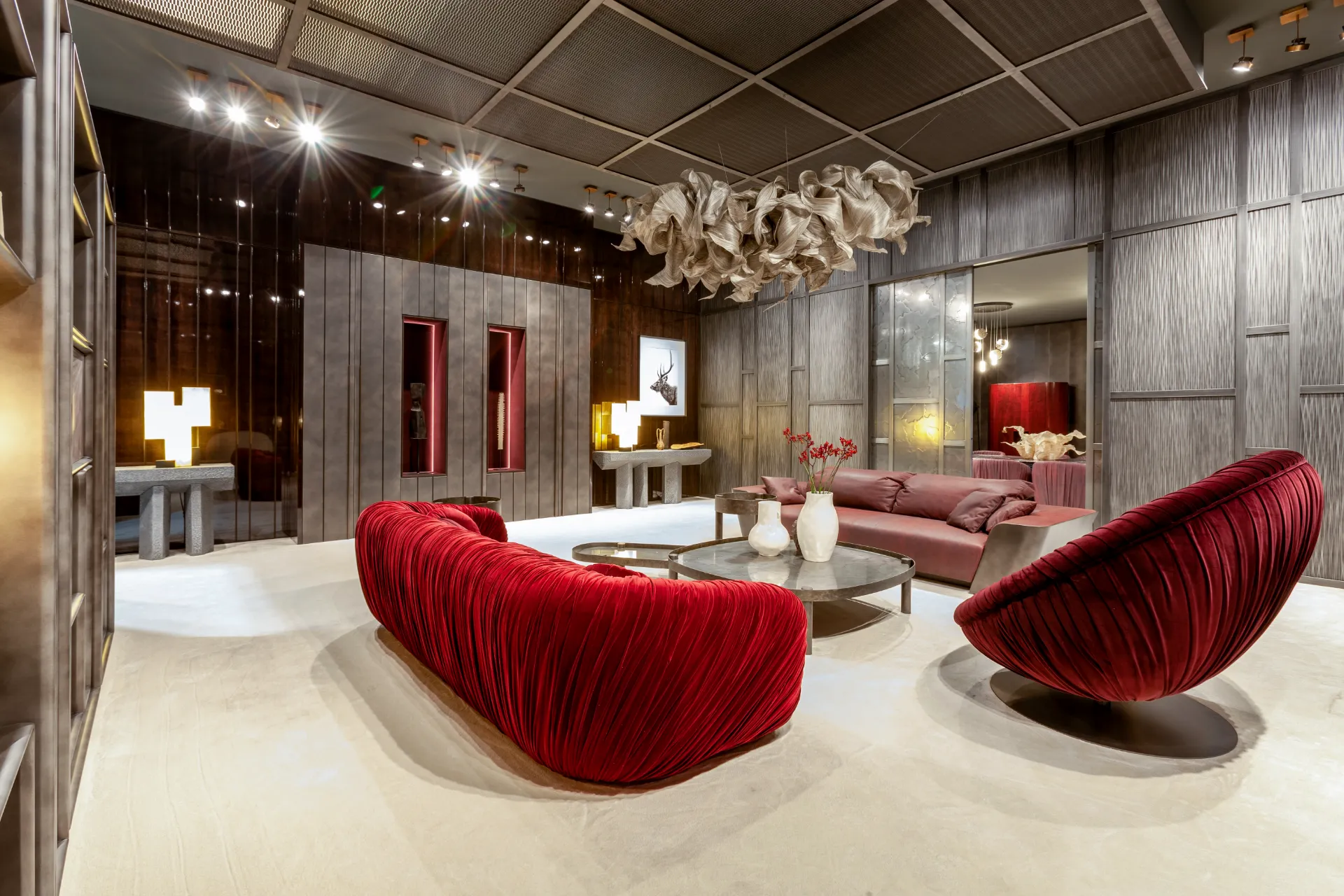
Founded by Yana Pojidaeva, Materia Collection was born from a deep reverence for Italian design traditions and a desire to reintroduce artistry into everyday interiors. Since its opening in 2016, Materia has positioned itself as a modern atelier—bridging timeless European techniques with bold, contemporary design.
Every piece from Materia is more than a furnishing—it is a modern heirloom, made with the same care, precision, and vision that defined the furniture of old masters.
Italian-Inspired Artistry and Bespoke Craftsmanship
From the carved wood of Florence to the marquetry schools of Milan, Italy has long been the cradle of furniture excellence. Materia Collection proudly continues this tradition by embracing:
- Hand-selected materials, including rare woods, architectural veneers, and luxurious finishes.
- Tailored craftsmanship, where each piece is made to order and measured precisely to the client’s space and vision.
- Timeless lines, blending minimalist elegance with ornamental flourishes, much like the great masters of 18th-century Europe.
Whether designing a statement wall panel or a sculptural kitchen island, Materia approaches every element with a fine artist’s eye and a sculptor’s hand.
Collaborating with Architects and Designers Worldwide
What sets Materia apart is its collaborative DNA. The studio partners with internationally renowned architects, interior designers, and property developers to bring complex visions to life.
From private residences in Miami and New York, to flagship stores in Paris and bespoke interiors for hospitality brands in Dubai and Milan, Materia’s fingerprint can be found in some of the world’s most refined spaces.
The brand doesn’t just manufacture furniture—it engineers environments, creating cohesive, multi-layered experiences where furniture, light, material, and architecture speak the same design language.
Custom Solutions for Private, Commercial, and Hospitality Spaces
Materia’s process begins with a simple idea: no two spaces—and no two people—are the same. This belief drives the studio to offer full custom solutions, including:
- Wall paneling systems that double as sculptural backdrops.
- Handcrafted doors and cabinetry tailored to millimeter precision.
- Tables, shelving, lighting, and more—each calibrated to enhance proportion, balance, and material synergy.
In high-end hospitality and commercial projects, Materia’s furniture doesn’t just occupy a room—it defines its personality.
Whether you’re furnishing a private residence or conceptualizing a luxury commercial interior, Materia Collection invites you to explore the possibility of owning not just furniture—but future legacy.